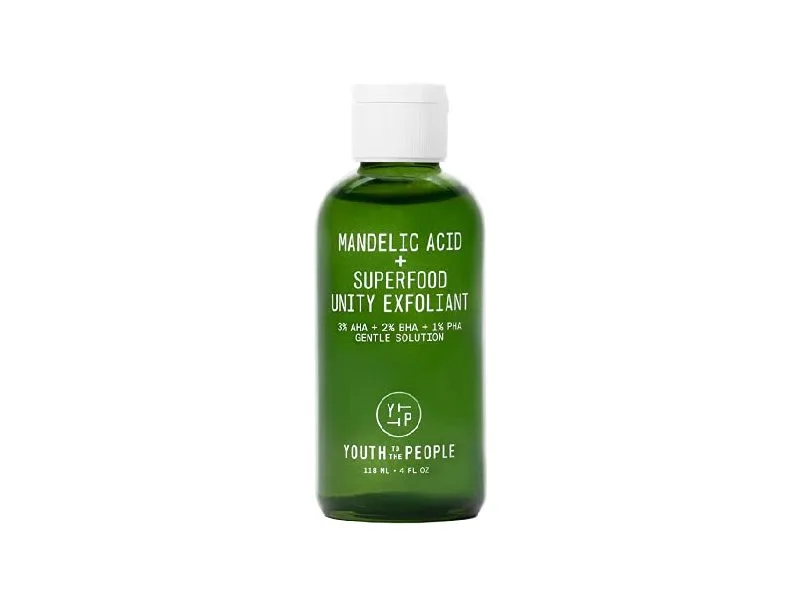
The AHA-BHA-PHA triple-acid architecture is the distinguishing feature — mandelic acid for surface exfoliation with melanin-safe properties, salicylic acid for pore-depth oil control, and gluconolactone for hydrating exfoliation. Most exfoliating toners pick one or two acids; this formula covers all three hydroxy acid classes at gentle enough concentrations to be usable by a wider range of skin types.
A thoughtfully engineered triple-acid exfoliant that prioritizes inclusivity over intensity, delivering gentle multi-level exfoliation backed by a generous antioxidant complex. The gentle approach means patience is required, but for the right skin type, the payoff is a refined, clearer complexion without the drama.
Strong choicefor AcneIn your profileYou chose · Salicylic Acid is an approved or monograph active for acne; this liquid carries it at 2%.Moderate evidenceGentleNo reviews collected yet
The case for it
Salicylic Acid is a first-line active — approved, monograph-listed or named in current guidelines — for this concern.
It is present at an effective concentration, declared or high in the ingredient list.
The formula carries none of the triggers this concern is sensitive to.
Same rule for everyone. “Strong choice” is the verdict on 1,459 of 45,024 concern verdicts across the catalog; rule R2 decided 892 of them.
Unchanged since September 5, 2026, engine 5.1.1.
R2 — A regulator- or guideline-recognised first-line active, declared at an effective strength, in a form the claim supports. · the full register
Carrying active
Salicylic Acid
Standing
first line — a regulator recognises it for this use; trials support it · per § 333.310 Acne active ingredients. (U.S. Food and Drug Administration — 21 CFR Part 333 Subpart D (Topical Acne Drug Products), Code of Federal Regulations via GovInfo), opened July 27, 2026
Form
adequate (declared 2%) — studied range 0.5–2%, from the OTC monograph or label; judge it after ~6 weeks
Tolerability
gentle
Row checked
against its sources on July 27, 2026 (evidence table ev-2026.09-r228)
Good choicefor Rough TextureIn your profileYou chose · Salicylic Acid is a reference standard by mechanism for rough texture; this liquid carries it at 2%.Moderate evidenceGentleNo reviews collected yet
The case for it
Salicylic Acid has trial-supported standing for this concern.
It is present at an effective concentration, declared or high in the ingredient list.
The formula carries none of the triggers this concern is sensitive to.
Same rule for everyone. “Good choice” is the verdict on 9,564 of 45,024 concern verdicts across the catalog; rule R5 decided 9,072 of them.
Unchanged since September 5, 2026, engine 5.1.1.
Not for thisfor Large PoresIn your profileYou chose · The actives here have been researched for large pores and the evidence does not support the claim.Not yet assessedGentleNo reviews collected yet
The case for it
Salicylic Acid has been researched for this concern and the evidence does not support it.
It is present at an effective concentration, declared or high in the ingredient list.
The formula carries none of the triggers this concern is sensitive to.
Same rule for everyone. “Not for this” is the verdict on 488 of 45,024 concern verdicts across the catalog; rule R10 decided 488 of them.
Unchanged since September 5, 2026, engine 5.1.1.
Unprovenfor HyperpigmentationIn your profileYou chose · Licorice Root Extract has early or mechanistic evidence for hyperpigmentation — a reasonable bet, not a recommendation; the other actives here are not yet assessed for it.Limited evidenceStandard tolerabilityNo reviews collected yet
The case for it
Licorice Root Extract has early or mechanistic evidence for this concern, not trial-backed standing.
It is plausibly present at a working level, though the concentration is not declared.
The formula carries no trigger this concern is sensitive to, with the cautions noted.
Cautions: a photosensitising active — use sun protection.
What would change this: A declared concentration would move this to a firmer reading of the dose.
Same rule for everyone. “Unproven” is the verdict on 1,111 of 45,024 concern verdicts across the catalog; rule R9 decided 1,111 of them.
Unchanged since September 5, 2026, engine 5.1.1.
R9 — Plausible-tier actives alone do not earn a recommendation, and 'not for this' would overstate the case against them. 'Unproven' with the evidence dots lets the reader judge the bet (added 0.2.0 after the first shadow run put a 10% niacinamide serum at 'not for this' for hyperpigmentation). 0.5.0: the closing clause reads the other heroes — "nothing else here addresses it" only when every other active has a researched 'none' row; "not yet assessed" when that is the truth. Rows whose dots read moderate or better now reach R9p first. · the full register
Carrying active
Licorice Root Extract
Standing
plausible — trials support it
Form
plausible — studied range 4–20%, from the OTC monograph or label; needs leave-on contact
Tolerability
standard — photosensitization
Row checked
against its sources on July 17, 2026 (evidence table ev-2026.09-r228)
Not for thisfor Dark SpotsIn your profileYou chose · The actives here have been researched for dark spots and the evidence does not support the claim.Not yet assessedStandard tolerabilityNo reviews collected yet
The case for it
Licorice Root Extract has been researched for this concern and the evidence does not support it.
It is plausibly present at a working level, though the concentration is not declared.
The formula carries no trigger this concern is sensitive to, with the cautions noted.
Cautions: a photosensitising active — use sun protection.
What would change this: A declared concentration would move this to a firmer reading of the dose.
Same rule for everyone. “Not for this” is the verdict on 488 of 45,024 concern verdicts across the catalog; rule R10 decided 488 of them.
Unchanged since September 5, 2026, engine 5.1.1.
Strong choicefor BlackheadsIn your profileYou chose · Salicylic Acid is an approved or monograph active for blackheads; this liquid carries it at 2%.Moderate evidenceGentleNo reviews collected yet
The case for it
Salicylic Acid is a first-line active — approved, monograph-listed or named in current guidelines — for this concern.
It is present at an effective concentration, declared or high in the ingredient list.
The formula carries none of the triggers this concern is sensitive to.
Same rule for everyone. “Strong choice” is the verdict on 1,459 of 45,024 concern verdicts across the catalog; rule R2 decided 892 of them.
Unchanged since September 5, 2026, engine 5.1.1.
R2 — A regulator- or guideline-recognised first-line active, declared at an effective strength, in a form the claim supports. · the full register
Carrying active
Salicylic Acid
Standing
first line — a regulator recognises it for this use; trials support it · per 21 CFR § 333.350 - Labeling of acne drug products. (US Code of Federal Regulations (Legal Information Institute, Cornell Law School)), opened July 27, 2026
Form
adequate (declared 2%) — studied range 0.5–2%, from the OTC monograph or label; judge it after ~6 weeks
Tolerability
gentle
Row checked
against its sources on July 27, 2026 (evidence table ev-2026.09-r228)
The studies behind the evidence row
OTC monograph, Topical Acne Drug Products — salicylic acid 0.5–2% recognized as an acne treatment active — US Food and Drug Administration
Promisingfor Excess OilinessIn your profileYou chose · Green Tea Extract has trial-level evidence for excess oiliness but no guideline or regulatory standing yet — promising, short of a recommendation; the other actives here are not yet assessed for it.Moderate evidenceGentleNo reviews collected yet
The case for it
Green Tea Extract has trial-level evidence for this concern but no guideline or regulatory standing yet.
It is plausibly present at a working level, though the concentration is not declared.
The formula carries none of the triggers this concern is sensitive to.
What would change this: A declared concentration would move this to a firmer reading of the dose.
Same rule for everyone. “Promising” is the verdict on 7,858 of 45,024 concern verdicts across the catalog; rule R9p decided 7,858 of them.
Unchanged since September 5, 2026, engine 5.1.1.
R9p — 0.5.0: 'Unproven' beside three filled dots read as one question answered twice with opposite words (7,018 rows). The chip measures standing, the dots measure trial volume; where the row carries at least one RCT or a tier-2 source (moderate dots) and the active is present at a working level, the honest word is Promising. Unproven is reserved for plausible-standing rows with limited or weak evidence, or an under-dosed form. Same rank as Unproven — a bet either way; the dots order them. · the full register
Carrying active
Green Tea Extract
Standing
plausible — trials support it
Form
plausible — studied range 3–5%, from the OTC monograph or label; needs leave-on contact
Tolerability
gentle
Row checked
against its sources on July 17, 2026 (evidence table ev-2026.09-r228)
Also listed for Dullness — the actives here (Mandelic Acid, Salicylic Acid, Gluconolactone, Panthenol (Vitamin B5) are in our research queue for that concern; there is no verdict until their evidence rows are written. That is a gap in our table, not a mark against the product.
A verdict is DermApproved’s assessment of how well a product’s ingredients fit a concern — never a claim about what the product treats. Evidence dots and collected reviews sit beside it and are never blended in.
Rules 0.5.1 · evidence table ev-2026.09-r228 · how we decide
Assessment
Pros & Cons
Pros
✓ Triple-acid AHA-BHA-PHA system addresses texture, pores, and tone simultaneously
✓ Mandelic acid base is clinically gentler for melanin-rich skin types
✓ Licorice root provides both brightening and anti-inflammatory support
✓ Fragrance-free, vegan, cruelty-free with Leaping Bunny certification
✓ Gentle enough for many sensitive skin types to tolerate
✓ Mini size available for trial before committing to full price
Cons
✗ Forty-two dollars for four ounces makes this a premium-priced toner
✗ Reported stability issues — cloudiness or chunky formations over time
✗ Results are gradual and require weeks of consistent use to notice
✗ Some users find the effects too subtle compared to stronger acid products
✗ Contains salicylic acid, making it unsuitable during pregnancy
Review
Full Review
The skincare industry has a percentage problem. Brands compete to slap bigger numbers on their exfoliant labels — twelve percent here, thirty percent there — as if exfoliation were a game of chemical escalation. Youth to the People's Mandelic Acid + Superfood Unity Exfoliant walks into that arms race and does something quietly radical: it uses three different acids at moderate concentrations instead of one acid at a high one.
The logic is sound. Mandelic acid at three percent handles surface exfoliation with a gentleness that glycolic acid at three times the concentration cannot match. Its molecular weight — 152 daltons, the largest of the common AHAs — means it moves through the stratum corneum slowly and evenly, which is precisely why dermatologists have long favored it for melanin-rich skin types where uneven acid penetration can trigger the very hyperpigmentation the product is meant to treat. In this formula, mandelic acid is the diplomat: effective but unhurried.
Salicylic acid at two percent — the maximum allowed in over-the-counter products — adds the dimension that no AHA can provide. As an oil-soluble beta hydroxy acid, it penetrates into the pore itself, dissolving the cocktail of sebum and dead cells that creates blackheads and congestion. If mandelic acid is working the surface, salicylic acid is the one doing the deep cleaning. And then gluconolactone at one percent rounds out the trio as the gentlest player — a polyhydroxy acid that exfoliates so slowly it simultaneously hydrates, pulling water to the skin surface even as it loosens dead cells. The result is a three-tier exfoliation system that addresses surface texture, pore congestion, and hydration in a single formula.
The superfood antioxidant complex is where YTTP's brand identity shows through, and it is more than decoration. Green tea extract delivers EGCG, one of the most studied topical antioxidants, which helps protect freshly exfoliated skin from the oxidative stress it becomes more vulnerable to. Licorice root extract does double duty — its glabridin content inhibits tyrosinase, actively supporting the brightening work the mandelic acid initiates, while its anti-inflammatory properties calm the skin during the exfoliation process. Chamomile provides additional soothing, and the kale, spinach, moringa, and alfalfa extracts contribute a spectrum of polyphenols and vitamins that, collectively, create a more comprehensive antioxidant shield than most exfoliating toners bother to include.
The texture is water-thin — a faintly pink-tinted liquid from the rose water that pours and spreads like a traditional toner. Application is straightforward: sweep across clean, dry skin with fingertips or a cotton pad, then move on with your routine. The sensation is remarkably mild. Where the brand's own Kombucha AHA Toner announces itself with a noticeable sting, this formula barely registers — most users report no tingling at all, which is both its strength and, for those expecting the validating burn of an acid product, a source of skepticism.
That skepticism is worth addressing. This exfoliant trades intensity for breadth, and the results reflect that philosophy. You will not wake up after one use with dramatically transformed skin. The improvements are cumulative and gradual: smoother texture emerging over a week or two, reduced congestion becoming visible after a month, more even tone revealing itself over six to eight weeks. For people accustomed to the instant-gratification glow of a high-percentage glycolic toner, this pacing may feel underwhelming. But for anyone who has ever overdone it with acids — the tight, peeling, burning-face regret of too much too fast — this measured approach is a relief.
The formula's inclusivity deserves emphasis. Mandelic acid's gentleness on darker skin tones is clinically documented, and the combination with licorice root's tyrosinase inhibition makes this one of the more thoughtful exfoliating options for skin of color. The absence of glycolic acid — the AHA most likely to cause post-inflammatory hyperpigmentation in melanin-rich skin — is a deliberate choice, not an oversight.
The rosemary and rose flower waters contribute a subtle botanical scent that is pleasant without being intrusive. It fades within seconds and does not linger on the skin. No synthetic fragrances are added, though the natural scent from these floral waters means this is technically not completely unscented.
There are legitimate criticisms. At forty-two dollars for four ounces, used every night, you are looking at barely two months per bottle — that is expensive for a toner-consistency product with moderate acid concentrations. The stability issue that multiple users have reported — cloudiness or chunky formations developing within the product's lifespan — is concerning for a premium product and suggests the botanical extract blend may not be fully optimized for long-term stability. And the effects, while real, require patience and consistent use that some users may not have the discipline to maintain before deciding it does not work.
The arginine in the formula provides some pH buffering similar to the brand's Kombucha toner, and panthenol adds barrier-supportive hydration that helps the skin recover from the exfoliation. Glycerin rounds out the hydrating support. These are smart supporting players that elevate the formula beyond a simple acid-and-water product.
For oily, combination, and acne-prone skin types — and particularly for anyone with melanin-rich skin seeking a chemical exfoliant that will not punish them for using it — this is a genuinely well-considered option. It does not hit as hard as the Kombucha toner, and it does not pretend to. What it offers instead is a broader, gentler, more inclusive approach to chemical exfoliation that trusts the process of consistent, moderate use over the thrill of a single aggressive application.
Formula
Key Ingredients
The hero actives that drive this product's performance.
The lead exfoliant in this triple-acid formula, mandelic acid's large molecular size (152 Da) makes it the gentlest AHA option — it penetrates the stratum corneum more slowly and evenly than glycolic or lactic acid, making it particularly effective for melanin-rich skin types prone to post-inflammatory hyperpigmentation. In this formula, it handles surface-level exfoliation while the salicylic acid works deeper in the pores.
At the maximum over-the-counter concentration, salicylic acid provides the oil-soluble exfoliation that mandelic acid cannot — it penetrates into the pore lining to dissolve the sebum and dead cell mixture that causes congestion. In this AHA-BHA-PHA trio, salicylic acid is the pore-clearing specialist, complementing the surface work of mandelic acid and the hydrating exfoliation of gluconolactone.
Established mechanismfor Rough Texture · established mechanism
This polyhydroxy acid (PHA) completes the triple-acid system by providing the gentlest exfoliation of the three — its large molecular structure exfoliates even more slowly than mandelic acid while simultaneously functioning as a humectant. In this formula, gluconolactone counterbalances the drying potential of the BHA and adds a hydrating dimension to the exfoliation process.
Part of the superfood antioxidant complex in this formula, green tea extract delivers EGCG — one of the most studied topical antioxidants — to protect the freshly exfoliated skin from oxidative stress. Works alongside the kale, spinach, and moringa extracts to create a broad-spectrum antioxidant shield that supports the skin's recovery from the chemical exfoliation.
Glycyrrhiza glabra extract serves a dual purpose in this exfoliating formula: its glabridin content inhibits tyrosinase to address hyperpigmentation — amplifying the brightening effect of the mandelic acid — while its anti-inflammatory properties help soothe the skin during the exfoliation process, reducing the redness that acid treatments can trigger.
Provides barrier-supportive hydration in this exfoliating formula, helping to counterbalance the potential dryness and irritation from the triple-acid system. Panthenol converts to vitamin B5 in the skin, supporting the natural repair process that becomes especially important when the stratum corneum is being actively exfoliated.
Not yet assessed
Ingredient standings describe the active at treatment-level doses and
vehicles; this product's own condition grades weigh its actual formula.
Apply after cleansing to dry skin using fingertips or a cotton pad. Follow with a hydrating serum and moisturizer. Avoid layering with other direct acids or retinoids on the same night.
Results Timeline
Smoother texture and brighter appearance visible within 1-2 weeks. Pore refinement, reduced congestion, and improved tone evenness develop over 4-8 weeks of consistent 2-3x weekly use.
Youth to the People Mandelic Acid + Superfood Unity Exfoliant
Hydrating serum
Moisturizer
Evidence
Science & Expert Perspective
The Science
Mandelic acid has emerged as a preferred AHA for skin of color due to its unique molecular properties. At 152 daltons, it is the largest commonly used alpha hydroxy acid, which translates to slower, more uniform penetration through the stratum corneum. Research reported in the Indian Journal of Dermatology, Venereology and Leprology (Garg et al., 2009) demonstrated that mandelic acid peels produced significant improvement in melasma and post-inflammatory hyperpigmentation with fewer side effects than glycolic acid peels, particularly in Fitzpatrick skin types IV-VI.
The inclusion of 2% salicylic acid provides the oil-soluble exfoliation dimension. Salicylic acid's efficacy in treating acne and comedonal lesions is extensively documented — a review published in Clinical, Cosmetic and Investigational Dermatology (Arif, 2015) confirmed its ability to penetrate the pilosebaceous unit to dissolve the intercellular lipid matrix responsible for comedone formation.
Gluconolactone, the PHA in this formula, offers a distinct mechanism. A comparative study published in the Journal of the European Academy of Dermatology and Venereology (Grimes et al., 2004) found that PHAs provided comparable exfoliation to AHAs with significantly less skin irritation and better moisturization, attributed to their larger molecular size and humectant properties. At 1%, gluconolactone contributes gentle exfoliation while supporting the skin's moisture barrier — a particularly valuable function in a formula already containing two other exfoliating acids.
The antioxidant complex is supported by robust evidence. EGCG from green tea has been shown in a study published in the Journal of the American Academy of Dermatology (Katiyar et al., 2001) to protect against UV-induced oxidative damage and support DNA repair in skin cells — relevant for freshly exfoliated skin with a temporarily thinner stratum corneum.
References
Chemical peeling with mandelic acid for acne and skin rejuvenation — Indian Journal of Dermatology, Venereology and Leprology (2009)
Dermatologists frequently recommend mandelic acid as a first-line chemical exfoliant for patients with Fitzpatrick skin types IV-VI, where the risk of post-inflammatory hyperpigmentation from faster-penetrating AHAs like glycolic acid is a genuine clinical concern. The clinical consensus is that the triple-acid approach in this formula — combining AHA, BHA, and PHA at moderate concentrations — mirrors the multi-acid strategy used in professional treatments, scaled down for safe at-home use. The addition of licorice root extract as a tyrosinase inhibitor is considered a smart formulation choice that amplifies the brightening benefits of the mandelic acid. Dermatologists typically advise starting any acid product at lower frequency regardless of stated gentleness, and daily broad-spectrum sunscreen remains essential.
Guidance
Usage & Recommendations
How to Use
Apply to clean, dry skin in the evening using fingertips or a cotton pad. Start with 2-3 times per week and increase frequency as tolerated — many users can work up to nightly use. Follow with a hydrating serum and moisturizer. Do not combine with retinoids, other direct acids, or benzoyl peroxide in the same routine. Apply broad-spectrum SPF 30+ every morning. The product may leave a slight tackiness — this dissipates once you layer your next product.
Value Assessment
At $42 for 4 fl oz, this falls at the premium end of the exfoliating toner market. With nightly use, a bottle lasts about 2 months ($21/month); with 2-3x weekly use, closer to 4-5 months ($8-10/month). The 1 fl oz mini at a lower price point lets you trial the formula before committing. The triple-acid architecture, antioxidant complex, and soothing ingredients justify some premium over basic single-acid toners, but the stability reports and subtle results make the value proposition harder to defend for users who want visible, rapid improvement. For those specifically seeking a gentle, melanin-safe exfoliant with clean beauty credentials, the premium feels more earned.
Who Should Buy
Oily, combination, and acne-prone skin types seeking a gentle multi-acid exfoliant that addresses pores, texture, and tone without aggressive irritation. Especially well-suited for melanin-rich skin types who need a hyperpigmentation-safe AHA, and for acid beginners who want to start with a lower-intensity formula.
Who Should Skip
Anyone looking for dramatic, fast-acting exfoliation results — this formula prioritizes gentleness over intensity. Also not recommended during pregnancy due to the 2% salicylic acid content. If you have severely compromised skin barrier or active eczema, wait until your barrier is restored before introducing any acid product.
Ready to try Youth to the People Mandelic Acid + Superfood Unity Exfoliant?
Thin, watery liquid with a very slight viscosity. Pours easily and spreads across the face like a lightweight toner. Has a faintly pink-tinged hue from the rose water. Can feel slightly tacky before fully absorbing.
Scent
A subtle, natural floral-herbal scent from the rosemary and rose flower waters. Not overpowering and dissipates quickly. No synthetic fragrance added.
Packaging
Frosted glass bottle with a controlled-pour cap, consistent with YTTP's minimalist aesthetic. The 1 fl oz mini size is available for trial. Glass is recyclable but adds weight.
Finish
lightweightdewyfast-absorbing
What to Expect on First Use
Most users experience little to no stinging on first application thanks to the gentle mandelic acid base and low overall acid concentrations. The triple-acid approach is designed for gradual, cumulative results rather than immediate dramatic exfoliation. Start with 2x per week and increase to nightly if tolerated.
How Long It Lasts
2-3 months with nightly use, 4-5 months with 2-3x weekly use
Youth to the People developed this exfoliant as a gentler counterpart to their Kombucha AHA toner, specifically designed to accommodate more skin types including those with melanin-rich or reactive skin. The 'Unity' name reflects the brand's intention to create an exfoliant that unites all three hydroxy acid families in a single formula, supported by their signature superfood antioxidant blend.
About Youth to the People Established Brand (5–20 years)
Youth to the People was founded in 2015 by Greg Gonzalez and Joe Cloyes, drawing on their family's 40-year legacy in professional skincare. The brand is known for vegan, cruelty-free formulations built around superfood ingredients, though it relies more on ingredient-transparency positioning than independent clinical research.
Brand founded: 2015 · Product launched: 2021
Myth vs. Reality
Common Myths
Myth
The low acid percentages (3% AHA, 2% BHA, 1% PHA) mean this product won't deliver real results.
Reality
The combined 6% total acid concentration is moderate, not weak — and mandelic acid's larger molecular size means it provides sustained exfoliation over a longer period. The triple-acid approach delivers multi-level results that a single higher-concentration acid may not achieve.
Myth
If the product turns cloudy or develops chunks, it's gone bad and is unsafe to use.
Reality
Some separation or cloudiness can occur with the botanical extracts in this formula. While it's not ideal aesthetically, the brand notes this is within normal parameters. However, if the product changes color significantly or develops an off smell, discontinue use.
FAQ
Frequently Asked Questions
Is this exfoliant safe for darker skin tones?
Yes — mandelic acid is widely considered the safest AHA for melanin-rich skin because its large molecular size (152 Da) ensures slow, even penetration that is less likely to trigger post-inflammatory hyperpigmentation. The 3% concentration in this formula is gentle enough for regular use, and the licorice root extract actively works to inhibit excess melanin production.
Can I use this every night?
Many users can work up to nightly use with this formula because the individual acid concentrations are relatively low (3% AHA, 2% BHA, 1% PHA). Start with 2-3 times per week and monitor your skin's response. If you experience no dryness, flaking, or irritation after 2-3 weeks, you can gradually increase frequency.
How does this compare to the Kombucha AHA Toner from the same brand?
The Kombucha toner is a stronger, AHA-only exfoliant with 11% combined lactic and glycolic acids — it's better for experienced acid users targeting dullness and texture. This Mandelic Acid formula is gentler with its triple-acid approach (6% total) and more suitable for acne-prone, sensitive, or darker skin types that need pore-clearing BHA alongside surface exfoliation.
Does Mandelic Acid + Superfood Unity Exfoliant layer safely with retinol?
Not on the same night — the salicylic acid in this formula combined with retinol can compromise your skin barrier. Alternate nights between this exfoliant and your retinol product, and always buffer with a hydrating moisturizer on both evenings.
Why does my bottle look cloudy or have chunks in it?
Some users report that the botanical extracts in this formula can separate or form visible particles over time. The brand considers mild cloudiness within normal parameters, but store the product in a cool, dark place to minimize this. If the color or smell changes significantly, replace it.
Does Mandelic Acid + Superfood Unity Exfoliant contain anything to avoid during pregnancy?
No — this formula contains 2% salicylic acid (a BHA), which is generally advised against during pregnancy at concentrations above low levels in leave-on products. Consult your dermatologist or OB-GYN before using any salicylic acid product during pregnancy or breastfeeding.
Reviews
What Reviewers Tend to Say
Recurring themes our editors read across retailer reviews of this product — summaries in our words, not quotations, and not a substitute for your own patch test.
Common Praise
Gentle enough for sensitive skin
Visibly smooths texture without irritation
Pleasant botanical scent from rose and rosemary waters
Triple acid approach covers multiple concerns at once
Common Complaints
Product can develop cloudy or chunky consistency over time
Expensive for the size
Effects are subtle — some users want stronger results
The whole case for salicylic acid rests on one unglamorous fact of chemistry: it dissolves in oil. Understand that, and you know exactly when it beats a glycolic acid — and when it's overkill.
They all get sold as 'exfoliation,' but molecule size and oil-solubility make them genuinely different tools — and picking the wrong one is why so many people wreck their barrier.
Jun 9, 2026· 5 min
Questions people ask about Acne
Verified answers from our questions library — the nuance a product page cannot carry.
Products, answers, therapy guides, tools and articles in one search. Brand names,
slang and abbreviations all work — accutane finds isotretinoin, bacne finds truncal acne.