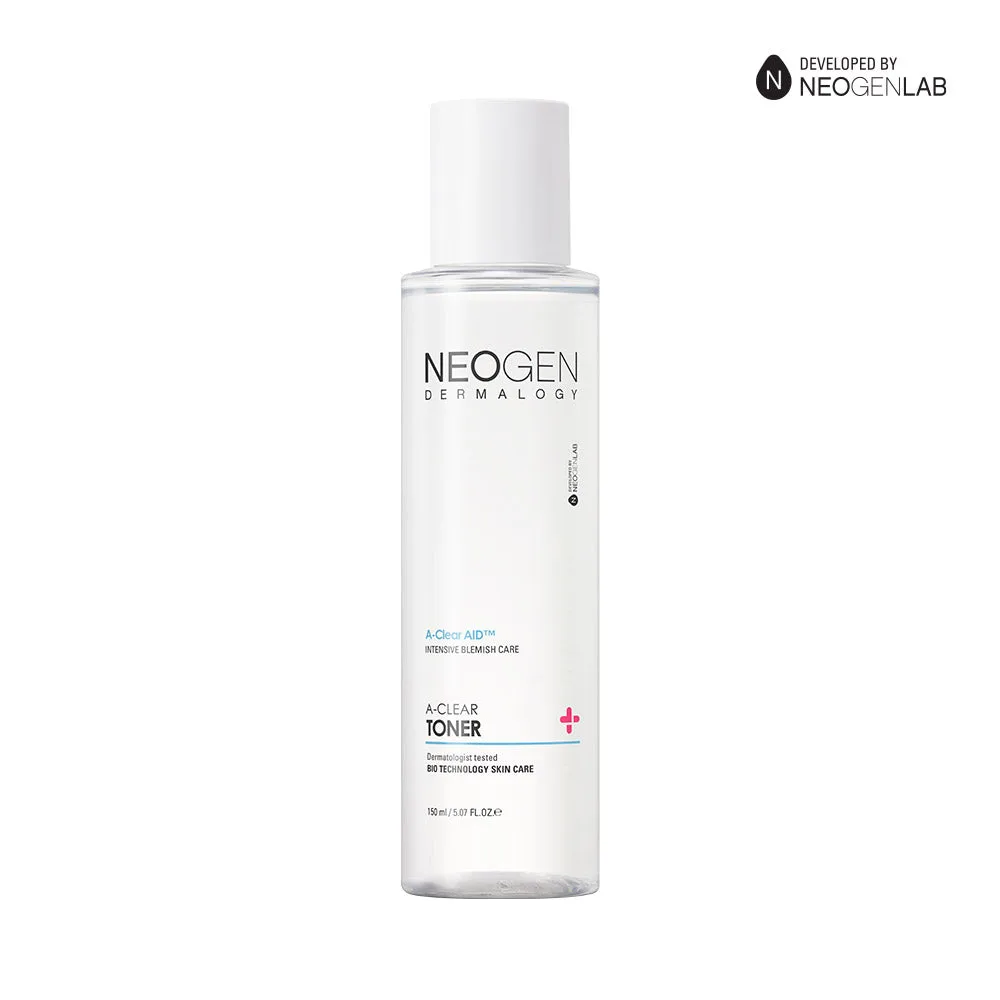
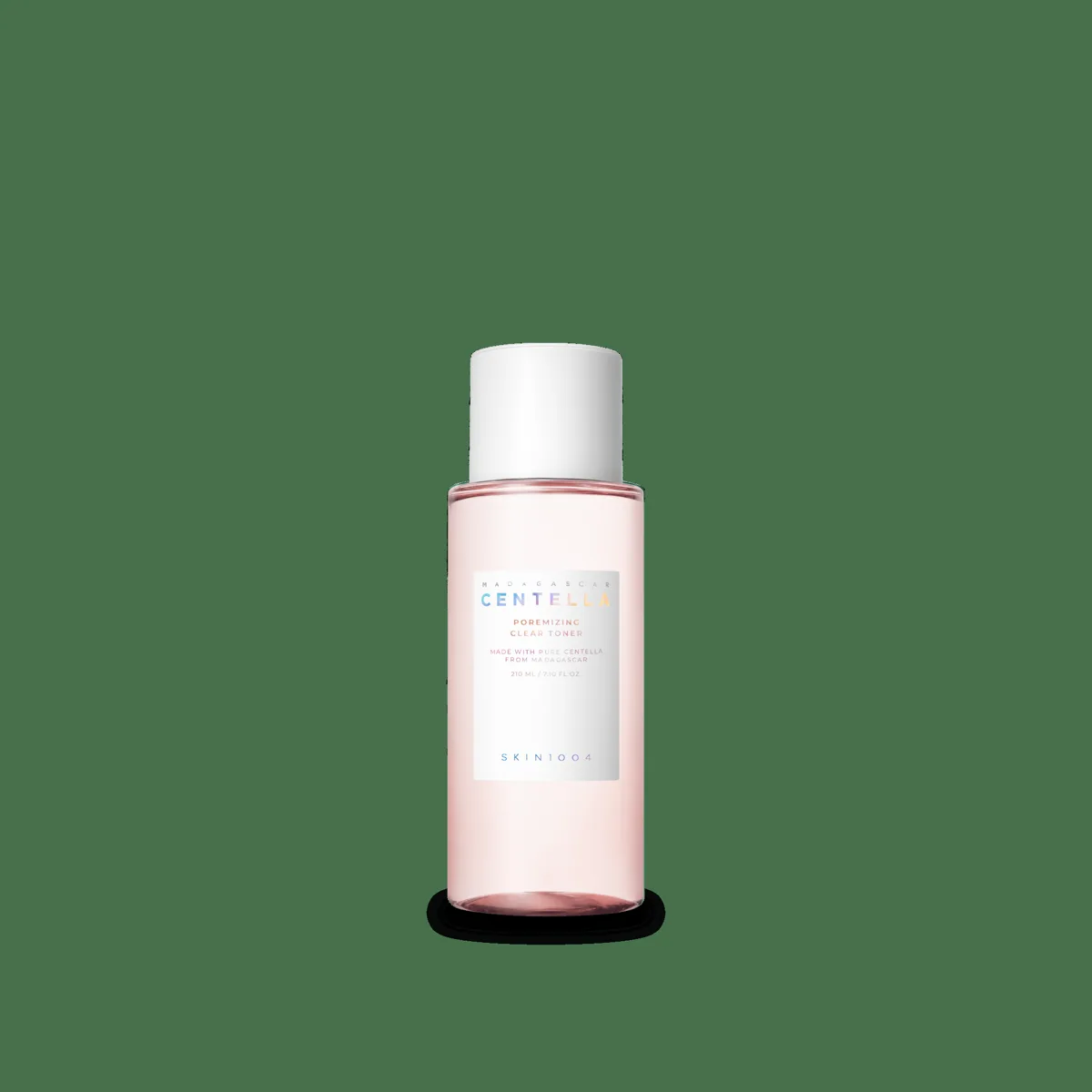
It compresses the whole A-Clear blemish philosophy into fifteen ingredients and a wipe-on step: salicylic acid and tea tree for clearing, guaiazulene and centella for calm, and almost nothing else. The brevity is the feature — there is no filler to react to, just a focused soothing-exfoliant you can use every day.
A pared-down exfoliating toner that proves a fifteen-ingredient list can outperform a crowded one. Salicylic acid and tea tree do the clearing, centella and azulene keep it comfortable, and the 150ml bottle makes it a quiet value. Sensitive skin should pace it, and the tea tree note isn't for everyone, but for oily, congestion-prone faces it's a smart daily step.
Independent feedback for this toner numbers in the low hundreds across retail platforms — enough to gauge its soothing-exfoliant reputation but not a deep long-term record. The score here rests mainly on the short, fully disclosed formula and Neogen's established track record, and could shift as more user data accrues.
Verdicts
How well it fits each concern
Verdict by concern tap a concern for the case
Strong choicefor AcneIn your profileYou chose · Salicylic Acid is an approved or monograph active for acne; this liquid carries it, though the concentration is not declared.Moderate evidenceStandard tolerabilityNo reviews collected yet
The case for it
Salicylic Acid is a first-line active — approved, monograph-listed or named in current guidelines — for this concern.
It is plausibly present at a working level, though the concentration is not declared.
The formula carries no trigger this concern is sensitive to, with the cautions noted.
Cautions: fragrance.
What would change this: A declared concentration would move this to a firmer reading of the dose.
Same rule for everyone. “Strong choice” is the verdict on 1,459 of 45,024 concern verdicts across the catalog; rule R3 decided 567 of them.
Unchanged since September 5, 2026, engine 5.1.1.
R3 — Undeclared but plausibly dosed (top-third INCI position, or a potent sub-1% active) — the verdict stands, and the sentence says what disclosure would add. A declared figure below range would have been sub-threshold. · the full register
Carrying active
Salicylic Acid
Standing
first line — a regulator recognises it for this use; trials support it · per § 333.310 Acne active ingredients. (U.S. Food and Drug Administration — 21 CFR Part 333 Subpart D (Topical Acne Drug Products), Code of Federal Regulations via GovInfo), opened July 27, 2026
Form
plausible — studied range 0.5–2%, from the OTC monograph or label; judge it after ~6 weeks
Tolerability
standard — fragrance load
Row checked
against its sources on July 27, 2026 (evidence table ev-2026.09-r228)
Strong choicefor BlackheadsIn your profileYou chose · Salicylic Acid is an approved or monograph active for blackheads; this liquid carries it, though the concentration is not declared.Moderate evidenceStandard tolerabilityNo reviews collected yet
The case for it
Salicylic Acid is a first-line active — approved, monograph-listed or named in current guidelines — for this concern.
It is plausibly present at a working level, though the concentration is not declared.
The formula carries no trigger this concern is sensitive to, with the cautions noted.
What would change this: A declared concentration would move this to a firmer reading of the dose.
Same rule for everyone. “Strong choice” is the verdict on 1,459 of 45,024 concern verdicts across the catalog; rule R3 decided 567 of them.
Unchanged since September 5, 2026, engine 5.1.1.
R3 — Undeclared but plausibly dosed (top-third INCI position, or a potent sub-1% active) — the verdict stands, and the sentence says what disclosure would add. A declared figure below range would have been sub-threshold. · the full register
Carrying active
Salicylic Acid
Standing
first line — a regulator recognises it for this use; trials support it · per 21 CFR § 333.350 - Labeling of acne drug products. (US Code of Federal Regulations (Legal Information Institute, Cornell Law School)), opened July 27, 2026
Form
plausible — studied range 0.5–2%, from the OTC monograph or label; judge it after ~6 weeks
Tolerability
standard
Row checked
against its sources on July 27, 2026 (evidence table ev-2026.09-r228)
The studies behind the evidence row
OTC monograph, Topical Acne Drug Products — salicylic acid 0.5–2% recognized as an acne treatment active — US Food and Drug Administration
Unprovenfor Excess OilinessIn your profileYou chose · Salicylic Acid has early or mechanistic evidence for excess oiliness — a reasonable bet, not a recommendation; the other actives here are not yet assessed for it.Moderate evidenceStandard tolerabilityNo reviews collected yet
The case for it
Salicylic Acid has early or mechanistic evidence for this concern, not trial-backed standing.
It is present below the studied range.
The formula carries no trigger this concern is sensitive to, with the cautions noted.
What would change this: A concentration inside the studied range would raise this a step.
Same rule for everyone. “Unproven” is the verdict on 1,111 of 45,024 concern verdicts across the catalog; rule R9 decided 1,111 of them.
Unchanged since September 5, 2026, engine 5.1.1.
R9 — Plausible-tier actives alone do not earn a recommendation, and 'not for this' would overstate the case against them. 'Unproven' with the evidence dots lets the reader judge the bet (added 0.2.0 after the first shadow run put a 10% niacinamide serum at 'not for this' for hyperpigmentation). 0.5.0: the closing clause reads the other heroes — "nothing else here addresses it" only when every other active has a researched 'none' row; "not yet assessed" when that is the truth. Rows whose dots read moderate or better now reach R9p first. · the full register
Carrying active
Salicylic Acid
Standing
plausible — trials support it
Form
sub threshold — studied range 30%, from the trials on the row; needs leave-on contact; judge it after ~6 weeks
Tolerability
standard
Row checked
against its sources on July 17, 2026 (evidence table ev-2026.09-r228)
Good choicefor Rough TextureIn your profileYou chose · Salicylic Acid is a reference standard by mechanism for rough texture; this liquid carries it.Moderate evidenceStandard tolerabilityNo reviews collected yet
The case for it
Salicylic Acid has trial-supported standing for this concern.
It is plausibly present at a working level, though the concentration is not declared.
The formula carries no trigger this concern is sensitive to, with the cautions noted.
What would change this: A declared concentration would move this to a firmer reading of the dose.
Same rule for everyone. “Good choice” is the verdict on 9,564 of 45,024 concern verdicts across the catalog; rule R5 decided 9,072 of them.
Unchanged since September 5, 2026, engine 5.1.1.
Does the jobDoes what a toner is for: not alcohol-driven, adds something real. Not measured from the label: restores skin pH, plays well with what follows.
A verdict is DermApproved’s assessment of how well a product’s ingredients fit a concern — never a claim about what the product treats. Evidence dots and collected reviews sit beside it and are never blended in.
Rules 0.5.1 · evidence table ev-2026.09-r228 · how we decide
Assessment
Pros & Cons
Pros
✓ Short, fully transparent fifteen-ingredient list with no filler
✓ Daily-friendly salicylic acid clears congestion without stinging
✓ Tea tree sits high enough to deposit real antibacterial action
✓ Centella and guaiazulene keep the exfoliation from causing redness
✓ Generous 150ml size makes the per-milliliter cost low
✓ Fragrance-free, alcohol-free and silicone-free formula
✓ Layers cleanly under the matching A-Clear serum
Cons
✗ Tea tree oil is a known contact allergen worth patch-testing
✗ Daily leave-on acid can be too much for sensitive skin
✗ Watery texture soaks through cotton pads quickly
✗ Open-spout bottle pours fast and is easy to over-dispense
✗ Not hydrating enough to skip a follow-up humectant
Review
Full Review
There is a particular confidence in a skincare label with only fifteen ingredients on it. Most toners pad their lists with a dozen botanical extracts that do little beyond filling out the marketing claims; Neogen's A-Clear Soothing Toner does the opposite, stripping the formula down to the handful of things that actually justify the step. What is left is almost diagrammatic: a humectant base, two clearing actives, two soothing ones, and a brightener. You can read the entire strategy of the product in a single glance at the back of the bottle, and that transparency turns out to be the most appealing thing about it.
The clearing half is salicylic acid and tea tree oil. The salicylic acid sits at the low concentration a daily wipe-on step calls for — enough to lift dead cells and dissolve the early stage of a clog, not enough to leave skin raw after twice-daily use. It gets a quiet assist from willow bark at the bottom of the list, which contributes its own naturally occurring salicylates. Tea tree oil, meanwhile, sits unusually high; in a formula this lean there is nowhere for it to hide, so each swipe genuinely deposits a thin film of antibacterial active across the skin. For oily, blackhead-prone faces, that combination is exactly the right kind of low-grade, everyday maintenance.
What keeps the toner from behaving like an astringent is its soothing half. Centella asiatica brings the cica triterpenes that calm and support healing, and guaiazulene — the azulene blue that gives the liquid its faint tint — supplies most of the anti-redness effect. Licorice root rounds it out, sitting high enough in this short list to make a real contribution to fading the brown marks a cleared pimple leaves behind. The balance is the whole point: an exfoliating toner that does not punish you for using it daily, which is precisely the failure mode of so many acid toners that leave skin tight and flaky within a week.
In use, it is about as no-nonsense as toners get. The texture is pure water — no slip, no viscosity — so it vanishes into a cotton pad and into skin instantly. There is a clean, faintly medicinal tea-tree smell that lifts within seconds and no added perfume to linger. The first few swipes feel cool and lightly clarifying without any burn, and because the acid is gentle there is no dramatic purge to brace for. Skin tends to feel a touch smoother within days, with the more meaningful payoff — clearer pores, fewer small breakouts, slowly fading marks — arriving over two to four weeks of steady use.
The trade-offs are the same ones that shadow the rest of the A-Clear line. Tea tree oil is a recognized contact allergen, and its prominent placement here makes a patch test genuinely worthwhile for anyone with reactive skin. A daily leave-on acid, even a mild one, is also more exfoliation than some sensitive complexions want, so the every-other-day pace is the safer starting point. And while the watery texture is part of the appeal, it does run through cotton pads quickly and pours fast from the open-spout bottle, so a heavy hand will drain the 150ml faster than expected. None of these are dealbreakers; they are just the trade-offs of a focused, active-forward toner.
Value is where this one quietly shines. At twenty-eight dollars for 150ml, the per-milliliter cost is low for a toner carrying real actives, and you are paying for the formula rather than for packaging or a fragrance story. It comes in a single size, so there is no larger-format discount to chase, but the bottle lasts two to three months at a normal pace, which makes the repurchase rhythm reasonable. For the oily and combination skin it is built for, it delivers a daily soothing-exfoliant step at a price that undercuts most of its Western counterparts. If your skin is dry or easily irritated, this is not the toner to reach for — but if you break out, shine by midday, and want a simple, well-judged swipe to keep things in check, it earns its place on the shelf.
It is also worth being honest about expectations, because a toner occupies a humble place in any routine. This is not the step that will single-handedly clear a stubborn breakout or erase texture overnight; it is the daily groundwork that makes the rest of your routine work a little better. Used consistently, that groundwork compounds — the small, steady exfoliation keeps pores from clogging in the first place, which is far easier than clearing them after the fact. Think of it less as a treatment and more as maintenance, the skincare equivalent of brushing rather than a dental visit. Approached that way, with patience and a follow-up of hydration and sunscreen, it quietly earns its keep. Approached as a miracle, it will inevitably disappoint, as every toner does.
Formula
Key Ingredients
The hero actives that drive this product's performance.
The gentle exfoliating engine of this toner — at the low level a wipe-on step demands, it lifts dead cells and clears the start of a clog before it becomes a blackhead, primed by the willow bark salicylates sitting just below it on the list.
Established mechanismfor Rough Texture · established mechanism
Carries the antibacterial load in a stripped-back formula with very few ingredients to hide behind, sitting above the soothing extracts so each swipe leaves a faint film of blemish-fighting actives across the skin.
Pairs with guaiazulene to keep this exfoliating swipe from leaving skin tight or pink, contributing the cica triterpenes that make the toner safe to use daily on reactive, breakout-prone faces.
The azulene blue that tints the formula and supplies most of its anti-redness muscle, the quiet reason a toner with salicylic acid and tea tree manages to read as calming rather than astringent.
Sits high in this short list to fade the dark marks left after a spot clears, working over weeks alongside the daily micro-exfoliation rather than as an instant brightener.
Not yet assessed
Ingredient standings describe the active at treatment-level doses and
vehicles; this product's own condition grades weigh its actual formula.
Sweep it on with a cotton pad or press in with palms straight after cleansing and before serums; because it carries salicylic acid, don't pair it the same night with another acid or a retinoid — alternate them.
Results Timeline
Skin feels smoother and less congested almost immediately after the first few uses; clearer pores and fewer small breakouts settle in around two to four weeks, with post-acne marks lightening over a couple of months.
The toner leans on a pairing with solid evidence behind it. Salicylic acid is a lipophilic beta-hydroxy acid that penetrates into the sebum-filled pore and exfoliates from within, and it is a long-standing first-line over-the-counter treatment for comedonal acne in dermatologic guidance — even at the low concentrations a daily toner uses, regular exposure gradually clears the plugs behind blackheads. Tea tree oil supplies the antibacterial half: a widely cited randomized trial in the Medical Journal of Australia reported that a 5% tea tree oil gel reduced acne lesions comparably to 5% benzoyl peroxide, with a slower onset but fewer adverse effects, which is precisely the gentle-but-effective profile a daily toner wants. The more product-specific point is the buffering. Centella asiatica's triterpenoid saponins are documented to support wound healing and dampen inflammation, and guaiazulene belongs to the azulene family known for anti-inflammatory activity; together they offset the irritation potential of frequent low-dose exfoliation, which is what makes this safe to use as an everyday step rather than a twice-weekly treatment. The evidence also flags the catch: tea tree oil is a documented sensitizer, especially when oxidized, so reactive skin should approach it carefully.
References
A comparative study of tea-tree oil versus benzoylperoxide in the treatment of acne — The Medical Journal of Australia (1990)
In vitro and in vivo wound healing studies on Centella asiatica — Indian Journal of Pharmaceutical Sciences (2007)
Dermatologist Perspective
Daily low-concentration salicylic acid toners are a familiar tool in clinical practice for oily, comedonal skin, since BHA exfoliation works inside the pore and is generally well tolerated when the dose is kept modest. Clinicians often pair this kind of step with soothing ingredients like centella or azulene precisely to allow daily use without barrier damage, and that is the design philosophy on display here. Tea tree oil is recognized as an evidence-backed botanical antibacterial but also a known contact allergen, so the standard caution is to patch-test before committing to twice-daily application. For breakout-prone skin, common guidance is to introduce a leave-on acid step gradually, avoid stacking it with other acids or retinoids on the same evening, and keep daily sunscreen non-negotiable, since exfoliated skin is more vulnerable to UV-driven pigmentation.
Guidance
Usage & Recommendations
How to Use
After cleansing, dampen a cotton pad and sweep it across the face, or pour a little into your palms and press it in, avoiding the immediate eye area. Oily and combination skin can use it morning and night; sensitive skin should start every other evening and build up slowly. Follow with a hydrating serum and moisturizer, since the toner exfoliates but does not deeply hydrate. In the morning, always finish with a broad-spectrum SPF, and avoid layering it on the same night as another acid or a retinoid to keep the barrier comfortable.
Value Assessment
At $28 for 150ml, the per-milliliter cost is genuinely low for a toner carrying active ingredients rather than just hydration, and the money clearly goes into the formula instead of fragrance or fancy packaging. There is only the one size, so no bulk discount exists, but a bottle realistically lasts two to three months at a daily pace, keeping the repurchase cycle affordable. Coming from Neogen — a two-decade-old brand with its own manufacturing — the price reflects a proven, no-frills formula rather than hype. For oily and combination skin it is one of the better-value exfoliating toners in K-beauty; for dry or very sensitive skin the value is moot, since it is simply the wrong category of product.
Who Should Buy
This is for oily and combination skin that wants a simple, daily soothing-exfoliant step to keep blackheads, congestion and rough texture in check. It suits people who like a transparent, short ingredient list and want real actives at a low per-milliliter cost without the sting of a harsh astringent toner.
Who Should Skip
Dry skin will find it more clarifying than nourishing and should look to a hydrating toner instead. Very sensitive or barrier-compromised skin may find a daily leave-on acid too frequent, and anyone with a tea tree oil allergy should avoid it entirely rather than risk a reaction.
A pure water-thin liquid with no slip or viscosity, soaking into a cotton pad and into skin instantly.
Scent
A clean, faintly medicinal tea-tree note with no perfume, gone within seconds of wiping on.
Packaging
A tall plastic bottle with a simple open spout — practical and refill-friendly, though it pours quickly so it pays to tip carefully onto a pad.
Finish
lightweightfast-absorbinginvisible
What to Expect on First Use
First swipes feel cool and slightly squeaky-clean without the burn of an astringent; you may notice slightly smoother skin within days, and there is no significant purge because the acid level is mild.
How Long It Lasts
About two to three months of once- or morning and night, depending on how heavy-handed you are with the pour.
Neogen built the A-Clear toner as the entry point to its blemish-care range, designed for the K-beauty habit of a daily toner step but aimed at the oily, congestion-prone skin the brand's gauze exfoliators first attracted.
About Neogen Established Brand (5–20 years)
Neogen Dermalogy is the skincare arm of Korea's Neogenlab, founded in 2000 with in-house R&D and manufacturing. The brand earned its name on the Bio-Peel gauze exfoliators and has since built a wide, affordably-priced catalog with a long retail track record across K-beauty platforms.
Brand founded: 2000 · Product launched: 2021
Myth vs. Reality
Common Myths
Myth
An exfoliating toner has to sting to be working.
Reality
The salicylic acid here is deliberately low and buffered by humectants and azulene, so it micro-exfoliates with no burn — comfort is not a sign it's doing nothing.
FAQ
Frequently Asked Questions
How often can I use the Neogen A-Clear Soothing Toner?
Oily and combination skin can usually use it once or twice daily, but because it carries salicylic acid, sensitive skin should limit it to every other day and watch for tightness. It is a leave-on swipe, not a rinse-off.
Is the A-Clear toner an exfoliating toner or a hydrating one?
It is squarely an exfoliating toner — the salicylic acid and willow bark do gentle daily exfoliation, while centella and guaiazulene keep it calm. It is not a deeply hydrating toner, so follow it with a humectant serum.
Can I use this toner with the matching A-Clear serum?
Yes — they share the same active family, so layer the toner first and the serum after. Because both contain salicylic acid and tea tree, sensitive users should not also add a separate acid or retinoid on the same night.
Is the Neogen A-Clear toner safe to use during pregnancy?
It contains salicylic acid and willow bark, so the usual advice is to run any leave-on BHA toner past your doctor before using it during pregnancy or breastfeeding.
Will this toner help with blackheads and rough texture?
Yes, that is its sweet spot — daily low-dose salicylic acid gradually clears the plugs behind blackheads and smooths bumpy texture over a few weeks, especially across the oilier T-zone.
Reviews
What Reviewers Tend to Say
Recurring themes our editors read across retailer reviews of this product — summaries in our words, not quotations, and not a substitute for your own patch test.
The whole case for salicylic acid rests on one unglamorous fact of chemistry: it dissolves in oil. Understand that, and you know exactly when it beats a glycolic acid — and when it's overkill.
The strongest counterexample to blanket botanical scepticism is also one of the more common contact allergens — and holding both facts at once is the only honest way to read it.
Essential oils are declared by botanical name rather than as fragrance, which is why the most heavily perfumed products in the natural aisle can carry the reassuring word — and why the bottle gets more sensitising the longer you own it.
Products, answers, therapy guides, tools and articles in one search. Brand names,
slang and abbreviations all work — accutane finds isotretinoin, bacne finds truncal acne.