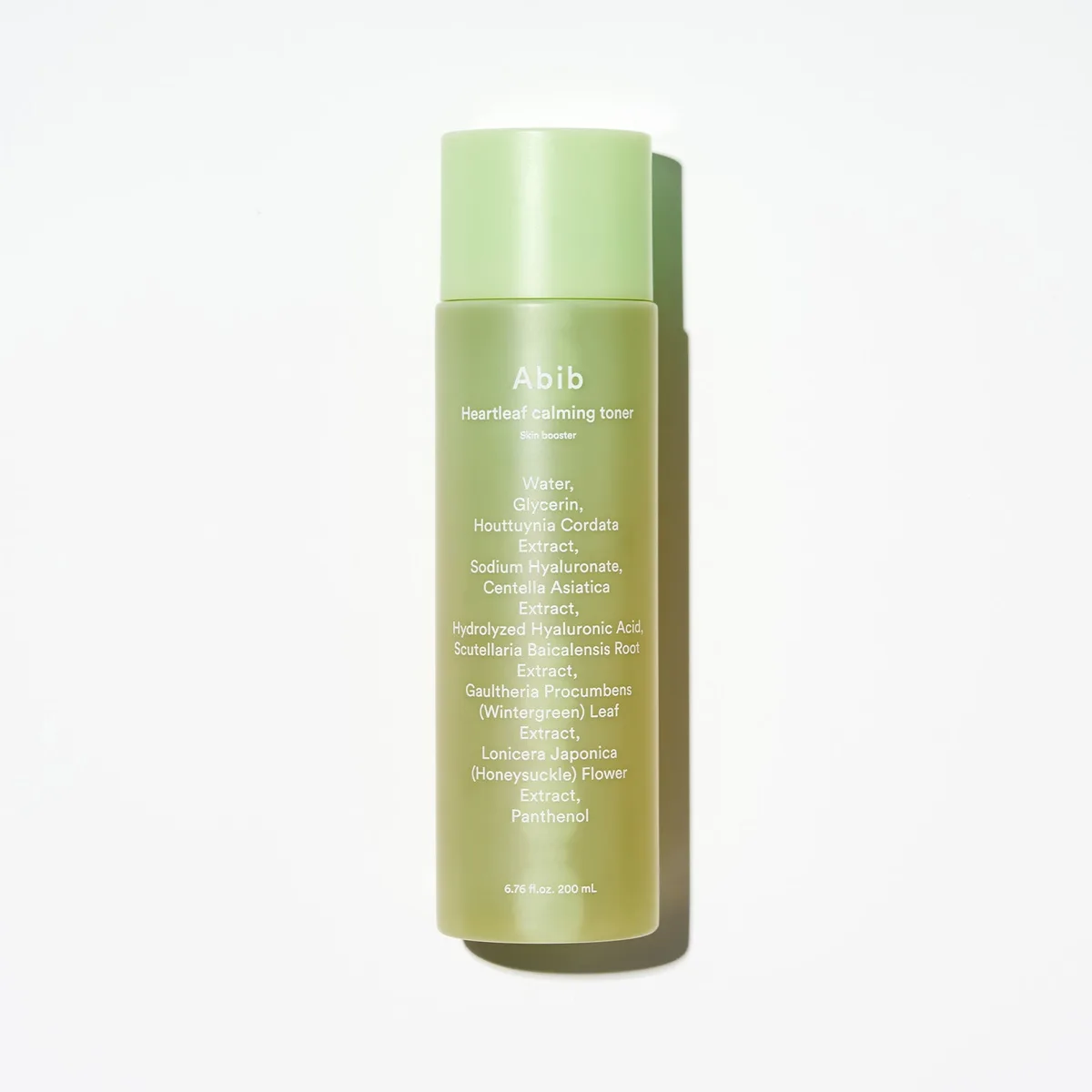
Most niacinamide toners run a 2–3% supportive dose; this one discloses 3.7–5.5%, which is solidly in the treatment-active band for a toner format. Built on a calendula-water base rather than plain water, with a coherent soothing-and-clarifying cast (allantoin, adenosine, coptis japonica, oat, multiple calendula forms), the toner combines treatment-level niacinamide with a thoughtful botanical supporting cast in one step. Vegan and fungal-acne safe, both rare at this price-and-formulation tier.
A treatment-dose niacinamide toner at 3.7–5.5% on a calendula-water base, with allantoin, adenosine, coptis japonica's berberine for mild clarifying, and a multi-botanical soothing cast. Vegan, fungal-acne safe, and fairly priced for the formulation depth. The bergamot oil pulls some points on the irritation-risk side, but for the right skin it is one of the most underrated K-beauty toners at this tier.
Avoidfor SensitivityIn your profileYou chose · This formula carries fragrance — the kind of thing reactive skin flags first.Not yet assessedCarries a triggerNo reviews collected yet
The case for it
Calendula Officinalis Flower Water has no evidence row yet for this concern — it is in the research queue.
The formula carries a known trigger for this concern, which decides the verdict before any efficacy question.
What would change this: Removing the trigger named above would let the actives be judged on their own.
Same rule for everyone. “Avoid” is the verdict on 1,909 of 45,024 concern verdicts across the catalog; rule F1 decided 605 of them.
Unchanged since September 5, 2026, engine 5.1.1.
Avoidfor Compromised Skin BarrierIn your profileYou chose · This formula carries fragrance — a known trigger for compromised skin barrier — so it is not a fit however good its actives are.Moderate evidenceCarries a triggerNo reviews collected yet
The case for it
Niacinamide has trial-supported standing for this concern.
It is present at an effective concentration, declared or high in the ingredient list.
The formula carries a known trigger for this concern, which decides the verdict before any efficacy question.
What would change this: Removing the trigger named above would let the actives be judged on their own.
Same rule for everyone. “Avoid” is the verdict on 1,909 of 45,024 concern verdicts across the catalog; rule R1 decided 1,304 of them.
Unchanged since September 5, 2026, engine 5.1.1.
R1 — Safety outranks praise (MASTER-PLAN §1.7). A condition-weighted trigger (multiplier ≥ 2 in condition-fit-matrix) decides the verdict before any efficacy question. · the full register
Carrying active
Niacinamide
Standing
supported — its mechanism is established
Form
adequate (declared 3.7%) — studied range 2%, from the trials on the row; needs leave-on contact; judge it after ~8 weeks
Tolerability
harsh — fragrance load
Row checked
against its sources on July 17, 2026 (evidence table ev-2026.09-r228)
Avoidfor Post-ProcedureIn your profileYou chose · This formula carries fragrance — a known trigger for post procedure — so it is not a fit however good its actives are.Limited evidenceCarries a triggerNo reviews collected yet
The case for it
Allantoin & Adenosine has early or mechanistic evidence for this concern, not trial-backed standing.
It is plausibly present at a working level, though the concentration is not declared.
The formula carries a known trigger for this concern, which decides the verdict before any efficacy question.
Cautions: a photosensitising active — use sun protection.
What would change this: Removing the trigger named above would let the actives be judged on their own.
Same rule for everyone. “Avoid” is the verdict on 1,909 of 45,024 concern verdicts across the catalog; rule R1 decided 1,304 of them.
Unchanged since September 5, 2026, engine 5.1.1.
R1 — Safety outranks praise (MASTER-PLAN §1.7). A condition-weighted trigger (multiplier ≥ 2 in condition-fit-matrix) decides the verdict before any efficacy question. · the full register
Carrying active
Allantoin & Adenosine
Standing
plausible — trials support it
Form
plausible — studied range 0.5–2%, from the OTC monograph or label; needs leave-on contact
Tolerability
harsh — fragrance load
Row checked
against its sources on July 17, 2026 (evidence table ev-2026.09-r228)
Unprovenfor AcneIn your profileYou chose · Niacinamide has early or mechanistic evidence for acne — a reasonable bet, not a recommendation; the other actives here are not yet assessed for it.Moderate evidenceStandard tolerabilityNo reviews collected yet
The case for it
Niacinamide has early or mechanistic evidence for this concern, not trial-backed standing.
It is present below the studied range.
The formula carries no trigger this concern is sensitive to, with the cautions noted.
Cautions: fragrance.
What would change this: A concentration inside the studied range would raise this a step.
Same rule for everyone. “Unproven” is the verdict on 1,111 of 45,024 concern verdicts across the catalog; rule R9 decided 1,111 of them.
Unchanged since September 5, 2026, engine 5.1.1.
R9 — Plausible-tier actives alone do not earn a recommendation, and 'not for this' would overstate the case against them. 'Unproven' with the evidence dots lets the reader judge the bet (added 0.2.0 after the first shadow run put a 10% niacinamide serum at 'not for this' for hyperpigmentation). 0.5.0: the closing clause reads the other heroes — "nothing else here addresses it" only when every other active has a researched 'none' row; "not yet assessed" when that is the truth. Rows whose dots read moderate or better now reach R9p first. · the full register
Carrying active
Niacinamide
Standing
plausible — trials support it
Form
sub threshold (declared 3.7%) — studied range 4–5%, from the OTC monograph or label; needs leave-on contact; judge it after ~8 weeks
Tolerability
standard — fragrance load
Row checked
against its sources on July 17, 2026 (evidence table ev-2026.09-r228)
Also listed for Dullness and Blackheads — the actives here (Calendula Extract, Niacinamide, Allantoin, Botanical Extracts) are in our research queue for those concerns; there is no verdict until their evidence rows are written. That is a gap in our table, not a mark against the product.
Does the jobDoes what a toner is for: adds something real, not alcohol-driven. Not measured from the label: restores skin pH, plays well with what follows.
A verdict is DermApproved’s assessment of how well a product’s ingredients fit a concern — never a claim about what the product treats. Evidence dots and collected reviews sit beside it and are never blended in.
Rules 0.5.1 · evidence table ev-2026.09-r228 · how we decide
Assessment
Pros & Cons
Pros
✓ Treatment-dose niacinamide at disclosed 3.7–5.5%
✓ Calendula water replaces standard water solvent
✓ Multi-botanical soothing cast (calendula, oat, water lily, coptis)
✓ Vegan and fungal-acne safe formulation
✓ Pairs well with retinoids and acids to buffer irritation
✓ Strong value at $21 for 150ml — about $7/month
✓ Eight-year formulation stability across cumulative review base
Cons
✗ Contains bergamot oil — phototoxicity concern for daytime use
✗ Distinctive herbal-citrus scent is divisive for fragrance-averse users
✗ Brightening effect is gradual rather than dramatic
✗ Niacinamide-sensitive users may experience brief flushing on first use
✗ Clear glass bottle requires cool, dark storage
Review
Full Review
Niacinamide is one of the most well-validated cosmetic actives in dermatology, with controlled trial evidence for barrier function, reduced transepidermal water loss, gentle tone-evening, sebum regulation, and even subtle pore minimisation. The relevant variable across all of those mechanisms is dose. Below 2% the effects are essentially undetectable; 2–5% is where most clinical evidence sits; 5–10% delivers stronger effects but increases irritation risk for sensitive users. The toner category has been quietly disappointing on this dimension — most 'niacinamide toners' on the K-beauty shelf run a 2–3% supportive dose and rely on the soothing botanical cast to deliver the felt effect. The Nacific Fresh Herb Origin Toner is one of the more honest entries in the category: it discloses a 3.7–5.5% niacinamide dose, which puts it firmly in the treatment-active band rather than the cosmetic-claim one. That alone justifies pausing on it. Format anxiety is misplaced here, incidentally — niacinamide is small and thoroughly water-soluble, so it absorbs from a watery toner just as readily as from a serum. Dose is the variable; the bottle it arrives in is not.
What sits around the niacinamide is the second piece of the case. Calendula officinalis flower water replaces the standard water solvent — the formulation move that makes this a calendula toner with niacinamide rather than a niacinamide toner with some calendula. Calendula has a well-documented soothing and mild wound-healing profile; allantoin (eighth on the INCI) contributes additional skin-protectant and gentle keratolytic activity; adenosine — Korea's MFDS-recognised wrinkle-care active — adds the only formal anti-ageing claim the formula can make at a low supportive dose. Coptis japonica root extract, with its berberine content, brings a mild antimicrobial angle that supports use on blemish-prone skin. Oat kernel extract — the active behind colloidal oatmeal in eczema care — contributes meaningful anti-inflammatory work, and water lily (nymphaea alba) rounds out the multi-botanical soothing approach. Around them, the housekeeping is lean: butylene glycol and glycerin carry the water phase, betaine adds an osmolyte humectant that keeps the finish cushioned rather than squeaky, C12-14 pareth-12 solubilises the aromatic oil so the liquid stays clear, xanthan gum gives it the faintest body, and 1,2-hexanediol plus ethylhexylglycerin handle preservation without parabens. The vegan and fungal-acne-safe formulation is the rare bonus on top: the absence of esters, polysorbates, fermented ingredients, and most oil-based components makes the toner suitable for malassezia-prone users, a group that usually has to give up on treatment toners entirely.
In use, the toner is thin and watery with a faint slip from the glycerin and betaine, sinks in within seconds, and leaves a faintly cushioned post-application feel rather than the immediate-evaporation finish of pure-water toners. The herbal-citrus scent is immediate, dominated by the bergamot oil and the calendula water base; it is pleasant but clearly perceptible and persists for a few minutes after application. Technique is worth a sentence, because the pour-top glass bottle invites the wrong one: two or three drops pressed in with the palms puts the whole dose on your face, while a soaked cotton pad donates a meaningful fraction of every application to the cotton. Most users notice quieter baseline redness within the first week of consistent twice-daily use, and the cumulative work on tone, surface smoothness, and barrier resilience from the niacinamide-and-botanical combination develops across four to eight weeks. Niacinamide-sensitive users may experience brief flushing on first use; this typically resolves within two to three applications and is not a sign of formulation failure but of the active doing its job.
The single limitation that pulls the toner's score down meaningfully is the bergamot oil. Bergamot is a citrus essential oil with documented phototoxicity potential — the same furanocoumarin chemistry that requires citrus peel oils to be used with SPF or restricted to nighttime application. For a daytime toner this is a significant consideration: users in high-sun climates, with photo-sensitised skin, or with rosacea will be better served by a fragrance-free niacinamide toner alternative. For users committed to broad-spectrum SPF 30+ as part of every morning routine, the bergamot does not represent a meaningful additional risk; for users who skip sunscreen, it does. The other minor limitations are the divisive herbal-citrus scent (a feature for some, a disqualifier for others), the clear glass packaging that calls for cool, dark storage to protect the photosensitive oils, and the gradual rather than dramatic brightening effect — this is treatment-active maintenance, not a one-week glow transformation. Those trade-offs show up almost verbatim in the roughly 1,900 reviews on record: the praise clusters around how instantly it absorbs and how well it buffers a retinoid or a BHA night, the complaints around the scent and the citrus oil.
Value is one of the toner's clearer strengths. Twenty-one dollars for 150ml works out to about seven dollars a month at twice-daily use, which is solidly mid-range for a treatment-dose niacinamide toner with the supporting cast described above. The toner pairs naturally with the Nacific Fresh Herb Origin Serum if you want the matched-set routine, but it also stands on its own as the active step of a calming, barrier-supportive toner-and-moisturiser routine — press it into damp skin, give it half a minute, and build serums and cream on top. Almost eight years of formulation stability means the cumulative reviews are based on essentially the same product across all of them, a consistency that is increasingly rare in K-beauty as brands chase reformulations every couple of years. For users who want treatment-dose niacinamide in a coherent botanical-soothing formulation, this is one of the more underrated K-beauty toners on the shelf — provided the bergamot and the scent aren't dealbreakers for your skin and your routine.
Formula
Key Ingredients
The hero actives that drive this product's performance.
Calendula water replaces the standard water solvent — the formulation move that makes this a calendula toner with niacinamide rather than a niacinamide toner with some calendula. Calendula has a long traditional and growing modern evidence base for skin-soothing and mild wound-healing activity, and using the floral water as the base means that soothing direction carries through every drop of the toner rather than being a label flourish.
Sits fifth on the INCI with disclosed dosing in the 3.7–5.5% range — putting it solidly in the treatment-level band for a toner format. In this formulation niacinamide does two complementary jobs: barrier support (via stimulating endogenous ceramide synthesis) and gentle tone-evening, both of which pair naturally with the calendula water base and the calming supporting cast.
Established mechanismfor Compromised Skin Barrier · established mechanism
A complementary soothing-and-anti-ageing pair. Allantoin contributes gentle keratolytic and skin-protectant activity that supports surface smoothness, while adenosine (Korea's MFDS-recognised wrinkle-care active) adds a low-dose anti-ageing claim. Together they extend the toner's calming-and-tone-evening positioning into the smoothing and supportive-firmness territory without adding any irritation overhead.
Coptis japonica is rich in berberine, an alkaloid with established antimicrobial activity. Its inclusion here gives the toner a mild clarifying angle on top of the soothing-and-tone-evening core, supporting use for blemish-prone skin where surface bacterial load is part of the picture.
Multiple complementary soothing botanicals layered onto the calendula-water base. Oat extract carries well-established anti-inflammatory and anti-itch evidence (it is the active behind colloidal oatmeal used in eczema care), calendula extract reinforces the foundational soothing story, and water lily (nymphaea alba) adds traditional anti-irritant activity. The stack approach delivers calming through several botanical pathways rather than relying on calendula alone.
Not yet assessed
Ingredient standings describe the active at treatment-level doses and
vehicles; this product's own condition grades weigh its actual formula.
Press a few drops into damp skin straight after cleansing — palms over the face rather than a soaked cotton pad to keep the calendula-water base on your skin rather than the pad. Follow with any serums and your moisturiser. Note the bergamot oil content — apply at night during periods of strong sun exposure to reduce phototoxicity risk, or always layer broad-spectrum SPF 30+ in the morning when used in AM routines.
Results Timeline
Skin feels calmer and more cushioned from the first use, and reactive redness reads quieter within the first week. The cumulative work on tone, surface smoothness, and barrier resilience from the niacinamide and calendula combination typically develops across four to eight weeks of consistent twice-daily use.
Pairs Well With
centella serumsvitamin C serumsceramide moisturizersNacific Fresh Herb Origin Serumretinoids
Niacinamide carries one of the most robust evidence bases of any cosmetic active. Controlled trials — including work published in the British Journal of Dermatology and the Journal of Cosmetic Dermatology — support its activity at 2–5% topical concentration for barrier function via stimulation of de novo ceramide synthesis in the stratum corneum, reduction in transepidermal water loss, gentle tone-evening through inhibition of melanosome transfer, and modest sebum reduction. The disclosed 3.7–5.5% dose in this toner sits at the upper end of the well-evidenced range, and niacinamide's water-solubility means it absorbs effectively from a watery toner formulation with no special vehicle required.
Calendula officinalis has substantial dermatological literature for skin-soothing and mild wound-healing activity, with controlled trials supporting its use in radiation dermatitis, post-procedure recovery, and gentle skin conditions. The flower water (the diluted aqueous extract) is a milder form that preserves the soothing direction while providing the formula's solvent base. Allantoin has well-established evidence as a skin-protectant and gentle keratolytic. Adenosine has Korean MFDS recognition as a wrinkle-care active with controlled trial support. Coptis japonica root extract contains berberine, an alkaloid with documented antimicrobial activity in multiple in-vitro and clinical studies. Oat kernel extract — specifically the colloidal-oatmeal-style extract — has substantial human evidence for anti-inflammatory and anti-itch activity, and is included in FDA monographs for skin-protectant claims.
The one component requiring dermatological attention is the bergamot fruit oil (citrus aurantium bergamia). Bergamot oil contains bergapten and other furanocoumarins that can cause phytophotodermatitis when applied to skin and exposed to UV. The clinical literature is clear that cosmetic products containing significant bergamot oil require either nighttime use or unfailing daytime sun protection. Many cosmetic-grade bergamot oils are bergapten-reduced (FCF — furanocoumarin-free), but this is not disclosed for the Nacific formulation; the conservative interpretation is to treat the bergamot here as requiring standard photosensitivity precautions. Overall, the formulation is mechanistically sound, the niacinamide dose is at clinically meaningful levels, the supporting cast is well-evidenced, and the bergamot is the formulation's one clear safety consideration.
Dermatologist Perspective
Dermatologists generally view niacinamide-led toners at clinically meaningful doses as a valuable addition to routines for blemish-prone, post-acne, or barrier-compromised skin, particularly when supported by well-tolerated soothing botanicals as this formula is. A 3.7–5.5% niacinamide dose in a toner format delivers an effect approaching that of a dedicated niacinamide serum, which is unusual for the category. Clinicians often recommend such toners alongside (or as a gentler alternative to) more aggressive treatment actives. The calendula and oat extract content reinforces the toner's suitability for sensitive or inflamed skin, and the vegan and fungal-acne-safe formulation broadens its accessibility. The bergamot oil is the one consideration clinicians would flag — for patients with rosacea, photo-sensitivity, or routine non-adherence to sunscreen, a fragrance-free niacinamide toner is the more conservative recommendation. For patients with healthy skin who use broad-spectrum SPF 30+ consistently, the toner is a clinically reasonable, well-formulated daily-use product with a strong cumulative track record.
Guidance
Usage & Recommendations
How to Use
Use morning and evening immediately after cleansing, while the skin is still slightly damp. Pour two to three drops into the palms — not onto a cotton pad, which absorbs a meaningful fraction of every dose — and press the toner gently across the face and neck. Allow about thirty seconds for it to settle before layering serums, treatments, and moisturiser on top. In the morning, always follow with a broad-spectrum SPF 30+ sunscreen — the bergamot oil in the formula can sensitise skin to UV exposure, and unprotected daytime use is not recommended. For users in high-UV climates or with concerns about phototoxicity, restricting the toner to nighttime application is the safer compromise. Store the bottle in a cool, dark place to protect the photosensitive components. Once opened, use within twelve months per the PAO marking.
Value Assessment
At twenty-one dollars for 150ml, this is one of the better-value treatment-dose niacinamide toners in K-beauty. A bottle realistically lasts two and a half to three months at twice-daily face use, putting the cost-per-month around seven dollars — strong value for a toner carrying treatment-level niacinamide plus a thoughtful multi-botanical supporting cast. Many K-beauty niacinamide toners at this price tier run only a 2–3% supportive dose; the higher 3.7–5.5% disclosed here is what genuinely earns the price. Only the 150ml size is sold. The price is appropriately mid-range — not budget like a CeraVe or a basic Anua toner, but well below premium European treatment toners. For shoppers who want a treatment-dose niacinamide toner in a coherent botanical formulation, the value reads as fair-to-strong. For shoppers focused on pure cost-per-millilitre on a basic niacinamide toner, cheaper supporting-dose options exist.
Who Should Buy
Combination, oily, and normal skin looking for a treatment-dose niacinamide step in a toner format will find one of the better options on the K-beauty shelf — particularly users who appreciate a botanical formulation philosophy and who already follow consistent daily sunscreen habits. The vegan, fungal-acne-safe formula broadens the audience further, making the toner a strong fit for malassezia-prone users who often struggle to find treatment-active toners that fit their constraints.
Who Should Skip
Anyone with active rosacea, fragrance sensitivity, photo-sensitive skin, or who routinely skips sunscreen should look at a fragrance-free niacinamide toner alternative — the bergamot oil here is a real consideration for those skin types and routine habits. Niacinamide-sensitive users with severe flushing reactions should test the toner cautiously or skip it; while brief flushing on first use is normal, persistent reactions are a sign to step down to a lower-dose alternative.
A thin, watery toner with a faint slip from the glycerin and betaine — sinks in immediately, leaving no residue and a faintly cushioned post-application feel
Scent
A light, fresh herbal-citrus scent dominated by bergamot and the calendula-water base; pleasant but clearly perceptible
Packaging
150ml clear glass bottle with a screw-cap dispenser; pour rather than pump — pour into palms or onto a cotton pad
Finish
lightweightfast-absorbinginvisible
What to Expect on First Use
On first application the toner feels cooling, sinks in within seconds, and leaves a faintly cushioned finish. The herbal-citrus scent is immediate and persistent for a few minutes. Most users notice quieter baseline redness within the first week of consistent use; niacinamide-sensitive users may experience brief flushing on first use, which typically resolves within two to three applications.
Nacific launched in 2014 with a 'nature pacific' botanical philosophy. The Fresh Herb Origin Toner arrived around 2017 alongside the more famous serum, intended to provide a coherent toner-and-serum routine pair built around the brand's herbal-medicine framing. The toner has stayed in its core formulation since launch and has built strong cumulative review presence on YesStyle and Stylevana over the years, with users frequently citing it as their long-term toner staple rather than a try-and-discard product.
About Nacific Established Brand (5–20 years)
Nacific is a Korean indie brand founded in 2014 with a 'nature pacific' botanical-heavy formulation philosophy. The Fresh Herb Origin Toner is the toner counterpart to the more famous serum in the same line, sharing the herbal-medicine framing and launched around the same window. Together they form the brand's most-recognised international product family.
Brand founded: 2014 · Product launched: 2017
Myth vs. Reality
Common Myths
Myth
Niacinamide is best applied as a serum — a toner can't deliver enough.
Reality
Niacinamide is highly water-soluble and easily absorbs from watery formulations like toners, with no special vehicle required for penetration. The relevant factor is dose, not format. This toner's disclosed 3.7–5.5% niacinamide is in the same treatment-active range as a dedicated niacinamide serum, and applying it from a toner is mechanistically equivalent.
Myth
Botanical extracts in a toner are just for marketing — only the named actives matter.
Reality
Some botanicals have measurable activity that contributes to a toner's overall effect — calendula has documented soothing activity, oat extract is the active behind colloidal oatmeal in eczema care, and coptis japonica's berberine has established antimicrobial properties. Treating them as marketing-only ignores the supporting roles they play; treating them as substitutes for the named actives overstates them. Both views miss the point.
FAQ
Frequently Asked Questions
What is the niacinamide percentage in the Nacific Fresh Herb Origin Toner?
The toner is formulated with niacinamide in the 3.7–5.5% range, which is solidly in the treatment-active band — meaningfully higher than the typical 2–3% supportive dose found in most niacinamide toners. That dose delivers measurable barrier support, gentle tone-evening, and reduced transepidermal water loss, comparable to a dedicated niacinamide serum.
How is this toner different from a niacinamide serum?
Mechanistically, it is not very different. Niacinamide is highly water-soluble and absorbs easily from watery formulations, so a 3.7–5.5% toner delivers a similar niacinamide effect to a niacinamide serum at the same percentage. The difference is in format and supporting cast — this toner pairs the niacinamide with a calendula-water base, allantoin, adenosine, and a multi-botanical soothing layer, while a dedicated serum might be more concentrated on a single active.
Can I use the Fresh Herb Origin Toner during the daytime?
Yes, but with sunscreen as a non-negotiable follow-up. The formula contains bergamot oil, which is a citrus essential oil with phototoxicity potential. A broad-spectrum SPF 30+ on top in the morning is essential; for users concerned about phototoxicity or in high-UV climates, restricting the toner to evening use is the safer compromise. The actives themselves do not require a specific time of day.
Is the Nacific Fresh Herb Origin Toner fragrance-free?
No — the formula contains bergamot fruit oil and a calendula-water base that together produce a distinct herbal-citrus scent. The scent is light but clearly perceptible and divisive among users. Anyone with fragrance sensitivity, rosacea, or other reactive skin should look at a strictly fragrance-free niacinamide toner alternative.
Is this Nacific toner vegan?
Yes. Unlike the Nacific Fresh Herb Origin Serum (which contains pearl powder), the toner is fully vegan and cruelty-free. It is one of the more interesting vegan niacinamide toners at this dose and price.
Will the Nacific Fresh Herb Origin Toner help with acne?
It can support acne-prone skin in a few ways — niacinamide at treatment dose reduces sebum and inflammation, the calendula and oat soothe inflamed lesions, and the coptis japonica adds a mild antimicrobial angle via berberine. It is not a salicylic acid or benzoyl peroxide treatment, but it works well as a calming, barrier-supportive toner layered into an acne routine alongside a dedicated treatment active.
Should I apply this toner with a cotton pad or with my hands?
Hands give you better mileage out of the bottle — cotton pads absorb a meaningful fraction of every dose. Pour two or three drops into damp palms straight after cleansing, then press into the face and neck. Use a saturated cotton pad only if you want a light swipe-style toner step for clarifying purposes or to remove any final cleanser residue.
Reviews
What Reviewers Tend to Say
Recurring themes our editors read across retailer reviews of this product — summaries in our words, not quotations, and not a substitute for your own patch test.
Common Praise
Lightweight watery toner absorbs instantly
Niacinamide dose is treatment-level for a toner format
Calendula-water base feels genuinely soothing
Vegan, fungal-acne safe formula is unusual at this price
Pairs reliably with retinoids and BHAs to dial down irritation
Common Complaints
Contains bergamot oil — phototoxicity concern for daytime use
Distinctive herbal-citrus scent is divisive
Brightening claim is gradual rather than headline-worthy
Picking one skin state and selling through hospital dermatology departments is a genuinely smart strategy. Whether the house botanical earns its billing is a separate question, and the answer is not the one either side wants.
Five brands that own the feed, judged on their ingredient lists rather than their view counts — including the one active all five suddenly added at once, and what that tells you.
Cutting a beard hair takes about a twentieth of a newton. You press with two and stretch your skin by a fifth — which is why almost every shaving problem is a technique problem wearing a hardware costume.
Aug 28, 2026· 10 min
Questions people ask about sensitive skin
Verified answers from our questions library — the nuance a product page cannot carry.
Products, answers, therapy guides, tools and articles in one search. Brand names,
slang and abbreviations all work — accutane finds isotretinoin, bacne finds truncal acne.