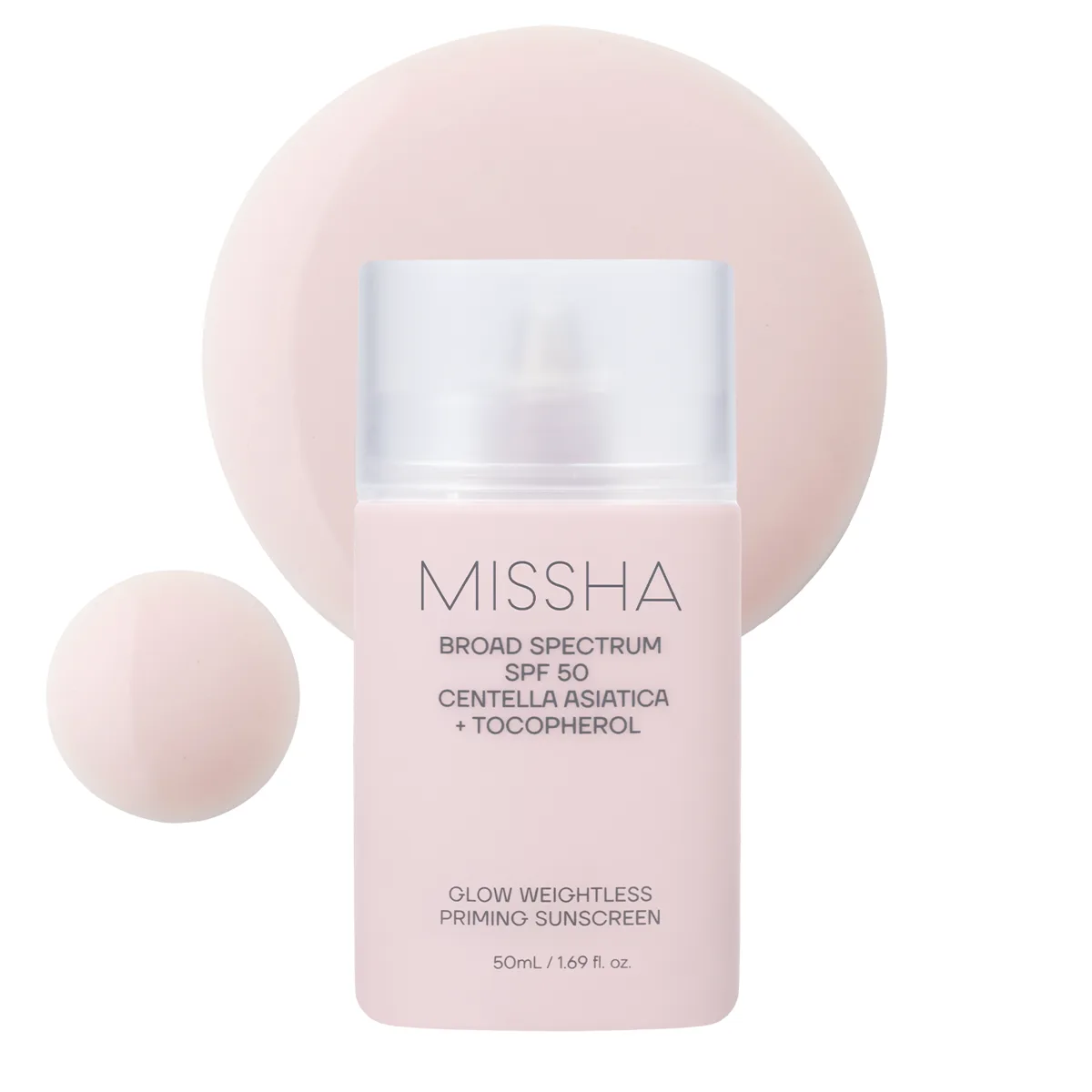
It is a proper hybrid, nearly fifteen percent zinc oxide plus two organic UVB filters, engineered in a water-in-silicone base with sebum-absorbing silica and acrylic light-scattering spheres so that the mineral load reads as blur rather than chalk. Most mattifying sunscreens are all-chemical fluids; most zinc sunscreens are not this dry-touch. Missha built it for the American oily-skin buyer and filed it as an OTC drug from day one.
For oily, pore-conscious skin that wants real broad-spectrum protection under makeup, this is one of the more intelligently built hybrid sunscreens to reach the US this year: fifteen percent zinc that somehow wears like a primer. Alcohol and fragrance keep it off the list for dry or reactive faces, and deeper skin tones should test the cast first.
This sunscreen reached the US in June 2026 and the buyer record behind it is a few dozen early reviews plus creator wear tests, not years of daily use. What can be assessed with confidence is the declared filter system on its FDA label and the behaviour of the base; how it holds up across a full summer of real-world wear is still being learned.
Verdicts
How well it fits each concern
Verdict by concern tap a concern for the case
Full protectionfor Sun DamageIn your profileYou chose · Broad-spectrum SPF 50 with zinc oxide, titanium dioxide: the protection sun damage calls for.Moderate evidenceStandard tolerabilityNo reviews collected yet
The case for it
Zinc Oxide is a first-line active — approved, monograph-listed or named in current guidelines — for this concern.
It is present at an effective concentration, declared or high in the ingredient list.
The formula carries no trigger this concern is sensitive to, with the cautions noted.
Same rule for everyone. “Full protection” is the verdict on 2,288 of 45,024 concern verdicts across the catalog; rule P1 decided 2,232 of them.
As of September 25, 2026, engine 5.1.1.
P1 — Photoprotection standing is regulatory (M020 / Annex VI filters; 21 CFR 201.327 attaches the early-skin-aging claim to tested broad-spectrum SPF 15+). SPF 30 is the AAD daily-use bar. · the full register
Supporting rolefor AcneIn your profileYou chose · Nothing here targets acne directly; photoprotection for post-inflammatory marks is the recognised companion to treating it, and this cream does that without known triggers.Not yet assessedStandard tolerabilityNo reviews collected yet
The case for it
Zinc Oxide has no evidence row yet for this concern — it is in the research queue.
The formula carries no trigger this concern is sensitive to, with the cautions noted.
Cautions: fragrance; fungal-acne triggers.
What would change this: A researched evidence row for the lead active would replace this with a verdict.
Same rule for everyone. “Supporting role” is the verdict on 8,197 of 45,024 concern verdicts across the catalog; rule R8 decided 4,250 of them.
As of September 25, 2026, engine 5.1.1.
R8 — The category's job (barrier care, humectant hydration, gentle cleansing, photoprotection) is the documented supportive role for this concern. This is the honest verdict for a moisturizer on an acne page. · the full register
Also listed for Excess Oiliness and Large Pores — the actives here (Zinc Oxide, Homosalate, Octisalate, Silica) are in our research queue for those concerns; there is no verdict until their evidence rows are written. That is a gap in our table, not a mark against the product.
Does the jobDoes what a sunscreen is for: UVA coverage, holds up in sunlight. Not measured from the label: pleasant enough to actually use.
A verdict is DermApproved’s assessment of how well a product’s ingredients fit a concern — never a claim about what the product treats. Evidence dots and collected reviews sit beside it and are never blended in.
Rules 0.5.1 · evidence table ev-2026.09-r228 · how we decide
Assessment
Pros & Cons
Pros
✓ Nearly fifteen percent zinc oxide gives real UVA cover in a hybrid
✓ Silica and acrylic microspheres blur pores and absorb sebum for hours
✓ Sets to a velvet-matte finish that replaces a silicone primer
✓ Spreads thin and weightless despite the heavy mineral load
✓ Oil-free base tested on acne-prone skin, per the brand
✓ Filed with the FDA as an OTC drug, so the SPF 50 claim is US-legal
✓ Brand store discounts bring it into the low twenties routinely
Cons
✗ Alcohol is the third ingredient and can sting or dry
✗ Fragrance in a product marketed to acne-prone skin is unnecessary
✗ Can cast grey on deeper skin tones at the full dose
✗ Pills over moisturiser that has not fully set
✗ Powdery matte finish reads flat on normal-to-dry skin
✗ Only a few months of buyer feedback so far
Review
Full Review
For years the great irony of Missha in America was that the brand's best-loved category, sun care, was the one it could not properly sell here. Korean sunscreens use filters the FDA has never cleared, so US shoppers bought them grey-market and the official store quietly stocked older octinoxate formulas. In 2026 Missha finally did the unglamorous thing: it reformulated from scratch to the American monograph, filed Drug Facts labels with the FDA in February, and launched three Glow sunscreens in June. This priming version is the one built for oily skin, and it is the most interesting of the three because it takes a constraint, the short list of filters the FDA allows, and turns it into a design brief.
The brief was: make a mineral-forward sunscreen that oily skin will actually wear under makeup. The actives tell you how they solved it. Zinc oxide at 14.7 percent does the heavy UVA lifting and brings its own mattifying, slightly opaque quality; titanium dioxide at 1.79 percent is a rounding contribution; and then homosalate at 8.5 and octisalate at 4.5 percent, two of the old reliable organic UVB filters, push the SPF to 50 without needing another ten percent of chalk. Hybrids like this are common in Australia and Europe and rarer in Korean lines, which tend to go all-organic for elegance. Here the compromise is deliberate: enough zinc to give real broad-spectrum cover and the blur finish, enough organic filter to keep it thin.
The inactive list is where the primer idea lives. Water, cyclopentasiloxane, alcohol and dimethicone lead, which makes this a water-in-silicone emulsion that flashes off its alcohol and leaves a silicone film. Into that film Missha loaded silica, which drinks sebum, and methyl methacrylate crosspolymer, acrylic microspheres that scatter light across pores. That pairing is the soft blur powder technology the carton talks about and it is a legitimate cosmetic trick, the same one in most silicone pore primers. Two iron oxides right at the end warm the white base a shade so the zinc reads as a soft focus rather than a ghost. Centella extract and chamomile flower water are the soothing garnish, present at levels that make the label nicer rather than the skin calmer.
On the face it delivers on the weightless claim to a surprising degree. It pumps out as a pale, slippery cream with almost no drag, spreads thin, gives a sharp little breath of alcohol, and sets inside a minute to a velvety, powder-dry touch. Pores look blurred, shine stays down through a warm afternoon, and foundation applied over it with a damp sponge grips cleanly with no separate primer. For a formula carrying nearly fifteen percent zinc that is unusual, and it is the reason to buy this. On light and medium skin at the full dose there is a faint brightening that reads as blur; on deeper tones, and we want to be direct about this, the cast becomes grey and noticeable, and the iron oxides are not present in anything like the quantity needed to correct it. Test it in daylight before relying on it.
The honest weaknesses come straight from that same formula. Alcohol is the third ingredient, and while it is what makes the texture possible, it also means the sunscreen tugs moisture on drier skin and can sting on an active breakout. Fragrance is mid-list, unnecessary in a product marketed to acne-prone skin, and the single biggest reason a rosacea-prone or barrier-compromised reader should choose something else. Layering is fussy: put it over a moisturiser that has not fully set and the silicone film pills into little rolls, so the routine underneath needs to be gel-light and given a minute. And the matte, powdery set that oily skin loves reads as flat and dry on a normal-to-dry face by lunchtime.
A word on the acne-prone testing claim, since it does a lot of work in the marketing. A clinical non-comedogenic test is real and worth something; it means a panel wore the formula for weeks without a rise in clogged pores. It does not mean no individual will break out, and the oil-free, silica-loaded base is far more the reason this suits breakout-prone skin than the certificate is. Take the claim as a reasonable reassurance rather than a guarantee.
On value, thirty dollars for fifty millilitres, with the brand store discounting it to the low twenties often enough that the sale price is the real one, puts it in the middle of the US market for a Korean-made SPF and below most Western hybrid sunscreens with this much zinc. Because the finish begs to be applied thinly, the temptation is to under-dose, and that is the one habit that would undo the whole exercise: SPF 50 is measured at a quarter teaspoon for the face, and a primer-thin swipe delivers a fraction of it. Used properly the tube lasts five or six weeks, which makes the ongoing cost fair rather than cheap.
Where this lands, then, is as a genuinely good answer to a specific question: what should oily, pore-conscious skin wear under makeup that is a real broad-spectrum sunscreen and not just a tinted primer with SPF 15 for decoration? The zinc dose is serious, the blur technology is clever, the finish is the best part, and the brand has the FDA paperwork to back the number on the bottle. It is a new product with a few months of buyer feedback, so the long-term record is still being written, and it is emphatically not for dry, reactive or deeper-toned faces. For its intended customer it is one of the better arrivals of the year.
Formula
Key Ingredients
The hero actives that drive this product's performance.
The backbone of the broad-spectrum claim, carrying most of the UVA load in a formula whose only other UVA contributor is a trace of titanium dioxide. At nearly fifteen percent it also gives the cream its soft-focus, mattifying quality, which is the property Missha is selling as primer-like blur.
Regulator-approvedfor Sun Damage · limited certainty
A UVB filter that tops up the SPF number without adding the chalk of more zinc, and in this water-in-silicone base it doubles as a solvent that helps disperse the mineral particles evenly so the cast stays light.
Regulator-approvedfor Sun Damage · limited certainty
The second organic UVB filter, chosen for its low sensitisation rate and its oil-like feel, which keeps a heavily loaded mineral formula spreading like a lotion rather than a paste.
Regulator-approvedfor Sun Damage · limited certainty
The soft-blur powder technology on the carton is these two: porous silica spheres that soak up sebum and acrylic microspheres that scatter light across pores. Together with the zinc oxide they turn a sunscreen into something that behaves like a mattifying primer.
Listed at the tail with chamomile flower water, so it is a soothing accent rather than a treatment dose. It is there to offset the drying pull of the alcohol and silica on a formula aimed at oily, acne-prone skin.
Two iron oxides near the end of the list give the white mineral base a faint warmth so the cast reads as a blur rather than a ghost. At this level they tint the cream rather than the skin and do not reach the concentrations that provide meaningful visible-light protection.
Not yet assessed
Ingredient standings describe the active at treatment-level doses and
vehicles; this product's own condition grades weigh its actual formula.
Let serums and moisturiser set fully before this goes on, since the silicone base can pill over anything still tacky; foundation sits directly on top without a separate primer.
Results Timeline
Sun protection and the pore-blurring, shine-absorbing finish are immediate. Long-term payoff, fewer new sun spots and slower photoageing, accrues over years of consistent daily use rather than weeks.
The protective case for this formula rests on two well-worn facts and one clever combination. The facts: zinc oxide is the broadest single filter the FDA recognises, absorbing across UVB and both UVA bands, and daily sunscreen use has hard outcome data behind it, most famously the Nambour trial in Queensland, whose 2011 follow-up in the Journal of Clinical Oncology reported roughly half the rate of invasive melanoma in adults randomised to daily sunscreen versus discretionary use. The combination: layering homosalate and octisalate, both UVB absorbers, on top of the zinc lets a formula hit SPF 50 with about fifteen percent mineral rather than the twenty-plus that an all-zinc SPF 50 usually needs, and that is the entire reason it can feel this thin.
The base is doing more physics than chemistry. Water-in-silicone emulsions spread the mineral particles in a continuous silicone phase, which reduces clumping and therefore the whiteness of the cast; triethoxycaprylylsilane on the list is the coating that keeps the zinc dispersed. The silica spheres work by capillary action, pulling sebum into their pores as it is produced, and the methyl methacrylate microspheres scatter light diffusely so shadowed pores look shallower. Neither changes the skin; both change how it looks and how the film holds up, which matters because sunscreen that has migrated into oil and slid off is no longer sunscreen.
Two things the label might imply that the evidence does not support. The iron oxides here are pigment-level, not protective-level; the visible-light protection that tinted sunscreens offer melasma-prone skin, reviewed in the Journal of the American Academy of Dermatology in 2021, depends on iron oxide at concentrations of a few percent and a visibly tinted product, which this is not. And homosalate's regulatory story is unfinished: the FDA's 2019 maximal-use trial in JAMA found systemic absorption of several organic filters, including homosalate, above the agency's testing threshold, which is why the FDA asked for more safety data rather than a finding of harm. That request is still open. It is not a reason to skip sunscreen, whose benefit is proven, but it is a reason someone who prefers mineral-only filters would look elsewhere.
The clinical view of a sunscreen starts with whether people will wear it daily at the right dose, and a matte hybrid that oily patients actually like is worth more than a technically superior formula that stays in the drawer. On that measure this is a sensible recommendation for oily and acne-prone skin: an oil-free base, a meaningful zinc fraction, and a finish that discourages the mid-day blotting that removes protection. The reservations are familiar. Alcohol and fragrance are the two ingredients most often advised against in patients with rosacea, seborrhoeic dermatitis or a compromised barrier, and both are here. Patients with melasma or post-inflammatory hyperpigmentation are usually steered toward a visibly tinted iron-oxide sunscreen, which this is not despite the pigments on its list. And dermatologists generally note that the FDA's open questions about systemic absorption of organic filters such as homosalate are a data gap, not a hazard finding, and that stopping sunscreen over them is the worse trade.
Guidance
Usage & Recommendations
How to Use
Every morning as the last skincare step, after moisturiser has fully absorbed, pump out about a quarter teaspoon for face and neck, roughly three pumps, and spread it in sections rather than dotting, since it sets fast. Give it a minute to flash off before foundation, which goes on best with a damp sponge. Reapply every two hours outdoors and after sweating; over makeup, a powder or stick SPF is easier than a second layer of this. Keep it away from the eyes, where the alcohol can sting. Remove at night with a cleansing balm or oil, because the silicone film shrugs off a plain foaming wash.
Value Assessment
Thirty dollars for fifty millilitres is a middle-of-the-road price for a Korean-made facial SPF in the US, and Missha discounts it to around twenty-three on its own site so often that the lower figure is closer to what most buyers pay. For that you get a hybrid with a serious zinc dose, an FDA-filed label and a mattifying finish that would otherwise mean buying a separate primer, which tips the value in its favour for oily skin. The counterweight is that a face-sized dose every morning empties the tube in five or six weeks, so the annual cost is real, and a brand that has been formulating sun care for two decades but only months for this formula cannot yet point to a long track record. Fair value at retail, good value on sale. It comes in one size.
Who Should Buy
Oily and combination skin that wants one product to do sunscreen and primer, with a real broad-spectrum mineral fraction and a matte finish that survives a workday. It suits acne-prone faces that need an oil-free SPF, and anyone who has given up on zinc sunscreens for feeling heavy.
Who Should Skip
Dry, sensitive, rosacea-prone or barrier-compromised skin, which will feel the alcohol and fragrance. Deeper skin tones should test for a grey cast before buying, and anyone with melasma looking for visible-light protection needs a properly tinted sunscreen instead of this blur finish.
Ready to try Missha Glow Weightless Priming Sunscreen SPF50+?
A light, slippery silicone cream that feels almost like a primer fluid, setting quickly to a powdery, velvet-dry touch.
Scent
A brief sharp note of alcohol on application followed by a faint fresh perfume, both gone within a minute.
Packaging
A squat, pale pink plastic pump bottle with a clear cap, labelled in grey with the SPF 50 claim and the US Drug Facts panel on the back.
Finish
mattevelvetynatural
What to Expect on First Use
First application is faster than most mineral-heavy sunscreens expect: it spreads thin, flashes off its alcohol and settles to a soft-focus matte within a minute. There is no adjustment period, but drier patches may look powdery by mid-afternoon in the first week until you learn how much moisturiser it wants underneath.
How Long It Lasts
About five to six weeks at the full face-and-neck dose every morning; it stretches to two months if reapplication happens with a different product.
Missha's original US sunscreen catalogue was a patchwork of Korean formulas that could not legally carry US SPF claims. For its 2026 American relaunch the brand built a three-product Glow line to the FDA monograph, each with a DailyMed listing, and this priming version is the one aimed at the oily-skin, primer-loving customer that Korean sun-care blogs had long asked for.
About Missha Legacy Brand (20+ years)
Missha, founded in Seoul in 2000 by Able C&C, has filed OTC sunscreen labels with the US FDA for more than fifteen years, going back to its early BB creams. The Glow sunscreens are the brand's first US-compliant line built around the 2026 American launch; the actives are monograph-recognised, but the finished products have no published trials of their own.
Brand founded: 2000 · Product launched: 2026
Myth vs. Reality
Common Myths
Myth
The iron oxides mean this doubles as a tinted, visible-light-blocking sunscreen.
Reality
The two iron oxides here are listed near the very end and serve to warm the cream's colour so the zinc reads less white. Visible-light protection for melasma needs iron oxides at percent-level concentrations; this is a blur-finish sunscreen, not a tinted one.
Myth
A sunscreen clinically tested for acne-prone skin cannot cause breakouts.
Reality
Non-comedogenic testing checks a formula on a panel over weeks and shows it does not tend to clog pores; it cannot rule out an individual reaction, and the alcohol and fragrance here can still aggravate an active flare. It reduces the odds, it does not remove them.
FAQ
Frequently Asked Questions
Is the Missha Glow Weightless Priming Sunscreen a mineral or chemical sunscreen?
Both. The Drug Facts panel lists zinc oxide at 14.7 percent and titanium dioxide at 1.79 percent alongside homosalate at 8.5 percent and octisalate at 4.5 percent. The zinc carries the UVA protection and the two organic filters top up UVB, which is how it reaches SPF 50 without the paste-like feel of an all-mineral formula.
Does the Glow Weightless Priming Sunscreen leave a white cast?
On light to medium skin the finish reads as a soft blur rather than a cast, thanks to the silicone base and a hint of iron oxide warmth. On deeper tones the fifteen percent zinc can look grey or ashy, particularly if applied at the full recommended amount, so a wear test in daylight is worth doing before committing.
Can I wear foundation over the Missha priming sunscreen?
That is its whole design. The silica and acrylic microspheres set to a velvet-matte surface that grips foundation the way a silicone primer does, so you can skip a separate primer. Let it settle for a minute first and use a damp sponge rather than a brush to avoid disturbing the film.
Is this Missha sunscreen fragrance-free and alcohol-free?
No on both counts. Alcohol is the third ingredient, which is what gives the weightless flash-off, and fragrance sits mid-list. Both are tolerated by most oily skin but are the reason it is a less comfortable fit for dry, rosacea-prone or barrier-compromised faces.
Is the Missha Glow Weightless Priming Sunscreen safe for acne-prone skin?
It is oil-free, clinically tested for acne-prone skin according to Missha, and the silica actively absorbs sebum, so it is one of the more sensible sunscreens for breakout-prone faces. The caveats are the alcohol and fragrance, which can sting on inflamed lesions, and the ester-based silicones, which some fungal-acne sufferers prefer to avoid.
How much of the Missha priming sunscreen should I apply?
The SPF 50 rating assumes the standard two milligrams per square centimetre, which for a face and neck is roughly a quarter teaspoon or a line the length of two fingers. Applying a thin primer-style layer will look better under makeup but delivers a fraction of the labelled protection.
Reviews
What Reviewers Tend to Say
Recurring themes our editors read across retailer reviews of this product — summaries in our words, not quotations, and not a substitute for your own patch test.
Common Praise
Genuinely weightless for a fifteen percent zinc formula
The K-beauty buzzword slaps a green leaf on half the shelf — but centella is one of the rare botanicals with genuine wound-healing data. The trick is knowing which molecule is doing the job.
IPL is a filtered flashlamp, a true vascular laser is one wavelength aimed at haemoglobin, and the choice between them turns on a distinction almost no consult makes: whether your redness is vessels or a state.
Cutting a beard hair takes about a twentieth of a newton. You press with two and stretch your skin by a fifth — which is why almost every shaving problem is a technique problem wearing a hardware costume.
The dewy-layering marketing reads as a warning if you are congested — and it is hiding the strongest mass-market lineup anywhere for exactly that skin.
Aug 28, 2026· 8 min
Questions people ask about Acne
Verified answers from our questions library — the nuance a product page cannot carry.
Products, answers, therapy guides, tools and articles in one search. Brand names,
slang and abbreviations all work — accutane finds isotretinoin, bacne finds truncal acne.