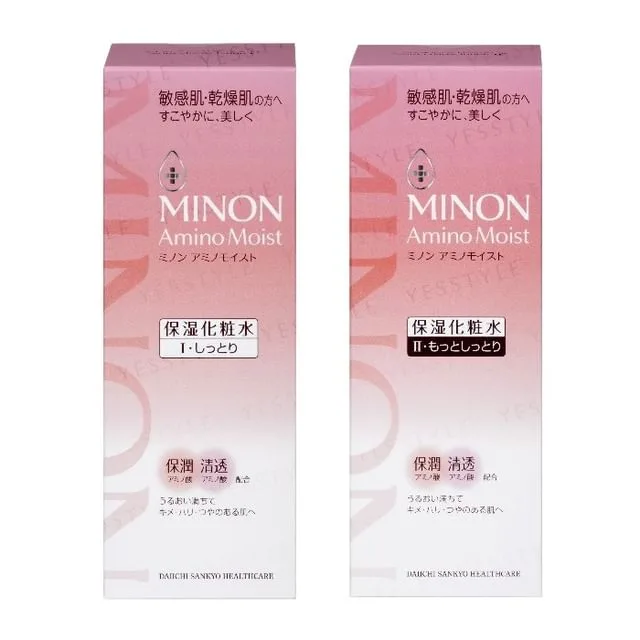
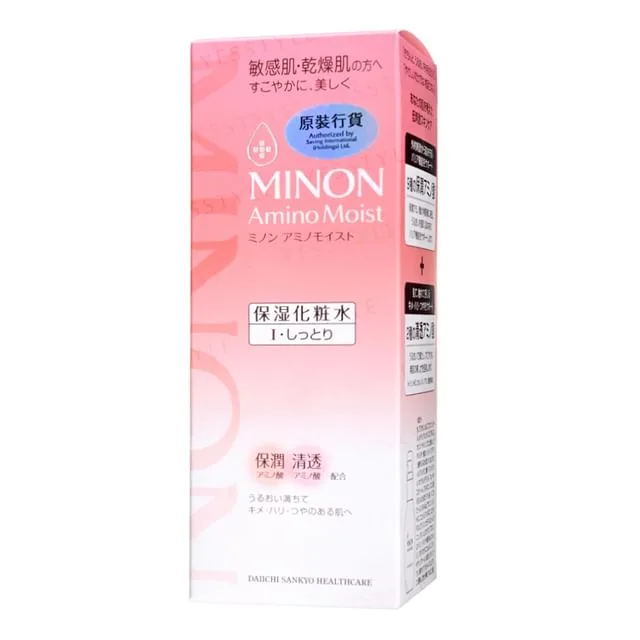
It's the richer-texture variant in Minon's Charge Lotion family — identical formulation philosophy to Lotion I but with xanthan gum added for the viscosity that genuinely dry skin needs. The same comprehensive NMF amino-acid complex, carnosine inclusion, and dual-MW hyaluronic acid system, now in a format that won't leave very dry winter complexions wanting more. The two-version approach (light Lotion I, richer Lotion II) lets users choose based on their actual skin condition rather than settling for a one-size formula.
The richer-texture counterpart to Minon's Charge Lotion I — identical comprehensive NMF amino-acid and dual-MW hyaluronic-acid architecture, now with xanthan gum added for the viscosity that genuinely dry skin needs. The two-version approach lets users match format to skin condition rather than settling for one-size formulation. Premium pharmacy-brand pricing is the only meaningful flag.
Good choicefor DrynessIn your profileYou chose · Glycerin is a reference standard by mechanism for dryness; this liquid carries it high in the ingredient list.Moderate evidenceGentleNo reviews collected yet
The case for it
Glycerin + Methyl Gluceth-20 has trial-supported standing for this concern.
It is present at an effective concentration, declared or high in the ingredient list.
The formula carries none of the triggers this concern is sensitive to.
Same rule for everyone. “Good choice” is the verdict on 9,564 of 45,024 concern verdicts across the catalog; rule R5 decided 9,072 of them.
Unchanged since September 5, 2026, engine 5.1.1.
Good choicefor DehydrationIn your profileYou chose · Glycerin is a reference standard by mechanism for dehydration; this liquid carries it high in the ingredient list.Moderate evidenceGentleNo reviews collected yet
The case for it
Glycerin + Methyl Gluceth-20 has trial-supported standing for this concern.
It is present at an effective concentration, declared or high in the ingredient list.
The formula carries none of the triggers this concern is sensitive to.
Same rule for everyone. “Good choice” is the verdict on 9,564 of 45,024 concern verdicts across the catalog; rule R5 decided 9,072 of them.
Unchanged since September 5, 2026, engine 5.1.1.
R5 — Trial-supported or guideline-supported active, adequately or plausibly dosed. · the full register
Carrying active
Glycerin + Methyl Gluceth-20
Standing
supported — its mechanism is established
Form
adequate — studied range 20%, from the trials on the row; needs leave-on contact; judge it after ~1 weeks
Tolerability
gentle
Row checked
against its sources on July 17, 2026 (evidence table ev-2026.09-r228)
The studies behind the evidence row
USP glycerin monograph / Fluhr et al., glycerol and the skin (review) — glycerin is the reference humectant, drawing and holding water in the stratum corneum — reference work
Good choicefor SensitivityIn your profileYou chose · No fragrance, drying alcohol, declarable allergens or sensitising preservatives in this liquid — the profile sensitive skin looks for.Not yet assessedGentleNo reviews collected yet
The case for it
Glycerin + Methyl Gluceth-20 has no evidence row yet for this concern — it is in the research queue.
The formula carries none of the triggers this concern is sensitive to.
What would change this: A researched evidence row for the lead active would replace this with a verdict.
Same rule for everyone. “Good choice” is the verdict on 1,938 of 45,024 concern verdicts across the catalog; rule F2 decided 1,938 of them.
Unchanged since September 5, 2026, engine 5.1.1.
Also listed for Compromised Skin Barrier and Winter Skin — the actives here (Glycerin, Film Formers & Texture Polymers, Hyaluronic Acid, Carnosine) are in our research queue for those concerns; there is no verdict until their evidence rows are written. That is a gap in our table, not a mark against the product.
Does the jobDoes what a toner is for: not alcohol-driven, adds something real. Not measured from the label: restores skin pH, plays well with what follows.
A verdict is DermApproved’s assessment of how well a product’s ingredients fit a concern — never a claim about what the product treats. Evidence dots and collected reviews sit beside it and are never blended in.
Rules 0.5.1 · evidence table ev-2026.09-r228 · how we decide
Assessment
Pros & Cons
Pros
✓ Richer texture handles genuine dryness and winter use better than Lotion I
✓ Same comprehensive NMF amino-acid complex as Lotion I
✓ Dual-molecular-weight hyaluronic acid for sustained hydration
✓ Genuinely fragrance-free with no masking notes
✓ Carnosine inclusion is unusual at this price point
✓ Vegan formulation across the entire ingredient list
✓ Pairs cleanly with the rest of the Amino Moist routine
Cons
✗ Premium price for a hydrating-lotion format
✗ Too rich for oily summer skin (use Lotion I instead)
✗ Requires longer absorption time when layering
✗ Hada Labo and other simpler toners deliver 70% of the function for 25% of the cost
Review
Full Review
Most pharmacy brands offer one hydrating lotion and call it a day. Minon offers two viscosity versions of essentially the same formulation, and that approach tells you something about how Daiichi Sankyo thinks about sensitive-skin formulation. The Charge Lotion I is the light-watery version for combination-to-normal skin or warmer climates. The Charge Lotion II Moist is the richer version for genuinely dry skin, winter use, or chronic atopic complexions that need more substantial hydration support. Identical core actives across both products; xanthan gum as the only meaningful additional ingredient in Lotion II. The decision to ship both versions rather than splitting the difference is the more honest formulation approach, and it's the reason both products earn their places in their respective use cases.
The ingredient architecture matches Lotion I's almost line for line. Glycerin at second position, methyl gluceth-20 at fifth, serine leading the nine-amino-acid NMF complex, carnosine and lysine HCl as the 'clarifying' amino-acid additions, phytosteryl/octyldodecyl lauroyl glutamate as the skin-mimetic emollient ester, sodium hyaluronate and hydrolyzed hyaluronan as the dual-MW HA system. What changes is xanthan gum at INCI position eight — the texture-building polysaccharide that gives Lotion II its richer body — and a slight shift in the order of some of the supporting ingredients.
In practical use the texture difference is immediately noticeable. Where Lotion I pours like slightly-thickened water, Lotion II pours like a thin essence — viscous enough to coat dry skin substantially before absorbing, light enough that it still feels like a lotion rather than a serum. Pour 3-5 drops into clean damp palms, warm briefly, then press and pat into damp skin. Absorption takes about 25-30 seconds — slightly longer than Lotion I — and the post-application skin feels noticeably more cushioned, with a soft dewy finish that doesn't go tacky.
The richer texture has practical consequences for routine layering. Where Lotion I can be layered aggressively in seven-skin-method applications without any pilling risk, Lotion II needs slightly more patience between layers — wait 60-90 seconds between applications to avoid the slight pilling that can happen if the polymer-thickened formula doesn't fully absorb before the next product is added. For AM use under sunscreen or makeup, one layer is generally sufficient; reserve aggressive seven-skin-method layering for PM use when the routine has more time to settle.
The fragrance-free positioning is identical to Lotion I — no masking perfumes, no 'natural' aromatic extracts, no fragrance hiding under other ingredient names. The product has only the faint inherent note of a clean amino-acid formulation, which fades immediately. For sensitive-skin users specifically frustrated by fragrance creep in the broader Japanese pharmacy-brand market, this matters in a way that's hard to overstate.
In comparison with Lotion I, Lotion II is the version most users with chronically dry or compromised-barrier skin will reach for after trying both. Lotion I is the version most users with combination or normal skin will default to. There's no right answer between them — they're complementary products for different needs, and Daiichi Sankyo's two-version approach lets the user pick rather than forcing them to settle. Both products use the same packaging, are identically fragrance-free, and command the same premium pharmacy-brand price.
Value is the genuine consideration with this product. At about $22 for 150ml at Japanese pharmacy pricing, the per-ml cost is significantly above mainstream Japanese hydrating toners (Hada Labo, Senka, Naturie) and roughly at parity with sensitive-skin specialist Western brands. What you pay extra for is the comprehensive NMF amino-acid complex, the carnosine inclusion, the dual-MW HA system, the xanthan gum texture engineering, and Daiichi Sankyo's pharmaceutical-grade formulation rigor. For sensitive-skin users with chronic barrier concerns, the premium is reasonable. For everyone else, simpler hydrating toners deliver basic function adequately for less spend.
Who this is for: very dry, atopic dermatitis, eczema, or chronically reactive complexions needing the richer hydrating-lotion format, anyone who has tried Lotion I and found it too light, winter-routine users switching from a lighter summer hydrator to a richer cold-weather option, and Amino Moist routine completers who specifically need the richer Lotion II for their skin condition.
Who should skip: oily complexions that don't need the extra viscosity (Lotion I is better-suited), humid-climate users for whom Lotion II would feel like too much, budget-conscious shoppers for whom Hada Labo Gokujyun delivers sufficient basic hydration at a fraction of the price, and cruelty-free purchasers ruled out by Daiichi Sankyo's mainland China distribution.
The broader take: this is the version of Minon's hydrating lotion that most genuinely-dry-skin users settle on after trying both. The two-version approach is unusual in Japanese pharmacy brands and reflects a research-driven formulation maturity that's worth supporting — even if the per-ml price is higher than mainstream alternatives, the fact that Daiichi Sankyo bothered to make two versions rather than one compromised middle option signals the kind of formulation rigor that earns long-term brand loyalty. For the right user, Lotion II Moist is the toner that completes the Minon Amino Moist routine and pairs cleanly with the brand's Charge Milk and Moisture Charge Cream for a coherent sensitive-skin layering routine.
Formula
Key Ingredients
The hero actives that drive this product's performance.
The single ingredient that distinguishes Lotion II from Lotion I. Xanthan gum sits at INCI position eight here — it's the texture-thickening polymer that gives Lotion II its richer, more viscous body. The chemistry is the same as Lotion I; the format is the difference. This is the right pick when Lotion I's watery texture feels too thin for what your skin needs.
Serine, alanine, arginine, glycine, threonine, valine, histidine, proline, and leucine — the same NMF amino-acid lineup Minon uses across the Amino Moist range. Serine sits high at INCI position seven as the lead amino acid; the rest are distributed through the formula at meaningful leave-on concentrations. The NMF replenishment mechanism is the structural reason this lotion delivers actual sensitive-skin barrier benefit.
Minon's two 'clarifying' amino-acid additions. Carnosine is a dipeptide with documented antioxidant and anti-glycation activity; lysine HCl provides additional barrier-supportive amino acid character. Together they're what distinguishes the Charge Lotion family from cheaper amino-acid toners in the same category.
The dual-humectant backbone. Glycerin at position two for immediate osmotic water draw, methyl gluceth-20 at position five as a longer-chain humectant for sustained hydration. The combined humectant load in Lotion II is meaningfully higher than in many comparable hydrating toners, supporting the formula's positioning for genuinely dry skin and winter use.
Established mechanismfor Dryness · established mechanism
Two molecular-weight forms of hyaluronic acid working together. Sodium hyaluronate provides surface plumping; hydrolyzed hyaluronan penetrates slightly deeper for more sustained hydration support. The pairing is what gives this lotion its workday-holding plumping effect that single-MW HA formulas often can't match.
Established mechanismfor Dehydration · established mechanism
Ingredient standings describe the active at treatment-level doses and
vehicles; this product's own condition grades weigh its actual formula.
Apply after cleansing and before serum or moisturizer. Lotion II is rich enough to function as a near-complete hydration step for combination skin; for very dry skin, layer 2-3 thin applications (seven-skin method) or follow with the Charge Milk and Moisture Cream. Pat in with palms; cotton-pad application wastes product.
Results Timeline
Immediate plumping and noticeable surface softening on first use. Sustained dryness improvement and reduced reactivity from twice-daily use typically becomes noticeable within 2-3 weeks, especially in combination with the rest of the Amino Moist routine.
The defining chemistry difference between Lotion II Moist and Lotion I is xanthan gum at INCI position eight. Xanthan gum is a polysaccharide gum derived from bacterial fermentation, used widely in cosmetics as a texture-building polymer. Its inclusion doesn't change the underlying active concentrations — it changes the viscosity of the formula, which in turn changes the skin-contact behavior. Polymer-thickened hydrating lotions deposit more substantially on dry skin before absorbing, which is the mechanism behind Lotion II's perceived richer texture and more sustained hydration coat.
Everything else in the formula matches Lotion I's well-established hydration chemistry. The dual-humectant approach (glycerin and methyl gluceth-20 in the top of the INCI) pulls water into the upper stratum corneum via osmotic gradient. The NMF amino-acid complex (serine, alanine, arginine, glycine, threonine, valine, histidine, proline, leucine) replenishes natural moisturizing factor at meaningful leave-on concentrations. The dual-molecular-weight hyaluronic acid system (sodium hyaluronate plus hydrolyzed hyaluronan) provides both surface plumping and slightly deeper hydration support.
The carnosine inclusion delivers the same antioxidant and anti-glycation activity as in Lotion I — well-documented mechanisms at the cosmetic concentrations used here. The phytosteryl/octyldodecyl lauroyl glutamate provides the same skin-mimetic emollient ester support for the stratum corneum lipid lamellae.
The slightly richer texture has practical implications for ingredient delivery that are worth flagging. Xanthan-gum-thickened formulations tend to deposit somewhat more material on the skin surface during application, which gives the active ingredients (amino acids, HA, carnosine) marginally longer contact time before they fully absorb or rinse off. The published research on viscosity-driven ingredient delivery in topical formulations supports modest improvements in active uptake for slightly-thickened formulations versus pure-water equivalents, though the magnitude is small.
The formulation's pH should match Lotion I's slightly-acidic range (around 5.5), compatible with the skin's natural pH and suitable for compromised barriers that don't tolerate pH-shifting products well.
The one chemistry consideration specific to Lotion II is the slightly slower absorption time, which has implications for routine layering. The polymer-thickened formula needs more time to fully equilibrate with the skin's surface moisture before subsequent products can be applied without pilling. Waiting 60-90 seconds between applications eliminates this issue.
Dermatologist Perspective
Minon Charge Lotion II Moist occupies a specific position in Japanese clinical dermatology — it is the version most frequently suggested for patients with atopic dermatitis, chronic dry skin, or post-procedure recovery in dry winter climates where Lotion I's lighter texture doesn't provide sufficient hydration support. Clinically the appealing characteristics mirror Lotion I's — comprehensive NMF amino-acid complex, dual-MW hyaluronic acid system, fragrance-free formulation, absence of common contact sensitizers — with the addition of the richer texture from xanthan gum that handles genuinely compromised barriers more substantially. The flag clinicians sometimes raise is the same as for Lotion I (premium price relative to simpler hydrating toners), with the additional consideration that some patients tolerate Lotion II's slightly slower absorption less well in busy AM routines under sunscreen and makeup. For patients with diagnosed atopic dermatitis or chronic compromised barrier in cold-climate winter conditions, Lotion II Moist is among the more thoughtful pharmacy-brand options available; for patients with simpler hydration needs, Lotion I or even simpler toners typically work fine.
Guidance
Usage & Recommendations
How to Use
After cleansing, pour 3-5 drops of the lotion into clean damp palms. Warm briefly between your hands. Press and pat into damp skin, allowing the lotion to absorb without rubbing or wiping. For very dehydrated skin or winter use, apply 1-2 layers (allowing each to absorb fully — about 60-90 seconds — before the next is added). Avoid aggressive seven-skin-method layering in AM routines where you need to apply sunscreen quickly. Follow with serum, then richer moisturizer (Minon Charge Milk or Moisture Charge Cream for brand-consistent layering), then sunscreen in the AM. Safe for use morning and evening.
Value Assessment
At approximately $22 for 150ml at Japanese pharmacy pricing, this is identically priced with Lotion I — Daiichi Sankyo doesn't charge more for the richer version, which is appropriate since the formulation cost difference is small. The per-ml cost is meaningfully above Japanese drugstore competitors (Hada Labo, Naturie, Senka in the $5-8 range for comparable volumes) and roughly at parity with Western sensitive-skin pharmacy brands (La Roche-Posay, CeraVe at $20-25 for similar products). The 150ml bottle lasts about 2 months of twice-daily face use, putting monthly cost at about $10-11 — reasonable for a specialty sensitive-skin product. International markup at non-Japanese retailers can push this product to $30-$36, which weakens the value proposition. Compared to the Charge Lotion I, the choice between them is a format preference rather than a value question — same price, same actives, different texture. Compared to Western alternatives at similar pricing, the Minon formulation depth (carnosine, comprehensive amino-acid complex) is competitive.
Who Should Buy
Very dry, atopic, eczema, or chronically reactive complexions needing the richer hydrating-lotion format, anyone who has tried Lotion I and found it too light, winter-routine users switching from a lighter summer hydrator to a richer cold-weather option, and Amino Moist routine completers who specifically need the richer Lotion II for their skin condition.
Who Should Skip
Oily complexions that don't need the extra viscosity (Lotion I is better-suited). Humid-climate users for whom Lotion II would feel like too much. Budget-conscious shoppers for whom Hada Labo Gokujyun delivers sufficient basic hydration at a quarter of the price. Cruelty-free purchasers ruled out by Daiichi Sankyo's mainland China distribution. And users who need their hydrating-toner step to be the fastest part of the routine — Lotion II absorbs more slowly than Lotion I.
Ready to try Minon Amino Moist Charge Lotion II Moist?
A thicker, slightly viscous watery lotion — closer to a thin essence than to Lotion I's pure-water texture; pours readily and absorbs in 25-30 seconds.
Scent
Genuinely fragrance-free — only the faint inherent ingredient note of a clean amino-acid formulation.
Packaging
Standard plastic bottle with a flip-top cap; functional drugstore design rather than premium-feeling, but the wide-mouth design dispenses generously.
Finish
lightweightnon-greasydewy
What to Expect on First Use
First application immediately feels richer than Lotion I — the slightly viscous texture coats the skin more substantially before absorbing. Skin feels noticeably plumped and softly cushioned within 30 seconds, without tackiness. Within the first week, very dry complexions typically report meaningfully less mid-day tightness and a more sustained dewy finish that holds through office air conditioning.
How Long It Lasts
About 2 months applied morning and night face use; closer to 5-6 weeks if used as a layered seven-skin-method hydration step.
Minon was developed by Daiichi Sankyo Healthcare in 1973 for sensitive complexions, and the Amino Moist sub-line emerged in the 2000s. The Charge Lotion II Moist was added as the richer counterpart to Lotion I after consumer feedback indicated that very dry skin users needed a more substantial format. The two-version approach is unusual in Japanese pharmacy brands and reflects Daiichi Sankyo's research-driven philosophy of matching format to clinical need rather than offering one universal product.
About Minon Legacy Brand (20+ years)
Minon was founded in 1973 by Daiichi Sankyo Healthcare — the OTC arm of one of Japan's largest pharmaceutical companies — and built five decades of clinical formulation work into the brand. The Amino Moist sub-line anchors on natural-moisturizing-factor amino acid composition, with broad familiarity in Japanese dermatology offices for atopic and barrier-compromised patients.
Brand founded: 1973
Myth vs. Reality
Common Myths
Myth
A 'richer' hydrating lotion is just thicker with no real ingredient difference.
Reality
In some brands, yes. In Minon's case the core actives are identical between Lotion I and Lotion II — what changes is the inclusion of xanthan gum as a texture-building polymer in Lotion II. The richer feel comes from the polymer addition, not from a change in active concentrations. For users who need the viscosity, it matters; for users who don't, Lotion I delivers the same actives in a lighter texture.
Myth
Sensitive-skin toners can't handle winter dryness without an occlusive component.
Reality
Hydrating-lotion-format toners with sufficient humectant and HA loads can deliver meaningful hydration support in winter, especially when layered (seven-skin method) and followed with a richer cream. Lotion II is engineered for exactly this use case — the format won't replace a moisturizer in cold climates, but it adds significant hydration support to the routine.
FAQ
Frequently Asked Questions
Should I get Minon Charge Lotion I or Lotion II Moist?
Pick Lotion II Moist if your skin is genuinely dry, if you live in a cold or dry winter climate, or if you've tried Lotion I and found it too light. Pick Lotion I if your skin is combination, normal, or trending oily, or if you live in a humid climate where the richer Lotion II would feel like too much. Many Minon devotees keep both and switch seasonally.
Can Minon Charge Lotion II Moist replace my moisturizer?
Mostly no, but partially yes depending on your needs. The richer texture delivers more substantial hydration than typical lotion-format toners, and combination-to-normal skin in mild climates can sometimes get away with using it as a near-complete hydration step. For genuinely dry skin or winter use, follow with the Minon Charge Milk or Moisture Charge Cream for additional barrier support.
Why does Lotion II include xanthan gum?
Xanthan gum is a texture-building polysaccharide that creates the slightly viscous body that distinguishes Lotion II from Lotion I. It doesn't add active benefit — it adds substance. The richer feel helps the formula coat dry skin more substantially before absorbing, and it's the single ingredient difference between the two Charge Lotion versions.
Is Minon Charge Lotion II Moist safe for fungal-acne-prone skin?
Likely yes. The formula is oil-free, alcohol-free, and avoids the longer-chain fatty acids and esters that feed Malassezia. The PEG-60 hydrogenated castor oil derivatives are not on standard fungal-acne avoid lists. As always, individual reactions vary; patch test on a small area first if you've had Malassezia issues with other hydrating toners.
Can I use Lotion II Moist with retinol or chemical exfoliants?
Yes — no conflicts. The lotion's role is to set up skin hydration before treatment actives, not to interact with them. Apply Lotion II first, allow to absorb fully (90 seconds or so), then layer your retinol or AHA/BHA serum on top. The amino acid and HA hydration actually buffer some of the dryness retinol can cause.
Is the Minon Charge Lotion II Moist cruelty-free?
No. Daiichi Sankyo Healthcare distributes through mainland China retail channels where animal testing is required by local regulation, so Minon cannot claim cruelty-free certification. For shoppers where that's a hard purchase requirement, the entire Minon line would be ruled out regardless of formulation merits.
Does Lotion II Moist pill under sunscreen or makeup?
It can if applied too heavily or layered too aggressively in the AM routine. The richer texture needs more absorption time than Lotion I — wait 60-90 seconds after applying before layering the next product. For AM use under sunscreen or makeup, a single layer is usually sufficient; reserve seven-skin-method layered application for PM use.
Reviews
What Reviewers Tend to Say
Recurring themes our editors read across retailer reviews of this product — summaries in our words, not quotations, and not a substitute for your own patch test.
Common Praise
Richer texture handles winter dryness without feeling heavy
Genuinely fragrance-free formulation
Tolerated by chronically reactive complexions
Holds plumping effect through a workday
Layered application doesn't pill
Common Complaints
Premium price for a hydrating lotion format
Too rich for oily summer skin (use Lotion I instead)
150ml goes fast with seven-skin-method use
Limited international availability
Notable Endorsements
Frequent dermatologist recommendation in Japan for very dry and atopic complexionsLong-running @cosme top-tier hydrating lotion for dry skin
Hada Labo, Senka, Melano CC, Curel and Minon occupy a price-to-formulation tier the West does not have. Reading them correctly requires knowing one rule that inverts everything you assume about ingredient lists.
The internet's favorite hydrator has a counterintuitive dark side — in dry air, a humectant with nothing to seal it can pull water out of your skin instead of into it.
The cheapest humectant on the ingredient list is also the best-studied, the most reliable in dry air, and the one your favorite moisturizer is quietly built around.
Jan 21, 2026· 6 min
Questions people ask about sensitive skin
Verified answers from our questions library — the nuance a product page cannot carry.
Products, answers, therapy guides, tools and articles in one search. Brand names,
slang and abbreviations all work — accutane finds isotretinoin, bacne finds truncal acne.