
Hyaluronic Acid Can Actually Dehydrate Your Skin (Here's When)
The internet's favorite hydrator has a counterintuitive dark side — in dry air, a humectant with nothing to seal it can pull water out of your skin instead of into it.
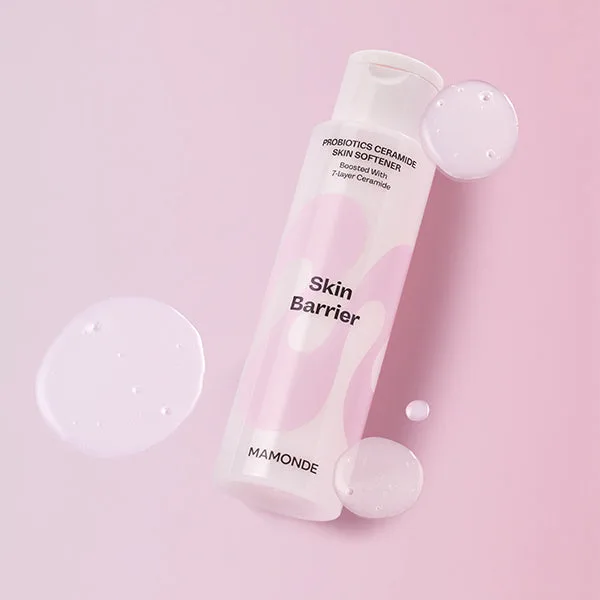
Most toners either focus on hydration (hyaluronic acid toners) or treatment (acid toners). This occupies a rare third category: barrier-prep. By delivering ceramides, pseudo-ceramides, and phytosphingosine at the toner step — when skin is most receptive — it primes the lipid barrier before heavier moisturizers lock it all in. This sequential ceramide approach is a K-beauty innovation that Western routines are only beginning to adopt.
A clever K-beauty softener that turns the humble toner step into active barrier repair, delivering ceramides and probiotics in a fast-absorbing liquid that primes skin for everything that follows. The value is outstanding, and the formula proves that effective barrier care doesn't need to be heavy.
The case for it
Cautions: fragrance.
Same rule for everyone. “Good choice” is the verdict on 9,564 of 45,024 concern verdicts across the catalog; rule R5 decided 9,072 of them. Unchanged since September 5, 2026, engine 5.1.1.
Brand or formulator? Disclose a concentration or correct a fact →
The studies behind the evidence row
The case for it
Same rule for everyone. “Good choice” is the verdict on 9,564 of 45,024 concern verdicts across the catalog; rule R5 decided 9,072 of them. Unchanged since September 5, 2026, engine 5.1.1.
Brand or formulator? Disclose a concentration or correct a fact →
The studies behind the evidence row
The case for it
What would change this: Removing the trigger named above would let the actives be judged on their own.
Same rule for everyone. “Avoid” is the verdict on 1,909 of 45,024 concern verdicts across the catalog; rule R1 decided 1,304 of them. Unchanged since September 5, 2026, engine 5.1.1.
Brand or formulator? Disclose a concentration or correct a fact →
The studies behind the evidence row
The case for it
What would change this: Removing the trigger named above would let the actives be judged on their own.
Same rule for everyone. “Avoid” is the verdict on 1,909 of 45,024 concern verdicts across the catalog; rule F1 decided 605 of them. Unchanged since September 5, 2026, engine 5.1.1.
Brand or formulator? Disclose a concentration or correct a fact →
Does the jobDoes what a toner is for: not alcohol-driven, adds something real. Not measured from the label: restores skin pH, plays well with what follows.
A verdict is DermApproved’s assessment of how well a product’s ingredients fit a concern — never a claim about what the product treats. Evidence dots and collected reviews sit beside it and are never blended in. Rules 0.5.1 · evidence table ev-2026.09-r228 · how we decide
Western skincare treated toners as an afterthought for decades — a splash of astringent to strip whatever the cleanser missed. Korean skincare had a fundamentally different idea. The sop'teuneo, or softener, is the foundational hydration step that determines how well every subsequent product performs. Mamonde took that concept and weaponized it, turning a simple hydrating toner into a ceramide-loaded barrier primer that begins rebuilding skin defenses before your moisturizer has entered the conversation.
The architecture is deceptively simple. Glycerin sits second, providing the humectant foundation everything else is built on. But glycerin alone is only hydration. What makes this formula genuinely interesting is the ceramide system layered into that vehicle: Ceramide NP at 11.2 ppm for authentic skin-identical lipid repair, plus two pseudo-ceramides — hydroxypropyl bispalmitamide MEA and hydroxypropyl bislauramide MEA — synthetic analogs that integrate with the stratum corneum's lipid matrix. Phytosphingosine appears further down, quietly serving as a ceramide precursor.
The concentrations are necessarily lower than a cream could carry. This is a liquid built for rapid absorption, not a heavy emollient designed to sit on the surface, and pretending otherwise would be dishonest. But the timing is the entire argument, and it's a good one. Cleansing strips lipids from the stratum corneum — that's simply what surfactants do — and barrier research has shown that recovery is enhanced when lipid replacement happens promptly after the disruption rather than later. The moment immediately after cleansing is when the barrier is at its most stripped and most receptive. Delivering ceramides *then*, in a thin vehicle that penetrates before any occlusive layer arrives, is a strategic approach to barrier repair rather than a brute-force one. Hydrogenated lecithin acts as the carrier, forming liposomal structures that help the lipids integrate — a technology borrowed straight from pharmaceutical delivery.
Which also dispatches a stubborn misconception: ceramides do not require a heavy cream to work. The vehicle determines the timing, not the efficacy, and applying them early can improve their integration precisely because nothing heavier is yet in the way.
Polyquaternium-51 deserves more attention than it usually gets. Also known as Lipidure, it's a synthetic phospholipid analog structurally modeled on phosphatidylcholine, the molecule that makes up cell membranes. Studies have found it retains moisture more effectively than hyaluronic acid at the molecular level while reducing protein adsorption, which is to say it helps preserve the skin's own protective film. In practice it's the ingredient responsible for that immediate "my skin feels different" moment the instant the softener absorbs.
Sodium hyaluronate adds a second hydration mechanism, drawing water deeper than glycerin manages on its own. Between the two, the strategy is layered: glycerin holds water at the surface, hyaluronic acid pulls it inward, and the ceramides help the barrier keep hold of all of it. That's textbook formulation rather than a shopping list.
The lactobacillus ferment and ferment lysate continue Mamonde's Floral Biotics thread — postbiotics supporting the skin's microbial ecosystem. At 10 ppm the lysate is modest, and honesty requires saying so, though used alongside the matching cream the cumulative support adds up. Hibiscus syriacus bark extract ties the formula to the brand's flower-science identity, the mugunghwa contributing antioxidant polyphenols and mucilage. Camellia japonica seed oil and green tea seed extract add lightweight emollience without any oiliness.
The texture is exactly what a K-beauty softener should be: fractionally thicker than water, with a slippery hydrating slip that vanishes within seconds of being pressed in. Immediately comfortable. No tightness, no stickiness, no waiting. That's what makes it ideal for the 7-skin method — layering two or three thin applications converts it from a light hydrating step into a genuinely intensive moisture treatment for very dry skin.
The simplicity is part of the appeal. Pour into palms, press into damp skin straight after cleansing, move on. Fifteen seconds. For a product actively delivering ceramides, probiotics and hyaluronic acid, that's remarkable efficiency.
The fragrance is present but minimal — a light floral note gone within a minute. As with everything in the line, its inclusion in a barrier-care product remains the formula's one philosophical inconsistency, and the overwhelming majority of users report no trouble with it. Anyone who needs strictly fragrance-free for medical reasons should still look elsewhere.
At $23 for 200ml, lasting three to four months at twice-daily use, the cost lands around twenty cents a day. For ceramides, pseudo-ceramides, probiotics and hyaluronic acid backed by Amorepacific's research infrastructure, that is genuinely difficult to argue with — and the generous bottle means you can apply liberally rather than rationing, which is exactly how a softener is meant to be used.
The limitation is structural rather than a flaw. This is a prep step, not a solution. Very dry skin will still need something substantial on top, and anyone expecting a standalone moisturizer will be disappointed for entirely predictable reasons. Used as designed, though — as the foundation of a barrier-repair routine — it improves the performance of everything applied after it, because softer, better-hydrated skin absorbs actives more readily than tight, stripped skin ever will.
For anyone building a ceramide-focused routine, this is the invisible first layer that makes the rest work harder. It gets none of the glory of a hero serum and none of the comfort of a thick cream. It's simply the step everything else is standing on.
The hero actives that drive this product's performance.
| Ingredient | Function | Evidence |
|---|---|---|
| Ceramide NP + Pseudo-Ceramides (11.2 ppm Ceramide NP + 20 ppm pseudo-ceramides) | Delivers ceramide barrier support in a toner format — the ceramide NP and two pseudo-ceramides prime the skin's lipid matrix before heavier products, ensuring subsequent moisturizer layers can integrate more effectively with the barrier. | Established mechanism for Dryness · established mechanism |
| Glycerin | The formula's primary humectant, positioned second on the ingredient list, drawing water into the epidermis to create the hydrated foundation that ceramides need to function — dry skin lacks the moisture for ceramides to organize into effective lipid bilayers. | Established mechanism for Dryness · established mechanism |
| Sodium Hyaluronate | The low-molecular-weight form penetrates deeper than glycerin alone, providing multi-level hydration that supports the ceramide barrier from within the epidermis rather than just at the surface. | Established mechanism for Dehydration · established mechanism |
| Lactobacillus Ferment Lysate (10 ppm) | Mamonde's Floral Biotics postbiotic that supports the skin microbiome, providing biological barrier reinforcement that complements the structural lipid repair from the ceramides. | Not yet assessed |
| Polyquaternium-51 | A lipidure — a synthetic phospholipid analog that mimics cell membrane structure, providing immediate hydration and a skin-smoothing effect that enhances the toner's ability to prep skin for subsequent products. | Not yet assessed |
Ingredient standings describe the active at treatment-level doses and vehicles; this product's own condition grades weigh its actual formula.
Water, Glycerin, Dipropylene Glycol, Propanediol, 1,2-Hexanediol, Butylene Glycol, Caprylic/Capric Triglyceride, Hydrogenated Lecithin, Acrylates/C10-30 Alkyl Acrylate Crosspolymer, Dextrin, Polyquaternium-51, Tromethamine, Lactobacillus Ferment, Ethylhexylglycerin, Fragrance, Ammonium Acryloyldimethyltaurate/VP Copolymer, Disodium EDTA, Adenosine, Sodium Hyaluronate, Ceramide NP (11.2 ppm), Raffinose, Sodium Stearoyl Glutamate, Hibiscus Syriacus Bark Extract, Hydroxypropyl Bislauramide MEA (10 ppm), Hydroxypropyl Bispalmitamide MEA (10 ppm), Lactobacillus Ferment Lysate (10 ppm), Camellia Japonica Seed Oil, Camellia Sinensis Seed Extract, Glycine Max (Soybean) Oil, Tocopherol, Phytosphingosine, Canola Oil, Rosmarinus Officinalis (Rosemary) Leaf Extract
toner
AM & PM
Apply immediately after cleansing on slightly damp skin. Pour onto palms or a cotton pad and press into the face. Can be layered 2-3 times (the 7-skin method) for extra hydration. Follow with serum and moisturizer — pairs exceptionally well with the Mamonde Ceramide Intense Cream for a full ceramide routine.
Immediate skin-softening and hydration boost from first application. Improved skin suppleness and reduced tightness within 3-5 days. Full barrier-support benefits and enhanced product absorption over 3-4 weeks.
The concept of delivering ceramides at the toner step is supported by research into stratum corneum lipid dynamics. Studies by Elias and colleagues published in the Journal of Clinical Investigation (1979, 2006) established that the skin barrier depends on organized lipid bilayers in the stratum corneum, and that replenishing these lipids — particularly ceramides, cholesterol, and free fatty acids — can restore barrier function after disruption.
The timing of ceramide application matters. A paper published in the Journal of Investigative Dermatology (Man et al., 1996) demonstrated that barrier recovery is enhanced when lipid replacement occurs promptly after disruption. Cleansing necessarily removes some stratum corneum lipids, making the immediate post-cleansing window — exactly when this softener is designed to be applied — the optimal moment for ceramide delivery.
Polyquaternium-51 (Lipidure) has been studied for its structural similarity to phosphatidylcholine, a key component of cell membranes. A study reported in the Journal of Biomedical Materials Research (Ishihara et al., 2005) demonstrated that this biomimetic polymer provides superior moisture retention compared to hyaluronic acid on a molecular level, and reduces protein adsorption — meaning it helps maintain the skin's natural protective film.
The hydrogenated lecithin in this formula serves as a delivery vehicle for the ceramides, forming liposomal structures that can encapsulate lipophilic ingredients and facilitate their integration into the skin's lipid matrix. This is a technology borrowed from pharmaceutical drug delivery.
Dermatologists increasingly recognize that barrier repair should begin at the earliest step in the routine, making ceramide-infused toners a logical evolution of the barrier-repair approach. Dermatology professionals frequently recommend layering ceramide products for patients with compromised barriers — using a ceramide toner followed by a ceramide moisturizer delivers lipids at two different stages of absorption. The alcohol-free formula is appropriate for post-procedure skin and eczema-prone patients, though the fragrance content remains a minor concern for the most sensitized skin types.
Apply immediately after cleansing, while skin is still slightly damp. Pour a generous amount (about a quarter-size) into palms and press gently into the face and neck. Pat to promote absorption. For extra hydration, layer 2-3 applications (the 7-skin method). Follow immediately with serum and moisturizer. Can be used morning and evening.
At $23 for 200ml, this is one of the best values in the ceramide skincare category. The three-to-four-month lifespan with twice-daily use brings the daily cost to roughly $0.20 — less than a quarter for a product delivering ceramides, pseudo-ceramides, probiotics, and hyaluronic acid. Amorepacific's manufacturing scale enables this pricing despite premium ingredients. The generous 200ml size encourages liberal application, which is exactly how a softener should be used.
Anyone with dry, dehydrated, or barrier-compromised skin who wants to add ceramide support at the foundational toner step. Especially valuable for retinol users, post-procedure skin, and anyone building a K-beauty-inspired barrier-repair routine. Also a great entry point for anyone curious about ceramide skincare at a low price commitment.
Those with very oily skin who find toners unnecessary, or anyone seeking a standalone hydrating product. Also not ideal for users who require strictly fragrance-free formulations for medical reasons.
Ready to try Mamonde Ceramide Skin Softener?
Buy at Amazon ♥Lightweight, slightly viscous liquid that's thicker than water but thinner than most Western toners — classic K-beauty softener consistency
Light, clean floral fragrance that dissipates within a minute of application
200ml plastic bottle with a controlled-pour opening, practical for daily dispensing
Pours easily onto palms — slightly thicker than water with a slippery, hydrating feel. Absorbs into the skin within seconds, leaving a dewy, plumped finish. No stinging, no tightness, no residue. Skin immediately feels softer and more receptive to subsequent products.
Roughly 3-4 months applied morning and evening
All Year
In Korean skincare, the softener (sop'teuneo) is the foundational step that determines how well everything else absorbs. Mamonde designed this product to transform that foundational step from simple hydration into active barrier repair, creating a ceramide delivery system optimized for the thinnest, most absorbable format in the routine.
Mamonde was launched in 1991 by Amorepacific, South Korea's largest cosmetics conglomerate. Backed by Amorepacific's extensive R&D infrastructure, the brand has over three decades of flower-based skincare innovation and is distributed globally across Asia, the US, and Europe.
Toners are just water — they don't do anything meaningful for the skin
K-beauty softeners like this are fundamentally different from Western astringent toners. This formula delivers ceramides, hyaluronic acid, probiotics, and phytosphingosine in a lightweight vehicle designed to be absorbed immediately after cleansing, when the skin barrier is most receptive and in need of lipid replenishment.
Ceramides only work in heavy creams
Ceramides can be delivered in any vehicle — the hydrogenated lecithin in this formula acts as a carrier that helps the ceramides integrate into the lipid matrix even from a lightweight liquid. Applying ceramides at the toner step can actually improve their efficacy by allowing them to absorb before heavier products create an occlusive layer.
In K-beauty terminology, a skin softener is a type of hydrating toner designed to soften and prepare the skin for subsequent products. Unlike Western astringent toners that strip and tighten, this softener deposits hydrating and barrier-repairing ingredients — ceramides, hyaluronic acid, probiotics — to optimize absorption of your serum and moisturizer.
Yes — this softener is well-suited for the 7-skin method (applying multiple thin layers of toner for intensive hydration). The lightweight, fast-absorbing formula layers without pilling or heaviness. Start with 2-3 layers and build up as needed. This method is especially effective for very dry or dehydrated skin in winter.
This is an excellent pairing. The softener delivers ceramides in a lightweight vehicle that absorbs quickly, priming the skin barrier. The Intense Cream then follows with higher ceramide concentrations and heavier emollients that seal everything in. Together they create a layered ceramide approach that addresses barrier repair more comprehensively than either product alone.
The formula is generally non-comedogenic despite the light oils present. However, if your acne-prone skin is also sensitive or barrier-compromised, the ceramide and hyaluronic acid combination can actually help — a stronger barrier means less inflammation-driven breakouts. If you're concerned, patch-test on your jawline for a week before full-face use.
This softener provides excellent hydration but works best as the first layer in a multi-step routine, not as a standalone hydrating step. It primes the skin for better absorption of subsequent serums and moisturizers. For very dry skin, use this softener followed by a hyaluronic acid serum and then a ceramide cream for maximum hydration.
Recurring themes our editors read across retailer reviews of this product — summaries in our words, not quotations, and not a substitute for your own patch test.
Deeply hydrating without feeling heavy or sticky
Makes skin feel softer and more supple immediately
Great first step for dry or dehydrated skin
Affordable for the quality of ceramide ingredients
Contains fragrance, which some prefer to avoid
Consistency is thinner than expected — more water than toner
Not enough on its own for very dry skin — needs to be paired with moisturizer
Soybean oil may concern acne-prone users
Verified answers from our questions library — the nuance a product page cannot carry.