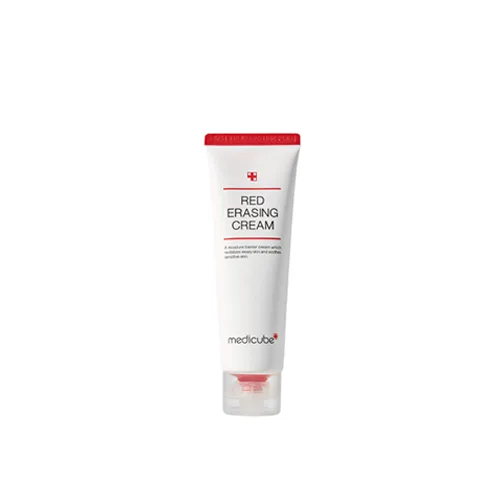
While most K-beauty calming creams rely on centella asiatica alone, the Red Erasing Cream leads with zinc oxide as both its primary soothing and UV-protective agent, creating a true multi-tasker that calms inflammation while physically shielding skin from the environmental triggers that cause flare-ups. The fragrance-free, alcohol-free formula is unusually clean for a product in this price range.
A thoughtfully formulated calming cream that leverages zinc oxide's dual soothing and protective properties alongside niacinamide and botanical extracts, delivering genuine redness relief for acne-prone sensitive skin at a fair price — with the caveat that the white cast may be a dealbreaker for deeper skin tones.
Supporting rolefor AcneIn your profileYou chose · Niacinamide has early evidence for acne, and barrier care alongside acne treatment is the recognised companion to treating it — a reasonable supporting choice, short of a recommendation.Moderate evidenceStandard tolerabilityNo reviews collected yet
The case for it
Niacinamide has early or mechanistic evidence for this concern, not trial-backed standing.
It is plausibly present at a working level, though the concentration is not declared.
The formula carries no trigger this concern is sensitive to, with the cautions noted.
Cautions: fungal-acne triggers.
What would change this: A declared concentration would move this to a firmer reading of the dose.
Same rule for everyone. “Supporting role” is the verdict on 8,197 of 45,024 concern verdicts across the catalog; rule R8a decided 1,489 of them.
Unchanged since September 5, 2026, engine 5.1.1.
R8a — A plausible-tier active in a category with a supportive job: the sentence names the active instead of saying nothing targets the concern (the AmLactin / CeraVe SA case for keratosis pilaris, where no guideline and single trials leave the keratolytics at early evidence). · the full register
Carrying active
Niacinamide
Standing
plausible — trials support it
Form
plausible — studied range 4–5%, from the OTC monograph or label; needs leave-on contact; judge it after ~8 weeks
Tolerability
standard — fungal triggers
Row checked
against its sources on July 17, 2026 (evidence table ev-2026.09-r228)
Supporting rolefor RosaceaIn your profileYou chose · Niacinamide has early evidence for rosacea, and barrier repair and gentle hydration is the recognised companion to treating it — a reasonable supporting choice, short of a recommendation.Limited evidenceGentleNo reviews collected yet
The case for it
Niacinamide has early or mechanistic evidence for this concern, not trial-backed standing.
It is plausibly present at a working level, though the concentration is not declared.
The formula carries none of the triggers this concern is sensitive to.
What would change this: A declared concentration would move this to a firmer reading of the dose.
Same rule for everyone. “Supporting role” is the verdict on 8,197 of 45,024 concern verdicts across the catalog; rule R8a decided 1,489 of them.
Unchanged since September 5, 2026, engine 5.1.1.
R8a — A plausible-tier active in a category with a supportive job: the sentence names the active instead of saying nothing targets the concern (the AmLactin / CeraVe SA case for keratosis pilaris, where no guideline and single trials leave the keratolytics at early evidence). · the full register
Carrying active
Niacinamide
Standing
plausible — trials support it
Form
plausible — studied range 2%, from the OTC monograph or label; needs leave-on contact; judge it after ~8 weeks
Tolerability
gentle
Row checked
against its sources on July 17, 2026 (evidence table ev-2026.09-r228)
Good choicefor SensitivityIn your profileYou chose · No fragrance, drying alcohol, declarable allergens or sensitising preservatives in this cream — the profile sensitive skin looks for.Not yet assessedGentleNo reviews collected yet
The case for it
Zinc Oxide has no evidence row yet for this concern — it is in the research queue.
The formula carries none of the triggers this concern is sensitive to.
What would change this: A researched evidence row for the lead active would replace this with a verdict.
Same rule for everyone. “Good choice” is the verdict on 1,938 of 45,024 concern verdicts across the catalog; rule F2 decided 1,938 of them.
Unchanged since September 5, 2026, engine 5.1.1.
Good choicefor Compromised Skin BarrierIn your profileYou chose · Niacinamide is a reference standard by mechanism for compromised skin barrier; this cream carries it.Moderate evidenceGentleNo reviews collected yet
The case for it
Niacinamide has trial-supported standing for this concern.
It is plausibly present at a working level, though the concentration is not declared.
The formula carries none of the triggers this concern is sensitive to.
What would change this: A declared concentration would move this to a firmer reading of the dose.
Same rule for everyone. “Good choice” is the verdict on 9,564 of 45,024 concern verdicts across the catalog; rule R5 decided 9,072 of them.
Unchanged since September 5, 2026, engine 5.1.1.
Strong choicefor Sun DamageIn your profileYou chose · Zinc Oxide is an approved or monograph active for sun damage; this cream carries it high in the ingredient list.Moderate evidenceGentleNo reviews collected yet
The case for it
Zinc Oxide is a first-line active — approved, monograph-listed or named in current guidelines — for this concern.
It is present at an effective concentration, declared or high in the ingredient list.
The formula carries none of the triggers this concern is sensitive to.
Same rule for everyone. “Strong choice” is the verdict on 1,459 of 45,024 concern verdicts across the catalog; rule R2 decided 892 of them.
Unchanged since September 5, 2026, engine 5.1.1.
Does the jobDoes what a moisturizer is for: draws in water, softens and smooths.
A verdict is DermApproved’s assessment of how well a product’s ingredients fit a concern — never a claim about what the product treats. Evidence dots and collected reviews sit beside it and are never blended in.
Rules 0.5.1 · evidence table ev-2026.09-r228 · how we decide
Assessment
Pros & Cons
Pros
✓ Zinc oxide at prominent concentration provides genuine anti-inflammatory and antimicrobial benefits
✓ Completely fragrance-free and alcohol-free — uncommon even among sensitive skin products
✓ Niacinamide supports barrier repair and sebum regulation alongside the zinc
✓ Surprisingly lightweight and silky texture for a zinc oxide-based cream
✓ Affordable pricing with a larger 100ml size available for better value
✓ Immediate visible redness calming upon application
✓ Suitable for use alongside retinol and other active treatments as a buffer cream
Cons
✗ Noticeable white cast on medium to deeper skin tones from the zinc oxide
✗ Silicone-heavy base may cause pilling under certain makeup or sunscreen formulations
✗ Jar packaging exposes product to air and bacteria with each use
✗ Contains beeswax which may be comedogenic for some acne-prone individuals
✗ Not a replacement for dedicated sunscreen despite zinc oxide content
Review
Full Review
In South Korea, where glass-clear, even-toned skin is the cultural gold standard, redness is treated as a serious skincare concern — not a cosmetic afterthought. Medicube's Red Line was built on this premise, and the Red Erasing Cream has been its anchor product since 2017, now refined into its 2.0 formulation. What started as a niche Korean product for acne-prone skin with persistent redness has quietly found its way into the routines of rosacea sufferers, post-procedure patients, and anyone whose skin runs hot and reactive.
The formulation strategy here is smart in its simplicity. Zinc oxide leads the ingredient list — not buried somewhere in the middle, but right after water. This is a cream that genuinely centers on zinc's anti-inflammatory and antimicrobial properties rather than just sprinkling it in for label appeal. Zinc oxide physically blocks UV radiation, calms inflammation through multiple pathways, and has demonstrated inhibition of the bacteria involved in acne lesion formation. In a single ingredient, the cream addresses three of the most common concerns for redness-prone acne skin: sun sensitivity, inflammation, and bacterial overgrowth.
Backing up the zinc is niacinamide, which barely needs an introduction — but its role here is specific and well-considered. This is also the answer to a stubborn assumption, that a calming cream can only mask redness and never actually treat acne. Niacinamide does real anti-acne work: clinical evidence has shown its anti-inflammatory effect rivals topical clindamycin, and it does so without antibiotic-resistance concerns, while also regulating sebum and reinforcing the barrier. Paired with the zinc oxide's antimicrobial activity, this is a soothing cream that genuinely intervenes in the acne cycle rather than just cooling the surface.
The botanical supporting cast includes purslane extract, a traditional Korean medicinal plant with documented wound-healing and antioxidant properties, and tomato extract, which contributes lycopene — an antioxidant that helps neutralize the free radicals generated by UV exposure and inflammation. Adenosine adds collagen and wound-healing support, while squalane and jojoba seed oil round out the emollient profile, providing non-comedogenic moisture that keeps the formula from feeling like a thick zinc paste. A quaternium-18 bentonite and light esters give it structure, though the beeswax means it isn't vegan or fungal-acne-safe.
And that's where the texture conversation gets interesting, because it dismantles the other reflexive assumption about this category — that zinc oxide creams are inevitably too thick and heavy for acne-prone skin. Zinc creams conjure images of lifeguard noses and diaper ointment, but Medicube has addressed that with a silicone-forward base using cyclopentasiloxane and dimethicone crosspolymer to create a remarkably smooth, lightweight delivery system. The cream spreads with a silky slip that belies the zinc concentration, and it sets to a semi-matte finish that works reasonably well under makeup. It is, against all expectations for a zinc cream, genuinely pleasant to wear.
The trade-off is the white cast. There is no getting around the physics of zinc oxide — it is a white mineral, and it will leave some degree of visible residue. On lighter skin tones, this dissipates within a few minutes. On medium to deeper tones, it can be more persistent and noticeable, particularly if applied generously. This is the cream's most significant limitation and the reason it doesn't achieve universal recommendation despite its otherwise excellent formulation. It also complicates where the cream sits in a routine: because the zinc offers only incidental, unrated UV protection, it works best as the final leave-on step at night, or under a dedicated broad-spectrum sunscreen by day rather than in place of one. Applied that way — a thin, fully rubbed-in layer — the white cast is at its most manageable and the cream is least likely to pill under makeup.
Performance over time tells a compelling story. Users consistently report that redness visibly calms within minutes of application — this is the immediate anti-inflammatory effect of the zinc oxide at work, not a cosmetic trick. Over weeks of consistent use, the combination of barrier repair from niacinamide, ongoing inflammation suppression, and botanical antioxidant support leads to genuinely less reactive skin. Breakouts may not disappear, but they tend to heal faster and leave less hyperpigmentation behind.
The fragrance-free, alcohol-free formula is a welcome detail that deserves recognition. In a market where even products labeled 'for sensitive skin' frequently include essential oils or synthetic fragrance, the Red Erasing Cream keeps its ingredient list clean of common sensitizers. For anyone whose skin has been wrecked by one too many fragranced 'calming' products, this is a meaningful point of trust.
At $22 for 50ml (with a 100ml size available for better per-unit value), the pricing sits comfortably in the affordable K-beauty range. You get a clinically grounded formulation with genuine therapeutic ingredients at a price that doesn't pretend to be luxury. Its review base, in the low thousands averaging high, reflects exactly what the formula promises — visible calming within minutes and gentleness on reactive skin are the runaway praise, with the white cast on deeper tones and the silicone-heavy feel in humidity the recurring complaints.
The Red Erasing Cream isn't trying to be everything to everyone. It is a focused, well-executed calming cream for a specific population: people whose skin is red, reactive, and breakout-prone. For that audience, it delivers quietly and consistently.
Formula
Key Ingredients
The hero actives that drive this product's performance.
Serves dual duty in this formula as both a physical UV filter and an anti-inflammatory agent, providing broad-spectrum sun protection while actively calming redness and irritation — making it uniquely suited for acne-prone skin that cannot tolerate chemical sunscreen filters.
Regulator-approvedfor Sun Damage · limited certainty
Reinforces the skin barrier alongside the zinc oxide, reducing transepidermal water loss while also regulating sebum production and fading post-inflammatory hyperpigmentation — addressing multiple concerns that typically accompany acne-prone, redness-affected skin.
Established mechanismfor Compromised Skin Barrier · established mechanism
A traditional Korean medicinal botanical that provides potent anti-inflammatory and antioxidant activity, helping to soothe reactive skin and reduce visible redness alongside the zinc oxide in this calming formula.
A lightweight, skin-identical emollient that reinforces the lipid barrier without clogging pores, providing non-greasy moisture that complements the heavier zinc oxide base and helps the cream spread more evenly.
A Korean skincare staple that promotes collagen synthesis and wound healing, accelerating recovery of acne-damaged skin and reducing the appearance of fine lines in this multi-functional calming cream.
Not yet assessed
Ingredient standings describe the active at treatment-level doses and
vehicles; this product's own condition grades weigh its actual formula.
Save this for the last step in your skincare routine (or before dedicated sunscreen in the AM). The zinc oxide provides some UV protection but should not replace a dedicated SPF product for extended outdoor exposure.
Results Timeline
Immediate soothing and redness reduction visible upon first application thanks to the zinc oxide. Skin barrier improvement and reduced sensitivity typically noticed within 1-2 weeks. Longer-term improvements in post-acne marks and overall skin clarity emerge over 4-6 weeks.
The Red Erasing Cream's formulation centers on zinc oxide's well-documented anti-inflammatory properties. A comprehensive review by Gupta et al. (2014) in Dermatology Research and Practice established that zinc acts through multiple mechanisms in skin — reducing inflammatory cytokine production, providing antimicrobial activity against Cutibacterium acnes, and modulating immune responses that drive conditions like acne and rosacea. The topical zinc oxide in this formula delivers these benefits directly to the skin surface while also functioning as a physical UV blocker.
The niacinamide component adds a second therapeutic layer. A landmark study by Shalita et al. (1995) in the International Journal of Dermatology demonstrated that 4% topical niacinamide gel was comparable to 1% clindamycin gel in reducing inflammatory acne lesions, establishing niacinamide as a viable anti-acne active with anti-inflammatory rather than antibiotic mechanisms. More recent research has confirmed niacinamide's ability to strengthen the stratum corneum, reduce transepidermal water loss, and suppress melanin transfer to keratinocytes — all directly relevant to redness-prone, post-acne skin.
The combination of zinc oxide and niacinamide in a single formulation creates complementary therapeutic coverage. Zinc addresses acute inflammation and microbial overgrowth at the surface, while niacinamide works on barrier restoration and cellular-level inflammation deeper in the epidermis. Purslane extract (Portulaca oleracea) has been studied for its anti-inflammatory and wound-healing properties, with research showing it contains omega-3 fatty acids, vitamins, and antioxidants that support skin repair processes.
Dermatologists frequently recommend zinc-based topicals for patients with acne-associated redness and sensitivity, particularly those who cannot tolerate benzoyl peroxide or chemical exfoliants. Clinicians commonly recognize that zinc oxide's anti-inflammatory profile makes it suitable for concurrent use with prescription treatments like tretinoin or adapalene, serving as a soothing buffer layer. The addition of niacinamide is widely supported in dermatological practice for its barrier-strengthening and sebum-regulating properties. This type of formulation is commonly suggested as a recovery cream for post-procedure skin or as a gentle daily moisturizer during acne treatment regimens that tend to compromise the barrier.
Guidance
Usage & Recommendations
How to Use
Apply a pea-sized amount to clean, dry skin as the last step in your skincare routine (morning and evening). Warm between fingertips and press into the skin rather than rubbing to minimize white cast. In the morning, follow with a dedicated broad-spectrum sunscreen. Can be layered over active serums (retinol, vitamin C, BHA) to buffer irritation. If using for the first time, apply to a small test area to ensure compatibility.
Value Assessment
At $22 for 50ml, the Red Erasing Cream offers solid value for a zinc oxide and niacinamide-based calming cream. The formulation punches above its price point with therapeutic-grade actives and a clean (fragrance-free, alcohol-free) ingredient profile. A 100ml size is also available, which improves the per-unit economics significantly. Compared to dermatologist-brand calming creams that typically start at 0-40 for similar volumes, Medicube delivers comparable active ingredients at K-beauty-friendly pricing.
Who Should Buy
Anyone dealing with persistent facial redness alongside acne, rosacea sufferers looking for a daily calming moisturizer, and people recovering from aggressive skincare treatments who need a gentle, non-irritating barrier cream. Ideal for those who prioritize fragrance-free formulations.
Who Should Skip
Those with deeper skin tones who find white cast unacceptable, anyone with known sensitivities to beeswax, and very oily skin types who may find the silicone-rich formula too occlusive in warm or humid climates.
Rich yet surprisingly lightweight cream with a silicone-smooth slip that blends to a semi-matte finish with a slight white tint from the zinc oxide
Scent
Mild herbal scent from the botanical extracts (purslane, tomato), no added fragrance
Packaging
Opaque red jar with screw-top lid, also available in a larger 100ml size
Finish
mattelightweightvelvety
What to Expect on First Use
Expect immediate visible calming of redness upon first application. The zinc oxide provides an instant soothing sensation. Some users notice a slight white cast that settles within a few minutes. No adjustment period required — suitable for immediate daily use.
How Long It Lasts
Roughly 2-3 months applied morning and evening to the face
The Red Erasing Cream was one of Medicube's earliest products, launched as the cornerstone of their Red Line targeting acne-prone, redness-affected skin. The concept was born from the observation that many acne sufferers also deal with persistent redness and sensitivity, and traditional acne products tend to make both worse. Now in its 2.0 formulation, it remains one of the brand's core products.
About Medicube Established Brand (5–20 years)
Medicube was founded in South Korea in 2014 and has built a reputation through dermatologist-informed formulations and beauty technology devices. The brand surpassed $100M in TikTok Shop sales and is widely available at Ulta Beauty and major K-beauty retailers, though independent peer-reviewed research on its specific product formulations remains limited.
Brand founded: 2018 · Product launched: 2017
Myth vs. Reality
Common Myths
Myth
Zinc oxide creams are too thick and heavy for acne-prone skin.
Reality
This formula uses silicone-based emulsifiers to deliver the zinc oxide in a lightweight, spreadable texture that absorbs well without clogging pores — a far cry from the thick diaper cream consistency people associate with zinc oxide.
Myth
Calming creams can't treat acne — they just mask redness.
Reality
The niacinamide in this formula actively regulates sebum production and has demonstrated anti-acne efficacy comparable to topical clindamycin in clinical studies, while the zinc oxide provides additional antimicrobial activity.
FAQ
Frequently Asked Questions
Does Medicube Red Erasing Cream have SPF?
The cream contains zinc oxide, which is a physical UV filter, so it provides some baseline sun protection. However, the concentration is not disclosed and it is not marketed as a sunscreen, so you should still apply a dedicated SPF product over it for reliable UV protection.
Is Medicube Red Erasing Cream good for rosacea?
Yes — the zinc oxide and purslane extract combination is well-suited for rosacea-prone skin. The fragrance-free, alcohol-free formula minimizes trigger ingredients, and the zinc oxide physically shields skin from environmental irritants that can provoke rosacea flare-ups.
Does the Medicube Red Erasing Cream leave a white cast?
Some users, particularly those with medium to deeper skin tones, report a noticeable white cast from the zinc oxide. Warming the cream between your palms and pressing it into the skin rather than rubbing can help minimize this.
Can I use Medicube Red Erasing Cream with retinol?
Yes — this cream's soothing, barrier-supportive formula makes it an excellent companion for retinol. Apply retinol first on dry skin, wait a few minutes, then layer this cream on top to buffer irritation and lock in moisture.
Is Medicube Red Erasing Cream fragrance-free?
Yes, this cream contains no added fragrance or essential oils. The mild herbal scent comes from the natural botanical extracts (purslane and tomato) rather than synthetic fragrance compounds.
What is the difference between Medicube Red Erasing Cream and Red Cream?
The Red Erasing Cream focuses on calming existing redness with zinc oxide and purslane, while the Red Cream 2.0 targets active breakouts with BHA (salicylic acid) and niacinamide. Choose the Erasing Cream for redness and sensitivity, the Red Cream for active acne.
How long does the Medicube Red Erasing Cream take to work?
Redness calming is typically visible within minutes of application thanks to the zinc oxide's immediate anti-inflammatory effect. For longer-term improvements in skin barrier strength and reduced overall reactivity, expect 2-4 weeks of consistent use.
Reviews
What Reviewers Tend to Say
Recurring themes our editors read across retailer reviews of this product — summaries in our words, not quotations, and not a substitute for your own patch test.
Common Praise
Visibly calms redness within minutes of application
Gentle enough for irritated and reactive skin
Does not aggravate active breakouts
Pleasant lightweight texture for a zinc-based cream
Common Complaints
Leaves a noticeable white cast on deeper skin tones
Silicone-heavy formula can feel heavy in humid weather
Herbal scent from botanical extracts is off-putting for some
Can pill under makeup if not fully absorbed
Notable Endorsements
Featured in multiple K-beauty best-of listsRecommended for acne-prone sensitive skin by Korean beauty bloggers
Five brands that own the feed, judged on their ingredient lists rather than their view counts — including the one active all five suddenly added at once, and what that tells you.
IPL is a filtered flashlamp, a true vascular laser is one wavelength aimed at haemoglobin, and the choice between them turns on a distinction almost no consult makes: whether your redness is vessels or a state.
Cutting a beard hair takes about a twentieth of a newton. You press with two and stretch your skin by a fifth — which is why almost every shaving problem is a technique problem wearing a hardware costume.
The dewy-layering marketing reads as a warning if you are congested — and it is hiding the strongest mass-market lineup anywhere for exactly that skin.
Aug 28, 2026· 8 min
Questions people ask about Acne
Verified answers from our questions library — the nuance a product page cannot carry.
Products, answers, therapy guides, tools and articles in one search. Brand names,
slang and abbreviations all work — accutane finds isotretinoin, bacne finds truncal acne.