




Cutting the Leaf Yourself Gets You a Latex Problem the Bottle Already Solved
Aloe has the best clinical case of any kitchen remedy — and the fresh-leaf version puts a manual processing step between you and the part that works.
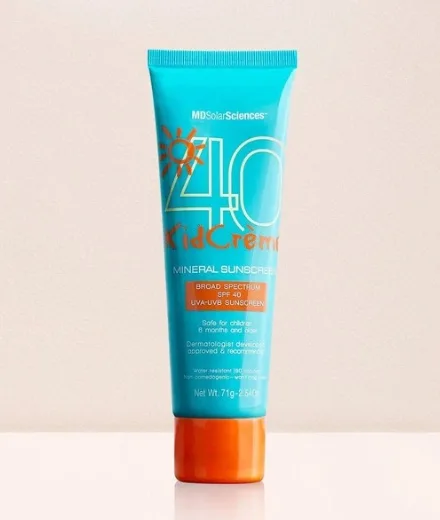
Most pediatric mineral sunscreens cut corners — either by using only one filter, by skipping soothing additives entirely, or by loading in fragrances that undermine the whole 'sensitive skin' premise. KidCrème uses both titanium dioxide and zinc oxide at meaningful percentages, layers in niacinamide and bisabolol for ongoing barrier support, and earns the National Eczema Association seal, which very few pediatric sunscreens hold.
A genuinely good pediatric mineral sunscreen that earns its National Eczema Association seal through actual formulation choices rather than marketing claims. The dual titanium-and-zinc active pairing, plus the niacinamide and bisabolol additions, make this the kind of tube pediatric dermatologists quietly recommend when parents ask what to buy.
The case for it
What would change this: A researched evidence row for the lead active would replace this with a verdict.
Same rule for everyone. “Good choice” is the verdict on 1,938 of 45,024 concern verdicts across the catalog; rule F2 decided 1,938 of them. Unchanged since September 5, 2026, engine 5.1.1.
Brand or formulator? Disclose a concentration or correct a fact →
The case for it
What would change this: A declared concentration would move this to a firmer reading of the dose.
Same rule for everyone. “Promising” is the verdict on 7,858 of 45,024 concern verdicts across the catalog; rule R9p decided 7,858 of them. Unchanged since September 5, 2026, engine 5.1.1.
Brand or formulator? Disclose a concentration or correct a fact →
The studies behind the evidence row
The case for it
Same rule for everyone. “Full protection” is the verdict on 2,288 of 45,024 concern verdicts across the catalog; rule P1 decided 2,232 of them. Unchanged since September 5, 2026, engine 5.1.1.
Brand or formulator? Disclose a concentration or correct a fact →
The studies behind the evidence row
Does the jobDoes what a sunscreen is for: UVA coverage, kind to the skin wearing it. Not measured from the label: pleasant enough to actually use.
A verdict is DermApproved’s assessment of how well a product’s ingredients fit a concern — never a claim about what the product treats. Evidence dots and collected reviews sit beside it and are never blended in. Rules 0.5.1 · evidence table ev-2026.09-r228 · how we decide
Pediatric dermatologists have a quiet and specific pain point: they want to recommend mineral sunscreens to parents of eczema-prone kids, but most of the pediatric mineral options on the drugstore shelf either sting, smell like fruit punch, or leave the kind of white cast that turns sunscreen application into a twenty-minute negotiation. The unglamorous truth about pediatric sun protection is that the best sunscreen is the one the kid will tolerate having applied — and that's a category where marketing claims don't matter nearly as much as texture, fragrance, and how quickly you can get it onto a squirming child before they run off toward the tidepools.
MDSolarSciences KidCrème exists to solve exactly this problem, and it was built by someone who actually understood it. The brand was founded in 2009 by Dr. Robert Friedman, a Mohs surgeon and melanoma researcher at NYU who wanted to take the clinical rigor of dermatology sunscreen counseling and put it into consumer products. KidCrème came out in 2014 as the brand's pediatric SKU, and the formulation choices reflect someone who had seen too many kids come into clinic with avoidable sunburns because the family had bought a sunscreen that nobody could stand to use.
The actives are what matter first. KidCrème uses 5.5% titanium dioxide and 5.0% zinc oxide, giving you a combined 10.5% mineral filter load that covers the full UVA and UVB spectrum. This dual-filter approach matters: zinc oxide carries most of the long UVA work, titanium dioxide strengthens the UVB and short UVA coverage, and the combination means you get broader and more balanced photoprotection than a single-filter formula. The tradeoff — and there is always a tradeoff with mineral sunscreens at these percentages — is a visible white cast that takes some rubbing to blend. Parents who have used thinner, more cosmetically elegant mineral sunscreens may be initially put off by the opacity, but it's actually useful for pediatric application because you can see exactly where you've applied and where you've missed. You're not guessing whether the kid's ears got covered; you can see the white sheen proving it.
The supporting cast is where the formula distinguishes itself from the dozens of pediatric mineral sunscreens with nothing but two filters and some water. Niacinamide is included at a meaningful position in the ingredient list, contributing anti-inflammatory and barrier-supporting work that helps keep eczema-prone skin calm through a full beach day. Bisabolol, a chamomile-derived anti-irritant, layers additional soothing onto the formula and is one of the reasons the National Eczema Association granted this sunscreen its Seal of Acceptance. Panthenol, allantoin, calendula, aloe vera, and cucumber extracts fill out a supporting chorus of gentle botanicals that actually earn their place here — the goal isn't just to block UV, but to keep the skin underneath from getting angry over the course of a hot afternoon.
The texture is thick. This isn't a complaint, it's an observation — a mineral sunscreen at this percentage is supposed to feel substantial, and KidCrème leans into that. It spreads more slowly than a chemical formula but blends down to a pale sheen within a minute of rubbing, and once it's on, it stays on. Water resistance is solid for the forty-minute claim, and the thickness of the cream actually works in its favor at the beach because it resists being immediately sweated off.
What KidCrème does not do is sting. This is the single most underappreciated virtue of a pediatric sunscreen, because the fastest way to turn a kid against sunscreen forever is to get a chemical filter into their eyes on a hot day. Because mineral filters sit on the skin surface and don't migrate into the aqueous phase the way chemical filters can, KidCrème is one of the better-performing options for eye tolerance — parents consistently report that even when it runs down a sweaty forehead, it doesn't produce the howling sting of, say, a chemical sunscreen stick.
The cost is the main thing that gives parents pause. At around $32 for 3 ounces, this is meaningfully more expensive per ounce than the pediatric mineral sunscreens sitting next to it at the drugstore. Whether that premium is worth it depends on your priorities. If you have a reliably reactive child whose skin has flared with cheaper options, the formulation specifics here justify the price. If your kid tolerates everything and you're doing two reapplications a day across three kids, you may burn through the tube faster than you'd like.
The honest recommendation is that this is a dermatology-grade pediatric mineral sunscreen that does exactly what it sets out to do. It's not glamorous, it's not thin, it's not invisible on skin — but it is genuinely well-formulated, eczema-tested, and built by someone who understood the real-world problems of pediatric sun protection rather than just the marketing version of them.
The hero actives that drive this product's performance.
| Ingredient | Function | Evidence |
|---|---|---|
| Zinc Oxide 5.0% (5.0%) | Provides the backbone of broad-spectrum UVA and UVB protection and is the component pediatric dermatologists specifically look for in sunscreens for sensitive children's skin — it sits on top of skin and reflects light rather than absorbing it. | Regulator-approved for Sun Damage · limited certainty |
| Titanium Dioxide 5.5% (5.5%) | The second mineral filter in this dual-active formula, contributing strong UVB and short-wavelength UVA coverage and giving the cream its extra-opacity on skin — an intentional tradeoff that makes reapplication spots visible during water play. | Regulator-approved for Sun Damage · limited certainty |
| Niacinamide | Included as an anti-inflammatory and barrier-supporting additive — helpful in a kids' sunscreen because it reduces the low-grade redness that comes from prolonged sun and sand exposure during beach days. | Limited for Eczema |
| Bisabolol | A chamomile-derived anti-irritant that calms the transient redness mineral filters can cause on reactive skin — particularly useful for the eczema-prone kids this formula is marketed toward. | Not yet assessed |
| Aloe Vera Leaf Juice | Appears high in the formula as part of the water phase, contributing immediate post-application soothing that helps make an otherwise thick mineral cream feel more comfortable on active, sweaty kids. | Not yet assessed |
Ingredient standings describe the active at treatment-level doses and vehicles; this product's own condition grades weigh its actual formula.
Active Ingredients: Titanium Dioxide 5.5%, Zinc Oxide 5.0%. Inactive Ingredients: Water, Propanediol, Caprylic/Capric Triglyceride, Cetearyl Olivate, Sorbitan Olivate, Glycerin, Isohexadecane, Polyhydroxystearic Acid, Coco-Caprylate, Aloe Barbadensis Leaf Juice, Tocopheryl Acetate, Panthenol, Allantoin, Bisabolol, Calendula Officinalis Flower Extract, Chamomilla Recutita (Matricaria) Flower Extract, Cucumis Sativus (Cucumber) Fruit Extract, Sodium Hyaluronate, Niacinamide, Xanthan Gum, Alumina, Stearic Acid, Polyglyceryl-3 Polyricinoleate, Caprylyl Glycol, Phenoxyethanol, Ethylhexylglycerin
sunscreen
AM
Apply as the final morning step after moisturizer, 15 minutes before sun exposure. Reapply every two hours and after swimming or heavy sweating. For kids, apply generously to dry skin before they put on a swimsuit — mineral sunscreens work immediately once rubbed in.
UV protection is immediate upon application. Barrier-soothing benefits from niacinamide and bisabolol build over weeks of consistent use, making this an appropriate daily sunscreen for eczema-prone children rather than a beach-day-only product.
The evidence base for dual-mineral pediatric sunscreens rests on several strands of research. Titanium dioxide and zinc oxide are classified by the FDA as Category I sunscreen actives — generally recognized as safe and effective — and a 2019 review in the Journal of the American Academy of Dermatology discussed how mineral filters have become the preferred choice for pediatric photoprotection due to their lack of systemic absorption and favorable tolerability profile. Zinc oxide's coverage into the UVA1 range (340-400 nm) is particularly important for long-term skin cancer prevention, as established by work going back to the 1990s on UVA's role in photocarcinogenesis. The niacinamide inclusion in KidCrème is supported by a substantial body of research on topical B3 as an anti-inflammatory agent: a 2005 study in the British Journal of Dermatology demonstrated niacinamide's ability to improve skin barrier function and reduce transepidermal water loss, and subsequent work has reinforced its utility in sensitive and compromised skin. Bisabolol's anti-inflammatory activity was characterized in a 2010 review in Natural Product Communications, which catalogued its mechanisms in reducing cutaneous inflammation. The pairing of these additives with non-nano mineral filters represents current best practice in pediatric sunscreen formulation — protect first with physical filters, then reduce the low-grade inflammation that comes from any prolonged sun exposure, rather than relying on actives alone.
Pediatric dermatologists frequently recommend dual-mineral sunscreens like this one for children with eczema, atopic dermatitis, or sensitive skin histories. Practicing dermatologists consistently acknowledge that fragrance-free mineral formulas with soothing additives are the photoprotection category most likely to be tolerated through a full beach day without triggering flares. When counseling families, dermatologists typically emphasize that the best sunscreen is the one that actually gets used consistently and reapplied correctly — which means texture, stinginess, and fragrance all matter as much as SPF number. This formula's National Eczema Association seal and the presence of niacinamide and bisabolol make it one of the options dermatologists commonly suggest when parents ask specifically for a pediatric sunscreen for reactive skin.
Apply generously to clean, dry skin fifteen minutes before sun exposure — though mineral filters technically work immediately, giving the cream time to set improves water resistance. Use about a shot-glass worth for full body coverage on a child. Don't forget ears, tops of feet, and the back of the neck. Reapply every two hours during prolonged sun exposure, and immediately after swimming, heavy sweating, or toweling off. For daily use, one application in the morning after moisturizer is sufficient for standard activity levels.
At $32 for 3 ounces, KidCrème is priced above drugstore pediatric mineral sunscreens but below most derm-brand adult mineral sunscreens. The value proposition is clearest for families with eczema-prone or reactive children, where cheaper sunscreens have already failed. For those parents, the dual-mineral formula plus soothing additives plus the NEA seal make the premium worth paying. For families whose kids tolerate most sunscreens without issue, the per-ounce cost may feel harder to justify — a $12 Blue Lizard or Thinkbaby tube may stretch further. No larger size is available, which is the main structural downside of the packaging for heavy-use families.
Parents of kids with eczema, atopic dermatitis, or any history of reacting to fragranced or chemical sunscreens. Also a strong pick for adults with very sensitive skin who want a no-fragrance mineral formula without paying double for adult-marketed versions of essentially the same formulation.
Families looking for the lowest-cost pediatric option, parents who prioritize an invisible finish over filter completeness, and anyone with deep skin tones who finds white cast unacceptable for daily use on kids. If your child tolerates cheaper mineral sunscreens without any issue, the premium here isn't necessary.
Ready to try MDSolarSciences KidCrème Mineral Sunscreen SPF 40?
Buy at Amazon ♥Thick, opaque mineral cream that spreads slowly and requires deliberate massage to blend. Finishes semi-matte with a faint protective film.
Essentially scentless — no added fragrance and no chemical filter smell.
Standard squeeze tube in white and blue kid-friendly graphics. Travel-size and water-tight enough to throw in a beach bag.
On first application you'll notice a clear white cast that requires rubbing to blend down to a pale sheen. This is normal and expected for a high-percentage dual-mineral formula. Protection begins immediately — there's no wait time. After a few uses, parents usually develop a rhythm for application speed.
Approximately 3-4 weeks of daily summer use for a single child's face, neck, and arms. Beach days burn through the tube faster.
All Year
MDSolarSciences was founded in 2009 by Dr. Robert Friedman, a dermatologist and melanoma researcher at NYU, who wanted to build photoprotection products around the needs of the skin cancer patients he was treating in clinic. KidCrème was released in 2014 as the brand's pediatric formula, designed to meet the tolerability standards of eczema-prone children while delivering actual broad-spectrum protection.
MDSolarSciences was founded in 2009 by Dr. Robert Friedman, a Mohs surgeon and melanoma researcher, specifically to build photoprotection products around the needs of skin cancer patients. The brand's credibility comes from its dermatologic origin rather than venture marketing.
Mineral sunscreens are less effective than chemical ones.
When applied at the proper amount, dual-mineral formulas like this provide full broad-spectrum protection. The real-world gap comes from underapplication — mineral creams take effort to spread evenly, so families often use too little. Applied generously, this cream meets its SPF 40 rating in testing.
You don't need sunscreen for kids under the age of six months.
Babies under six months should primarily rely on shade and clothing, but dermatologists now routinely support small amounts of mineral-only sunscreen on exposed areas like the cheeks and backs of hands when physical protection isn't possible.
Formal pediatric guidelines recommend shade and clothing for infants under six months. That said, this dual-mineral fragrance-free formula is the type of sunscreen dermatologists most often approve for small amounts on exposed skin like cheeks and backs of hands when physical protection isn't possible. Talk to your pediatrician before use on infants.
Yes — the combined 10.5% mineral filter load makes a visible white cast an intrinsic feature. That's a fair tradeoff for a pediatric formula where the goal is visible, even coverage that parents can confirm is in the right place. It blends down to a pale sheen on most skin tones but will remain more visible on deeper complexions.
Yes — this is specifically why it holds the National Eczema Association Seal of Acceptance. The formula is fragrance-free, uses only mineral filters, and includes niacinamide and bisabolol to calm reactive skin. Many dermatologists recommend it for kids whose eczema flares with other sunscreens.
Every two hours is the general rule, and more often after swimming or heavy toweling. Mineral filters are physically displaced by water and sand, not broken down chemically, so reapplying after water play is essential even though the formula is water-resistant.
One of the biggest wins for this formula is that it rarely causes eye stinging even when kids sweat it down their faces. Because mineral filters sit on the skin surface rather than absorbing into the water phase, they're much less likely to irritate the eyes than chemical sunscreens.
Absolutely — there's nothing pediatric-exclusive about the formula. Adults with very reactive or eczema-prone skin often prefer gentle pediatric sunscreens, and this one performs well on sensitive adult skin despite the white cast.
Yes — the only active ingredients are non-nano titanium dioxide and zinc oxide, which meet the standards of Hawaii's reef-safe sunscreen laws. There are no oxybenzone or octinoxate filters in the formula.
Recurring themes our editors read across retailer reviews of this product — summaries in our words, not quotations, and not a substitute for your own patch test.
Gentle on eczema-prone kids
No stinging in eyes
Stays on during water play
No chemical filter concerns
Fragrance-free
White cast is noticeable
Thicker texture takes effort to rub in
Price higher than drugstore mineral sunscreens
Tube is on the smaller side for family use
Verified answers from our questions library — the nuance a product page cannot carry.