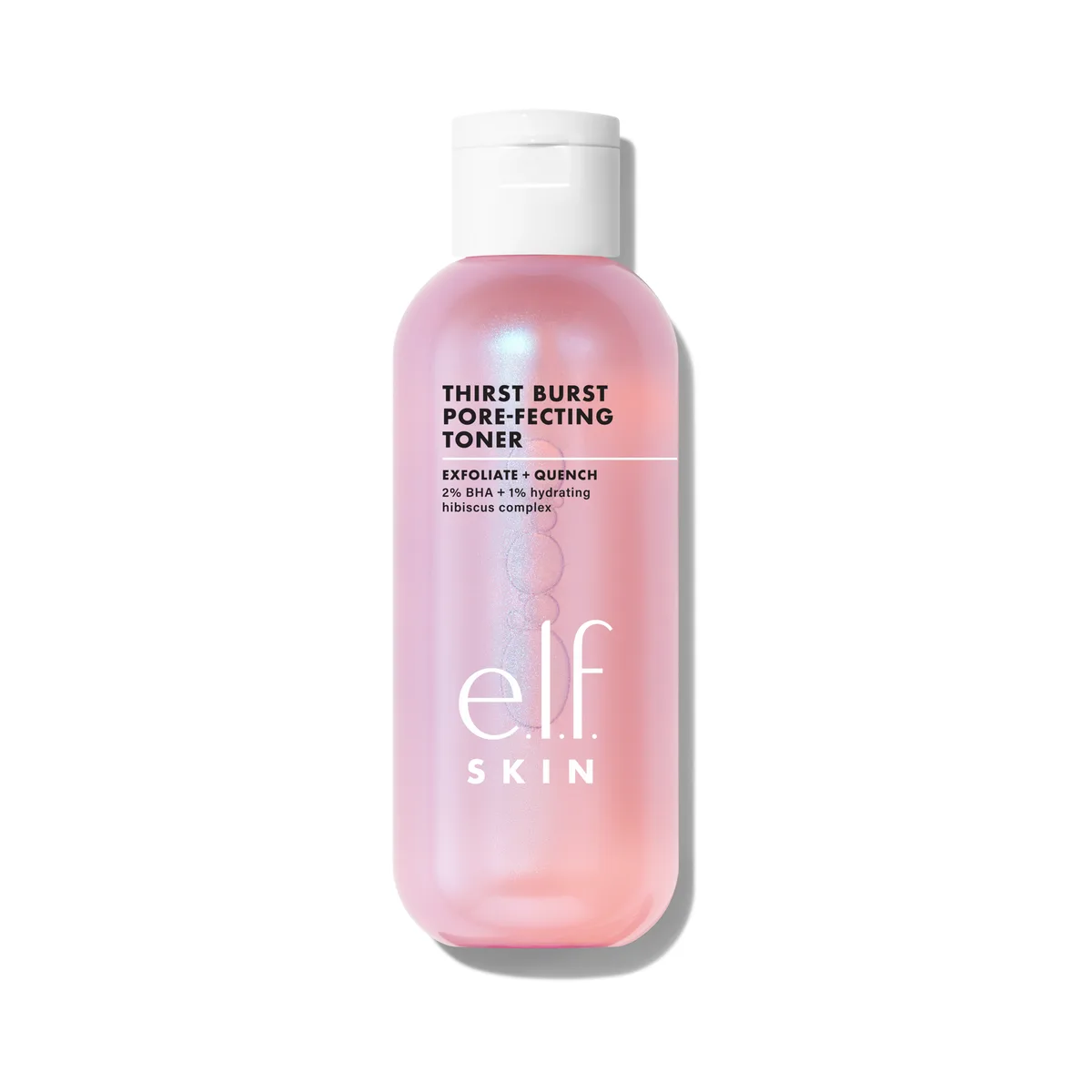
It pairs a proper 2% salicylic acid with gluconolactone (a gentle PHA) and a glycerin-hibiscus hydrating complex, so it exfoliates and refines pores while actively buffering the dryness most acid toners cause. The hydrate-while-you-exfoliate balance, at twelve dollars, is what sets it apart from harsher budget BHA toners.
A genuinely sensible budget exfoliating toner: a proper 2% salicylic acid backed by a gentle PHA and a real hydrating complex, so it refines pores and smooths texture without the tight, stripped feeling. At twelve dollars it's a smart, beginner-friendly BHA option. The only quibble is a possible Red 40 dye that the formula didn't really need.
Because this toner launched in 2025, there isn't yet a large body of independent, long-term reviews to draw on, so the assessment leans on its transparent formula — a proven 2% salicylic acid and PHA pairing buffered by glycerin and hibiscus — and on the established behavior of those ingredients. As real-world feedback accumulates across different skin types, the scores may be refined, particularly around tolerability and long-term pore results.
Verdicts
How well it fits each concern
Verdict by concern tap a concern for the case
Not for thisfor Large PoresIn your profileYou chose · The actives here have been researched for large pores and the evidence does not support the claim.Not yet assessedGentleNo reviews collected yet
The case for it
Salicylic Acid has been researched for this concern and the evidence does not support it.
It is present at an effective concentration, declared or high in the ingredient list.
The formula carries none of the triggers this concern is sensitive to.
Same rule for everyone. “Not for this” is the verdict on 488 of 45,024 concern verdicts across the catalog; rule R10 decided 488 of them.
Unchanged since September 5, 2026, engine 5.1.1.
Strong choicefor BlackheadsIn your profileYou chose · Salicylic Acid is an approved or monograph active for blackheads; this liquid carries it at 2%.Moderate evidenceStandard tolerabilityNo reviews collected yet
The case for it
Salicylic Acid is a first-line active — approved, monograph-listed or named in current guidelines — for this concern.
It is present at an effective concentration, declared or high in the ingredient list.
The formula carries no trigger this concern is sensitive to, with the cautions noted.
Cautions: fungal-acne triggers.
Same rule for everyone. “Strong choice” is the verdict on 1,459 of 45,024 concern verdicts across the catalog; rule R2 decided 892 of them.
Unchanged since September 5, 2026, engine 5.1.1.
R2 — A regulator- or guideline-recognised first-line active, declared at an effective strength, in a form the claim supports. · the full register
Carrying active
Salicylic Acid
Standing
first line — a regulator recognises it for this use; trials support it · per 21 CFR § 333.350 - Labeling of acne drug products. (US Code of Federal Regulations (Legal Information Institute, Cornell Law School)), opened July 27, 2026
Form
adequate (declared 2%) — studied range 0.5–2%, from the OTC monograph or label; judge it after ~6 weeks
Tolerability
standard — fungal triggers
Row checked
against its sources on July 27, 2026 (evidence table ev-2026.09-r228)
The studies behind the evidence row
OTC monograph, Topical Acne Drug Products — salicylic acid 0.5–2% recognized as an acne treatment active — US Food and Drug Administration
Unprovenfor Excess OilinessIn your profileYou chose · Salicylic Acid has early or mechanistic evidence for excess oiliness — a reasonable bet, not a recommendation; the other actives here are not yet assessed for it.Moderate evidenceStandard tolerabilityNo reviews collected yet
The case for it
Salicylic Acid has early or mechanistic evidence for this concern, not trial-backed standing.
It is present below the studied range.
The formula carries no trigger this concern is sensitive to, with the cautions noted.
Cautions: fungal-acne triggers.
What would change this: A concentration inside the studied range would raise this a step.
Same rule for everyone. “Unproven” is the verdict on 1,111 of 45,024 concern verdicts across the catalog; rule R9 decided 1,111 of them.
Unchanged since September 5, 2026, engine 5.1.1.
R9 — Plausible-tier actives alone do not earn a recommendation, and 'not for this' would overstate the case against them. 'Unproven' with the evidence dots lets the reader judge the bet (added 0.2.0 after the first shadow run put a 10% niacinamide serum at 'not for this' for hyperpigmentation). 0.5.0: the closing clause reads the other heroes — "nothing else here addresses it" only when every other active has a researched 'none' row; "not yet assessed" when that is the truth. Rows whose dots read moderate or better now reach R9p first. · the full register
Carrying active
Salicylic Acid
Standing
plausible — trials support it
Form
sub threshold (declared 2%) — studied range 30%, from the trials on the row; needs leave-on contact; judge it after ~6 weeks
Tolerability
standard — fungal triggers
Row checked
against its sources on July 17, 2026 (evidence table ev-2026.09-r228)
Good choicefor Rough TextureIn your profileYou chose · Salicylic Acid is a reference standard by mechanism for rough texture; this liquid carries it at 2%.Moderate evidenceGentleNo reviews collected yet
The case for it
Salicylic Acid has trial-supported standing for this concern.
It is present at an effective concentration, declared or high in the ingredient list.
The formula carries none of the triggers this concern is sensitive to.
Same rule for everyone. “Good choice” is the verdict on 9,564 of 45,024 concern verdicts across the catalog; rule R5 decided 9,072 of them.
Unchanged since September 5, 2026, engine 5.1.1.
Strong choicefor AcneIn your profileYou chose · Salicylic Acid is an approved or monograph active for acne; this liquid carries it at 2%.Moderate evidenceStandard tolerabilityNo reviews collected yet
The case for it
Salicylic Acid is a first-line active — approved, monograph-listed or named in current guidelines — for this concern.
It is present at an effective concentration, declared or high in the ingredient list.
The formula carries no trigger this concern is sensitive to, with the cautions noted.
Cautions: fungal-acne triggers.
Same rule for everyone. “Strong choice” is the verdict on 1,459 of 45,024 concern verdicts across the catalog; rule R2 decided 892 of them.
Unchanged since September 5, 2026, engine 5.1.1.
R2 — A regulator- or guideline-recognised first-line active, declared at an effective strength, in a form the claim supports. · the full register
Carrying active
Salicylic Acid
Standing
first line — a regulator recognises it for this use; trials support it · per § 333.310 Acne active ingredients. (U.S. Food and Drug Administration — 21 CFR Part 333 Subpart D (Topical Acne Drug Products), Code of Federal Regulations via GovInfo), opened July 27, 2026
Form
adequate (declared 2%) — studied range 0.5–2%, from the OTC monograph or label; judge it after ~6 weeks
Tolerability
standard — fungal triggers
Row checked
against its sources on July 27, 2026 (evidence table ev-2026.09-r228)
Promisingfor DullnessIn your profileYou chose · Glycerin has trial-level evidence for dullness but no guideline or regulatory standing yet — promising, short of a recommendation; the other actives here are not yet assessed for it.Moderate evidenceGentleNo reviews collected yet
The case for it
Glycerin & Hibiscus Complex has trial-level evidence for this concern but no guideline or regulatory standing yet.
It is present at an effective concentration, declared or high in the ingredient list.
The formula carries none of the triggers this concern is sensitive to.
What would change this: Guideline or regulatory standing for the active on this concern would move this from a promising bet to a recommendation.
Same rule for everyone. “Promising” is the verdict on 7,858 of 45,024 concern verdicts across the catalog; rule R9p decided 7,858 of them.
Unchanged since September 5, 2026, engine 5.1.1.
R9p — 0.5.0: 'Unproven' beside three filled dots read as one question answered twice with opposite words (7,018 rows). The chip measures standing, the dots measure trial volume; where the row carries at least one RCT or a tier-2 source (moderate dots) and the active is present at a working level, the honest word is Promising. Unproven is reserved for plausible-standing rows with limited or weak evidence, or an under-dosed form. Same rank as Unproven — a bet either way; the dots order them. · the full register
Carrying active
Glycerin & Hibiscus Complex
Standing
plausible — trials support it
Form
adequate — studied range 2–20%, from the trials on the row; needs leave-on contact; judge it after ~1 weeks
Tolerability
gentle
Row checked
against its sources on July 17, 2026 (evidence table ev-2026.09-r228)
The studies behind the evidence row
Harry's Cosmeticology / Baran & Maibach Textbook of Cosmetic Dermatology — humectant, emollient and occlusive classification — standard reference text
Does the jobDoes what a toner is for: not alcohol-driven, adds something real. Not measured from the label: restores skin pH, plays well with what follows.
A verdict is DermApproved’s assessment of how well a product’s ingredients fit a concern — never a claim about what the product treats. Evidence dots and collected reviews sit beside it and are never blended in.
Rules 0.5.1 · evidence table ev-2026.09-r228 · how we decide
Assessment
Pros & Cons
Pros
✓ Properly dosed 2% salicylic acid for real pore exfoliation
✓ Gentle PHA (gluconolactone) softens the exfoliating profile
✓ High glycerin and hibiscus complex prevents stripping
✓ Fragrance-free, oil-free, and fungal-acne safe
✓ Comfortable, beginner-friendly entry into chemical exfoliation
✓ Affordable with a mini size for trialing
✓ Cruelty-free and vegan
Cons
✗ May contain a Red 40 dye that adds nothing functional
✗ Still an acid toner that can sting compromised skin
✗ Too new to have a deep long-term track record
✗ Pump can over-dispense product
✗ Requires sunscreen diligence due to increased sun sensitivity
Review
Full Review
Anyone who has used a leave-on acid toner knows the trade-off intimately: you get the smoother texture and clearer pores, but you often pay for it with a tight, slightly squeaky, parched feeling that has you reaching for extra moisturizer. For years the standard advice was simply to layer more hydration on top to compensate. This e.l.f. toner takes a more direct approach — it builds the hydration into the exfoliating step itself — and the result is a budget BHA toner that's noticeably more comfortable to use than its price would suggest.
The exfoliating half is legitimate, which is the first thing to establish, because plenty of cheap toners gesture at acids without delivering them. Salicylic acid sits fourth on the ingredient list at a stated 2%, the textbook concentration for an over-the-counter BHA. As an oil-soluble acid, salicylic gets into the pore lining to dissolve the sebum and dead-cell plugs behind blackheads and congestion, which is exactly the mechanism behind the 'pore-fecting' claim. Backing it is gluconolactone, a polyhydroxy acid that adds a gentler, more surface-level exfoliation and doubles as a humectant; PHAs are generally better tolerated than stronger acids, so its presence softens the overall profile and makes this friendlier to sensitive or BHA-nervous skin than a bare salicylic toner would be. That BHA-plus-PHA pairing is a thoughtful combination, not a random one.
The hydrating half is where the formula earns its 'thirst burst' name and its distinctiveness. Glycerin sits all the way up at second on the list — a high placement that signals a serious humectant load — with hibiscus fruit extract and erythritol rounding out a moisture complex designed to plump and quench the skin while the acids do their exfoliating work. The practical upshot is that you get the pore-refining benefit without the punishing dryness, which matters more than it sounds. The tightness that acid toners cause isn't a badge of efficacy; it's a sign of barrier stress, and a toner that exfoliates while keeping skin hydrated is simply a better-behaved product. It also makes the toner easier to fit into a routine that already includes other actives, since you're not constantly fighting the dryness it leaves behind.
In use, it's pleasant. The texture is a light, faintly slippery liquid that absorbs fast and leaves no residue, fragrance-free with just a faint base smell. There may be a brief, mild tingle from the acids on application, settling quickly. Early on, skin looks a touch smoother and more refined, and over a few weeks of consistent, spaced-out use, the real benefits — clearer pores, fewer blackheads, more even texture — accumulate. The standard exfoliating-toner rules still apply: ease in a few times a week rather than going daily from the start, don't stack it with another strong acid or a retinoid the same session until your skin is acclimated, and always wear sunscreen, because exfoliating acids increase sun sensitivity.
The honest caveats are few but worth naming. First, the 'may contain' Red 40 colorant. It's a cosmetic dye that adds nothing functional, and while it's harmless for most people, a small subset can react to it, and it's the kind of thing a barrier-conscious formula could happily have skipped. If your skin is reactive, it's a minor flag to keep in mind. Second, it remains an acid toner, so genuinely sensitive, rosacea-prone, or barrier-compromised skin should patch test and introduce it slowly despite the buffering hydration — the glycerin helps, but it doesn't make salicylic acid magically non-irritating. And third, this is a 2025 launch, so the long-term, real-world picture across many skin types is still thin; the formula is sound, but the deep review history that confirms how a product actually performs over months isn't there yet.
On value, it's a strong showing. Twelve dollars for a properly dosed 2% BHA with an added PHA and a genuine hydrating complex is good, and the availability of a mini size means you can trial it cheaply before committing to the full bottle. As an established value brand, e.l.f. isn't charging a premium, and the formula is more considered than the price implies — this isn't a case of paying for buzz. For oily, combination, or congestion-prone skin that wants an affordable, beginner-friendly way into chemical exfoliation without the dreaded post-acid tightness, it's an easy recommendation. Skip the Red 40 mentally if you can, ease in sensibly, and you've got a smart little workhorse toner that punches above its price. It's also a nice illustration of how far affordable formulation has come, and why reading the list pays off. A few years ago, a budget 'pore' toner this cheap would likely have leaned on alcohol and astringents for that tight, deceptively 'clean' feeling, doing more harm than good. This one does the opposite — it pairs a properly dosed acid with serious humectants and a gentler secondary acid, which is the modern, barrier-conscious way to exfoliate. That's worth rewarding with your dollars, because it signals a brand actually thinking about tolerability rather than just slapping a buzzword on a bottle. Use it sensibly, give it a few weeks, keep your sunscreen game tight, and it's a genuinely smart little addition to an oily or congestion-prone routine.
Formula
Key Ingredients
The hero actives that drive this product's performance.
The exfoliating engine — at 2% and sitting fourth on the list, this oil-soluble BHA penetrates into pores to dissolve sebum and dead-cell buildup, which is what drives the pore-refining and smoothing the name promises. The high glycerin around it is designed to keep that exfoliation from feeling stripping.
Established mechanismfor Rough Texture · established mechanism
A gentle polyhydroxy acid that adds a milder, more surface-level exfoliation alongside the BHA while also acting as a humectant. Its inclusion softens the overall exfoliating profile, making this more tolerable for sensitive or BHA-cautious skin than a straight salicylic toner.
Glycerin sits second on the list, with hibiscus extract and erythritol rounding out a hydrating complex that offsets the acids — the 'thirst burst' half of the formula, designed to leave skin plump and quenched rather than tight after exfoliating.
Plausible mechanismfor Dullness
Ingredient standings describe the active at treatment-level doses and
vehicles; this product's own condition grades weigh its actual formula.
Apply after cleansing and before serums and moisturizer, building up from a few times a week. Don't layer it the same session as another strong acid or a retinoid until your skin is acclimated, and always follow daytime use with sunscreen since exfoliating acids increase sun sensitivity.
Results Timeline
Skin can feel smoother after the first few uses. Clearer pores, reduced blackheads, and more even texture typically build over two to four weeks of consistent, spaced-out use; pore appearance improves gradually rather than overnight.
e.l.f. Skin Thirst Burst Pore-fecting Toner (a few nights/week)
Hydrating serum
Moisturizer
Evidence
Science & Expert Perspective
The Science
The formulation pairs two complementary exfoliating acids with a strong humectant buffer, and the evidence behind each is well-mapped. Salicylic acid, the headline 2% BHA, is one of the most extensively studied exfoliants; its lipophilic structure lets it penetrate sebum-filled follicles, where it acts as a comedolytic and keratolytic agent, with robust evidence for reducing blackheads, refining the appearance of pores, and improving texture in oily and acne-prone skin. Gluconolactone, a polyhydroxy acid, exfoliates more superficially than alpha or beta hydroxy acids and carries data suggesting comparable smoothing benefit with lower irritation potential, partly because its larger molecular size slows penetration; it also functions as a humectant, contributing to the formula's hydration. The high placement of glycerin, supported by hibiscus extract and erythritol, reflects an evidence-based strategy: glycerin is a gold-standard humectant for improving stratum corneum hydration, and counteracting the transient barrier disruption that acids cause is a recognized way to improve tolerability of leave-on exfoliants. The one ingredient without a skin-benefit rationale is the possible Red 40 colorant, which is purely cosmetic and a known, if uncommon, sensitizer for some. The honest read is that this is a soundly constructed exfoliating toner whose acids are proven and whose hydrating buffer is a genuine, evidence-aligned improvement on harsher BHA toners.
Dermatologist Perspective
Leave-on salicylic acid toners at around 2% are a well-established recommendation in clinical practice for oily, congestion-prone, and acne-prone skin, valued for their ability to clear pores and smooth texture. A point frequently emphasized is that exfoliating acids should be introduced gradually and not over-used, since daily over-exfoliation damages the barrier and can worsen breakouts. The addition of a gentler PHA like gluconolactone is generally viewed as a reasonable way to broaden tolerability, and pairing acids with humectants such as glycerin is commonly advised to offset dryness. Sun sensitivity is a standard caution, making daily sunscreen non-negotiable with any acid toner. Dermatologists also tend to note that unnecessary dyes offer no benefit and can occasionally provoke reactions in sensitive individuals, so a fragrance-free, dye-free option is sometimes preferred for reactive skin.
Guidance
Usage & Recommendations
How to Use
Use it after cleansing, before serums and moisturizer. Shake well, then dispense one to two pumps onto clean hands or a cotton round and gently sweep or press it over the face and neck, avoiding the eye area. Start a few times a week and build up as your skin tolerates it rather than going daily immediately. Avoid pairing it with another strong acid or a retinoid in the same session until your skin is acclimated. Always follow daytime use with a broad-spectrum sunscreen, since salicylic acid increases sun sensitivity. Follow with a hydrating serum and moisturizer.
Value Assessment
At twelve dollars, this is a strong value for a properly formulated exfoliating toner. A genuine 2% salicylic acid plus a gentle PHA and a real glycerin-hibiscus hydrating complex is more thoughtful than the price suggests, and as an established budget brand e.l.f. isn't attaching a hype premium. The mini size lets you trial it inexpensively before buying the full 4.7 oz bottle, which itself lasts a couple of months at sensible, spaced-out use. The honest framing: you're getting a considered, comfortable BHA toner at a beginner-friendly price, with the only real demerit being the optional Red 40 dye. For affordable chemical exfoliation that doesn't leave skin stripped, it's money well spent.
Who Should Buy
Oily, combination, or congestion-prone skin that wants an affordable, comfortable way into chemical exfoliation for clearer pores and smoother texture. It's a good beginner BHA toner thanks to the hydrating buffer and gentle PHA, and the mini size makes it low-risk to try for anyone curious about acid toners.
Who Should Skip
Very sensitive, rosacea-prone, or barrier-compromised skin should approach cautiously and patch test, since this is still an acid toner. Anyone who reacts to dyes may want to avoid the possible Red 40, and those who already run a robust acid or retinoid routine may not need another exfoliating step crowding the lineup.
Ready to try e.l.f. Skin Thirst Burst Pore-fecting Toner?
A lightweight, slightly slippery liquid that's a touch thicker than water and absorbs quickly without residue.
Scent
Fragrance-free, with only a faint neutral base smell.
Packaging
Pump-top bottle that dispenses onto the hands or a cotton round; available in full and mini sizes.
Finish
lightweightfast-absorbingfresh
What to Expect on First Use
On the first few uses it feels light and hydrating, with maybe a faint, brief tingle from the acids that settles quickly. Skin looks a little smoother and more refined early on. As with any exfoliating toner, easing in a few times a week prevents over-exfoliation, and a mild adjustment period of slight extra purging is possible for acne-prone skin.
How Long It Lasts
About 2-3 months on the full size with several-times-weekly use; the mini suits travel or trialing.
Released in 2025, it taps the enduring popularity of leave-on exfoliating toners — a category cemented by cult BHA products — while answering the common complaint that acid toners leave skin tight and dry. e.l.f.'s angle was to build hydration directly into the formula, hence the 'thirst burst' branding alongside the 'pore-fecting' exfoliation.
About e.l.f. Skin Established Brand (5–20 years)
e.l.f. Skin (from e.l.f. Cosmetics, founded 2004) is a value brand rather than a clinical one, but it has a track record of building credible budget versions of proven categories. This exfoliating toner uses a recognized 2% salicylic acid plus PHA approach rather than a gimmick, which gives the formula real footing even without a long clinical history.
Brand founded: 2004 · Product launched: 2025
Myth vs. Reality
Common Myths
Myth
An exfoliating toner should leave your skin feeling tight to prove it's working.
Reality
Tightness is a sign of over-stripping, not effective exfoliation. This toner deliberately pairs its 2% BHA with glycerin and hibiscus so skin stays hydrated; you can get the pore-refining benefit without the uncomfortable squeak, and chasing tightness only risks barrier damage.
Myth
More frequent use of a BHA toner clears pores faster.
Reality
Over-using acids damages the barrier and can worsen breakouts and sensitivity. Salicylic acid works best at a sustainable cadence; a few times a week buffered with hydration delivers better long-term results than daily over-exfoliation.
FAQ
Frequently Asked Questions
How strong is the acid in the e.l.f. Thirst Burst Pore-fecting Toner?
It contains 2% salicylic acid, the standard over-the-counter BHA strength, listed fourth in the formula. It's paired with gluconolactone, a gentler PHA, so it exfoliates effectively into the pores while staying more tolerable than a straight high-strength acid toner.
Does the e.l.f. Thirst Burst Toner dry out your skin like other acid toners?
It's designed not to. Glycerin sits high in the formula alongside hibiscus extract and erythritol to hydrate while the acids exfoliate, so skin stays plumper and more comfortable rather than tight. That hydrate-while-you-exfoliate balance is the toner's main selling point.
How often should I use the e.l.f. Thirst Burst Pore-fecting Toner?
Start a few times a week and build up as your skin tolerates it, rather than going daily right away. Salicylic acid works best at a sustainable cadence; over-using it damages the barrier and can worsen breakouts, so spaced-out use with good hydration gives better long-term results.
Is the e.l.f. Thirst Burst Toner good for acne and blackheads?
Yes, this is one of its core uses. The 2% salicylic acid is oil-soluble, so it penetrates pores to dissolve the sebum and dead-cell plugs behind blackheads and congestion, helping refine pores and smooth texture over a few weeks of consistent use.
Does the e.l.f. Thirst Burst Toner contain dye?
It may contain Red 40 (CI 16035), a cosmetic colorant listed as a 'may contain' ingredient. It adds nothing functional and is harmless for most people, but a small number can react to it, so reactive skin should note it and patch test.
Can I use the e.l.f. Thirst Burst Toner with retinol?
You can include both in your routine, but don't layer this acid toner and a retinoid in the same session until your skin is well acclimated, to avoid irritation. Many people alternate them on different nights. Always wear sunscreen, since both increase sun sensitivity.
Reviews
What Reviewers Tend to Say
Recurring themes our editors read across retailer reviews of this product — summaries in our words, not quotations, and not a substitute for your own patch test.
Common Praise
Smooths and refines without stripping
Hydrating for an acid toner
Pleasant lightweight texture
Affordable BHA option
Common Complaints
Contains a possible Red 40 dye
Can sting on compromised skin
Too new to judge long-term results
Pump can over-dispense
Notable Endorsements
Early coverage in budget exfoliating-toner roundups
A complete cleanse-treat-moisturise-protect routine from one budget brand costs less than a single prestige serum — and the interesting question is not whether that works, but which steps it works for.
The whole case for salicylic acid rests on one unglamorous fact of chemistry: it dissolves in oil. Understand that, and you know exactly when it beats a glycolic acid — and when it's overkill.
Polyhydroxy acids get filed under 'beginner exfoliant,' as if gentle meant weak. The truth is stranger: their bulk is exactly why they work for the skin everything else sets on fire.
Jan 10, 2026· 5 min
Questions people ask about Acne
Verified answers from our questions library — the nuance a product page cannot carry.
Products, answers, therapy guides, tools and articles in one search. Brand names,
slang and abbreviations all work — accutane finds isotretinoin, bacne finds truncal acne.