e.l.f. Skin and the Case for a Whole Routine at Drugstore Prices
A complete cleanse-treat-moisturise-protect routine from one budget brand costs less than a single prestige serum — and the interesting question is not whether that works, but which steps it works for.
Read the preview
From the DermApproved blog, in Dupes and Budget Buys: you can build a whole routine from one drugstore brand for less than a single prestige serum. For one step, cheap isn't a compromise — regulation limits everyone to the same actives, so texture decides it. Two steps still repay spending more, and they're not the obvious ones. For the full breakdown, visit dermapproved.com/blog.
The whole routine, for the price of one bottle
There is a specific pleasure in the arithmetic here. Cleanser, toner, treatment serum, moisturiser, eye cream, sunscreen — six steps, a complete AM and PM structure, sourced entirely from a single drugstore brand, for less than the cost of one bottle from the prestige counter. The routine exists; you can put it in a basket this afternoon; the shelf is at the front of the store rather than behind a consultation desk.
The reflexive skincare-internet response to that fact is either uncritical enthusiasm or reflexive dismissal, and both are lazy. e.l.f. Skin's formulations are meaningfully better than the price positioning implies and meaningfully less exciting than the marketing implies, and those two things are true at the same time about different products in the same range.
The question worth actually answering is structural, not brand-specific: which steps in a routine are close to commoditised — where the mechanism is well understood, the ingredients are cheap, and a careful budget formulation loses you nothing you could measure — and which steps are genuinely formulation-dependent, where concentration, pH, stability and delivery decide whether anything happens at all?
The answer covers more of the routine than most people expect. But it does not cover all of it, and the two exceptions are the two steps people most often assume they can economise on.
The steps that are nearly solved problems
Start with cleansing, which is the easiest case to make. A facial cleanser is on your skin for perhaps forty seconds and then goes down the drain. Whatever 'actives' it contains have almost no contact time to work with, which means the meaningful variables are surfactant mildness and whether the formula strips the barrier. Those are well-understood and inexpensive to get right. A gentle, ceramide-containing cream cleanser like e.l.f. Skin Pure Skin Cleanser is doing the job a cleanser is supposed to do, and the ceramides and niacinamide on the label are best understood as insurance against harshness rather than as treatment. That is not a criticism — it is what a good cleanser is.
The rinse-off logic has one important exception. A medicated cleanser with a genuine active, like the salicylic acid in e.l.f. Skin Blemish Breakthrough Acne Fighting Cleanser, is limited by the same contact-time problem, but salicylic acid is lipophilic and partitions into follicles quickly, so it does more in forty seconds than a water-soluble active would. Still a supporting player, not the treatment step.
Hydration is the second near-solved category. Humectants, emollients and occlusives are old, cheap, thoroughly characterised chemistry, and there is no proprietary magic in glycerin or hyaluronic acid. A multi-weight HA serum such as e.l.f. Skin Holy Hydration! Triple Bounce Serum does the same thing a costlier one does, and a well-built emollient cream like e.l.f. Skin Holy Hydration! Face Cream or the oat-and-centella e.l.f. Skin Holy Hydration! Barrier Goals Cream competes on texture, not on capability. Where prestige moisturisers earn their price is usually in sensory experience and lipid sophistication, both of which are real but not the same as efficacy.
This is the honest version of the 'dupe' argument, and it is a better one than the usual claim that expensive products are a scam. They are not a scam. They are frequently paying for something that is not doing the work.
Sunscreen: the step where cheap is structurally defensible
Here is the most counterintuitive part of the case, and it turns on regulation rather than chemistry.
The United States has a short, dated list of approved UV filters. A brand cannot differentiate on filter technology the way European or Asian brands can, because the same handful of molecules is all anyone is permitted to use. Which means a budget American sunscreen and a luxury American sunscreen are frequently built on the same actives at similar percentages. e.l.f. Skin Suntouchable Invisible SPF 35 runs avobenzone with homosalate, octisalate and octocrylene; so does a great deal of what sits three price tiers above it. The differentiator is the vehicle — how it feels, whether it pills, whether it leaves a cast — not the protection chemistry.
And the vehicle is not a trivial concern, because of the single most under-appreciated number in sun protection. SPF is measured in the lab at 2 mg/cm². Under real conditions people apply roughly 0.39 to 1.0 mg/cm² — somewhere between a fifth and a half of the tested dose — and the relationship between thickness and measured SPF follows a curve steep enough that a study of high-performance sunscreens concluded double application should simply be the standing recommendation.
Follow that through and the practical conclusion inverts the usual instinct. The sunscreen that protects you best is not the one with the best formula on paper; it is the one whose texture you tolerate enough to apply at a genuinely generous dose, every day, and reapply. A tinted, cosmetically pleasant option like e.l.f. Skin SUNTOUCHABLE! Whoa Glow SPF 30 or a stick format like e.l.f. Skin Suntouchable Invisi-Stick SPF 50 for reapplication over makeup can outperform a technically superior sunscreen that you ration because of what it cost. If you want to compare filter loads across price tiers rather than take that on trust, the Compare tool puts the INCI lists side by side.
Where the money still buys something measurable
Now the exceptions, and they are the steps where 'it has the ingredient on the label' stops being a useful test.
Vitamin C is the clearest case. The benchmark formulation in the literature is specific: 15% L-ascorbic acid with 1% alpha-tocopherol, stabilised by 0.5% ferulic acid, an arrangement that improved the chemical stability of both vitamins and doubled photoprotection against solar-simulated irradiation, from roughly fourfold to eightfold. That is a formulation result, not an ingredient result — the same molecules at the wrong pH or without the stabiliser do not reproduce it.
e.l.f. Skin Bright Icon Vitamin C + E + Ferulic Serum is an interesting object against that standard. It carries ferulic acid and tocopherol, and it advertises a dual vitamin C at the benchmark strength — but the INCI order puts ethyl ascorbic acid ahead of ascorbic acid, meaning most of that total is a derivative rather than the free acid the research used. Derivatives are more stable and gentler, and the trade-off is real rather than fraudulent, but they are not the studied molecule and should not be assumed to deliver the studied result. This is precisely a step where knowing what you are buying matters more than the price, and where an inexpensive product can still be a sensible purchase provided you have calibrated your expectations to the derivative rather than to the benchmark. Our vitamin C ingredient page lays out which forms have what behind them.
Retinoids are the second exception, for a different reason. e.l.f. Skin Youth Boosting Advanced Night Retinoid Serum stacks hydroxypinacolone retinoate with retinal and retinyl propionate. Retinaldehyde is the strongest ingredient in that list by evidence: a randomised double-blind trial of 0.1% and 0.05% retinaldehyde creams found significant improvement in photoaged skin with good tolerability, and a systematic review of over-the-counter vitamin A products supports the class while being clear about how much the specific compound and dose matter. The retinal dose declared on this label sits just below the lower of those two studied strengths — a reasonable starting concentration, not a substitute for a prescription retinoid if that is what your goals require. Where price genuinely buys something in this category is usually stability, encapsulation and concentration, all of which are expensive to do well.
Standouts, and things that are simply inexpensive
It is worth separating those two categories inside any budget range, because a brand that spans a whole routine will inevitably contain both.
The standouts here are the ones where the formulation choice is genuinely considered rather than merely adequate. The barrier-focused creams and the ceramide cleanser are built with an actual point of view about what compromised skin needs. The salicylic-and-PHA combination in e.l.f. Skin Thirst Burst Pore-fecting Toner is a sensible pairing — a lipophilic acid for follicles alongside a large-molecule PHA that works more superficially — and is a legitimate treatment step rather than a hydrating toner in disguise.
The merely-inexpensive category is not a criticism either, just a different proposition. Peptide eye creams and plumping-primer hybrids sit closer to cosmetic than corrective, and the peptides in them have far less evidence behind them than the retinoids and acids elsewhere in the same range. Buying those is fine. Buying them expecting the effect that a retinoid produces is where disappointment comes from — and it is exactly the confusion that price tiers, in prestige skincare, are also very good at producing.
Assembled deliberately, though, the full-routine claim holds up. A complete routine built from this one range is a genuinely defensible starting structure, and the wider budget routine shows what the same logic looks like when you are free to mix brands. The Routine Finder tool will build the structure around your own skin type; the Dupe Finder tool is the right instrument if you already own a prestige product and want to know whether the cheaper version shares what actually matters in it.
The false economy nobody prices in
One last thing, and it is the variable that undoes more budget routines than any formulation shortfall.
A product only works if it is applied, and cosmetic acceptability is a documented determinant of whether that happens. When patients were asked which attributes of a topical mattered most across acne, atopic dermatitis and plaque psoriasis, the list was almost entirely sensory — absorbs quickly, is not greasy, is not sticky, does not stain, is easy to apply. In psoriasis specifically, quantitative assessment found patients preferred solution and foam vehicles over creams, gels and ointments, with the authors noting the implication for adherence directly. Treatment-related causes of poor adherence in dermatology consistently include poor cosmetic characteristics such as slow absorption and greasiness.
Which means the calculation is not 'cheap product versus expensive product'. It is 'a product you use every night versus a product you use four times and abandon'. An excellent formula applied twice a week is beaten by a decent formula applied daily, and that is not a moral point about consistency — it is dose. The cheapest sunscreen in the world protects nothing from the back of a drawer.
So the honest recommendation is neither 'buy budget' nor 'buy prestige'. Spend nothing extra on the steps that are solved — cleansing, hydration, basic barrier support, and, in the US, sunscreen chemistry. Spend attention rather than money on vitamin C and retinoids, where reading the INCI order tells you more than reading the price. And on every step, weight the version you will actually reach for, because the routine that gets run is the only one that has any effect at all.
Products mentioned
Independently reviewed and scored — the real products behind this piece.


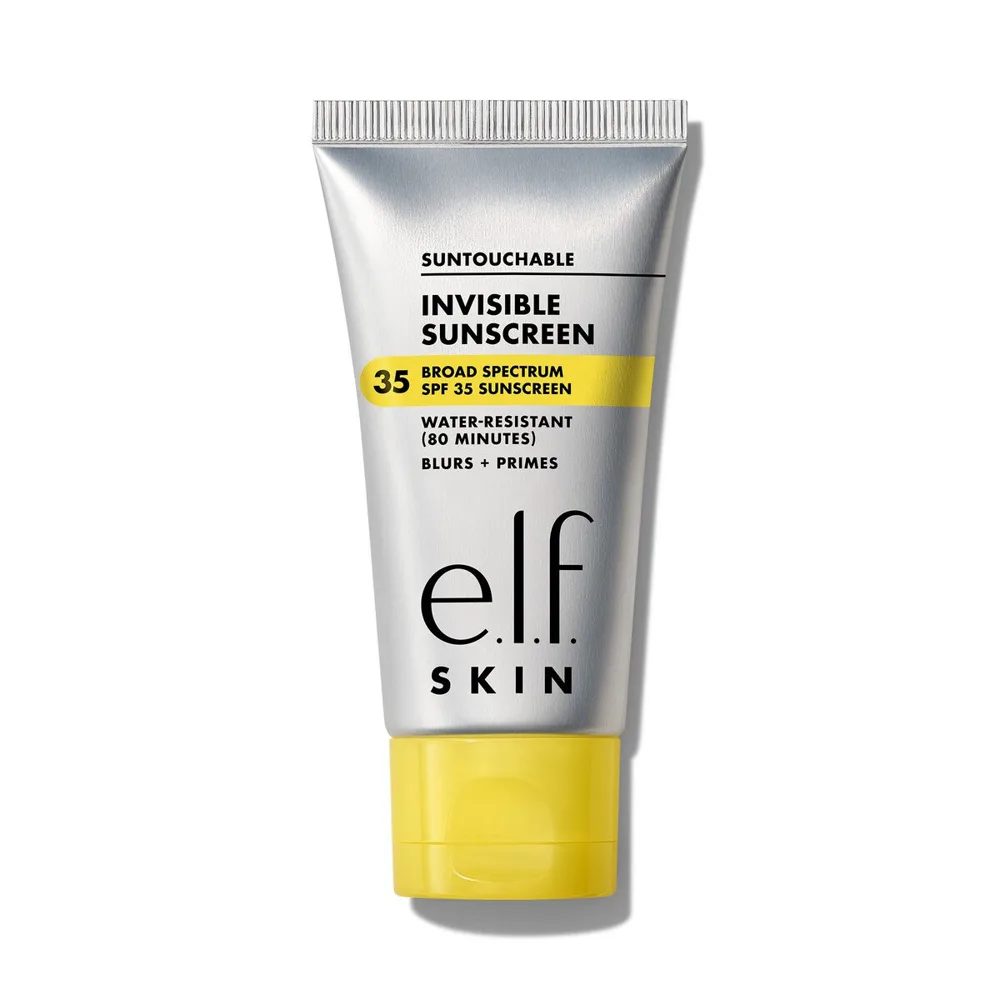
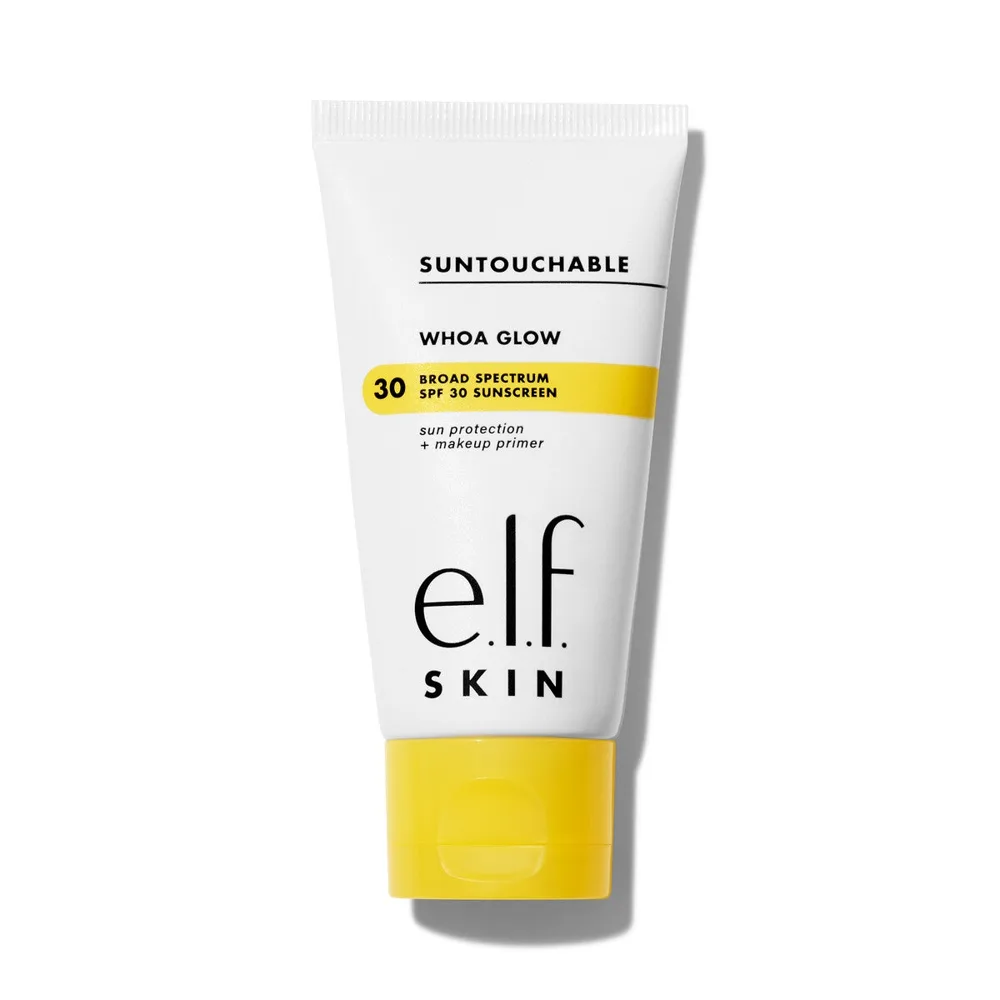


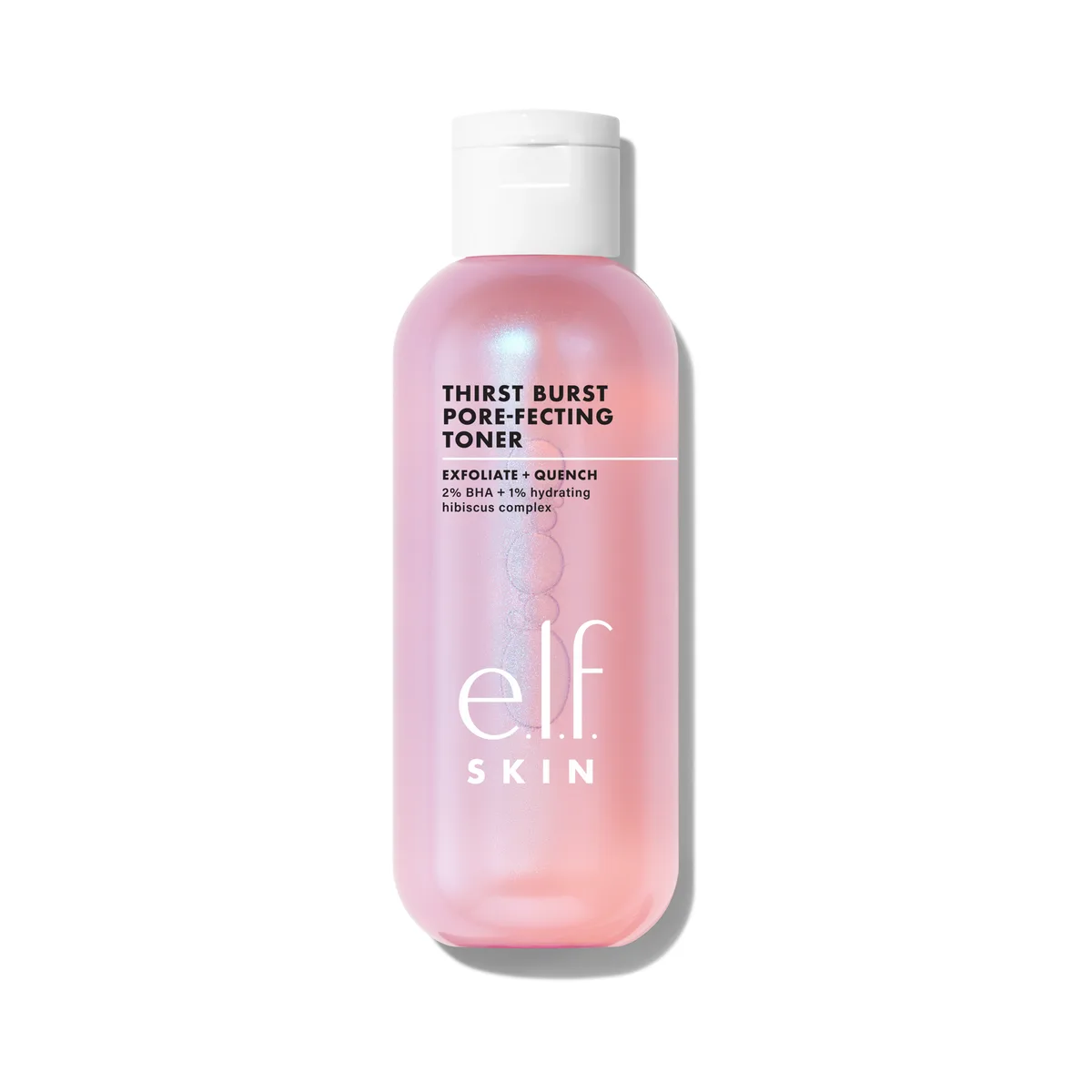
- Routine e.l.f. Skin Routine on a Budget: The Full Starter Lineup The complete single-brand routine this post argues is structurally defensible.
- Routine Budget Skincare Routine (Under $75 Total) The same logic with the freedom to mix brands.
- Ingredient Ceramides Insurance against harshness in a rinse-off, rather than a treatment claim.
- Ingredient Niacinamide (Vitamin B3) The other supporting active that shows up across the range.
- Ingredient Salicylic Acid (BHA) Lipophilic, so it partitions into follicles fast enough to matter even in a cleanser.
- Ingredient Glycerin Cheap, characterised humectant chemistry with no proprietary magic.
- Ingredient Hyaluronic Acid Same argument — the multi-weight version is not a premium capability.
- Ingredient Vitamin C (L-Ascorbic Acid) Which form is in the bottle decides whether the benchmark research applies.
- Ingredient Retinal (Retinaldehyde) The best-evidenced compound in the range's retinoid stack.
References
- Ferulic acid stabilizes a solution of vitamins C and E and doubles its photoprotection of skin — Journal of Investigative Dermatology, 2005
- Application of sunscreen--theory and reality — Photodermatology, Photoimmunology & Photomedicine, 2014
- Relationship between sun-protection factor and application thickness in high-performance sunscreen: double application of sunscreen is recommended — Clinical and Experimental Dermatology, 2012
- Efficacy and safety of retinaldehyde 0.1% and 0.05% creams used to treat photoaged skin: A randomized double-blind controlled trial — Journal of Cosmetic Dermatology, 2018
- Evidence for the Efficacy of Over-the-counter Vitamin A Cosmetic Products in the Improvement of Facial Skin Aging: A Systematic Review — The Journal of Clinical and Aesthetic Dermatology, 2021
- Assessing attributes of topical vehicles for the treatment of acne, atopic dermatitis, and plaque psoriasis — Cutis, 2014
- Patients with psoriasis prefer solution and foam vehicles: a quantitative assessment of vehicle preference — Cutis, 2002
Every cited link is verified to resolve to the paper named. Where a source could not be independently confirmed, it is listed without a link rather than pointing you somewhere wrong.
Frequently asked
Can a drugstore brand really cover every step of a routine?
Structurally, yes. Cleansing, hydration, barrier support and — in the US — sunscreen are steps where a careful budget formulation loses you nothing measurable, because the mechanisms are well understood and the ingredients are inexpensive. The steps that demand more scrutiny are vitamin C and retinoids, where the specific form and concentration decide the outcome.
Is a cheap sunscreen really as protective as an expensive one?
In the US it often uses the same filters, because the approved list is short and everyone draws from it. The bigger variable is dose: SPF is tested at 2 mg/cm² while people typically apply between 0.39 and 1.0 mg/cm². A texture you apply generously and reapply beats a superior formula you use sparingly.
Does 15% vitamin C on the label mean it matches the research?
Not automatically. The benchmark formulation is 15% L-ascorbic acid with 1% tocopherol and 0.5% ferulic acid. If the INCI list puts a derivative such as 3-O-ethyl ascorbic acid ahead of ascorbic acid, most of that percentage is the derivative — more stable and gentler, but not the molecule the photoprotection data came from.
Is the retinal level in a budget serum strong enough to do anything?
It sits at the low end of the studied range — randomised trial data on photoaged skin used retinaldehyde creams at 0.05% and 0.1% — so a lower declared strength is a reasonable starting point rather than a maximal one. That is a fair place to begin if you are retinoid-naive, and not a replacement for a prescription retinoid if that is what your goals need.
Where should I spend more if my budget is limited?
Spend attention rather than money. Cleanser, hydrating serum, moisturiser and sunscreen are the steps where budget versions hold up. Put the scrutiny into vitamin C and retinoid choices, where reading the ingredient order tells you more than the price does — and where a poorly-formulated expensive product is also possible.
Isn't buying cheap a false economy if the product isn't as good?
The more common false economy runs the other way. Cosmetic acceptability — absorption, greasiness, stickiness — is a documented driver of whether people keep using a topical, and a product abandoned after four uses delivers nothing regardless of what it cost. Weight the version you will actually reach for nightly.