



The Truth About Pore Strips, Pore Vacuums, and 'Shrinking' Your Pores
You cannot shrink a pore. But you can change how visible it is — and almost everything sold to 'minimize' pores is pulling the wrong lever.
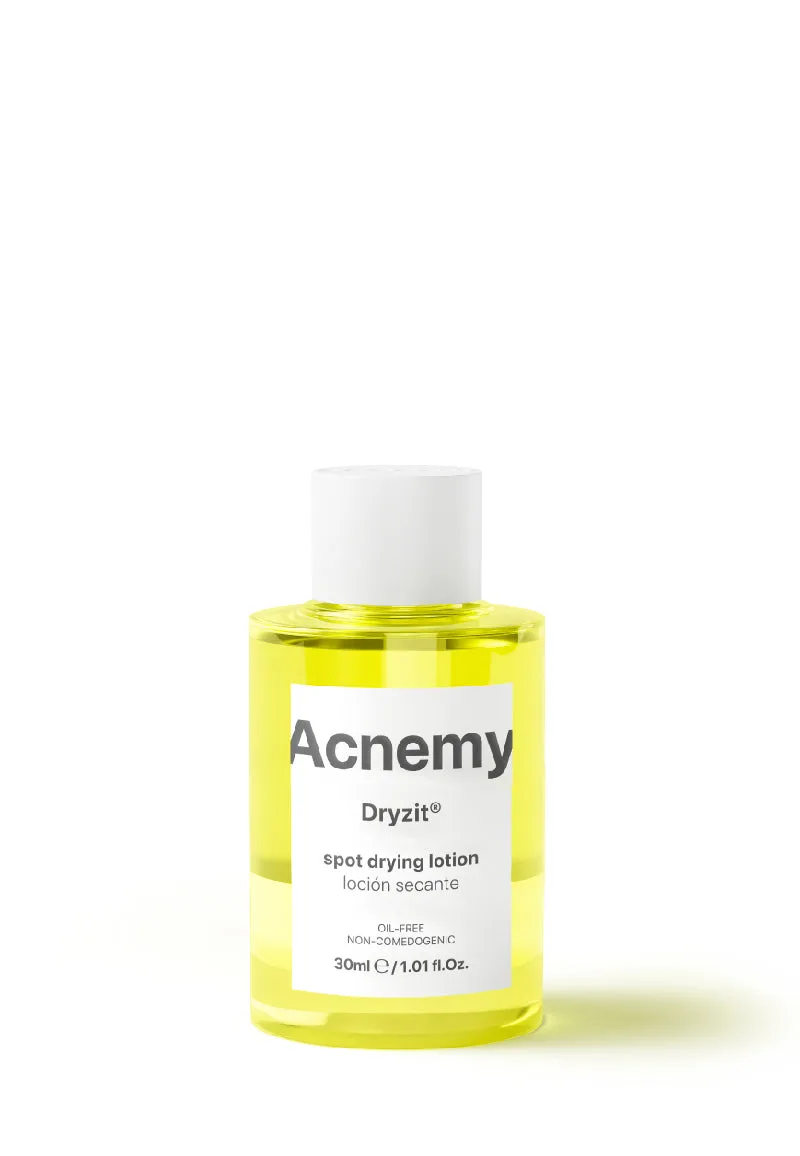
This is the calamine drying lotion format — invented by Mario Badescu in the 1960s — rebuilt for the niacinamide era. Most legacy versions are just calamine, sulfur, and alcohol. Dryzit adds 5% niacinamide and a low-dose salicylic acid assist, addressing the post-spot redness and surface keratin that the original formats ignored.
Dryzit takes the classic bifasic calamine spot treatment — a category invented by Mario Badescu in the 1960s — and rebuilds it for the niacinamide era. You get the same satisfying ritual of dipping a cotton swab into a pink powder layer and dabbing it onto a whitehead before bed, but with 5% niacinamide and a low-dose salicylic acid assist that the original format never had.
Note: This suspension launched in 2020 by an emerging brand and our assessment is based on moderate real-world data. Scoring relies on ingredient analysis, formulation quality, and several hundred user reviews across retailers.
The case for it
What would change this: A concentration inside the studied range would raise this a step.
Same rule for everyone. “Good choice” is the verdict on 9,564 of 45,024 concern verdicts across the catalog; rule R4 decided 84 of them. Unchanged since September 5, 2026, engine 5.1.1.
Brand or formulator? Disclose a concentration or correct a fact →
The studies behind the evidence row
The case for it
What would change this: A concentration inside the studied range would raise this a step.
Same rule for everyone. “Good choice” is the verdict on 9,564 of 45,024 concern verdicts across the catalog; rule R4 decided 84 of them. Unchanged since September 5, 2026, engine 5.1.1.
Brand or formulator? Disclose a concentration or correct a fact →
The studies behind the evidence row
A verdict is DermApproved’s assessment of how well a product’s ingredients fit a concern — never a claim about what the product treats. Evidence dots and collected reviews sit beside it and are never blended in. Rules 0.5.1 · evidence table ev-2026.09-r228 · how we decide
The bifasic drying lotion is one of the few skincare formats that hasn't really changed since the 1960s. The original sat in glass bottles on bathroom counters for decades — calamine, sulfur, alcohol, and nothing else, separated into a clear top layer and a pink chalk bottom layer that you were supposed to dip a cotton swab into without shaking. The mechanism worked. It still works. But for sixty years nobody bothered to update the recipe to include any of the actives that have become standard in modern acne care, and that's the gap Acnemy walked into when it launched Dryzit out of Barcelona in 2020.
Open the bottle and the layout is immediately familiar. There's the clear alcohol-and-water phase on top, and there's the pink calamine sediment at the bottom, exactly where you'd expect it. The instructions are also familiar: do not shake, dip a cotton swab into the pink layer, dab it onto a surfaced whitehead, leave overnight. That instruction is the one people most often get wrong, and it isn't fussiness — the separation is the entire design. The drying agents live in the sediment. Shake the bottle and you disperse them through the alcohol, diluting the deposit you were supposed to be transferring to the spot.
What's different is what's in the formula. Niacinamide at 5% sits in the liquid phase, which means every dab delivers a meaningful dose of one of the most well-validated anti-inflammatory ingredients in skincare. There's also a low concentration of salicylic acid — 0.16%, modest by design — bolstered by willow bark extract, and the calamine itself is joined by 4% zinc oxide and a little titanium dioxide in the powder phase. Sulfur, the most polarizing ingredient in the legacy formulas, is omitted entirely, which means Dryzit doesn't smell like rotten eggs and won't trigger the gag reflex of anyone who's ever had to wear a sulfur spot treatment to bed. The whole ingredient list runs to eleven items, and there isn't a passenger among them.
The application ritual is part of what makes this category compelling. You can see exactly what you're putting on the spot, you can feel the slight sting of the alcohol on contact, and within a minute the calamine has dried into a faintly visible pink chalk cap. There's a tactile reassurance to it that hydrocolloid patches don't quite match — the patch is a passive bandage, while the drying lotion is an active intervention you can watch happening in real time. By morning, the chalk cap has typically integrated with whatever the spot was extruding overnight, and the cleanup involves nothing more than splashing water on your face. Underneath, the spot is visibly flatter and pinker than it was the night before, and the niacinamide has been working on the surrounding redness while you slept. Give it two or three nights and that lingering red mark — usually the part of a pimple that outlasts the pimple — starts fading too.
Where the format earns its limits is in the alcohol base. Isopropyl alcohol is the first ingredient, and that's appropriate for a tool meant to be applied via cotton swab to an isolated spot — it dries fast, it disinfects, and it carries the actives where they need to go. It is wildly inappropriate for full-face use, and Dryzit, like every other drying lotion, will trash a skin barrier in a hurry if anyone tries to treat it as a serum. That temptation is real, because the bottle looks like a toner and the price feels like a toner. Resist it: a week of full-face alcohol will leave you with a stripped barrier and, perversely, more oil than you started with. The pink visible residue also rules out daytime use unless you're committed to walking around with a chalky dot on your face. This is a bedtime tool, full stop, and best layered as the absolute final step over an already-moisturized routine.
Sequencing matters too. The rest of the face gets its retinoid, its acid, its benzoyl peroxide as usual — but the spot itself should be left alone until the Dryzit goes on last. Stacking a keratolytic on top of an alcohol-and-zinc poultice on a single square centimeter of already-inflamed skin is how a two-day pimple turns into a five-day scab.
The other limit is what the format can and can't address. Dryzit is for whiteheads — for the moment when you can see the surfaced head of a pustule and you want to flatten it before morning. It does that job well. It does not work on cystic acne, where the inflammation is deep and there's nothing for the calamine to wick out at the surface. It does not work on closed comedones, where there's no fluid to absorb. It does not prevent future breakouts. It is a reactive intervention for a specific stage of a specific kind of pimple, and reading it as anything else will lead to disappointment. The reviews reflect exactly that boundary — a few hundred of them, averaging well, with the recurring complaint being not that it fails but that it only works on spots that have already come to a head.
As a price-quality proposition, Dryzit lands in a defensible spot. At around seventeen dollars for a 30ml bottle that will probably last most users six months or longer, the per-use cost is essentially trivial — pennies a pimple. The heritage versions cost about the same for a slightly larger bottle, but they lack the niacinamide and carry the sulfur, which plenty of people actively dislike. If you want the original format and don't mind the smell, the legacy products remain perfectly good. If you want a modernized take designed to also manage post-inflammatory redness and to be more pleasant to live with, Dryzit is the obvious upgrade.
Two footnotes before you buy. The salicylic acid, low as it is, makes this one to skip during pregnancy. And anyone with eczema, rosacea, or a barrier that's already complaining should stay away entirely — the alcohol will sting and the zinc won't apologize.
For an emerging Spanish indie brand without a long clinical track record, the formulation work here is thoughtful and the result holds up against products with sixty years of name recognition behind them. That's not a small accomplishment in a category where the original recipe has remained essentially unchanged for decades.
The hero actives that drive this product's performance.
| Ingredient | Function | Evidence |
|---|---|---|
| Calamine (Zinc Carbonate) 5% (5%) | Settles into a chalky pink layer at the bottom of the bottle that you dab onto a whitehead with a cotton swab. In Dryzit, the calamine works alongside zinc oxide and titanium dioxide to absorb sebum and exudate from the spot while soothing the surrounding inflammation, creating a drying poultice effect overnight. | Not yet assessed |
| Niacinamide 5% (5%) | Sits in the upper liquid phase of the bifasic formula and reduces the inflammatory cascade around the spot, dialing down redness while regulating sebum output. At 5% it's high enough to make a measurable difference in post-spot redness without irritating already-stressed skin. | Limited for Acne |
| Salicylic Acid 0.16% (0.16%) | A low concentration that's lipophilic enough to penetrate the spot and break down the keratin plug at the surface. The amount is intentionally modest because Dryzit relies on the calamine and zinc to do the bulk of the drying — the salicylic acid is here as an exfoliating assist, not the lead actor. | Regulator-approved for Acne · emerging certainty |
| Zinc Oxide 4% (4%) | Joins the calamine in the powder phase to provide additional sebum absorption and a mild antibacterial action against acne-causing bacteria. The combined zinc-based powder cap that forms on the spot is what gives Dryzit its visible drying effect by morning. | Not yet assessed |
Ingredient standings describe the active at treatment-level doses and vehicles; this product's own condition grades weigh its actual formula.
Isopropyl Alcohol, Aqua (Water), Zinc Carbonate, Zinc Oxide, Titanium Dioxide, Niacinamide, Glycerin, Methylpropanediol, Salicylic Acid, Salix Alba (Willow) Bark Extract, 4-Terpineol
treatment
PM
Use as a final step at night on isolated whiteheads only. Do not shake the bottle — dip a cotton swab into the bottom calamine layer and dab onto the spot. Avoid layering retinoids, AHAs, or benzoyl peroxide on the same spot.
Visible drying and flattening of a whitehead by morning after one overnight application. Post-inflammatory redness improves over 2-3 days as niacinamide compounds.
The active mechanism in Dryzit pulls together several well-established interventions that work synergistically when delivered to the same spot. Calamine — chemically a mixture of zinc carbonate and ferric oxide — has been used as a topical antipruritic and drying agent for over a century and is recognized in pharmacopeias as a Category I active for the relief of inflamed skin. Combined with the 4% zinc oxide in the powder phase, the deposit on the spot creates a hygroscopic chalk cap that pulls exudate out of the lesion through simple capillary action. The niacinamide content is where Dryzit pulls from more recent literature. A 2013 review in the International Journal of Cosmetic Science summarized multiple controlled studies showing that topical niacinamide at concentrations of 2-5% reduced inflammatory lesions in mild-to-moderate acne over 8-12 weeks, with effect sizes comparable to topical clindamycin in head-to-head comparisons. The same body of literature has documented niacinamide's effect on post-inflammatory erythema, which is what makes the inclusion at 5% in a spot treatment particularly clever — it addresses both the active spot and the lingering red mark in a single application. The low-dose salicylic acid serves a smaller but real role. At 0.16%, it's well below the concentration used in leave-on BHA exfoliants, but applied to a confined spot it provides enough lipophilic penetration to begin breaking down the keratin plug at the follicular opening. The combination of physical absorption (calamine and zinc) plus follicular keratolysis (salicylic acid) plus anti-inflammatory action (niacinamide) is more comprehensive than any single mechanism would be on its own, and the bifasic delivery system keeps the actives stable in the bottle until the moment of application.
Dermatologists generally consider bifasic calamine drying lotions a reasonable adjunct for managing isolated surfaced whiteheads, though they're rarely recommended as a primary acne treatment. Clinicians frequently stress that the format is best understood as a finishing tool — something to deploy at the very end of a properly structured acne regimen that already includes a leave-on actives like adapalene, benzoyl peroxide, or azelaic acid. The risk concern flagged most often is that users treat drying lotions as a substitute for real treatment and end up applying alcohol-heavy products too broadly, damaging their skin barrier. Used as intended on individual spots a few times a week, products like Dryzit are low-risk and can shorten the visible lifespan of a single pimple by a day or two. Dermatologists also note that the addition of niacinamide makes Dryzit gentler on the skin around the spot than legacy sulfur-based formulas.
Apply at the very end of your nighttime routine, only on isolated surfaced whiteheads. Do not shake the bottle — the separation is intentional. Dip a clean cotton swab into the pink calamine layer at the bottom, transferring a small amount of the powder onto the swab, then dab it directly onto the spot. The pink chalk will dry within a minute. Leave overnight, then rinse off in the morning with your normal cleanser. Do not apply over open or broken skin. Do not use on areas treated with retinoids, AHAs, or benzoyl peroxide on the same evening — those should be applied to the rest of the face first and the spot left untreated until the Dryzit goes on as a final step.
At around seventeen dollars for a 30ml bottle, Dryzit is priced similarly to Mario Badescu's original drying lotion but with a meaningfully more modern formulation. Per use, the cost is negligible — a single bottle will last most spot-users six months to a year, working out to a few cents per application. The value depends on how much weight you put on the niacinamide and the absence of sulfur. If you've happily used the legacy formats for years, the upgrade is incremental. If you've found sulfur off-putting or wanted post-spot redness management built into your spot treatment, the additional cost is easily justified. As an emerging brand without decades of clinical validation behind it, Acnemy is asking you to pay slightly more than legacy alternatives for a thoughtful reformulation, and the bet is reasonable.
People with oily or combination skin who get occasional surfaced whiteheads and want a satisfying overnight intervention. Anyone who liked the Mario Badescu format but found sulfur off-putting. Acne patients on stable routines who need a finishing tool for the inevitable surface flares.
Pregnant or breastfeeding people due to the salicylic acid. Anyone with eczema, rosacea, or a compromised skin barrier — the alcohol base will sting and worsen reactivity. People dealing with primarily cystic or comedonal acne, where the format can't reach the underlying problem.
A two-phase suspension — clear liquid on top, pink calamine powder settled at the bottom
Sharp isopropyl alcohol on application, fades within seconds
30ml clear glass bottle with screw cap so you can see the two phases without shaking
Dip a cotton swab into the pink layer at the bottom (without shaking) and dab onto the whitehead. The alcohol stings briefly on contact and the spot turns pale pink as the calamine deposits. Dries to a chalky cap within a minute. By morning the chalk has often integrated with absorbed sebum and the spot beneath is visibly flatter.
6-12 months with occasional spot use
All Year
Acnemy launched in Barcelona in 2019 with a tight focus on acne-prone skin and built Dryzit as a modernized take on the bifasic drying lotion category. The brand's founders wanted to keep the visible 'overnight cap' mechanism that makes calamine spot treatments satisfying to use while updating the formula with the actives that have become standard in modern acne care.
Acnemy is a Spanish indie brand founded in 2019 in Barcelona that focuses exclusively on acne. Formulas are developed with dermatologist input but independent clinical validation of the brand's specific products remains limited.
Drying lotions can be used all over the face like a serum.
Dryzit is alcohol-based and concentrated for spot application only. Used over a whole face, it would severely strip the skin barrier and likely trigger reactive sebum overproduction within a week.
You should shake the bottle to mix the two phases.
The separation is the point. The active drying agents are in the bottom calamine layer — shaking would dilute them through the alcohol phase and reduce the deposit you transfer to the spot.
Both are bifasic calamine drying lotions, but Dryzit adds 5% niacinamide and salicylic acid to the formula and skips sulfur. The niacinamide makes Dryzit better for managing the redness around a spot, while the absence of sulfur means no rotten-egg smell.
No — the bifasic separation is intentional. Dip a clean cotton swab straight into the pink calamine layer at the bottom of the bottle and apply to your spot. Shaking would dilute the active calamine cap that does the overnight drying.
Not recommended. Dryzit contains salicylic acid, and while topical BHA at low concentrations is generally considered low-risk, most dermatologists advise pregnant patients to skip salicylic acid spot treatments and stick to azelaic acid or hydrocolloid patches instead.
No. Dryzit is designed for surfaced whiteheads with visible exudate. Cystic acne is deep inflammation with nothing for the calamine to absorb at the surface — for cysts you need an in-office cortisone injection or oral therapy.
The base is isopropyl alcohol so spot use is fine but full-face use would be aggressive. If your skin is reactive, test on one spot first and consider a hydrocolloid patch as a gentler alternative for whitehead management.
For most people who use it on occasional spots, a single bottle will last six months to a year. The product is dispensed in tiny amounts via cotton swab, so even daily spot users won't burn through it quickly.
Recurring themes our editors read across retailer reviews of this product — summaries in our words, not quotations, and not a substitute for your own patch test.
Visibly flattens whiteheads overnight
Less drying than Mario Badescu's classic version
Niacinamide helps with redness
Bottle lasts a long time
Pink residue is visible during application
Strong alcohol smell on application
Only works on already-surfaced spots
Not invisible enough for daytime wear
Verified answers from our questions library — the nuance a product page cannot carry.