


Hyaluronic Acid Can Actually Dehydrate Your Skin (Here's When)
The internet's favorite hydrator has a counterintuitive dark side — in dry air, a humectant with nothing to seal it can pull water out of your skin instead of into it.
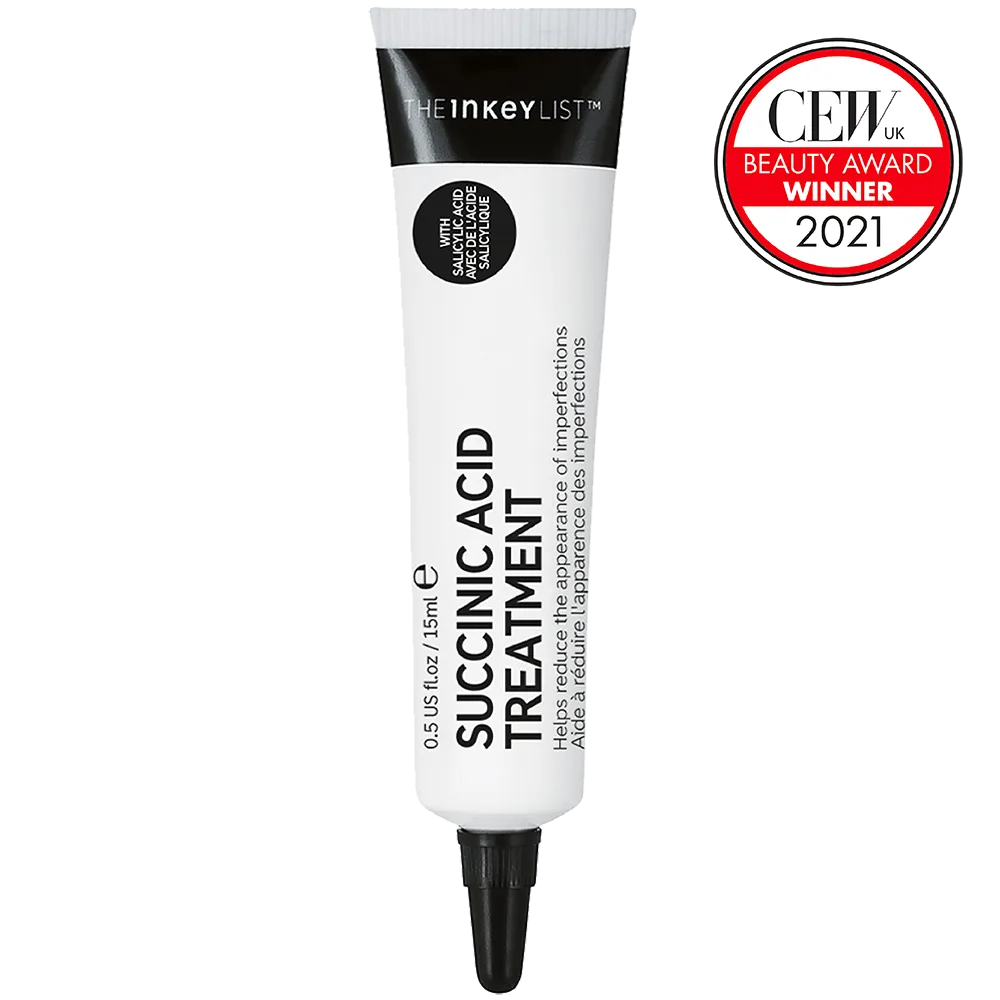
Most spot treatments rely on a single active — benzoyl peroxide or salicylic acid alone. This formula attacks breakouts through three simultaneous mechanisms: succinic acid for antimicrobial and anti-inflammatory action, colloidal sulfur for oil absorption and keratolysis, and salicylic acid for pore-penetrating exfoliation. The addition of hyaluronic acid and squalane prevents the excessive drying that triple-active treatments would normally cause.
A triple-threat acne spot treatment that punches above its weight — succinic acid, sulfur, and salicylic acid working in concert for under $9. The green tint and small tube are trade-offs, but the multi-active approach delivers faster blemish resolution than most single-ingredient alternatives.
Out since 2021 and carrying roughly 900 reviews across Boots, Sephora, and Amazon, this treatment has a respectable feedback base. Sulfur and salicylic acid are extensively studied, but succinic acid remains a newer active with limited clinical depth, which is the main gap in an otherwise well-supported assessment.
The case for it
Cautions: fungal-acne triggers.
Same rule for everyone. “Strong choice” is the verdict on 1,459 of 45,024 concern verdicts across the catalog; rule R2 decided 892 of them. Unchanged since September 5, 2026, engine 5.1.1.
Brand or formulator? Disclose a concentration or correct a fact →
The studies behind the evidence row
The case for it
Cautions: fungal-acne triggers.
What would change this: A concentration inside the studied range would raise this a step.
Same rule for everyone. “Unproven” is the verdict on 1,111 of 45,024 concern verdicts across the catalog; rule R9 decided 1,111 of them. Unchanged since September 5, 2026, engine 5.1.1.
Brand or formulator? Disclose a concentration or correct a fact →
The studies behind the evidence row
The case for it
Cautions: fungal-acne triggers.
Same rule for everyone. “Strong choice” is the verdict on 1,459 of 45,024 concern verdicts across the catalog; rule R2 decided 892 of them. Unchanged since September 5, 2026, engine 5.1.1.
Brand or formulator? Disclose a concentration or correct a fact →
The studies behind the evidence row
A verdict is DermApproved’s assessment of how well a product’s ingredients fit a concern — never a claim about what the product treats. Evidence dots and collected reviews sit beside it and are never blended in. Rules 0.5.1 · evidence table ev-2026.09-r228 · how we decide
Succinic acid sounds like something from an organic chemistry textbook — because it is. This dicarboxylic acid, found naturally in amber and various organisms, entered the skincare conversation relatively recently when researchers noticed something interesting: Cutibacterium acnes bacteria, the microorganisms largely responsible for inflammatory acne, showed vulnerability to succinic acid that they didn't show to some traditional treatments. The INKEY List took this emerging research and built one of the first affordable spot treatments around it.
The formula is a triple-active approach that attacks breakouts from three angles simultaneously. Succinic acid at 2% provides antimicrobial and anti-inflammatory action — it targets the bacteria causing the infection while simultaneously reducing the redness and swelling that make breakouts so visible and painful. Colloidal sulfur at 2% absorbs excess oil and has keratolytic properties, softening the hardened plug of dead skin cells and sebum that blocks pores. Salicylic acid at 1% penetrates into the pore lining to dissolve congestion from the inside out. Three mechanisms, one tube, one application.
This triple-active approach is architecturally smart. Most spot treatments pick one lane — benzoyl peroxide for bacterial killing, salicylic acid for pore clearing, sulfur for oil absorption. By combining all three approaches at moderate concentrations, this treatment covers more bases without pushing any single active to irritation-inducing levels. The 1% salicylic acid is deliberately lower than the standard 2% to accommodate the other actives without overwhelming the skin.
The inclusion of hyaluronic acid at 0.4% and squalane addresses the main complaint about multi-active acne treatments: they dry the skin out relentlessly. These humectant and emollient ingredients create a moisture buffer that prevents the treated area from becoming a flaky, peeling desert. It's a small but meaningful design choice that makes this treatment tolerable for daily use where more aggressive formulations force you to skip days.
The texture is a thick, green-tinted cream with a paste-like consistency. And about that green — it's very green. The chlorophyllin-copper complex colorant gives the product an unmistakable tint that's visible on skin, particularly lighter skin tones. This effectively makes it a nighttime-only product for most users, unless you're comfortable wearing green patches on your face during the day or can cover them with makeup. It's not a dealbreaker, but it's worth knowing before your first application. For the record, the green is not a warning sign — the colorant is a chlorophyllin-copper complex derived from chlorophyll, purely cosmetic, and some users come to like it as a built-in map of where the treatment has already gone.
There's also a faint sulfur smell. It's not strong — nothing like the sulfur hot springs scent some products produce — but it's detectable at close range on application. It dissipates within minutes and doesn't linger on the skin or pillowcase.
Results follow a satisfying timeline. Active blemishes typically show visible reduction in size and redness within 24-48 hours of the first application — faster than salicylic-acid-only treatments in most users' experience. The sulfur works particularly quickly at drawing oil out of the blemish and drying it down. Over 1-2 weeks of consistent use, new breakouts tend to appear less frequently. The full benefit of ongoing treatment — reduced pore congestion, fewer breakouts overall — develops over 4-6 weeks.
The caveats are mostly about moderation. Three active acne-fighting ingredients means three potential sources of dryness and irritation. Using too much product, applying too frequently, or layering with other actives (retinol, other BHAs, benzoyl peroxide) can tip the formula from therapeutic to irritating. The formula includes squalane and hyaluronic acid to buffer this, but users with dry or sensitive skin should approach with particular caution — and always follow with moisturizer. Some skin should not approach at all: eczema, rosacea, and a compromised barrier put this treatment firmly off the table, since three actives on inflamed, broken skin is a recipe for making everything worse. And the salicylic acid content means it also sits out pregnancy — the occasional gestational breakout needs one of the shorter, obstetrician-approved lists.
At $8.99 for 15ml, the volume is small but appropriate for a spot treatment. Used as directed — targeted application on individual blemishes rather than full-face coverage — the tube lasts 2-4 months for most acne patterns. The per-use cost is minimal, and the triple-active formula means you're getting three treatments in one product rather than layering separate BHA, sulfur, and antimicrobial products.
The Succinic Acid Treatment represents The INKEY List at its most creative: taking an ingredient from emerging research, combining it with established actives at thoughtful concentrations, adding moisturizing buffers to improve tolerability, and pricing it below $10. It won't replace a dermatologist's treatment plan for severe or cystic acne, but for mild to moderate breakouts — the occasional flare-up, the persistent chin breakout, the forehead congestion — it's a remarkably complete treatment in a remarkably small tube. The nine hundred reviews averaging 4.2 stars follow the formula's script closely — visible shrinkage within a day or two, faster healing, and gratitude that it doesn't flake skin off around the blemish — with the green tint, overuse dryness, and the fast-emptying tube as the recurring quibbles. One last recalibration worth taking from the design: a spot treatment does not need to sting to be working. The mechanisms here are antimicrobial and anti-inflammatory, and the absence of burn is a feature, not a sign of weakness.
The hero actives that drive this product's performance.
| Ingredient | Function | Evidence |
|---|---|---|
| Succinic Acid (2%) | A dicarboxylic acid with antimicrobial and anti-inflammatory properties that targets Cutibacterium acnes bacteria while reducing the redness and swelling of active blemishes. In this formula, it works synergistically with sulfur and salicylic acid to attack breakouts through three different mechanisms — bacterial control (succinic acid), pore unclogging (salicylic acid), and sebum absorption (sulfur). | Not yet assessed |
| Colloidal Sulfur (2%) | A time-tested acne-fighting ingredient that absorbs excess oil, has keratolytic properties (softening and removing dead skin cells), and provides mild antimicrobial activity. Sulfur's oil-absorbing action complements the salicylic acid's pore-penetrating exfoliation in this triple-active formula. | Regulator-approved for Acne · limited certainty |
| Salicylic Acid (1%) | At 1% — half the maximum OTC concentration — salicylic acid provides oil-soluble exfoliation that penetrates into pores to dissolve sebum plugs. The lower concentration keeps the overall irritation potential manageable given the two other active acne-fighters in this formula. | Regulator-approved for Acne · emerging certainty |
| Sodium Hyaluronate (0.4%) | Provides essential hydration to counterbalance the drying effects of the triple-active acne treatment. Without this humectant buffer, the combination of succinic acid, sulfur, and salicylic acid would likely leave the treated area excessively dry and flaky. | Not yet assessed |
| Squalane | A lightweight, non-comedogenic emollient that prevents the treatment from causing the flaking and peeling that spot treatments often produce. Squalane's biomimetic properties ensure the treatment area stays moisturized without triggering additional breakouts. | Not yet assessed |
Ingredient standings describe the active at treatment-level doses and vehicles; this product's own condition grades weigh its actual formula.
Water (Aqua/Eau), Caprylic/Capric Triglyceride, Glyceryl Stearate SE, Stearic Acid, Cetearyl Alcohol, Colloidal Sulfur, Glycerin, Succinic Acid, Hydroxyethyl Acrylate/Sodium Acryloyldimethyl Taurate Copolymer, Salicylic Acid, Phenoxyethanol, Squalane, Benzyl Alcohol, Sodium Hyaluronate, Polysorbate 60, Ethylhexylglycerin, Sodium Hydroxide, Dehydroacetic Acid, Malachite Extract, Sorbitan Isostearate, Trisodium Ethylenediamine Disuccinate, CI 75810 (Chlorophyllin-Copper Complex)
treatment
PM
Apply as a spot treatment directly onto active blemishes after cleansing and before moisturizer. Use a thin layer — a little goes a long way. The green tint means this is best used at night unless you're comfortable with the visible color during the day. Can also be applied as a thin layer across acne-prone zones.
Reduced blemish size and redness often visible within 24-48 hours of first application. Consistent use over 1-2 weeks reduces breakout frequency. Full benefits including pore decongestion emerge over 4-6 weeks.
Succinic acid has emerged as an acne-fighting ingredient based on research into the skin microbiome. Work appearing in the Journal of Clinical Investigation (Barnard et al., 2020) found that Cutibacterium acnes strains produce succinic acid-degrading enzymes at different rates, and that strains associated with healthy skin had different metabolic profiles than acne-associated strains. While direct clinical trials of topical succinic acid for acne are still limited, its dicarboxylic acid structure is related to azelaic acid, which has well-established anti-inflammatory and antimicrobial efficacy in acne treatment.
Colloidal sulfur has been used to treat skin conditions for centuries, with modern evidence confirming its keratolytic and mild antimicrobial properties. The colloidal (finely suspended particle) form used in this product enhances skin contact and absorption compared to precipitated sulfur. Sulfur's sebostatic properties — its ability to reduce oil production — complement the BHA's pore-clearing action.
Salicylic acid at 1% provides evidence-based exfoliation. While lower than the 2% maximum OTC concentration, 1% salicylic acid still effectively dissolves the intracellular lipid bonds in the pilosebaceous unit. The lower concentration is a deliberate formulation choice to manage the total irritation load when combined with two other active acne-fighting ingredients.
The inclusion of squalane and sodium hyaluronate as moisturizing agents reflects current dermatological thinking that effective acne treatment should maintain skin hydration rather than solely drying out lesions — an approach that reduces compensatory sebum production and supports barrier function during active treatment.
Dermatologists would recognize the triple-active approach as a thoughtful combination of established (sulfur, salicylic acid) and emerging (succinic acid) acne-fighting ingredients. Practitioners frequently prescribe sulfur-based treatments for inflammatory acne, and the addition of a low-dose BHA and a novel antimicrobial creates a multi-target approach at moderate concentrations. Dermatologists would appreciate the moisturizing inclusions but would caution patients to use it strictly as directed, avoid combining with other active acne treatments on the same area, and to always follow with moisturizer. For moderate to severe acne, dermatologists would likely recommend this as an adjunct to — not a replacement for — prescription treatments.
After cleansing in the evening, apply a small amount directly onto active blemishes or breakout-prone areas. A thin layer is sufficient — resist the urge to pile it on. Allow 1-2 minutes for the treatment to set before applying moisturizer over the top. Can be used morning and evening, but the green tint makes PM use more practical. Start with once daily and increase to twice daily if tolerated. Always follow with moisturizer and use SPF the next morning.
At $8.99 for 15ml, this is one of the most cost-effective multi-active spot treatments available. You're getting three acne-fighting ingredients plus hydrating support in one targeted product. The small tube size is appropriate for spot treatment use and lasts longer than the volume suggests. Compared to buying separate salicylic acid, sulfur, and antimicrobial products, the all-in-one approach at under $9 offers clear value for anyone dealing with recurring breakouts.
Oily and combination skin types dealing with mild to moderate inflammatory breakouts, occasional blemishes, or persistent acne-prone areas. Budget-conscious consumers looking for a multi-active spot treatment. Those who want an alternative to benzoyl peroxide, which can bleach fabrics.
Dry or sensitive skin types who are prone to irritation from active treatments. Pregnant or nursing individuals due to the salicylic acid content. Those with severe cystic acne — this is a spot treatment for mild to moderate concerns, not a replacement for dermatological care.
Ready to try The INKEY List Succinic Acid Treatment?
Buy at Amazon ♥Thick, creamy gel with a visible green tint from the chlorophyllin-copper complex — paste-like consistency designed for targeted spot application
Faint sulfur smell that's noticeable on close inspection but dissipates within minutes of application
Small white squeeze tube (15ml) with green accent, consistent with The INKEY List's minimal aesthetic. The small size reflects its use as a targeted spot treatment rather than a full-face product.
The green color is immediately noticeable when applied. The cream blends to a subtle tint that's visible on lighter skin tones. A faint sulfur smell is detectable on application but fades quickly. Some users may experience mild dryness or tightness around the treated area within the first few days — this is normal as the actives work to dry out the blemish.
2-4 months depending on frequency and severity of breakouts
All Year
Succinic acid is a relatively novel acne-fighting ingredient that emerged from research into the skin microbiome. Studies found that Cutibacterium acnes bacteria are less resistant to succinic acid than to traditional acne treatments, making it a promising alternative or complement to established actives. The INKEY List was among the first brands to bring succinic acid to a mainstream, affordable spot treatment format.
The INKEY List launched in 2018 with a focus on ingredient transparency and accessible pricing. The Succinic Acid Treatment showcases the brand's willingness to use less conventional actives — succinic acid is a relatively novel acne-fighting ingredient compared to established options like benzoyl peroxide.
The green color means the product contains harsh chemicals
The green tint comes from chlorophyllin-copper complex (CI 75810), a naturally derived colorant from chlorophyll. It's purely cosmetic and has no impact on the product's efficacy or safety. Some users actually appreciate it as a visual indicator of where they've applied the treatment.
Spot treatments should sting to work
This treatment uses a moderate-strength combination of actives designed to reduce blemishes without causing pain or visible peeling. Stinging indicates irritation, not efficacy. The succinic acid in this formula works primarily through antimicrobial and anti-inflammatory mechanisms, not through aggressive surface-level acid action.
Succinic acid is a dicarboxylic acid that fights acne through antimicrobial and anti-inflammatory mechanisms. Research suggests it's effective against Cutibacterium acnes — the bacteria that triggers inflammatory breakouts — while also reducing the redness and swelling of active blemishes. In this formula, it works alongside sulfur and salicylic acid for a triple-action approach.
Apply a thin layer directly onto active blemishes after cleansing in the evening. You can also apply a thin layer across breakout-prone areas like the chin or forehead. Follow with moisturizer. The green tint is visible on skin, so most users prefer nighttime application. Use consistently for best results.
While designed as a spot treatment, you can apply a thin layer across acne-prone zones. However, using it all over the face increases the risk of dryness and irritation, particularly since it contains three active acne-fighting ingredients. Start with spot application and expand coverage gradually if your skin tolerates it.
The green color comes from chlorophyllin-copper complex, a naturally derived chlorophyll colorant. It has no therapeutic function — it's purely cosmetic. The green tint is visible when applied and is best used at night or under makeup that provides sufficient coverage.
Avoid applying both products to the same area at the same time. The combination of retinol with three acne actives (succinic acid, sulfur, salicylic acid) could cause excessive irritation and dryness. You can use retinol on unaffected areas while applying this treatment to blemishes, or alternate nights.
This product contains 1% salicylic acid, which is generally advised against during pregnancy in leave-on products. Consult your healthcare provider before using this treatment if you are pregnant or nursing.
Recurring themes our editors read across retailer reviews of this product — summaries in our words, not quotations, and not a substitute for your own patch test.
Reduces blemish size noticeably within 1-2 days
Effective at making breakouts heal faster
Affordable alternative to prescription spot treatments
Hydrating enough that it doesn't cause excessive flaking
Green tint is very visible on skin
Can cause dryness if overused or used without moisturizer
Some users report initial purging
Small 15ml tube runs out quickly for frequent breakout sufferers
Verified answers from our questions library — the nuance a product page cannot carry.