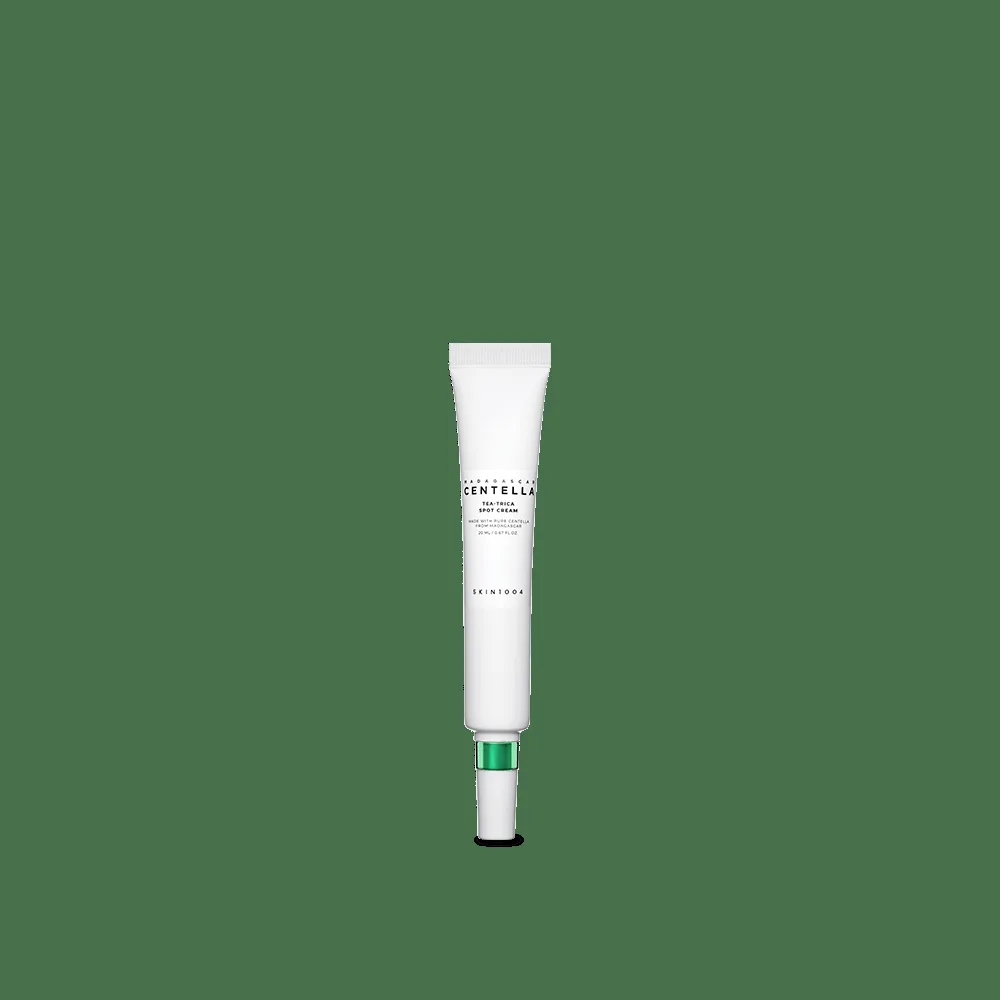
Most K-beauty spot treatments rely on a single active — usually tea tree oil or salicylic acid. This one layers tea tree, salicylic acid, sulfur, zinc oxide, and the full centella triterpene panel in one formula. That multi-mechanism approach is more common in older drugstore acne products than in the modern K-beauty category, and it's an interesting hybrid of new and old formulation logic.
A genuinely multi-mechanism spot treatment that combines tea tree, salicylic acid, sulfur, zinc oxide, and the centella triterpene panel. It's more aggressive than the rest of the Tea-Trica line and more effective on active pimples, with sulfur quietly doing more work than most users expect.
Note: This cream launched in 2023 and scoring relies on ingredient analysis plus the well-established evidence base for each of the individual actives in the formula. We'll revisit as more independent reviews accumulate.
Verdicts
How well it fits each concern
Verdict by concern tap a concern for the case
Strong choicefor AcneIn your profileYou chose · Salicylic Acid is an approved or monograph active for acne; this cream carries it, though the concentration is not declared.Moderate evidenceStandard tolerability44 reviews collected
The case for it
Salicylic Acid is a first-line active — approved, monograph-listed or named in current guidelines — for this concern.
It is plausibly present at a working level, though the concentration is not declared.
The formula carries no trigger this concern is sensitive to, with the cautions noted.
Cautions: fragrance; fungal-acne triggers.
What would change this: A declared concentration would move this to a firmer reading of the dose.
Same rule for everyone. “Strong choice” is the verdict on 1,459 of 45,024 concern verdicts across the catalog; rule R3 decided 567 of them.
Unchanged since September 5, 2026, engine 5.1.1.
R3 — Undeclared but plausibly dosed (top-third INCI position, or a potent sub-1% active) — the verdict stands, and the sentence says what disclosure would add. A declared figure below range would have been sub-threshold. · the full register
Carrying active
Salicylic Acid
Standing
first line — a regulator recognises it for this use; trials support it · per § 333.310 Acne active ingredients. (U.S. Food and Drug Administration — 21 CFR Part 333 Subpart D (Topical Acne Drug Products), Code of Federal Regulations via GovInfo), opened July 27, 2026
Form
plausible — studied range 0.5–2%, from the OTC monograph or label; judge it after ~6 weeks
Tolerability
standard — fragrance load, fungal triggers
Row checked
against its sources on July 27, 2026 (evidence table ev-2026.09-r228)
A verdict is DermApproved’s assessment of how well a product’s ingredients fit a concern — never a claim about what the product treats. Evidence dots and collected reviews sit beside it and are never blended in.
Rules 0.5.1 · evidence table ev-2026.09-r228 · how we decide
Assessment
Pros & Cons
Pros
✓ Multi-mechanism formula with four complementary acne actives
✓ Sulfur inclusion is unusual and genuinely useful for spot treatment
✓ Full centella triterpene panel buffers the aggressive stack
✓ Spot format allows higher active concentrations safely
✓ Long lifespan from the small-application-area design
✓ Fair value compared to Western multi-active spot treatments
Cons
✗ Not for sensitive or rosacea-prone skin
✗ Not pregnancy safe
✗ Slight whitish cast from zinc oxide
✗ Faint sulfur scent noticeable up close
✗ Ineffective on cystic or deep pimples — surface only
Review
Full Review
Sulfur used to be everywhere in acne skincare. For most of the twentieth century, it was one of the core ingredients you'd find in pharmacy acne products — cheap, well-studied, effective at reducing bacteria and flattening pustules. Then in the last couple of decades it quietly disappeared from most modern formulations, partly because of its faint rotten-egg association and partly because fashion moved on to benzoyl peroxide, retinoids, and salicylic acid. The irony is that the evidence for sulfur didn't change. It still works, it still has a century of clinical history supporting its antimicrobial and keratolytic action, and it still pairs well with other acne actives. It's just unfashionable. SKIN1004 bringing it back in the Tea-Trica Spot Cream is unexpected — K-beauty brands rarely reach for old-school Western pharmacy actives — and it's one of the most interesting formulation choices in the entire Tea-Trica line.
The logic of a spot treatment is different from the logic of a daily moisturizer. Because you're applying it to one or two pimples at a time, you can carry much higher concentrations of aggressive actives than would be safe for full-face use. This is the design space SKIN1004 is working in here. Tea tree shows up in three forms — leaf water, extract, and essential oil — with the oil at a meaningfully higher concentration than in the B5 Cream or the ampoule. The published evidence base for tea tree's antimicrobial activity against Cutibacterium acnes is strong, and at the higher localized concentrations that spot treatment tolerates, the antimicrobial action is genuinely on par with low-dose benzoyl peroxide in the relevant clinical trials, though slower to take effect.
Salicylic acid sits higher on the INCI of this cream than it does in the toner or daily moisturizer, which suggests it's carrying a meaningfully higher dose. In spot treatment form, this is actually fine — you're not exposing most of your face to the BHA, and the direct contact with the comedone is exactly what salicylic acid needs to work on pore contents. Sulfur and zinc oxide round out the anti-bacterial and astringent side. Zinc oxide contributes some mild sun-protection and a slight whitish cast that doubles as visual concealment, and sulfur does the kind of drying, anti-microbial work that turns an angry red pustule into a flatter, less inflamed bump overnight. The four actives hit different targets in the same treatment session — bacterial action, keratolytic exfoliation, drying, and astringent effect — which is a broader mechanism profile than most single-active spot treatments.
And then there's the centella layer. All four triterpenes appear on the INCI, which is the same pattern SKIN1004 uses across the Tea-Trica line. In a spot treatment as aggressive as this one, the centella is doing more than making the formula feel nice. Stacking tea tree oil, salicylic acid, and sulfur without any anti-inflammatory buffering is a reliable way to turn a pimple into a post-inflammatory mark that lasts six weeks after the original breakout has resolved. The centella triterpenes' published anti-inflammatory activity is what keeps this spot cream from creating a worse-looking result than it fixes.
On skin, the texture is a lightweight cream with a faint grainy feel from the sulfur and zinc. It applies with a slight whitish cast that can be visible on darker skin tones — this is unavoidable with zinc oxide at this positioning. The scent is mostly neutral, though you can pick up a very faint sulfur note up close. On an active pimple, there's usually a mild tingle from the sulfur and BHA that fades within a minute or two. By the next morning, most whiteheads and shallow pustules are visibly flatter and less red. Deeper or cystic pimples respond much less — this cream is built for surface-level active breakouts, not for the kind of inflammation that sits two millimeters below the skin.
Honest limitations: this isn't for sensitive skin, even as a spot product. The combination of tea tree oil, salicylic acid, and sulfur is too aggressive for reactive types, and eczema-prone users should avoid it entirely. It's not pregnancy-safe because of the BHA and tea tree content, and it's not strictly fungal acne safe because of the triglyceride and fatty alcohol content, though the tea tree and sulfur actives are often considered helpful for malassezia. The whitish cast from the zinc oxide can be visible, especially on deeper skin tones, which is a usability tradeoff. And because the formula is designed for spot application, overusing it across large areas of the face will create more irritation than benefit.
At around $14 for 15ml, the value is good. Spot treatments inherently deliver long lifespans because of the small application area, and 15ml is enough to last most users six months to a year of regular use. Comparable multi-active spot treatments from Western brands (Mario Badescu Drying Lotion being the closest competitor) are priced similarly but with narrower ingredient lists. For oily or combination skin dealing with active whiteheads and pustules, this is one of the more thoughtful spot treatment options available, and the sulfur alone makes it worth considering if you've been stuck in the tea-tree-only loop with most K-beauty spot products.
Formula
Key Ingredients
The hero actives that drive this product's performance.
The spot-treatment format tolerates a higher tea tree oil concentration than the rest of the Tea-Trica line — delivering strong, localized antimicrobial action directly on active pimples without the irritation of applying it over the full face.
A direct leave-on BHA dose targeting the comedone — higher positioning on the INCI than the daily moisturizer because point-application reduces the total skin exposure.
An old-school acne treatment active rarely seen in K-beauty products — reduces bacteria, dries out pustules, and pairs naturally with salicylic acid and tea tree for a multi-mechanism spot treatment.
The calming layer that makes this aggressive spot treatment tolerable — without it, stacking tea tree oil, salicylic acid, and sulfur in one formula would create a fast track to irritation and mark-making.
Not yet assessed
Ingredient standings describe the active at treatment-level doses and
vehicles; this product's own condition grades weigh its actual formula.
The active stack in this spot cream rests on four well-studied acne categories. Tea tree oil has substantial clinical evidence for antimicrobial activity against Cutibacterium acnes, with published trials showing efficacy in mild-to-moderate inflammatory acne. Salicylic acid has decades of published research supporting its comedolytic activity, particularly at direct contact with comedones. Sulfur is one of the oldest topical acne treatments still in use, with research spanning more than a century supporting its antimicrobial and keratolytic effects at concentrations between 2-10% — it remains listed as an active ingredient in FDA over-the-counter acne drug monographs. Zinc oxide provides mild antimicrobial and astringent activity with documented benefits in acne formulations. The centella triterpene panel — madecassoside, asiaticoside, asiatic acid, and madecassic acid — contributes anti-inflammatory activity that reduces the post-inflammatory hyperpigmentation risk associated with aggressive acne treatment. The overall formulation strategy of stacking multiple low-to-moderate concentration actives rather than relying on a single high-concentration active reflects a well-established approach to spot treatment that maximizes efficacy while spreading the irritation burden across multiple mechanisms.
Dermatologist Perspective
Dermatologists continue to prescribe sulfur-containing formulations for mild-to-moderate inflammatory acne, particularly for patients who cannot tolerate benzoyl peroxide. Working dermatologists frequently acknowledge that sulfur remains a legitimate acne active with substantial historical and ongoing clinical support, despite its fall from fashion in mass-market products. Multi-mechanism spot treatments combining sulfur with salicylic acid and plant antimicrobials are commonly suggested for patients who want a non-prescription option for active breakouts. Patients with sensitive skin, rosacea, or eczema are generally advised to use gentler spot treatments or stick to plain hydrocolloid patches.
Guidance
Usage & Recommendations
How to Use
Apply a small dab directly on active pimples after moisturizer. Do not spread across large areas — this is a spot product and will over-dry if used all-over. Use twice daily or as needed on active breakouts. For overnight treatment, apply after your full routine and leave on. In the morning, follow with sunscreen over any spots where the cream has been applied. Do not use on broken or severely inflamed skin.
Value Assessment
At around $14 for 15ml, this spot cream offers strong value. Comparable multi-active spot treatments from Western brands like Mario Badescu Drying Lotion run $17-20 at similar sizes with narrower ingredient lists. The small tube inherently lasts a long time because spot treatment application uses minimal product — most users will get 6-12 months out of a single tube. The per-use cost is negligible, making this an easy addition to an acne-focused routine.
Who Should Buy
Oily, combination, or normal skin dealing with occasional active whiteheads, pustules, or surfaced breakouts looking for a multi-mechanism spot treatment. Also a good complement to the rest of the Tea-Trica routine for anyone already invested in the line.
Who Should Skip
Sensitive, rosacea-prone, or eczema-prone skin. Anyone pregnant. If your primary acne is cystic or deep, this cream won't do much — see a dermatologist for prescription treatment instead.
The Tea-Trica Spot Cream finishes the Tea-Trica line as the point-treatment companion to the toner, ampoule, and moisturizer. SKIN1004 used the spot format to carry actives at concentrations that would be too aggressive for full-face application — sulfur in particular is almost never used in daily-use Korean products but is well suited to localized treatment.
About SKIN1004 Established Brand (5–20 years)
SKIN1004 launched in 2016 around Madagascar centella. The Tea-Trica Spot Cream is the brand's point-treatment product, applying the Tea-Trica active stack at higher concentration for targeted use on active breakouts.
Brand founded: 2016 · Product launched: 2023
Myth vs. Reality
Common Myths
Myth
Sulfur is an outdated acne treatment with no real evidence
Reality
Sulfur has been used for acne for over a century, and published research continues to support its antimicrobial and keratolytic action at concentrations between 2-10%. It fell out of fashion because of its scent, not its effectiveness, and it remains a legitimately useful active for spot treatment.
FAQ
Frequently Asked Questions
How is this different from the Tea-Trica B5 Cream?
The B5 Cream is an all-over daily moisturizer with a gentler active load. The Spot Cream is a point treatment with higher concentrations of tea tree, salicylic acid, and sulfur added. Apply the B5 Cream across the face and use the Spot Cream directly on active pimples.
Is the Tea-Trica Spot Cream pregnancy safe?
No — it contains salicylic acid and tea tree oil. While the spot application limits total exposure, most dermatologists still recommend avoiding these during pregnancy. Use a plain hydrocolloid patch instead.
Can I use it with retinol or benzoyl peroxide?
Yes, but apply the spot cream after your treatment products have absorbed. Don't layer it directly on top of wet benzoyl peroxide or retinol — wait a few minutes so the products don't interact on skin. Also avoid using on skin that's already raw from overuse of other actives.
Does sulfur really work on acne?
Yes — sulfur has been used as a topical acne treatment for over a century and has published research supporting its antimicrobial and keratolytic activity. It's less fashionable than it once was because of the faint scent, but it's a legitimately useful active, particularly in spot format.
Does Tea-Trica Spot Cream contain known malassezia triggers?
Not strictly. It contains caprylic/capric triglyceride and cetearyl alcohol, which some fungal acne routines exclude. The tea tree and sulfur actives are often considered helpful against malassezia, so the answer is mixed depending on your specific tolerance.
Reviews
What Reviewers Tend to Say
Recurring themes our editors read across retailer reviews of this product — summaries in our words, not quotations, and not a substitute for your own patch test.
The fourth most frequent positive patch test in North America is an oxidation product of a molecule that occurs naturally in lavender. Nobody synthesised it into your face cream.
The strongest counterexample to blanket botanical scepticism is also one of the more common contact allergens — and holding both facts at once is the only honest way to read it.
Essential oils are declared by botanical name rather than as fragrance, which is why the most heavily perfumed products in the natural aisle can carry the reassuring word — and why the bottle gets more sensitising the longer you own it.
Cutting a beard hair takes about a twentieth of a newton. You press with two and stretch your skin by a fifth — which is why almost every shaving problem is a technique problem wearing a hardware costume.
Aug 28, 2026· 10 min
Questions people ask about Acne
Verified answers from our questions library — the nuance a product page cannot carry.
Products, answers, therapy guides, tools and articles in one search. Brand names,
slang and abbreviations all work — accutane finds isotretinoin, bacne finds truncal acne.