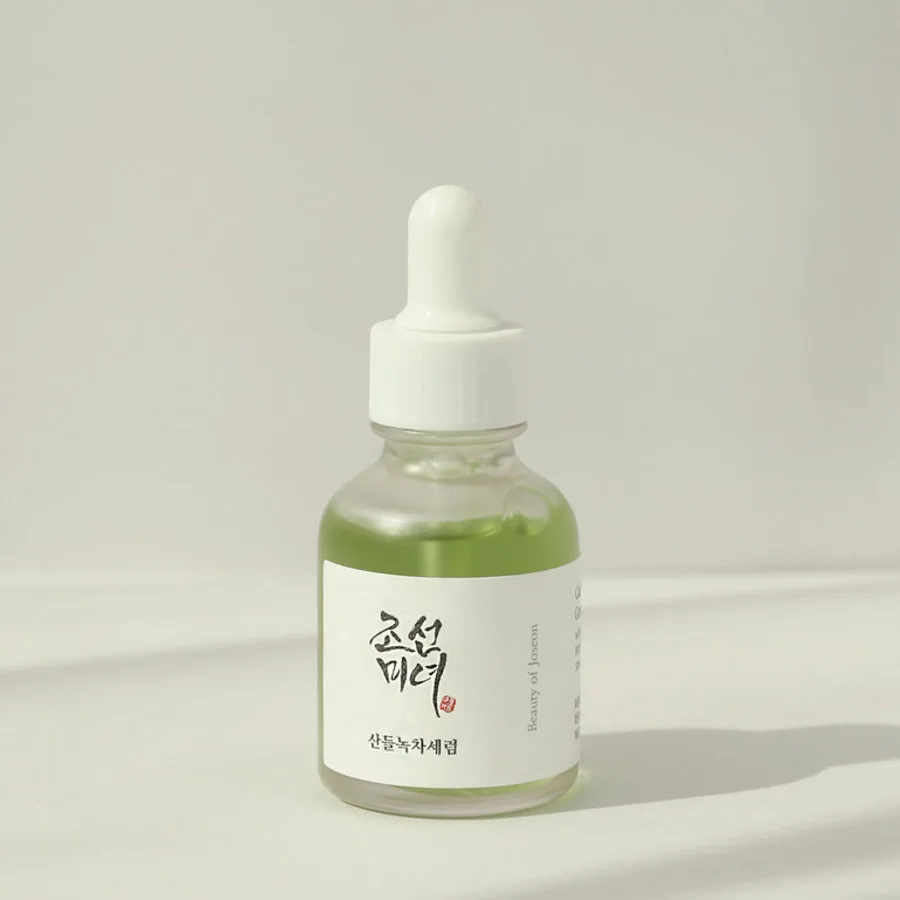
This is the most concentrated calming step in the Mugwort line, stacking around 1% mugwort with the complete four-part centella complex, panthenol, and allantoin in a leave-on serum that hydrates as it soothes. Its one quirk is that, unlike the line's fully fragrance-free toner, it reintroduces a trace of sage oil — a puzzling choice in a serum built for reactive skin.
The treatment-minded heart of Round Lab's Mugwort line: a concentrated leave-on serum stacking around 1% mugwort with the complete four-part centella complex, panthenol, and allantoin to calm redness and reactivity while lightly hydrating. The soothing payload is genuinely strong and it feels lovely on stressed skin. The frustrating quirk is that, unlike the line's fully fragrance-free toner, this leave-on serum reintroduces a trace of sage oil — an odd call for a product built for reactive skin.
Good choicefor SensitivityIn your profileYou chose · No fragrance, drying alcohol, declarable allergens or sensitising preservatives in this serum — the profile sensitive skin looks for.Not yet assessedGentleNo reviews collected yet
The case for it
Full 4-CICA Centella Complex has been researched for this concern and the evidence does not support it.
It is plausibly present at a working level, though the concentration is not declared.
The formula carries none of the triggers this concern is sensitive to.
What would change this: A declared concentration would move this to a firmer reading of the dose.
Same rule for everyone. “Good choice” is the verdict on 1,938 of 45,024 concern verdicts across the catalog; rule F2 decided 1,938 of them.
Unchanged since September 5, 2026, engine 5.1.1.
Promisingfor RosaceaIn your profileYou chose · Centella Asiatica has trial-level evidence for rosacea but no guideline or regulatory standing yet — promising, short of a recommendation; the other actives here are not yet assessed for it.Moderate evidenceGentleNo reviews collected yet
The case for it
Full 4-CICA Centella Complex has trial-level evidence for this concern but no guideline or regulatory standing yet.
It is plausibly present at a working level, though the concentration is not declared.
The formula carries none of the triggers this concern is sensitive to.
What would change this: A declared concentration would move this to a firmer reading of the dose.
Same rule for everyone. “Promising” is the verdict on 7,858 of 45,024 concern verdicts across the catalog; rule R9p decided 7,858 of them.
Unchanged since September 5, 2026, engine 5.1.1.
R9p — 0.5.0: 'Unproven' beside three filled dots read as one question answered twice with opposite words (7,018 rows). The chip measures standing, the dots measure trial volume; where the row carries at least one RCT or a tier-2 source (moderate dots) and the active is present at a working level, the honest word is Promising. Unproven is reserved for plausible-standing rows with limited or weak evidence, or an under-dosed form. Same rank as Unproven — a bet either way; the dots order them. · the full register
Carrying active
Full 4-CICA Centella Complex
Standing
plausible — trials support it
Form
plausible
Tolerability
gentle
Row checked
against its sources on July 17, 2026 (evidence table ev-2026.09-r228)
Supporting rolefor Compromised Skin BarrierIn your profileYou chose · Nothing here targets compromised skin barrier directly; barrier support is the recognised companion to treating it, and this serum does that without known triggers.Not yet assessedGentleNo reviews collected yet
The case for it
Panthenol + Allantoin has no evidence row yet for this concern — it is in the research queue.
The formula carries none of the triggers this concern is sensitive to.
What would change this: A researched evidence row for the lead active would replace this with a verdict.
Same rule for everyone. “Supporting role” is the verdict on 8,197 of 45,024 concern verdicts across the catalog; rule R8 decided 4,250 of them.
Unchanged since September 5, 2026, engine 5.1.1.
R8 — The category's job (barrier care, humectant hydration, gentle cleansing, photoprotection) is the documented supportive role for this concern. This is the honest verdict for a moisturizer on an acne page. · the full register
Promisingfor DullnessIn your profileYou chose · Hyaluronic Acid has trial-level evidence for dullness but no guideline or regulatory standing yet — promising, short of a recommendation; the other actives here are not yet assessed for it.Moderate evidenceGentleNo reviews collected yet
The case for it
Sodium Hyaluronate + Glycerin + Betaine has trial-level evidence for this concern but no guideline or regulatory standing yet.
It is plausibly present at a working level, though the concentration is not declared.
The formula carries none of the triggers this concern is sensitive to.
What would change this: A declared concentration would move this to a firmer reading of the dose.
Same rule for everyone. “Promising” is the verdict on 7,858 of 45,024 concern verdicts across the catalog; rule R9p decided 7,858 of them.
Unchanged since September 5, 2026, engine 5.1.1.
R9p — 0.5.0: 'Unproven' beside three filled dots read as one question answered twice with opposite words (7,018 rows). The chip measures standing, the dots measure trial volume; where the row carries at least one RCT or a tier-2 source (moderate dots) and the active is present at a working level, the honest word is Promising. Unproven is reserved for plausible-standing rows with limited or weak evidence, or an under-dosed form. Same rank as Unproven — a bet either way; the dots order them. · the full register
Carrying active
Sodium Hyaluronate + Glycerin + Betaine
Standing
plausible — trials support it
Form
plausible
Tolerability
gentle
Row checked
against its sources on July 17, 2026 (evidence table ev-2026.09-r228)
Also listed for Acne and Excess Oiliness — the actives here (Panthenol (Vitamin B5) are in our research queue for those concerns; there is no verdict until their evidence rows are written. That is a gap in our table, not a mark against the product.
A verdict is DermApproved’s assessment of how well a product’s ingredients fit a concern — never a claim about what the product treats. Evidence dots and collected reviews sit beside it and are never blended in.
Rules 0.5.1 · evidence table ev-2026.09-r228 · how we decide
Assessment
Pros & Cons
Pros
✓ Concentrated ~1% mugwort with the full four-part centella complex
✓ Panthenol and allantoin high in the formula deepen the calm
✓ Soothes redness and reactive, breakout-prone skin over time
✓ Cushioned, lightly hydrating texture that absorbs cleanly
✓ Leave-on format lets the soothing actives keep working
✓ Cruelty-free, alcohol-free, and fairly priced
Cons
✗ Contains sage oil in a leave-on serum aimed at reactive skin
✗ Not fully fragrance-free, unlike the line's toner
✗ A calming serum, not a targeted acne or treatment serum
✗ Pricier per ml than the line's large toner
✗ Sage oil makes it a poor fit for the most fragile skin
Review
Full Review
Build a skincare line for sensitive skin and you make a series of small promises, the biggest of which is restraint: no fragrance, nothing volatile, nothing that might provoke the very reactivity you are trying to calm. Round Lab's Mugwort line mostly keeps that promise, and its toner keeps it perfectly — fully fragrance-free, essential-oil-free, exactly what a reactive complexion wants. So the Mugwort Calming Serum, the most concentrated and treatment-minded step in the line, arrives with a genuine puzzle attached. It is in most ways the strongest soothing product Round Lab makes, and yet, tucked into its ingredient list, sits a trace of sage oil — the same essential oil the toner so sensibly omitted. Understanding that contradiction is the key to deciding whether this serum is for you.
Start with the considerable strengths, because they are real. As a calming formula, this is the most loaded product in the line. Mugwort leads the actives at around 1%, in two forms, concentrating the soothing herb that anchors the whole range. Behind it comes the complete four-part centella complex — madecassoside, madecassic acid, asiatic acid, and asiaticoside — the full set of cica's active fractions rather than a single one or a vague extract, and they sit high enough on the list to do meaningful work. Panthenol and allantoin, two of the most dependable soothers in skincare, appear near the top as well. This is a genuinely treatment-minded anti-inflammatory stack, and as a leave-on serum it gives those actives the residence time to actually reduce the low-grade inflammation that drives redness and reactive, breakout-prone skin. Chlorella, green tea, and cacao seed extracts add a light antioxidant layer on top.
It also feels good to use. The texture is a slightly viscous, lightweight serum that spreads easily, sinks in fairly quickly, and leaves a soft, cushioned, non-greasy finish. A humectant blend of glycerin, betaine, and sodium hyaluronate gives it a hydrating backbone, so it soothes and moisturizes in a single step rather than sitting dry on the skin. Pressed over damp skin after toner and sealed with a moisturizer, it leaves reactive skin feeling calmer within minutes, and with consistent use over several weeks, redness-prone complexions tend to look less inflamed and more even. As the concentrated soothing step in a calming routine, it does its job well.
Which brings us back to the sage oil. Salvia officinalis oil sits in the middle of the ingredient list — a small amount, almost certainly there for a faint herbal scent rather than any benefit — but it is an essential oil, and its volatile constituents are recognized potential sensitizers. In the rinse-off cleanser, that trace was a minor footnote. In a leave-on serum that stays on your skin all day and is specifically marketed to the most reactive, redness-prone, rosacea-adjacent complexions, it is a more meaningful misstep. The whole point of a concentrated calming serum is to be the safest, most soothing thing you put on inflamed skin, and including even a trace of a fragrant oil works against that brief. The toner proves Round Lab can make this exact kind of formula completely fragrance-free; that the serum does not is a genuine, if minor, disappointment.
How much it matters depends entirely on your skin. For most people — including plenty with sensitive skin — the trace of sage oil will never register, and they will simply enjoy a very effective, cushioned calming serum. But for the genuinely reactive, the rosacea-prone, or anyone who has reacted to essential oils before, it is a real reason to hesitate, and an argument for leaning on the fragrance-free toner for your calming needs and choosing a scent-free serum elsewhere. It is the one judgment call the rest of the line does not force you to make.
Value is reasonable rather than remarkable. At thirty-one dollars for 50 milliliters, it is fair K-beauty pricing for a concentrated serum with a real mugwort-and-full-centella payload, though it costs more per milliliter than the line's large, generous toner, so anyone whose calming needs are modest can get further with the toner alone. The serum justifies its step up through the more concentrated actives and the cushioned, hydrating feel — for skin that wants the strongest soothing step in the routine, that is worth paying for.
In the end, the Mugwort Calming Serum is an effective, well-built calming serum carrying one avoidable flaw. Buy it for the concentrated mugwort and full centella complex and the comforting texture, and if sage oil has never troubled your skin, you will likely love it as the soothing centerpiece of a reactive-skin routine. If your skin is truly fragile or you avoid essential oils on principle, the contradiction at the heart of this formula is reason enough to build your calming around the line's spotless toner instead, and to look for a fragrance-free serum to sit beside it.
Formula
Key Ingredients
The hero actives that drive this product's performance.
Two mugwort extracts lead the actives at around 1%, concentrating the line's signature soothing herb in a leave-on serum so its antioxidant and anti-inflammatory compounds can work on redness and reactivity throughout the day rather than rinsing away.
The complete set of four centella fractions sits high enough on the list to matter, delivering the most studied calming actives in skincare and forming, with the mugwort, a genuinely treatment-minded soothing payload for irritated, breakout-prone skin.
Provitamin B5 and allantoin, placed near the top of the formula, add reliable barrier-supporting and soothing action, deepening the anti-inflammatory effect so the serum settles stressed skin and supports its recovery.
A humectant blend gives the calming serum a light hydrating backbone and a slightly viscous, cushioned feel, ensuring it soothes and moisturizes in one step rather than sitting dry on the skin.
Plausible mechanismfor Dullness
Ingredient standings describe the active at treatment-level doses and
vehicles; this product's own condition grades weigh its actual formula.
Press a few drops over damp skin after toner and before moisturizer; concentrate it on red or reactive areas, and seal with a soothing cream. It layers cleanly under sunscreen.
Results Timeline
Skin feels soothed and lightly hydrated immediately; with daily use over three to six weeks, reactive and breakout-prone skin tends to look calmer, less red, and more even.
The serum delivers a concentrated, mechanistically coherent calming payload in a leave-on format that allows real active residence time. Mugwort (Artemisia vulgaris and princeps) at roughly 1% supplies antioxidant and anti-inflammatory constituents, and the complete centella complex — madecassoside, madecassic acid, asiatic acid, and asiaticoside — provides the cica fractions with the strongest evidence for soothing and barrier repair, positioned high enough to be functionally relevant. Panthenol and allantoin add documented anti-inflammatory and conditioning effects, and the humectants glycerin, betaine, and sodium hyaluronate provide hydration and a cushioned vehicle. Chlorella, green tea (Camellia sinensis), and cacao extracts contribute supplementary antioxidant polyphenols at lower levels. The formulation's clear evidence-based shortcoming is the inclusion of Salvia officinalis oil: as an essential oil, its terpene constituents are recognized contact sensitizers, and because this is a leave-on product, the exposure and therefore the sensitization risk are greater than in the line's rinse-off cleanser and entirely absent from its fragrance-free toner. For a serum targeting reactive and rosacea-prone skin, that inclusion runs counter to standard evidence-based recommendations to avoid fragrance in leave-on products for compromised barriers.
Dermatologist Perspective
A concentrated leave-on serum combining mugwort with the full centella complex is a reasonable, soothing-focused choice in clinical thinking for reactive and redness-prone skin, since these actives have a growing evidence base for calming inflammation and supporting barrier recovery, and a leave-on format maximizes their contact time. Panthenol and allantoin further reinforce that calming, barrier-friendly profile. The notable clinical reservation is the sage essential oil: dermatology resources consistently advise that leave-on products for sensitive, rosacea-prone, or barrier-compromised skin avoid fragrance and essential-oil components, whose terpenes are recognized contact allergens, so its presence in a serum aimed precisely at that group is a meaningful caveat. Patients with fragrance sensitivity are generally better served by a fully fragrance-free calming serum. As a soothing rather than treatment product, it complements but does not replace medical management of acne or rosacea.
Guidance
Usage & Recommendations
How to Use
After cleansing and toner, dispense a few drops onto slightly damp skin and press them in with the palms, concentrating on red, reactive, or breakout-prone areas. Apply it before your moisturizer, and always seal with a cream to lock in the soothing and hydration. It layers cleanly under sunscreen in the morning. Use it morning and night as the concentrated calming step, ideally alongside the rest of the Mugwort line. If your skin is highly fragrance-sensitive, patch test first given the trace sage oil.
Value Assessment
At thirty-one dollars for 50 milliliters, the Mugwort Calming Serum is fairly priced for a concentrated serum carrying a real mugwort and full four-part centella payload, with the actives positioned to matter rather than as label decoration. It does cost more per milliliter than the line's large 300ml toner, so anyone whose calming needs are modest can get further from the toner alone, while the serum justifies its premium through more concentrated actives and a cushioned, hydrating feel. The sage oil slightly undercuts the value for reactive shoppers who would otherwise make this a staple. Against premium cica serums that charge a multiple of this for comparable centella content, it remains reasonable value, with the fragrance caveat the main thing weighing on an otherwise solid proposition.
Who Should Buy
This suits sensitive, reactive, redness-prone, or acne-prone skin that wants a concentrated, leave-on calming step with mugwort and the full centella complex, and that has no history of reacting to essential oils. It is a good soothing centerpiece for anyone building a calming routine and untroubled by a trace of sage oil.
Who Should Skip
Genuinely fragile, rosacea-prone, or fragrance-sensitive skin should skip it in favor of a fully fragrance-free calming serum, since the leave-on sage oil works against the serum's own soothing purpose. Those who want a targeted acne or treatment serum, or the most calming per dollar, may also prefer the line's fragrance-free toner or another option.
A slightly viscous, lightweight serum that spreads easily and sinks in fairly quickly, leaving a soft, cushioned, non-greasy finish.
Scent
A very faint herbal note from the trace sage oil, light rather than perfumed.
Packaging
A 50ml bottle with a dropper for metering the serum.
Finish
lightweightfast-absorbingnatural
What to Expect on First Use
On first use it feels soothing and lightly hydrating, absorbing to a soft finish with only the faintest herbal scent; reactive skin tends to feel calmer within minutes.
How Long It Lasts
About 2-3 months applied morning and night of a few drops per application.
Round Lab designed the Mugwort line for redness-prone, reactive, and acne-prone skin, and the serum is its treatment-minded centerpiece, concentrating the mugwort and full centella complex into the leave-on step where soothing actives can do the most work.
About ROUND LAB Established Brand (5–20 years)
Round Lab, the South Korean brand founded in 2014, positions this serum as the concentrated calming step of its Mugwort line, combining mugwort with the full centella (CICA) complex. The brand's gentle formulas are widely reviewed, though this leave-on serum, like the line's cleanser, includes a trace of sage oil that its toner notably omits.
Brand founded: 2017
Myth vs. Reality
Common Myths
Myth
A calming serum will clear acne on its own.
Reality
Soothing serums like this reduce the inflammation that accompanies and worsens breakouts, which can help acne-prone skin look calmer, but they do not treat acne directly. They complement, rather than replace, actual acne actives or medical treatment.
FAQ
Frequently Asked Questions
What does the Round Lab Mugwort Calming Serum do?
It is a concentrated leave-on calming serum that soothes redness and reactivity while lightly hydrating. Around 1% mugwort plus the full four-part centella complex, panthenol, and allantoin work to reduce inflammation, with a humectant blend adding moisture.
Is the Mugwort Calming Serum fragrance-free?
No. Like the line's cleanser but unlike its toner, the serum contains a trace of sage (Salvia Officinalis) oil. It is a leave-on product, so the most reactive or fragrance-sensitive skin should be aware of the inclusion despite the soothing focus.
Is the Mugwort serum good for acne-prone skin?
It can help. By calming the inflammation that accompanies breakouts, it makes acne-prone skin look less red and reactive, but it is a soothing serum, not an acne treatment, and works best alongside actual acne actives rather than in place of them.
How is the serum different from the Mugwort toner?
The serum is the more concentrated calming step, with the full four-part centella complex and a thicker, more cushioned texture, while the toner is a lighter first layer. Notably, the toner is fully fragrance-free, whereas the serum contains a trace of sage oil.
How should I use the Mugwort Calming Serum?
After toner, press a few drops over damp skin, concentrating on red or reactive areas, then seal with a moisturizer. Use it morning and night, and layer it under sunscreen in the daytime. It pairs well with the rest of the Mugwort line for a full calming routine.
Reviews
What Reviewers Tend to Say
Recurring themes our editors read across retailer reviews of this product — summaries in our words, not quotations, and not a substitute for your own patch test.
Common Praise
Concentrated mugwort and full centella complex genuinely calm
Lightweight yet cushioned, hydrates as it soothes
Helps redness and reactive, breakout-prone skin over time
Common Complaints
Contains sage oil in a leave-on aimed at sensitive skin
Every cica, calming, and barrier product leans on the same three ingredients, and the real mechanisms are far more specific — and more limited — than 'soothing' lets on.
The K-beauty buzzword slaps a green leaf on half the shelf — but centella is one of the rare botanicals with genuine wound-healing data. The trick is knowing which molecule is doing the job.
It's in half your products and headlines none of them. Provitamin B5 has the kind of boring, decades-deep barrier and wound-healing evidence that flashier actives can only envy.
Cutting a beard hair takes about a twentieth of a newton. You press with two and stretch your skin by a fifth — which is why almost every shaving problem is a technique problem wearing a hardware costume.
Aug 28, 2026· 10 min
Questions people ask about sensitive skin
Verified answers from our questions library — the nuance a product page cannot carry.
Products, answers, therapy guides, tools and articles in one search. Brand names,
slang and abbreviations all work — accutane finds isotretinoin, bacne finds truncal acne.