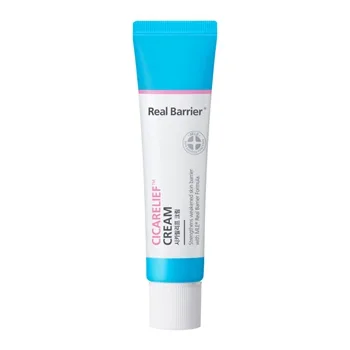
Most calming creams rely on centella extract as a single hero ingredient. Cicarelief pairs calamine — a traditional mineral soother — with the full suite of purified centella derivatives (asiaticoside, madecassic acid, asiatic acid, madecassoside) and Real Barrier's ceramide-cholesterol base. It's a modern reformulation of the classic calamine approach, tuned for K-beauty sensitivity and post-procedure applications.
Real Barrier's Cicarelief Cream is a modern reinterpretation of the traditional calamine cream, reworked with ceramides, panthenol, and the full centella derivative suite into a K-beauty post-procedure specialist. It's not a daily moisturizer for most — it's a targeted recovery cream that belongs in the skincare medicine cabinet for acute irritation episodes.
Note: Our assessment combines formulation analysis, the established evidence base for the core ingredients, and moderate real-world feedback from K-beauty communities since the 2019 launch. We'll update as more long-term user data becomes available.
Verdicts
How well it fits each concern
Verdict by concern tap a concern for the case
Good choicefor SensitivityIn your profileYou chose · No fragrance, drying alcohol, declarable allergens or sensitising preservatives in this cream — the profile sensitive skin looks for.Not yet assessedGentleNo reviews collected yet
The case for it
Madecassoside + Centella Derivatives has been researched for this concern and the evidence does not support it.
It is plausibly present at a working level, though the concentration is not declared.
The formula carries none of the triggers this concern is sensitive to.
What would change this: A declared concentration would move this to a firmer reading of the dose.
Same rule for everyone. “Good choice” is the verdict on 1,938 of 45,024 concern verdicts across the catalog; rule F2 decided 1,938 of them.
Unchanged since September 5, 2026, engine 5.1.1.
Promisingfor RosaceaIn your profileYou chose · Centella Asiatica has trial-level evidence for rosacea but no guideline or regulatory standing yet — promising, short of a recommendation; the other actives here are not yet assessed for it.Moderate evidenceGentleNo reviews collected yet
The case for it
Madecassoside + Centella Derivatives has trial-level evidence for this concern but no guideline or regulatory standing yet.
It is plausibly present at a working level, though the concentration is not declared.
The formula carries none of the triggers this concern is sensitive to.
What would change this: A declared concentration would move this to a firmer reading of the dose.
Same rule for everyone. “Promising” is the verdict on 7,858 of 45,024 concern verdicts across the catalog; rule R9p decided 7,858 of them.
Unchanged since September 5, 2026, engine 5.1.1.
R9p — 0.5.0: 'Unproven' beside three filled dots read as one question answered twice with opposite words (7,018 rows). The chip measures standing, the dots measure trial volume; where the row carries at least one RCT or a tier-2 source (moderate dots) and the active is present at a working level, the honest word is Promising. Unproven is reserved for plausible-standing rows with limited or weak evidence, or an under-dosed form. Same rank as Unproven — a bet either way; the dots order them. · the full register
Carrying active
Madecassoside + Centella Derivatives
Standing
plausible — trials support it
Form
plausible
Tolerability
gentle
Row checked
against its sources on July 17, 2026 (evidence table ev-2026.09-r228)
Good choicefor Compromised Skin BarrierIn your profileYou chose · Ceramides is a reference standard by mechanism for compromised skin barrier; this cream carries it.Moderate evidenceGentleNo reviews collected yet
The case for it
Ceramide NP + Cholesterol has trial-supported standing for this concern.
It is plausibly present at a working level, though the concentration is not declared.
The formula carries none of the triggers this concern is sensitive to.
What would change this: A declared concentration would move this to a firmer reading of the dose.
Same rule for everyone. “Good choice” is the verdict on 9,564 of 45,024 concern verdicts across the catalog; rule R5 decided 9,072 of them.
Unchanged since September 5, 2026, engine 5.1.1.
R5 — Trial-supported or guideline-supported active, adequately or plausibly dosed. · the full register
Carrying active
Ceramide NP + Cholesterol
Standing
supported — its mechanism is established
Form
plausible — studied range 0.5–1%, from the trials on the row; needs leave-on contact; judge it after ~4 weeks
Tolerability
gentle
Row checked
against its sources on July 17, 2026 (evidence table ev-2026.09-r228)
The studies behind the evidence row
Elias PM, Skin Barrier / Coderch et al., ceramides and skin barrier function — ceramides ~50% of SC intercellular lipid mass, essential to the permeability barrier — reference work
Promisingfor Post-ProcedureIn your profileYou chose · Panthenol (Vitamin B5) has trial-level evidence for post procedure but no guideline or regulatory standing yet — promising, short of a recommendation; the other actives here are not yet assessed for it.Moderate evidenceGentleNo reviews collected yet
The case for it
Panthenol has trial-level evidence for this concern but no guideline or regulatory standing yet.
It is plausibly present at a working level, though the concentration is not declared.
The formula carries none of the triggers this concern is sensitive to.
What would change this: A declared concentration would move this to a firmer reading of the dose.
Same rule for everyone. “Promising” is the verdict on 7,858 of 45,024 concern verdicts across the catalog; rule R9p decided 7,858 of them.
Unchanged since September 5, 2026, engine 5.1.1.
R9p — 0.5.0: 'Unproven' beside three filled dots read as one question answered twice with opposite words (7,018 rows). The chip measures standing, the dots measure trial volume; where the row carries at least one RCT or a tier-2 source (moderate dots) and the active is present at a working level, the honest word is Promising. Unproven is reserved for plausible-standing rows with limited or weak evidence, or an under-dosed form. Same rank as Unproven — a bet either way; the dots order them. · the full register
Carrying active
Panthenol
Standing
plausible — trials support it
Form
plausible — studied range 0.5–2%, from the OTC monograph or label; needs leave-on contact
Tolerability
gentle
Row checked
against its sources on July 17, 2026 (evidence table ev-2026.09-r228)
Also listed for Sun Damage — the actives here (Panthenol (Vitamin B5) are in our research queue for that concern; there is no verdict until their evidence rows are written. That is a gap in our table, not a mark against the product.
A verdict is DermApproved’s assessment of how well a product’s ingredients fit a concern — never a claim about what the product treats. Evidence dots and collected reviews sit beside it and are never blended in.
Rules 0.5.1 · evidence table ev-2026.09-r228 · how we decide
Assessment
Pros & Cons
Pros
✓ Calamine delivers fast relief for acute irritation and redness
✓ Full centella derivative suite rather than just whole-plant extract
✓ Ceramide NP and cholesterol provide genuine barrier repair underneath
✓ Panthenol and bisabolol layer additional calming action
✓ Fragrance-free and designed for post-procedure and rosacea skin
✓ Silicone-cushioned base is comfortable on acutely sensitized skin
✓ Compact travel-friendly size suitable for episodic use
Cons
✗ Heavy silicone content won't suit silicone-averse users
✗ Too specialized to work as an everyday moisturizer for most
✗ Subtle pink calamine tint visible on very pale or very dark skin
✗ Small 35g size limited value for heavy daily users
✗ Limited availability outside Korean and international K-beauty retailers
Review
Full Review
Calamine, for most people, is the faintly pink lotion your grandmother dabbed on mosquito bites. It's been a dermatological staple for over a century — a blend of zinc oxide and ferric oxide with mild astringent, anti-pruritic, and anti-inflammatory properties — but it fell out of fashion in mainstream skincare because the classic calamine lotion is drying, chalky, and inelegant. Nobody wants to walk around with chalky pink patches on their face during a rosacea flare. So calamine became the ingredient you only reached for in bug-bite emergencies, while the skincare industry moved on to newer actives. Real Barrier's Cicarelief Cream is interesting because it brings calamine back into the formulation conversation for a modern use case — which is exactly the point that retires the myth that calamine is outdated and only good for poison ivy. Its mild astringent, anti-itch action is still genuinely useful on sensitized skin; the old problem was the dry, standalone lotion, not the mineral itself.
The parent company, Neopharm, has been working on damaged-skin formulations since the 1990s through a sister clinical brand, and their consumer K-beauty line Real Barrier was launched in 2017 as the aesthetic-forward extension of that clinical work. Cicarelief sits in the collection as the targeted recovery specialist — the product you reach for during acute irritation episodes, post-procedure recovery, or rosacea flares, rather than as a daily moisturizer.
The formula is a genuine surprise on the ingredient list. You start with water and a silicone-heavy base (cyclopentasiloxane, dimethicone, caprylic/capric triglyceride) that delivers the cushioned, non-draggy application that sensitized skin needs. Panthenol sits high in the formula — a key detail, because panthenol is one of the most consistently-documented calming and barrier-supporting ingredients in the category, and it softens the astringent edge of the calamine that follows. Then you hit calamine, the functional core of the formula and the reason this cream works differently from standard centella creams: it provides the mild astringent and anti-pruritic action that gets redness under control fast.
Ceramide NP and cholesterol — the Real Barrier signature lipid pair from the brand's MLE technology — sit in the middle of the list to provide genuine barrier repair underneath the calming action. This matters because the classic calamine lotion's biggest problem was that it dried the skin; this formula flips that by pairing calamine with physiologic lipids that rebuild while the calamine calms. Then comes the centella brigade. Not just centella extract, but the full suite of purified active compounds — madecassoside, asiaticoside, madecassic acid, and asiatic acid — that form the clinically-relevant fraction of the plant. Most calming creams include centella as a whole-plant extract; Cicarelief uses the purified derivatives, which is the preferred approach when you're trying to deliver consistent dose-dependent anti-inflammatory effects. Bisabolol rounds out the calming cast with a chamomile-derived note, and allantoin plus a little sodium hyaluronate provide extra soothing and hydration support.
On application, the texture is distinctly silicone-forward. It's thicker than the brand's Aqua Soothing Gel Cream, with a cushioned, slightly pink-tinted finish that comes from the calamine. The pink tint is subtle enough to blend in on most skin tones but can take a moment to disappear on very pale or very dark skin. Once it settles, the finish is satin rather than greasy, and sunscreen layers over it cleanly. The cooling, calming sensation is immediate on acutely irritated skin — the kind that's been over-exfoliated, windburned, or freshly laser-treated. Within an hour, the redness typically drops a visible notch; within 24 hours on acute irritation, the difference is usually clear. Its roughly 1,400 reviewers, averaging 4.5 stars, keep returning to exactly that fast redness relief and its gentleness after peels and procedures.
The use case is where this cream deserves a clear note. This isn't a daily moisturizer for someone with normal, comfortable skin — it's more expensive per gram than it needs to be for that role, the silicone-heavy base isn't designed for long-term routine use, and it isn't fungal-acne-safe. Where it earns its place is in the episodic recovery role: in your skincare drawer alongside your regular moisturizer, pulled out during sensitivity flares, post-peel recovery, retinoid over-use episodes, or rosacea flare days, whether as an all-over cream or a targeted spot treatment. For that specific job, it's one of the better options in K-beauty, blending traditional dermatological wisdom (calamine) with modern formulation rigor (ceramides plus centella derivatives plus panthenol), buffered to a skin-friendly pH of 5.5 and fragrance-free.
The 35g size is small but actually appropriate for a product you use episodically rather than daily — it's enough to last through several sensitivity episodes without going bad, and the compact tube travels well if your skin is unpredictable on trips. At around $24, the value is fair for the niche and it's pregnancy-safe, though heavy daily users will want to consider whether they actually need a specialist product or whether a gentler daily moisturizer would serve them better. Bought for what it is — an acute-flare fixer rather than an everyday cream — it's a smart, quietly sophisticated addition to a reactive-skin arsenal.
Formula
Key Ingredients
The hero actives that drive this product's performance.
The traditional anti-itch and anti-inflammatory mineral ingredient sits as the functional core of this cream. Calamine provides mild astringent and soothing action for acutely irritated, reactive, or post-procedure skin — a clinical throwback used here in a modern calming base.
The full suite of purified centella asiatica actives rather than just the whole-plant extract, delivering documented anti-inflammatory and wound-healing benefits to acutely irritated skin. This depth of centella chemistry is one of the reasons the cream is commonly recommended for post-procedure recovery.
Sits high in the formula as a calming humectant that softens the astringent edge of the calamine while supporting barrier recovery. Essential for making the cream tolerable on acutely sensitized skin.
The lipid pair from Real Barrier's MLE technology that anchors the calming base in genuine barrier-repair function. Unlike traditional calamine lotions that strip and dry, this formula uses ceramides and cholesterol to simultaneously calm and rebuild.
Established mechanismfor Compromised Skin Barrier · established mechanism
A chamomile-derived anti-inflammatory that reinforces the overall soothing architecture of the formula, particularly useful for rosacea-prone and reactive skin types.
Not yet assessed
Ingredient standings describe the active at treatment-level doses and
vehicles; this product's own condition grades weigh its actual formula.
Use as a spot treatment on irritated areas or as an all-over cream during acute flares. Can be layered under a regular moisturizer, or used alone on the days your skin can't tolerate a full routine.
Results Timeline
Immediate: cooling, calming sensation on irritated areas. 24-48 hours: noticeable reduction in redness and discomfort on acutely reactive skin. 1-2 weeks: strengthened tolerance to routine ingredients.
The ingredient architecture of this cream draws on both traditional dermatological pharmacology and modern formulation research. Calamine has been used in dermatology for over a century as a mild astringent and anti-pruritic; research published in the Journal of the American Academy of Dermatology has documented its role in managing sensitized and irritated skin through its zinc oxide and ferric oxide content. The purified centella asiatica compounds — madecassoside, asiaticoside, madecassic acid, and asiatic acid — have a more contemporary evidence base. Research in the Journal of Ethnopharmacology has shown that madecassoside has anti-inflammatory effects relevant to atopic and reactive skin, while asiaticoside has documented wound-healing and collagen-modulating activity. A study in the International Journal of Molecular Sciences examined the use of centella derivatives in post-procedure recovery and documented accelerated healing and reduced erythema compared to untreated controls. The physiologic lipid component — ceramide NP and cholesterol — sits on the same evidence base as Real Barrier's broader MLE technology, with published work on lipid-matrix barrier repair dating back to foundational stratum corneum research from the 1990s. Panthenol (provitamin B5) has decades of evidence for calming and barrier-supporting activity, with clinical studies documenting improvements in transepidermal water loss and reduction of erythema in irritated skin. The combined formulation approach — traditional astringent mineral plus modern centella derivatives plus physiologic lipids — is the kind of layered strategy typically found in clinical post-procedure creams rather than consumer moisturizers.
Dermatologists frequently recommend targeted recovery creams for patients managing acute sensitivity episodes, post-procedure recovery, or rosacea flares. Working dermatologists generally agree that calming creams containing panthenol, ceramides, and purified centella derivatives are preferred for their evidence base and low irritation risk. Calamine-based products have a long history in dermatological practice for their astringent and anti-pruritic properties, and their inclusion in modern lipid-repair formulations represents a thoughtful update to a traditional ingredient. Dermatologists also commonly emphasize that targeted recovery creams should be reserved for actual flare situations rather than used daily, to avoid over-treating skin that doesn't need intervention.
Guidance
Usage & Recommendations
How to Use
Apply to clean skin as needed on acutely irritated or red areas, or as an all-over cream during sensitivity flares and post-procedure recovery. Can be used once daily as a spot treatment or twice daily during flare periods. Layer under a lighter regular moisturizer if needed, or use alone during the days your skin can't tolerate a full routine. Always follow with broad-spectrum SPF in the AM — post-procedure and reactive skin is especially vulnerable to UV damage. Not intended for continuous long-term daily use on non-irritated skin.
Value Assessment
At $24 for 35g, Cicarelief is priced as a specialist treatment cream rather than a daily moisturizer. Comparable post-procedure creams from Western clinical brands like Avène Cicalfate and La Roche-Posay Cicaplast run similar prices in the $20-30 range for 40ml-40g sizes, which puts Real Barrier's pricing in line with the category. The value depends entirely on the use case — for occasional episodic use during sensitivity flares, the 35g tube can last several months and delivers real clinical benefit. For daily all-over use, the cost-per-use makes less sense, and you'd be better served by a gentler everyday barrier cream from the same brand line.
Who Should Buy
Anyone managing rosacea, recurring sensitivity episodes, post-procedure recovery, or acute irritation who wants a clinically-minded K-beauty recovery cream. Particularly valuable for people on active treatments like retinoids or acids who occasionally push past their tolerance.
Who Should Skip
If your skin is stable and comfortable, this isn't your daily cream — reach for the Aqua Soothing Gel Cream or another general moisturizer instead. Silicone-averse users should skip given the prominent silicone content, and fungal-acne-prone skin should consider the fatty acid components carefully.
Thick, silicone-based cream with a cushioned, slightly pink-tinted finish
Scent
None
Packaging
Slim tube with flip cap
Finish
satinnon-greasy
What to Expect on First Use
Applies with a cool, cushioned sensation thanks to the calamine and silicone base. Acute redness typically calms within hours, and continued use over 1-2 weeks improves overall skin tolerance.
How Long It Lasts
About 2 months with spot use during flare-ups; 4-6 weeks with all-over daily use
Neopharm's clinical work on damaged and sensitized skin dates back to the 1990s through the Atopalm brand. The Cicarelief Cream was developed as Real Barrier's response to the growing K-beauty demand for post-procedure creams that could handle redness, irritation, and compromised barriers in one formula. The calamine inclusion draws on traditional dermatological practice; the centella derivatives and ceramide base bring it into the modern formulation era.
About Real Barrier Established Brand (5–20 years)
Real Barrier is the consumer-facing K-beauty line from Neopharm, the Korean dermatological laboratory behind Atopalm. The Cicarelief Cream draws on the brand's clinical background in sensitive and damaged skin care, with a calamine-centered formulation designed for post-procedure and acute redness.
Brand founded: 2015 · Product launched: 2019
Myth vs. Reality
Common Myths
Myth
Calamine is outdated and only for poison ivy
Reality
Calamine's mild astringent and anti-pruritic properties are still clinically relevant for sensitized and irritated skin. This formula uses it in a modern lipid-supported base rather than as a drying standalone lotion, keeping the benefits without the downsides.
FAQ
Frequently Asked Questions
What does Cicarelief Cream do?
It's designed as a calming and recovery cream for acutely irritated, reactive, or post-procedure skin. The combination of calamine, panthenol, ceramides, and centella derivatives works to reduce redness and support barrier recovery in one formula.
Can I use this after a peel or laser?
Yes — it's commonly used in K-beauty routines for post-procedure recovery. The fragrance-free, silicone-cushioned base is gentle on acutely sensitive skin and the centella derivatives have documented wound-healing properties.
Is this a moisturizer or a treatment?
It sits between the two. You can use it as your full moisturizer during acute flares, or as a targeted treatment layer under your regular moisturizer. Many users keep it in their routine only during sensitivity episodes rather than daily.
Does it leave a white cast?
There's a very subtle pink tint from the calamine on initial application, but it blends into the skin without leaving a visible residue on most skin tones.
How is this different from the Aqua Soothing Gel Cream?
The Aqua Soothing Gel Cream is a daily moisturizer designed for general barrier support. Cicarelief is a more targeted treatment cream specifically for acutely irritated, post-procedure, or rosacea-prone skin, with calamine and a richer centella derivative profile.
Does the Cicarelief Cream contain added fragrance?
Yes — the formula is completely fragrance-free, which is essential for the acutely sensitized skin it's designed to calm.
Reviews
What Reviewers Tend to Say
Recurring themes our editors read across retailer reviews of this product — summaries in our words, not quotations, and not a substitute for your own patch test.
Common Praise
Quickly calms acute redness and sensitivity
Gentle enough for post-procedure and post-peel use
Cica derivatives deliver visible results on reactive skin
Every cica, calming, and barrier product leans on the same three ingredients, and the real mechanisms are far more specific — and more limited — than 'soothing' lets on.
Western sensitive skincare works by subtraction — remove the fragrance, remove the alcohol, shorten the list. Japan's answer adds a designed molecule back in, and one of the two bets has a trial literature.
Chamomile's active fraction inhibits the same inflammatory pathways a steroid does, at a fraction of the strength — and the version that works best is grubbed out of Brazilian cerrado, while the synthetic substitute is half inactive by construction.
A wrecked barrier is the most common self-inflicted skin condition and the one with the clearest fix — the difficulty is that the routine which caused it feels productive and the one that repairs it feels like giving up.
Aug 5, 2026· 8 min
Questions people ask about sensitive skin
Verified answers from our questions library — the nuance a product page cannot carry.
Products, answers, therapy guides, tools and articles in one search. Brand names,
slang and abbreviations all work — accutane finds isotretinoin, bacne finds truncal acne.