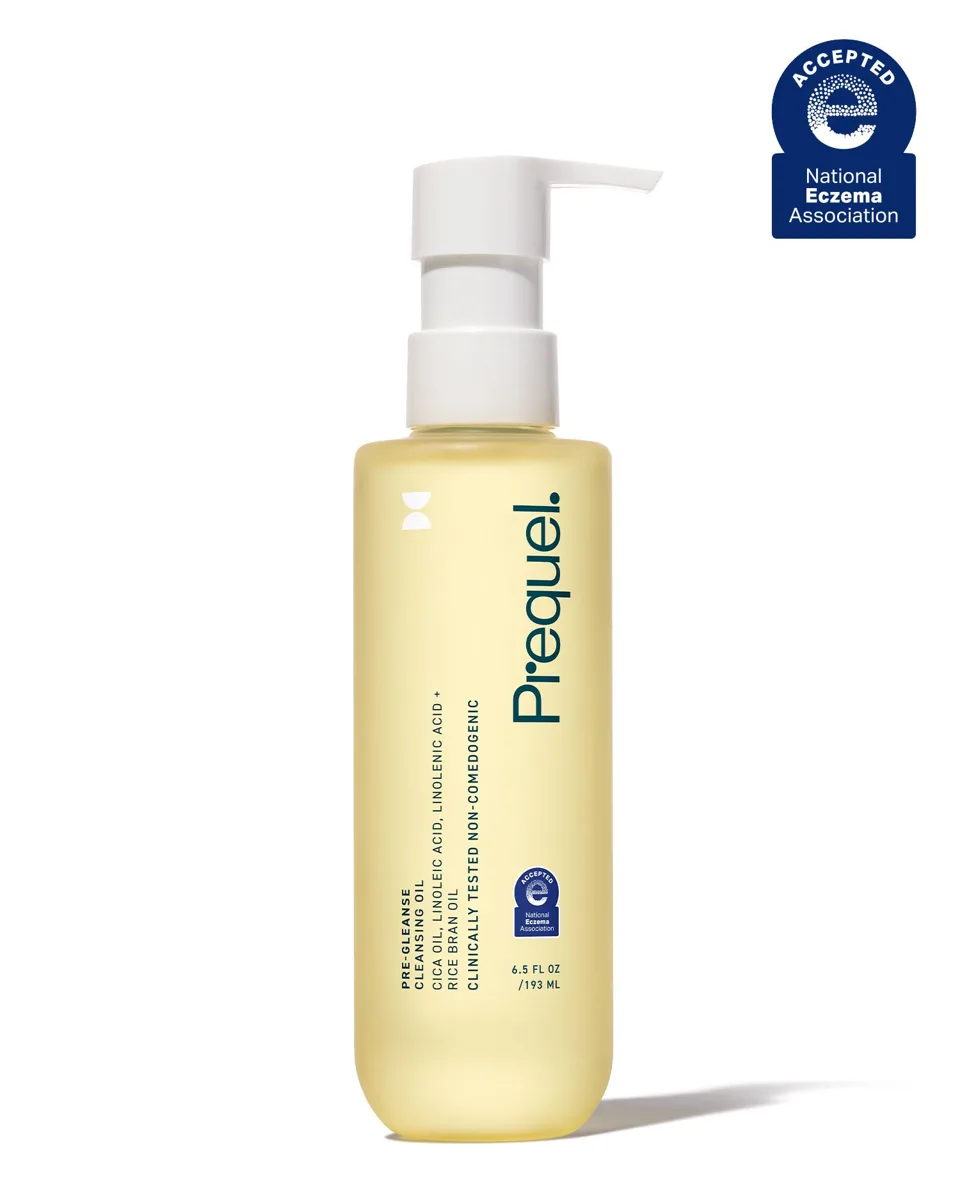
Prequel Pre-Gleanse Oil Cleanser combines essential-fatty-acid-rich sunflower and rice bran oils with free linoleic and linolenic acids, centella asiatica, and vitamin E in a fragrance-free vegan double-cleanse first step at indie value pricing.
Pre-Gleanse has accumulated solid Amazon and brand-site review volume since launch. Score blends ingredient chemistry assessment of the high-linoleic plant oil base with the early established user feedback; longer-term comparative data versus established double-cleanse competitors continues to develop.
Verdicts
How well it fits each concern
Verdict by concern tap a concern for the case
Good choicefor SensitivityIn your profileYou chose · No fragrance, drying alcohol, declarable allergens or sensitising preservatives in this oil — the profile sensitive skin looks for.Not yet assessedGentleNo reviews collected yet
The case for it
Centella Asiatica Leaf Extract has been researched for this concern and the evidence does not support it.
It is in a rinse-off product, so it gets seconds of contact rather than the leave-on exposure the evidence assumes.
The formula carries none of the triggers this concern is sensitive to.
What would change this: The same active in a leave-on form would be judged on its evidence rather than its contact time.
Same rule for everyone. “Good choice” is the verdict on 1,938 of 45,024 concern verdicts across the catalog; rule F2 decided 1,938 of them.
Unchanged since September 5, 2026, engine 5.1.1.
Also listed for Dryness and Compromised Skin Barrier — the actives here (Fatty Acids, Centella Asiatica, Vitamin E, Sunflower Oil) are in our research queue for those concerns; there is no verdict until their evidence rows are written. That is a gap in our table, not a mark against the product.
As a cleanserNot judged: what a cleanser is for — surfactant mildness, pH match to skin, rinses clean without stripping — cannot yet be measured from the ingredient list (only puts something back can).
A verdict is DermApproved’s assessment of how well a product’s ingredients fit a concern — never a claim about what the product treats. Evidence dots and collected reviews sit beside it and are never blended in.
Rules 0.5.1 · evidence table ev-2026.09-r228 · how we decide
Assessment
Pros & Cons
Pros
✓ Essential-fatty-acid-rich sunflower and rice bran oils
✓ Discrete linoleic and linolenic acid supplementation
✓ Cica soothing extract
✓ Vitamin E antioxidant
✓ Fragrance-free formulation
✓ Cruelty-free and vegan
✓ Indie value pricing
✓ Larger refill size available
Cons
✗ PEG emulsifiers not for purists
✗ Fungal-acne-prone users should approach with caution
✗ Lecithin content may irritate very few sensitive users
✗ Heavier than micellar options
Review
Full Review
Most cleansing oils settle for the easy formula: a single carrier oil, whether mineral, sunflower, or jojoba, paired with an emulsifier system so the whole thing rinses clean. Prequel's Pre-Gleanse takes a more deliberate route, and the tell is buried in the middle of the ingredient list. The formula starts with a lightweight ester emollient ideal for dissolving sunscreen and makeup, moves into sunflower seed oil and rice bran oil, two of the most barrier-friendly plant oils available, and then directly adds linoleic acid and linolenic acid as standalone free fatty acids. That last detail signals something about the cleanser's intentions, and it's the most interesting thing about the product. Prequel, an emerging brand, built Pre-Gleanse as the first step of its double-cleanse system, launching it in 2024, and the formulation choices suggest the team thought harder than the category usually demands.
Linoleic acid, an omega-6, and linolenic acid, an omega-3, are the two essential fatty acids most associated with skin-barrier health. Both rice bran and sunflower oil already contain them naturally, but adding them as discrete free fatty acids ensures their presence at meaningful levels regardless of seasonal variation in the carrier oils. For acne-prone skin in particular, the linoleic-to-oleic ratio of a cleansing oil matters, because high-linoleic oils tend to be less comedogenic than high-oleic ones. Sunflower and rice bran both lean linoleic, and the supplemental free linoleic acid here pushes that ratio further in the right direction. Dermatology research supports the broader principle, with linoleic and linolenic acids contributing to barrier lipid composition and topical application during cleansing shown to support epidermal hydration and reduce water loss when paired with an appropriate carrier. It's a barrier-conscious choice in a category that often ignores barriers entirely.
The emulsifier system uses sorbeth-30 tetraoleate, PEG-20 glyceryl triisostearate, and PEG-10 isostearate, a competent and effective PEG-based approach that converts the oil into a milky lather on contact with water and rinses cleanly without residue. Lecithin appears low in the list as a natural emulsifier supplement. PEG ingredients occasionally draw purist objections, but they're well-studied for cosmetic use and considered safe, so the objection is more philosophical than scientific. Centella asiatica leaf extract, cica, anchors the soothing layer, its anti-inflammatory action via madecassoside, asiaticoside, and asiatic acid among the best-documented in modern cosmetic dermatology and well-suited to cleansing chemistry where surfactants can cause transient irritation. Tocopherol, vitamin E, caps the formula as an oil-phase antioxidant. Rice bran oil also brings gamma-oryzanol and ferulic-acid derivatives for a little extra antioxidant activity.
The texture is a clean, lightweight cleansing oil, not heavy and not silicone-slick. The routine is the standard one: apply to dry skin, massage two or three pumps in to dissolve makeup, sunscreen, and surface sebum, add water to emulsify into that milky lather, then rinse. Makeup and sunscreen removal is immediate and effective, there's no greasy film left behind, no stinging, and no fragrance to interfere, since the formula is fragrance-free. It pairs naturally with the brand's foaming cleanser for a full double-cleanse, which is exactly the role it was designed to play.
Performance is solid for the price, and the value math is genuinely good. The 193ml bottle should last roughly three months at nightly use, putting the cost per month under seven dollars, and a larger refill option adds further value for committed users. The limitations are modest. The PEG emulsifiers, effective and safe as they are, won't appeal to purist clean-beauty shoppers who avoid them on principle. The cleansing-oil format itself is not fungal-acne-safe, because the fatty acids can feed Malassezia, so anyone prone to fungal acne is better served by a fatty-acid-free cleansing balm or a micellar option. The lecithin content could theoretically bother a very small number of sensitive users. And it's heavier than a micellar water, which is inherent to the format rather than a flaw. None of these are serious knocks for the intended audience.
At twenty dollars for 193ml, this is excellent indie value for a thoughtfully-built cleansing oil. Comparable Western brands typically charge more for similar formulations in similar sizes, while Korean and Japanese cleansing oils may undercut on price but rarely match this fatty-acid-rich plant-oil base with discrete free-fatty-acid supplementation. Where it lands is as a strong recommendation for the first step of an evening double-cleanse for normal, dry, combination, or sensitive skin, and especially for routines focused on barrier support. The shoppers who should look elsewhere are PEG-averse purists and the fungal-acne-prone, but for everyone else, this is a barrier-friendly, fragrance-free, fairly-priced cleansing oil that does its quiet job, and the free-fatty-acid detail makes it a touch smarter than most of its shelf-mates. The medium data confidence is reasonable for a 2024 launch from a still-emerging brand, with a review pool of around eight hundred ratings averaging roughly four-and-a-half stars. Early feedback emphasizes effective sunscreen and makeup removal, a non-comedogenic feel, and how cleanly it rinses, all of which track with the high-linoleic plant-oil base and the competent emulsifier system. The main recurring objection is purely philosophical, the PEG emulsifiers that clean-beauty purists prefer to avoid, rather than any complaint about how the cleanser actually performs. Because the brand is young, the long-term barrier benefits rest partly on the strength of the formulation logic, but the day-to-day cleansing experience is already well-validated by users who simply want their sunscreen gone without a stripped, tight feeling afterward.
Formula
Key Ingredients
The hero actives that drive this product's performance.
Linoleic and linolenic essential fatty acids contribute to skin barrier lipid composition, and topical application during cleansing has been shown in dermatology research to support epidermal hydration and reduce transepidermal water loss when paired with appropriate carrier systems. Sunflower seed oil has documented barrier-supportive activity, particularly in studies on premature infant skin and atopic dermatitis. Rice bran oil contains gamma-oryzanol and ferulic acid derivatives that contribute additional antioxidant activity. Cica's anti-inflammatory mechanism via madecassoside, asiaticoside, and asiatic acid is among the best-documented in modern cosmetic dermatology.
Dermatologist Perspective
Dermatologists frequently recommend oil-based cleansers as the first step of an evening routine for those wearing sunscreen, makeup, or pollution-exposed during the day, particularly when followed by a gentle foaming or surfactant-based second cleanse. The choice of high-linoleic plant oils in this formula aligns with dermatologic preferences for acne-prone and barrier-compromised skin. Most dermatologists typically advise against oil cleansing for those with active Malassezia folliculitis or pityrosporum-related concerns.
Guidance
Usage & Recommendations
How to Use
Pump 2-3 pumps onto dry skin in the evening. Massage gently for 30-60 seconds to dissolve makeup, sunscreen, and surface sebum. Add a small amount of water to emulsify into a milky lather, continue to massage, then rinse thoroughly. Follow with a foaming or surfactant cleanser if desired.
Value Assessment
At 20 dollars for 193ml, this lands in the strong indie value tier — comparable Western brands charge 25-40 dollars for similar formulations. The 13.5oz refill size offers additional per-ounce value for committed users. Per-month cost at nightly use comes in under seven dollars, competitive with both K-beauty and Western mid-tier oil cleansers.
Who Should Buy
Anyone wearing sunscreen or makeup daily, especially those with normal, dry, combination, or sensitive skin pursuing an effective fragrance-free oil cleanser at indie value pricing.
Who Should Skip
Those with active Malassezia folliculitis or fungal-acne-prone skin — the fatty acids in the formula can feed Malassezia yeast. Also skip if PEG emulsifiers are a personal exclusion.
Prequel built Pre-Gleanse as the first step of its double-cleanse system.
About Prequel Emerging Brand (2–5 years)
Prequel's Pre-Gleanse anchors the first step of its double-cleanse system, emphasizing essential-fatty-acid-rich plant oils and cica.
Brand founded: 2022 · Product launched: 2024
Myth vs. Reality
Common Myths
No myths to debunk yet.
FAQ
Frequently Asked Questions
Is the Pre-Gleanse Oil Cleanser vegan?
Yes.
Is the Pre-Gleanse Oil Cleanser cruelty-free?
Yes.
Can I use the Pre-Gleanse Oil Cleanser while pregnant or breastfeeding?
Yes.
Sensitive skin?
Yes — fragrance-free with cica.
Removes sunscreen?
Yes — designed for first-step makeup and sunscreen removal.
Non-comedogenic?
Yes — sunflower and rice bran are low-comedogenic plant oils.
Larger size available?
Yes — 13.5oz refill size.
Reviews
What Reviewers Tend to Say
Recurring themes our editors read across retailer reviews of this product — summaries in our words, not quotations, and not a substitute for your own patch test.
Picking one skin state and selling through hospital dermatology departments is a genuinely smart strategy. Whether the house botanical earns its billing is a separate question, and the answer is not the one either side wants.
Every word on a plant oil label describes what was left in — including the proteins that sensitise and the compounds that go rancid — and the variable that decided the one head-to-head trial isn't printed anywhere.
The K-beauty buzzword slaps a green leaf on half the shelf — but centella is one of the rare botanicals with genuine wound-healing data. The trick is knowing which molecule is doing the job.
The famous 15/1/0.5 trio isn't marketing folklore — it traces to a specific Duke experiment. But 'the studied combination' and 'any serum with all three names on the label' are not the same thing.
Jun 26, 2026· 5 min
Questions people ask about sensitive skin
Verified answers from our questions library — the nuance a product page cannot carry.
Products, answers, therapy guides, tools and articles in one search. Brand names,
slang and abbreviations all work — accutane finds isotretinoin, bacne finds truncal acne.