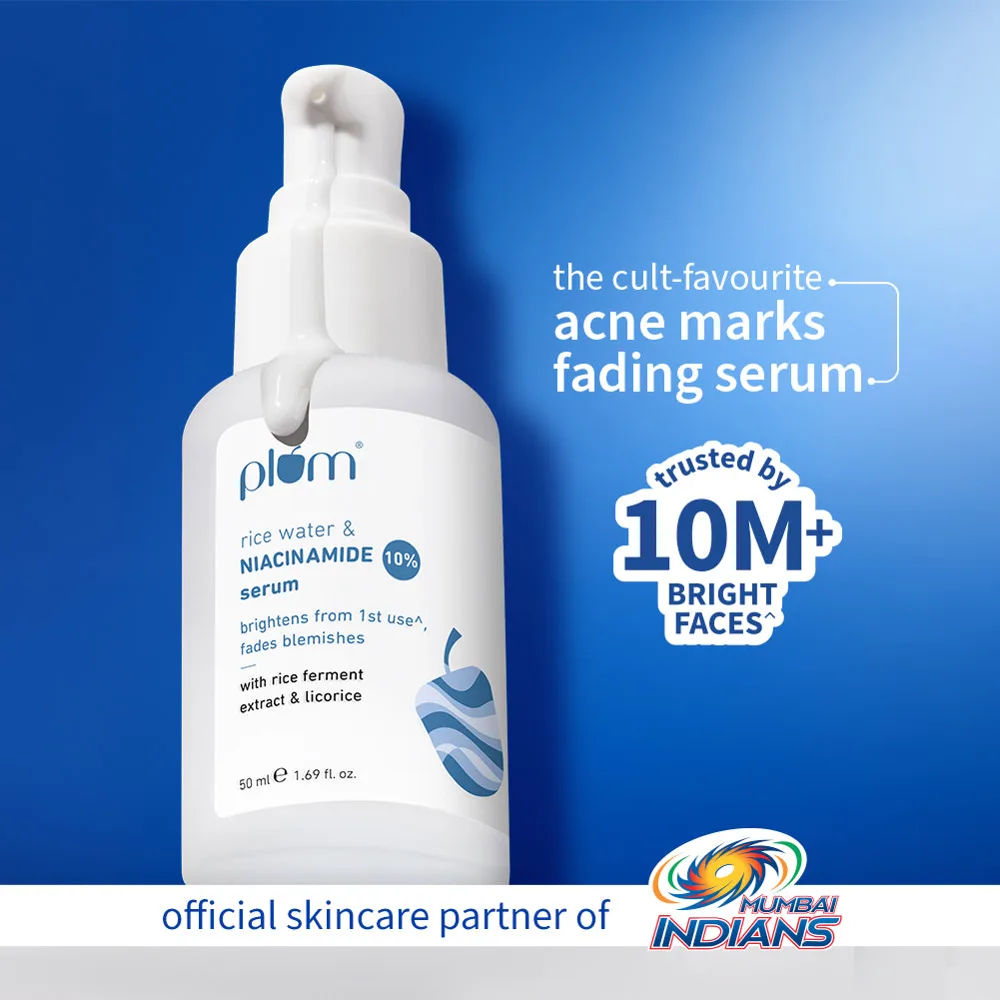
Plum's differentiation here isn't just the 15% niacinamide — it's the addition of tranexamic acid and N-acetyl glucosamine, which address pigmentation through mechanisms niacinamide alone doesn't reach. That multi-pathway approach to dark spots is rare at this price point and positions this serum as a more specialized tool than a generic high-strength niacinamide.
A thoughtfully stacked high-strength niacinamide serum that earns its place not through concentration alone but through the addition of tranexamic acid and N-acetyl glucosamine for pigmentation. For users with stubborn dark spots, it's a genuine upgrade over basic niacinamide; for everyone else, the 10% version is probably the smarter choice.
Note: This serum has moderate real-world data with a few hundred user reviews, and the specific 15% formulation relies more on ingredient-level research than product-specific validation. Read this score as an early take, open to revision down the line.
Verdicts
How well it fits each concern
Verdict by concern tap a concern for the case
Good choicefor HyperpigmentationIn your profileYou chose · Niacinamide is a trial-supported active for hyperpigmentation; this serum carries it at 15%.Moderate evidenceGentleNo reviews collected yet
The case for it
Niacinamide has trial-supported standing for this concern.
It is present at an effective concentration, declared or high in the ingredient list.
The formula carries none of the triggers this concern is sensitive to.
Same rule for everyone. “Good choice” is the verdict on 9,564 of 45,024 concern verdicts across the catalog; rule R5 decided 9,072 of them.
Unchanged since September 5, 2026, engine 5.1.1.
Promisingfor Excess OilinessIn your profileYou chose · Niacinamide has trial-level evidence for excess oiliness but no guideline or regulatory standing yet — promising, short of a recommendation; the other actives here are not yet assessed for it.Moderate evidenceGentleNo reviews collected yet
The case for it
Niacinamide has trial-level evidence for this concern but no guideline or regulatory standing yet.
It is present at an effective concentration, declared or high in the ingredient list.
The formula carries none of the triggers this concern is sensitive to.
What would change this: Guideline or regulatory standing for the active on this concern would move this from a promising bet to a recommendation.
Same rule for everyone. “Promising” is the verdict on 7,858 of 45,024 concern verdicts across the catalog; rule R9p decided 7,858 of them.
Unchanged since September 5, 2026, engine 5.1.1.
R9p — 0.5.0: 'Unproven' beside three filled dots read as one question answered twice with opposite words (7,018 rows). The chip measures standing, the dots measure trial volume; where the row carries at least one RCT or a tier-2 source (moderate dots) and the active is present at a working level, the honest word is Promising. Unproven is reserved for plausible-standing rows with limited or weak evidence, or an under-dosed form. Same rank as Unproven — a bet either way; the dots order them. · the full register
Carrying active
Niacinamide
Standing
plausible — trials support it
Form
adequate (declared 15%) — studied range 2%, from the trials on the row; needs leave-on contact; judge it after ~8 weeks
Tolerability
gentle
Row checked
against its sources on July 17, 2026 (evidence table ev-2026.09-r228)
Promisingfor Large PoresIn your profileYou chose · Niacinamide has trial-level evidence for large pores but no guideline or regulatory standing yet — promising, short of a recommendation; the other actives here are not yet assessed for it.Moderate evidenceGentleNo reviews collected yet
The case for it
Niacinamide has trial-level evidence for this concern but no guideline or regulatory standing yet.
It is present at an effective concentration, declared or high in the ingredient list.
The formula carries none of the triggers this concern is sensitive to.
What would change this: Guideline or regulatory standing for the active on this concern would move this from a promising bet to a recommendation.
Same rule for everyone. “Promising” is the verdict on 7,858 of 45,024 concern verdicts across the catalog; rule R9p decided 7,858 of them.
Unchanged since September 5, 2026, engine 5.1.1.
R9p — 0.5.0: 'Unproven' beside three filled dots read as one question answered twice with opposite words (7,018 rows). The chip measures standing, the dots measure trial volume; where the row carries at least one RCT or a tier-2 source (moderate dots) and the active is present at a working level, the honest word is Promising. Unproven is reserved for plausible-standing rows with limited or weak evidence, or an under-dosed form. Same rank as Unproven — a bet either way; the dots order them. · the full register
Carrying active
Niacinamide
Standing
plausible — trials support it
Form
adequate (declared 15%) — studied range 4%, from the trials on the row; needs leave-on contact; judge it after ~8 weeks
Tolerability
gentle
Row checked
against its sources on July 17, 2026 (evidence table ev-2026.09-r228)
Promisingfor Dark SpotsIn your profileYou chose · Niacinamide has trial-level evidence for dark spots but no guideline or regulatory standing yet — promising, short of a recommendation; the other actives here are not yet assessed for it.Moderate evidenceGentleNo reviews collected yet
The case for it
Niacinamide has trial-level evidence for this concern but no guideline or regulatory standing yet.
It is present at an effective concentration, declared or high in the ingredient list.
The formula carries none of the triggers this concern is sensitive to.
What would change this: Guideline or regulatory standing for the active on this concern would move this from a promising bet to a recommendation.
Same rule for everyone. “Promising” is the verdict on 7,858 of 45,024 concern verdicts across the catalog; rule R9p decided 7,858 of them.
Unchanged since September 5, 2026, engine 5.1.1.
R9p — 0.5.0: 'Unproven' beside three filled dots read as one question answered twice with opposite words (7,018 rows). The chip measures standing, the dots measure trial volume; where the row carries at least one RCT or a tier-2 source (moderate dots) and the active is present at a working level, the honest word is Promising. Unproven is reserved for plausible-standing rows with limited or weak evidence, or an under-dosed form. Same rank as Unproven — a bet either way; the dots order them. · the full register
Carrying active
Niacinamide
Standing
plausible — trials support it
Form
adequate (declared 15%)
Tolerability
gentle
Row checked
against its sources on July 17, 2026 (evidence table ev-2026.09-r228)
Promisingfor AcneIn your profileYou chose · Niacinamide has trial-level evidence for acne but no guideline or regulatory standing yet — promising, short of a recommendation; the other actives here are not yet assessed for it.Moderate evidenceGentleNo reviews collected yet
The case for it
Niacinamide has trial-level evidence for this concern but no guideline or regulatory standing yet.
It is present at an effective concentration, declared or high in the ingredient list.
The formula carries none of the triggers this concern is sensitive to.
What would change this: Guideline or regulatory standing for the active on this concern would move this from a promising bet to a recommendation.
Same rule for everyone. “Promising” is the verdict on 7,858 of 45,024 concern verdicts across the catalog; rule R9p decided 7,858 of them.
Unchanged since September 5, 2026, engine 5.1.1.
R9p — 0.5.0: 'Unproven' beside three filled dots read as one question answered twice with opposite words (7,018 rows). The chip measures standing, the dots measure trial volume; where the row carries at least one RCT or a tier-2 source (moderate dots) and the active is present at a working level, the honest word is Promising. Unproven is reserved for plausible-standing rows with limited or weak evidence, or an under-dosed form. Same rank as Unproven — a bet either way; the dots order them. · the full register
Carrying active
Niacinamide
Standing
plausible — trials support it
Form
adequate (declared 15%) — studied range 4–5%, from the OTC monograph or label; needs leave-on contact; judge it after ~8 weeks
Tolerability
gentle
Row checked
against its sources on July 17, 2026 (evidence table ev-2026.09-r228)
A verdict is DermApproved’s assessment of how well a product’s ingredients fit a concern — never a claim about what the product treats. Evidence dots and collected reviews sit beside it and are never blended in.
Rules 0.5.1 · evidence table ev-2026.09-r228 · how we decide
Assessment
Pros & Cons
Pros
✓ Multi-pathway pigmentation approach with niacinamide, tranexamic acid, and N-acetyl glucosamine
✓ Centella asiatica and panthenol help buffer high-dose niacinamide irritation
✓ Accessible price for a formulation with multiple targeted actives
✓ Fragrance-free, silicone-free, and pregnancy-safe
✓ Works for oily and combination skin with pigmentation concerns
✓ pH-appropriate for niacinamide stability
Cons
✗ 15% concentration is unnecessarily strong for users without specific issues
✗ Elevated flushing risk compared to 5-10% formulations
✗ 20ml size is small for a twice-daily serum
✗ Limited product-specific clinical data compared to the 10% sibling
✗ Not suitable for truly sensitive or reactive skin
Review
Full Review
There's a pattern in affordable skincare that's worth naming: once a brand has a successful 10% active serum, the predictable next move is a 15% version. It's a marketing-driven instinct, not a science-driven one, and most of the time the jump from 10% to 15% produces diminishing returns that don't justify the extra irritation risk. Plum's 15% Niacinamide Face Serum could have been one of those lazy line extensions. Instead, it's one of the rare cases where the strength bump actually comes with additional reasoning.
The reasoning is the supporting cast. A straight 15% niacinamide serum would be a fairly unremarkable upgrade — the research has been pretty clear that niacinamide's benefits plateau around 5% for most skin endpoints, with modest marginal gains through 10% and very little beyond that for the general population. Anyone buying this because a bigger number must mean a better result has misread the assignment. What makes the serum worth considering is what Plum added alongside the higher dose: tranexamic acid and N-acetyl glucosamine, both targeting pigmentation through mechanisms niacinamide alone doesn't fully address.
Tranexamic acid is the more interesting of the two. It's been used orally in Japanese dermatology for melasma since the 1970s, and over the past decade has become a staple topical active for stubborn pigmentation that shrugs off conventional brighteners. Its mechanism interrupts the plasmin pathway feeding melanin synthesis — a different angle of attack from niacinamide's interference with melanosome transfer. Combine the two and you're hitting pigmentation from two directions at once, which is what multi-active routines have been chasing for years. And while its reputation is tied to melasma, the pathways it interrupts are the same ones driving the dark marks acne leaves behind, so the ingredient is more broadly useful than its melasma association suggests.
N-acetyl glucosamine is the third piece — essentially a hyaluronic acid precursor with a secondary effect on tyrosinase, the enzyme gating melanin production. Combining it with niacinamide has been shown to produce visible pigmentation improvements beyond what niacinamide manages alone. The pairing isn't new, but it isn't common at this price either.
Practically: if you're here for post-inflammatory dark spots, melasma, or other persistent pigmentation, this is a more thoroughly considered formulation than a plain high-dose niacinamide. If you're here for shine control or pore refinement, most of the added complexity is wasted, and the 10% version does the job with less risk.
The base is the same water-and-humectant platform as the 10%, with centella asiatica and panthenol providing buffering support, plus zinc PCA reinforcing the sebum-regulating side and allantoin and betaine smoothing the edges. At 15%, that buffering earns its keep — higher concentrations raise the odds of the flushing reaction some users get, driven by niacinamide's vasodilatory effects and the trace nicotinic acid that can form in certain formulations. The pH of 5.5 keeps that conversion in check and the centella supplies an anti-inflammatory cushion, but a minority of users will still feel warmth or see redness during week one. If a 10% serum did that to you before, this isn't the product to try.
The sensory experience is essentially identical to its 10% sibling. Thin, watery, odorless, fast-absorbing, with a faint tackiness that vanishes under moisturizer. Three or four drops on clean skin, then whatever comes next. It layers cleanly under sunscreen in the morning and under a ceramide moisturizer at night, and it doesn't fight with anything. The formula is fragrance-free, silicone-free, vegan, and safe in pregnancy, which quietly widens who can use it even as the concentration narrows who should. The frosted glass dropper is pleasant, and 20ml is small by any standard — the bottle empties faster than people expect once both morning and evening application become habit.
Honest limitations. The ingredient-level research is strong, but product-specific clinical data on this exact formulation is thin. Its review count is meaningfully smaller than the 10% version's — several hundred rather than several thousand — which means the assessment leans on inference from ingredient research more than on accumulated real-world outcomes. Those reviews are broadly positive, with dark-spot fading and the price the recurring praise and flushing the recurring gripe, but that's a suggestive sample rather than a settled one. A cautious buyer has a reasonable case for staying with the 10% until more data lands, and anyone trying this one should patch test along the jaw first and start once daily rather than twice.
The other question is whether this is the right tool at all. Mild shine or the occasional breakout is a job for a 5% niacinamide moisturizer, which accomplishes most of the same ends with less complexity. Truly entrenched pigmentation usually responds better to a deliberate routine — layered actives plus religious sun protection — than to any single bottle, and no amount of pigment-fading chemistry survives an unprotected commute. This serum is best understood as a middle option: one product taking a reasonable multi-pathway swing at pigmentation without demanding you build a whole regimen around it. That's a legitimate role. It's just narrower than the 15% headline invites you to assume, and the timeline is longer too — eight to sixteen weeks before dark spots visibly relent.
Formula
Key Ingredients
The hero actives that drive this product's performance.
A high-strength niacinamide dose that pushes beyond the typical 5-10% range, chosen here specifically for users dealing with persistent oiliness, stubborn post-inflammatory pigmentation, and large-pore concerns — though research suggests benefits plateau above 5% for most endpoints.
Added to this formula specifically to target melanin synthesis pathways that niacinamide alone doesn't reach, creating a two-pronged approach to hyperpigmentation that the 10% version of this serum doesn't offer.
Pairs with the niacinamide in this serum to enhance its pigmentation-fading effects — the combination has been shown in clinical studies to outperform niacinamide alone at reducing the appearance of dark spots.
Supports the niacinamide's sebum-regulating effects in this formula and contributes antimicrobial activity, making the combination well-suited to oily and acne-prone skin that also struggles with pigmentation.
Works in this serum to soften the inflammatory potential of a 15% niacinamide dose, reducing the likelihood of flushing reactions that sometimes occur with high-concentration formulations.
Not yet assessed
Ingredient standings describe the active at treatment-level doses and
vehicles; this product's own condition grades weigh its actual formula.
Apply to clean skin before moisturizer. Patch test first — 15% is high enough to trigger flushing in sensitive users.
Results Timeline
Immediate: lightweight finish, possible transient warmth. 2-4 weeks: reduced oiliness and shine. 8-12 weeks: visible improvement in post-inflammatory dark spots. 12-16 weeks: meaningful fading of stubborn pigmentation with consistent sun protection.
High-strength niacinamide formulations sit in an interesting position in the evidence base. Extensive research has documented niacinamide's benefits — sebum regulation, barrier support, reduced hyperpigmentation, anti-inflammatory effects — at concentrations between 2% and 5%, with additional data supporting 5-10% for specific indications. The marginal benefit of pushing above 10% is less well-studied and generally smaller than the concentration increase suggests. For pigmentation specifically, the evidence supports that niacinamide works by inhibiting melanosome transfer from melanocytes to keratinocytes, which means the rate-limiting step is less about concentration and more about duration of consistent use.
The addition of tranexamic acid is where this formulation gets more interesting. Tranexamic acid has a well-documented history in oral form for melasma treatment in Asian dermatology. Topical formulations have accumulated a growing body of clinical evidence, including studies published in the Journal of Cosmetic Dermatology and Dermatologic Surgery, showing meaningful improvements in melasma and post-inflammatory hyperpigmentation at concentrations between 2% and 5%. The mechanism involves inhibition of plasmin activity and reduction of the UV-induced signaling cascade that drives melanin production. It's a distinct pathway from niacinamide's effects on melanosome transfer, which is why combining the two is a reasonable strategy.
N-acetyl glucosamine has a smaller but supportive evidence base. Early 2000s research from multiple cosmetic science groups demonstrated that the combination of niacinamide with N-acetyl glucosamine produced visible improvements in hyperpigmentation over niacinamide alone. The proposed mechanism involves reduction of tyrosinase activity and interference with melanin synthesis at an earlier step than niacinamide targets.
The practical takeaway is that this serum's formulation strategy — combining three ingredients that act on different points in the pigmentation cascade — is grounded in reasonable science, even if the specific 15% niacinamide concentration is more aggressive than strictly needed. For pigmentation-focused routines, the multi-pathway approach has a stronger rationale than any single active alone.
Dermatologist Perspective
Dermatologists generally view high-concentration niacinamide as an option for users with specific needs rather than a baseline recommendation. Practicing dermatologists have long observed that 5% is sufficient for most skin concerns and that 15% primarily makes sense when paired with additional actives targeting a specific problem — in this formulation's case, hyperpigmentation. Tranexamic acid has gained substantial credibility in dermatology practice for pigmentation treatment, and its inclusion in an OTC serum at a reasonable price is considered a genuine value. Dermatologists consistently emphasize that topical pigmentation treatments work slowly and require months of consistent use alongside rigorous daily sunscreen — any pigmentation serum without SPF follow-through is working against itself.
Guidance
Usage & Recommendations
How to Use
Apply 3-4 drops to clean skin morning and/or night, before moisturizer. Patch test behind the ear or on the jawline first — 15% niacinamide has a higher flushing rate than lower concentrations. If you experience transient warmth or redness, reduce to once-daily and let skin adjust over a week before increasing. Always follow with daily broad-spectrum sunscreen, as pigmentation treatment without sun protection is fundamentally ineffective. Results for dark spots take 8-16 weeks of consistent use to become clearly visible.
Value Assessment
At roughly $14 for 20ml, this serum offers strong value for a formulation that combines three clinically relevant pigmentation actives. A comparable combination from a Western prestige brand would typically run $40-80. The 20ml size is modest, but the active density means the per-application cost is competitive. Plum's shorter brand track record and the 15% version's newer release date temper the case slightly — a longer history of formulation consistency would strengthen the confidence in long-term results. Still, for users specifically targeting stubborn pigmentation at a budget-friendly price, this is one of the more thoughtful options currently available in the Indian D2C market.
Who Should Buy
Users with persistent post-inflammatory hyperpigmentation, melasma, or stubborn dark spots who want a multi-pathway approach in a single serum. Oily or combination skin that also struggles with pigmentation. Experienced niacinamide users who've tolerated 10% well and want a targeted step up.
Who Should Skip
Sensitive, reactive, or rosacea-prone skin. Users who experienced flushing from the 10% version. Anyone whose main concern is general hydration or shine control — a 5-10% formulation will serve you better. Those unable to commit to consistent daily sunscreen.
Thin, watery serum with light viscosity from humectants
Scent
Virtually odorless
Packaging
Frosted glass dropper bottle
Finish
non-greasylightweightfast-absorbing
What to Expect on First Use
A small but meaningful percentage of users experience flushing or warmth during the first week — typically transient. No purging expected from niacinamide itself, though the pigmentation effects take 8-12 weeks to become visible.
Plum released this 15% version after the 10% serum proved popular, responding to user requests for a stronger option specifically for pigmentation-focused routines. The addition of tranexamic acid reflects the ingredient's rising profile in Korean and Japanese skincare for dark-spot treatment, which Indian consumers had increasingly been seeking out.
About Plum Established Brand (5–20 years)
Plum launched this 15% concentration as a step-up version of its popular 10% serum to target users with persistent oiliness and stubborn pigmentation. The brand itself has been operating since 2013, but this specific high-strength formulation has a shorter track record and limited independent clinical validation.
Brand founded: 2013 · Product launched: 2023
Myth vs. Reality
Common Myths
Myth
15% is always better than 10% niacinamide.
Reality
Research shows benefits plateau around 5% for most niacinamide effects. The 15% version is meaningful mainly for users with persistent issues not responding to lower doses — for most people, 5-10% is sufficient.
Myth
Tranexamic acid only works for melasma.
Reality
Tranexamic acid targets melanin synthesis pathways relevant to melasma, but the same mechanisms apply to other forms of hyperpigmentation including post-inflammatory dark spots from acne.
FAQ
Frequently Asked Questions
Do I need 15% instead of 10%?
For most users, no. 15% is meaningful primarily for persistent pigmentation or oiliness that hasn't responded to lower concentrations. Start with a 5-10% serum first, and only step up if you're not seeing the results you want after 12 weeks.
What does tranexamic acid add here?
Tranexamic acid works through a different pigmentation pathway than niacinamide — it inhibits plasmin activity that contributes to melanin synthesis. Combined with niacinamide and N-acetyl glucosamine, the formula targets pigmentation from multiple angles simultaneously.
Will it cause flushing?
A minority of users experience transient flushing with 15% niacinamide, typically subsiding within the first week or two. If you're prone to flushing, consider starting with the 10% version instead.
Does 15% Niacinamide Face Serum layer safely with retinol?
Yes. Niacinamide pairs well with retinol and actually helps buffer some of retinol's barrier-disrupting effects. Apply this serum first, then retinol after it absorbs.
How long until I see pigmentation results?
Niacinamide and tranexamic acid work gradually. Expect 8-12 weeks of consistent use before seeing meaningful fading of post-inflammatory marks, and 12-16+ weeks for more stubborn pigmentation.
Is 15% Niacinamide Face Serum considered safe for pregnant users?
Yes. Niacinamide, tranexamic acid (topical), zinc PCA, and centella asiatica are all considered pregnancy-safe.
Can I use it with vitamin C?
Yes — this is an outdated compatibility myth. Modern formulations of both ingredients coexist fine. Use vitamin C in the morning and this serum at night, or space them by a few minutes if layering.
Reviews
What Reviewers Tend to Say
Recurring themes our editors read across retailer reviews of this product — summaries in our words, not quotations, and not a substitute for your own patch test.
It was invented to stop bleeding during surgery. In 2026 it's in dozens of brightening serums — and the evidence is better than most trend ingredients can claim.
Japan runs a third regulatory tier between cosmetic and pharmaceutical, and once you can see it, the entire J-beauty aisle stops looking modest and starts looking legally precise.
Most heritage claims are unfalsifiable. This one sits on a public regulatory register — which makes it the rare case where you can check what 150 years of institutional research actually bought.
Five brands that own the feed, judged on their ingredient lists rather than their view counts — including the one active all five suddenly added at once, and what that tells you.
Aug 28, 2026· 6 min
Questions people ask about Hyperpigmentation
Verified answers from our questions library — the nuance a product page cannot carry.
Products, answers, therapy guides, tools and articles in one search. Brand names,
slang and abbreviations all work — accutane finds isotretinoin, bacne finds truncal acne.