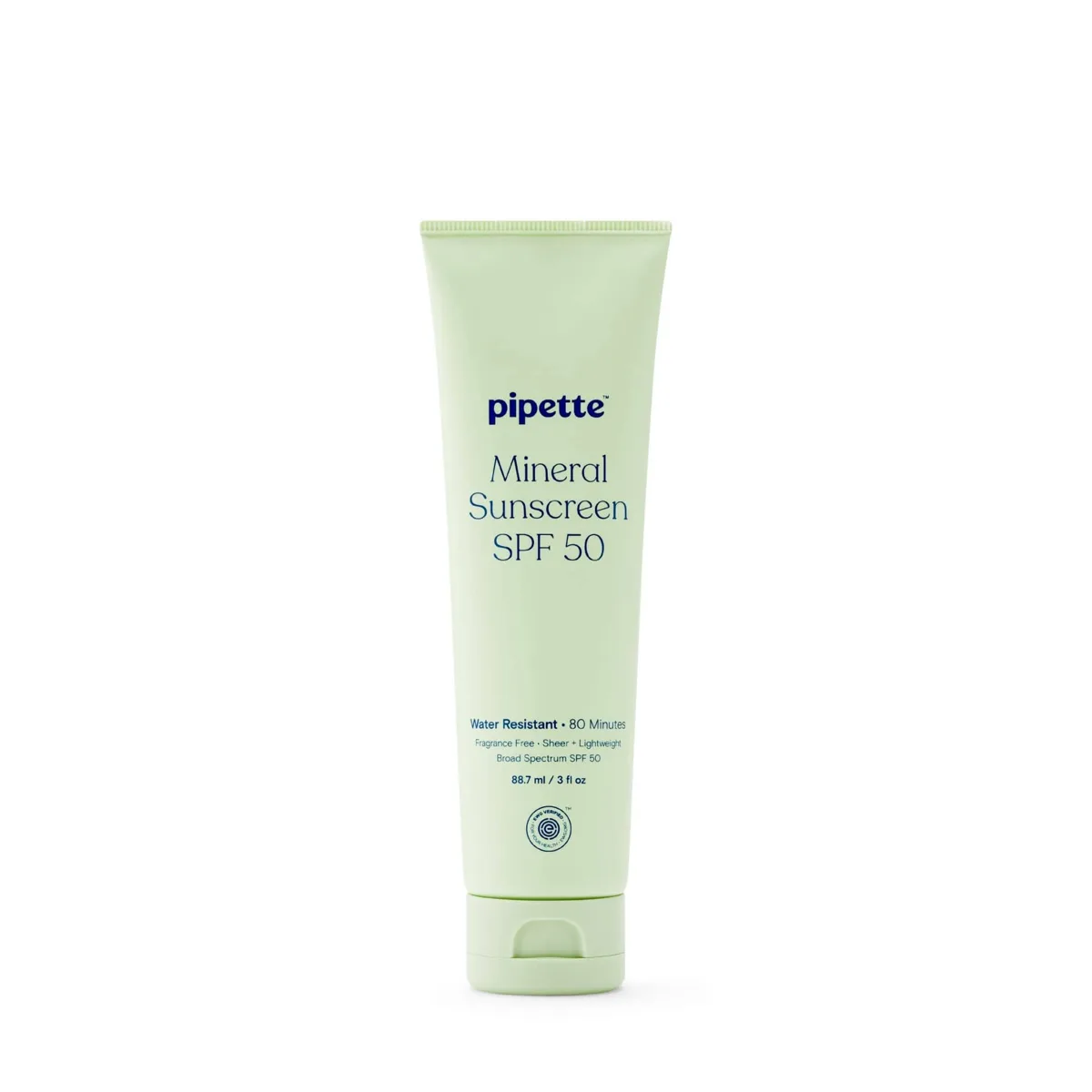
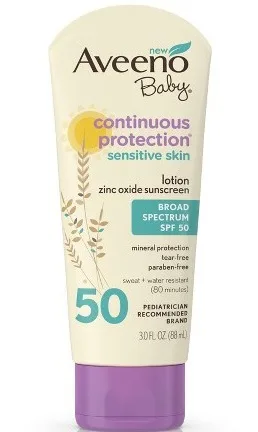
Most mineral sunscreens at 20% zinc oxide feel heavy and leave significant white cast. Pipette's proprietary sugarcane-derived squalane dramatically improves the spreadability and aesthetic finish, creating a formula that functions more like a moisturizing lotion than a traditional mineral block. The biotech origin of the squalane — developed by Amyris, a company that started making anti-malaria drugs — gives this baby sunscreen an unexpectedly sophisticated ingredient story.
A genuinely elegant mineral sunscreen that solves the two biggest complaints about zinc oxide formulas — white cast and heavy texture — thanks to its biotech-derived squalane base. Not the cheapest option, but one of the most pleasant mineral sunscreens to actually wear daily, especially for sensitive or reactive skin.
Note: While Pipette has been available since 2020, independent clinical validation of this specific formulation is limited. Our scoring draws on approximately 3,000 user reviews, ingredient analysis, and the well-established safety profile of zinc oxide. We'll continue monitoring as more data becomes available.
Verdicts
How well it fits each concern
Verdict by concern tap a concern for the case
Good choicefor SensitivityIn your profileYou chose · No fragrance, drying alcohol, declarable allergens or sensitising preservatives in this lotion — the profile sensitive skin looks for.Not yet assessedGentleNo reviews collected yet
The case for it
Zinc Oxide 20% has no evidence row yet for this concern — it is in the research queue.
The formula carries none of the triggers this concern is sensitive to.
What would change this: A researched evidence row for the lead active would replace this with a verdict.
Same rule for everyone. “Good choice” is the verdict on 1,938 of 45,024 concern verdicts across the catalog; rule F2 decided 1,938 of them.
Unchanged since September 5, 2026, engine 5.1.1.
Good choicefor EczemaIn your profileYou chose · Glycerin is a trial-supported active for eczema; this lotion carries it, though the concentration is not declared.Moderate evidenceGentleNo reviews collected yet
The case for it
Glycerin has trial-supported standing for this concern.
It is plausibly present at a working level, though the concentration is not declared.
The formula carries none of the triggers this concern is sensitive to.
What would change this: A declared concentration would move this to a firmer reading of the dose.
Same rule for everyone. “Good choice” is the verdict on 9,564 of 45,024 concern verdicts across the catalog; rule R5 decided 9,072 of them.
Unchanged since September 5, 2026, engine 5.1.1.
Full protectionfor Post-ProcedureIn your profileYou chose · Broad-spectrum SPF 50 with zinc oxide: the protection post procedure calls for.Not yet assessedGentleNo reviews collected yet
The case for it
Squalane has been researched for this concern and the evidence does not support it.
It is plausibly present at a working level, though the concentration is not declared.
The formula carries none of the triggers this concern is sensitive to.
What would change this: A declared concentration would move this to a firmer reading of the dose.
Same rule for everyone. “Full protection” is the verdict on 2,288 of 45,024 concern verdicts across the catalog; rule P1 decided 2,232 of them.
Unchanged since September 5, 2026, engine 5.1.1.
P1 — Photoprotection standing is regulatory (M020 / Annex VI filters; 21 CFR 201.327 attaches the early-skin-aging claim to tested broad-spectrum SPF 15+). SPF 30 is the AAD daily-use bar. · the full register
Also listed for Compromised Skin Barrier — the actives here (Zinc Oxide, Squalane, Glycerin, Ethyl Ferulate) are in our research queue for that concern; there is no verdict until their evidence rows are written. That is a gap in our table, not a mark against the product.
Does the jobDoes what a sunscreen is for: UVA coverage, kind to the skin wearing it. Not measured from the label: pleasant enough to actually use.
A verdict is DermApproved’s assessment of how well a product’s ingredients fit a concern — never a claim about what the product treats. Evidence dots and collected reviews sit beside it and are never blended in.
Rules 0.5.1 · evidence table ev-2026.09-r228 · how we decide
Assessment
Pros & Cons
Pros
✓ Remarkably lightweight texture for a 20% zinc oxide mineral formula
✓ Squalane base significantly reduces the white cast common in mineral sunscreens
✓ Completely fragrance-free with no detectable scent or added sensitizers
✓ EWG Verified and Leaping Bunny Certified with a genuinely clean ingredient list
✓ Suitable for babies over 6 months, making it a true whole-family product
✓ Silicone-free formula that still manages smooth, even application
✓ Reef-safe profile free from oxybenzone and octinoxate
Cons
✗ Can feel overly emollient on oily skin types, especially in humid weather
✗ Some visible white cast persists on deeper skin tones despite improved blending
✗ Water resistance may not hold up to vigorous swimming or heavy sweating
✗ Higher price per ounce than basic drugstore mineral sunscreen options
✗ Limited shade range — no tinted version available to further reduce white cast
Review
Full Review
Before Pipette ever put squalane in a sunscreen tube, its parent company Amyris was engineering synthetic artemisinin to fight malaria in sub-Saharan Africa. The pivot from antimalarial drugs to baby skincare sounds like a Silicon Valley fever dream, but that biotech backbone is precisely what gives this mineral sunscreen its edge. Amyris developed a proprietary fermentation process to produce high-purity squalane from sugarcane, and when they realized this ingredient could transform the texture of mineral sunscreens, the Pipette brand was born.
The formula itself is deceptively simple. Zinc oxide at 20% does all the UV-blocking work — no chemical filters, no controversial ingredients, no compromises. That concentration is robust enough to deliver genuine SPF 50 broad-spectrum protection, which puts it in the upper tier of mineral-only formulas. The non-nano particle size means the zinc oxide stays on the skin surface rather than penetrating into it, which is exactly what you want for babies, eczema-prone adults, and anyone whose skin barrier is already under siege.
What sets this apart from the mineral sunscreen crowd is entirely about the experience of wearing it. Most 20% zinc oxide sunscreens feel like you're applying joint compound to your face. This one spreads like a moisturizer. The squalane creates a slip that carries the zinc particles evenly across the skin, and the result is a finish that's remarkably natural for a formula this protective. On fair-to-medium skin tones, the initial white tint disappears within about a minute of rubbing. Deeper skin tones may still see some residue — mineral sunscreens haven't fully solved this problem yet — but it's noticeably less pronounced than many competitors in this category.
The supporting cast of ingredients is thoughtfully chosen, if not flashy. Glycerin provides reliable humectant hydration beneath the zinc layer. Ethyl ferulate, a stabilized derivative of ferulic acid, adds antioxidant backup that complements the physical UV blocking. Bisabolol brings anti-inflammatory soothing, which is particularly smart in a formula designed for baby skin and adults with conditions like eczema or rosacea. The ingredient list is short by modern standards — no fragrances, no silicones, no parabens, no unnecessary botanical extracts padding the label.
For a label that avoids padding, two quiet entries still invite a second glance. Physalis angulata extract — cutleaf groundcherry — is the lone botanical flourish, tucked far down the list. And the texture engineering owes something to unglamorous helpers: acacia and xanthan gums build the film that keeps zinc evenly distributed, while lecithin helps the particles disperse. It's the difference between a formula that's short because it's lazy and one that's short because every entry auditioned.
Texture-wise, this genuinely feels like applying a lightweight moisturizing lotion. It absorbs within two to three minutes and leaves behind a soft, natural finish rather than the greasy or chalky layer that mineral sunscreens are notorious for. The squalane does make this formula more emollient than a typical chemical sunscreen, so people with oily skin may find it too rich for daily wear, especially in humid conditions. If your T-zone is already producing its own oil slick by noon, this probably isn't your sunscreen.
Routine-wise it's the morning's closing argument, and on humid days the squalane base is rich enough to stand in for moisturizer entirely — the same emollience that annoys oily skin becomes a two-steps-in-one convenience for everyone else. Give it fifteen minutes before real sun exposure, reapply every two hours or after water, and note that a formula this clingy needs an oil cleanser or micellar pass in the evening before your regular wash. It's flagged pregnancy-safe and sits comfortably on post-procedure skin, which is about as strong a gentleness endorsement as a sunscreen can carry.
The brand's clean credentials are legitimately strong. EWG Verified status isn't easy to earn — it requires meeting strict standards for ingredient safety and transparency. Leaping Bunny certification confirms cruelty-free practices. The reef-safe profile, free from oxybenzone and octinoxate, checks another box for environmentally conscious buyers. These certifications matter, though it's worth noting that "clean" is a marketing category, not a regulated one, and good ingredients matter more than good labels.
Pipette's journey since launch hasn't been entirely smooth. When parent company Amyris filed for Chapter 11 bankruptcy in 2023, Pipette was acquired by HRB Brands. The transition hasn't visibly affected product quality or availability — the sunscreen remains widely stocked at Target, Walmart, and Amazon — but it's worth mentioning for anyone tracking brand stability.
At roughly $16 for 4 ounces, this sits in the mid-range for mineral sunscreens. It's more expensive than basic drugstore zinc oxide options, but significantly cheaper than premium mineral sunscreens from luxury or specialty brands. The price feels justified by the texture improvement alone — if you've ever abandoned a mineral sunscreen because it felt terrible, this might be the one that changes your mind.
Three thousand reviews at a healthy average confirm the family-sunscreen positioning — the most repeated praise is that one tube serves everyone from infants to eczema-prone adults without incident. The complaints are already familiar from this review: a greasy feel on oily skin by midday, residual cast on deeper tones, water resistance that wilts in extreme heat, and a price above bare-bones drugstore zinc. Expect a tube to last two to three months as a daily face-and-neck sunscreen, less on beach weeks when the whole household borrows it.
The 80-minute water resistance rating is adequate for everyday wear and moderate outdoor activity, though serious swimmers or athletes in extreme heat may want something with a more tenacious film. For its intended audience — families, sensitive skin, daily commute-and-errand protection — the water resistance is perfectly sufficient.
This sunscreen earns its place not through exotic ingredients or revolutionary technology, but through thoughtful formulation that makes mineral sun protection genuinely pleasant to use. It's the kind of product that quietly solves a real problem: the gap between wanting clean, gentle sun protection and wanting something you'll actually enjoy putting on your face every morning.
Formula
Key Ingredients
The hero actives that drive this product's performance.
The sole UV filter in this formula, providing broad-spectrum UVA and UVB protection by sitting on the skin surface and physically deflecting UV radiation. At 20%, this is a robust concentration that achieves SPF 50 without requiring any chemical UV filters, making the formula suitable for the most sensitive skin including babies over 6 months.
Pipette's signature ingredient, derived from sugarcane via Amyris's proprietary biotechnology process. In this sunscreen it serves a dual role: it acts as an emollient that improves the spreadability of the zinc oxide and helps reduce the chalky white cast typical of mineral formulas, while simultaneously reinforcing the skin's lipid barrier and providing antioxidant support against UV-generated free radicals.
Works as a humectant to draw moisture into the upper layers of skin, counterbalancing the drying effect that zinc oxide formulations can sometimes have. Paired with the squalane emollient base, it keeps the skin hydrated under the mineral sunscreen layer throughout the day.
A stabilized ester of ferulic acid that provides supplemental antioxidant protection. In this zinc-oxide-only formula, ethyl ferulate helps neutralize free radicals that may form at the skin surface during UV exposure, adding a layer of photoprotection beyond the physical UV blocking.
A chamomile-derived anti-inflammatory agent that soothes reactive skin and reduces potential irritation from the mineral formula. Particularly valuable in this baby-and-sensitive-skin context, where calming ingredients help maintain comfort during sun exposure.
Not yet assessed
Ingredient standings describe the active at treatment-level doses and
vehicles; this product's own condition grades weigh its actual formula.
Save this for the last step of your morning skincare routine. Its moisturizing squalane base means you may be able to skip a separate moisturizer on humid days. Allow 15 minutes before sun exposure. Reapply every 2 hours or after swimming or sweating.
Results Timeline
Immediate broad-spectrum UV protection upon application. The squalane base provides instant hydration and skin-softening. Over 1-2 weeks of consistent use, many users notice improved skin comfort and reduced dryness compared to other mineral sunscreens.
Pairs Well With
Lightweight hydrating serumsGentle cleansers for removalBarrier repair moisturizers
Oil cleanser or micellar water to remove sunscreen
Gentle foaming cleanser
Treatment serum
Night moisturizer
Evidence
Science & Expert Perspective
The Science
Zinc oxide is one of only two UV filters classified by the FDA as Generally Recognized as Safe and Effective (GRASE), alongside titanium dioxide. At 20% concentration, it provides broad-spectrum coverage across both UVA (320-400 nm) and UVB (290-320 nm) wavelengths, with particularly strong UVA protection that many chemical filters struggle to match. A comprehensive review published in the International Journal of Cosmetic Science (2018) confirmed that non-nano zinc oxide particles remain on the skin surface without penetrating into viable epidermis, supporting its safety profile for compromised skin barriers and pediatric use.
The squalane in this formula serves a purpose beyond texture improvement. A study reported in Molecules (2018) demonstrated that squalane and its precursor squalene exhibit antioxidant properties that can help neutralize UV-generated reactive oxygen species at the skin surface. A separate study in Colloids and Surfaces B: Biointerfaces (2022) found that squalane-based emulsions increased the skin residence time of active compounds by approximately 5%, suggesting it may enhance the effective duration of the zinc oxide protection layer.
The inclusion of ethyl ferulate is a smart formulation choice. Ferulic acid derivatives have been shown to provide synergistic photoprotective effects when paired with physical UV filters, absorbing a portion of UV radiation and scavenging free radicals that the zinc oxide barrier doesn't fully block. Bisabolol, the other notable supporting ingredient, has demonstrated anti-inflammatory and skin-soothing properties in multiple studies, reducing erythema and irritation — particularly relevant when formulating for atopic or pediatric skin.
The non-nano particle specification matters both for safety and for consumer confidence. A 2018 study in the Journal of Investigative Dermatology confirmed that even nano-sized zinc oxide particles showed no cellular toxicity after repeated application to human volunteers, but the non-nano designation in this formula provides an additional margin of safety by ensuring larger particle sizes that definitively stay on the skin surface.
Dermatologists frequently recommend mineral sunscreens containing zinc oxide for patients with sensitive, eczema-prone, or post-procedure skin, as physical UV filters are less likely to cause irritation or allergic contact dermatitis than chemical alternatives. Practicing dermatologists commonly agree that a 20% zinc oxide concentration provides excellent broad-spectrum protection, and the non-nano particle size in this formula offers additional reassurance for use on compromised skin barriers. Pediatric dermatologists generally consider zinc-oxide-only formulas the safest sunscreen option for infants over 6 months. The inclusion of squalane and bisabolol aligns with dermatological recommendations for maintaining skin hydration and reducing inflammation during sun exposure.
Guidance
Usage & Recommendations
How to Use
Apply liberally to all exposed skin 15 minutes before sun exposure. For the face, use approximately a nickel-sized amount. Spread in gentle, even strokes and rub until the white tint disappears. Reapply every 2 hours, or immediately after swimming, toweling off, or heavy sweating. For babies, apply to all areas not covered by clothing and a hat. Remove at the end of the day with a gentle cleanser or micellar water — the mineral formula may require a double cleanse for thorough removal.
Value Assessment
At approximately $16 for 4 ounces, Pipette sits in the mid-range for mineral sunscreens — more expensive than basic pharmacy zinc oxide creams but considerably less than premium mineral sunscreen brands. The 4-ounce size offers the best per-ounce value, while the 3-ounce and travel stick versions carry a slight premium for convenience. For families using this on multiple children plus adults, the cost can add up with frequent reapplication. However, the dramatically improved texture and wearability over budget mineral options arguably justifies the price premium — a sunscreen you'll actually enjoy wearing daily provides better real-world protection than a cheaper one that stays in the drawer.
Who Should Buy
Parents looking for a safe, pleasant daily sunscreen for babies and young children. Adults with sensitive, reactive, eczema-prone, or post-procedure skin who need mineral-only protection. Anyone who has given up on mineral sunscreens because of poor texture and white cast.
Who Should Skip
People with oily skin who need a matte, lightweight finish for humid conditions. Those with deeper skin tones seeking a completely invisible sunscreen — while improved, some white cast may still be visible. Anyone on a tight budget who needs a large volume of sunscreen for frequent full-body reapplication.
Ready to try Pipette Mineral Sunscreen Broad Spectrum SPF 50?
Lightweight lotion that spreads easily without the thick, chalky feel typical of zinc oxide sunscreens. The squalane base gives it a smooth, almost moisturizer-like slip.
Scent
Completely fragrance-free with no detectable scent.
Packaging
White squeeze tube with a flip-top cap. Simple, clean design consistent with the brand's baby-care aesthetic. Easy to dispense and travel-friendly.
Finish
non-greasynaturallightweight
What to Expect on First Use
Applies with a slight white tint that blends out within 30-60 seconds of rubbing in. Feels immediately hydrating rather than drying, which is unusual for a 20% zinc oxide formula. No stinging, tingling, or adjustment period — suitable for first-time use on sensitive or reactive skin.
How Long It Lasts
2-3 months with daily face and neck application. Less if used as a full-body sunscreen for children.
Pipette was born from Amyris, a Silicon Valley biotech company that originally developed synthetic artemisinin to fight malaria before pivoting to sustainable beauty ingredients. When parents kept asking for safer baby products made with Amyris's sugarcane-derived squalane, the company launched Pipette in 2019 to fill the gap between clean baby care and actual cosmetic elegance.
About Pipette Established Brand (5–20 years)
Pipette launched in 2019 as a clean baby skincare brand by Amyris, a biotechnology company. Its formulations are EWG Verified, dermatologist-tested, and pediatrician-approved, though the brand's independent clinical validation remains limited given its short history.
Brand founded: 2019 · Product launched: 2020
Myth vs. Reality
Common Myths
Myth
Mineral sunscreens always leave a thick white cast that's impossible to blend.
Reality
While zinc oxide can leave residue, this formula's squalane-rich base and careful particle dispersion significantly reduce white cast. Most fair-to-medium skin tones see it disappear completely with proper rubbing.
Myth
Baby sunscreens aren't strong enough for adult use.
Reality
SPF 50 with 20% zinc oxide provides robust broad-spectrum protection for any age. The gentle formulation is actually an advantage for adults with sensitive, reactive, or post-procedure skin.
FAQ
Frequently Asked Questions
Is Pipette Mineral Sunscreen safe for babies?
Yes, this sunscreen is formulated specifically for babies 6 months and older. It uses only zinc oxide as its UV filter, is fragrance-free, hypoallergenic, and has been dermatologist-tested and pediatrician-approved. The EWG Verified certification adds an extra layer of ingredient safety assurance.
Does Pipette Mineral Sunscreen leave a white cast?
The squalane-enriched formula significantly reduces white cast compared to most 20% zinc oxide sunscreens. On fair-to-medium skin tones, it blends out almost completely with thorough rubbing. Some visible residue may remain on deeper skin tones, though it's still less noticeable than many competitors.
Is Pipette Mineral Sunscreen reef-safe?
Yes. This formula contains only non-nano zinc oxide as its UV filter and is free from oxybenzone and octinoxate, the two chemical filters most commonly linked to coral reef damage. It meets current reef-safe standards.
Can adults use Pipette Mineral Sunscreen?
Absolutely. While marketed for babies and families, the SPF 50 broad-spectrum protection and gentle, moisturizing formula make it an excellent choice for adults with sensitive, reactive, or post-procedure skin. Many adults prefer it specifically because of its clean ingredient profile and lack of chemical UV filters.
How often should I reapply Pipette Mineral Sunscreen?
Reapply every 2 hours during continuous sun exposure, and immediately after swimming or sweating. While the formula is rated water-resistant for 80 minutes, reapplication is essential for maintaining full SPF 50 protection regardless of water contact.
What is the squalane in Pipette sunscreen derived from?
The squalane is derived from sugarcane using Amyris's proprietary biotechnology process. Unlike shark-derived squalane or olive-derived alternatives, this sugarcane-sourced version is 100% vegan, sustainably produced, and highly pure, which contributes to the sunscreen's lightweight texture and skin compatibility.
Is Pipette Mineral Sunscreen good for eczema-prone skin?
This sunscreen is well-suited for eczema-prone skin due to its minimal, non-irritating ingredient list, fragrance-free formula, and the barrier-supporting properties of squalane and glycerin. The physical zinc oxide filter is generally recommended by dermatologists for eczema patients over chemical alternatives.
Reviews
What Reviewers Tend to Say
Recurring themes our editors read across retailer reviews of this product — summaries in our words, not quotations, and not a substitute for your own patch test.
Common Praise
Minimal white cast compared to other mineral sunscreens
Lightweight lotion-like texture that spreads easily
No irritation even on very sensitive and baby skin
Chamomile's active fraction inhibits the same inflammatory pathways a steroid does, at a fraction of the strength — and the version that works best is grubbed out of Brazilian cerrado, while the synthetic substitute is half inactive by construction.
The fourth most frequent positive patch test in North America is an oxidation product of a molecule that occurs naturally in lavender. Nobody synthesised it into your face cream.
Western sensitive skincare works by subtraction — remove the fragrance, remove the alcohol, shorten the list. Japan's answer adds a designed molecule back in, and one of the two bets has a trial literature.
Irritant and allergic contact dermatitis can look identical on the arm and take opposite instructions — and the single most common mistake in skincare is applying the tolerance-building logic of one to the immune memory of the other.
Jul 20, 2026· 9 min
Questions people ask about sensitive skin
Verified answers from our questions library — the nuance a product page cannot carry.
Products, answers, therapy guides, tools and articles in one search. Brand names,
slang and abbreviations all work — accutane finds isotretinoin, bacne finds truncal acne.