


Niacinamide: How Much Do You Actually Need? (The 10% Arms Race Is Marketing)
Brands keep climbing the percentage ladder — 5%, 10%, now 15% and 20%. The evidence quietly tops out far lower, and higher isn't gentler.

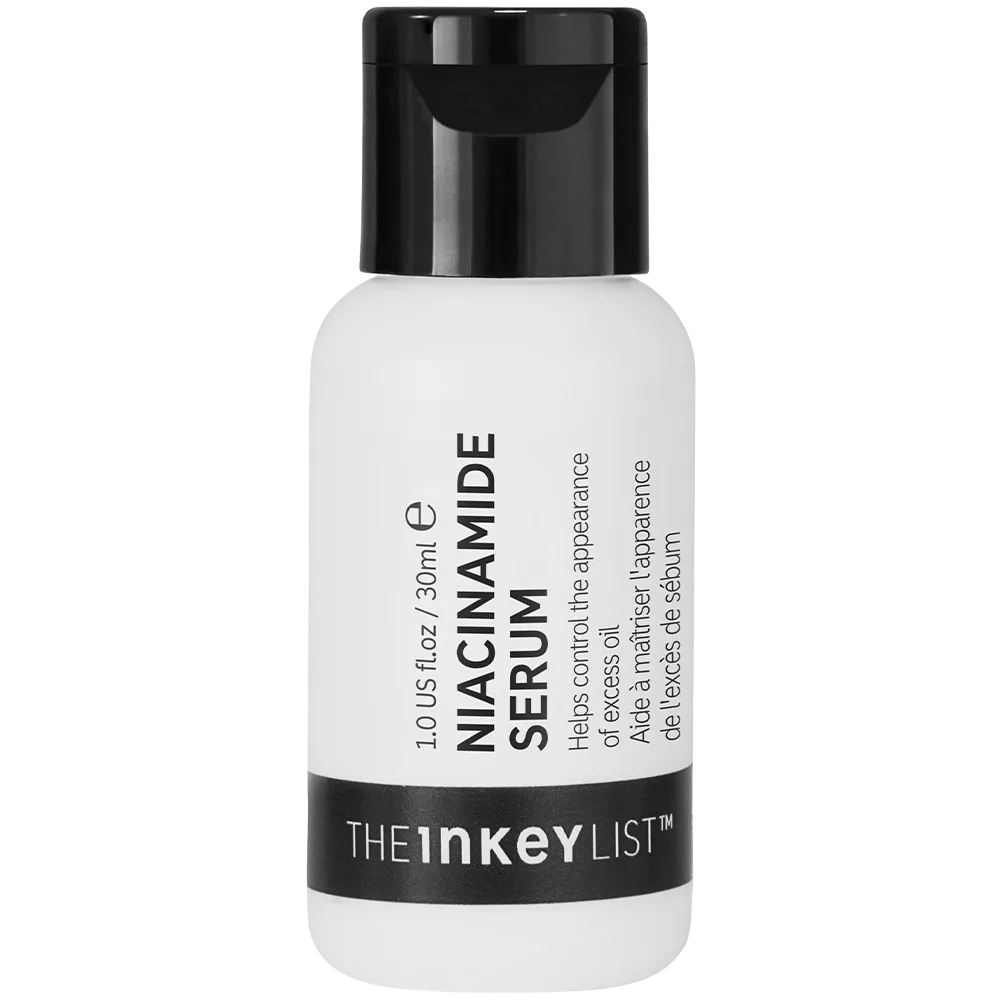
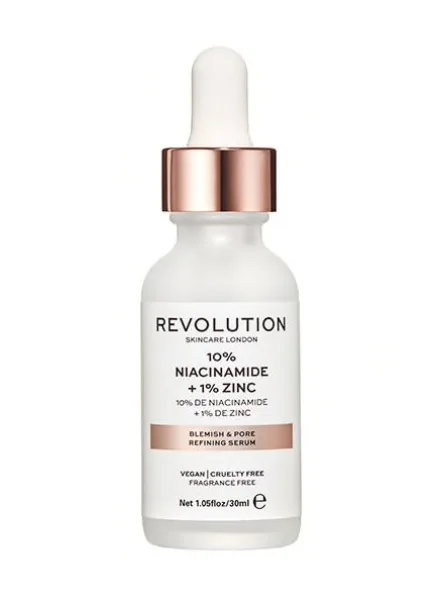
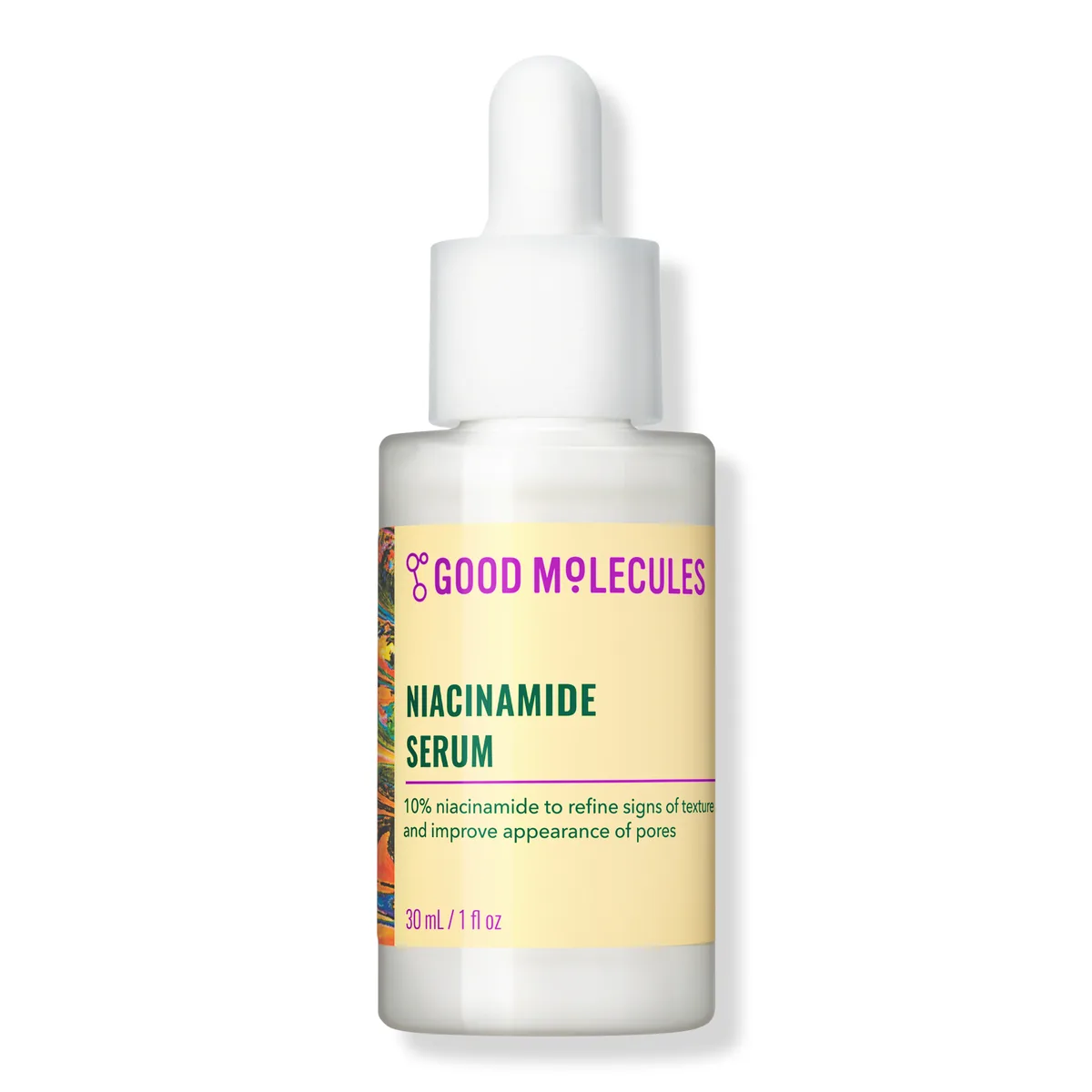
Most 10% niacinamide products are positioned as treatment serums in 30ml bottles at $15-25, which works out to 50-80 cents per ml. One Thing delivers the same clinically relevant concentration in a 150ml bottle for roughly 10 cents per ml, formatted as a generous essence rather than a rationed treatment. The format change alone makes this one of the most usable niacinamide products in the category.
One Thing's Niacinamide 10% is the best value in the niacinamide category — a clinically relevant concentration in a 150ml essence bottle for roughly one-third the per-ml cost of most competitors. Clean, fragrance-free, and gentle enough to use twice daily from day one. If you want niacinamide as an everyday habit rather than a rationed treatment, this is the one.
The case for it
What would change this: Guideline or regulatory standing for the active on this concern would move this from a promising bet to a recommendation.
Same rule for everyone. “Promising” is the verdict on 7,858 of 45,024 concern verdicts across the catalog; rule R9p decided 7,858 of them. Unchanged since September 5, 2026, engine 5.1.1.
Brand or formulator? Disclose a concentration or correct a fact →
The studies behind the evidence row
The case for it
Same rule for everyone. “Good choice” is the verdict on 9,564 of 45,024 concern verdicts across the catalog; rule R5 decided 9,072 of them. Unchanged since September 5, 2026, engine 5.1.1.
Brand or formulator? Disclose a concentration or correct a fact →
The studies behind the evidence row
The case for it
What would change this: Guideline or regulatory standing for the active on this concern would move this from a promising bet to a recommendation.
Same rule for everyone. “Promising” is the verdict on 7,858 of 45,024 concern verdicts across the catalog; rule R9p decided 7,858 of them. Unchanged since September 5, 2026, engine 5.1.1.
Brand or formulator? Disclose a concentration or correct a fact →
The studies behind the evidence row
The case for it
What would change this: Guideline or regulatory standing for the active on this concern would move this from a promising bet to a recommendation.
Same rule for everyone. “Promising” is the verdict on 7,858 of 45,024 concern verdicts across the catalog; rule R9p decided 7,858 of them. Unchanged since September 5, 2026, engine 5.1.1.
Brand or formulator? Disclose a concentration or correct a fact →
The studies behind the evidence row
Also listed for Dullness — the actives here (Niacinamide, Allantoin, Panthenol (Vitamin B5) are in our research queue for that concern; there is no verdict until their evidence rows are written. That is a gap in our table, not a mark against the product.
Where our review and the verdict differ. The review below was written on the formulation and the published trials; the verdicts above apply the stricter standing test in our methodology — an active earns a recommendation only with guideline or regulatory standing for the concern. Where the two disagree, the verdict is DermApproved’s position.
A verdict is DermApproved’s assessment of how well a product’s ingredients fit a concern — never a claim about what the product treats. Evidence dots and collected reviews sit beside it and are never blended in. Rules 0.5.1 · evidence table ev-2026.09-r228 · how we decide
Here's a design question the skincare industry mostly got wrong: if niacinamide at 10% is the concentration dermatologists keep pointing to for sebum control and pigment management, and it's cheap to manufacture, why is it almost always sold in tiny 30ml dropper bottles marketed as precious treatment serums? A famously minimalist budget brand set that pricing template back in 2016, and nearly everyone who followed copied the format. One Thing arrived in 2020 with a different answer: put the same 10% niacinamide in a 150ml bottle, call it an essence, and let people actually use it every day without counting drops.
That format change matters more than it sounds. When a niacinamide product costs 80 cents per ml, users tend to rationalize it — small amounts, every other day, only on problem areas. When it costs 10 cents per ml, the calculation flips. You pour a generous puddle, pat it onto your whole face, use it morning and night, and treat it as an infrastructure layer rather than a special intervention. That's how niacinamide is supposed to work. The research on sebum reduction, barrier improvement, and post-inflammatory hyperpigmentation fading is based on twice-daily application over 8 to 12 weeks, not occasional spot treatment. The bottle wasn't the brand's first act, either — One Thing built its name on viral single-ingredient centella and hyaluronic essences, and this was the same philosophy pointed at a harder-working active.
The formula itself is almost impressively unambitious, which is the point. Niacinamide at 10%, butylene glycol and glycerin as humectants, allantoin and panthenol as barrier soothers, sodium hyaluronate for a hydration assist, a drop of adenosine (a Korean-regulated anti-wrinkle active that contributes a minor smoothing effect), 1,2-hexanediol for preservation, and water. That's the whole list — eleven entries, buffered to a skin-comfortable pH of 6, fragrance-free, vegan, and fungal-acne safe. No essential oils, no plant extracts chasing a trend, no unnecessary peptides or exotics. The ingredient deck is so short that any given drop of the essence is about 90% doing one job: delivering niacinamide.
On skin it's indistinguishable from water with a faint slip. It absorbs in seconds, leaves no tack, and pills under nothing — including sunscreens, silicone primers, and makeup. The lack of added zinc (a common companion ingredient in niacinamide formulas) means the texture stays thinner and cleaner than versions that include zinc PCA. It also means you don't get the slight grittiness that zinc sometimes contributes, which matters more than you'd think for daily wearability. A dime-sized pour patted in with the palms — after toner, before moisturizer — covers face and neck, and the old worry about layering niacinamide with vitamin C can be retired: that caution came from decades-old data on a different molecule under lab conditions, and in real-world routines the two coexist fine.
Results follow the usual niacinamide timeline. Oil control and pore appearance improvements show up around weeks 2 to 3 — not because pores actually shrink (they don't, physically) but because reduced sebum congestion and improved keratin turnover make pore openings look smaller. Post-inflammatory hyperpigmentation fading is slower, as always: expect 8 to 12 weeks of consistent twice-daily use before the flatter dark marks start to visibly fade. Users with compromised barriers often notice the barrier-calming effects first, within a week or two. Users expecting a dramatic transformation out of a 10 cents-per-ml essence will be disappointed, but users expecting incremental, cumulative improvement will be rewarded. The several thousand reviews accumulated across K-beauty retailers land on the same arc — users consistently report calmer oil output, smoother-looking pores, and appreciation for how far the bottle stretches, with the main complaints being the patience required for pigment work and first-week flushing on reactive skin.
The flushing caveat is worth mentioning. A small percentage of users — especially those with rosacea or very reactive skin — experience temporary vasodilation in the first week of using 10% niacinamide. This shows up as transient redness lasting 15 to 30 minutes after application, and it typically fades as the skin adapts. If you're in that camp, the solution is to introduce the essence every other day for the first two weeks rather than diving straight into twice-daily use. It's a real-world tolerance issue, not a formulation flaw, and it applies to any 10% niacinamide product. Going higher than 10% wouldn't help anyway — above that line, irritation risk climbs without clear added benefit, which is why this concentration is the sensible ceiling rather than a compromise. For everyone else the formula is about as low-risk as actives get, and it's safe during pregnancy and breastfeeding.
Value is where this product becomes almost a no-brainer. At roughly $16 for 150ml, you're paying around 10 cents per ml for a clinically relevant niacinamide concentration. A typical twice-daily face application lasts about three to four months, which works out to $4 to $5 per month. For comparison, prestige niacinamide boosters run north of forty dollars for 20ml — more than ten times the per-ml cost — and even the famously cheap budget dropper bottles work out to about five times more per ml. One Thing isn't a legacy derm brand with decades of clinical research behind its name, but it doesn't need to be. The active is off-patent and well-studied, the formula is minimal enough to leave almost nothing to get wrong, and the value is unbeatable. For niacinamide specifically, this is the one to beat.
The hero actives that drive this product's performance.
| Ingredient | Function | Evidence |
|---|---|---|
| Niacinamide 10% (10%) | The entire point of this essence. At 10%, niacinamide sits at the top of the clinically useful range for reducing sebum output, improving barrier function, and fading post-inflammatory hyperpigmentation. With only gentle humectants and allantoin for company, there's nothing competing for skin-contact time or diluting the core active. | Emerging for Hyperpigmentation |
| Adenosine | A Korean-regulated anti-wrinkle active included at a low functional concentration. It provides a mild complement to the niacinamide, adding some smoothing and barrier-calming effects without introducing any irritation risk of its own. | Not yet assessed |
| Panthenol | Works alongside the niacinamide to reinforce barrier repair — particularly relevant here because 10% niacinamide on some skin types can cause a brief flushing response, and panthenol helps buffer that while the skin adapts. | Not yet assessed |
| Allantoin | A gentle soother added as an irritation buffer for a formula that contains a fairly high percentage of niacinamide. Its inclusion shows the brand understood that minimalism still requires a couple of calming agents when you're using an active at its upper functional limit. | Not yet assessed |
Ingredient standings describe the active at treatment-level doses and vehicles; this product's own condition grades weigh its actual formula.
Water, Niacinamide, Butylene Glycol, 1,2-Hexanediol, Glycerin, Allantoin, Panthenol, Sodium Hyaluronate, Adenosine, Ethylhexylglycerin, Disodium EDTA
serum
AM & PM
Apply after cleansing and hydrating toner, before heavier serums or moisturizer. Avoid layering directly with pure vitamin C (ascorbic acid) if you're sensitive — though research shows they coexist fine for most users.
Oil control and pore appearance improvements often show within 2-3 weeks. Hyperpigmentation fading takes 8-12 weeks of consistent use. Barrier improvements are cumulative over 4-6 weeks.
Niacinamide is one of the most thoroughly studied cosmetic actives of the past three decades. A 2005 study in the British Journal of Dermatology (Hakozaki et al., originally published 2002 and replicated through 2005) demonstrated that topical niacinamide at 2-5% significantly reduced facial hyperpigmentation by interfering with melanosome transfer from melanocytes to keratinocytes — notably, without inhibiting tyrosinase activity, which is how it differs mechanistically from hydroquinone. A 2006 paper in the Journal of Cosmetic and Laser Therapy (Draelos et al.) found that 2% niacinamide reduced sebum excretion rates in Japanese and Caucasian subjects, with measurable results at 2-4 weeks. Higher concentrations, up to 10%, have shown additional barrier function improvements via upregulation of ceramide and free fatty acid synthesis. What's interesting about One Thing's 10% formulation specifically is that it uses the active at the upper edge of the clinically useful range while keeping the excipient list minimal enough to avoid dilution or interference. Most of the supporting cast — panthenol, allantoin, adenosine, sodium hyaluronate — is there to buffer the mild vasodilation response that a small minority of users experience at 10% niacinamide. The formula is calibrated for tolerance rather than maximum active delivery, and in real-world use that's the right trade-off.
Dermatologists routinely recommend niacinamide at 2-10% as one of the most versatile actives in modern skincare. Skin-care clinicians recognize that niacinamide's mechanism — reducing melanosome transfer rather than inhibiting tyrosinase — makes it a useful complement to hydroquinone, azelaic acid, or tranexamic acid in hyperpigmentation protocols. It's also commonly used alongside topical retinoids to help offset retinoid-induced barrier disruption. Clinical guidance emphasizes that niacinamide is safe during pregnancy and compatible with virtually every other topical active, which is why it appears in so many 'universal add-on' recommendations. The 10% concentration in this essence is the upper edge of what most practitioners consider clinically useful before the risk of flushing or irritation outweighs the incremental benefit.
Apply to clean skin after your hydrating toner but before your moisturizer. A dime-sized amount is enough for the full face and neck — pat in with palms rather than using a cotton pad. Start every other day for the first two weeks if you have sensitive or reactive skin, then increase to twice daily once tolerance is established. Layers fine with vitamin C, retinoids, exfoliants, and peptides. Always follow with sunscreen in the morning. Safe during pregnancy and breastfeeding.
At approximately $16 for 150ml, this is the best per-milliliter price on a clinically relevant 10% niacinamide formulation currently on the market. A typical twice-daily face application lasts roughly three to four months, working out to $4-5 per month. Compared to prestige niacinamide serums in the $40-60 range for 20-30ml, the value difference is roughly 10x in One Thing's favor. The brand is an emerging one without the legacy of a derm-developed line, but niacinamide at 10% is such a well-studied, off-patent active that there's very little formulation risk. For daily niacinamide habits, the value here is hard to argue with.
Anyone looking for an affordable daily niacinamide habit — especially users dealing with large pores, oiliness, post-inflammatory hyperpigmentation, or dullness. Also an excellent complement to retinoid routines, where niacinamide helps offset barrier disruption.
Skip if you have severe rosacea and have had prior flushing reactions to niacinamide at concentrations above 5%. This one is also wrong for you if you prefer a multi-active serum with added peptides or antioxidants — this deliberately contains nothing but niacinamide and its supporting cast.
Thin, watery liquid with a barely perceptible slip
Unscented
Clear plastic bottle with a screw top — same design language as the rest of the One Thing line
First few applications may cause mild flushing on sensitive skin as the niacinamide causes temporary vasodilation — this is normal and fades within 15-30 minutes. Most users tolerate it with no reaction at all. Visible oil-control and glow improvements typically begin around week 2-3.
Around 3-4 months when applied morning and night to the face
All Year
One Thing launched the Niacinamide 10% essence in 2020 as a follow-up to its viral Centella Asiatica and Hyaluronic Acid essences. The brand's pitch was simple: if 10% niacinamide is the clinically meaningful concentration for sebum control and pigmentation, why sell it as a precious 30ml dropper bottle instead of a generous everyday essence? It's now one of the brand's bestsellers globally.
One Thing launched in 2018 in South Korea with a minimalist single-ingredient philosophy. While the brand is still relatively new, its niacinamide essence uses a well-studied active at a clinically relevant concentration, making the formulation itself conservative even if the brand's track record is short.
You can't layer niacinamide with vitamin C.
This concern came from a 1960s study on pure niacin (not niacinamide) at very high temperatures. Modern formulations of niacinamide and L-ascorbic acid layer fine in real-world use, and this essence is stable enough to apply directly before or after any vitamin C serum.
Higher niacinamide concentrations always work better.
Above 10%, the risk of irritation and flushing increases without clear additional benefit. One Thing's 10% sits at the upper edge of the clinically useful range without crossing into the territory where most users develop reactions.
Both deliver 10% niacinamide at a budget price, but One Thing's formula omits zinc PCA and uses a significantly larger 150ml format instead of 30ml. The One Thing version is less prone to pilling under makeup and more generous to use as an everyday essence rather than a rationed treatment.
Yes. Niacinamide and retinoids are actually a classic pairing — the niacinamide's barrier-supportive effect helps offset some of retinol's drying side effects. This essence layers cleanly underneath any retinoid product without causing pilling.
Mostly yes, though a small percentage of users experience temporary flushing during the first week as their skin adjusts to 10% niacinamide. If that happens, try using it every other day for two weeks before moving to daily use.
Yes. Niacinamide is considered safe during pregnancy and nursing, and the rest of the ingredient list contains only mild humectants and soothers — nothing restricted.
Indirectly yes — niacinamide reduces sebum production and has mild anti-inflammatory properties, both of which support acne management. It won't replace benzoyl peroxide or salicylic acid for active breakouts, but it helps reduce post-acne discoloration and oiliness.
Oil-control and pore-appearance improvements typically show within 2-3 weeks. Post-inflammatory hyperpigmentation fading takes longer — expect 8-12 weeks of consistent twice-daily use for visible results.
Recurring themes our editors read across retailer reviews of this product — summaries in our words, not quotations, and not a substitute for your own patch test.
Noticeable improvement in oiliness
Large size for the price
Non-sticky feel
Visible pore appearance improvement
Flushing reaction on very sensitive skin
Doesn't smell like anything (some expect a 'scent cue')
Needs patience for PIH fading
Verified answers from our questions library — the nuance a product page cannot carry.