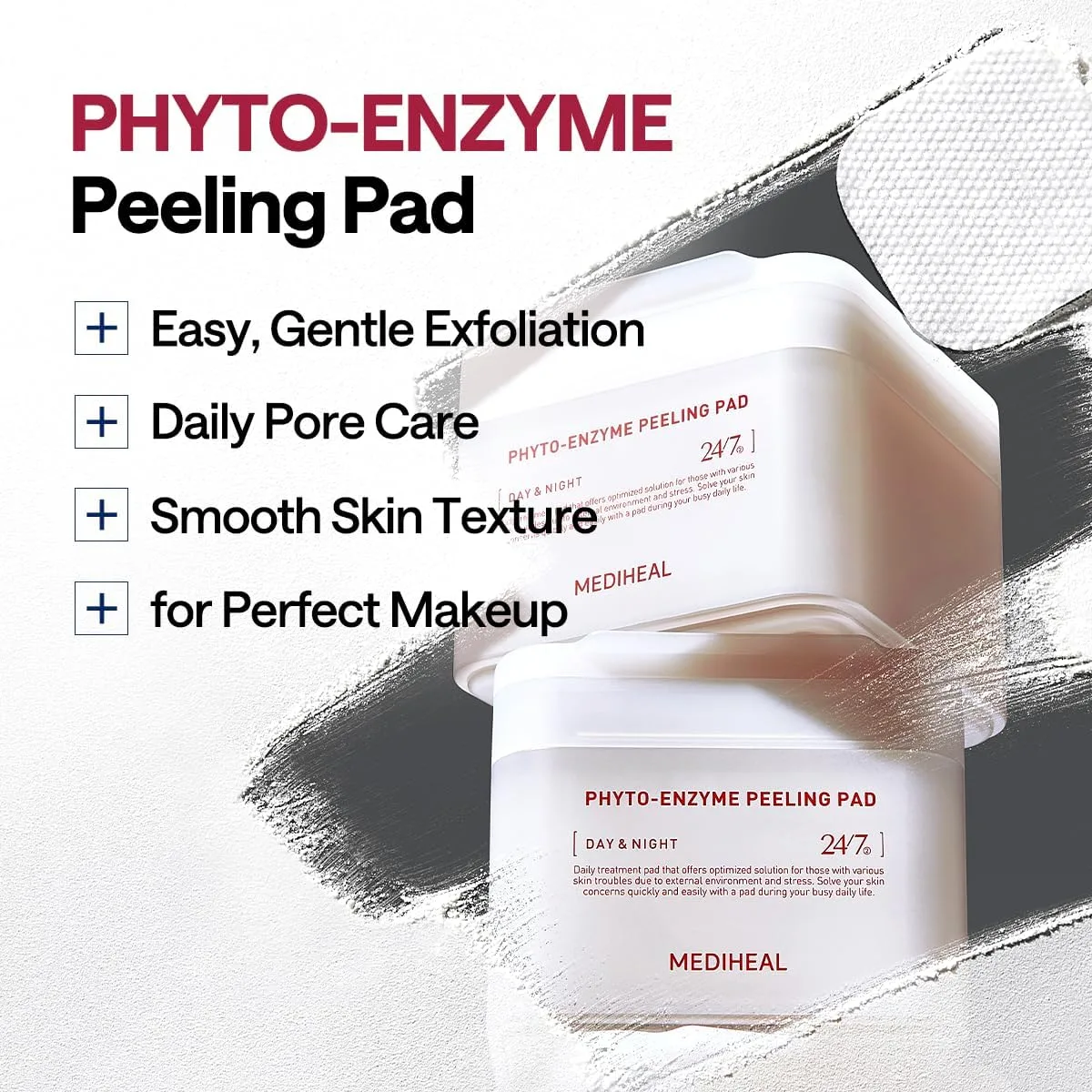
They're exfoliating peeling pads using genuinely gentle exfoliants — betaine salicylate (a buffered BHA), LHA (a larger, milder salicylic derivative), and papaya enzyme — to clear pores, control sebum, and smooth texture without a harsh peel. What sets them apart is that gentle multi-route exfoliation at a big-count value; the honest catch is the essential-oil load (patchouli, juniper, mugwort, mint) on freshly-exfoliated skin, which limits suitability for sensitive skin.
Gentle exfoliating peeling pads — betaine salicylate (a mild BHA), LHA, and papaya enzyme clear pores, control sebum, and smooth texture without a harsh peel, at a big-count value. The recurring catch: they're loaded with essential oils (patchouli, juniper, mugwort, mint), which on freshly-exfoliated skin raises the irritation risk and rules them out for sensitive skin. Genuinely gentle, effective exfoliation for non-reactive congested skin; a skip for the sensitive, and they need sunscreen and moderation.
Strong choicefor BlackheadsIn your profileYou chose · Salicylic Acid is an approved or monograph active for blackheads; this pad carries it, though the concentration is not declared.Moderate evidenceGentleNo reviews collected yet
The case for it
Betaine Salicylate is a first-line active — approved, monograph-listed or named in current guidelines — for this concern.
It is plausibly present at a working level, though the concentration is not declared.
The formula carries none of the triggers this concern is sensitive to.
What would change this: A declared concentration would move this to a firmer reading of the dose.
Same rule for everyone. “Strong choice” is the verdict on 1,459 of 45,024 concern verdicts across the catalog; rule R3 decided 567 of them.
Unchanged since September 5, 2026, engine 5.1.1.
R3 — Undeclared but plausibly dosed (top-third INCI position, or a potent sub-1% active) — the verdict stands, and the sentence says what disclosure would add. A declared figure below range would have been sub-threshold. · the full register
Carrying active
Betaine Salicylate
Standing
first line — a regulator recognises it for this use; trials support it · per 21 CFR § 333.350 - Labeling of acne drug products. (US Code of Federal Regulations (Legal Information Institute, Cornell Law School)), opened July 27, 2026
Form
plausible — studied range 0.5–2%, from the OTC monograph or label; judge it after ~6 weeks
Tolerability
gentle
Row checked
against its sources on July 27, 2026 (evidence table ev-2026.09-r228)
The studies behind the evidence row
OTC monograph, Topical Acne Drug Products — salicylic acid 0.5–2% recognized as an acne treatment active — US Food and Drug Administration
Promisingfor Excess OilinessIn your profileYou chose · Salicylic Acid has trial-level evidence for excess oiliness but no guideline or regulatory standing yet — promising, short of a recommendation; the other actives here are not yet assessed for it.Moderate evidenceGentleNo reviews collected yet
The case for it
Betaine Salicylate has trial-level evidence for this concern but no guideline or regulatory standing yet.
It is plausibly present at a working level, though the concentration is not declared.
The formula carries none of the triggers this concern is sensitive to.
What would change this: A declared concentration would move this to a firmer reading of the dose.
Same rule for everyone. “Promising” is the verdict on 7,858 of 45,024 concern verdicts across the catalog; rule R9p decided 7,858 of them.
Unchanged since September 5, 2026, engine 5.1.1.
R9p — 0.5.0: 'Unproven' beside three filled dots read as one question answered twice with opposite words (7,018 rows). The chip measures standing, the dots measure trial volume; where the row carries at least one RCT or a tier-2 source (moderate dots) and the active is present at a working level, the honest word is Promising. Unproven is reserved for plausible-standing rows with limited or weak evidence, or an under-dosed form. Same rank as Unproven — a bet either way; the dots order them. · the full register
Carrying active
Betaine Salicylate
Standing
plausible — trials support it
Form
plausible — studied range 30%, from the trials on the row; needs leave-on contact; judge it after ~6 weeks
Tolerability
gentle
Row checked
against its sources on July 17, 2026 (evidence table ev-2026.09-r228)
Good choicefor Rough TextureIn your profileYou chose · Salicylic Acid is a reference standard by mechanism for rough texture; this pad carries it high in the ingredient list.Moderate evidenceGentleNo reviews collected yet
The case for it
Betaine Salicylate has trial-supported standing for this concern.
It is present at an effective concentration, declared or high in the ingredient list.
The formula carries none of the triggers this concern is sensitive to.
Same rule for everyone. “Good choice” is the verdict on 9,564 of 45,024 concern verdicts across the catalog; rule R5 decided 9,072 of them.
Unchanged since September 5, 2026, engine 5.1.1.
Strong choicefor AcneIn your profileYou chose · Salicylic Acid is an approved or monograph active for acne; this pad carries it, though the concentration is not declared.Moderate evidenceStandard tolerabilityNo reviews collected yet
The case for it
Betaine Salicylate is a first-line active — approved, monograph-listed or named in current guidelines — for this concern.
It is plausibly present at a working level, though the concentration is not declared.
The formula carries no trigger this concern is sensitive to, with the cautions noted.
Cautions: known irritants.
What would change this: A declared concentration would move this to a firmer reading of the dose.
Same rule for everyone. “Strong choice” is the verdict on 1,459 of 45,024 concern verdicts across the catalog; rule R3 decided 567 of them.
Unchanged since September 5, 2026, engine 5.1.1.
R3 — Undeclared but plausibly dosed (top-third INCI position, or a potent sub-1% active) — the verdict stands, and the sentence says what disclosure would add. A declared figure below range would have been sub-threshold. · the full register
Carrying active
Betaine Salicylate
Standing
first line — a regulator recognises it for this use; trials support it · per § 333.310 Acne active ingredients. (U.S. Food and Drug Administration — 21 CFR Part 333 Subpart D (Topical Acne Drug Products), Code of Federal Regulations via GovInfo), opened July 27, 2026
Form
plausible — studied range 0.5–2%, from the OTC monograph or label; judge it after ~6 weeks
Tolerability
standard — irritant load
Row checked
against its sources on July 27, 2026 (evidence table ev-2026.09-r228)
Also listed for Dullness — the actives here (Salicylic Acid, Enzymes, Essential Oils) are in our research queue for that concern; there is no verdict until their evidence rows are written. That is a gap in our table, not a mark against the product.
A verdict is DermApproved’s assessment of how well a product’s ingredients fit a concern — never a claim about what the product treats. Evidence dots and collected reviews sit beside it and are never blended in.
Rules 0.5.1 · evidence table ev-2026.09-r228 · how we decide
✓ Clears pores, controls sebum, and smooths texture without a harsh peel
✓ Beta-glucan soothes; gentler acids than a strong glycolic/salicylic peel
✓ Big 90-count value; refreshing, cooling finish
✓ Good for oily, congested, or textured skin in moderation
✓ Both vegan and cruelty-free
Cons
✗ Essential-oil load (patchouli, juniper, mugwort, mint) on exfoliated skin — not for sensitive skin
✗ Mugwort oil (Asteraceae allergen) and mint can irritate; avoid in pregnancy
✗ Easy to over-exfoliate; requires moderation and daily sunscreen
✗ Not fungal-acne safe (plant oils)
✗ The recurring Mediheal-pad fragrance flaw
Review
Full Review
It's fitting to close this Mediheal batch with the exfoliating pad, because it crystallizes the pattern running through the brand's whole pad range: a genuinely well-chosen active approach, undercut by an unnecessary essential-oil load. The exfoliation here is genuinely gentle and smart — mild salicylic-based acids plus a papaya enzyme, a multi-route resurfacing that congested skin can tolerate. And then, on freshly-exfoliated skin of all places, the formula adds patchouli, juniper, mugwort, and mint oils, exactly when the barrier is briefly most permeable. Good exfoliation, questionable fragrance, one more time.
The exfoliation is the genuine strength, and it's well-judged. The pads use betaine salicylate — a betaine-buffered, milder form of salicylic acid (BHA) — and capryloyl salicylic acid (LHA, a larger, gentler salicylic derivative), both of which clear pores, control sebum, and smooth texture more gently than standard BHA, thanks to their larger molecule size. Add papain (papaya enzyme) for a mild, non-acid route to dissolving dead cells, and beta-glucan to soothe, and it's a thoughtful, gentle, multi-route exfoliation — a relatively mild peel suited to regular (not daily) use on congested, oily, or textured skin. On the resurfacing itself, it's genuinely good.
The gentleness of the acids is a real point in its favor. Betaine salicylate and LHA are among the gentler exfoliating choices, so the pads resurface without the sting and over-drying a strong glycolic or salicylic peel can cause. For oily or congested skin that wants smoother texture and clearer pores without harshness, that gentle exfoliation is exactly right, and the enzyme adds a mild extra route.
Now the recurring, frustrating caveat: the essential oils. The pads contain patchouli, juniper, mugwort, and mint oils, which are fragrance components and potential sensitizers — mugwort is an Asteraceae allergen, and mint can sting. And the problem is amplified here, because you're applying them to freshly-exfoliated skin, where the barrier is briefly more permeable and more vulnerable to irritation. So the essential oils on exfoliated skin are a genuinely poor pairing, making the pads less suited to sensitive, reactive skin than the gentle acids alone would be. The genuine soothing comes from the beta-glucan; the oils add scent and risk.
The practical picture is gentle exfoliation with real exfoliant rules plus the oil caveat. Use them a few times a week to start (not daily), don't stack them with other exfoliants or retinoids the same day, and always wear daily sunscreen (exfoliating acids increase sun sensitivity). Avoid them in pregnancy (mugwort oil), and they're not fungal-acne safe. For non-sensitive congested skin used in moderation, they resurface nicely; for sensitive skin, the essential oils are the deciding drawback.
On value, non-sensitive skin gets a genuine bargain here. Around twenty-two dollars for 90 gentle exfoliating pads with betaine salicylate, LHA, and papaya enzyme is solid value, far cheaper per use than many exfoliating treatments, and the count lasts at moderate use. For non-reactive oily or textured skin wanting affordable gentle exfoliation, it's a sensible, effective buy.
Where it lands closes the batch on the brand's signature note: genuinely good actives, undercut by fragrance. For non-sensitive oily, combination, or congestion-prone skin wanting affordable, gentle, multi-route exfoliation — to smooth texture, clear pores, and control sebum without a harsh peel — these Mediheal pads deliver genuinely gentle, effective resurfacing, used in moderation with sunscreen. But the essential-oil load on freshly-exfoliated skin is a real problem for sensitive or reactive skin, and the mugwort oil rules them out for pregnancy, so the sensitive and the pregnant should choose a fragrance-free exfoliant. Effective gentle exfoliation for non-reactive skin; a skip for the sensitive — exactly the pattern that runs through Mediheal's pad range, where the active formulation is consistently smart and the fragrance choice consistently isn't. The masks earn the brand its best-selling crown; the pads, good as their actives are, keep tripping over the same avoidable essential-oil hurdle. The pad-versus-acids point is worth one clarifying beat for anyone weighing this against a leave-on exfoliant. A swipe pad is a convenient, fairly controlled way to exfoliate — you get a measured dose on the cotton, it's hard to over-apply in a single use, and it doubles as a quick tone-and-prep step — but it's still a leave-on acid by another name, and the same discipline applies: a few times a week, not on top of your retinoid, always under sunscreen. The gentle salicylic forms here make that easier to get right than a strong glycolic pad would, and the enzyme adds a soft second route that's forgiving of the occasional over-enthusiastic swipe. Treated with normal exfoliant respect, it's a low-drama way to keep congestion and texture in check.
And so the batch ends where it kept arriving: a genuinely sensible active formula wearing a fragrance it didn't need. If Mediheal offered this exact exfoliating blend without the patchouli-juniper-mugwort-mint perfume, it would be an easy, broad recommendation for congested and sensitive skin alike; with the oils, it's a 'yes, if your skin is robust' product, and sensitive or pregnant users should reach for a fragrance-free exfoliant instead. The brand's masks remain the deserved bestsellers — gentler, simpler, fragrance-light — while its pads, for all their smart actives, keep asking reactive skin to accept an essential-oil tax that the best of modern exfoliant formulation has learned to leave off. Buy these for non-reactive, congestion-prone skin and they'll do their gentle resurfacing job well; just know, by now, exactly which half of the audience the fragrance is quietly turning away.
Formula
Key Ingredients
The hero actives that drive this product's performance.
The gentle chemical-exfoliation core. Betaine salicylate (a mild, betaine-buffered form of salicylic acid/BHA) and capryloyl salicylic acid (LHA, a larger, gentler salicylic derivative) clear pores, control sebum, and smooth texture — both gentler than standard BHA due to their larger molecule size, making this a relatively mild peel suited to congested, oily, or textured skin.
Established mechanismfor Rough Texture · established mechanism
The enzyme-exfoliation-and-soothing layer. Papain (papaya enzyme) gently dissolves dead surface cells via enzymatic exfoliation (a mild, non-acid route), while beta-glucan hydrates and soothes — adding gentle resurfacing and a cushioning effect to the acids, for smoother, clearer skin.
The scenting layer, and the gentleness caveat. A blend of essential oils — patchouli, juniper, mugwort, and mint — gives a herbal scent, but these are fragrance components and potential sensitizers (mugwort is also an Asteraceae allergen, mint can sting). On freshly-exfoliated skin especially, that's a real irritation consideration, making the pads less suited to sensitive skin.
Not yet assessed
Ingredient standings describe the active at treatment-level doses and
vehicles; this product's own condition grades weigh its actual formula.
After cleansing, sweep a pad over the face to gently exfoliate, then follow with serums and moisturizer, a few times a week to start (build as tolerated) — not daily at first. Don't stack with other strong exfoliants the same day. Wear daily sunscreen (exfoliating acids increase sun sensitivity). Given the essential oils on exfoliated skin, sensitive skin should patch test or choose a fragrance-free exfoliant; avoid in pregnancy (mugwort oil).
Results Timeline
Immediately smoother, clearer, less-congested skin; with regular (not daily) use, texture, pores, and sebum improve. A gentle exfoliating-and-pore-clearing pad, not a strong peel.
Pairs Well With
a moisturizer after to soothedaily sunscreen (essential with acids)a congestion-prone routine
The pads provide gentle multi-route exfoliation: betaine salicylate (a betaine-buffered, milder BHA) and capryloyl salicylic acid (LHA, a larger-molecule, gentler salicylic derivative) provide keratolytic/comedolytic pore-clearing and sebum control with less irritation than standard BHA, and papain (papaya enzyme) adds mild enzymatic exfoliation; beta-glucan soothes. The acids' gentleness suits regular (non-daily) use on congested skin. Notably, the formula contains a blend of essential oils (patchouli, juniper, mugwort, mint) — fragrance components and sensitizers (mugwort is an Asteraceae allergen; mint can sting) — applied to freshly-exfoliated, more-permeable skin, raising irritation risk and reducing suitability for sensitive skin.
The formulation is vegan but not malassezia-safe (plant oils); exfoliating acids mandate daily sunscreen and moderation, and mugwort oil warrants pregnancy avoidance.
The scientific bottom line is a genuinely gentle exfoliating pad (mild salicylic forms plus enzyme) undercut for sensitive skin by an essential-oil load on exfoliated skin. For non-reactive congested skin used in moderation with sunscreen, it resurfaces effectively; sensitive skin and the pregnant should choose a fragrance-free, mugwort-free exfoliant.
Dermatologist Perspective
Dermatologists would credit the genuinely gentle, multi-route exfoliation — betaine salicylate and LHA are milder salicylic forms, and papain adds enzymatic resurfacing, so the pads clear pores and smooth texture without the harshness of a strong peel, suited to congested, oily skin in moderation. The clear clinical criticism is the essential-oil blend (patchouli, juniper, mugwort, mint) applied to freshly-exfoliated skin, where the barrier is briefly more permeable: these are sensitizers (mugwort an Asteraceae allergen, mint a potential stingant), raising irritation risk and making the pads unsuitable for sensitive skin. Standard exfoliant guidance applies: moderate frequency, daily sunscreen, no stacking with other exfoliants/retinoids, and pregnancy avoidance (mugwort oil). They're not fungal-acne safe. Clinically, they're effective gentle exfoliation for non-reactive congested skin; sensitive skin and the pregnant should choose a fragrance-free exfoliant.
Guidance
Usage & Recommendations
How to Use
After cleansing, sweep a pad over the face to gently exfoliate, then follow with serums and moisturizer, a few times a week to start and building as tolerated — not daily at first, to avoid over-exfoliating. Don't stack with other strong exfoliants or retinoids the same day, and always wear daily sunscreen (exfoliating acids increase sun sensitivity). Given the essential oils on exfoliated skin, sensitive skin should patch test or choose a fragrance-free exfoliant; avoid in pregnancy (mugwort oil).
Value Assessment
At around $22 for 90 pads, value is good for non-sensitive skin — gentle exfoliants (betaine salicylate, LHA) plus a papaya enzyme cost far less per use than many exfoliating treatments, and the count lasts one to three months at moderate use. Its value is highest for non-reactive oily, combination, or congestion-prone skin wanting affordable, gentle exfoliation to smooth texture and clear pores, used with sunscreen and in moderation; the essential-oil load on exfoliated skin rules them out for sensitive skin, and mugwort oil for pregnancy. As effective, gentle, affordable exfoliating pads for non-reactive skin, they're a solid buy, with a fragrance-free exfoliant the gentler option.
Who Should Buy
Non-sensitive oily, combination, or congestion-prone skin wanting affordable, gentle, multi-route exfoliation (betaine salicylate, LHA, papaya enzyme) to smooth texture, clear pores, and control sebum without a harsh peel — used in moderation with daily sunscreen. Those who want gentle exfoliating pads and aren't fragrance-reactive or pregnant.
Who Should Skip
Sensitive or reactive skin (the essential-oil load on freshly-exfoliated skin raises irritation risk — choose a fragrance-free exfoliant); pregnant or breastfeeding people (mugwort oil and leave-on acids); anyone prone to over-exfoliating or already using strong acids/retinoids; and the fungal-acne-prone (plant oils).
Micro-embossed pads soaked in a lightweight exfoliating essence that leaves skin smooth, clear, and refreshed.
Scent
Herbal-scented by essential oils (patchouli, juniper, mugwort, mint).
Packaging
A tub of 90 micro-embossed pads in Mediheal's clean aesthetic. Generous count.
Finish
smoothclearrefreshed
What to Expect on First Use
Sweep a textured pad over the skin and it gently exfoliates — betaine salicylate, LHA, and papaya enzyme loosening dead cells and clearing pores — leaving skin smoother, clearer, and refreshed, with a cooling, herbal-scented finish. The exfoliation is genuinely gentle (the acids are mild forms), which is good. The catch is the essential-oil blend (patchouli, juniper, mugwort, mint) on just-exfoliated skin, which raises the irritation risk for sensitive skin.
Mediheal's toner-pad range includes this Phyto-enzyme Peeling version — the exfoliating one, pairing gentle salicylic-based acids with a papaya enzyme for resurfacing and pore-clearing, in a big economical count for congestion-prone skin.
About Mediheal Established Brand (5–20 years)
Mediheal, the world's best-selling sheet-mask brand, makes these exfoliating peeling pads with gentle acids and a papaya enzyme — betaine salicylate (a mild BHA), LHA, and papain — for pore-clearing, sebum control, and smoother texture. The exfoliation is genuinely gentle, but they're loaded with essential oils (patchouli, juniper, mugwort, mint), a real caveat on freshly-exfoliated, sensitive skin.
Brand founded: 2009 · Product launched: 2023
Myth vs. Reality
Common Myths
Myth
Peeling pads are too harsh to use regularly.
Reality
Strong acid peels can be, but these use genuinely gentle exfoliants — betaine salicylate (a buffered BHA) and LHA (a larger, milder salicylic derivative) plus a papaya enzyme — so they're a relatively mild peel suited to regular (not daily) use on congested skin. The bigger irritation risk here is actually the essential-oil blend on exfoliated skin, not the acids; used in moderation with sunscreen, the exfoliation itself is gentle.
Myth
The herbal essential oils make these soothing.
Reality
Patchouli, juniper, mugwort, and mint oils sound herbal and soothing, but they're essential oils and potential sensitizers — mugwort is an Asteraceae allergen, and mint can sting, especially on freshly-exfoliated skin where the barrier is briefly more permeable. So the oils add scent and irritation risk, not soothing (the genuine soothing comes from beta-glucan); they make the pads less suited to sensitive skin.
FAQ
Frequently Asked Questions
What do the Mediheal Phyto-enzyme Peeling Pads do?
They gently exfoliate: betaine salicylate (a mild BHA), LHA (a larger, gentler salicylic derivative), and papain (papaya enzyme) loosen and dissolve dead surface cells, clear pores, control sebum, and smooth texture, with beta-glucan to soothe. So they resurface and clarify congested, oily, or textured skin without a harsh peel — a relatively gentle exfoliating step, used a few times a week.
Are they gentle enough for sensitive skin?
The acids are genuinely gentle (betaine salicylate and LHA are milder salicylic forms), but the pads contain a blend of essential oils (patchouli, juniper, mugwort, mint), which are sensitizers — and on freshly-exfoliated skin, where the barrier is briefly more permeable, that raises the irritation risk. So sensitive or reactive skin should patch test or choose a fragrance-free exfoliant; the exfoliation is gentle, but the fragrance isn't ideal.
How often should I use them?
A few times a week to start, building as tolerated — not daily at first, to avoid over-exfoliating. Don't stack them with other strong exfoliants (or retinoids) the same day, and always wear daily sunscreen, since exfoliating acids increase sun sensitivity. The gentle acids allow fairly regular use once your skin adjusts, but moderation matters with any exfoliant.
Can I use them in pregnancy?
It's best to avoid them during pregnancy — they contain mugwort oil (traditionally cautioned in pregnancy) and leave-on salicylic-based acids, so pregnant or breastfeeding people should choose a pregnancy-safe exfoliant (like a gentle lactic acid) and check with their doctor. For non-pregnant skin, the gentle exfoliation is fine used in moderation with sunscreen.
Are they worth the price?
For non-sensitive, congestion-prone skin, yes — around $22 for 90 gentle exfoliating pads with betaine salicylate, LHA, and papaya enzyme is good value, far cheaper per use than many exfoliating treatments. The essential oils make them less suitable for sensitive skin (and they need sunscreen and moderation), but for non-reactive oily or textured skin wanting affordable gentle exfoliation, they're a solid buy.
Reviews
What Reviewers Tend to Say
Recurring themes our editors read across retailer reviews of this product — summaries in our words, not quotations, and not a substitute for your own patch test.
Common Praise
Smooths texture and clears pores gently
Gentle acids (betaine salicylate, LHA) plus enzyme
Controls sebum; refreshing
Big count, good value
Common Complaints
Essential-oil load on exfoliated skin — not for sensitive skin
The whole case for salicylic acid rests on one unglamorous fact of chemistry: it dissolves in oil. Understand that, and you know exactly when it beats a glycolic acid — and when it's overkill.
They all get sold as 'exfoliation,' but molecule size and oil-solubility make them genuinely different tools — and picking the wrong one is why so many people wreck their barrier.
Essential oils are declared by botanical name rather than as fragrance, which is why the most heavily perfumed products in the natural aisle can carry the reassuring word — and why the bottle gets more sensitising the longer you own it.
Products, answers, therapy guides, tools and articles in one search. Brand names,
slang and abbreviations all work — accutane finds isotretinoin, bacne finds truncal acne.