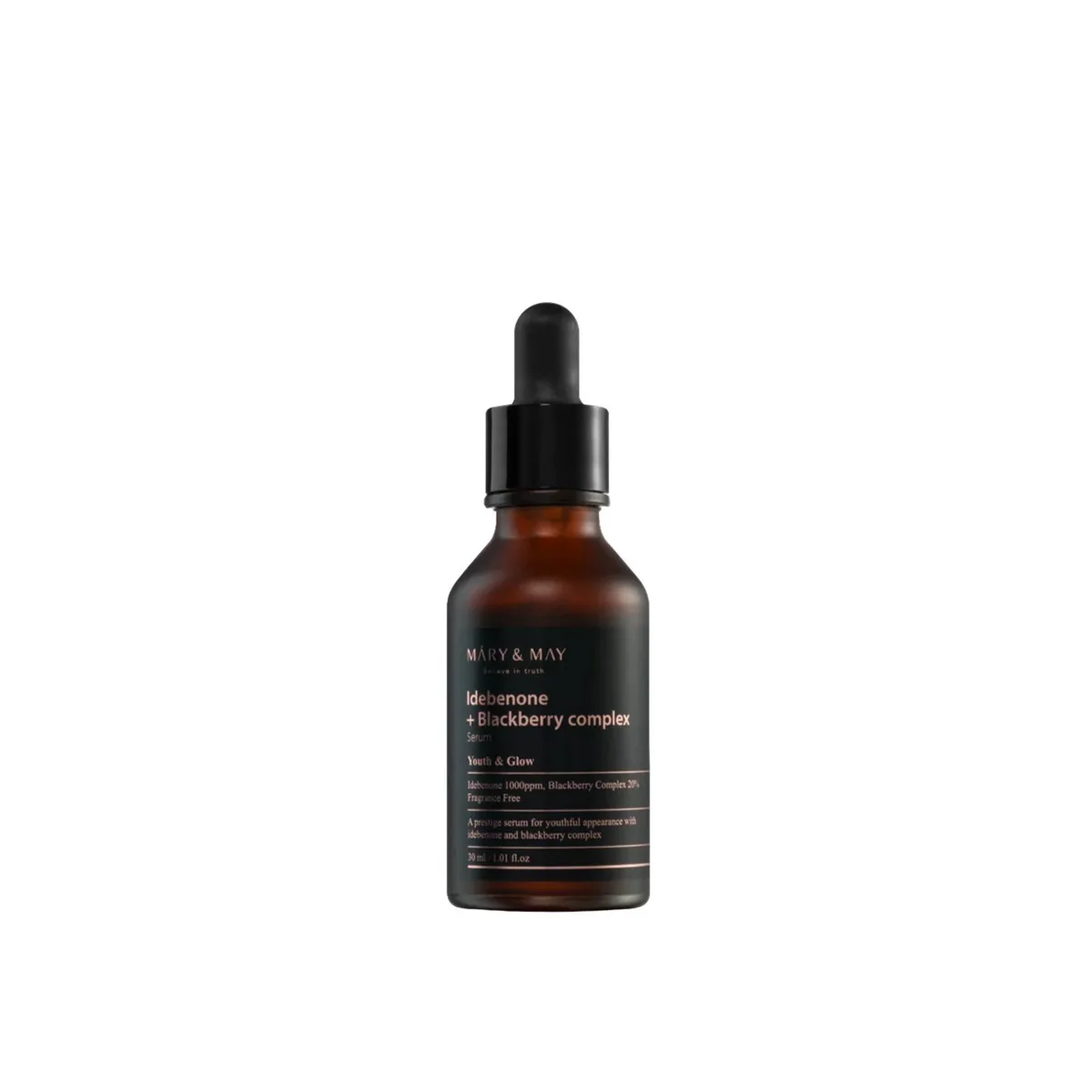
Combines idebenone (a potent CoQ10-analog antioxidant rarely seen at affordable price) with three berry extracts each at substantial 6.75% concentration. The transparent ppm disclosure and fragrance-free formulation distinguish it in the K-beauty antioxidant serum category.
An antioxidant serum that puts a genuinely interesting active — idebenone — at a price that doesn't usually buy it. Backed by three berry extracts at meaningful 6.75% concentrations, it's a clean, fragrance-free, well-tolerated daily defense layer. Don't expect dramatic before-and-afters; antioxidant protection is preventive work, and on those terms it's a quietly excellent $23 buy.
Promisingfor DullnessIn your profileYou chose · Glycerin has trial-level evidence for dullness but no guideline or regulatory standing yet — promising, short of a recommendation; the other actives here are not yet assessed for it.Moderate evidenceGentleNo reviews collected yet
The case for it
Glycerin has trial-level evidence for this concern but no guideline or regulatory standing yet.
It is present at an effective concentration, declared or high in the ingredient list.
The formula carries none of the triggers this concern is sensitive to.
What would change this: Guideline or regulatory standing for the active on this concern would move this from a promising bet to a recommendation.
Same rule for everyone. “Promising” is the verdict on 7,858 of 45,024 concern verdicts across the catalog; rule R9p decided 7,858 of them.
Unchanged since September 5, 2026, engine 5.1.1.
R9p — 0.5.0: 'Unproven' beside three filled dots read as one question answered twice with opposite words (7,018 rows). The chip measures standing, the dots measure trial volume; where the row carries at least one RCT or a tier-2 source (moderate dots) and the active is present at a working level, the honest word is Promising. Unproven is reserved for plausible-standing rows with limited or weak evidence, or an under-dosed form. Same rank as Unproven — a bet either way; the dots order them. · the full register
Carrying active
Glycerin
Standing
plausible — trials support it
Form
adequate — studied range 2–20%, from the trials on the row; needs leave-on contact; judge it after ~1 weeks
Tolerability
gentle
Row checked
against its sources on July 17, 2026 (evidence table ev-2026.09-r228)
The studies behind the evidence row
Harry's Cosmeticology / Baran & Maibach Textbook of Cosmetic Dermatology — humectant, emollient and occlusive classification — standard reference text
Also listed for Aging and Sun Damage — the actives here (Glycerin, Phospholipids, berry extract, Idebenone) are in our research queue for those concerns; there is no verdict until their evidence rows are written. That is a gap in our table, not a mark against the product.
A verdict is DermApproved’s assessment of how well a product’s ingredients fit a concern — never a claim about what the product treats. Evidence dots and collected reviews sit beside it and are never blended in.
Rules 0.5.1 · evidence table ev-2026.09-r228 · how we decide
Assessment
Pros & Cons
Pros
✓ Idebenone at a genuine 0.1% concentration at an unusually low price
✓ Three berry extracts at meaningful 6.75% concentrations each
✓ Fully fragrance-free, suitable for sensitive skin
✓ Transparent parts-per-million concentration disclosure on packaging
✓ Lightweight texture absorbs cleanly with no tackiness
✓ Idebenone avoids the pH-stability problems of pure vitamin C
✓ Vegan and cruelty-free certified formulation
Cons
✗ Idebenone's research base is thinner than vitamin C's
✗ Antioxidant benefits are preventive, with no dramatic visible change
✗ Limited mainstream US retail availability
✗ Single 30ml size offers no larger-value option
✗ Deep berry tint may briefly cast on very light skin
Review
Full Review
Idebenone has a reputation for showing up in expensive places. It's a synthetic, lower-molecular-weight cousin of coenzyme Q10, and for years it lived almost exclusively in premium-priced antioxidant lines, the kind that come with a story about laboratory-grade potency and a price to match. So the genuinely surprising thing about Mary & May's Idebenone + Blackberry Complex Serum isn't the ingredient — it's the receipt. Twenty-three dollars for 30ml of a serum built around an active most brands reserve for their flagship tier is the sort of thing that makes you reread the label to check you understood it correctly.
Mary & May is a Korean indie brand founded in 2018, still in the emerging tier, and one of its defining habits is disclosing active concentrations in parts per million right on the packaging — a transparency move that's rarer than it should be. Here it tells you exactly what you're getting: idebenone at 1000ppm, which is 0.1%, plus blackberry, acai, and blueberry fruit extracts each at a substantial 67500ppm, or 6.75%. Those berry numbers matter. At 6.75% each, the fruit extracts aren't the trace, bottom-of-the-list 'fairy dusting' that lets a brand put a pretty botanical on the front of the bottle — they're genuine co-actives, contributing anthocyanin pigments and polyphenols that do real free-radical-scavenging work alongside the idebenone. The deep berry color of the serum isn't a dye; it's the extracts themselves.
The idebenone is the headline, and it's a meaningful one. At 0.1% it's a real working concentration, and idebenone is a lipid-soluble antioxidant that doesn't carry the pH-stability headaches of pure L-ascorbic acid vitamin C — it doesn't oxidize into uselessness if the formula drifts slightly off-target, and it doesn't need to be kept in an opaque bottle and used within three months or wasted. Hydrogenated lecithin, a phospholipid, sits in the formula to help shuttle the lipid-soluble idebenone into the skin and lend mild barrier support, while glycerin provides a humectant cushion of hydration. It's a focused formula — antioxidants, a delivery aid, a humectant base — without the kitchen-sink crowding that dilutes a lot of serums.
In use it's pleasantly unremarkable, which for an antioxidant serum is exactly the goal — you want a defense layer to disappear into your routine, not announce itself. The texture is lightweight, the deep berry tint of the liquid disappears on the skin within seconds, and it absorbs fast and clean with no tackiness or film. There's no fragrance added — only a faint natural berry note from the extracts themselves — and no tingling or stinging, so it slots easily into a morning routine for essentially any skin type, sensitive included. That tolerability is a real selling point and not a small one: a meaningful share of people who try a vitamin C serum end up abandoning it because of the irritation or the sting, and a well-tolerated alternative that delivers comparable antioxidant defense solves a genuine problem. This is a serum you can use daily, indefinitely, without your skin filing a complaint.
Now the honest part, because antioxidant serums attract a lot of hype that this review will not. Idebenone's research base, while genuinely promising, is thinner than vitamin C's — there's a well-known clinical trial from the mid-2000s on photodamaged skin, but the body of evidence isn't as deep or as replicated as the decades of vitamin C literature. And the more important caveat applies to the whole category: antioxidants are preventive. They work by neutralizing the free radicals that UV and pollution generate, which means their job is to stop future damage, not erase what's already there. You will not look in the mirror after two weeks and see a transformed face. What you're buying is a defense layer, and defense layers are invisible by design — you only know they worked by what didn't happen. The other limitation is purely logistical: US mainstream availability is limited, so this is usually an order from a K-beauty retailer rather than a shelf grab.
Value is the easy part of the verdict. Twenty-three dollars buys you idebenone at a real concentration plus a triple-berry polyphenol complex at concentrations that genuinely count, fragrance-free and vegan, with the brand telling you the exact numbers in parts per million rather than hiding behind a vague 'contains antioxidants' claim. That combination at this price is, frankly, a small bargain — idebenone has historically been the kind of ingredient you pay a premium to access, and seeing it priced like an everyday serum is genuinely refreshing. There's no celebrity name inflating the cost, no luxury packaging tax, no marketing budget baked into the receipt; you're paying for the formula and very little else. If you want to add a daytime antioxidant step to your routine — and worn under sunscreen, that's a smart, evidence-supported thing to do, since antioxidants and UV filters defend against photodamage through complementary mechanisms — this is an easy, low-risk way to do it. Just go in understanding what an antioxidant serum is for: quiet, cumulative, preventive protection, not a visible overnight payoff. Judged on those honest terms, it quietly overdelivers for the money.
Formula
Key Ingredients
The hero actives that drive this product's performance.
Idebenone is a synthetic analog of coenzyme Q10 with research supporting potent antioxidant activity — some studies rank it among the more effective topical antioxidants. At 0.1% it's a meaningful concentration. The transparent ppm disclosure is characteristic of Mary & May's formulation honesty.
Not yet assessed
Blackberry + Acai + Blueberry Fruit Complex (6.75% each (67500ppm))
Three berry extracts each at a substantial 6.75% concentration — providing anthocyanin antioxidants and polyphenols. At these concentrations, the berry complex is a genuine primary active rather than trace marketing inclusion, working synergistically with idebenone for comprehensive antioxidant defense.
The formula pairs two antioxidant strategies that work through different chemistry. Idebenone is a synthetic analog of coenzyme Q10 with a lower molecular weight that improves its skin penetration. Its most-cited clinical evidence is a 2005 study in the Journal of Cosmetic Dermatology by McDaniel and colleagues, which tested 0.5% and 1.0% idebenone formulations twice daily for six weeks in subjects with moderate photodamage and reported reductions in fine lines and roughness alongside improved hydration and global photodamage scores. This serum's 0.1% is below those trial concentrations, so it should be understood as a meaningful daily-defense dose rather than a high-strength treatment level. The berry extract trio is the other half: blackberry, acai, and blueberry are rich in anthocyanins and polyphenols, plant antioxidants that quench reactive oxygen species through hydrogen-donating activity — a complementary mechanism to idebenone's. At 6.75% each, these are formulated as genuine actives, not marketing inclusions, which is the formulation point that distinguishes this serum. Hydrogenated lecithin is included as a phospholipid delivery aid; because idebenone is lipid-soluble, a phospholipid carrier supports its movement into the stratum corneum and lends modest barrier benefit. The broader rationale — that topical antioxidants are best understood as preventive, reducing the oxidative-stress burden from UV and pollution rather than reversing existing damage — is well established, and it explains why a serum like this earns its place under sunscreen as part of a long-game routine.
Dermatologists broadly endorse adding a daytime topical antioxidant beneath sunscreen, because antioxidants and UV filters address photodamage through different mechanisms — filters block radiation, antioxidants mop up the free radicals that still get generated. Practicing dermatologists most often point to vitamin C as the best-studied option, but they also recognize idebenone as a legitimate alternative, particularly for patients who find vitamin C formulations irritating or who dislike the oxidation and stability quirks of L-ascorbic acid. Dermatologists consistently emphasize that antioxidant serums are preventive rather than corrective, and that they are not a substitute for sunscreen but a complement to it. For sensitive skin, the fragrance-free formulation and absence of stinging actives make a serum like this an easy recommendation, and many practitioners note that idebenone and vitamin C can be alternated or layered without conflict.
Guidance
Usage & Recommendations
How to Use
Apply three to five drops to clean skin in the morning, after any toner or essence and before moisturizer. Pat gently rather than rubbing, and let it absorb for a moment before layering. Antioxidant serums work synergistically with sun protection, so always follow with a broad-spectrum SPF 30 or higher — this is non-negotiable for getting the preventive benefit. The formula layers well with hyaluronic acid serums and is compatible with a retinoid used in the evening routine. There are no significant conflicts, so it slots easily into most regimens. Store it away from direct heat and light, and use consistently — antioxidant protection is a cumulative, daily habit rather than an occasional treatment.
Value Assessment
At $23 for 30ml, this is one of the more affordable ways to get idebenone into a routine — an active that typically appears in considerably pricier antioxidant lines. The price also covers three berry extracts at concentrations high enough to function as real co-actives rather than label decoration, a fragrance-free vegan formula, and the brand's unusual transparency on exact concentrations. Only the one size is offered, so there's no bulk-format saving to weigh. For an emerging brand without decades of clinical history, the value case rests on the formula itself, and on ingredient merit alone this serum comfortably justifies its modest cost. It's a genuine small bargain in the antioxidant category.
Who Should Buy
Anyone wanting to add an evidence-supported daytime antioxidant step at a reasonable price, especially those curious about idebenone but unwilling to pay luxury-tier prices for it. Its fragrance-free, non-irritating formula makes it suitable across all skin types, and sensitive skin that struggles with vitamin C will find it a welcome alternative.
Who Should Skip
Look elsewhere if you're hoping for visible, dramatic results — antioxidant serums are preventive and their payoff is invisible by design. Those already happy with a well-tolerated vitamin C serum gain little by switching, and anyone who won't reliably pair a daytime antioxidant with sunscreen is missing the point of using one at all.
Ready to try Mary & May Idebenone + Blackberry Complex Serum?
Mary & May's idebenone serum brings a relatively unusual antioxidant active to the affordable K-beauty market with the brand's signature transparent-concentration approach.
About Mary & May Established Brand (5–20 years)
Mary & May is a Korean indie skincare brand founded in 2018 focused on minimalist, vegan formulations with transparent active concentrations.
Brand founded: 2018 · Product launched: 2022
Myth vs. Reality
Common Myths
No myths to debunk yet.
FAQ
Frequently Asked Questions
What is idebenone?
Idebenone is a synthetic analog of coenzyme Q10 with research supporting potent antioxidant activity. Some studies have ranked it highly among topical antioxidants for free-radical-quenching capacity, though its overall research base is less extensive than vitamin C.
How does it compare to a vitamin C serum?
Both are antioxidant serums. Vitamin C has more extensive research backing and adds brightening. Idebenone is a potent antioxidant without the pH-stability challenges of L-ascorbic acid. The two can be used together or alternated.
Can Idebenone + Blackberry Complex Serum be used while pregnant or breastfeeding?
Yes — idebenone, berry extracts, and supporting ingredients are pregnancy-compatible.
Reviews
What Reviewers Tend to Say
Recurring themes our editors read across retailer reviews of this product — summaries in our words, not quotations, and not a substitute for your own patch test.
Common Praise
Idebenone is a potent antioxidant rarely found at this price
Three berry extracts at substantial 6.75% concentrations
Fragrance-free formulation
Transparent ppm concentration disclosure
Vegan certified
Lightweight texture absorbs cleanly
Common Complaints
Idebenone efficacy research less robust than vitamin C
Antioxidant benefits are preventive — no dramatic visible change
Limited US mainstream availability
Notable Endorsements
K-beauty community favorite for affordable antioxidant serumsFeatured in K-beauty antioxidant serum discussions
The longevity supplement of the moment jumped straight onto serum labels in 2026 — but the cellular-energy story that dazzles in a petri dish runs into a wall at the surface of your face.
Spermidine, senolytics, autophagy activators — the supplement world's obsessions are migrating onto skincare labels well ahead of the topical evidence. Here's what's genuinely promising versus what's just early.
The critics are right about the data gap, and they are right that it took two decades to move. What follows from that is not the conclusion most people draw.
Women get a biological alarm bell at menopause. Men get a straight line down from their twenties, which is why so many arrive at fifty-five with thirty-five years of unopposed decline and no routine.
Products, answers, therapy guides, tools and articles in one search. Brand names,
slang and abbreviations all work — accutane finds isotretinoin, bacne finds truncal acne.