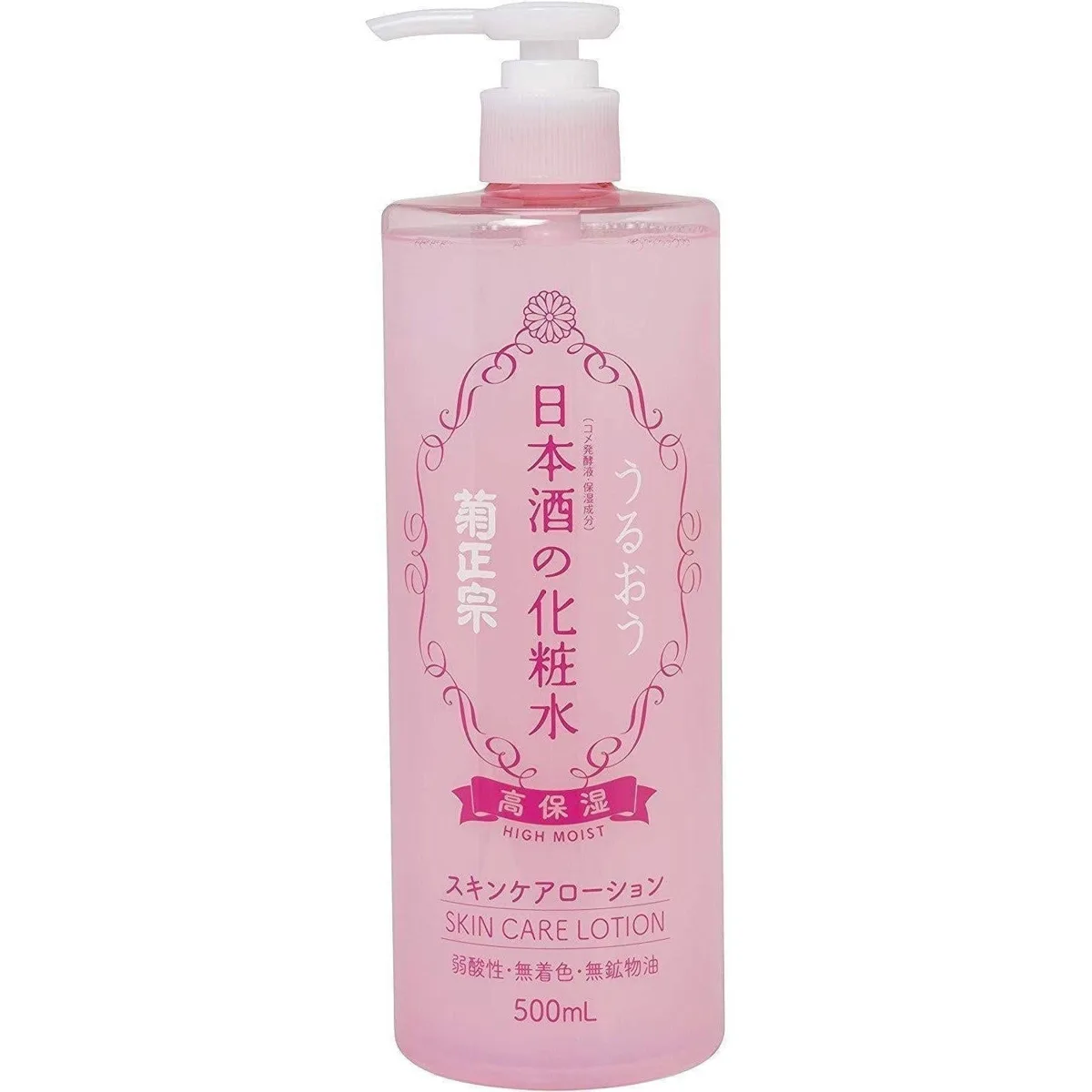
Combines sake (rice ferment filtrate) with dual ceramides, amino acid complex, arbutin, and placental protein at one of the best per-ml values in skincare ($14 for 500 ml). The 350+ year Kiku-Masamune sake brewery heritage provides unusual J-beauty brand authenticity.
A 350-year-old sake brewery turned its own fermentation byproduct into one of the best-value hydrating essences in skincare — $14 for 500ml, with real sake ferment, dual ceramides, an amino acid complex, and arbutin. The per-ml price is almost unbelievable. The trade-off is a fragranced, paraben-containing formula and an undisclosed placental protein, which keep it from being a clean recommendation for everyone.
Supporting rolefor DehydrationIn your profileYou chose · Nothing here targets dehydration directly; humectant hydration is the recognised companion to treating it, and this liquid does that without known triggers.Not yet assessedStandard tolerabilityNo reviews collected yet
The case for it
Sake has no evidence row yet for this concern — it is in the research queue.
The formula carries no trigger this concern is sensitive to, with the cautions noted.
What would change this: A researched evidence row for the lead active would replace this with a verdict.
Same rule for everyone. “Supporting role” is the verdict on 8,197 of 45,024 concern verdicts across the catalog; rule R8 decided 4,250 of them.
Unchanged since September 5, 2026, engine 5.1.1.
R8 — The category's job (barrier care, humectant hydration, gentle cleansing, photoprotection) is the documented supportive role for this concern. This is the honest verdict for a moisturizer on an acne page. · the full register
Good choicefor DrynessIn your profileYou chose · Ceramides is a reference standard by mechanism for dryness; this liquid carries it high in the ingredient list.Moderate evidenceStandard tolerabilityNo reviews collected yet
The case for it
Ceramide NP + Ceramide AP has trial-supported standing for this concern.
It is present at an effective concentration, declared or high in the ingredient list.
The formula carries no trigger this concern is sensitive to, with the cautions noted.
Cautions: fragrance.
Same rule for everyone. “Good choice” is the verdict on 9,564 of 45,024 concern verdicts across the catalog; rule R5 decided 9,072 of them.
Unchanged since September 5, 2026, engine 5.1.1.
R5 — Trial-supported or guideline-supported active, adequately or plausibly dosed. · the full register
Carrying active
Ceramide NP + Ceramide AP
Standing
supported — its mechanism is established
Form
adequate
Tolerability
standard — fragrance load
Row checked
against its sources on July 17, 2026 (evidence table ev-2026.09-r228)
The studies behind the evidence row
Elias PM, Feingold KR (eds), Skin Barrier — stratum corneum ceramides are the principal intercellular lamellar lipid; their depletion is the biochemical signature of dry/xerotic skin — reference work
Also listed for Dullness — the actives here (Probiotics & Prebiotics, Ceramides, Milk & Silk Proteins, Arbutin) are in our research queue for that concern; there is no verdict until their evidence rows are written. That is a gap in our table, not a mark against the product.
Does the jobDoes what a toner is for: not alcohol-driven, adds something real. Not measured from the label: restores skin pH, plays well with what follows.
A verdict is DermApproved’s assessment of how well a product’s ingredients fit a concern — never a claim about what the product treats. Evidence dots and collected reviews sit beside it and are never blended in.
Rules 0.5.1 · evidence table ev-2026.09-r228 · how we decide
Assessment
Pros & Cons
Pros
✓ Exceptional value at roughly three cents per milliliter
✓ Genuine sake ferment with authentic centuries-deep brewery expertise
✓ Dual ceramides provide real barrier reinforcement, uncommon at this price
✓ Comprehensive amino acid NMF complex for deep humectant hydration
✓ Arbutin adds a second brightening mechanism alongside the sake
✓ Lightweight, fast-absorbing texture builds barrier comfort over weeks
Cons
✗ Contains parfum, limiting appeal for fragrance-sensitive users
✗ Methylparaben preservative is avoided by some shoppers on principle
✗ Placental protein source is undisclosed, leaving animal-derivation unclear
✗ Sake/rice scent may not appeal to everyone
Review
Full Review
Kiku-Masamune has been brewing sake since 1659. To put that in perspective, the brewery predates the United States by well over a century, and has spent more than 350 years perfecting the fermentation of rice into Junmai Ginjo sake. Somewhere along that long history, the brewery noticed something the workers had reportedly known anecdotally for generations: the hands of the people who handled the fermenting rice mash tended to look remarkably soft and bright. That observation — fermentation byproduct as skincare — is the origin of this lotion, and it is a far more authentic backstory than the usual marketing-invented heritage. This is a brewery applying genuine, centuries-deep fermentation expertise to skin, and the result is one of the great value buys in the category.
First, a translation note, because the format confuses Western shoppers. A Japanese "lotion" is not a Western body lotion — it is a watery, essence-like hydrating step applied after cleansing, the J-beauty equivalent of a hydrating toner or essence. So think of this as a hydrating essence you apply generously by hand-patting, not a cream.
The signature ingredient is sake itself, listed as rice ferment filtrate — the same Junmai Ginjo sake the brewery produces for drinking, here used as a skincare active. Fermentation does real work: it generates amino acids and peptides that mimic the skin's own natural moisturizing factor, and it produces compounds like kojic acid as a fermentation metabolite. Those amino acids reinforce the barrier and reduce water loss; the kojic acid contributes mild brightening by inhibiting tyrosinase, the melanin-producing enzyme. So the sake here is not aromatic theater — it is a genuine bioactive ingredient backed by the brewery's actual craft.
What genuinely surprises at this price is the rest of the formula. Two skin-identical ceramides — ceramide NP and ceramide AP — provide real barrier reinforcement, and dual-ceramide inclusion is uncommon in a $14 product; ceramides are not cheap ingredients, and most products at this price skip them entirely or include a single token one. There is a comprehensive amino acid complex: glutamic acid, arginine, leucine, and soybean protein, all replicating NMF components for deep humectant hydration that lives up to the "high moist" name. And there is arbutin, a melanin synthesis inhibitor, layering a second brightening mechanism on top of the sake's kojic acid. For a drugstore-tier Japanese essence, that is a genuinely thoughtful, multi-benefit ingredient deck — it does not behave like a budget product, it just happens to be priced like one.
In use, it is a light, slightly viscous watery liquid that you apply liberally — hand-patting two or three layers in succession is the traditional J-beauty technique, and the enormous 500ml bottle is sized precisely for that generous use. This is a meaningful point: Western toners are often sold in small bottles that quietly discourage you from using enough, whereas the Japanese lotion format assumes generosity, and the price here makes that generosity painless. It absorbs cleanly, delivers immediate hydration, and builds noticeable barrier comfort over two to three weeks of layered application. There is a mild fragrance plus a subtle sake/rice note that some users find pleasant and faintly nostalgic and others simply do not notice after the first few uses. A 500ml bottle, even with twice-daily layered use, lasts four to six months — which is what makes the value math almost absurd, and what has earned the product its cult standing in J-beauty communities.
Now The caveats, because this is a legacy formula and it shows its age in places. It is not fragrance-free — there is parfum — and it contains methylparaben. Neither is dangerous; parabens are among the most studied and well-tolerated preservatives in cosmetics, and the fragrance level is mild. But fragrance-avoidant and paraben-avoidant users have a real reason to look elsewhere, and the fragrance is why this lands at "works for" rather than "best for" sensitive skin. There is also placental protein in the formula, and the source is not disclosed — placental protein in cosmetics is typically porcine, bovine, or plant-derived, but without labeling, anyone avoiding animal-derived ingredients is left guessing. That also means the product is not vegan, and it is not cruelty-free certified. None of these are deal-breakers for most people, but they are honest marks against an otherwise excellent product.
Where it lands is simple and easy to say: this is an exceptional value. At roughly three cents per milliliter, with a genuine fermentation pedigree, dual ceramides, an NMF amino acid complex, and arbutin, the Kiku-Masamune High Moist Lotion delivers far more than its price suggests. The format takes a moment to understand, and the fragrance, parabens, and undisclosed placental protein mean it is not the right pick for everyone. But for dry, normal, combination, or dehydrated skin that wants a generous, effective hydrating essence and is not avoiding fragrance on principle, there is very little reason not to try it. A 350-year-old brewery figured out something real, and it priced it like a drugstore staple.
Formula
Key Ingredients
The hero actives that drive this product's performance.
The product's signature ingredient — fermented rice liquid using the same Junmai Ginjo sake the brewery produces for drinking. Sake contains amino acids, kojic acid (naturally produced during fermentation), and other fermentation metabolites with documented skin-brightening and hydrating effects. The fermentation process produces bioactive compounds that distinguish this Japanese skincare approach from non-fermented alternatives.
Two skin-identical ceramides providing barrier reinforcement. The dual-ceramide approach is unusual at this affordable J-beauty price point — provides genuine barrier-supporting effects that justify the 'moisture' positioning.
Established mechanismfor Dryness · established mechanism
A combination of amino acids that replicate components of natural moisturizing factor (NMF). The amino acids work alongside the sake to provide deep humectant hydration appropriate for the 'high moist' positioning.
A melanin synthesis inhibitor providing pigmentation reduction support. Combined with sake's natural kojic acid content, this creates a brightening layer in the formula.
Note: placental protein in cosmetics is typically derived from porcine, bovine, or plant sources (specifics often not disclosed). Has traditional J-beauty positioning for skin-supporting effects. Research evidence is limited compared to dedicated dermatology actives. May not be vegan-suitable depending on source.
Not yet assessed
Ingredient standings describe the active at treatment-level doses and
vehicles; this product's own condition grades weigh its actual formula.
Apply liberally to clean skin after cleansing — Japanese lotion essences are designed for generous application by hand-patting or with cotton pads. The 500 ml size supports the layered application typical of J-beauty routines. Apply morning and evening before serums and moisturizer.
Results Timeline
Immediate hydration. Sustained barrier improvement over 2-3 weeks with consistent layered application.
The defining active is rice ferment filtrate — sake — and the fermentation chemistry behind it is genuinely substantive. Fermenting rice generates amino acids and peptides that mimic the components of the skin's natural moisturizing factor (NMF), the intrinsic humectant system that keeps the stratum corneum supple and limits transepidermal water loss. Fermentation also produces kojic acid as a metabolite, and kojic acid is a documented tyrosinase inhibitor — a study in the Journal of Cosmetic Science (Lim, 1999) reported that kojic acid reduced hyperpigmentation over an eight-week period, supporting the mild brightening contribution sake makes to this formula. The amino acid complex is then reinforced directly: glutamic acid, arginine, leucine, and soybean protein replicate NMF components and provide humectant hydration that pairs with the ferment. What elevates this formula above a simple humectant essence is the dual ceramide inclusion — ceramide NP and ceramide AP are skin-identical lipids that reinforce the stratum corneum's barrier matrix, and their presence means the formula does not just draw water in but helps the skin hold it. Arbutin adds a second, well-characterized brightening route: as a hydroquinone derivative it inhibits melanin synthesis through tyrosinase, complementing the sake's natural kojic acid content. The coherence of the formula lies in this layering — fermentation-derived NMF chemistry plus a ceramide barrier plus a dual-mechanism brightening element. The honest limitation is that sake/rice ferment, while mechanistically sound and traditionally used, has a thinner finished-product clinical evidence base than dedicated dermatology actives, which is why its evidence level is best described as promising rather than definitively established.
Dermatologists generally regard fermented ingredients like sake ferment filtrate as reasonable, gentle additions to a routine, noting that fermentation can yield amino acids and metabolites that support hydration and barrier comfort. The dual ceramide content earns particular approval — practicing dermatologists routinely recommend ceramide-containing products for reinforcing a compromised barrier and managing dryness. Clinicians familiar with J-beauty also note that the layered, generous application typical of Japanese lotion essences is a sound way to deliver humectants, provided the essence is sealed afterward with a moisturizer. Dermatologists do caution that fragrance is a common trigger for irritation and contact dermatitis, so patients with sensitive, eczema-prone, or rosacea-prone skin are typically advised to patch test a fragranced product like this first. The arbutin content offers gentle support for uneven tone, though significant pigmentation generally warrants more targeted treatment.
Guidance
Usage & Recommendations
How to Use
After cleansing, dispense a generous amount into your palms and press it into the skin by hand-patting — Japanese lotion essences are designed for liberal application, not a thin swipe. For deeper hydration, apply two or three layers in succession, patting each one in before adding the next. Use it morning and evening as the hydration step before serums and moisturizer. Because it is a watery essence rather than a moisturizer, always follow with a cream or emulsion to seal in the hydration, especially if your skin is dry. The 500ml size is built for this generous routine, so do not be stingy. It has no sun-sensitivity concerns and fits both AM and PM routines without restriction.
Value Assessment
At $14 for 500ml — roughly three cents per milliliter — this is among the best per-ml values in all of skincare. The price would be reasonable for a basic humectant essence; for one that includes genuine sake ferment, dual ceramides, an amino acid NMF complex, and arbutin, it is remarkable. Kiku-Masamune is a legacy brand with over 350 years of fermentation expertise, and crucially the price reflects efficient drugstore-tier production rather than any compromise on the formula. There is only one size, so no larger-format play exists — but at this volume and price, none is needed. A bottle lasts four to six months even with generous layered use. The value here is essentially uncontested; the only reasons to pay more lie in the fragrance-free or vegan formulations the category's pricier options offer.
Who Should Buy
Buy this if you want a generous, effective, genuinely low-cost hydrating essence and you enjoy or are open to J-beauty layering. It suits dry, normal, combination, and dehydrated skin especially well, and is an easy entry point into fermented Japanese skincare for anyone who is not avoiding fragrance.
Who Should Skip
Pass on this if you are fragrance-sensitive or avoid parabens on principle, since the formula contains both. Those who require fully vegan or cruelty-free certified products should also skip it, as the undisclosed placental protein leaves the animal-derivation question unresolved.
Kiku-Masamune is a Japanese sake brewery established in 1659 (Edo period). The brewery expanded into skincare leveraging the byproducts of sake fermentation — rice ferment filtrate plus the associated amino acids and ceramides — creating an affordable J-beauty line with genuine fermentation chemistry.
About Kiku-Masamune Legacy Brand (20+ years)
Kiku-Masamune is a Japanese sake brewery established in 1659 (over 350 years old) that expanded into skincare leveraging their sake fermentation expertise. The brand applies traditional sake brewing knowledge — specifically rice ferment filtrate (sake) and its associated amino acids and ceramides — to create J-beauty skincare. The lotion-style essence format is traditional in Japanese skincare and very different from Western toners.
Brand founded: 1659 · Product launched: 2014
Myth vs. Reality
Common Myths
No myths to debunk yet.
FAQ
Frequently Asked Questions
How does it compare to SK-II Facial Treatment Essence?
SK-II uses pitera (galactomyces ferment filtrate) at high concentration with $200+ pricing. Kiku-Masamune uses sake (rice ferment filtrate) at much lower concentration with $14 pricing. Both are fermented Japanese essences with skin-supporting effects; SK-II has stronger established research and higher concentration; Kiku-Masamune offers dramatically better value with similar mechanism.
Is the placental protein animal-derived?
Source not disclosed. Placental protein in cosmetics is typically porcine, bovine, or plant-derived — the specifics are usually not labeled clearly. Users avoiding animal-derived ingredients should consider this uncertainty.
Is High Moist Lotion considered safe for pregnant users?
Generally yes — the active ingredients are pregnancy-compatible. The placental protein content may warrant checking with your OB.
Reviews
What Reviewers Tend to Say
Recurring themes our editors read across retailer reviews of this product — summaries in our words, not quotations, and not a substitute for your own patch test.
Common Praise
Exceptional value at $14 for 500 ml (among the best per-ml in skincare)
Dual ceramide content uncommon at this price
Sake fermentation provides genuine skin benefits
Comprehensive amino acid complex for hydration
Layered J-beauty application format works well
Common Complaints
Contains parfum and parabens — not appropriate for sensitive-skin users avoiding these
Sake/rice-ferment scent may not appeal to all users
Placental protein source not disclosed
Not vegan or cruelty-free certified
Notable Endorsements
Cult favorite in J-beauty and r/AsianBeauty communitiesFeatured in Japanese drugstore skincare guides350+ year Kiku-Masamune sake brewery heritage
Japan's daily-mask economy runs on thirty-count boxes at drugstore prices — and the trick underneath it costs less again, controls what goes on your face, and is one of the few cases where the homemade version genuinely wins.
The burn trials are real and the skeptics who dismiss aloe as folklore are wrong — but the same substance has delayed healing in other wounds, and none of it says anything about what a soothing gel does to intact skin.
Western sensitive skincare works by subtraction — remove the fragrance, remove the alcohol, shorten the list. Japan's answer adds a designed molecule back in, and one of the two bets has a trial literature.
A wrecked barrier is the most common self-inflicted skin condition and the one with the clearest fix — the difficulty is that the routine which caused it feels productive and the one that repairs it feels like giving up.
Products, answers, therapy guides, tools and articles in one search. Brand names,
slang and abbreviations all work — accutane finds isotretinoin, bacne finds truncal acne.