The Best Sheet Mask in Japan Is a Cotton Pad and a Bottle of Lotion
Japan's daily-mask economy runs on thirty-count boxes at drugstore prices — and the trick underneath it costs less again, controls what goes on your face, and is one of the few cases where the homemade version genuinely wins.
Read the preview
From the DermApproved blog, in J-Beauty: in Japan, sheet masks come thirty to a box and get used like moisturiser. But what many Japanese users reach for is cheaper still — cotton pads and a bottle of lotion. It beats the packaged version outright. And it makes one timing rule, the one everyone gets backwards, unbreakable. For the full breakdown, visit dermapproved.com/blog.
Masks as groceries, not as treats
The Western sheet mask is a small luxury. It arrives individually foiled, it is photographed, it is deployed on a Sunday evening as an act of self-care, and its price per use makes daily application absurd.
The Japanese sheet mask is a household staple sold in boxes of thirty at drugstore prices, stacked in a tub, and used the way a Western person uses moisturiser — as the hydration step, every day, without ceremony. Lululun's Pure Daily Face Mask is the archetype of the format, and the entire product architecture follows from the frequency: thin sheet, modest essence load, humectant-led formula, nothing so active that daily use becomes a problem.
The morning masks push the logic further. Saborino's Morning Face Mask is explicitly sold as a time-saving device — a single sheet that stands in for cleansing, toning and moisturising in about a minute, aimed at someone who overslept. That is not self-care. That is an efficiency object, and it tells you the category is understood domestically as convenience rather than indulgence.
Reframing masks that way changes what you should expect from one, and what you should be willing to pay. It also opens the door to the thing Japanese users have quietly done for decades, which is cheaper still.
The lotion mask, and why the homemade version wins
The method is almost embarrassingly simple. Take plain cotton pads — the flat, layered kind — soak them thoroughly in a hydrating lotion, peel each pad into thinner sheets if it separates, lay them across the cheeks, forehead and chin, leave them for a few minutes, remove, and seal with your usual moisturiser.
That is the whole technique, and it is superior to a packaged sheet mask on three counts that actually matter.
You choose what goes on your face. A sheet mask's essence is fixed; a lotion mask uses whatever bottle you already trust. That matters most for people who react to things — you can run the method with a fragrance-free, alcohol-free lotion and know exactly what is in it, which no sheet mask lets you do.
It is fresh. Nothing has been sitting saturated in a foil pouch at warehouse temperature for two years.
And it is dose-controllable. You decide how wet the pads are, how many go on, and how long they stay.
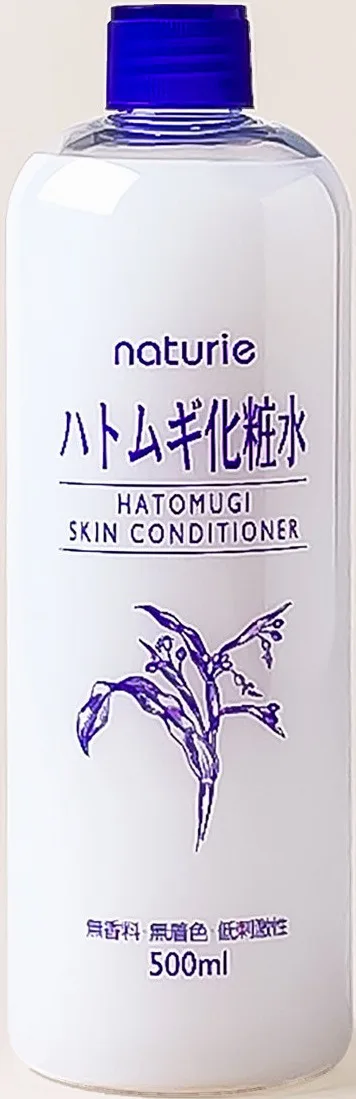
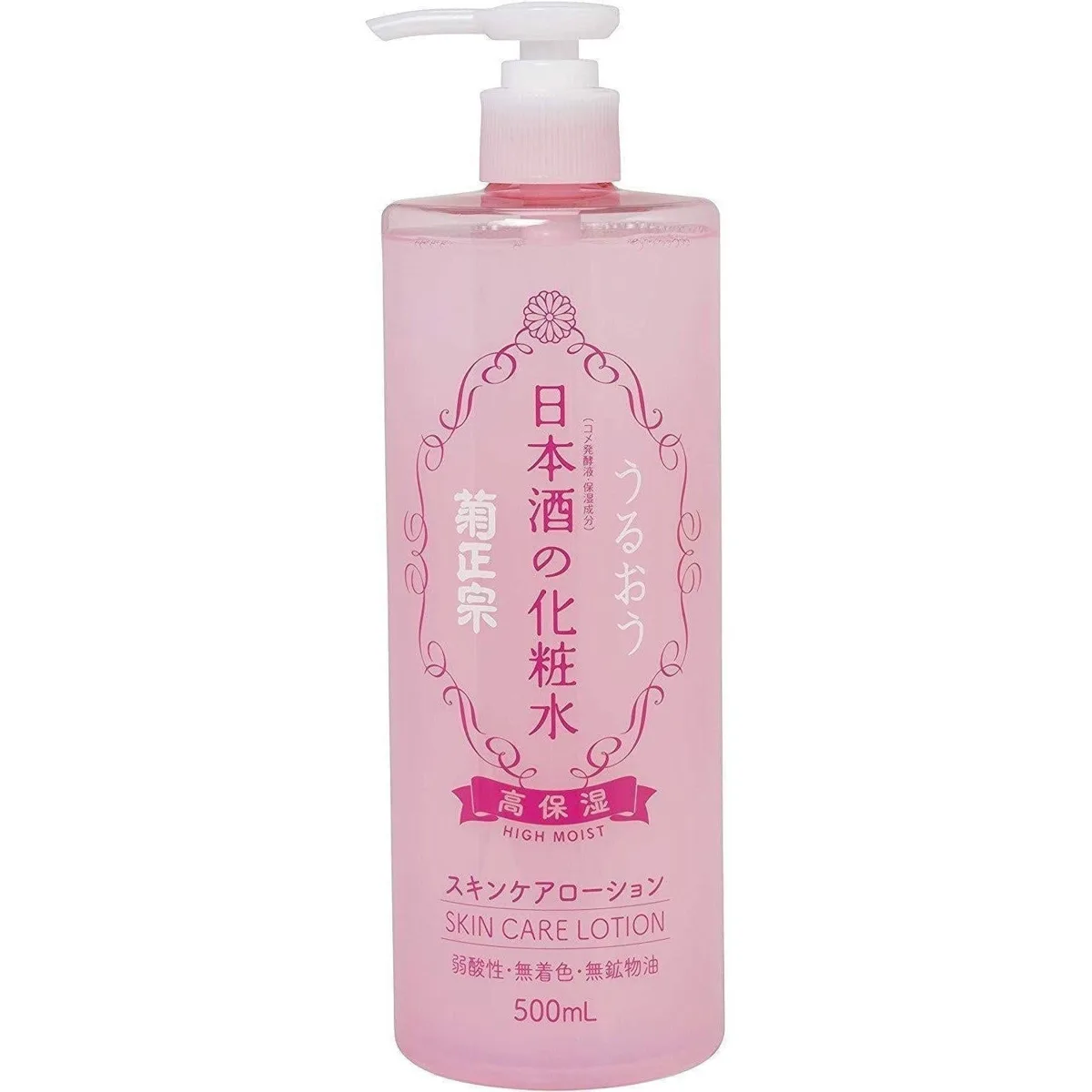
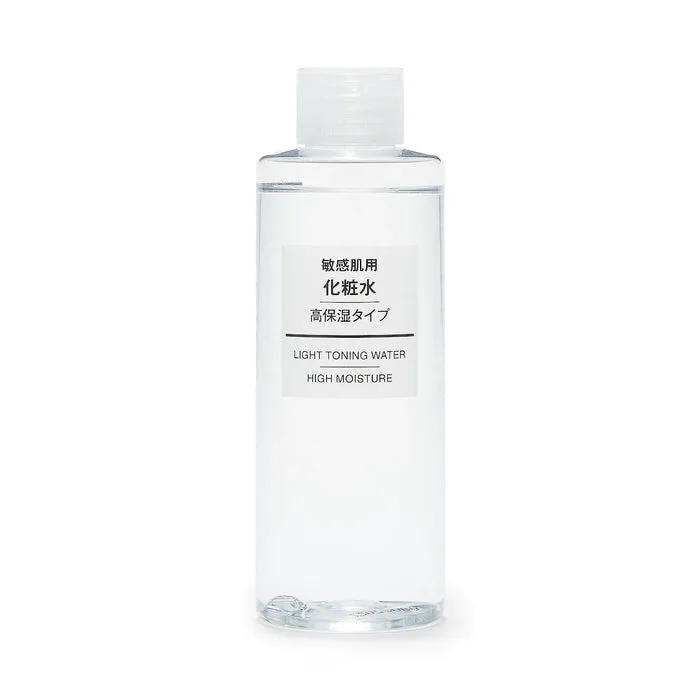
The lotions Japanese drugstores sell in improbably large bottles exist substantially for this purpose. Hada Labo's Gokujyun Hyaluronic Acid Lotion is the default choice, built around multiple molecular weights of hyaluronic acid with very little else in the way. Hatomugi Skin Conditioner comes in the enormous bottle precisely because it is expected to be poured onto cotton rather than patted on by hand. Kiku-Masamune High Moist Lotion adds ceramides and amino acids to the same idea. And Muji's Sensitive Skin Toning Water is the fragrance-free, minimal-ingredient version for reactive skin, leaning on glycerin and simple humectants rather than botanicals.
One warning, because the name will mislead you. Kose's Sekkisei Lotion Mask is literally sold for this technique, and it is built on an alcohol-and-witch-hazel astringent base. Sitting an alcohol-containing liquid against skin under a cotton pad for several minutes is the opposite of what the method is for. Read the lotion before you soak anything in it — panthenol, glycerin and hyaluronic acid are what you want on that pad, not a toner designed to evaporate.
What occlusion does, and the timing limit nobody explains
Both versions work by the same physics, and understanding it tells you exactly when to stop.
A saturated sheet laid on skin does two things. It floods the stratum corneum surface with water and humectants, and it forms a barrier that slows evaporation from beneath. Water content in the outer layers rises, corneocytes swell, the surface flattens, and skin looks smoother and feels plumper. Occlusive hyperhydration produces a measurable reduction in surface roughness and a smoother macroscopic appearance — the effect is real, and it is largely why a mask makes such a visible difference in fifteen minutes.
Occlusion also increases the penetration of whatever is sitting under it, which is a benefit for a humectant and a complication for an active.
But occlusion is not free, and the mechanism that makes it costly is one of the more elegant findings in barrier physiology. Transepidermal water loss is not merely a symptom of a damaged barrier — it is the signal the epidermis uses to detect damage and initiate repair. Work in the late nineteen-eighties showed that when skin was covered with a fully occlusive membrane, barrier function did not recover normally, while covering it with a vapour-permeable membrane allowed normal recovery. Blocking the water-loss signal blocks the repair response. Separately, a study occluding forearms for periods from one to four days found transepidermal water loss rising to a plateau by around the second day, producing barrier damage without any visible dryness.
None of that condemns a fifteen-minute mask, and it would be dishonest to pretend a quarter of an hour resembles a ninety-six-hour patch. What it does establish is that longer is not better, and that the popular instinct to leave a mask on until it dries out has the physics backwards.
Here is the rule that follows. Take the sheet off while it is still visibly wet. A drying sheet has stopped being an occlusive layer; it has become a large evaporating surface pressed against your face, and evaporation from that surface will pull water from the skin underneath it rather than into it. The moment the sheet feels tacky rather than soaked, it is working against you. For a lotion mask the same limit applies and is easier to obey, because thin cotton dries fast enough that you cannot forget about it — a few minutes is the whole window.
Then seal. A mask delivers water; something occlusive has to keep it there, or the effect is gone within the hour. Our routine order tool covers where the step sits relative to everything else.
Daily masks and treatment masks are different products
Grouping them is the most common error, and it has consequences in both directions.
A daily-use mask is a delivery vehicle for humectants. Its formula is deliberately unexciting because it is designed to be used every day, and its actives — if any — sit at levels that will not accumulate into irritation. Lululun's Precious Red is that category with a slightly richer humectant load for mature skin, and there is nothing in it that a daily cadence makes risky.
A treatment mask is a different proposition wearing the same shape. Quality 1st's Derma Laser Super Retinol Mask carries retinol; Quality 1st's Super AZ100 carries azelaic acid; Melano CC's Premium Brightening Mask runs a multi-form vitamin C complex. Each of those is worth using and none is worth using nightly — and the reason is the occlusion described above. The same barrier that pushes a humectant deeper pushes an active deeper. A retinol applied under an occlusive sheet is not the same dose as the identical retinol in a cream, and treating it as though it were is how people end up with a compromised barrier from a product they used "only twice a week."
There is a second, quieter difference. A wet textile sealed in a pouch and shipped through a warm supply chain for two years is a demanding microbiological problem, and sheet masks are preserved accordingly — often more robustly than a cream would need to be. That is good engineering rather than a scandal, but it is a genuine consideration for anyone who reacts to common preservatives, and it is one of the places where the lotion-mask method has a real structural advantage: you are making it fresh and discarding it, so the preservative load is only whatever your lotion needed anyway.
The flip side is hygiene, and it deserves saying. Once you are pouring from a bottle onto pads with your fingers in the mix, keep the bottle capped, do not decant back, and do not leave soaked pads sitting in a container for later. The freshness advantage evaporates the moment you turn it into a batch.
The cost comparison, done honestly
Per-use economics is where the Japanese approach diverges most sharply from the Western one, and it is worth being precise about what is being compared.
A large-count daily mask box works out, per application, at roughly what a pump of an ordinary moisturiser costs — which is the entire point of the format and why daily use is normal there rather than extravagant. A single premium treatment mask sits at a completely different tier, comparable to a meaningful fraction of a serum, which is appropriate for something used occasionally and absurd for something used nightly.
The lotion mask undercuts both by a wide margin, because you are spending a few millilitres from a bottle designed to be bought in volume, plus cotton pads. That is the reason those bottles are the size they are. A brand selling a lotion intended to be patted on with hands has no reason to package it like a litre of milk; a brand that knows customers will be soaking cotton in it does.
The honest counterweight is convenience, and it is not nothing. A sheet mask requires no preparation, holds itself in place, covers the face evenly including the awkward areas around the nose and eyes, and can be worn while doing something else. Cotton pads slide, do not cover well, need refreshing if you want more than a few minutes, and require you to stay horizontal. If the convenience is what makes you actually do the step, the convenience is worth paying for. A skincare habit you abandon is more expensive than any product.
When a mask is the wrong answer
The most useful thing this piece can do is talk some readers out of the category entirely, because masks are frequently deployed against problems they cannot touch.
A mask adds water. If your skin is dry because it lacks water — after a flight, in a dry-heated room, on a hangover morning — that is precisely the right intervention and it works immediately. If your skin is dry because the barrier's lipid matrix is depleted, adding water does nothing to fix the deficit; it feels better for an hour and then the water leaves faster than it arrived, because the thing that would have held it is what is missing. That situation calls for ceramides and occlusives, not for more masks, and our mask ranking for dryness is worth reading alongside that distinction rather than instead of it.
If skin is dehydrated because a stripping cleanser or an over-enthusiastic exfoliation schedule is removing water-holding capacity daily, masking is treating a symptom you are recreating every evening. Fix the input.
And if the goal is pigment, texture or lines, arithmetic settles it: fifteen minutes of exposure twice a week loses badly to a leave-on product working for eight hours every night. Masks are a poor delivery format for anything that needs cumulative exposure, which is most things worth doing. Our mask ranking for dullness covers where an occasional mask genuinely does contribute to appearance.
One caution specific to occlusion: skin that is prone to breakouts under anything held against it — the pattern people know from helmets, phones and face coverings — will sometimes react the same way to a sheet mask, especially a rich one left on too long. Our answer on occlusion-related breakouts covers how to tell that pattern apart from ordinary acne.
Where masks earn their place is narrow and real: an acute hydration event before something that matters, comfort after a procedure when a clinician has said so, and — most honestly — making a humectant step pleasant enough that somebody performs it consistently. That last one is not a small thing. Adherence beats formulation more often than the industry likes to admit.
The position we would defend, then: the Japanese framing is right and the Western one is a marketing artefact. A mask is a cheap, frequent, unremarkable hydration step, best done with something plain, taken off while still wet, and sealed immediately. The most sophisticated version of it costs a bottle of lotion and a bag of cotton pads, and there is a certain pleasure in an entire luxury category being outperformed by the thing underneath it.
Products mentioned
Independently reviewed and scored — the real products behind this piece.




- Ranked list Masks for Dryness: What the Verdicts Say Read alongside the water-versus-lipid distinction rather than instead of it.
- Ranked list Masks for Dullness: What the Verdicts Say Where an occasional mask genuinely contributes to appearance.
- Ingredient Hyaluronic Acid The humectant the default lotion-mask lotions are built around.
- Ingredient Glycerin The simpler, cheaper humectant doing most of the work in minimal formulas.
- Ingredient Panthenol (Pro-Vitamin B5) What you want on the pad rather than an astringent designed to evaporate.
- Question Can my phone, helmet or face mask cause breakouts? Telling occlusion-related breakouts apart from ordinary acne.
References
- Transepidermal water loss: the signal for recovery of barrier structure and function — Journal of Lipid Research, 1989
- Effects of prolonged occlusion on stratum corneum barrier function and water holding capacity — Skin Pharmacology and Applied Skin Physiology, 1999
- Skin barrier response to occlusion of healthy and irritated skin: differences in trans-epidermal water loss, erythema and stratum corneum lipids — Contact Dermatitis, 2010
- Hydration of the stratum corneum — International Journal of Cosmetic Science, 2009
Every cited link is verified to resolve to the paper named. Where a source could not be independently confirmed, it is listed without a link rather than pointing you somewhere wrong.
Frequently asked
How do I make a lotion mask?
Soak flat cotton pads thoroughly in a hydrating lotion, split them into thinner layers if they separate, lay them over cheeks, forehead and chin for a few minutes, then remove and seal with your moisturiser. Choose a lotion without alcohol or fragrance, since it will sit against skin under occlusion.
How long should a sheet mask stay on?
Until it is no longer visibly wet, and no longer. A drying sheet has stopped acting as an occlusive layer and become an evaporating surface against your face, which pulls water out rather than in. If it feels tacky rather than soaked, it is already working against you.
Is daily sheet masking bad for your skin?
Not for a humectant-led daily-format mask, which is exactly what those thirty-count boxes are designed for. It is a different question for treatment masks carrying retinol, acids or high-strength vitamin C, because occlusion increases penetration and therefore effective dose.
Does a sheet mask make products absorb better?
Occlusion does increase penetration of what sits beneath it, which is useful for humectants and a complication for actives. It also raises stratum corneum water content directly, which is most of the visible smoothing effect and happens regardless of what else is in the essence.
Is a lotion mask really better than a sheet mask?
On control, freshness and cost, yes. You choose the lotion, nothing has been sitting preserved in a pouch for two years, and the per-use cost is a fraction. Sheet masks win on convenience — even coverage, no preparation, no need to lie still — which is worth paying for if it is what makes you do the step.
Why doesn't masking fix my dry skin?
Because a mask adds water, and some dry skin is short of lipids rather than water. If the barrier's lipid matrix is depleted, water arrives, feels good, and leaves faster than it came. That situation needs ceramides and occlusives; masking treats the sensation rather than the deficit.