It treats the toner step as prime real estate for brightening rather than just hydration, layering niacinamide, two vitamin C forms, and tranexamic acid — a multi-pathway pigment-fighting stack you'd normally buy as a standalone serum. Getting that combination, fragrance-free, into a sub-twenty-dollar toner is what sets it apart from both plain hydrating toners and pricier brightening serums.
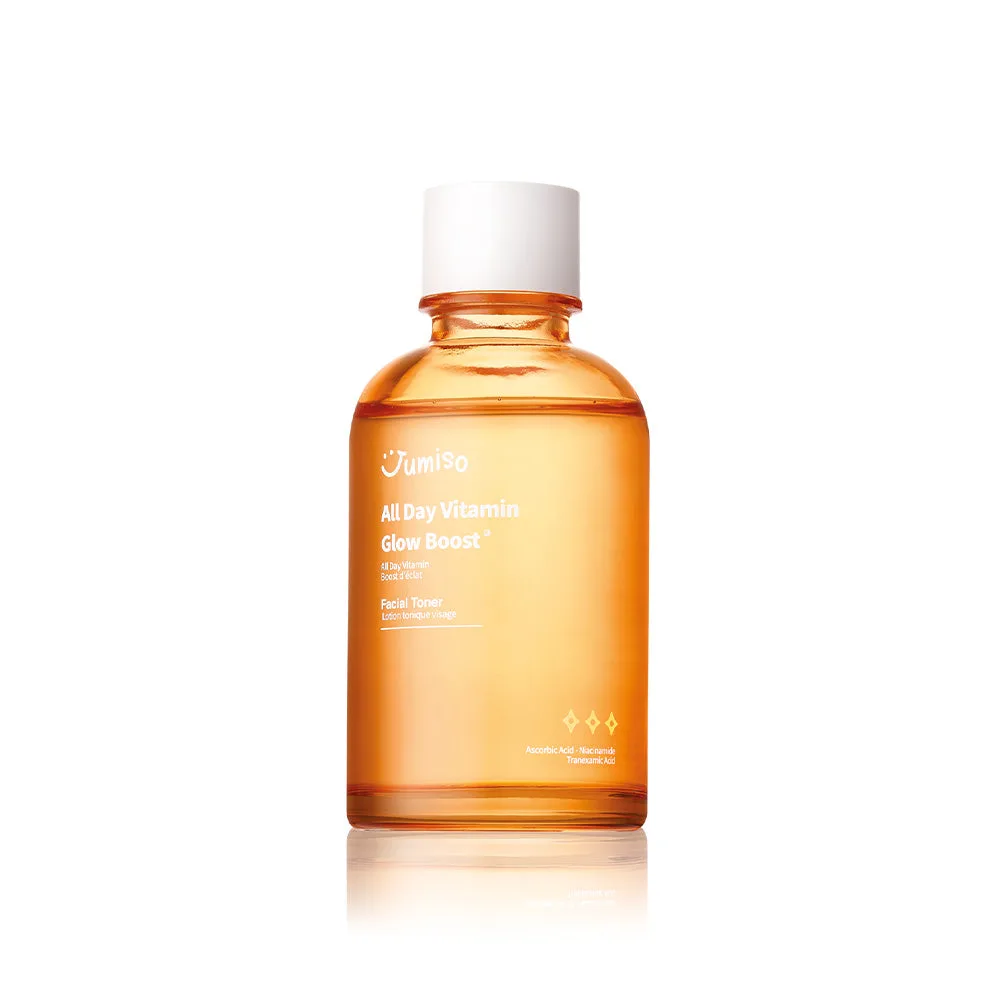
Jumiso All Day Vitamin Glow Boost Facial Toner Review
Brightening Toner Pick
tonerliquidk beautyParaben FreeCruelty Free
A brightening toner that punches like a serum, stacking niacinamide, two vitamin C forms, and tranexamic acid into one early routine step for under twenty dollars. It builds real, gradual radiance and evens tone, all fragrance-free — just go slowly if your skin is reactive, since that active-dense lineup can sting the sensitive.
On the market since around 2022 and stocked across K-beauty and US retailers, this toner has a solid review base, so the assessment combines that real-world feedback with the strong individual evidence behind niacinamide, vitamin C, and tranexamic acid. As a younger brand's formula, its specific long-term brightening performance has less large-scale validation than legacy treatments, so expectations should follow the well-documented gradual timeline of its active ingredients.
Verdicts
How well it fits each concern
Verdict by concern tap a concern for the case
Good choicefor HyperpigmentationIn your profileYou chose · Niacinamide is a trial-supported active for hyperpigmentation; this liquid carries it, though the concentration is not declared.Moderate evidenceGentleNo reviews collected yet
The case for it
Niacinamide has trial-supported standing for this concern.
It is plausibly present at a working level, though the concentration is not declared.
The formula carries none of the triggers this concern is sensitive to.
What would change this: A declared concentration would move this to a firmer reading of the dose.
Same rule for everyone. “Good choice” is the verdict on 9,564 of 45,024 concern verdicts across the catalog; rule R5 decided 9,072 of them.
Unchanged since September 5, 2026, engine 5.1.1.
Promisingfor Dark SpotsIn your profileYou chose · Niacinamide has trial-level evidence for dark spots but no guideline or regulatory standing yet — promising, short of a recommendation; the other actives here are not yet assessed for it.Moderate evidenceGentleNo reviews collected yet
The case for it
Niacinamide has trial-level evidence for this concern but no guideline or regulatory standing yet.
It is plausibly present at a working level, though the concentration is not declared.
The formula carries none of the triggers this concern is sensitive to.
What would change this: A declared concentration would move this to a firmer reading of the dose.
Same rule for everyone. “Promising” is the verdict on 7,858 of 45,024 concern verdicts across the catalog; rule R9p decided 7,858 of them.
Unchanged since September 5, 2026, engine 5.1.1.
R9p — 0.5.0: 'Unproven' beside three filled dots read as one question answered twice with opposite words (7,018 rows). The chip measures standing, the dots measure trial volume; where the row carries at least one RCT or a tier-2 source (moderate dots) and the active is present at a working level, the honest word is Promising. Unproven is reserved for plausible-standing rows with limited or weak evidence, or an under-dosed form. Same rank as Unproven — a bet either way; the dots order them. · the full register
Carrying active
Niacinamide
Standing
plausible — trials support it
Form
plausible
Tolerability
gentle
Row checked
against its sources on July 17, 2026 (evidence table ev-2026.09-r228)
Promisingfor Sun DamageIn your profileYou chose · Niacinamide has trial-level evidence for sun damage but no guideline or regulatory standing yet — promising, short of a recommendation; the other actives here are not yet assessed for it.Moderate evidenceGentleNo reviews collected yet
The case for it
Niacinamide has trial-level evidence for this concern but no guideline or regulatory standing yet.
It is plausibly present at a working level, though the concentration is not declared.
The formula carries none of the triggers this concern is sensitive to.
What would change this: A declared concentration would move this to a firmer reading of the dose.
Same rule for everyone. “Promising” is the verdict on 7,858 of 45,024 concern verdicts across the catalog; rule R9p decided 7,858 of them.
Unchanged since September 5, 2026, engine 5.1.1.
R9p — 0.5.0: 'Unproven' beside three filled dots read as one question answered twice with opposite words (7,018 rows). The chip measures standing, the dots measure trial volume; where the row carries at least one RCT or a tier-2 source (moderate dots) and the active is present at a working level, the honest word is Promising. Unproven is reserved for plausible-standing rows with limited or weak evidence, or an under-dosed form. Same rank as Unproven — a bet either way; the dots order them. · the full register
Carrying active
Niacinamide
Standing
plausible — trials support it
Form
plausible — studied range 5–10%, from the OTC monograph or label; needs leave-on contact; judge it after ~8 weeks
Tolerability
gentle
Row checked
against its sources on July 17, 2026 (evidence table ev-2026.09-r228)
Also listed for Dullness — the actives here (Niacinamide, Tranexamic Acid, Sea Buckthorn, Vitamin C) are in our research queue for that concern; there is no verdict until their evidence rows are written. That is a gap in our table, not a mark against the product.
Does the jobDoes what a toner is for: not alcohol-driven, adds something real. Not measured from the label: restores skin pH, plays well with what follows.
A verdict is DermApproved’s assessment of how well a product’s ingredients fit a concern — never a claim about what the product treats. Evidence dots and collected reviews sit beside it and are never blended in.
Rules 0.5.1 · evidence table ev-2026.09-r228 · how we decide
Assessment
Pros & Cons
Pros
✓ Multi-pathway brightening trio of niacinamide, dual vitamin C, and tranexamic acid
✓ Stabilized ethyl ascorbic acid keeps the vitamin C functional in a toner
✓ Fragrance-free, oil-free, and alcohol-free formula
✓ Well-buffered with panthenol, allantoin, and licorice soothers
✓ Sea buckthorn adds an antioxidant nourishment layer
✓ Serum-grade brightening actives at a budget toner price
✓ Pairs especially well with morning sunscreen
Cons
✗ Active stack can sting reactive or rosacea-prone skin
✗ Brightening builds over weeks, not overnight
✗ Vitamin C content means light and air degrade it over time
✗ Smaller 125 ml bottle than the hydrating toners
✗ Clear bottle isn't ideal for preserving vitamin C potency
Review
Full Review
A toner is supposed to be the routine's warm-up act — prep the skin, add a little hydration, get out of the way. Jumiso clearly didn't get that memo, and that's the whole reason this product is interesting. The All Day Vitamin Glow Boost toner crams a brightening serum's worth of actives into a step most brands treat as an afterthought: niacinamide, two forms of vitamin C, and tranexamic acid, all working different angles of the same goal. The obvious question is whether loading a toner like this is clever value engineering or an overreach that asks too much of the wrong step. After looking at the formula, it lands much closer to the former — with a couple of honest caveats.
Start with the brightening stack, because it's genuinely well-constructed. Niacinamide sits fifth in the list at what reads as a real working level, and it's one of the most evidence-backed tone-evening ingredients there is, reducing the transfer of pigment to surface skin cells. Then comes the vitamin C, handled smartly: rather than dumping unstable pure ascorbic acid into a watery toner where it would oxidize within weeks, Jumiso leans mainly on 3-O-ethyl ascorbic acid — a stabilized, lower-irritation derivative — with only a small amount of pure ascorbic acid alongside it. That's a deliberate formulation choice to get vitamin C's antioxidant and brightening benefits in a format that would otherwise degrade. And then tranexamic acid, the quiet star, which targets the inflammation-driven signaling behind stubborn discoloration like melasma and post-acne marks. The point of three brighteners isn't redundancy — it's that pigment forms through several pathways, and hitting more than one is how you actually move the needle on uneven tone.
Rounding the formula out is a sea buckthorn theme that ties into the 'vitamin' branding: both the water and fruit extract of Hippophae rhamnoides sit high in the list, bringing carotenoids and their own skin-supporting vitamins for an antioxidant nourishment layer. And crucially, Jumiso didn't forget the buffering. Panthenol, allantoin, licorice-derived dipotassium glycyrrhizate, arginine, and glycerin are all here to soothe and hydrate, which matters a lot when you're asking skin to take on this many actives at once. Those soothers are the difference between a brightening toner that's usable daily and one that sandpapers your face.
In use, it's a light, faintly viscous toner that spreads and absorbs cleanly with no tack, leaving skin feeling fresh and looking subtly more luminous right away — that immediate glow is the antioxidants at work. It's fragrance-free, with only a faint natural note from the botanicals, and oil-free and alcohol-free besides. For normal, combination, and oily skin chasing brightness and a more even tone, it's a lovely, efficient step that does a serum's job earlier in the routine. Mornings are an especially good time to use it, since vitamin C and antioxidants complement sunscreen's UV defense.
Now Its limitations. This is an active-dense product, and active-dense products aren't for everyone. The vitamin C and niacinamide combination can sting reactive, rosacea-prone, or sensitized skin, so this is not the no-risk hydrating toner that some of Jumiso's other formulas are — sensitive users should patch test and ease in every other day before committing to daily use, and should avoid stacking it with a separate high-strength vitamin C or strong acids on the same day. Brightening is also, by nature, a slow game: niacinamide, vitamin C, and tranexamic acid deliver their tone-evening over four to eight weeks of consistent use, not overnight, so anyone expecting a dramatic instant change will be disappointed. The vitamin C content also means storage matters — keep it cool, dark, and tightly capped, because light and air slowly degrade vitamin C, and the clear bottle doesn't help on that front. And it's a modest 125 ml, smaller than the brand's big hydrating toners, so it won't last as long.
On value, it's a strong proposition for the right person. Around eighteen to twenty dollars for a fragrance-free toner carrying niacinamide, dual vitamin C, and tranexamic acid is genuinely good — those actives bought as a standalone brightening serum would typically cost more, and folding them into the toner step can simplify a routine. You're getting premium-style active density at a budget price from a brand that has made that its whole identity. The trade-off is the one every active product asks you to accept: more potency means less universal gentleness. If you have resilient, normal-to-oily skin focused on dullness, dark spots, or uneven tone, this is a smart, efficient buy. If your skin is easily irritated or you want a purely soothing toner, one of Jumiso's hydration-focused formulas will serve you far better — and that's the right way to choose between them. The single most important habit to pair it with is daily sunscreen, because brightening actives only hold their ground when fresh pigment isn't constantly being stimulated by UV — skip that step, and you're bailing water out of a leaky boat no matter how good the toner is.
Formula
Key Ingredients
The hero actives that drive this product's performance.
The lead brightening active, sitting fifth in the formula at what appears to be a meaningful concentration. It tackles dullness and uneven tone by limiting the transfer of pigment to skin cells, and it works in concert with the two vitamin C forms and tranexamic acid here to attack discoloration through several pathways at once rather than relying on a single brightener.
Two complementary forms — the stable, less irritating ethyl ascorbic acid plus a touch of pure ascorbic acid — provide antioxidant defense and brightening. Pairing a stabilized derivative with a small amount of the active form is a deliberate choice to get vitamin C benefits in a watery toner that would otherwise oxidize a pure-ascorbic formula quickly.
A targeted brightener that interrupts the inflammation-driven signaling behind stubborn discoloration like melasma and post-acne marks. Its inclusion alongside niacinamide and vitamin C is what makes this a genuine multi-pathway brightening toner rather than a simple vitamin C splash — each active addresses pigment formation from a different angle.
Both the water and fruit extract appear high in the formula, supplying carotenoids, vitamins, and antioxidants that reinforce the vitamin-C glow theme. The orange-toned berry is rich in its own skin-supporting vitamins, layering an antioxidant nourishment angle onto the active brightening complex.
Not yet assessed
Ingredient standings describe the active at treatment-level doses and
vehicles; this product's own condition grades weigh its actual formula.
Use it after cleansing and before serums so the brightening actives sit close to the skin. It's a strong morning choice under sunscreen, since the vitamin C and antioxidants complement UV protection. If you also use a dedicated vitamin C or exfoliating acid, alternate or space them out to avoid stacking too many actives and overdoing it on reactive skin.
Results Timeline
An immediate fresh, slightly more luminous look from the antioxidants. Genuine brightening and fading of uneven tone is gradual — expect to notice it over four to eight weeks of consistent daily use, as is normal for niacinamide and vitamin C.
Pairs Well With
Sunscreen in the morning to amplify antioxidant protectionA hydrating serum or moisturizer to buffer the activesNiacinamide-friendly routines targeting tone and dullness
The brightening logic here rests on attacking pigment through complementary mechanisms rather than overloading one, which is what makes the active selection worth examining. Niacinamide has robust clinical evidence for reducing hyperpigmentation, working largely by inhibiting the transfer of melanosomes from pigment-producing cells to keratinocytes — a different step than where vitamin C or tranexamic acid act. Vitamin C (ascorbic acid) brightens by inhibiting tyrosinase, the rate-limiting enzyme in melanin synthesis, and provides antioxidant protection against UV-induced free radicals; its well-known instability in water is precisely why this formula leans on 3-O-ethyl ascorbic acid, a derivative with better stability and lower irritation that converts to active ascorbic acid in the skin, with a small amount of pure ascorbic acid added for immediacy. Tranexamic acid, originally an antifibrinolytic drug, has promising topical evidence for melasma and post-inflammatory hyperpigmentation, where it appears to interrupt the plasmin-driven inflammatory signaling that stimulates melanocytes — a pathway the other two don't address. Combining all three is supported by the principle that multi-target brightening outperforms single-agent approaches on stubborn, multifactorial discoloration. Supporting players have their own backing: panthenol and allantoin for barrier support and soothing, licorice-derived glycyrrhizates with their own mild brightening and anti-inflammatory activity, and sea buckthorn contributing carotenoid antioxidants with emerging skin data. The fair summary: a thoughtfully layered brightening formula grounded in well-established mechanisms, where the realistic expectation is gradual, cumulative tone improvement with consistent use rather than rapid change.
References
Niacinamide and the reduction of facial hyperpigmentation — Journal of Cosmetic and Laser Therapy (2011)
Topical tranexamic acid for melasma and hyperpigmentation — Journal of the American Academy of Dermatology (2017)
Vitamin C in dermatology: stability, derivatives, and depigmenting effects — Indian Dermatology Online Journal (2013)
Dermatologist Perspective
Multi-agent brightening of this kind reflects an approach dermatology increasingly favors, since uneven pigmentation rarely responds as well to one ingredient as to several targeting different steps of melanin production. Niacinamide, vitamin C, and tranexamic acid are all part of standard topical strategies for hyperpigmentation, melasma, and post-inflammatory marks, and seeing them combined is clinically sensible. The cautions clinicians would raise are practical: vitamin C and niacinamide together can irritate reactive skin, so a gradual introduction is wise, and brightening regimens demand patience, with visible change generally measured over one to two months. The single most important pairing from a clinical standpoint is daily sunscreen — without consistent UV protection, any brightening effort is undermined by ongoing pigment stimulation, which is why a vitamin-antioxidant toner is best deployed in a morning routine that finishes with SPF. For persistent or patchy melasma, this kind of over-the-counter formula is a reasonable adjunct, though stubborn cases warrant professional evaluation.
Guidance
Usage & Recommendations
How to Use
Following a gentle cleanse, sweep a few drops over the face and neck with a cotton pad or pressed in by hand, before serums, so the brightening actives sit close to the skin. Mornings are ideal, finishing the routine with sunscreen to protect and amplify the antioxidant benefit. Introduce it gradually — every other day at first — if your skin is reactive, and avoid pairing it with a separate strong vitamin C or exfoliating acid on the same day to prevent over-sensitizing. Always follow with a moisturizer, and store the bottle somewhere cool and dark.
Value Assessment
At roughly eighteen to twenty dollars for 125 ml, this toner offers strong value for its active density: niacinamide, two vitamin C forms, and tranexamic acid purchased as a standalone brightening serum would typically run higher, and consolidating them into the toner step can streamline both routine and spend. The bottle is smaller than the brand's hydrating toners and the vitamin C means it's best used within a reasonable window rather than stockpiled, so factor in a two-to-three-month lifespan per bottle. Only one size is sold. For shoppers specifically targeting dullness and uneven tone, the price-to-active ratio is excellent and reflects Jumiso's habit of pricing premium-style formulas accessibly; for those who just want hydration, a cheaper basic toner would make more sense, since you'd be paying for actives you don't need.
Who Should Buy
Reach for this if you have normal, combination, or oily skin focused on dullness, dark spots, or uneven tone and want serum-grade brightening actives folded efficiently into your toner step. It's a smart, economical pick for anyone building a glow-and-tone routine on a budget.
Who Should Skip
Those with sensitive, rosacea-prone, or easily-stung skin should approach carefully or choose a gentler hydrating toner, since the vitamin C and niacinamide stack can irritate. Anyone wanting only hydration, or expecting overnight brightening, will be better served elsewhere.
Ready to try Jumiso All Day Vitamin Glow Boost Facial Toner?
A light, slightly viscous toner that spreads smoothly and absorbs quickly without tack.
Scent
Fragrance-free, with only a faint natural note from the sea buckthorn and botanical extracts.
Packaging
A 125 ml bottle; the vitamin C content makes a cool, dark storage spot worthwhile to preserve potency, and an opaque or airless format would have been ideal.
Finish
non-greasylightweightfast-absorbing
What to Expect on First Use
First use leaves skin feeling fresh and looking subtly brighter from the antioxidants, with no heaviness. Most people feel nothing beyond a light tingle, but if your skin is reactive the vitamin C and niacinamide combination may register as a mild sting — a cue to ease in every other day before going daily.
How Long It Lasts
Around two to three months of morning and evening use from the 125 ml bottle.
The All Day Vitamin line is Jumiso's brightening counterpart to its Waterfull hydration range, built for the K-beauty shopper chasing 'glass skin' glow on a budget. This toner condenses a brightening serum's worth of actives into an early routine step, reflecting the brand's habit of pushing ingredient lists usually reserved for premium products down to accessible prices.
About Jumiso Established Brand (5–20 years)
Jumiso, founded in 2016 under Helloskin in South Korea, is known for delivering targeted actives at budget prices. The All Day Vitamin line is its brightening range, and this toner is unusual for the price in stacking niacinamide, two forms of vitamin C, and tranexamic acid — a serum-grade brightening trio in a toner format, though as a younger brand its long-term clinical validation is still building.
Brand founded: 2016 · Product launched: 2022
Myth vs. Reality
Common Myths
Myth
Vitamin C in a toner is too unstable to do anything.
Reality
Pure ascorbic acid alone in a watery base does oxidize fast, which is exactly why this formula leans mainly on 3-O-ethyl ascorbic acid — a stabilized derivative — with only a small amount of pure ascorbic acid, a pairing designed to deliver real vitamin C benefit while resisting quick degradation.
Myth
A brightening product will lighten your natural skin tone.
Reality
Ingredients like niacinamide, vitamin C, and tranexamic acid target excess and uneven pigment — dark spots, post-acne marks, dullness — by regulating melanin overproduction. They even out and add radiance, they don't bleach or change your baseline complexion.
FAQ
Frequently Asked Questions
What brightening ingredients are in the Jumiso All Day Vitamin toner?
It stacks a multi-pathway brightening trio: niacinamide, two forms of vitamin C (stable 3-O-ethyl ascorbic acid plus a little pure ascorbic acid), and tranexamic acid, supported by antioxidant sea buckthorn. Each targets uneven tone differently, which is unusual to find combined in a toner at this price.
Is the Jumiso All Day Vitamin Glow Boost toner good for dark spots?
It's well suited to gradually fading dark spots and post-acne marks. Niacinamide limits pigment transfer, vitamin C provides antioxidant brightening, and tranexamic acid targets inflammation-driven discoloration — but results build over four to eight weeks of consistent use, not overnight.
Can sensitive skin use the Jumiso vitamin toner?
With caution. Although it's fragrance-free and buffered with panthenol, allantoin, and licorice, the combination of vitamin C and niacinamide can sting reactive or rosacea-prone skin. Sensitive users should patch test and ease in every other day before daily use.
When should I apply the Jumiso All Day Vitamin toner — morning or night?
Either works, but mornings are especially good because the vitamin C and antioxidants complement your sunscreen's UV defense. Just don't stack it on the same day as a separate high-strength vitamin C or strong acids if your skin is sensitive, to avoid over-doing the actives.
How should I store the Jumiso vitamin toner to keep it effective?
Because it contains vitamin C, keep it in a cool, dark place and close the cap tightly between uses. Vitamin C degrades with light, heat, and air exposure over time, so proper storage helps the brightening actives stay potent through the bottle.
Reviews
What Reviewers Tend to Say
Recurring themes our editors read across retailer reviews of this product — summaries in our words, not quotations, and not a substitute for your own patch test.
Common Praise
Visibly boosts glow and evens tone with consistent use
Packs serum-level brightening actives into a toner step
Fragrance-free and lighter on the wallet than separate serums
Absorbs cleanly with no sticky residue
Common Complaints
Active stack can sting reactive or sensitized skin
Brightening takes weeks of consistent use, not overnight
Smaller 125 ml bottle than some hydrating toners
Vitamin C content means freshness and storage matter
Notable Endorsements
Popular in K-beauty brightening routine roundupsDetailed on INCIDecoder for its multi-active brightening profile
It was invented to stop bleeding during surgery. In 2026 it's in dozens of brightening serums — and the evidence is better than most trend ingredients can claim.
The one home formulation with a genuinely coherent case, taken apart on its own terms: the pH window, the oxidation clock, and what a browning serum has actually become.
Japan runs a third regulatory tier between cosmetic and pharmaceutical, and once you can see it, the entire J-beauty aisle stops looking modest and starts looking legally precise.
Aug 28, 2026· 11 min
Questions people ask about Hyperpigmentation
Verified answers from our questions library — the nuance a product page cannot carry.
Products, answers, therapy guides, tools and articles in one search. Brand names,
slang and abbreviations all work — accutane finds isotretinoin, bacne finds truncal acne.