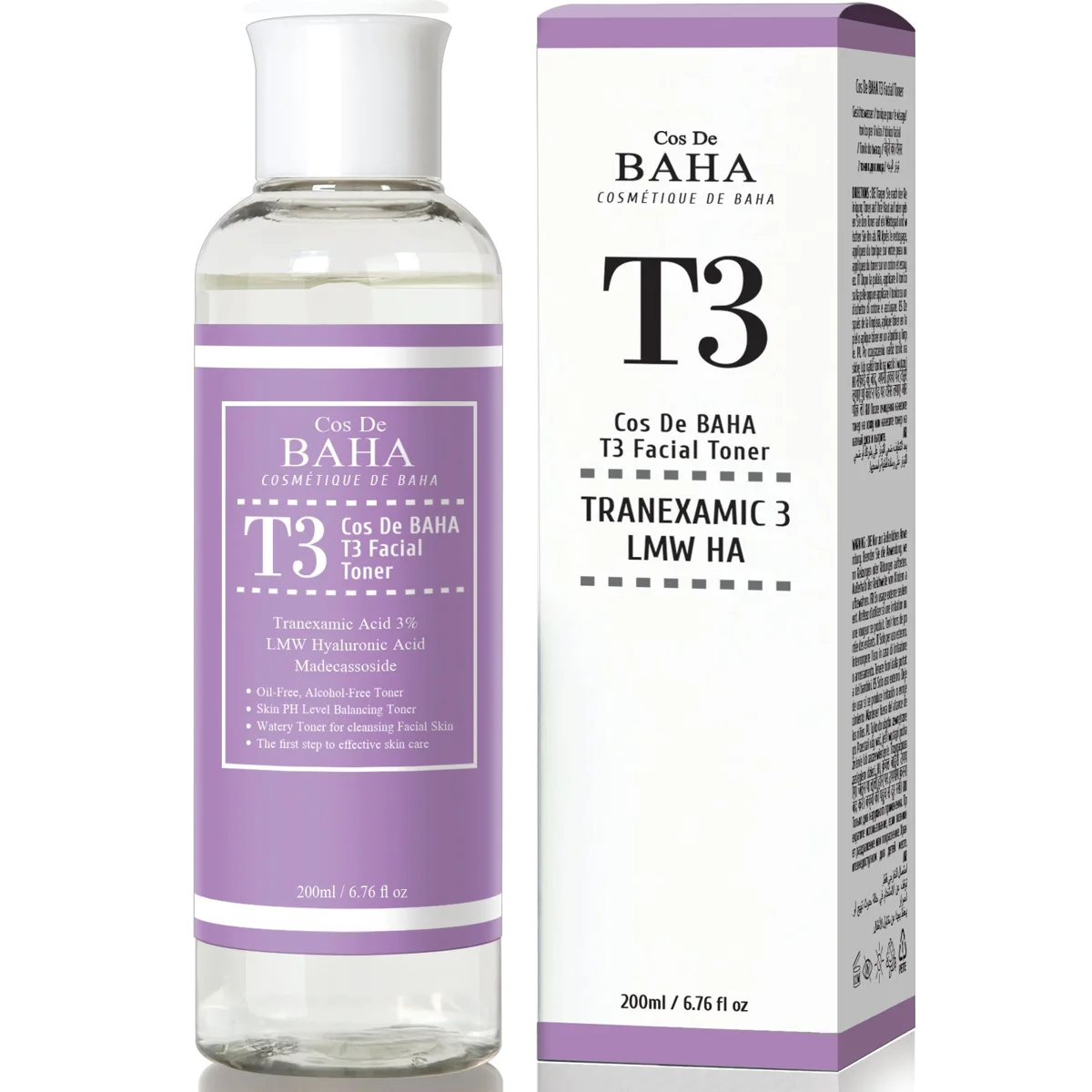
It puts tranexamic acid — usually found in pricier serums — into a fragrance-free daily toner alongside vitamin C, glutathione, and a gentle PHA, in a generous 200ml at a budget price. Building a respected pigment active into the first routine step, cheaply, is the appeal.
A fragrance-free brightening toner that brings tranexamic acid — a genuinely well-regarded active for stubborn pigment — to the first step of your routine, alongside vitamin C, glutathione, a gentle PHA, and hydrators, in a generous 200ml at a bargain price. It's gentle, hydrating, and a smart way to build a pigment active into daily use. The catch is patience: tranexamic acid works slowly, and only if you pair it with diligent sunscreen.
Promisingfor HyperpigmentationIn your profileYou chose · Tranexamic Acid has trial-level evidence for hyperpigmentation but no guideline or regulatory standing yet — promising, short of a recommendation; the other actives here are not yet assessed for it.Moderate evidenceGentleNo reviews collected yet
The case for it
Tranexamic Acid 3% has trial-level evidence for this concern but no guideline or regulatory standing yet.
It is present at an effective concentration, declared or high in the ingredient list.
The formula carries none of the triggers this concern is sensitive to.
What would change this: Guideline or regulatory standing for the active on this concern would move this from a promising bet to a recommendation.
Same rule for everyone. “Promising” is the verdict on 7,858 of 45,024 concern verdicts across the catalog; rule R9p decided 7,858 of them.
Unchanged since September 5, 2026, engine 5.1.1.
R9p — 0.5.0: 'Unproven' beside three filled dots read as one question answered twice with opposite words (7,018 rows). The chip measures standing, the dots measure trial volume; where the row carries at least one RCT or a tier-2 source (moderate dots) and the active is present at a working level, the honest word is Promising. Unproven is reserved for plausible-standing rows with limited or weak evidence, or an under-dosed form. Same rank as Unproven — a bet either way; the dots order them. · the full register
Carrying active
Tranexamic Acid 3%
Standing
plausible — trials support it
Form
adequate (declared 3%) — studied range 2–5%, from the OTC monograph or label; needs leave-on contact; judge it after ~12 weeks
Tolerability
gentle
Row checked
against its sources on July 17, 2026 (evidence table ev-2026.09-r228)
Good choicefor MelasmaIn your profileYou chose · Tranexamic Acid is a trial-supported active for melasma; this liquid carries it at 3%.Strong evidenceGentleNo reviews collected yet
The case for it
Tranexamic Acid 3% has trial-supported standing for this concern.
It is present at an effective concentration, declared or high in the ingredient list.
The formula carries none of the triggers this concern is sensitive to.
Same rule for everyone. “Good choice” is the verdict on 9,564 of 45,024 concern verdicts across the catalog; rule R5 decided 9,072 of them.
Unchanged since September 5, 2026, engine 5.1.1.
Promisingfor Dark SpotsIn your profileYou chose · Vitamin C has trial-level evidence for dark spots but no guideline or regulatory standing yet — promising, short of a recommendation; the other actives here are not yet assessed for it.Moderate evidenceGentleNo reviews collected yet
The case for it
Vitamin C has trial-level evidence for this concern but no guideline or regulatory standing yet.
It is plausibly present at a working level, though the concentration is not declared.
The formula carries none of the triggers this concern is sensitive to.
What would change this: A declared concentration would move this to a firmer reading of the dose.
Same rule for everyone. “Promising” is the verdict on 7,858 of 45,024 concern verdicts across the catalog; rule R9p decided 7,858 of them.
Unchanged since September 5, 2026, engine 5.1.1.
R9p — 0.5.0: 'Unproven' beside three filled dots read as one question answered twice with opposite words (7,018 rows). The chip measures standing, the dots measure trial volume; where the row carries at least one RCT or a tier-2 source (moderate dots) and the active is present at a working level, the honest word is Promising. Unproven is reserved for plausible-standing rows with limited or weak evidence, or an under-dosed form. Same rank as Unproven — a bet either way; the dots order them. · the full register
Carrying active
Vitamin C
Standing
plausible — trials support it
Form
plausible — studied range 1–28%, from the trials on the row; needs leave-on contact; judge it after ~12 weeks
Tolerability
gentle
Row checked
against its sources on July 17, 2026 (evidence table ev-2026.09-r228)
Promisingfor DullnessIn your profileYou chose · Hyaluronic Acid has trial-level evidence for dullness but no guideline or regulatory standing yet — promising, short of a recommendation; the other actives here are not yet assessed for it.Moderate evidenceGentleNo reviews collected yet
The case for it
Hyaluronic Acid & Gluconolactone has trial-level evidence for this concern but no guideline or regulatory standing yet.
It is plausibly present at a working level, though the concentration is not declared.
The formula carries none of the triggers this concern is sensitive to.
What would change this: A declared concentration would move this to a firmer reading of the dose.
Same rule for everyone. “Promising” is the verdict on 7,858 of 45,024 concern verdicts across the catalog; rule R9p decided 7,858 of them.
Unchanged since September 5, 2026, engine 5.1.1.
R9p — 0.5.0: 'Unproven' beside three filled dots read as one question answered twice with opposite words (7,018 rows). The chip measures standing, the dots measure trial volume; where the row carries at least one RCT or a tier-2 source (moderate dots) and the active is present at a working level, the honest word is Promising. Unproven is reserved for plausible-standing rows with limited or weak evidence, or an under-dosed form. Same rank as Unproven — a bet either way; the dots order them. · the full register
Carrying active
Hyaluronic Acid & Gluconolactone
Standing
plausible — trials support it
Form
plausible
Tolerability
gentle
Row checked
against its sources on July 17, 2026 (evidence table ev-2026.09-r228)
Good choicefor DehydrationIn your profileYou chose · Hyaluronic Acid is a reference standard by mechanism for dehydration; this liquid carries it.Moderate evidenceGentleNo reviews collected yet
The case for it
Hyaluronic Acid & Gluconolactone has trial-supported standing for this concern.
It is plausibly present at a working level, though the concentration is not declared.
The formula carries none of the triggers this concern is sensitive to.
What would change this: A declared concentration would move this to a firmer reading of the dose.
Same rule for everyone. “Good choice” is the verdict on 9,564 of 45,024 concern verdicts across the catalog; rule R5 decided 9,072 of them.
Unchanged since September 5, 2026, engine 5.1.1.
R5 — Trial-supported or guideline-supported active, adequately or plausibly dosed. · the full register
Carrying active
Hyaluronic Acid & Gluconolactone
Standing
supported — its mechanism is established
Form
plausible — studied range 0.1%, from the trials on the row; needs leave-on contact; judge it after ~1 weeks
Tolerability
gentle
Row checked
against its sources on July 17, 2026 (evidence table ev-2026.09-r228)
The studies behind the evidence row
Draelos ZD, Cosmetic Dermatology: Products and Procedures — hyaluronic acid classified as a humectant water-binding agent holding many times its weight in water — reference work
Promisingfor Sun DamageIn your profileYou chose · Vitamin C has trial-level evidence for sun damage but no guideline or regulatory standing yet — promising, short of a recommendation; the other actives here are not yet assessed for it.Moderate evidenceGentleNo reviews collected yet
The case for it
Vitamin C has trial-level evidence for this concern but no guideline or regulatory standing yet.
It is plausibly present at a working level, though the concentration is not declared.
The formula carries none of the triggers this concern is sensitive to.
What would change this: A declared concentration would move this to a firmer reading of the dose.
Same rule for everyone. “Promising” is the verdict on 7,858 of 45,024 concern verdicts across the catalog; rule R9p decided 7,858 of them.
Unchanged since September 5, 2026, engine 5.1.1.
R9p — 0.5.0: 'Unproven' beside three filled dots read as one question answered twice with opposite words (7,018 rows). The chip measures standing, the dots measure trial volume; where the row carries at least one RCT or a tier-2 source (moderate dots) and the active is present at a working level, the honest word is Promising. Unproven is reserved for plausible-standing rows with limited or weak evidence, or an under-dosed form. Same rank as Unproven — a bet either way; the dots order them. · the full register
Carrying active
Vitamin C
Standing
plausible — trials support it
Form
plausible
Tolerability
gentle
Row checked
against its sources on July 17, 2026 (evidence table ev-2026.09-r228)
The studies behind the evidence row
Use of topical ascorbic acid and its effects on photodamaged skin topography — Archives of Otolaryngology–Head & Neck Surgery — PubMed type includes 'Randomized Controlled Trial'; n=19 evaluable; active AND vehicle supplied by Cellex-C International; private facial plastic surgery practice (1999), opened July 16, 2026
Does the jobDoes what a toner is for: not alcohol-driven, adds something real. Not measured from the label: restores skin pH, plays well with what follows.
A verdict is DermApproved’s assessment of how well a product’s ingredients fit a concern — never a claim about what the product treats. Evidence dots and collected reviews sit beside it and are never blended in.
Rules 0.5.1 · evidence table ev-2026.09-r228 · how we decide
Assessment
Pros & Cons
Pros
✓ Tranexamic acid, a respected pigment active, in a daily toner
✓ Stacks vitamin C and glutathione for layered brightening
✓ Hydrating with a gentle PHA for surface refinement
✓ Fragrance-free, alcohol-free, and fungal-acne safe
✓ Soothing centella, panthenol, and licorice
✓ Excellent value in a large 200ml size
✓ Gentle enough for twice-daily use
Cons
✗ Pigment results are slow and demand patience
✗ Only works alongside diligent daily sunscreen
✗ Subtle delivery in a toner step
✗ Plain packaging
✗ Mild PHA may bother the most reactive skin
Review
Full Review
Of all the brightening ingredients that have risen to prominence in recent years, tranexamic acid is among the most genuinely respected. Originally a medication used to control bleeding, it turned out to have a real effect on melasma and stubborn pigment when applied topically, working on the pathways that drive excess melanin production rather than just exfoliating the surface. Dermatologists take it seriously, which is more than can be said for many 'brightening' buzzwords. So there's something quietly smart about the Cos De BAHA Tranexamic Acid 3% Hydrating Facial Toner: it takes an active usually reserved for pricier serums and builds a meaningful 3% dose into a cheap, fragrance-free daily toner. The result is a sensible, affordable way to weave a serious pigment ingredient into the routine — with one big caveat that determines whether it works at all.
The formula is more than just its headliner. Tranexamic acid sits third on the list at a functional level, but the toner stacks complementary brightening pathways on top of it: a stable vitamin C derivative (ascorbyl glucoside) and the antioxidant glutathione, both of which approach uneven tone from different angles. Then there's the 'hydrating' half of the name, which is real — multiple hyaluronic acids provide water-based hydration, and a gentle polyhydroxy acid (gluconolactone) lightly refines the surface without the sting of a stronger acid, helping the actives meet fresher skin. Soothing agents — madecassoside from centella, panthenol, allantoin, licorice — keep everything calm, which matters because pigment-prone skin is often reactive too. And it's fragrance-free, alcohol-free, and fungal-acne safe, so it's broadly tolerable. For a brightening product, that's an unusually gentle, well-rounded formula, and putting it at the toner step means you get consistent daily exposure to the actives as the very first thing you apply.
Now the caveat, and it's the one that makes or breaks any brightening routine: sunscreen is non-negotiable. Tranexamic acid genuinely helps pigment, but it works slowly — think eight to twelve weeks or more of consistent use to see tone improvement — and it's fighting an uphill battle the entire time against UV exposure, which is the primary driver of melasma and most hyperpigmentation. Using this toner without daily, diligent sun protection is like bailing a boat without plugging the leak. No brightening product, however good its actives, can win against ongoing sun-driven pigment. So if you buy this for its tranexamic acid, you are implicitly committing to wearing sunscreen every single day, or you're wasting both the product and your time. That's not a knock on the toner; it's the reality of pigment correction, and it's worth stating bluntly because so many people skip it and then conclude the product 'didn't work.'
With sunscreen in place, the realistic expectations are these: immediate hydration and a soft, comfortable base from the first use; a fresher, slightly brighter surface within a few weeks from the gentle exfoliation and antioxidants; and gradual, patient improvement in stubborn tone over months from the tranexamic acid and the layered brightening actives. It's a slow, cumulative benefit, not a dramatic overnight fade, and anyone expecting fast results from a toner will be disappointed. But as a foundational brightening-and-hydrating step that you build a habit around, it does its job, and the gentle formula means you can use it twice daily and layer other actives over it without trouble.
The practical strengths seal the recommendation. At around $18 for a generous 200ml bottle, it's excellent value — tranexamic acid, vitamin C, and glutathione usually come in small, pricier serums, and here you get them in an affordable, large-format daily toner that lasts months and that you can apply lavishly. The fragrance-free, gentle, fungal-acne-safe formula makes it suitable for a wide range of skin including sensitive, and it layers cleanly with the rest of a routine. The only real limitations are the plain packaging, the subtlety inherent to delivering actives in a toner step, and the patience the active demands.
The verdict: this is one of the smarter budget brightening products available, precisely because it pairs a genuinely respected pigment active with the gentleness and large size that make daily, long-term use easy and affordable. Buy it if you have dullness, melasma, post-acne marks, or general uneven tone, commit to the sunscreen that makes it work, and give it the months it needs. Skip it if you want fast, dramatic results or won't wear daily SPF, because then no tranexamic acid product — this one included — will deliver. For the patient, sun-protected user, it's a gentle, effective, genuinely affordable way to chip away at uneven tone, and the value is hard to beat. One more framing that helps: think of this toner as the inexpensive, low-effort base layer of a pigment routine rather than the whole treatment. Its job is to deliver a respected active to clean skin daily, cheaply enough that you never ration it, while you stack a stronger serum on top and protect everything with sunscreen. Pigment work is fundamentally about consistency over months, and the products most likely to succeed are the ones cheap and pleasant enough that you actually keep using them. By that measure — affordable, gentle, large-format, fragrance-free — this toner is well designed to be the part of a brightening routine you never skip, which is quietly more valuable than a pricier product that sits unused after the novelty fades.
Formula
Key Ingredients
The hero actives that drive this product's performance.
The brightening star, sitting third at a meaningful level — tranexamic acid is one of the better-evidenced topical actives for stubborn pigment like melasma and post-acne marks, and putting it in a daily toner builds consistent exposure into the routine.
A stable vitamin C derivative plus the antioxidant glutathione layer additional brightening pathways on top of the tranexamic acid, building a multi-angle approach to dullness and uneven tone.
Hyaluronic acid hydrates while a gentle polyhydroxy acid lightly smooths and refines, so the brightening toner also conditions the surface and helps the actives meet fresher skin — the 'hydrating' half of the name.
Established mechanismfor Dehydration · established mechanism
Centella-derived madecassoside plus panthenol, allantoin, and licorice keep the actives-laden toner calm and comfortable, important for the pigment-prone skin that's often also sensitive.
Not yet assessed
Ingredient standings describe the active at treatment-level doses and
vehicles; this product's own condition grades weigh its actual formula.
Use as your first leave-on step after cleansing, patted in or with a cotton pad, morning and night. Layer brightening serums over it for a stacked approach, and — essential for any pigment routine — always wear sunscreen during the day to protect your progress.
Results Timeline
Immediate: hydrated, soft skin. Short-term (2-4 weeks): a fresher, slightly brighter surface. Long-term (8-12+ weeks): tranexamic acid works gradually on stubborn pigment, so consistent use plus daily sunscreen is needed to see tone improvement.
Pairs Well With
vitamin C serumsniacinamide serumssunscreenmoisturizers
The lead active here has a credible evidence base: tranexamic acid is well-studied for melasma and hyperpigmentation, where it appears to interrupt the plasmin-driven signaling that stimulates melanocytes, reducing pigment production rather than merely exfoliating; topical concentrations around 2-5% are used in research, so 3% is a functional level, with the caveat that absorption from a toner is less than from an optimized serum. The supporting brighteners broaden the approach: ascorbyl glucoside is a stable vitamin C derivative with gradual brightening and antioxidant evidence, and glutathione is an antioxidant with emerging topical brightening data. Gluconolactone, a polyhydroxy acid, offers mild exfoliation and humectancy with low irritation, and the hyaluronic acids provide humectant hydration. Madecassoside, panthenol, allantoin, and licorice-derived dipotassium glycyrrhizate are reasonably evidenced soothing agents. The formula is fragrance- and alcohol-free with no malassezia-feeding lipids. The crucial scientific point is that all topical pigment correction is undermined by UV exposure, so daily sunscreen is mechanistically essential to any result. The honest summary: a gentle, well-constructed brightening toner whose tranexamic acid is genuinely evidence-backed, delivering gradual benefit that depends entirely on consistent sun protection.
Dermatologist Perspective
Tranexamic acid is one of the topical brightening ingredients dermatologists most respect for stubborn pigment, particularly melasma, and delivering a 3% dose in a gentle, fragrance-free daily toner is a reasonable, low-risk way to incorporate it. The supporting vitamin C derivative and glutathione add complementary brightening pathways, and the soothing agents suit the often-reactive skin that pigment concerns accompany. Clinically, two points are paramount: results are gradual, requiring months of consistent use, and — most importantly — sun protection is essential, since UV exposure drives the very pigment the toner targets and will negate progress without it. The gentle PHA and absence of fragrance make it broadly tolerable, though the most reactive skin should patch-test. For a patient, sun-protected pigment routine, it's a sensible foundational step, best paired with a dedicated sunscreen and, for resistant cases, professional evaluation.
Guidance
Usage & Recommendations
How to Use
After cleansing, apply the toner as your first leave-on step, patted in by hand or swept on with a cotton pad, morning and night. Layer brightening serums (vitamin C, niacinamide) over it for a stacked approach, then moisturize. Most importantly for any pigment routine, apply a broad-spectrum sunscreen every morning and reapply through the day, since sun exposure drives the pigment you're trying to fade and will undo your progress without protection. Introduce it gradually if your skin is reactive to the mild PHA, and give it eight to twelve weeks of consistent use before judging tone results.
Value Assessment
At around $18 for a generous 200ml, this is excellent value: tranexamic acid, vitamin C, and glutathione typically appear in small, more expensive serums, and here they're delivered in a large-format, fragrance-free daily toner that lasts three to four months and can be used lavishly. The big size and low price make consistent, long-term use — which pigment correction requires — genuinely affordable, which is itself part of the value, since these actives only work with sustained application. For pigment-prone skin willing to commit to the routine and sunscreen, the price-to-active ratio is among the best available; the only thing tempering it is the inherent subtlety of delivering brighteners at the toner step, best addressed by layering a serum over it.
Who Should Buy
This is for anyone with dullness, melasma, post-acne marks, or general uneven tone who wants to build a respected pigment active into an affordable, gentle daily toner — and who is committed to wearing sunscreen. Its fragrance-free, large-size, fungal-acne-safe formula suits a wide range of skin, including sensitive.
Who Should Skip
Those wanting fast, dramatic brightening, or who won't commit to daily sunscreen, should skip it, since tranexamic acid is slow and useless against unprotected UV exposure. The most reactive skin should patch-test for the gentle PHA, and anyone wanting a richer, more occlusive treatment should look beyond a toner.
Ready to try Cos De BAHA Tranexamic Acid 3% Hydrating Facial Toner?
A lightweight, watery toner with a faint slip from the humectants that absorbs quickly to a soft, hydrated finish.
Scent
Genuinely scentless — no added fragrance.
Packaging
A large simple bottle in the brand's plain clinical style, suited to generous daily use.
Finish
dewylightweightfast-absorbing
What to Expect on First Use
On first use it feels hydrating and soft with no scent or sting; brightening is gradual, so there's no immediate dramatic change, just a comfortable, well-hydrated base.
How Long It Lasts
The large 200ml bottle lasts around 3-4 months applied morning and evening.
Tranexamic acid has become a go-to topical for stubborn pigment like melasma, and Cos De BAHA's value approach made it accessible by putting a meaningful 3% dose into an inexpensive daily toner rather than a premium serum.
About Cos De BAHA Established Brand (5–20 years)
Cos De BAHA is a Korean brand known for affordable, active-forward formulas sold on Amazon. This toner brings tranexamic acid — a respected brightening active for stubborn pigment — to the first step of the routine, alongside vitamin C, glutathione, and hydrators, fragrance-free and in a large value size.
Brand founded: 2016 · Product launched: 2023
Myth vs. Reality
Common Myths
Myth
A brightening toner alone will fade melasma and dark spots.
Reality
Tranexamic acid genuinely helps pigment, but it works slowly and only as part of a routine that includes diligent daily sunscreen. Without sun protection, no brightening product can win against ongoing UV-driven pigment.
FAQ
Frequently Asked Questions
What does tranexamic acid do in this toner?
Tranexamic acid is a well-regarded topical brightener for stubborn pigment such as melasma and post-acne marks, working on the pathways that drive excess pigment. At a meaningful 3% in a daily toner, it builds consistent exposure into your routine, though results are gradual.
How long until I see brightening results?
Expect to be patient — tranexamic acid works slowly on pigment, typically over eight to twelve weeks or more of consistent use, and only alongside diligent daily sunscreen. The toner also hydrates immediately, but tone improvement is a long game.
Is this toner gentle enough for sensitive skin?
Largely yes — it's fragrance-free, alcohol-free, and uses a mild PHA rather than a harsh acid, plus soothing centella, panthenol, and licorice. Most skin tolerates it well, though the genuinely reactive should patch-test for the gentle gluconolactone.
Can I layer it with a vitamin C serum?
Yes — the toner already contains a vitamin C derivative and glutathione, and layering a dedicated vitamin C serum over it stacks complementary brightening pathways. Just introduce actives gradually and always finish with sunscreen during the day.
Is it good value?
Very — at around $18 for a large 200ml, it puts a meaningful tranexamic acid dose plus vitamin C and glutathione into an affordable daily toner, where these actives usually appear in pricier serums. The generous size makes it especially economical.
Reviews
What Reviewers Tend to Say
Recurring themes our editors read across retailer reviews of this product — summaries in our words, not quotations, and not a substitute for your own patch test.
Japan runs a third regulatory tier between cosmetic and pharmaceutical, and once you can see it, the entire J-beauty aisle stops looking modest and starts looking legally precise.
Most heritage claims are unfalsifiable. This one sits on a public regulatory register — which makes it the rare case where you can check what 150 years of institutional research actually bought.
The one home formulation with a genuinely coherent case, taken apart on its own terms: the pH window, the oxidation clock, and what a browning serum has actually become.
It was invented to stop bleeding during surgery. In 2026 it's in dozens of brightening serums — and the evidence is better than most trend ingredients can claim.
Jul 6, 2026· 3 min
Questions people ask about Hyperpigmentation
Verified answers from our questions library — the nuance a product page cannot carry.
Products, answers, therapy guides, tools and articles in one search. Brand names,
slang and abbreviations all work — accutane finds isotretinoin, bacne finds truncal acne.