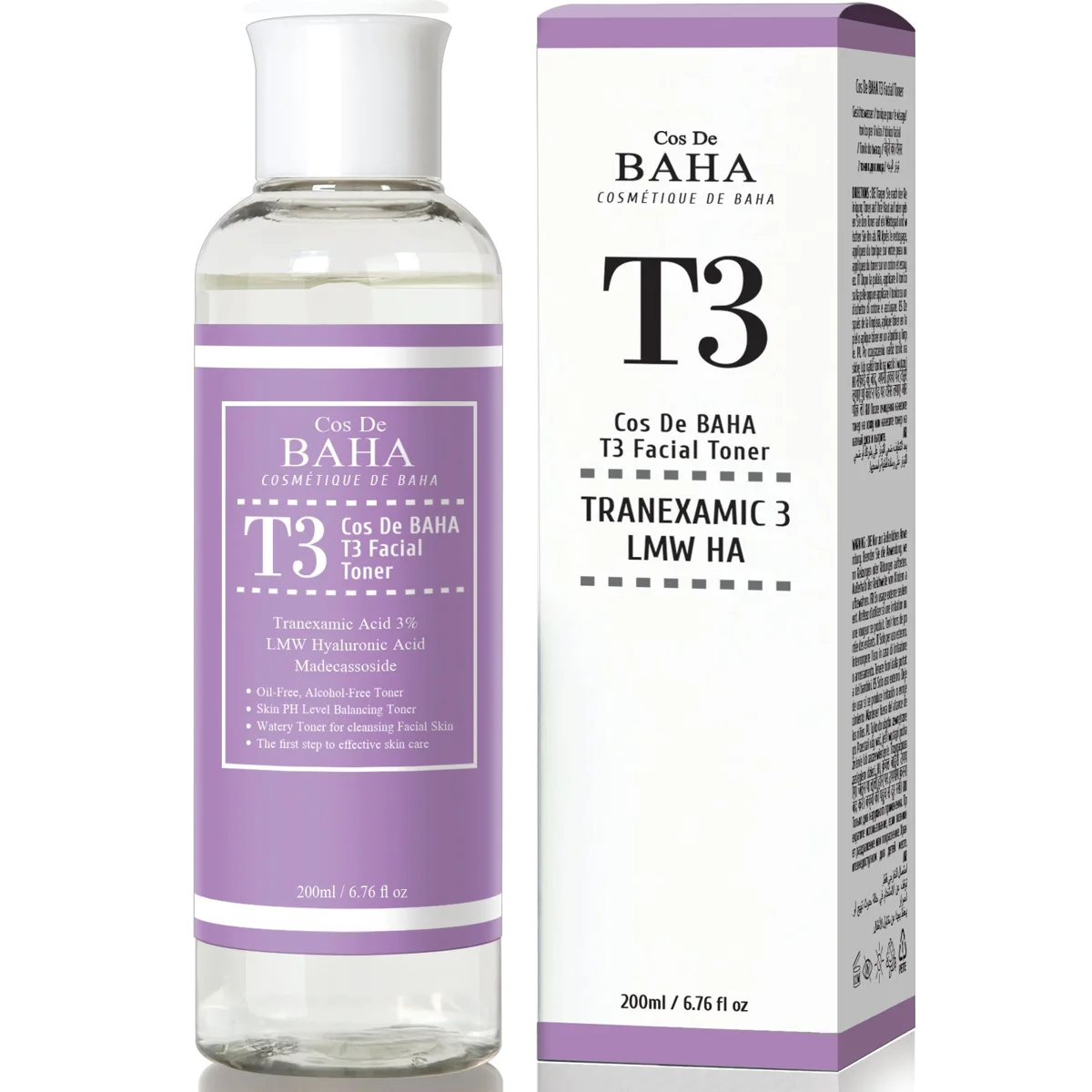
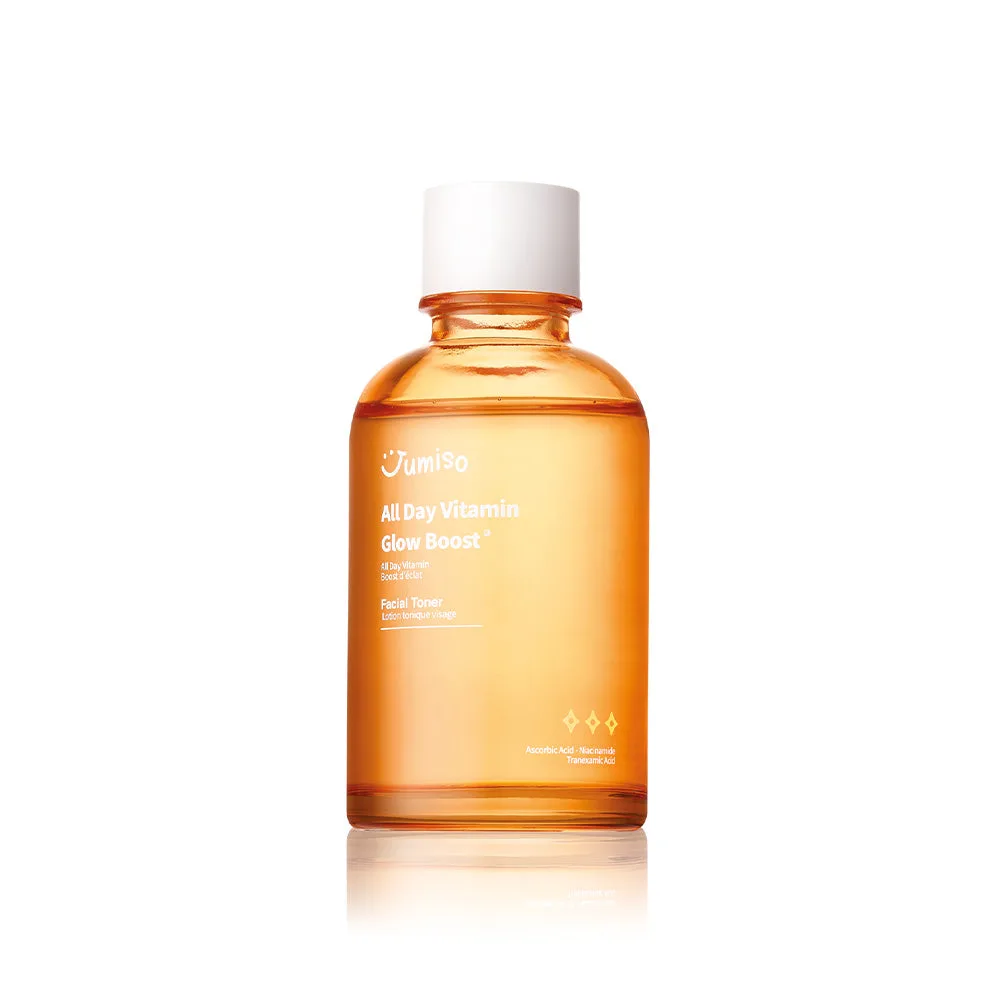
The combination of two quasi-drug brightening actives (tranexamic acid plus L-ascorbic acid 2-glucoside) in a fragrance-free, alcohol-free drugstore-priced toner is genuinely unusual. Most dual-active brightening toners are premium-tier; Hadabisei delivers the formulation sophistication at $25. The 2025 @cosme award recognition reflects sustained consumer satisfaction with this combination.
Kracie's 2025 @cosme Best Cosmetics Award winner delivers genuinely exceptional value — dual quasi-drug brightening actives (tranexamic acid plus L-ascorbic acid 2-glucoside) in a fragrance-free, alcohol-free toner at the $25 drugstore price point. One of the most cost-effective entry points for tranexamic acid skincare available globally.
Promisingfor HyperpigmentationIn your profileYou chose · Vitamin C has trial-level evidence for hyperpigmentation but no guideline or regulatory standing yet — promising, short of a recommendation; the other actives here are not yet assessed for it.Moderate evidenceGentleNo reviews collected yet
The case for it
L-Ascorbic Acid 2-Glucoside has trial-level evidence for this concern but no guideline or regulatory standing yet.
It is plausibly present at a working level, though the concentration is not declared.
The formula carries none of the triggers this concern is sensitive to.
What would change this: A declared concentration would move this to a firmer reading of the dose.
Same rule for everyone. “Promising” is the verdict on 7,858 of 45,024 concern verdicts across the catalog; rule R9p decided 7,858 of them.
Unchanged since September 5, 2026, engine 5.1.1.
R9p — 0.5.0: 'Unproven' beside three filled dots read as one question answered twice with opposite words (7,018 rows). The chip measures standing, the dots measure trial volume; where the row carries at least one RCT or a tier-2 source (moderate dots) and the active is present at a working level, the honest word is Promising. Unproven is reserved for plausible-standing rows with limited or weak evidence, or an under-dosed form. Same rank as Unproven — a bet either way; the dots order them. · the full register
Carrying active
L-Ascorbic Acid 2-Glucoside
Standing
plausible — trials support it
Form
plausible — studied range 5–6%, from the trials on the row; needs leave-on contact; judge it after ~12 weeks
Tolerability
gentle
Row checked
against its sources on July 17, 2026 (evidence table ev-2026.09-r228)
Promisingfor Dark SpotsIn your profileYou chose · Vitamin C has trial-level evidence for dark spots but no guideline or regulatory standing yet — promising, short of a recommendation; the other actives here are not yet assessed for it.Moderate evidenceGentleNo reviews collected yet
The case for it
L-Ascorbic Acid 2-Glucoside has trial-level evidence for this concern but no guideline or regulatory standing yet.
It is plausibly present at a working level, though the concentration is not declared.
The formula carries none of the triggers this concern is sensitive to.
What would change this: A declared concentration would move this to a firmer reading of the dose.
Same rule for everyone. “Promising” is the verdict on 7,858 of 45,024 concern verdicts across the catalog; rule R9p decided 7,858 of them.
Unchanged since September 5, 2026, engine 5.1.1.
R9p — 0.5.0: 'Unproven' beside three filled dots read as one question answered twice with opposite words (7,018 rows). The chip measures standing, the dots measure trial volume; where the row carries at least one RCT or a tier-2 source (moderate dots) and the active is present at a working level, the honest word is Promising. Unproven is reserved for plausible-standing rows with limited or weak evidence, or an under-dosed form. Same rank as Unproven — a bet either way; the dots order them. · the full register
Carrying active
L-Ascorbic Acid 2-Glucoside
Standing
plausible — trials support it
Form
plausible — studied range 1–28%, from the trials on the row; needs leave-on contact; judge it after ~12 weeks
Tolerability
gentle
Row checked
against its sources on July 17, 2026 (evidence table ev-2026.09-r228)
Good choicefor MelasmaIn your profileYou chose · Tranexamic Acid is a trial-supported active for melasma; this liquid carries it, though the concentration is not declared.Strong evidenceGentleNo reviews collected yet
The case for it
Tranexamic Acid has trial-supported standing for this concern.
It is plausibly present at a working level, though the concentration is not declared.
The formula carries none of the triggers this concern is sensitive to.
What would change this: A declared concentration would move this to a firmer reading of the dose.
Same rule for everyone. “Good choice” is the verdict on 9,564 of 45,024 concern verdicts across the catalog; rule R5 decided 9,072 of them.
Unchanged since September 5, 2026, engine 5.1.1.
Promisingfor Sun DamageIn your profileYou chose · Vitamin C has trial-level evidence for sun damage but no guideline or regulatory standing yet — promising, short of a recommendation; the other actives here are not yet assessed for it.Moderate evidenceGentleNo reviews collected yet
The case for it
L-Ascorbic Acid 2-Glucoside has trial-level evidence for this concern but no guideline or regulatory standing yet.
It is plausibly present at a working level, though the concentration is not declared.
The formula carries none of the triggers this concern is sensitive to.
What would change this: A declared concentration would move this to a firmer reading of the dose.
Same rule for everyone. “Promising” is the verdict on 7,858 of 45,024 concern verdicts across the catalog; rule R9p decided 7,858 of them.
Unchanged since September 5, 2026, engine 5.1.1.
R9p — 0.5.0: 'Unproven' beside three filled dots read as one question answered twice with opposite words (7,018 rows). The chip measures standing, the dots measure trial volume; where the row carries at least one RCT or a tier-2 source (moderate dots) and the active is present at a working level, the honest word is Promising. Unproven is reserved for plausible-standing rows with limited or weak evidence, or an under-dosed form. Same rank as Unproven — a bet either way; the dots order them. · the full register
Carrying active
L-Ascorbic Acid 2-Glucoside
Standing
plausible — trials support it
Form
plausible
Tolerability
gentle
Row checked
against its sources on July 17, 2026 (evidence table ev-2026.09-r228)
The studies behind the evidence row
Use of topical ascorbic acid and its effects on photodamaged skin topography — Archives of Otolaryngology–Head & Neck Surgery — PubMed type includes 'Randomized Controlled Trial'; n=19 evaluable; active AND vehicle supplied by Cellex-C International; private facial plastic surgery practice (1999), opened July 16, 2026
Also listed for Dullness — the actives here (Vitamin C, Tranexamic Acid, Ceramides, Soybean (Glycine Soja) are in our research queue for that concern; there is no verdict until their evidence rows are written. That is a gap in our table, not a mark against the product.
Does the jobDoes what a toner is for: not alcohol-driven, adds something real. Not measured from the label: restores skin pH, plays well with what follows.
Where our review and the verdict differ. The review below was written on the formulation and the published trials; the verdicts above apply the stricter standing test in our methodology — an active earns a recommendation only with guideline or regulatory standing for the concern. Where the two disagree, the verdict is DermApproved’s position.
A verdict is DermApproved’s assessment of how well a product’s ingredients fit a concern — never a claim about what the product treats. Evidence dots and collected reviews sit beside it and are never blended in.
Rules 0.5.1 · evidence table ev-2026.09-r228 · how we decide
Assessment
Pros & Cons
Pros
✓ Outstanding value — dual quasi-drug brightening actives at $25
✓ Tranexamic acid effective for melasma and post-inflammatory hyperpigmentation
✓ Genuinely fragrance-free and alcohol-free formulation
✗ Single 200ml size limits volume-buying flexibility
✗ Limited US availability typically requires Japanese import
Review
Full Review
Award shortlists in beauty usually reward whoever spent the most on sampling campaigns, which is exactly why it is worth pausing when a drugstore product wins on apparent merit. Kracie's Hadabisei Medicated Brightening Toner took home an @cosme Best Cosmetics Award in 2025, and @cosme's voting skews toward enormous volumes of ordinary Japanese shoppers reporting what actually worked on their faces rather than toward whatever a brand pushed hardest that quarter. That distinction matters here, because the formula underneath the trophy is genuinely more interesting than its twenty-five-dollar price tag suggests, and the recognition reads as substance catching up to it rather than marketing reach manufacturing it.
The headline is a pair of quasi-drug brightening actives, which in the Japanese regulatory framework means ingredients formally registered with the PMDA for a stated efficacy rather than vaguely gestured at on the carton. The first is tranexamic acid, and this is the part that makes the price look almost suspicious. Tranexamic acid is among the most clinically validated brightening ingredients in modern dermatology, an amino acid derivative that works by interrupting the keratinocyte-to-melanocyte signaling that drives excess melanin production, which is a different mechanism than vitamin C or hydroquinone and the reason it has earned its reputation for melasma and stubborn post-inflammatory hyperpigmentation. Finding it as a regulated active in a drugstore toner, rather than a premium serum, is the unusual part. The second active is L-ascorbic acid 2-glucoside, a stable vitamin C derivative that converts gradually to ascorbic acid in the skin, trading peak potency for shelf stability and a slow, sustained antioxidant and tone-evening contribution. The two stack mechanistically, which is more complete than the single-active brightening toners that dominate the drugstore shelf.
Around those two sit choices that suggest someone cared about the barrier, not just the brightening. There is a yuzu-derived ceramide, which is a genuinely rare inclusion at this tier, contributing barrier-supporting lipids so the skin stays comfortable while the actives do their gradual work. A traditional Japanese botanical complex of coix seed, peony root, rice bran, and soybean extracts reinforces the brightening and surface-conditioning direction, and that botanical roster is consistent with a brand whose identity, through Kracie, reaches back through nearly seventy years of Japanese cosmetics history to Kanebo's textile division. The formula is genuinely fragrance-free and alcohol-free, which is the right call for anything meant to be used daily on skin that may already be reactive from sun damage or pigmentation.
Using it is the unfussy Japanese-routine experience, which is to say there is almost nothing to it. The liquid is clear and lightly viscous, somewhere between a watery toner and a thin essence, and it absorbs to a soft satin finish without any astringent bite or scent. There is no warming sensation, no tingle, no perfume note to either enjoy or endure, which sounds unremarkable until you remember how many brightening products lean on fragrance and a faint sting to feel like they are working. This one simply disappears into the skin and gets on with it. Pat it in with palms or a cotton pad after cleansing, layer your serums and moisturizer on top, and that is the entire ritual. Where it sits in a brightening routine is as a foundation layer rather than the heavy lifter, the thing that quietly compounds underneath your dedicated treatments. The timeline reflects that supporting role: comfort and light hydration immediately, a subtle lift in dullness and surface clarity across the first few weeks, and meaningful improvement in mild hyperpigmentation, melasma, and post-inflammatory marks over roughly eight to twelve weeks, with the usual non-negotiable caveat that none of it holds without rigorous daily sunscreen, since unprotected UV undoes brightening work faster than any toner can build it.
The limitations are worth naming plainly, because they are real even if none is a dealbreaker for most people. The preservative system uses methylparaben, which is well-tolerated and well-studied but will put off anyone committed to a paraben-free routine. The conchiolin is mollusc-derived, which rules the product out for vegans and anyone with a shellfish allergy, and the soybean extract is a flag for the soy-allergic. It comes in a single two-hundred-milliliter size, so there is no jumbo bottle to drive the per-use cost down further, and US availability is thin enough that buying it usually means a Japanese import with the shipping and timing that implies. With around seven thousand reviews behind it and a 4.6 average, the sentiment is well-established rather than speculative, so the brightening contribution can be discussed with reasonable confidence rather than hedged.
On value, this is close to the best argument in the category. Imported premium tranexamic acid toners frequently run two to four times the price for a comparable or thinner active deck, and Western drugstore brightening toners rarely match the specific dual-active, quasi-drug-regulated combination on offer here. At roughly twenty-five to fifty cents per application, it is one of the most cost-effective legitimate entry points into tranexamic acid skincare available anywhere. If you are building a budget-conscious melasma or post-inflammatory hyperpigmentation routine, you tolerate the parabens and the import logistics, and you understand a toner is a supporting act rather than a miracle, this is an easy, well-engineered, sensible recommendation. The only people who should pass are vegans, those with shellfish or soy concerns, and anyone expecting a single bottle to do the work of a full brightening regimen on its own.
Formula
Key Ingredients
The hero actives that drive this product's performance.
The declared quasi-drug brightening active. Tranexamic acid is an amino acid derivative with documented melanin synthesis inhibition mechanism — it works by blocking the interaction between keratinocytes and melanocytes that triggers excess melanin production. Particularly effective for melasma and post-inflammatory hyperpigmentation. The inclusion as a regulated active in a drugstore-priced toner is meaningful.
The second declared quasi-drug active. Ascorbyl glucoside is a stable vitamin C derivative that gradually converts to L-ascorbic acid in skin, providing sustained brightening and antioxidant action. The dual-active combination (tranexamic acid plus vitamin C derivative) provides layered brightening mechanism beyond single-active competitors.
Yuzu-derived ceramide providing barrier-supporting lipid action. The yuzu citrus origin reflects traditional Japanese cosmetic ingredient sourcing. Combined with the soybean and silk-derived peptides in the formula, the yuzu ceramide supports the broader brightening positioning by maintaining barrier function during active treatment.
Traditional Japanese botanical ingredients reinforcing the brightening positioning. Coix lacryma-jobi (yokuinin), peony root, rice bran, and soybean extracts each contribute documented surface-conditioning and mild brightening effects. The traditional Japanese formulation philosophy is consistent with Hadabisei's broader brand identity.
Not yet assessed
Ingredient standings describe the active at treatment-level doses and
vehicles; this product's own condition grades weigh its actual formula.
Apply after cleansing as the toner step. Dispense onto cotton pad or palms; pat into skin. The fragrance-free, alcohol-free formula supports daily morning and evening use. Pair with leave-on tranexamic acid or vitamin C serums for amplified brightening effect. Follow with moisturizer and (in morning) SPF 50.
Results Timeline
Immediate: skin feels comforted and lightly hydrated. Short-term (2-4 weeks): subtle improvement in dullness and surface clarity. Full benefits (8-12 weeks): meaningful improvement in mild hyperpigmentation, melasma, and post-inflammatory hyperpigmentation, particularly when paired with rigorous SPF and leave-on brightening serums.
Pairs Well With
leave-on tranexamic acid serumsvitamin C serums for layered brighteningniacinamide serumssunscreen SPF 50 in morning routine
Tranexamic acid research is among the most clinically validated in brightening dermatology. Multiple peer-reviewed studies document the mechanism (keratinocyte-melanocyte signaling inhibition), efficacy for melasma and post-inflammatory hyperpigmentation, and safety profile. L-ascorbic acid 2-glucoside (ascorbyl glucoside) has substantial cosmetic literature documenting its gradual conversion to L-ascorbic acid and sustained brightening action. Yuzu ceramide research is more limited but supports the broader cosmetic literature on ceramides as barrier-supporting lipids. The traditional Japanese botanical complex has individual research backing each component. The combination of dual quasi-drug brightening actives with barrier-supporting ceramide is mechanistically more complete than single-active drugstore competitors.
Dermatologist Perspective
Dermatologists generally view this kind of dual-active brightening toner favorably for patients building accessible brightening routines. The tranexamic acid inclusion is particularly valued for melasma patients. The fragrance-free, alcohol-free formulation supports sensitive-skin tolerance. Concerns: methylparaben preservation for paraben-averse patients; shellfish-derived conchiolin for shellfish-allergic users; soybean extract for soy-allergic users. For appropriate patients, dermatological consensus is positive.
Guidance
Usage & Recommendations
How to Use
Apply after cleansing as the toner step. Dispense 3-5 drops onto cotton pad or palms; pat into skin. Use morning and evening. Pair with leave-on tranexamic acid or vitamin C serums for amplified brightening. Always use SPF 50 in morning routine to protect the brightening-treated skin.
Value Assessment
At $25 for 200 ml, per-use cost approximately 25-50 cents — exceptional value for dual quasi-drug active toner. Compared with luxury Japanese brightening toners ($75-250+), Hadabisei offers competitive formulation substance at a fraction of the price. Compared with Western drugstore brightening toners (CeraVe, Olay), the quasi-drug active deck and tranexamic acid inclusion represent meaningful differentiation. For value-conscious users seeking effective tranexamic acid skincare, this is one of the best products available globally.
Who Should Buy
Melasma sufferers and post-inflammatory hyperpigmentation users seeking accessible tranexamic acid skincare. Budget-conscious users building Japanese-routine brightening systems. J-beauty enthusiasts curious about award-winning drugstore formulations. Sensitive-skin users wanting fragrance-free brightening toner. Anyone curious about tranexamic acid skincare at low cost.
Who Should Skip
Paraben-averse users should choose phenoxyethanol-only preserved alternatives. Vegan and shellfish-allergic users must avoid the conchiolin content. Soy-allergic users should choose alternatives. Users seeking aggressive leave-on tranexamic acid treatment should add dedicated serums.
Ready to try Hadabisei Medicated Brightening Toner?
A clear, lightly viscous liquid with the consistency of a thin essence. Absorbs to a soft satin finish.
Scent
Genuinely fragrance-free.
Packaging
200 ml clear plastic bottle with the Hadabisei drugstore-friendly visual language.
Finish
satinlightweight
What to Expect on First Use
First-time users notice the absence of fragrance and the gentle texture immediately. The dual-active brightening contribution is gradual rather than dramatic.
How Long It Lasts
Around 2-3 months when applied morning and evening
Japan PMDA quasi-drug (iyakubuhin) registered@cosme Best Cosmetics Award 2025
Background
The Story Behind This Product
Kracie launched the Hadabisei Medicated Brightening Toner in 2024 as the brand's flagship dual-active brightening drugstore offering. The product won @cosme Best Cosmetics Award in 2025 — meaningful recognition reflecting strong consumer reception of the dual-active brightening formulation at the accessible price tier. Kracie has nearly 70 years of Japanese cosmetics history (originally Kanebo's textile division).
About Hadabisei Legacy Brand (20+ years)
Hadabisei is a Japanese skincare brand from Kracie Holdings (founded 1956 as Kanebo's textile division, currently a personal care conglomerate). The Medicated Brightening Toner is the latest in Hadabisei's quasi-drug brightening line, with dual active ingredients (L-ascorbic acid 2-glucoside and tranexamic acid) registered under Japan's PMDA framework. Won @cosme Best Cosmetics Award in 2025.
Brand founded: 1956 · Product launched: 2024
Myth vs. Reality
Common Myths
Myth
Tranexamic acid in a toner is too weak to do anything.
Reality
Tranexamic acid as a quasi-drug regulated active in this formula provides meaningful daily contribution to a brightening routine. While leave-on tranexamic acid serums at higher concentrations deliver more aggressive treatment effects, daily exposure through a toner provides sustained mild brightening contribution that compounds over weeks of use. The 2025 @cosme award reflects users experiencing visible benefits.
FAQ
Frequently Asked Questions
How does tranexamic acid work for hyperpigmentation?
Tranexamic acid blocks the interaction between keratinocytes (skin cells) and melanocytes (pigment-producing cells), reducing the signal that triggers excess melanin production. It is particularly effective for melasma and post-inflammatory hyperpigmentation. As a quasi-drug regulated active in Hadabisei's formulation, the tranexamic acid contribution is meaningful for sustained daily use.
Is this toner suitable for melasma?
Yes — tranexamic acid is one of the most-recommended actives for melasma. The Hadabisei toner provides daily exposure to tranexamic acid that supports a complete melasma treatment routine. For aggressive melasma treatment, pair with leave-on tranexamic acid serums at higher concentrations and consistent SPF 50.
Why is it so affordable for a dual quasi-drug active toner?
Kracie operates as a Japanese drugstore brand with mass-market pricing positioning. The quasi-drug active deck and fragrance-free formulation reflect the brand's commitment to accessible brightening skincare. The 2025 @cosme award recognition demonstrates the formulation quality despite the affordable pricing.
Can I use it during pregnancy?
Generally yes — tranexamic acid and L-ascorbic acid 2-glucoside are considered safe during pregnancy. The formulation contains no salicylic acid, retinoids, or hydroquinone. Discuss any specific concerns with your obstetrician, particularly given the methylparaben preservation and shellfish-derived conchiolin content.
Reviews
What Reviewers Tend to Say
Recurring themes our editors read across retailer reviews of this product — summaries in our words, not quotations, and not a substitute for your own patch test.
Common Praise
Outstanding value for dual quasi-drug active toner
Tranexamic acid effective for melasma and post-inflammatory hyperpigmentation
Fragrance-free, alcohol-free formulation
Suitable for sensitive skin while delivering meaningful brightening contribution
Drugstore accessibility for a premium-tier ingredient deck
Japan runs a third regulatory tier between cosmetic and pharmaceutical, and once you can see it, the entire J-beauty aisle stops looking modest and starts looking legally precise.
Most heritage claims are unfalsifiable. This one sits on a public regulatory register — which makes it the rare case where you can check what 150 years of institutional research actually bought.
The one home formulation with a genuinely coherent case, taken apart on its own terms: the pH window, the oxidation clock, and what a browning serum has actually become.
It was invented to stop bleeding during surgery. In 2026 it's in dozens of brightening serums — and the evidence is better than most trend ingredients can claim.
Jul 6, 2026· 3 min
Questions people ask about Hyperpigmentation
Verified answers from our questions library — the nuance a product page cannot carry.
Products, answers, therapy guides, tools and articles in one search. Brand names,
slang and abbreviations all work — accutane finds isotretinoin, bacne finds truncal acne.