

You Can Mix L-Ascorbic Acid at Home. Keeping It Alive Is the Hard Part.
The one home formulation with a genuinely coherent case, taken apart on its own terms: the pH window, the oxidation clock, and what a browning serum has actually become.
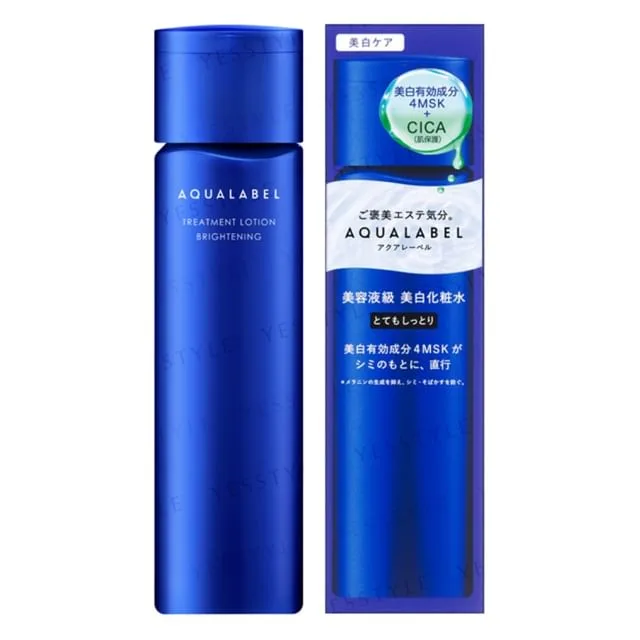
Combines Shiseido's patented 4MSK brightening molecule with stable 2-O-ethyl ascorbic acid and the full J-beauty hydration architecture in a single drugstore-tier product. 4MSK works through a different mechanism than hydroquinone, kojic acid, or arbutin — most Western brightening products don't access this active class at all. The pairing with multiple amino acids and Centella asiatica makes the formula notably more comprehensive than the alcohol-toner brightening category Western shoppers might compare it to.
A well-executed J-beauty brightening lotion that leverages Shiseido's patented 4MSK mechanism with stable vitamin C in a multi-mechanism formula at drugstore pricing. Strong fit for normal-to-combination skin focused on tone-evening, less suited to genuinely sensitive or actively reactive skin given the alcohol-and-fragrance combination. Best value comes from the refill version and the J-beauty layering technique that the formula is built around.
The case for it
What would change this: A declared concentration would move this to a firmer reading of the dose.
Same rule for everyone. “Promising” is the verdict on 7,858 of 45,024 concern verdicts across the catalog; rule R9p decided 7,858 of them. Unchanged since September 5, 2026, engine 5.1.1.
Brand or formulator? Disclose a concentration or correct a fact →
The studies behind the evidence row
The case for it
What would change this: A declared concentration would move this to a firmer reading of the dose.
Same rule for everyone. “Promising” is the verdict on 7,858 of 45,024 concern verdicts across the catalog; rule R9p decided 7,858 of them. Unchanged since September 5, 2026, engine 5.1.1.
Brand or formulator? Disclose a concentration or correct a fact →
The studies behind the evidence row
The case for it
What would change this: A declared concentration would move this to a firmer reading of the dose.
Same rule for everyone. “Promising” is the verdict on 7,858 of 45,024 concern verdicts across the catalog; rule R9p decided 7,858 of them. Unchanged since September 5, 2026, engine 5.1.1.
Brand or formulator? Disclose a concentration or correct a fact →
The studies behind the evidence row
The case for it
What would change this: A declared concentration would move this to a firmer reading of the dose.
Same rule for everyone. “Promising” is the verdict on 7,858 of 45,024 concern verdicts across the catalog; rule R9p decided 7,858 of them. Unchanged since September 5, 2026, engine 5.1.1.
Brand or formulator? Disclose a concentration or correct a fact →
The studies behind the evidence row
The case for it
What would change this: A declared concentration would move this to a firmer reading of the dose.
Same rule for everyone. “Good choice” is the verdict on 9,564 of 45,024 concern verdicts across the catalog; rule R5 decided 9,072 of them. Unchanged since September 5, 2026, engine 5.1.1.
Brand or formulator? Disclose a concentration or correct a fact →
The studies behind the evidence row
Does the jobDoes what a toner is for: not alcohol-driven, adds something real. Not measured from the label: restores skin pH, plays well with what follows.
A verdict is DermApproved’s assessment of how well a product’s ingredients fit a concern — never a claim about what the product treats. Evidence dots and collected reviews sit beside it and are never blended in. Rules 0.5.1 · evidence table ev-2026.09-r228 · how we decide
The Western brightening category has historically defaulted to three options. Vitamin C serums dominate the consumer end, with brands ranging from The Ordinary to SkinCeuticals competing on the same handful of formulations. Niacinamide at various concentrations fills the gentler middle ground. Prescription hydroquinone occupies the medical end for severe pigmentation, with its safety considerations around darker skin tones and the regulatory tightening that has restricted its over-the-counter availability. The mechanism diversity in Western brightening is, frankly, narrow.
Japanese skincare has built around a different set of options. Potassium methoxysalicylate — known in the Shiseido system as 4MSK — has been an approved quasi-drug brightening active in Japan for nearly two decades, with substantial published clinical research on its melanocyte-quieting mechanism. It addresses pigmentation through a pathway distinct from the hydroquinone-kojic-arbutin tyrosinase-blocker family, which gives it a different safety and efficacy profile across skin types and pigmentation conditions. Despite the established record, 4MSK is virtually absent from Western brightening discourse — a function of Japan-only quasi-drug regulation rather than ingredient merit.
Aqualabel Treatment Lotion Brightening is the most accessible introduction to this active for Western shoppers. The formula combines 4MSK as the marquee active with 2-O-ethyl ascorbic acid as a stable vitamin C derivative, two molecular weights of hyaluronic acid for hydration support, an amino acid trio (glutamic acid, methionine, alanine) for NMF reinforcement, soluble collagen for surface humectant work, and Centella asiatica extract for anti-inflammatory soothing. The supporting cast addresses the irritation potential of any brightening formula, and the multi-mechanism architecture means the lotion does meaningful work across hydration, brightening, antioxidant defense, and barrier support in a single application.
The formulation tradeoffs are clear. Alcohol sits fourth on the INCI — high position that makes the lotion run lighter and produces a quick cool sensation on application, but raises the irritation potential for reactive sensitive skin. Fragrance is present at the end of the INCI, restrained but detectable on application. These choices reflect a deliberate positioning toward normal-to-combination skin types where the alcohol functions as a useful texturizer rather than a problem. For dry or genuinely sensitive skin, the Oil-In variant from the same line replaces the alcohol with macadamia phytosterols and triethylhexanoin lipids — same brightening platform, different vehicle.
The texture is lightweight watery lotion that absorbs in about thirty seconds. The J-beauty pressing technique still applies — two to three light layers patted into skin with palms warmed first — but the overall sensory experience runs closer to a Western toner than the cushiony Oil-In variant. The dry-down is clean and primes skin well for subsequent moisturizer and sunscreen layers. For users coming from Western brightening serums, the integration into a routine is straightforward, with this lotion replacing or supplementing the usual toner step.
The results timeline is realistic and follows the brightening category's general pattern. Immediate hydration is visible within minutes of first application. Tone-evening from the 4MSK and vitamin C combination develops over 4-8 weeks of consistent twice-daily use, with established hyperpigmentation requiring the full 12 weeks plus paired sunscreen. The brightening category is patience-intensive — and pigment management without rigorous SPF use produces disappointing results regardless of which active is used. This lotion will not erase melasma in a month; it will, over months, meaningfully reduce post-acne dark marks and sun-driven dullness in users who commit to the timeline.
The Japanese review picture is overwhelmingly consistent. Cosme.net rankings — the most trusted Japanese consumer review platform — place this lotion in the upper tier of brightening lotion rankings, with users consistently flagging visible tone improvement within 4-6 weeks, the lightweight texture suiting combination and oily skin, and effectiveness specifically on post-acne dark marks. The dominant criticisms cluster around the alcohol stinging on freshly cleansed skin and the modest brightening effect on established melasma versus prescription alternatives. The pattern matches what the formulation would predict — a well-targeted product serving its intended demographic and being misapplied by users outside that group.
The value math works clearly in the user's favor. At roughly $26 USD via J-beauty retailers (versus $16 at Japanese drugstore pricing), this delivers Shiseido formulation chemistry at a price point Western brightening serums rarely match. A SkinCeuticals C E Ferulic at $182 covers the vitamin C end. A prescription hydroquinone treatment runs $30-60 plus the dermatologist visit. The Aqualabel lotion delivers 4MSK plus stable vitamin C plus hydration architecture for less than either, and the 200 mL size lasts three months at the recommended J-beauty layering technique. The refill cartridge drops the per-mL cost by 30% for committed users.
The positioning is honest. For normal-to-combination skin focused on tone-evening, mild hyperpigmentation, post-acne dark marks, and overall dullness, this lotion is among the most thoughtfully formulated drugstore-tier options currently available globally. For genuinely sensitive or actively reactive skin, the alcohol position pushes toward the Oil-In variant or unfragranced alternatives. For established melasma, this works as a maintenance supporting product alongside dermatologist-supervised treatment rather than as a standalone solution. For Western users willing to navigate the import friction, the formulation depth justifies the access cost.
Where this lands: the answer to 'I want a brightening product that actually does something but I can't get prescription hydroquinone or don't want a high-end serum.' The 4MSK mechanism is genuinely different from what Western brightening defaults to, the supporting active cast is well-chosen, and the price reflects what the formula delivers rather than brand markup. For brightening-focused J-beauty enthusiasts, this should be a default routine consideration.
The hero actives that drive this product's performance.
| Ingredient | Function | Evidence |
|---|---|---|
| Potassium Methoxysalicylate (4MSK) | Sits eighth on the INCI at a working concentration that earns this lotion its brightening positioning. Shiseido's patented salicylic acid derivative addresses melanin synthesis through melanocyte quieting rather than tyrosinase blockade — a mechanism distinct from the hydroquinone-kojic-arbutin family that gives 4MSK a different safety profile, including approval as a quasi-drug brightening active in Japan. | Not yet assessed |
| 2-O-Ethyl Ascorbic Acid | Stable vitamin C derivative that converts to L-ascorbic acid in skin without the pH and oxidation problems of pure ascorbic acid. Sits at the right position in the INCI to do meaningful brightening and antioxidant work alongside the 4MSK, with the combination addressing pigmentation through two complementary mechanisms. | Limited for Hyperpigmentation |
| Sodium Acetylated Hyaluronate + Sodium Hyaluronate | Shiseido's signature acetylated HA paired with standard sodium hyaluronate — the acetylated form binds tighter to keratin and resists wash-off, contributing the J-beauty plumping sensation. In this brightening-focused formula the HA pair provides the comfort foundation that lets the 4MSK and alcohol work without dryness compounding. | Established mechanism for Dehydration · established mechanism |
| Centella Asiatica Leaf/Stem Extract | Skin-soothing extract with documented anti-inflammatory and barrier-supporting effects. In this formula it offsets the alcohol-and-4MSK combination's potential for sensitivity, making the lotion usable on broader skin types than the alcohol alone would suggest. | Not yet assessed |
| Soluble Collagen + Amino Acid Pool (Glutamic Acid, Methionine, Alanine) | Surface humectant collagen paired with three amino acids that contribute to the skin's NMF (natural moisturizing factor) reservoir. The amino acid blend is meaningful as supporting hydration architecture and characteristic of J-beauty formulation philosophy that layers multiple hydration mechanisms. | Not yet assessed |
| Tocopherol (Vitamin E) | Lipid-phase antioxidant providing free radical defense and stabilizing the vitamin C derivative. A supporting role rather than a marquee active, but contributes to the formula's overall antioxidant breadth. | Limited for Sun Damage |
Ingredient standings describe the active at treatment-level doses and vehicles; this product's own condition grades weigh its actual formula.
Water (Aqua), Glycerin, Dipropylene Glycol, Alcohol, Maltitol, PEG/PPG-14/7 Dimethyl Ether, Butylene Glycol, Potassium Methoxysalicylate, Xanthan Gum, Erythritol, 2-O-Ethyl Ascorbic Acid, Glutamic Acid, Sodium Acetylated Hyaluronate, Sodium Hyaluronate, Methionine, Soluble Collagen, PPG-13-Decyltetradeceth-24, Carbomer, Potassium Hydroxide, Acrylates/C10-30 Alkyl Acrylate Crosspolymer, Disodium EDTA, Alanine, Centella Asiatica Leaf/Stem Extract, Tocopherol, Phenoxyethanol, Fragrance (Parfum).
toner
AM & PM
Apply via the J-beauty palm-pressing technique in 2-3 light layers after cleansing. Follow with a moisturizer and broad-spectrum sunscreen during the day. Pigment treatments without sunscreen produce disappointing results; pair this lotion with an SPF 30+ for the brightening claim to actually deliver.
Immediate hydration and the characteristic J-beauty plumping is visible within minutes. Tone-evening effect from the 4MSK and ethyl ascorbic acid combination develops over 4-8 weeks of consistent twice-daily use. Established hyperpigmentation requires the full 12 weeks plus paired sunscreen.
The formulation case for this lotion rests on the combined activity of Shiseido's patented potassium methoxysalicylate (4MSK) with stable vitamin C as supporting brightening work. 4MSK research has accumulated since Shiseido's initial publication on the molecule in the early 2000s — peer-reviewed work including studies in the International Journal of Cosmetic Science and the Journal of Dermatological Science has characterized its melanin-synthesis inhibitory mechanism, which operates through pathways distinct from the tyrosinase blockade that defines hydroquinone, kojic acid, and arbutin family compounds. The molecule was approved as a quasi-drug brightening active by Japanese regulatory authorities, reflecting the standard of evidence required for that classification.
2-O-ethyl ascorbic acid occupies a useful niche in the vitamin C derivative family. Research has shown it converts efficiently to L-ascorbic acid in skin while offering substantially better pH stability and oxidation resistance than pure ascorbic acid. The conversion-to-active mechanism gives it the same downstream effects as pure vitamin C — antioxidant capacity, brightening via melanin synthesis modulation, and collagen synthesis support — without the formulation challenges that limit pure ascorbic acid stability.
The hyaluronic acid component combines high and low molecular weight HA, with the acetylated form providing improved keratin binding. Studies in dermatology journals have characterized both the immediate plumping effects of high-MW HA and the deeper hydration of fragmented lower-MW forms.
Centella asiatica's role as anti-inflammatory and barrier-supporting extract is well-validated across multiple peer-reviewed studies, with active components including madecassoside and asiaticoside showing measurable effects on wound healing, barrier function, and inflammation marker reduction.
The amino acid trio (glutamic acid, methionine, alanine) supports the skin's natural moisturizing factor pool — the endogenous hydration system that contributes to overall skin water retention. While not marquee actives, the amino acids contribute meaningful hydration architecture to the formula.
The overall formulation design combines a Japan-developed brightening active with established Western-recognized supporting actives in a balanced multi-mechanism approach. The active concentrations are tuned for daily-or-twice-daily long-term use rather than intensive short-term treatment, matching the J-beauty philosophy of consistent gentle work over time.
Within Japanese dermatological practice, 4MSK-based products like this Aqualabel lotion are commonly recommended for patients with mild-to-moderate hyperpigmentation across Fitzpatrick types — including darker skin where hydroquinone-based alternatives carry depigmentation risk. The Treatment Lotion Brightening variant specifically is suggested for normal-to-combination skin types as a daily-use brightening support product, often paired with a separate vitamin C serum and strict broad-spectrum sunscreen. Western dermatologists familiar with the J-beauty active library tend to acknowledge 4MSK as one of the few brightening mechanisms with genuine independent clinical support outside the tyrosinase-blocker tradition. The alcohol-and-fragrance composition leads most clinicians to redirect rosacea, perioral dermatitis, and contact-allergy patients toward the unfragranced or oil-rich alternatives in the line.
Dispense 2-3 pumps into the palms after morning and evening cleansing. Warm slightly by pressing palms together. Press the lotion gently into face in a light layer, focusing on areas of pigmentation or dullness. Allow about thirty seconds for absorption, then apply a second light layer. Follow with serum, moisturizer, and in the morning broad-spectrum sunscreen. The pressing technique matters — using this lotion in a Western splash-and-go fashion misses what makes the formulation work. Avoid the immediate eye contour and pair with daily SPF 30+ during use; pigment treatments without sunscreen produce disappointing results.
$26 USD via J-beauty retailers delivers Shiseido formulation chemistry at a price point that Western brightening alternatives struggle to match. Comparison against the broader market: SkinCeuticals C E Ferulic ($182) or Murad Rapid Dark Spot Correcting Serum ($86) cover the prestige brightening end at much higher cost. Drugstore alternatives like The Ordinary Alpha Arbutin 2% + HA ($9) lack the multi-mechanism architecture. The Aqualabel lotion sits in a value-sweet-spot for the 4MSK mechanism specifically, which has no direct Western equivalent at any price tier. The 200 mL size lasts approximately three months at twice-daily use, putting the per-day cost around $0.30 — excellent for what the formula delivers. The refill cartridge version drops this to roughly $0.20 per day for committed users. For users specifically seeking 4MSK or wanting J-beauty hydration architecture alongside brightening, the math works clearly. For Western shoppers without the J-beauty interest, equivalent vitamin C and niacinamide products are easier to access at similar or lower price points.
Normal-to-combination skin focused on tone-evening, post-acne dark marks, sun-driven hyperpigmentation, or general dullness. Particularly strong for users wanting a brightening mechanism distinct from the tyrosinase-blocker tradition, those interested in J-beauty formulation philosophy, and users committed to a 12-week-plus treatment timeline with daily sunscreen. Existing 4MSK users should consider this a default lotion-tier addition.
Sensitive or actively reactive skin should pass and look at the unfragranced or oil-rich Aqualabel variants. Anyone with established melasma needs dermatologist-supervised treatment that this lotion supports but cannot replace. Users wanting maximum brightening potency for severe pigmentation need prescription hydroquinone or layered active routines. Fragrance-reactive routines should choose alternatives in the unfragranced sensitive-skin category.
Ready to try Aqualabel Treatment Lotion Brightening?
Buy at Amazon ♥Lightweight watery lotion that absorbs in about thirty seconds. The alcohol-forward formulation produces a quick cool sensation and a clean dry-down finish, lighter than the Oil-In variant.
Light pharmacy-typical fragrance characteristic of the Aqualabel line — slightly clean, slightly floral, fading within a minute.
200 mL clear plastic bottle with the Aqualabel signature blue cap. Refill cartridge version available at 30% lower per-mL cost, recommended for committed users.
First application feels noticeably lighter than the Oil-In variant — closer to a Western toner in viscosity, with the alcohol producing a brief cool tingle that fades fast. The pressing technique still delivers the J-beauty plumping but the overall sensory profile is more refreshing than cushiony. Most users adjust within the first week.
Approximately three months applied morning and evening face use at the recommended 2-3 layer J-beauty technique.
spring summer
The Aqualabel Treatment Lotion Brightening launched as part of the original 2006 Aqualabel franchise, with the current formulation reflecting Shiseido's accumulated 4MSK research and ongoing refinement of the J-beauty premium-drugstore positioning. Within the line, the Brightening variant occupies the role of the 'tone-evening focused' option for normal-to-combination skin without the additional oil load of the Oil-In version.
Aqualabel sits in Shiseido's premium-drugstore J-beauty segment with the broader Shiseido cosmetic-chemistry library behind its formulations; the brand's 4MSK brightening molecule is regulated as a quasi-drug active in Japan with substantial published clinical research support.
Brightening lotions can't really fade dark spots compared to prescription products.
Prescription hydroquinone is more potent for severe pigmentation, but well-formulated brightening lotions with 4MSK, vitamin C, and consistent use over 12+ weeks deliver measurable improvement on mild-to-moderate hyperpigmentation. The category isn't useless — it requires realistic timeline expectations and paired sunscreen use.
Any product with alcohol in the formula will dry out your skin.
Alcohol position and supporting cast matter. The alcohol in this formula is buffered by glycerin, multiple HA forms, amino acids, and Centella extract. For oily and combination skin, the alcohol can actually be a useful texturizer that produces a clean dry-down. For dry or actively reactive skin, the alcohol position becomes more problematic — that's why the Oil-In variant exists as an alternative.
Same Aqualabel platform with different positioning. Brightening uses alcohol for a lightweight cool finish and focuses on the 4MSK-vitamin C brightening combination without the additional oil load; Oil-In adds macadamia phytosterols and triethylhexanoin lipids for richer hydration suited to drier skin. For oily-to-normal skin focused on tone-evening, Brightening; for dry-to-normal skin focused on hydration with mild brightening, Oil-In.
Different mechanism, different safety profile. Hydroquinone suppresses melanocyte function broadly and is the most potent topical brightener but carries depigmentation risk on darker skin tones at higher concentrations. 4MSK quiets melanin synthesis through a different pathway with much safer profiles across all Fitzpatrick types. For severe pigmentation, hydroquinone (prescription) is stronger; for daily long-term tone management, 4MSK is the safer option.
Yes — these are complementary actives that target pigmentation through different mechanisms. Apply this lotion in the morning under sunscreen for the 4MSK and vitamin C work; use retinol at night separately. Layering them on the same application risks compounding irritation potential from the alcohol-and-retinol combination.
It can be, with caveats. The alcohol position is the main consideration — for genuinely reactive sensitive skin, this lotion may sting on freshly cleansed skin. For combination or oily sensitive skin types where the alcohol functions as a useful texturizer, the lotion is usually well-tolerated. Patch test first if you have alcohol sensitivity history.
It can help with maintenance and prevention but isn't a treatment for established melasma. Melasma typically requires layered therapy — strict broad-spectrum SPF, possibly prescription tranexamic acid or hydroquinone, and supportive products like this lotion. For dermatologist-supervised melasma management, this lotion is a reasonable supporting product but not a standalone solution.
Yes. The formula contains no retinoids, hydroquinone, kojic acid, or salicylic acid above rinse-off levels. 4MSK, the vitamin C derivative, hyaluronic acid, and the amino acid system are all considered acceptable during pregnancy and breastfeeding.
Recurring themes our editors read across retailer reviews of this product — summaries in our words, not quotations, and not a substitute for your own patch test.
Users consistently note visible tone improvement within 4-6 weeks of consistent use
Lightweight non-greasy texture suited for oily and combination skin
Effective on post-acne dark marks specifically
Alcohol can sting on freshly cleansed skin
Some users find the fragrance noticeable
Brightening effect on established melasma is modest versus prescription alternatives
Verified answers from our questions library — the nuance a product page cannot carry.