



You Can Mix L-Ascorbic Acid at Home. Keeping It Alive Is the Hard Part.
The one home formulation with a genuinely coherent case, taken apart on its own terms: the pH window, the oxidation clock, and what a browning serum has actually become.
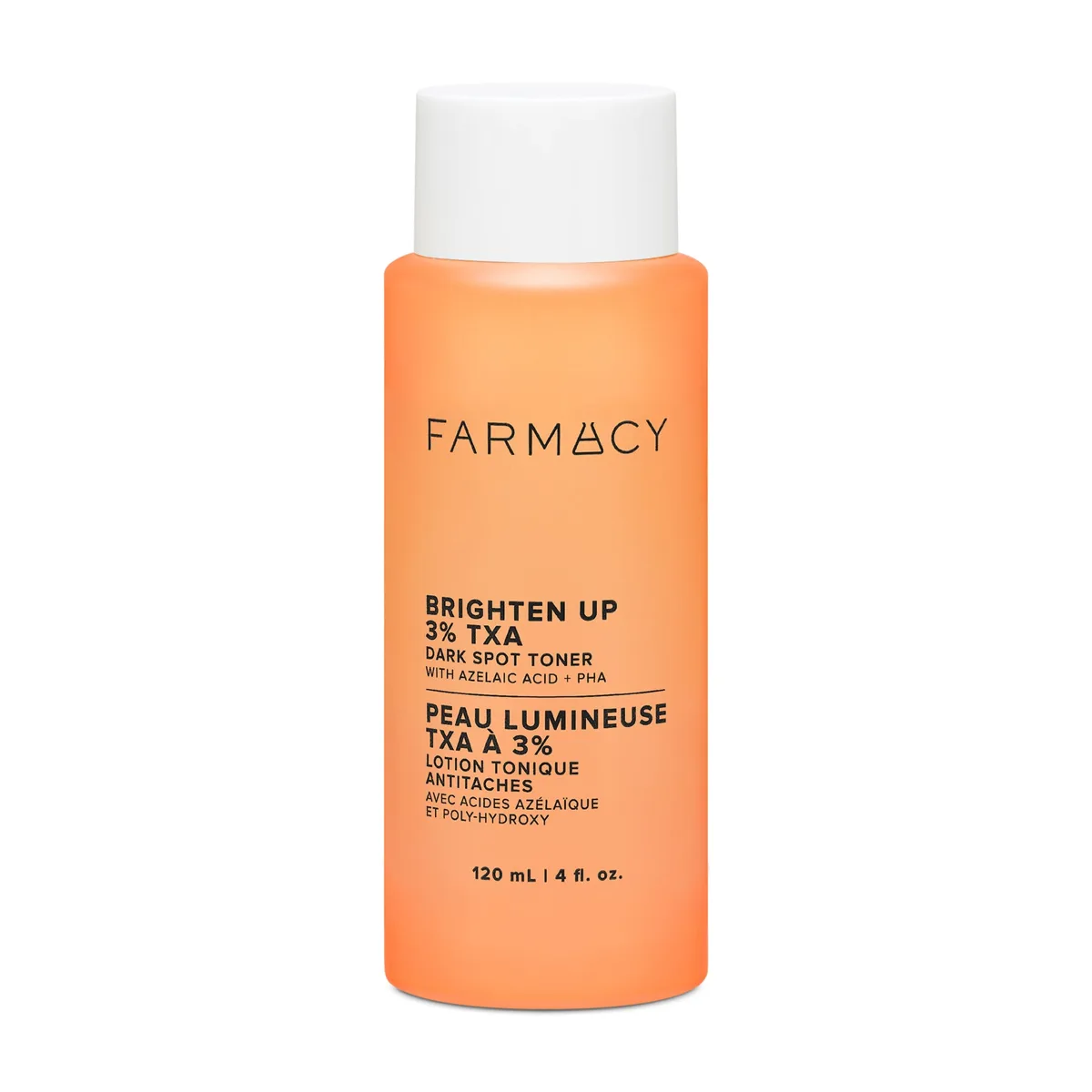
Rather than relying on a single brightener, this toner stacks 3% tranexamic acid, azelaic acid, vitamin C, and a 5% PHA into one fragrance-free leave-on step, attacking discoloration through several pigment pathways at once while gently resurfacing. Delivering that many proven brightening actives in a toner format is unusual, and the PHA-led exfoliation keeps it milder than an AHA toner.
An impressively loaded brightening toner that stacks 3% tranexamic acid, azelaic acid, vitamin C, and a gentle 5% PHA into one fragrance-free step, hitting dark spots from several angles while resurfacing texture. It is one of the more thoughtful actives-driven toners around and fair value at $34, but the citrus extracts and combined acids make it a careful-introduction product, not one for reactive skin.
This toner launched in 2024 and has accumulated only a few hundred reviews so far, so the rating leans on the strength and dosing of its well-studied brightening actives rather than years of real-world feedback. The brand's seven-day brightening claim comes from sponsored consumer testing, not independent trials, so treat the timeline as early radiance rather than confirmed spot fading. Expect the picture to sharpen as more long-term reviews accumulate.
The case for it
Cautions: a photosensitising active — use sun protection.
What would change this: A declared concentration would move this to a firmer reading of the dose.
Same rule for everyone. “Good choice” is the verdict on 9,564 of 45,024 concern verdicts across the catalog; rule R5 decided 9,072 of them. Unchanged since September 5, 2026, engine 5.1.1.
Brand or formulator? Disclose a concentration or correct a fact →
The studies behind the evidence row
The case for it
Cautions: a photosensitising active — use sun protection.
What would change this: A declared concentration would move this to a firmer reading of the dose.
Same rule for everyone. “Promising” is the verdict on 7,858 of 45,024 concern verdicts across the catalog; rule R9p decided 7,858 of them. Unchanged since September 5, 2026, engine 5.1.1.
Brand or formulator? Disclose a concentration or correct a fact →
The studies behind the evidence row
The case for it
Cautions: a photosensitising active — use sun protection.
What would change this: A declared concentration would move this to a firmer reading of the dose.
Same rule for everyone. “Unproven” is the verdict on 1,111 of 45,024 concern verdicts across the catalog; rule R9 decided 1,111 of them. Unchanged since September 5, 2026, engine 5.1.1.
Brand or formulator? Disclose a concentration or correct a fact →
The studies behind the evidence row
The case for it
Cautions: a photosensitising active — use sun protection.
What would change this: A declared concentration would move this to a firmer reading of the dose.
Same rule for everyone. “Promising” is the verdict on 7,858 of 45,024 concern verdicts across the catalog; rule R9p decided 7,858 of them. Unchanged since September 5, 2026, engine 5.1.1.
Brand or formulator? Disclose a concentration or correct a fact →
The studies behind the evidence row
Also listed for Dullness and Rough Texture — the actives here (Tranexamic Acid, Azelaic Acid, Gluconolactone, Vitamin C) are in our research queue for those concerns; there is no verdict until their evidence rows are written. That is a gap in our table, not a mark against the product.
Does the jobDoes what a toner is for: adds something real, not alcohol-driven. Not measured from the label: restores skin pH, plays well with what follows.
A verdict is DermApproved’s assessment of how well a product’s ingredients fit a concern — never a claim about what the product treats. Evidence dots and collected reviews sit beside it and are never blended in. Rules 0.5.1 · evidence table ev-2026.09-r228 · how we decide
Dark spots are one of the most stubborn, most-Googled skincare problems, and the standard industry response is to pick one hero brightener — vitamin C, or niacinamide, or tranexamic acid — and build a product around it. Farmacy took the opposite approach with this toner: instead of one star, it stacks four well-studied brightening actives into a single step. The skeptic's instinct is to read that as a kitchen-sink label designed to look impressive, so the real question is whether these particular actives genuinely work better together, and whether the dosing is meaningful or decorative. Having gone through the formula, I am mostly convinced it is the former. The centerpiece is tranexamic acid at a stated 3%, which is a genuinely meaningful concentration. Tranexamic acid works differently from most brighteners — rather than inhibiting the tyrosinase enzyme directly, it interrupts the signaling between skin cells and pigment-producing melanocytes, which is why it has become a favorite for melasma and stubborn discoloration that does not respond to vitamin C alone. Placed fifth on the list and named in the title, it is clearly the lead. Then comes azelaic acid, which is one of my favorite multitaskers in all of skincare: it fades discoloration and post-acne marks, evens tone, and calms redness, all while being gentle enough to use long-term. The pairing of tranexamic and azelaic acids is genuinely smart, because they fight pigment through different mechanisms and azelaic adds a soothing counterweight to the rest of the formula. Rounding out the brightening team is ascorbic acid (vitamin C), the classic antioxidant brightener, adding a third pigment-fighting angle. That is three complementary brightening mechanisms in one product, which is the synergy the multi-active approach is actually banking on. The fourth active is the exfoliant, and the choice here is telling. Gluconolactone, a polyhydroxy acid, sits second on the entire ingredient list, making it the resurfacing engine, supported by a touch of lactic acid. PHAs are the gentler cousins of AHAs — they exfoliate the surface to clear away dull, dead cells and let the brighteners penetrate better, but their larger molecular size means they work more slowly and cause less irritation than glycolic acid. For a leave-on toner you might use daily, choosing a PHA as the primary exfoliant rather than a strong AHA is a deliberate, sensible decision that keeps the formula usable. Glycerin, betaine, allantoin, and inulin provide hydration and soothing, so the toner is not a stripping, purely-acidic experience. In practice, it behaves like a good treatment toner. It is water-light, absorbs instantly, and is fragrance-free, which is a relief in a category that loves to add scent. You may feel a mild tingle in the first several uses as your skin adjusts to the acids and actives, but it should be brief and gentle — anything more than that means you are using it too often. Texture improvement, the smoother, brighter look from the PHA exfoliation, shows up fairly quickly, within a week or two. The actual fading of dark spots is the slower, more patient game: realistically four to eight weeks of consistent use for visible change, regardless of the brand's seven-day brightening claim, which reflects early radiance more than true spot fading. Now the caveats, because this is not a product to use carelessly. First, it contains citrus fruit extracts — bitter orange, orange peel, and tangerine. These are not the same as high-irritant essential oils, and the formula is fragrance-free, but citrus extracts can still bother reactive skin and are the main reason I would steer truly sensitive or rosacea-prone skin toward gentler azelaic options. Second, with multiple acids and vitamin C in one step, you need to introduce this gradually and be thoughtful about your routine — do not pile it on the same night as a strong retinoid or another leave-on acid until you know how your skin handles it. Third, and non-negotiably, daily sunscreen is mandatory. Any brightening routine that does not include diligent sun protection is working against itself, because UV exposure both drives new pigment and undoes the progress these actives make. It is also not formulated to be fungal-acne safe. On value, $34 for 120ml is fair, arguably good. When you consider that you are getting clinically-relevant doses of tranexamic acid, plus azelaic acid, vitamin C, and a PHA in a single fragrance-free product, the price compares well against buying those actives separately. A small amount covers the face, so the bottle lasts a couple of months, and a 50ml mini lets you test tolerance first, which I would genuinely recommend given the actives. Farmacy is a well-established brand, though this is a newer, more clinically-minded launch than its honey-led classics, so its long-term track record is still building even as the ingredient choices inspire confidence. Where it lands: this is a smart, well-dosed, multi-active brightening toner that earns its place for people dealing with dark spots, post-acne marks, and uneven tone who have resilient enough skin to handle it. Introduce it slowly, pair it religiously with sunscreen, and skip it if your skin is reactive. Done right, it is one of the more efficient ways to put several proven brighteners to work in one step.
The hero actives that drive this product's performance.
| Ingredient | Function | Evidence |
|---|---|---|
| Tranexamic Acid (3%) (3%) | The headline brightener at a meaningful 3%, it targets the look of dark spots by interrupting the pigment-signaling pathway between skin cells; here it leads a multi-active brightening team rather than working alone, which is the formula's core strategy against stubborn discoloration. | Limited for Hyperpigmentation |
| Azelaic Acid | Works alongside the tranexamic acid to fade discoloration and even tone while also calming redness, a dual brightening-and-soothing role that makes this toner relevant for post-acne marks and rosacea-adjacent redness, not just sun spots. | Named in treatment guidelines for Hyperpigmentation · emerging certainty |
| PHA (Gluconolactone) + Lactic Acid (5%) | Gluconolactone is the second ingredient and the gentle exfoliating engine, paired with a little lactic acid to resurface dead, dull surface cells so the brightening actives penetrate better — the polyhydroxy acid choice keeps the exfoliation mild enough for a leave-on toner. | Not yet assessed |
| Vitamin C (Ascorbic Acid) | Adds an antioxidant brightening boost that complements the tranexamic and azelaic acids, layering a third pigment-fighting mechanism into the toner so the overall tone-evening effect comes from several angles at once. | Limited for Hyperpigmentation |
Ingredient standings describe the active at treatment-level doses and vehicles; this product's own condition grades weigh its actual formula.
Water/Aqua/Eau, Gluconolactone, Pentylene Glycol, Isopentyldiol, Tranexamic Acid, Betaine, Propanediol, Azelaic Acid, Ascorbic Acid, Citrus Aurantium Amara (Bitter Orange) Fruit Extract, Citrus Aurantium Sinensis Peel Extract, Citrus Reticulata (Tangerine) Fruit Extract, Glycerin, Allantoin, Polyglycerin-6, Inulin, Fructose, Glucose, Xanthan Gum, Cellulose Gum, Lactic Acid, Citric Acid, Sodium Phytate, Cellulose
treatment
AM & PM
Apply after cleansing to dry skin, before serums and moisturizer. Because it contains exfoliating acids plus vitamin C, introduce it gradually and avoid layering it the same routine as strong retinoids or other acids until your skin adjusts. Always use sunscreen during the day.
Smoother, brighter-looking skin within 1 to 2 weeks from the PHA resurfacing. Visible fading of dark spots typically takes 4 to 8 weeks of consistent use, with the brand citing early brightening in 7 days.
Each active here is backed by real evidence, and the combination is the formulation's thesis. Tranexamic acid is the most novel: at concentrations around 2 to 5%, topical formulations have shown measurable reductions in melasma and hyperpigmentation in clinical studies, working by inhibiting the plasmin-driven signaling that stimulates melanocyte pigment production — a mechanism distinct from tyrosinase inhibitors, which is why it complements rather than duplicates the other actives. Azelaic acid has robust evidence at higher prescription strengths for both pigmentation and inflammatory acne, acting as a tyrosinase inhibitor and anti-inflammatory; at the lower cosmetic levels here it contributes meaningfully to tone-evening and redness reduction. Ascorbic acid (vitamin C) is a well-studied antioxidant and tyrosinase inhibitor that brightens and supports collagen, adding a third pigment-fighting pathway. The exfoliant choice is evidence-informed: gluconolactone, a polyhydroxy acid, exfoliates the stratum corneum like an AHA but with a larger molecule and humectant properties, producing comparable smoothing with less irritation and added moisture-binding — well suited to a daily leave-on toner. The clearest limitation in the evidence is that brand efficacy claims, including the seven-day brightening figure, derive from sponsored consumer perception testing rather than independent controlled trials of this exact formula, and the citrus extracts, while not essential oils, remain a potential irritant for sensitive skin. The actives and their dosing, however, are individually well-supported.
Tranexamic acid, azelaic acid, and vitamin C are all part of standard clinical approaches to hyperpigmentation, and dermatologists increasingly favor combining brighteners that act through different mechanisms for stubborn discoloration, which is the logic this toner follows. Azelaic acid in particular is frequently recommended because it addresses both pigment and inflammation and is well tolerated, including during pregnancy. Polyhydroxy acids like gluconolactone are generally regarded as suitable gentle exfoliants for skin that cannot tolerate stronger AHAs. The consistent clinical emphasis with any pigmentation regimen is rigorous daily sun protection, since UV exposure drives melanogenesis and undermines treatment. For sensitive or rosacea-prone patients, clinicians often suggest introducing multi-acid products slowly and patch testing, and may steer them toward fragrance-free, lower-irritant formulations.
After cleansing, apply to dry skin either by pouring a few drops into your palms and pressing it on, or onto a cotton pad swept over the face, avoiding the eye area. Start with once daily, ideally in the evening, and build to twice daily only if your skin tolerates it well. Follow with a hydrating serum and moisturizer. Avoid using it in the same routine as strong retinoids or other leave-on acids while your skin adjusts. Sunscreen every morning is essential, since the actives increase sensitivity and sun exposure undoes brightening progress. If you feel more than a brief mild tingle, reduce frequency until your skin acclimates.
At $34 for 120ml, this is reasonable, even favorable, value for what it delivers. Buying tranexamic acid, azelaic acid, vitamin C, and a PHA exfoliant as separate products would cost considerably more and require layering several steps, so consolidating clinically-relevant doses into one fragrance-free toner is genuinely efficient. A modest amount covers the face, so the bottle lasts a couple of months, and the 50ml mini is a smart, low-cost way to test tolerance before committing — worthwhile given the active load. The caveat on value is that the citrus extracts and combined acids limit who can use it comfortably, so for reactive skin a single gentle azelaic product may be the better spend. For resilient skin targeting dark spots, the multi-active value here is strong.
Buy this if you have resilient normal, combination, or oily skin dealing with dark spots, post-acne marks, sun-related discoloration, or general dullness, and you want several proven brighteners in one efficient step. It suits people who already use actives, are diligent with sunscreen, and want a fragrance-free option.
Reactive, rosacea-prone, or easily irritated skin should approach with caution or skip it, given the citrus extracts and stacked acids, and may prefer a single gentle azelaic product. Anyone unwilling to commit to daily sunscreen, or who is already using strong retinoids and acids and cannot add another, should hold off.
Ready to try Farmacy Brighten Up 3% TXA Dark Spot Toner with Azelaic Acid?
Buy at Amazon ♥A clear, water-light liquid with a faint slip that absorbs instantly and leaves no residue.
Fragrance-free; a very faint natural tang from the citrus extracts and acids rather than any added scent.
Bottle that dispenses by pour or onto a pad; the 120ml is the main size, with a 50ml mini for trial.
A light tingle is possible on the first few uses as skin adjusts to the acids and actives, but it should be mild and brief. Texture looks smoother quickly; any persistent stinging means you should reduce frequency.
About 2 to 3 months for the 120ml with once-to-twice-daily use.
All Year
As Farmacy expanded beyond its honey-and-balm heritage into targeted treatments, it built this toner to address one of skincare's most-searched concerns — dark spots and uneven tone — using a combination of modern, well-studied brighteners rather than a single hero ingredient. The fragrance-free, multi-active approach reflects a shift toward more clinically-minded formulations within the clean-beauty space.
Farmacy, established in 2015, broadened from its honey-and-botanical roots into more actives-driven products like this brightening toner. The brand has wide retailer reach; this formula uses well-studied brightening actives, though Farmacy's own efficacy claims are based on brand-sponsored consumer testing rather than independent published trials.
Tranexamic acid only works for melasma.
While tranexamic acid is well-known for melasma, it also helps fade post-inflammatory hyperpigmentation and general dark spots by interrupting pigment signaling. In this toner it works on uneven tone broadly, supported by azelaic acid and vitamin C.
A brightening toner with acids will make dark spots worse by irritating skin.
Over-exfoliation can worsen pigmentation, but this formula uses gentle PHA-led exfoliation and includes soothing azelaic acid and allantoin. Used as directed with daily sunscreen, it fades spots rather than aggravating them — diligent sun protection is the key.
It targets dark spots and uneven tone using 3% tranexamic acid, azelaic acid, and vitamin C, while a 5% PHA gently resurfaces for smoother, brighter skin. The multiple actives attack discoloration through different pigment pathways at once.
Use caution. While fragrance-free and PHA-based to keep exfoliation gentle, it contains citrus extracts and several acids that can irritate reactive or rosacea-prone skin. Patch test with the mini size, or choose a single gentle azelaic product instead.
Smoother, brighter-looking texture often appears within one to two weeks from the PHA. Actual fading of dark spots usually takes four to eight weeks of consistent use; the brand's seven-day claim reflects early radiance more than true spot fading.
Not in the same routine while your skin is adjusting. The toner already contains acids and vitamin C, so combining it with a strong retinoid at once can over-irritate. Alternate them on different nights until you know your tolerance.
Its key actives — tranexamic acid, azelaic acid, and PHA — are generally considered pregnancy-friendly, unlike retinoids. Still, always confirm any pigmentation product with your OB or dermatologist, and use it alongside daily sunscreen.
Absolutely, every morning. The acids increase sun sensitivity, and UV exposure both creates new dark spots and reverses brightening progress. Daily SPF 30 or higher is essential for the toner to actually work.
Recurring themes our editors read across retailer reviews of this product — summaries in our words, not quotations, and not a substitute for your own patch test.
Visibly brightens and evens tone
Smooths texture quickly
Fragrance-free and lightweight
Good multi-active value in one step
Can sting or tingle on sensitive skin
Citrus extracts worry some users
Pricey for a toner
Needs diligent sunscreen use
Verified answers from our questions library — the nuance a product page cannot carry.