


Azelaic Acid Should Be Far More Popular Than It Is
It treats acne, rosacea and pigment simultaneously, survives pregnancy, and fights with almost nothing in your routine. Its problem is texture and the absence of a marketing budget.
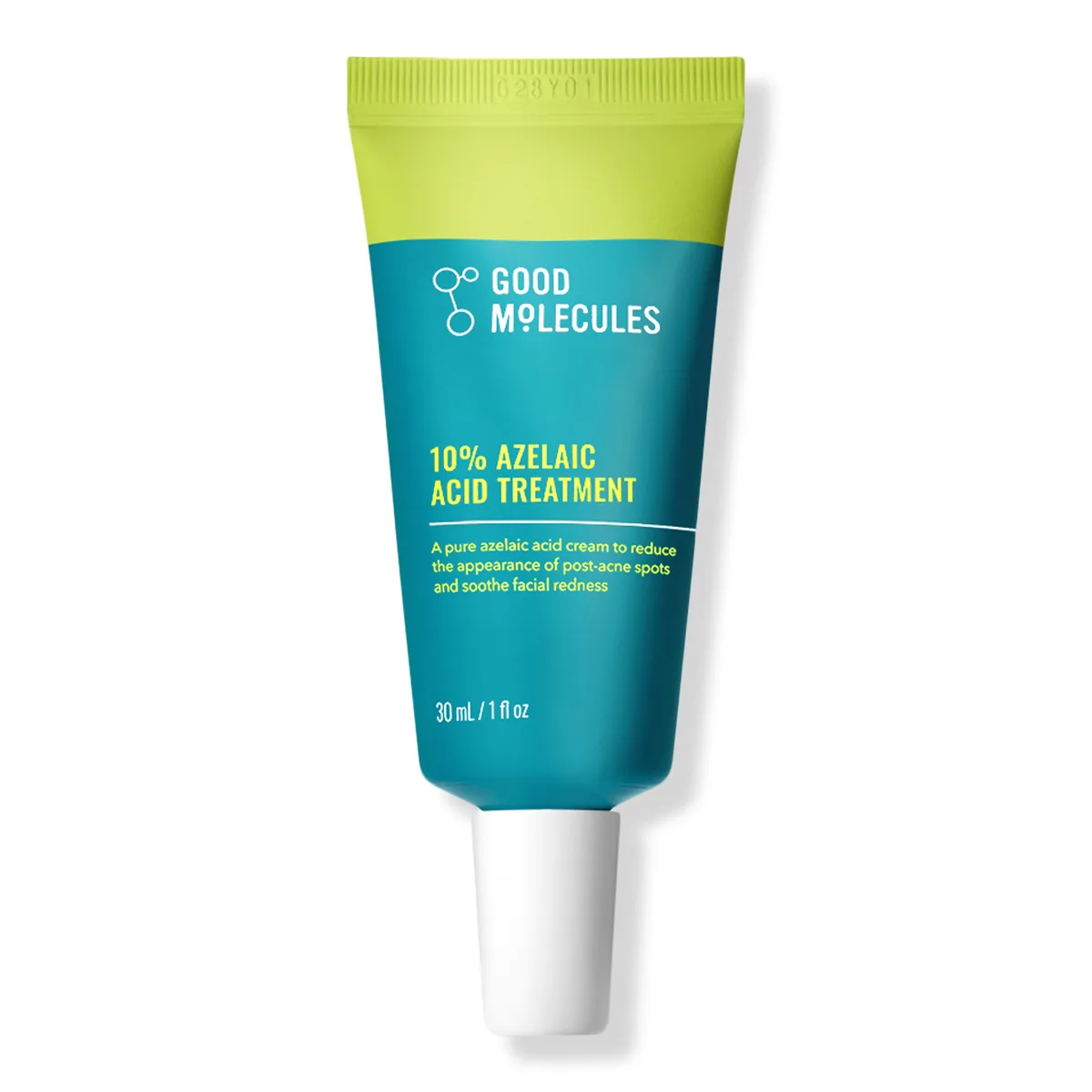
It wraps a 10% azelaic acid in a soothing support system — centella vesicles, bisabolol, ginger root, and passion fruit oil — to make a notoriously gritty active feel like a comfortable cream. That buffered, multi-concern approach at around twelve dollars is unusual for over-the-counter azelaic acid.
One of the most sensible budget azelaic acids around: a genuine 10% dose buffered by centella, bisabolol, and passion fruit oil into a comfortable cream. It tackles redness, bumps, and uneven tone at once, and at twelve dollars it makes a clinic-favorite active genuinely accessible. Expect a mild tingle and patience-rewarding, not overnight, results.
The case for it
What would change this: A concentration inside the studied range would raise this a step.
Same rule for everyone. “Good choice” is the verdict on 9,564 of 45,024 concern verdicts across the catalog; rule R4 decided 84 of them. Unchanged since September 5, 2026, engine 5.1.1.
Brand or formulator? Disclose a concentration or correct a fact →
The studies behind the evidence row
The case for it
Same rule for everyone. “Strong choice” is the verdict on 1,459 of 45,024 concern verdicts across the catalog; rule R2 decided 892 of them. Unchanged since September 5, 2026, engine 5.1.1.
Brand or formulator? Disclose a concentration or correct a fact →
The studies behind the evidence row
The case for it
Same rule for everyone. “Good choice” is the verdict on 9,564 of 45,024 concern verdicts across the catalog; rule R5 decided 9,072 of them. Unchanged since September 5, 2026, engine 5.1.1.
Brand or formulator? Disclose a concentration or correct a fact →
The studies behind the evidence row
Also listed for Dullness, Rough Texture and Excess Oiliness — the actives here (Azelaic Acid, passion fruit seed oil, Bisabolol, Centella Asiatica) are in our research queue for those concerns; there is no verdict until their evidence rows are written. That is a gap in our table, not a mark against the product.
A verdict is DermApproved’s assessment of how well a product’s ingredients fit a concern — never a claim about what the product treats. Evidence dots and collected reviews sit beside it and are never blended in. Rules 0.5.1 · evidence table ev-2026.09-r228 · how we decide
Azelaic acid is the quiet overachiever of the skincare world, an ingredient that does three jobs most people don't realize can be tackled by a single product. It calms the diffuse redness of rosacea, it clears acne by being gently antibacterial and keratolytic, and it fades the brown post-acne marks that linger long after a breakout heals. Despite this impressive resume, it's never quite achieved the cult fame of retinol or vitamin C — partly because, historically, over-the-counter azelaic acid has had a texture problem. Many formulas feel gritty, draggy, or pilly, the cosmetic equivalent of taking medicine that tastes bad. Good Molecules' 10% Azelaic Acid Treatment is essentially an attempt to solve that texture problem while keeping the active honest, and it largely succeeds. The first thing worth noting is the concentration. Azelaic acid sits third on the ingredient list at a labeled 10%, which is a real working dose. Prescription versions run higher, at 15-20%, but 10% is a legitimate strength that delivers meaningful benefits for milder-to-moderate concerns, and it's often better tolerated than the prescription tier. What sets this formula apart is everything wrapped around that acid. Rather than dumping azelaic acid into a bare base, Good Molecules has built a soothing support system: centella asiatica delivered in a vesicle form for better penetration, bisabolol (a chamomile-derived calming agent), ginger root extract, and passion fruit seed oil for emollient cushioning. The result is a soft, lightweight cream that feels more like a treatment lotion than the sandpapery azelaic products of skincare past. It spreads smoothly, absorbs to a comfortable finish, and doesn't leave the chalky residue that plagues some competitors. The experience on skin is generally gentle, with the usual azelaic caveat. A mild tingle on application is common in the first week or two, and a minority of people see a brief uptick in breakouts as cell turnover accelerates — the so-called purge. Both typically settle as the skin acclimates, and starting every other day rather than diving into twice-daily use is the smart way to ease in. The soothing botanicals genuinely seem to take the edge off; this is one of the more comfortable 10% azelaic experiences available over the counter, which matters because the people most likely to want azelaic acid — those with rosacea or reactive, redness-prone skin — are exactly the ones who can't tolerate harsh formulas. As for results, manage your timeline expectations. Azelaic acid is a tortoise, not a hare. You might notice calmer redness and slightly smoother texture within two to four weeks, but the real payoff — faded marks, more even tone, fewer bumps — accrues over eight to twelve weeks of consistent use. This is not a product that rewards impatience or sporadic application; it rewards showing up daily. Pair it with diligent sunscreen, because sun exposure undermines the pigmentation progress azelaic acid works hard to make. A couple of honest limitations: it's not fungal-acne safe, owing to some of the fatty components in the base, so anyone managing malassezia folliculitis should look elsewhere. It can occasionally pill if layered too quickly under or over certain products, a fixable issue with a little patience between steps. And while the buffering makes it gentle, gentle isn't the same as zero-irritation — truly reactive skin should still patch test. None of these are dealbreakers; they're the normal trade-offs of an effective active. Where this product genuinely excels is the value proposition. Azelaic acid in this comfortable, multi-concern, buffered form usually costs more, and prescription routes involve a doctor's visit and pharmacy markup. At around twelve dollars, this brings a dermatologist-respected ingredient within easy reach, formulated thoughtfully enough that beginners and sensitive types can actually use it. It's an easy recommendation for anyone dealing with the overlapping trio of redness, bumps, and dark marks — the combination azelaic acid was practically made for — who wants a single, affordable product to address all three without the grit or the gatekeeping. There's one more reason azelaic acid deserves a wider audience than it has, and this product is a good vehicle for making the case: it's one of the rare effective actives that's considered safe to continue during pregnancy. For the many people who suddenly find their usual acne and pigmentation tools off-limits when expecting — retinoids gone, high-strength salicylic acid discouraged — azelaic acid becomes one of the few genuinely useful options left standing. A gentle, buffered, fragrance-free 10% formula at twelve dollars is exactly the kind of product that fits that window well, though as always anyone pregnant should run their routine past their provider. Beyond that specific case, the product also rewards a bit of formulation literacy. Notice how the soothing agents — centella, bisabolol, ginger — aren't just marketing garnish; they're chosen to counter the precise complaint that has kept azelaic acid from mainstream popularity, the tingling and grit. That's the difference between a brand throwing a percentage on a label and one thinking about how a person will actually experience the product on day three. It's not a perfect formula, but it's a considered one, and at this price that consideration is what turns a respected clinical ingredient into something an ordinary person will reach for every morning.
The hero actives that drive this product's performance.
| Ingredient | Function | Evidence |
|---|---|---|
| Azelaic Acid 10% (10%) | The active core of this treatment, sitting third on the list — a 10% dose that targets redness, bumps, and uneven tone at once, made more comfortable here by the cushioning lipid base and soothing botanicals layered around it. | Regulator-approved for Rosacea · well-established certainty |
| Centella Asiatica Leaf Vesicles | Delivered in a vesicle (liposome-style) form to calm and support the barrier, specifically chosen to offset the mild tingling and dryness that a 10% azelaic acid can cause during the adjustment period. | Limited for Rosacea |
| Bisabolol | A chamomile-derived soothing agent that works with the centella and ginger root extract to make this azelaic formula notably gentler than a bare acid, reducing the visible flush some users get early on. | Not yet assessed |
| Passiflora Edulis (Passion Fruit) Seed Oil | An emollient, fatty-acid-rich oil that builds the creamy, comfortable texture and helps buffer the azelaic acid, so this reads as a nourishing treatment cream rather than a stripping spot serum. | Not yet assessed |
Ingredient standings describe the active at treatment-level doses and vehicles; this product's own condition grades weigh its actual formula.
Aqua/Water/Eau, Caprylic/Capric/Succinic Triglyceride, Azelaic Acid, Sorbitan Laurate, C18-20 Glycol Isostearate, Pentylene Glycol, Glycerin, Glycol Distearate, Behenyl Alcohol, Butylene Glycol, Passiflora Edulis Seed Oil, Polyacrylate Crosspolymer-11, Sodium Polyacryloyldimethyl Taurate, Arginine, Bisabolol, Ethylhexylglycerin, Centella Asiatica Leaf Vesicles, Zingiber Officinale (Ginger) Root Extract, Tocopherol
treatment
AM & PM
Apply after cleansing and any watery serums, before moisturizer. Start once daily and build up; if combining with retinoids or strong acids, use them on alternate nights at first to gauge tolerance. Always pair with daytime sunscreen.
Some smoothing and calmer redness within 2-4 weeks. Meaningful improvement in tone, post-acne marks, and bumps generally takes 8-12 weeks of consistent use, in line with how azelaic acid works.
Azelaic acid is one of the better-evidenced actives in this product's entire category, which is what anchors the formula's credibility. It's a naturally-occurring dicarboxylic acid with a well-documented multi-modal action: it normalizes keratinization (reducing the follicular plugging behind acne), exhibits antibacterial activity against Cutibacterium acnes, scavenges free radicals to calm inflammation, and inhibits tyrosinase to interrupt excess melanin production behind post-inflammatory hyperpigmentation. Clinical literature supports prescription-strength azelaic acid (15-20%) for both papulopustular rosacea and mild-to-moderate acne, and its tyrosinase inhibition underpins its use for pigmentation. At 10%, this product sits below prescription strength but within a range that still delivers measurable benefit, particularly for milder presentations and for users who cannot tolerate higher concentrations. The formulation science here is in the buffering: centella asiatica (and its triterpenoid compounds) has supportive evidence for soothing and barrier repair, while bisabolol is a recognized anti-inflammatory chamomile derivative. By combining these with the acid, the formula addresses azelaic acid's main practical drawback — tingling and irritation — without antagonizing its mechanism, since none of the soothing agents interfere with the acid's activity. The honest scientific read is that the active is strongly supported and the soothing additions are reasonable, evidence-backed choices that improve tolerability; the 10% strength simply means somewhat gentler, slower results than a prescription product.
Azelaic acid is widely prescribed and recommended in clinical practice as a versatile, well-tolerated option for rosacea, acne, and pigmentation, and it is notably considered safe to continue during pregnancy — one of the few effective acne and tone actives with that profile. An over-the-counter 10% version like this is often suggested for patients who want a gentler entry point or who cannot access or tolerate prescription strengths. Clinical guidance typically emphasizes consistent daily use, gradual introduction to limit tingling, and pairing with sunscreen to protect against the pigment-related concerns azelaic acid treats. Its buffered, soothing formulation here aligns with how dermatologists often advise reactive and rosacea-prone patients to approach acids — slowly and with barrier support.
After cleansing and any lightweight serums, apply a thin layer over the areas of concern or the whole face, before moisturizer. Start once daily — or every other day if your skin is sensitive — and build to twice daily as tolerated. A mild tingle early on is normal; persistent stinging or burning means you should scale back frequency. Give it a moment to absorb before layering to reduce pilling. Always follow with sunscreen in the morning, since sun exposure works against the tone-evening benefits. Consistency over eight to twelve weeks is essential for visible results.
At roughly twelve dollars, this is excellent value for a thoughtfully-formulated 10% azelaic acid. Comparable buffered azelaic treatments often cost more, and the prescription route adds a doctor's visit and pharmacy expense for a higher strength many people don't strictly need. You're getting a clinic-respected, multi-concern active in a comfortable base for the price of a sandwich and a coffee. The honest caveat is that 10% means gentler, slower results than 15-20% prescription products, so if your concerns are severe you may ultimately want prescription strength. For mild-to-moderate redness, bumps, and marks, though, the cost-to-benefit ratio here is hard to fault.
This is ideal for anyone juggling redness, breakouts, and post-acne marks who wants a single affordable product to address all three. Rosacea-prone and sensitive skin types will especially appreciate the soothing, buffered base, as will those wanting a pregnancy-compatible acne and tone active.
Those managing fungal acne should avoid it because of the fatty base. Anyone with severe rosacea or stubborn pigmentation may ultimately need prescription-strength azelaic acid, and people who can't tolerate any tingling sensation might prefer an even gentler active.
Ready to try Good Molecules 10% Azelaic Acid Treatment?
Buy at Amazon ♥Soft, lightweight cream that spreads smoothly and absorbs to a comfortable, non-tacky finish — closer to a treatment lotion than a thin serum.
No added fragrance; only the faint natural smell of the botanical extracts and oils, which is mild and quickly dissipates.
Opaque tube with a narrow nozzle that keeps the formula protected from light and air and dispenses a controlled amount.
A light tingle on application is common in the first week or two and usually fades as skin adjusts. Some people experience a brief uptick in breakouts as cell turnover speeds up; introducing it every other day helps the skin acclimate without flaring.
Around 2-3 months with once- or twice-daily full-face use from the 1 oz tube.
All Year
Azelaic acid has long been a dermatologist favorite for rosacea and acne, but prescription versions are pricey and over-the-counter ones often feel rough. Good Molecules built this to make a clinic-grade active approachable: a buffered 10% formula that calms while it works, at a fraction of prescription cost.
Good Molecules, founded in 2019, specializes in affordable single-active treatments. This azelaic acid product reflects the brand maturing past pure minimalism — it pairs a 10% acid with soothing botanicals like centella and bisabolol, though, as is typical for the brand, it doesn't publish supporting clinical data of its own.
Azelaic acid is only for acne.
It's genuinely multi-tasking. Beyond acne, azelaic acid is well-evidenced for rosacea-related redness and for fading post-inflammatory hyperpigmentation, which is why this single treatment can address several concerns at once.
A 10% over-the-counter azelaic acid does nothing compared to prescription strength.
Prescription azelaic acid is typically 15-20%, but 10% is a meaningful working concentration, especially in a well-formulated, buffered base used consistently. It's a legitimate option for milder concerns or for those who can't tolerate higher strengths.
It targets three concerns at once: rosacea-related redness, acne, and post-acne dark marks. The 10% azelaic acid is buffered with centella, bisabolol, and ginger to stay gentle, making it a versatile single treatment for uneven, reactive skin.
Yes. While prescription versions are 15-20%, 10% is a meaningful working concentration, especially in this well-buffered base. It delivers measurable results for mild-to-moderate redness, bumps, and pigmentation with consistent daily use.
A mild tingle in the first week or two is common, and some people see a brief uptick in breakouts as turnover speeds up. Starting every other day eases the adjustment, and the soothing botanicals help keep irritation low.
Azelaic acid is one of the few effective acne and tone actives generally considered safe during pregnancy, and this formula is fragrance-free with no retinoids. Anyone pregnant should still confirm their full routine with a healthcare provider.
Yes. It pairs especially well with niacinamide for redness and tone. With retinoids, introduce them on alternate nights at first to gauge tolerance, since combining two actives can increase irritation for some people.
No. The formula contains fatty base components that can feed malassezia, so it isn't suitable for those specifically managing fungal acne. For regular acne, rosacea, and pigmentation, it remains a strong option.
Recurring themes our editors read across retailer reviews of this product — summaries in our words, not quotations, and not a substitute for your own patch test.
Calms redness and evens tone
Gentle for a 10% acid
Creamy, non-stripping texture
Great value versus prescription strength
Mild tingling on application
Can pill under some products
Slow on stubborn pigmentation
Not fungal-acne safe
Verified answers from our questions library — the nuance a product page cannot carry.