Triple Cream Works. That Is Exactly Why It Comes With a Clock.
The most effective topical treatment for melasma is the one nobody is meant to keep using — and almost nothing about the tube explains why.
Read the preview
From the DermApproved blog, in Melasma: the most effective topical treatment is also the one nobody is meant to keep using. Three drugs in one tube — and the steroid among them sets a countdown on facial skin. So it comes in bursts, not refills. What you switch to afterwards is the part most people get wrong. For the full breakdown, visit dermapproved.com/blog.
Three drugs, three different jobs
The recipe is older than most of the people using it. In 1975, Kligman and Willis described a depigmenting formula in Archives of Dermatology built from a phenolic tyrosinase inhibitor, a retinoid and a corticosteroid, and argued that the combination did something none of the three managed alone. The modern prescription version is a refinement of that idea: hydroquinone, tretinoin and fluocinolone acetonide in one vehicle.
Each component is doing distinct work. The hydroquinone is the depigmenting agent, inhibiting tyrosinase and reducing melanin production in the melanocyte. The retinoid does two things at once — it accelerates epidermal turnover so pigmented keratinocytes are shed faster, and it improves penetration of the hydroquinone rather than merely sitting alongside it. The corticosteroid is the counterintuitive member. It is not there to treat the pigment; it is there to suppress the irritation the other two reliably produce, and in melasma that matters disproportionately, because inflammation in this condition is itself a pigment stimulus. An irritated melasma patch does not fade quietly. It darkens.
That interdependence is why the combination beat its own components. A trial published in Cutis in 2003 compared the triple agent against each of the possible two-drug versions in facial melasma and found the full combination superior to all of them. The tube is not a convenience bundle. Remove any one drug and the other two work less well.
The steroid is what sets the clock
Something gets lost the moment this cream is obtained outside a prescription: the corticosteroid in it is a fluorinated steroid sitting on facial skin, which is the thinnest and least forgiving skin anyone applies a steroid to.
The registration studies ran over weeks, not seasons, and that duration was a design decision rather than an accident of funding. Continuous facial steroid use produces a predictable sequence — thinning, visible telangiectasia, sometimes a perioral dermatitis or a steroid-induced rosacea — and the cruel detail is that some of these show up as redness, which reads as "the melasma is inflamed" and encourages more of the cream that caused it. Response also tends to flatten with continuous use, so the person applying it daily for a year is usually accumulating side effects without accumulating benefit.
The intended shape of treatment is therefore a burst followed by something quieter. Work published in the Journal of the European Academy of Dermatology and Venereology examined exactly this and found that after clearance, an intermittent maintenance schedule with the same cream substantially reduced relapse compared with stopping outright. That is the model to hold in your head: an induction phase that is time-limited and supervised, then a maintenance phase built mostly out of non-steroid agents and photoprotection. Our answer on what the steroid in a combination cream is actually doing goes further into where the limit sits and what should replace it.
Hydroquinone, cycling, and ochronosis in proportion
Hydroquinone attracts more anxiety than the evidence justifies, and the anxiety usually lands on the wrong risk.
Exogenous ochronosis — a blue-grey discolouration that is far harder to treat than the melasma it replaces — is the outcome people have heard of. It is genuinely disfiguring and it is genuinely documented, but the cases that established it overwhelmingly involve prolonged use of high-concentration unregulated preparations, often for years and often over large areas of the body. That is a materially different exposure from a supervised facial course. The realistic reason clinicians cycle hydroquinone is more prosaic: response plateaus, irritation accumulates, and a drug holiday preserves both the skin and the option of using it again later.
The regulatory picture in the United States also changed and many people missed it. Hydroquinone lost its over-the-counter route in 2020 when the pathway that had allowed low-concentration products to be marketed without an approved application closed; what remains is prescription or compounded product. That has had a knock-on effect worth naming — a large informal market in unregulated lightening creams, some of which contain undisclosed steroids or mercury, and which are the actual source of most ochronosis and steroid-damage stories. If you have inherited an unlabelled jar from a relative or a shop counter, the grey-pigment question and our answer on how long a course should run are the two worth reading before the next application.
Where the alternatives genuinely compete
The non-hydroquinone lane has stopped being a consolation prize, though the gap between agents with trial evidence and agents with marketing is still wide.
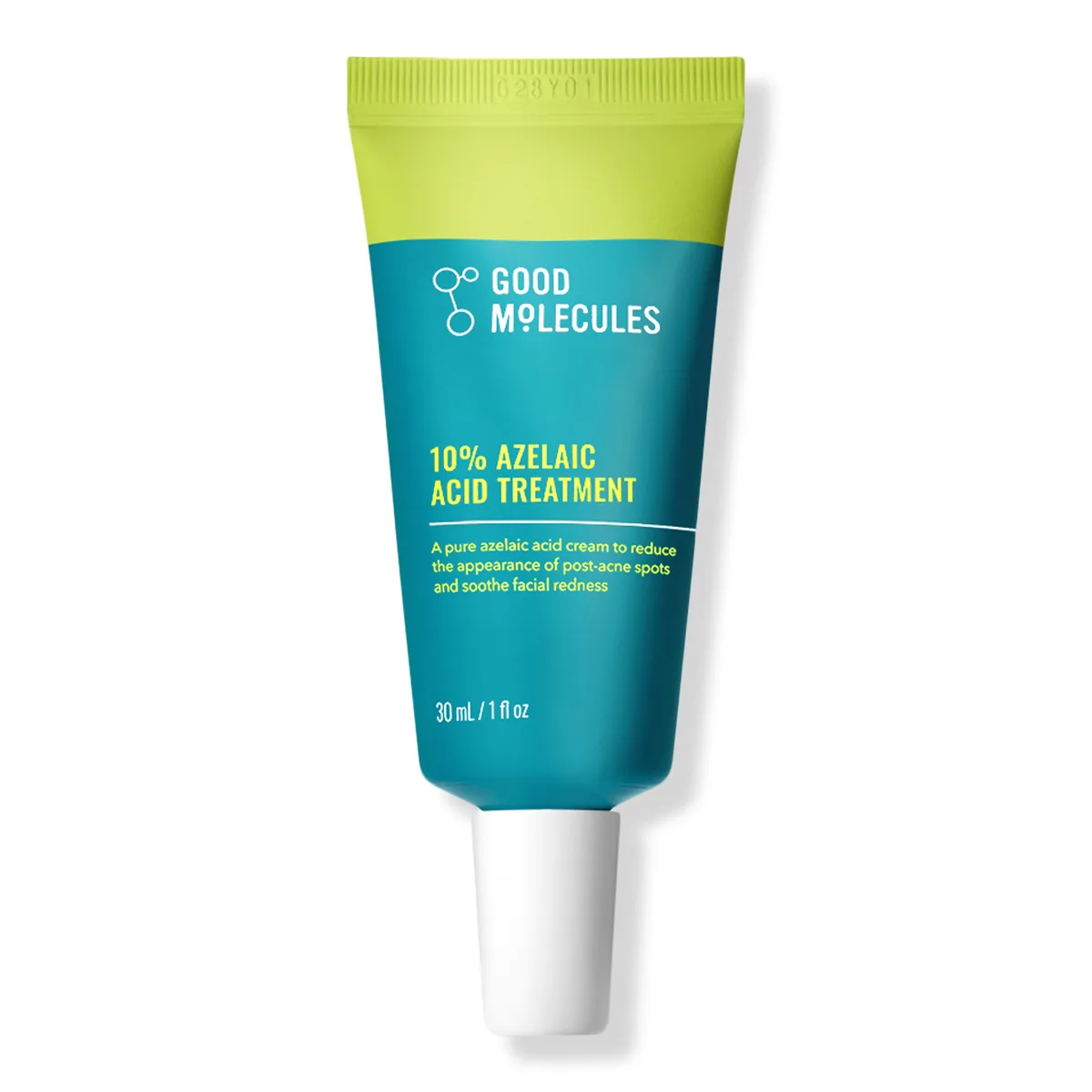
Azelaic acid is the most accessible of them and works through tyrosinase inhibition with a useful side effect of being tolerable in pregnancy, which matters in a condition so often triggered by it. Prescription strength sits well above what the shelf offers, but the over-the-counter tier is a reasonable maintenance agent. The Ordinary Azelaic Acid Suspension 10% and Good Molecules Azelaic Acid Treatment are the usual entry points, with Paula's Choice Azelaic Acid Booster offering a lighter-textured version of the same idea. The azelaic acid ingredient page tracks what the evidence supports claim by claim.
Thiamidol — isobutylamido thiazolyl resorcinol — is the newer entrant with the most convincing data, a genuinely potent human tyrosinase inhibitor tested in randomised, vehicle-controlled trials for facial hyperpigmentation. It is the active behind Eucerin Anti-Pigment Spot Corrector, with Eucerin Anti-Pigment Day Cream SPF 30 carrying it alongside daytime protection. Cysteamine has accumulated randomised evidence too, pooled in a recent systematic review and meta-analysis, though its odour is the reason adherence studies read the way they do.
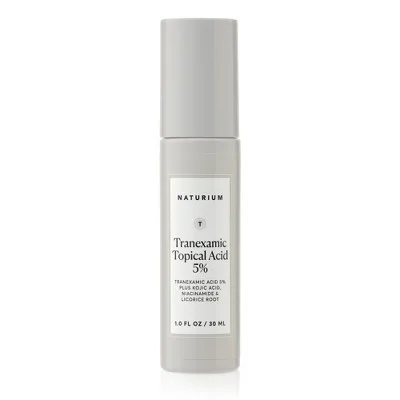
Topical tranexamic acid works on a different axis entirely — it interferes with the plasminogen pathway that links UV exposure and vascular signalling to melanocyte activation, which is why it pairs sensibly with agents that act on the melanocyte itself. Naturium Tranexamic Topical Acid 5% and SkinCeuticals Discoloration Defense are two routes to it, and the tranexamic acid page sets out where the evidence is strongest.
Oral tranexamic acid, and who it is not for
The oral version is the most significant change in melasma management in a decade, and it is also the one most casually recommended by people who have not read the contraindications.
The evidence is real. A randomised, placebo-controlled, double-blind study published in the Journal of the American Academy of Dermatology tested oral tranexamic acid in moderate-to-severe melasma and reported significantly greater improvement than placebo, at doses far below those used for bleeding disorders. In practice it is prescribed as a short course of a few months, frequently alongside topical treatment rather than instead of it, and relapse after stopping is common enough that it is discussed at the outset rather than treated as a failure.
The contraindications are where this stops being a lifestyle decision. Tranexamic acid is an antifibrinolytic — it exists to stabilise clots — so a personal or family history of venous thromboembolism, a known thrombophilia, active malignancy, or the combination of smoking with a combined oral contraceptive all belong in the conversation before the first tablet. Anyone taking it should know the symptoms that mean stopping immediately and seeking care: unilateral calf swelling or pain, sudden breathlessness, chest pain, visual change. That is not a disclaimer to skim; it is the reason this drug is prescribed rather than bought. Our answer on whether oral tranexamic acid is safe covers the screening questions in full.
The part that decides whether any of it holds
Every agent above is a way of turning pigment production down. None of them changes the fact that melasma is a chronically relapsing condition driven by light and hormones, which is why the maintenance half of the plan does more work than the treatment half.
Ultraviolet protection alone is not sufficient here. A double-blind randomised trial in Photodermatology, Photoimmunology and Photomedicine compared a sunscreen covering visible and near-visible light against a UV-only equivalent in melasma patients and found the broader-spectrum product produced better outcomes — which is the clinical basis for the tinted-sunscreen advice that otherwise sounds like a cosmetic preference. The tint is the mechanism: iron oxides absorb visible light in a way that transparent filters do not. La Roche-Posay Anthelios Mineral Tinted Sunscreen and CeraVe Hydrating Mineral Sunscreen Face Sheer Tint are two straightforward routes to it, and this is the one step in the plan that should never lapse, including in winter and indoors near windows.
The rest is measurement and sequencing. Melasma changes slowly enough that memory is a poor judge of it, which is what our MASI calculator is for — a repeatable score beats an impression six weeks apart. If an appointment is the next step, the derm-visit-prep tool assembles what a clinician needs to make an escalation decision in the time available, and the pregnancy-safe tool is the quick filter if pregnancy or breastfeeding is in the picture, since it rules out several of the agents above. The full sequence, including what typically has to be tried before a prescription is written, sits in our melasma therapy pathway — and why it keeps coming back is worth reading before you conclude that a treatment failed.
Products mentioned
Independently reviewed and scored — the real products behind this piece.





- Therapy guide Melasma The full escalation sequence this article's agents sit inside.
- Ingredient Azelaic Acid Claim-by-claim evidence for the most accessible alternative.
- Ingredient Tranexamic Acid Evidence grades for the topical form.
- Question Why is there a steroid in my melasma cream? What the corticosteroid is doing and where the duration limit sits.
- Question For how long is hydroquinone safe? Course length and cycling, in proportion to the actual risk.
- Question What if my skin has turned grey or blue after using a lightening cream? Exogenous ochronosis and unregulated creams.
- Question Is oral tranexamic acid safe to take for melasma? The screening questions before an oral course.
- Question Why does it keep coming back? Why maintenance does more work than treatment.
References
- A new formula for depigmenting human skin — Archives of Dermatology, 1975
- Efficacy and safety of a new triple-combination agent for the treatment of facial melasma — Cutis, 2003
- Preventing melasma recurrence: prescribing a maintenance regimen with an effective triple combination cream based on long-standing clinical severity — Journal of the European Academy of Dermatology and Venereology, 2012
- Randomized, placebo-controlled, double-blind study of oral tranexamic acid in the treatment of moderate-to-severe melasma — Journal of the American Academy of Dermatology, 2018
- Efficacy and safety of cysteamine 5% cream for the management of melasma: a systematic review and meta-analysis of randomized controlled trials — Archives of Dermatological Research, 2024
- Near-visible light and UV photoprotection in the treatment of melasma: a double-blind randomized trial — Photodermatology, Photoimmunology & Photomedicine, 2014
- Efficacy and Tolerability of 0.2% Thiamidol Cream for Facial Hyperpigmentation: A Randomized, Double-Blind, and Vehicle-Controlled Study — Dermatology and Therapy, 2026
Every cited link is verified to resolve to the paper named. Where a source could not be independently confirmed, it is listed without a link rather than pointing you somewhere wrong.
Frequently asked
Why can't I just keep using triple combination cream if it's working?
Because the corticosteroid in it does not stop having effects once the pigment improves. Continuous use on facial skin produces thinning, visible vessels and sometimes a steroid-driven rash, and response tends to flatten. The intended pattern is a supervised burst followed by intermittent maintenance, which trial evidence shows reduces relapse better than simply stopping.
Is hydroquinone dangerous?
In a supervised facial course, the realistic risks are irritation and a plateau in response rather than the grey discolouration people fear. Exogenous ochronosis is documented but is overwhelmingly associated with prolonged use of high-strength unregulated products, frequently over large body areas. The unlabelled jar is the genuine hazard, not the prescription.
Can I still buy hydroquinone over the counter in the US?
No. The regulatory route that allowed low-concentration hydroquinone to be sold without an approved application closed in 2020, so legitimate supply is now prescription or compounded. Products still sold openly as skin lighteners are worth treating with suspicion, since undisclosed steroids and mercury turn up in that market.
Which non-hydroquinone treatment has the best evidence?
Thiamidol has randomised, vehicle-controlled trial data for facial hyperpigmentation and is a genuinely potent tyrosinase inhibitor; cysteamine has randomised evidence pooled into a recent meta-analysis; azelaic acid has the longest track record and the advantage of being usable in pregnancy. Topical tranexamic acid works on a different mechanism and pairs well with any of them.
Is oral tranexamic acid safe for melasma?
It has randomised placebo-controlled support at melasma doses, which are much lower than bleeding-disorder doses. It is not appropriate for everyone: clotting history, thrombophilia, active malignancy and smoking on a combined contraceptive all need discussing first, and anyone taking it should recognise the symptoms of a clot and stop immediately if they appear.
Does sunscreen really change melasma outcomes, or is that just standard advice?
It changes them, and the type matters. A randomised trial comparing a sunscreen covering visible and near-visible light against a UV-only product found better melasma outcomes with the broader coverage. That is why tinted mineral formulas are recommended specifically here — the iron oxides are doing work that transparent filters do not.