Compounded Skincare: What a 'Custom Formula' Prescription Really Is
Bespoke medicine, or four familiar actives in one jar with your name printed on it? Compounding is genuinely useful and genuinely unreviewed, and the difference matters most in the places nobody advertises.
Read the preview
From the DermApproved blog, in Prescription Skincare: the custom cream in the subscription box. It is real medicine, mixed at a pharmacy, and nobody reviewed the combination. One stability study gave the popular pigment formula a beyond-use date of fourteen days — while the box arrives monthly. Which raises a question about the rest of the month. For the full breakdown, visit dermapproved.com/blog.
What you are actually buying
Compounding is old, legitimate and narrowly defined. A licensed pharmacist combines, mixes or alters ingredients to make a medication tailored to an individual patient, against a valid patient-specific prescription. It exists because approved products cannot cover every case: a patient allergic to a preservative in the commercial version, a child needing a liquid where only tablets exist, a strength that is not manufactured.
The legal machinery matters here. Section 503A of the Federal Food, Drug, and Cosmetic Act exempts qualifying compounded products from three things at once — approval prior to marketing, current good manufacturing practice requirements, and labelling with adequate directions for use. In plain terms: the FDA has not reviewed your cream for safety, effectiveness or quality, the facility making it is not held to manufacturing standards written for factories, and the agency does not interact with the vast majority of compounders because they are not FDA-licensed and generally do not register their facilities.
That is not an accusation. It is the deal, and it is a reasonable deal for the use case compounding was designed around. It becomes a different proposition when the same exemption is used to run a direct-to-consumer subscription for a condition that has approved treatments, where the word 'custom' is doing the persuading. A compounded cream is not a superior version of a commercial product. It is a product that skipped the queue where the evidence gets checked, for reasons that are sometimes excellent and sometimes commercial.
The actives are not a secret
Open up the ingredient panels across the personalised-skincare category and the same short list appears with remarkable consistency: tretinoin, hydroquinone, niacinamide, azelaic acid, clindamycin, a low-potency corticosteroid, occasionally tranexamic acid or a vitamin C derivative. The permutations are many. The alphabet is small.
The pigment formulas in particular have a lineage. Almost all of them descend from the Kligman formula — hydroquinone, tretinoin and a corticosteroid together — devised decades ago on the logic that each attacks pigment production at a different point while the steroid controls the irritation the other two cause. Its modern descendant, hydroquinone with tretinoin and fluocinolone acetonide, was studied as a triple-combination agent and published in 2003, and exists today as an approved prescription product for melasma. Which produces an odd situation: the compounded 'custom' pigment cream is frequently a variation on a formula whose canonical version has been through clinical trials, while the variation has not.
Regulation explains much of the category's growth. Since 23 September 2020, following the CARES Act reforms, over-the-counter skin-lightening products containing hydroquinone are deemed unapproved new drugs and misbranded in the US, and manufacturers were required to remove them from the market. The FDA issued warning letters to a dozen companies in 2022 over exactly this. Hydroquinone did not become more dangerous in 2020; it became prescription-only in practice. A compounding pharmacy is now one of the main routes to it, and that regulatory fact — not superior formulation science — is a large part of why your inbox fills with custom pigment creams. The melasma pathway sets out where hydroquinone sits among the alternatives, several of which never required a prescription at all.
The fourteen-day problem
One fact should change how you use a compounded product, and it comes from the compounding literature itself rather than from critics of it.
A 2025 study in the International Journal of Pharmaceutical Compounding tested several common dermatological combinations in a single cream base, running HPLC and microbiological assessment over a 180-day window to assign beyond-use dates. Some combinations were robust: adapalene with benzoyl peroxide held stability for the full 180 days at both tested strengths. Azelaic acid with niacinamide held 180 days. Niacinamide with tretinoin held 180 days.
The pigment formula did not. Hydroquinone with hydrocortisone and tretinoin was assigned a beyond-use date of 14 days. Clindamycin hydrochloride showed the same pattern, also 14 days. Microbiological effectiveness held throughout in every case — the limit was chemical, not contamination.
Sit with the arithmetic. The most popular category of compounded skincare, delivered on a monthly or quarterly cadence, includes a combination that one careful stability study found holds its assayed potency for about two weeks in that base. Beyond-use dates are base-specific and a different formulation may well perform differently — but this is the kind of question an approved product answers on its label and a compounded one usually does not answer at all. It is why hydroquinone-containing compounds are conventionally supplied in small quantities and often refrigerated, and why a large jar of one is a warning sign rather than good value.
The practical move is to ask, in writing, for the assigned beyond-use date and the storage conditions, and to compare that against how often the product actually arrives. The shelf-life tool will do the calendar arithmetic; the answer is frequently uncomfortable.
Where compounding genuinely earns its place
None of the above makes it a scam. There are four situations where a compounded formula is straightforwardly the better option, and they are worth naming because the marketing obscures them behind the personalisation story.
Adherence. Four separate steps applied nightly is a regimen most people abandon within three months. One tube is not. If combining actives is what gets a treatment used for the six months it needs, that is a clinically meaningful gain, and it is the strongest honest argument the category has.
Dose granularity. Commercial retinoid strengths come in a small number of increments. A patient who cannot tolerate the next step up but has plateaued on the current one has nowhere to go with approved products, and a compounder can sit them between the rungs. The same applies to stepping someone down slowly rather than stopping.
Excipient avoidance. Someone with a confirmed contact allergy to a preservative, a fragrance component or propylene glycol in the commercial version can have the same active in a base that omits it. This is compounding doing precisely the job the legal exemption was written for.
Combinations that do not exist commercially. Some pairings are clinically sensible and simply have no approved product behind them, usually because no company had a commercial reason to run the trials.
What is not on that list is personalisation in any biological sense. No compounder is analysing your skin. They are receiving a prescription generated from a questionnaire and a photograph, and dispensing one of a modest number of standard templates. Bring the question of what is actually in the jar to the consultation, and use the derm-visit-prep tool to arrive with your history and previous failures written down — that is what makes the prescription genuinely individual, not the compounding step.
Questions worth asking before the first shipment
Six, in the order that they save you money.
What exactly is in it, at what percentages? A formula you cannot name is a formula you cannot compare, refill elsewhere, or discuss with another clinician. Run the answer through the ingredient-decoder to see what each component is doing.
Is there an approved product with this combination? If yes, ask why the compounded version is preferable in your case. Sometimes there is a real answer — an excipient you react to, a strength that is not made. Sometimes there is not.
What is the beyond-use date, and how should it be stored? Then check that against the delivery interval.
Who is the prescriber, and will they follow up? Compounded actives include potent corticosteroids and hydroquinone, both of which have specific long-term concerns — steroid atrophy on facial skin, and ochronosis with prolonged hydroquinone use. These require a review schedule, not a standing order.
Is there an exit plan? Pigment treatment is intentionally time-limited, cycled rather than continuous. A subscription that renews indefinitely is structurally at odds with how these actives are meant to be used.
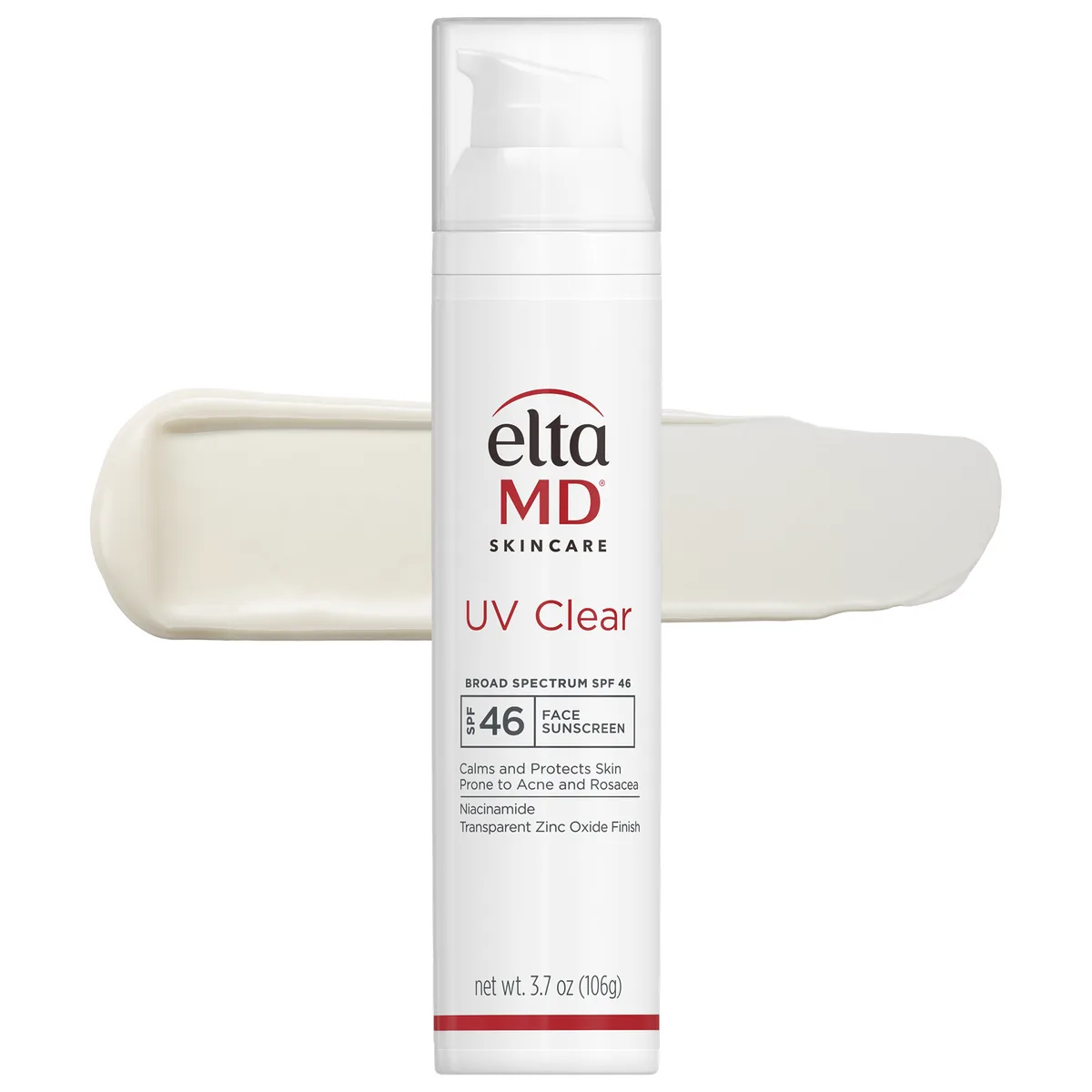
And finally: what happens if it works? Maintenance after clearance is usually a gentler, non-prescription regimen, which is where the acne and melasma pathways both end up. Sunscreen is the non-negotiable part — pigment work without it is pouring water into a bucket with a hole, and something like EltaMD UV Clear Broad-Spectrum SPF 46 worn daily does more for the result than the choice between two active permutations.
What you can build without a compounder
For a great many people, particularly those whose pigment is post-inflammatory rather than true melasma, the over-the-counter route reaches most of the way at a fraction of the friction.
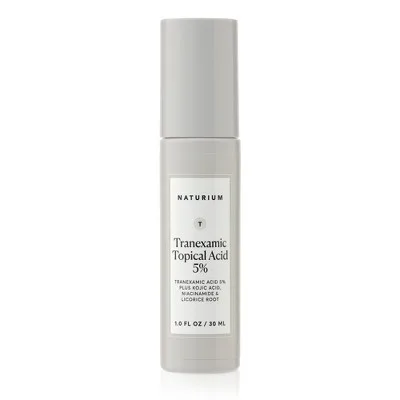
The Ordinary Azelaic Acid Suspension 10% covers the anti-inflammatory and tyrosinase-inhibiting territory without a prescription, and is pregnancy-compatible in a way most compounded pigment formulas are not. Tranexamic acid has become the most interesting non-prescription addition to the category — Naturium Tranexamic Topical Acid 5% and Good Molecules Discoloration Correcting Serum both put it in accessible form. The Ordinary Alpha Arbutin 2% + HA offers a gentler tyrosinase route for people who cannot use the stronger options.
The retinoid half is the one people most often assume requires a prescription and most often does not. Differin Adapalene Gel 0.1% is a genuine third-generation retinoid available over the counter, and CeraVe Skin Renewing Retinol Serum is a lower-friction entry for skin that has not used one before. Murad Rapid Dark Spot Correcting Serum sits in the same corrective lane with a different active profile.
This is not an argument against ever filling a compounded prescription. It is an argument for knowing what the tube contains before the subscription starts — because 'custom' describes where it was mixed, not what went into it.
Products mentioned
Independently reviewed and scored — the real products behind this piece.



References
- Compatibility of Active Pharmaceutical Ingredients Combinations Compounded in Cleoderm, a Cream Base for Personalized Dermatological Treatments — International Journal of Pharmaceutical Compounding, 2025
- Efficacy and safety of a new triple-combination agent for the treatment of facial melasma — Cutis, 2003
- Oral Tranexemic Acid With Triple Combination Cream (Flucinolone+Hydroquinone+Tretinoin) Versus Triple Combination Cream Alone In Treatment Of Melasma — Journal of Ayub Medical College Abbottabad, 2021
Every cited link is verified to resolve to the paper named. Where a source could not be independently confirmed, it is listed without a link rather than pointing you somewhere wrong.
Frequently asked
Is a compounded prescription cream FDA-approved?
No. Section 503A specifically exempts qualifying compounded products from premarket approval, from current good manufacturing practice requirements, and from adequate-directions labelling. That exemption is the legal basis of the whole practice — it means no agency has evaluated your particular combination for safety, effectiveness or quality.
How long does a compounded pigment cream actually last?
Potentially much less time than the subscription interval. A 2025 compatibility study assigned a beyond-use date of 14 days to a hydroquinone, hydrocortisone and tretinoin cream in the base tested, while other combinations held for 180 days. Ask your pharmacy for the assigned date and storage conditions in writing.
Is 'custom' formulation actually personalised to my skin?
Not biologically. No one is analysing your skin; a prescriber is reading a questionnaire and photographs and selecting from a modest set of standard templates. What is genuinely individual is the clinical history behind the prescription, which is why arriving with your previous treatments and failures documented matters more than the compounding step.
Why did hydroquinone become prescription-only?
Regulatory reform, not new evidence of harm. Following CARES Act changes effective 23 September 2020, over-the-counter skin-lightening products containing hydroquinone are deemed unapproved new drugs in the US and had to leave the market. That shifted demand toward compounding pharmacies and telehealth prescriptions.
When is compounding clearly the right choice?
Four cases: you have a confirmed allergy to an excipient in the commercial product, you need a strength that sits between manufactured increments, you need several actives in one step to have any chance of sticking to the routine, or the combination your clinician wants simply has no approved equivalent.
Can I get similar results without a prescription?
Often, particularly for post-inflammatory pigment rather than true melasma. Azelaic acid, tranexamic acid, alpha arbutin and an over-the-counter adapalene cover much of the same mechanistic ground. Daily sunscreen does more for the outcome than the choice between active permutations.