The Melasma Maintenance Problem: Treating Is Easy, Holding Is Hard
In the largest maintenance trial of its kind, 78.8% of patients cleared in eight weeks and only 53% were still clear six months later — and the thing that predicted relapse was not how well they cleared.
Read the preview
From the DermApproved blog, in Melasma: nearly four in five patients cleared in eight weeks. Six months later, barely half were still clear. Melasma is not hard to treat — it is hard to hold, and the median relapse lands right where people decide they are finished. Stranger still, what predicted relapse was not how well anyone cleared. For the full breakdown, visit dermapproved.com/blog.
Two numbers from the same study
The clearest description of melasma is not a mechanism. It is a pair of statistics from a single trial.
In a randomised, investigator-blinded study across sixteen centres in Brazil and Mexico, published in the Journal of the European Academy of Dermatology and Venereology, 242 subjects with moderate to severe melasma used a triple combination cream daily for up to eight weeks. By week eight, 78.8% had no or mild disease. Nearly four in five, cleared or near-cleared, in under two months.
Those people then entered a six-month maintenance phase, with a randomised schedule and clinical supervision — better conditions than almost anyone gets in real life. At the end of it, 53% remained relapse-free.
Read the two figures together and the shape of the problem appears. Getting melasma to leave is a solved problem with a high success rate on a short timeline. Keeping it gone is a coin flip over half a year, even under supervision. Every frustration people have with this condition lives in the gap between those numbers, and almost every product claim addresses only the first one.
The median time to relapse was around 190 days. Roughly six months — which is, with some precision, the point at which a person whose face cleared in February decides the problem is behind them.
The finding that should change how you plan
Buried in the same paper is a result that is easy to skim past and difficult to un-read.
Relapse rate was influenced by melasma severity at study entry — not by severity at maintenance baseline. In other words, how bad it was before treatment predicted whether it came back. How completely it cleared did not.
This quietly demolishes the most common mental model. Most people treat clearance as a status they have achieved, and the more complete the clearance the safer they assume they are. The data say otherwise: a person who started severe and cleared beautifully is not in the same position as a person who started mild and cleared beautifully, even though their faces look the same at the finish line. The underlying melanocyte population carries the history; the mirror does not.
The practical translation is uncomfortable and useful. Your maintenance intensity should be calibrated to your worst state, not your current one. The trial's own conclusion says as much — that prescribing should be adapted to patients based on melasma severity. If your melasma was severe, the maintenance protocol you need is the one designed for severe disease, permanently, regardless of how good today looks. The melasma pathway sets out what the escalation and de-escalation options actually are; the point here is which end of them you should be planning from.
You cannot hold what you are not measuring
There is a structural reason relapse gets caught late, and it is not carelessness. It is that the instrument most people use is a mirror, and a mirror is very good at detecting a change since yesterday and very bad at detecting a change since March.
Melasma relapses gradually, in the same distribution, under the same lighting habits. There is no morning where it obviously came back. It is simply worse than it was, by an increment too small to register, repeatedly, for weeks — until it crosses the threshold where you notice, at which point you have lost months of easy correction and have to re-treat rather than adjust.
The clinical answer is a score. The Melasma Area and Severity Index and its modified version reduce the face to three regions weighted by surface area, each rated for how dark and how extensive the pigment is, producing a single number. A 2017 study in Dermatologic Surgery evaluated the modified index specifically for reliability, validity and sensitivity to change over time — that last property is the one that matters here, because an instrument that cannot detect gradual change is no better than the mirror.
Run the MASI calculator quarterly and log the number. Not because a number is more real than a face, but because a number from March can be compared with a number from June and a memory cannot. Pair it with standardised photographs — same light, same distance, same time of day — and you get the two things a maintenance plan actually needs: an early warning that predates your own perception, and evidence that a boring routine is working during the long stretch where nothing appears to be happening. The photo tracker is built for exactly this kind of slow, undramatic surveillance.
The taper is a design decision, and both designs were tested
Once the pigment is gone, the question is what to keep doing and how often. This was the actual randomisation in the trial, which makes it one of the few places in pigment care where the schedule itself has been compared head to head.
Subjects were assigned either a flat twice-weekly application of the triple combination cream, or a stepped taper — three times weekly in the first month, twice weekly in the second, once weekly by the fourth. Both regimens were safe. Time to relapse was similar between them, at around 190 days. The twice-weekly schedule tended to hold longer in severe melasma, which is consistent with the entry-severity finding above.
Two things follow. First, intermittent use of a potent agent is a legitimate strategy rather than a compromise — pulsing a strong depigmenting cream two days a week is a tested protocol, not a way of being careful. Second, neither schedule was rescuing anybody indefinitely, which means the intermittent strong agent is one layer, not the plan.
The layer underneath it runs continuously and should be unglamorous enough to sustain for years. Tranexamic acid in a nightly leave-on such as Naturium Tranexamic Topical Acid 5% or The INKEY List Tranexamic Acid Night Treatment is the best-supported daily option to accumulate over a decade, and azelaic acid — as in The Ordinary Azelaic Acid Suspension 10% — is the workhorse for people who cannot tolerate more. Neither is dramatic. Drama is not the requirement; a decade of adherence is. Our tranexamic acid picks for melasma and the pigment-focused routine cover how that base layer assembles, and combining actives without provoking the condition is its own discipline, because irritation is itself a trigger.
The photoprotection number people underestimate
Everyone with melasma has been told to wear sunscreen. Far fewer have been told that the type is worth a measurable share of the result, and there is a trial that quantifies it.
Sixty-eight patients were randomised to either a broad-spectrum sunscreen containing iron oxide as a visible-light-absorbing pigment, or a conventional UV-only broad-spectrum sunscreen, both at SPF 50 or above, over eight weeks. Everyone in both arms was also using 4% hydroquinone. Published in Photodermatology, Photoimmunology & Photomedicine in 2014, the results favoured the iron oxide group by 15% on MASI, 28% on colorimetry, and 4% on histological melanin.
Hold the design in mind, because it is what makes the number persuasive. This was not tinted sunscreen versus nothing. It was tinted versus untinted, at matched SPF, with active depigmenting treatment running in both arms. The entire difference is attributable to blocking a part of the spectrum that a clear high-SPF sunscreen simply does not block — and that passes through window glass on an overcast afternoon.
So for melasma specifically, a tinted mineral sunscreen is not a cosmetic preference. Something like La Roche-Posay Anthelios Mineral Tinted SPF 50 or CeraVe Hydrating Mineral Sunscreen Sheer Tint is doing pharmacological work that the clear version of the same product does not do. The tint is the active part.
The corollary is dosing and reapplication, which is where most protection quietly fails. The sun safety tool covers what an adequate application actually looks like — and for a condition whose relapse curve is measured in months, the difference between nominal and actual sunscreen use is the difference between the two halves of that 53%.
Planning for the decade instead of the season
The honest framing is that melasma is a chronic relapsing condition with an unusually good acute response rate, and treating it like an acute problem is the single most reliable way to be disappointed by it.
That reframing changes what a good outcome looks like. Not a before-and-after. A maintained score, checked quarterly, with occasional intensification when the number drifts and de-escalation when it does not. Relapse, when it comes, is information about the protocol rather than a verdict on the treatment — the trial says outright that more than half of relapses were prevented, which also means a substantial minority were not, under ideal conditions.
Some triggers can be modified and are worth a conversation: hormonal contraception and hormone therapy are the obvious ones, heat exposure is the underrated one. Others cannot be modified at all, which is why the protocol has to carry the weight.
What this adds up to is less dramatic than the marketing and considerably more achievable. Calibrate maintenance to your worst severity rather than your current appearance. Keep a continuous, gentle base layer and pulse the strong agent. Wear a tinted sunscreen and reapply it. Measure quarterly so you can intervene at a drift instead of a relapse. Expect to do this indefinitely, and judge the routine over years.
The people who appear to have beaten melasma are, almost without exception, the people still quietly running the protocol. That is not a failure of the treatments. It is what a 190-day median actually asks of you — and the questions people ask while treating melasma are mostly, in the end, versions of this one.
Products mentioned
Independently reviewed and scored — the real products behind this piece.


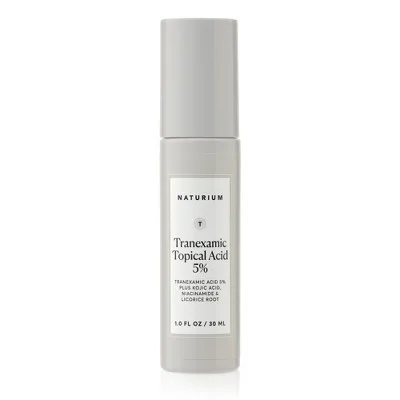
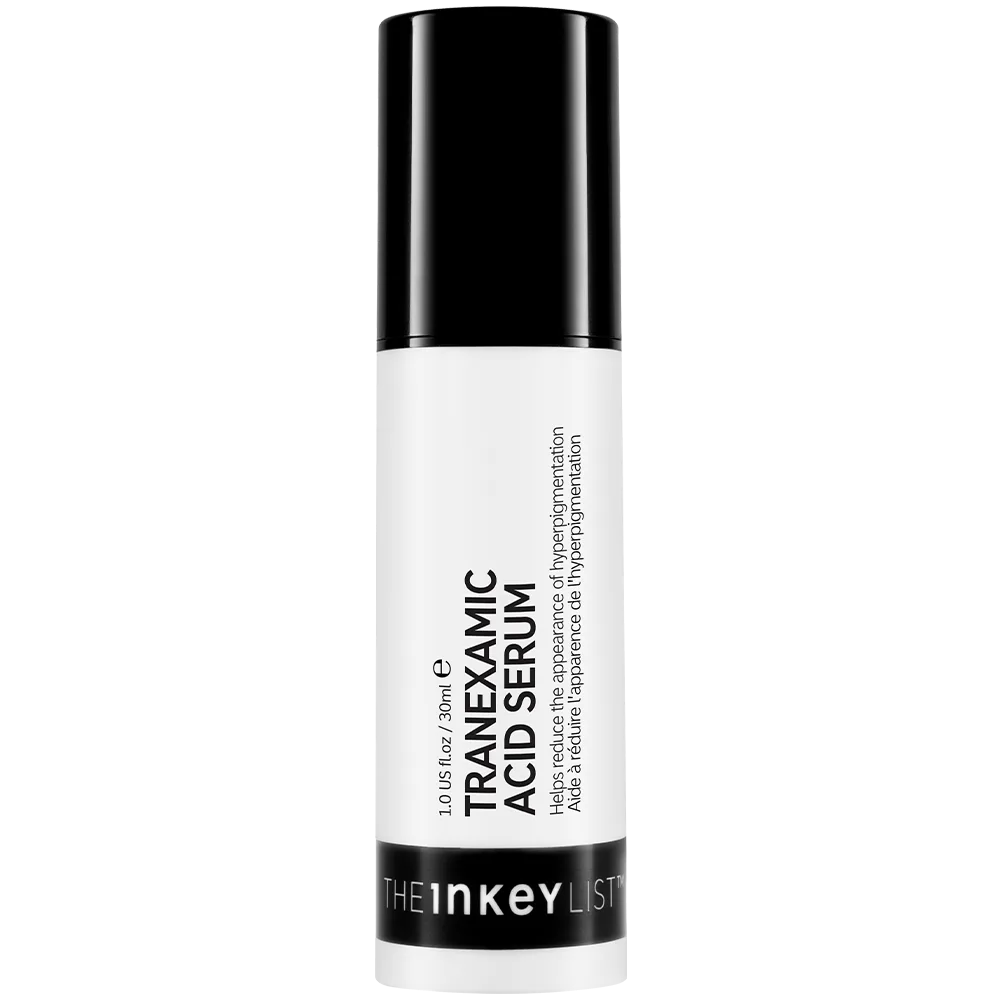

- Therapy guide Melasma The escalation and de-escalation options that a severity-calibrated maintenance plan draws on.
- Routine Skincare Routine for Hyperpigmentation How the continuous base layer assembles as a daily routine.
- Ranked list Best Tranexamic Acid for Melasma Tranexamic acid options for the continuous layer.
- Ingredient Tranexamic Acid The best-supported daily agent for long-term melasma maintenance.
- Ingredient Azelaic Acid The tolerable maintenance option for reactive skin.
- Question Questions about melasma The wider question library for people running a long melasma protocol.
- Question Can I layer several brightening actives? Layering the maintenance stack without provoking the condition through irritation.
References
- Preventing melasma recurrence: prescribing a maintenance regimen with an effective triple combination cream based on long-standing clinical severity — Journal of the European Academy of Dermatology and Venereology, 2012
- Near-visible light and UV photoprotection in the treatment of melasma: a double-blind randomized trial — Photodermatology, Photoimmunology & Photomedicine, 2014
- Reliability, Validity, and Sensitivity to Change Overtime of the Modified Melasma Area and Severity Index Score — Dermatologic Surgery, 2017
Every cited link is verified to resolve to the paper named. Where a source could not be independently confirmed, it is listed without a link rather than pointing you somewhere wrong.
Frequently asked
How likely is melasma to come back after it clears?
In a 242-subject trial, 78.8% reached no or mild melasma after eight weeks of daily triple combination cream, but only 53% were still relapse-free six months into a supervised maintenance phase. Median time to relapse was around 190 days, so roughly half relapse within six months even while actively maintaining.
Does clearing completely lower my chance of relapse?
Apparently not. In the same trial, relapse rate was influenced by melasma severity at study entry rather than by severity when maintenance began. Two people whose faces look identical after clearance can carry different risk, which is why maintenance intensity should be calibrated to your worst recorded state rather than your current appearance.
Is a tinted sunscreen actually better for melasma, or is that marketing?
It is measurable. A double-blind trial randomised 68 melasma patients to iron-oxide-containing versus UV-only sunscreen, both SPF 50 or higher, with everyone also on 4% hydroquinone. At eight weeks the tinted group showed 15% greater MASI improvement and 28% greater colorimetric improvement. The pigment blocking visible light is doing the extra work.
Should I taper my maintenance treatment or hold a steady schedule?
Both were tested and performed comparably overall. A flat twice-weekly schedule and a stepped taper down to once weekly produced similar times to relapse, and both were safe. The twice-weekly regimen tended to hold longer in severe disease, which fits the finding that pre-treatment severity drives relapse risk.
Why should I score my melasma instead of just watching it?
Because relapse is gradual and evenly distributed, so there is no day it visibly returns — it simply becomes worse than a face you can no longer accurately recall. A quarterly severity score, validated for sensitivity to change over time, and standardised photographs let you catch a drift early enough to adjust rather than re-treat.