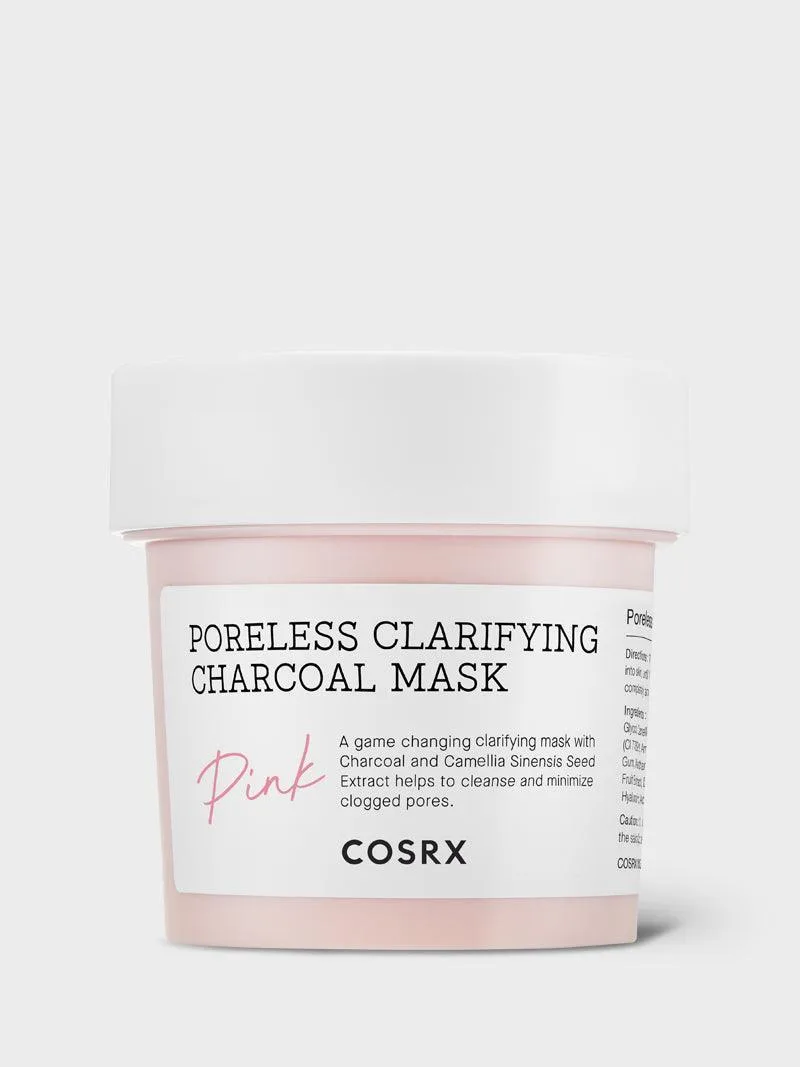
The hook is the color-changing show — it starts pink from calamine, turns grey as charcoal capsules burst during massage, and dries white — but underneath is a straightforward, effective oil-absorbing system of kaolin, silica and diatomaceous earth. The calamine is the genuinely thoughtful touch, adding a soothing, sebum-calming counterweight that most pure-clay detox masks lack.
A fun color-changing wash-off mask — pink calamine to grey charcoal to white — sitting on a genuinely effective kaolin-silica oil-absorbing base, with calamine and a little salicylic acid to soothe and clear. It does honest work for oily, blackhead-prone skin at a fair $19, but it's a clay mask through and through: drying by nature, and not the right pick for dry or sensitive types.
Having been available and reviewed for a few years, this mask's clay-based oil-control performance is well understood, so confidence in what it does is reasonable. The main individual variable is dryness tolerance — how a given skin type reacts to strong mineral absorbers — rather than uncertainty about the mask's basic function.
Verdicts
How well it fits each concern
Verdict by concern tap a concern for the case
Promisingfor Excess OilinessIn your profileYou chose · Green Tea Extract has trial-level evidence for excess oiliness but no guideline or regulatory standing yet — promising, short of a recommendation; the other actives here are not yet assessed for it.Moderate evidenceStandard tolerability134 reviews collected
The case for it
Green Tea Seed Extract has trial-level evidence for this concern but no guideline or regulatory standing yet.
It is plausibly present at a working level, though the concentration is not declared.
The formula carries no trigger this concern is sensitive to, with the cautions noted.
Cautions: fungal-acne triggers.
What would change this: A declared concentration would move this to a firmer reading of the dose.
Same rule for everyone. “Promising” is the verdict on 7,858 of 45,024 concern verdicts across the catalog; rule R9p decided 7,858 of them.
Unchanged since September 5, 2026, engine 5.1.1.
R9p — 0.5.0: 'Unproven' beside three filled dots read as one question answered twice with opposite words (7,018 rows). The chip measures standing, the dots measure trial volume; where the row carries at least one RCT or a tier-2 source (moderate dots) and the active is present at a working level, the honest word is Promising. Unproven is reserved for plausible-standing rows with limited or weak evidence, or an under-dosed form. Same rank as Unproven — a bet either way; the dots order them. · the full register
Carrying active
Green Tea Seed Extract
Standing
plausible — trials support it
Form
plausible — studied range 3–5%, from the OTC monograph or label; needs leave-on contact
Tolerability
standard — fungal triggers
Row checked
against its sources on July 17, 2026 (evidence table ev-2026.09-r228)
Strong choicefor BlackheadsIn your profileYou chose · Salicylic Acid is an approved or monograph active for blackheads; this clay mask carries it, though the concentration is not declared.Moderate evidenceStandard tolerability134 reviews collected
The case for it
Salicylic Acid is a first-line active — approved, monograph-listed or named in current guidelines — for this concern.
It is plausibly present at a working level, though the concentration is not declared.
The formula carries no trigger this concern is sensitive to, with the cautions noted.
Cautions: fungal-acne triggers.
What would change this: A declared concentration would move this to a firmer reading of the dose.
Same rule for everyone. “Strong choice” is the verdict on 1,459 of 45,024 concern verdicts across the catalog; rule R3 decided 567 of them.
Unchanged since September 5, 2026, engine 5.1.1.
R3 — Undeclared but plausibly dosed (top-third INCI position, or a potent sub-1% active) — the verdict stands, and the sentence says what disclosure would add. A declared figure below range would have been sub-threshold. · the full register
Carrying active
Salicylic Acid
Standing
first line — a regulator recognises it for this use; trials support it · per 21 CFR § 333.350 - Labeling of acne drug products. (US Code of Federal Regulations (Legal Information Institute, Cornell Law School)), opened July 27, 2026
Form
plausible — studied range 0.5–2%, from the OTC monograph or label; judge it after ~6 weeks
Tolerability
standard — fungal triggers
Row checked
against its sources on July 27, 2026 (evidence table ev-2026.09-r228)
The studies behind the evidence row
OTC monograph, Topical Acne Drug Products — salicylic acid 0.5–2% recognized as an acne treatment active — US Food and Drug Administration
Not for thisfor Large PoresIn your profileYou chose · The actives here have been researched for large pores and the evidence does not support the claim.Not yet assessedGentle134 reviews collected
The case for it
Salicylic Acid has been researched for this concern and the evidence does not support it.
It is plausibly present at a working level, though the concentration is not declared.
The formula carries none of the triggers this concern is sensitive to.
What would change this: A declared concentration would move this to a firmer reading of the dose.
Same rule for everyone. “Not for this” is the verdict on 488 of 45,024 concern verdicts across the catalog; rule R10 decided 488 of them.
Unchanged since September 5, 2026, engine 5.1.1.
Strong choicefor AcneIn your profileYou chose · Salicylic Acid is an approved or monograph active for acne; this clay mask carries it, though the concentration is not declared.Moderate evidenceStandard tolerability134 reviews collected
The case for it
Salicylic Acid is a first-line active — approved, monograph-listed or named in current guidelines — for this concern.
It is plausibly present at a working level, though the concentration is not declared.
The formula carries no trigger this concern is sensitive to, with the cautions noted.
Cautions: fungal-acne triggers.
What would change this: A declared concentration would move this to a firmer reading of the dose.
Same rule for everyone. “Strong choice” is the verdict on 1,459 of 45,024 concern verdicts across the catalog; rule R3 decided 567 of them.
Unchanged since September 5, 2026, engine 5.1.1.
R3 — Undeclared but plausibly dosed (top-third INCI position, or a potent sub-1% active) — the verdict stands, and the sentence says what disclosure would add. A declared figure below range would have been sub-threshold. · the full register
Carrying active
Salicylic Acid
Standing
first line — a regulator recognises it for this use; trials support it · per § 333.310 Acne active ingredients. (U.S. Food and Drug Administration — 21 CFR Part 333 Subpart D (Topical Acne Drug Products), Code of Federal Regulations via GovInfo), opened July 27, 2026
Form
plausible — studied range 0.5–2%, from the OTC monograph or label; judge it after ~6 weeks
Tolerability
standard — fungal triggers
Row checked
against its sources on July 27, 2026 (evidence table ev-2026.09-r228)
Good choicefor Rough TextureIn your profileYou chose · Salicylic Acid is a reference standard by mechanism for rough texture; this clay mask carries it.Moderate evidenceGentle134 reviews collected
The case for it
Salicylic Acid has trial-supported standing for this concern.
It is plausibly present at a working level, though the concentration is not declared.
The formula carries none of the triggers this concern is sensitive to.
What would change this: A declared concentration would move this to a firmer reading of the dose.
Same rule for everyone. “Good choice” is the verdict on 9,564 of 45,024 concern verdicts across the catalog; rule R5 decided 9,072 of them.
Unchanged since September 5, 2026, engine 5.1.1.
As a maskNot judged: what a mask is for — works within its wear time, benefit outlasts the mask, comes off cleanly — cannot yet be measured from the ingredient list (only intensity without injury can).
A verdict is DermApproved’s assessment of how well a product’s ingredients fit a concern — never a claim about what the product treats. Evidence dots and collected reviews sit beside it and are never blended in.
Rules 0.5.1 · evidence table ev-2026.09-r228 · how we decide
Assessment
Pros & Cons
Pros
✓ Genuinely effective kaolin-silica oil-absorbing base
✓ Soothing calamine softens the usual clay-mask dryness
✓ Small salicylic acid dose adds pore-clearing help
✓ Fun, satisfying color-changing ritual
✓ Fragrance-free with a hygienic squeeze-tube
✓ Long-lasting and fairly priced for oily skin
✓ Vegan and cruelty-free formula
Cons
✗ Drying by nature — poor fit for dry or sensitive skin
✗ Color change is novelty, not a detox indicator
✗ Lauric acid makes it unsuitable for fungal-acne-prone skin
✗ Only modest effect on stubborn blackheads
✗ Contains a silica-silicone hybrid
✗ Must be rinsed within 5-10 minutes to avoid over-drying
Review
Full Review
Let's be honest about why this mask sells: it changes color. You squeeze out a pastel-pink cream, massage it over your face, and watch it morph to grey as the charcoal disperses, then dry to a chalky white. It's a small piece of bathroom theater, and it's genuinely satisfying — the kind of thing that makes the chore of masking feel like an event. But a color-change trick is exactly the sort of feature that should make a skincare reviewer narrow their eyes, because the question is always the same: once you strip away the show, is there a real product underneath? In this case, mostly yes.
Under the gimmick is a perfectly conventional, perfectly competent oil-absorbing clay mask. Kaolin sits high on the ingredient list, backed by silica and diatomaceous earth — a trio of mineral absorbers that soak up excess sebum and lift surface debris, which is the actual mechanism behind that clean, matte, tightened-pore feeling you get after rinsing. Charcoal powder, the ingredient doing the grey-out, has a porous structure that helps grab oil and impurities; the evidence for charcoal as a skincare hero is thinner than the marketing suggests, but in a clay mask it's a reasonable supporting absorber. There's also a small amount of salicylic acid near the end of the list — oil-soluble, so it can slip into pores and add a mild keratolytic, blackhead-loosening assist. It's a modest inclusion given its low placement, but it's on-theme.
The ingredient I actually find thoughtful is the calamine — that's where the pink comes from, and it's not just a colorant. Calamine, a zinc-oxide blend, has a long history as a soothing, sebum-calming agent, and its presence here is what keeps the mask from being a purely drying clay brick. Clay masks have a tendency to leave skin tight and stripped; the calamine, plus glycerin, betaine and a few hyaluronic acids, softens that edge and makes the mask more tolerable for skin that's oily but also a bit reactive. Green tea seed extract adds antioxidant support up top. It's a smarter-than-average detox mask in that respect.
The experience is quick and well-judged. It's a creamy, spreadable clay rather than a stiff paste, you massage it in to trigger the color change, and you leave it just five to ten minutes before rinsing. That short window matters and the brand is right to specify it — leave a strong-absorbing clay like this on too long and you tip from 'clarified' into 'over-dried and uncomfortable.' Rinsed off on time, skin looks matte and feels smoother, with a mild tightness that's your cue to rehydrate immediately. Follow with a hydrating toner and moisturizer and you get the benefit without the rebound dryness.
Now the limitations, which are mostly the inherent limitations of the category plus a couple of formula notes. This is a clay mask, so it is drying by design — oily and combination skin will love it, but dry and sensitive types should either skip it or use it only on the oily T-zone, sparingly. The color change, fun as it is, is pure novelty: it's not a 'detox readout,' your skin doesn't hold toxins for a mask to pull out, and the real work is just oil absorption. The effect on stubborn blackheads is real but modest — this manages congestion rather than eliminating it, and deep blackheads still want a dedicated leave-on BHA. And there's a fungal-acne caveat worth flagging: the formula contains lauric acid, which can feed the yeast behind fungal acne, so despite being a rinse-off mask, the fungal-acne-prone should patch test or pass. It also contains a silica-silicone hybrid, a note for silicone-avoiders.
As a clay-and-charcoal mask, its real limitation is the one common to the whole category: it absorbs oil effectively but can overshoot into tightness and dryness if left on too long or used too often. Once or twice a week, on oily or congested areas rather than the whole face, is where it shines; treat it as targeted decongestion, follow promptly with hydration, and it earns its place without the rebound dryness that overusing clay masks so reliably causes.
On value, it's reasonable. Nineteen dollars for a 110g tube that lasts three to five months at one or two uses a week is fair, and the squeeze-tube packaging is more hygienic and less wasteful than the usual clay-mask jar. You're paying a small premium for the color-changing novelty, but the underlying formula — effective absorbers, soothing calamine, a touch of salicylic — earns its keep, and COSRX has a credible history in pore care rather than being a hype brand cashing in on a trend. If your skin runs oily and you want a deep-clean mask that's a little more fun and a little gentler than a standard charcoal brick, this is an easy, sensible pick. Just respect the ten-minute limit and keep a moisturizer handy for after.
Formula
Key Ingredients
The hero actives that drive this product's performance.
The charcoal is what's 'released' when you massage the pink cream and watch it turn grey; its porous surface helps grab onto surface oil and impurities, working with the clays above it to detoxify and clarify congested skin during the short wear time.
Kaolin sits high in the formula alongside silica and diatomaceous earth, forming the oil-absorbing backbone that does the real pore-clarifying work — soaking up excess sebum and tightening the look of pores as the mask dries from pink to white.
Calamine (a zinc-oxide blend) gives the mask its starting pink hue and its soothing, sebum-calming character, balancing the potentially drying clays with a gentler, skin-settling note that makes the mask tolerable for the oily-but-reactive.
A small amount of oil-soluble salicylic acid at the end of the list adds a mild keratolytic, pore-clearing assist to the physical absorption — modest given its low placement, but in keeping with the mask's blackhead-and-congestion focus.
Established mechanismfor Rough Texture · established mechanism
Green tea seed extract contributes antioxidant polyphenols high in the formula, adding a protective, soothing counterweight so the detoxifying clays and charcoal aren't the only story on the skin.
Limitedfor Excess Oiliness
Ingredient standings describe the active at treatment-level doses and
vehicles; this product's own condition grades weigh its actual formula.
Use after cleansing on dry skin, before the rest of the routine. Follow with a hydrating toner and moisturizer to offset the clay's drying tendency; apply only to oily zones if your skin is combination.
Results Timeline
Skin looks matte and feels smoother and tighter-pored right after rinsing; with weekly use over several weeks, oily areas and blackheads look more controlled. The effect is maintenance, not permanent pore-shrinking.
Pairs Well With
hydrating toner after rinsingbarrier moisturizersoothing serum
The dependable science here is mineral oil absorption; the rest is more marketing than mechanism. Kaolin, silica and diatomaceous earth are all well-documented sebum absorbers, and clay masks reliably produce a temporary matte, smoother, tighter-pored appearance by soaking up surface oil — an effect supported by their physical absorptive capacity rather than any biological action. Charcoal's reputation outpaces its evidence: activated charcoal is genuinely adsorptive in other contexts, but rigorous data showing it meaningfully 'detoxifies' skin is lacking, and in a mask it functions as one more oil-binding particle. Salicylic acid has strong evidence as a comedolytic that penetrates sebum-filled follicles, though its effect here is limited by both its low concentration and the brief, rinse-off contact time. Calamine and zinc compounds have a long, well-regarded history as soothing, mildly astringent agents for irritated and oily skin, which supports their role in tempering the mask's drying tendency. The popular notion that a clay mask 'pulls toxins' from the skin is not supported — skin does not accumulate toxins that topical products extract; the visible benefit is oil and debris removal. The color change is purely a cosmetic indicator from the calamine-to-charcoal transition. The practical, evidence-aligned takeaway is to treat this as an oil-control and surface-clarifying mask used briefly, always followed by rehydration to offset the barrier-drying that strong absorbers can cause.
Dermatologist Perspective
Clay and charcoal wash-off masks are generally regarded in clinical guidance as a reasonable adjunct for oily and acne-prone skin, valued for temporary oil control and a smoother surface rather than for treating acne itself. The standard caution is over-drying: kaolin and similar absorbers can compromise the barrier if used too often or left on too long, so a short contact time and follow-up hydration are routinely advised, and the masks are typically steered away from dry, sensitive or barrier-impaired skin. Calamine and zinc are long-recognized soothing agents, a sensible inclusion for calming oily but reactive skin. Salicylic acid is well validated for comedones, though clinicians note that in a rinse-off mask at low concentration its benefit is minor compared with a leave-on BHA. The 'detox' framing common to charcoal products is not supported clinically; the realistic benefit is sebum removal and a temporarily refined appearance.
Guidance
Usage & Recommendations
How to Use
After cleansing, apply an even layer of the pink mask to dry skin, avoiding the eyes and lips, and gently massage so the charcoal disperses and the color shifts toward grey. Leave it on for just 5 to 10 minutes until it dries to a white film — no longer, to avoid over-drying. Rinse thoroughly with lukewarm water, then immediately apply a hydrating toner and moisturizer to replenish what the clay absorbed. Use once or twice a week, focusing on oily zones if your skin is combination, and avoid pairing it with strong acids or retinoids the same evening.
Value Assessment
At $19 for 110g, this is fair value for a wash-off mask that lasts three to five months at the recommended once- or twice-weekly cadence, putting the per-use cost low. Part of the price reflects the color-changing novelty, but the underlying formula — effective mineral absorbers plus soothing calamine and a touch of salicylic acid — is substantive enough to justify it, and COSRX's genuine background in pore care means you're not just paying for a gimmick from a hype brand. The hygienic squeeze tube is a practical plus over jar packaging. The value holds specifically for oily and combination skin; for dry or sensitive skin that can only use it sparingly or not at all, the cost-per-benefit is naturally weaker.
Who Should Buy
This is for oily and combination skin that wants an effective, satisfying deep-clean mask for managing excess shine, blackheads and congestion — and for anyone who enjoys the color-changing ritual. The calamine makes it gentler than a typical charcoal brick, so oily-but-slightly-reactive skin can usually tolerate it with proper post-mask hydration.
Who Should Skip
Dry, sensitive or barrier-compromised skin should skip it or limit it to the T-zone, since clay masks are drying by design. Fungal-acne-prone users should avoid it because of the lauric acid, silicone-avoiders should note the silica-silicone hybrid, and anyone expecting a charcoal mask to permanently shrink pores or erase deep blackheads will be disappointed by what is, realistically, a temporary oil-control treatment.
Ready to try COSRX Poreless Clarifying Charcoal Mask Pink?
A creamy, spreadable pink clay that massages on smoothly, turns grey as the charcoal disperses, then dries to a matte white film over a few minutes.
Scent
No added fragrance; faint earthy clay-and-charcoal smell.
Packaging
Squeeze tube that keeps the cream clay fresh and dispenses without the mess of a jar.
Finish
mattenon-greasy
What to Expect on First Use
The novelty lands on first use: you apply a pink cream, massage it, and watch it shift to grey then white as it sets — genuinely satisfying. Skin feels matte and smooth after rinsing, with a mild tightness that signals it's time to rehydrate. Don't exceed the 5-10 minute window, as longer wear tips it into over-drying.
How Long It Lasts
Roughly 3-5 months at one to two uses weekly from the 110g tube.
It taps the color-changing, multi-step mask trend that swept K-beauty, dressing up a conventional clay-and-charcoal detox formula with a more engaging ritual. COSRX aimed it squarely at the oily and blackhead-prone crowd that wants the satisfying 'deep clean' experience without a harsh, peeling-off charcoal mask.
About COSRX Established Brand (5–20 years)
COSRX, founded in 2013, is well established in pore-care and acne-adjacent products. This wash-off charcoal mask uses a color-changing gimmick over a conventional clay-and-charcoal base, and it has been on the market and reviewed for a few years.
Brand founded: 2013 · Product launched: 2021
Myth vs. Reality
Common Myths
Myth
The color change means the mask is 'pulling toxins' out of your skin.
Reality
The color shift is simply the calamine pink giving way to grey charcoal as you massage, then drying white — it's a visual cue, not a detox readout. The real work is the clays absorbing surface oil; skin doesn't hold 'toxins' that a mask draws out.
Myth
Charcoal masks shrink your pores permanently.
Reality
Clay and charcoal temporarily clear and tighten the look of pores by absorbing oil and debris, but pore size is largely genetic. Regular use keeps oily, congested skin looking clearer; it doesn't permanently change pore diameter.
FAQ
Frequently Asked Questions
How does the COSRX charcoal mask change color?
It starts pink from calamine, and as you massage it, charcoal disperses and turns it grey; it then dries to a white film. The color change is a visual cue for the steps, not a measure of how much it's 'detoxing' — the actual work is clay absorbing excess oil.
How long should I leave the pink charcoal mask on?
Just 5 to 10 minutes. Because kaolin, silica and diatomaceous earth are strong oil absorbers, leaving it on longer can over-dry the skin. Rinse once it has dried to white, then immediately follow with a hydrating toner and moisturizer.
Is the COSRX charcoal mask good for dry or sensitive skin?
Not really. Like most clay masks it's built to absorb oil, which makes it drying — better suited to oily and combination skin. The calamine softens the effect somewhat, but dry or sensitive skin should use it sparingly, only on oily zones, or choose a gentler mask.
Will this mask get rid of blackheads?
It helps manage them rather than eliminate them. The clays and a small amount of salicylic acid clear surface oil and loosen congestion, so with regular weekly use blackheads look reduced, but stubborn, deep blackheads usually need a dedicated BHA treatment too.
Is the pink charcoal mask safe for fungal-acne-prone skin?
It's best avoided. The formula contains lauric acid, which can feed the yeast behind fungal acne, and a polyglyceryl ester. Despite being a wash-off mask, fungal-acne-prone users should patch test carefully or pick a fungal-acne-safe clay mask instead.
Reviews
What Reviewers Tend to Say
Recurring themes our editors read across retailer reviews of this product — summaries in our words, not quotations, and not a substitute for your own patch test.
The whole case for salicylic acid rests on one unglamorous fact of chemistry: it dissolves in oil. Understand that, and you know exactly when it beats a glycolic acid — and when it's overkill.
Those tiny dots on your nose are almost certainly not blackheads — they're normal, functional plumbing you will never 'clear,' and the extraction obsession is quietly wrecking the skin around them.
Adult hormonal acne and teenage acne are different beasts, yet grown women keep drying out deep jawline cysts with teenage products and wondering why it spreads.
May 30, 2026· 5 min
Questions people ask about Acne
Verified answers from our questions library — the nuance a product page cannot carry.
Products, answers, therapy guides, tools and articles in one search. Brand names,
slang and abbreviations all work — accutane finds isotretinoin, bacne finds truncal acne.