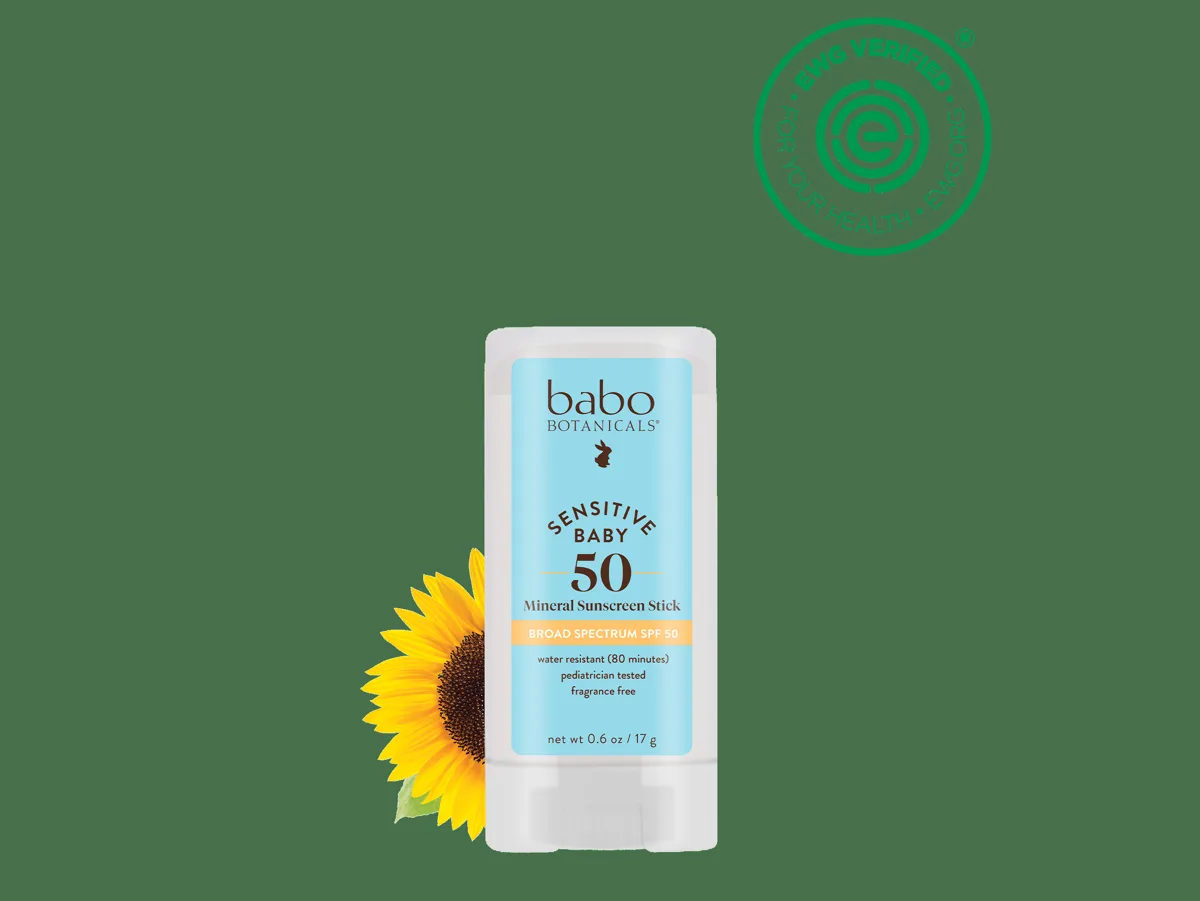
Most sunscreen sticks in the US market are either low-SPF conveniences or zinc-titanium hybrids with moderate protection. This one leans hard into pediatric sensitive-skin positioning with a single active (non-nano zinc at 21.9%), a minimalist plant-based inactive list, and National Eczema Association recognition. It's more clinical than the 'clean beauty' branding suggests.
A high-zinc, fragrance-free pediatric sunscreen stick that's well-formulated enough to earn its spot in a lot of family bags. The white cast is a feature of the 21.9% zinc load, not a flaw — it's the price of the protection. Strong for kids and fair-skinned adults; less ideal for deeper skin tones or facial acne-prone users.
Full protectionfor Sun DamageIn your profileYou chose · Broad-spectrum SPF 50 with zinc oxide: the protection sun damage calls for.Moderate evidenceGentleNo reviews collected yet
The case for it
Non-Nano Zinc Oxide 21.9% is a first-line active — approved, monograph-listed or named in current guidelines — for this concern.
It is present at an effective concentration, declared or high in the ingredient list.
The formula carries none of the triggers this concern is sensitive to.
Same rule for everyone. “Full protection” is the verdict on 2,288 of 45,024 concern verdicts across the catalog; rule P1 decided 2,232 of them.
Unchanged since September 5, 2026, engine 5.1.1.
P1 — Photoprotection standing is regulatory (M020 / Annex VI filters; 21 CFR 201.327 attaches the early-skin-aging claim to tested broad-spectrum SPF 15+). SPF 30 is the AAD daily-use bar. · the full register
Good choicefor SensitivityIn your profileYou chose · No fragrance, drying alcohol, declarable allergens or sensitising preservatives in this stick — the profile sensitive skin looks for.Not yet assessedGentleNo reviews collected yet
The case for it
Non-Nano Zinc Oxide 21.9% has no evidence row yet for this concern — it is in the research queue.
The formula carries none of the triggers this concern is sensitive to.
What would change this: A researched evidence row for the lead active would replace this with a verdict.
Same rule for everyone. “Good choice” is the verdict on 1,938 of 45,024 concern verdicts across the catalog; rule F2 decided 1,938 of them.
Unchanged since September 5, 2026, engine 5.1.1.
Strong choicefor EczemaIn your profileYou chose · Colloidal Oatmeal is an approved or monograph active for eczema; this stick carries it, though the concentration is not declared.Moderate evidenceGentleNo reviews collected yet
The case for it
Oat Kernel Extract is a first-line active — approved, monograph-listed or named in current guidelines — for this concern.
It is plausibly present at a working level, though the concentration is not declared.
The formula carries none of the triggers this concern is sensitive to.
What would change this: A declared concentration would move this to a firmer reading of the dose.
Same rule for everyone. “Strong choice” is the verdict on 1,459 of 45,024 concern verdicts across the catalog; rule R3 decided 567 of them.
Unchanged since September 5, 2026, engine 5.1.1.
R3 — Undeclared but plausibly dosed (top-third INCI position, or a potent sub-1% active) — the verdict stands, and the sentence says what disclosure would add. A declared figure below range would have been sub-threshold. · the full register
Carrying active
Oat Kernel Extract
Standing
first line — a regulator recognises it for this use; trials support it · per § 347.50 Labeling of skin protectant drug products (US FDA — 21 CFR 347.50 (via Cornell Legal Information Institute)), opened July 27, 2026
Form
plausible — studied range 1%, from the OTC monograph or label; judge it after ~2 weeks
Tolerability
gentle
Row checked
against its sources on July 27, 2026 (evidence table ev-2026.09-r228)
Does the jobDoes what a sunscreen is for: UVA coverage, kind to the skin wearing it. Not measured from the label: pleasant enough to actually use.
A verdict is DermApproved’s assessment of how well a product’s ingredients fit a concern — never a claim about what the product treats. Evidence dots and collected reviews sit beside it and are never blended in.
Rules 0.5.1 · evidence table ev-2026.09-r228 · how we decide
Assessment
Pros & Cons
Pros
✓ High 21.9% non-nano zinc provides strong broad-spectrum protection
✓ Fragrance-free and minimal irritant profile suitable for pediatric skin
✓ Carries National Eczema Association recognition
✓ Stick format is practical for squirming kids and reapplication
✓ Reef-safer formulation with no organic UV filters
✓ Water-resistant for 80 minutes (max FDA claim)
Cons
✗ Visible white cast on medium and deep skin tones
✗ Waxy texture can drag on the face and feels firm in cool weather
✗ Shea butter and beeswax may be comedogenic for acne-prone adults
✗ Small 0.6oz size runs out quickly with full-family use
✗ Can soften or melt in hot summer temperatures
Review
Full Review
The sunscreen stick is the most practical tool in the parenting sun-protection arsenal. Creams require a cooperative child, a flat surface, and two free hands you probably don't have. Sprays are effective but controversial near the face and difficult to apply evenly on small moving targets. Sticks are the compromise that actually works: you can swipe one across a wriggling three-year-old's cheeks and ears in under five seconds, reapply on the playground bench between slides, and stuff the thing back in a diaper bag without worrying about leaks. The question for any given sunscreen stick isn't whether the format is worth using — it's whether this particular stick earns its spot in the bag.
Babo Botanicals has been building family-skincare products since 2004, which makes it one of the older brands in the pediatric 'clean beauty' category. The Baby Skin Mineral Sunscreen Stick is a well-considered entry in that lineup. The star ingredient — and essentially the entire active story — is 21.9% non-nano zinc oxide, which is a meaningfully high concentration even by mineral sunscreen standards. Most zinc-forward sticks land around 18-20%, and this one nudges higher, which is part of why it earns an SPF 50 rating with zinc as the sole active. The inactive list is minimalist and intentional: sunflower oil as the primary carrier, beeswax and carnauba wax as structural elements, jojoba, caprylic triglyceride, shea butter, and a small cast of plant extracts for soothing. Vitamin E for antioxidant support. No fragrance. No oxybenzone, no octinoxate, no avobenzone — all the organic UV filters some parents specifically want to avoid.
The supporting oils are chosen with some care, which is more than can be said for a lot of sticks. Sunflower oil is linoleic-acid-rich and sits comfortably on infant skin barriers; jojoba and caprylic/capric triglyceride keep the wax matrix from turning into a crayon; carnauba gives the stick enough backbone to survive a hot afternoon. The calendula, chamomile, and oat kernel extracts are the gentlest possible garnish — oat in particular has a real evidence base for calming irritated skin, though under a thick zinc layer its job is largely to make the swipe feel kind rather than to treat anything.
The 'clean beauty' positioning is worth a moment of scrutiny. What actually matters in a sunscreen is the UV filter selection and concentration, and this stick would be well-formulated whether or not it wore the clean-beauty label. Botanical branding is not a safety credential; a badly built botanical sunscreen protects no better than a badly built conventional one. The absence of fragrance is a real plus for sensitive and eczema-prone kids — and the National Eczema Association seal on the box reflects that rather than the marketing language. The high zinc concentration is a real plus for UV protection. The botanical soothing extracts are modest but harmless. The formula holds up on its chemistry, not on its story, which is the honest way to evaluate any product in this category.
On the skin, it behaves like a pure-zinc stick. The first swipe leaves a white film that mostly settles into a matte mineral finish but never fully disappears, especially on medium and deep skin tones. For very young children and fair-skinned adults, the appearance is usually acceptable — many parents actually appreciate being able to see exactly where they've applied product, which is the rare case where a white cast is diagnostic rather than cosmetic. For darker skin tones, the visible white cast is a real limitation, and it's the main reason this stick is better positioned as a pediatric and fair-skin option than as a universal recommendation. The texture is waxy and firm at room temperature, requiring a bit of pressure and a warming-up swipe to transfer product on cool mornings; rolling it between the palms for a few seconds first solves most of that. In hot weather, the opposite problem: the wax softens and the stick can become misshapen if left in a hot car, so the glovebox is not its friend.
Application discipline matters more with a stick than with any other format, because the format invites a quick, thin pass. Several passes over the same patch, enough to leave a visibly opaque layer, is what actually delivers the SPF on the label. Fifteen minutes before going out, every two hours after, and again after the water — the 80-minute resistance rating is the maximum the FDA allows anyone to claim, not a promise that the zinc survives a full afternoon in the surf.
For a family context, the stick format is genuinely valuable. Kids hold still for sticks in a way they don't for creams. The 0.6oz size is small enough to travel with but means it disappears quickly if you're using it on a full family during a beach week — expect four to eight weeks from one stick with a single face, and considerably less across four. The beeswax content means it isn't vegan, which matters to some buyers.
For adult facial use, this stick is less of an automatic recommendation. The shea butter and beeswax are comedogenic for acne-prone skin, and the visible white cast is less forgiving on an adult face than on a toddler cheek. If you're an adult with sensitive but non-reactive skin who wants a mineral stick for nose, ears, and targeted reapplication over the top of a morning SPF, it works well in that role. If you're looking for your primary facial sunscreen, a cream or lotion format will serve you better.
At seventeen dollars for 0.6oz, the per-ounce cost is on the higher end of pediatric mineral sticks, but it's consistent with the brand tier and the formulation quality. Across roughly twenty-seven hundred reviews the sentiment is steady and unsurprising: parents praise the zinc load and the fragrance-free formula, and the complaints are the cast, the drag, and the summer softening — all of them properties of what a high-zinc wax stick fundamentally is. The value is strong if you use it in the intended context — family beach days, targeted reapplication, sensitive children — and weaker if you try to stretch it as a full-family primary sunscreen. Most families end up buying one or two sticks per summer, which is about right.
Formula
Key Ingredients
The hero actives that drive this product's performance.
The sole UV filter in this stick at a high 21.9% concentration, providing broad-spectrum UVA and UVB protection through physical scattering and absorption. Non-nano particle size means the zinc doesn't penetrate the stratum corneum, which is particularly relevant for pediatric and sensitive-skin applications.
Regulator-approvedfor Sun Damage · limited certainty
The primary carrier oil in the stick, holding the high zinc load in a spreadable wax matrix. Its high linoleic acid content makes it compatible with infant and sensitive skin barriers — meaningful in a product designed for the face and ears of young children.
Added to calm the skin beneath the protective zinc layer. In a pediatric stick sunscreen, their role is about comfort on delicate skin rather than any major therapeutic effect — a reassuring touch rather than a hero ingredient.
Provides gentle soothing compatible with eczema-prone and reactive pediatric skin — the same active that has FDA skin protectant approval in other formats. In this stick its contribution is modest but reinforces the gentle positioning.
Regulator-approvedfor Eczema · limited certainty
Ingredient standings describe the active at treatment-level doses and
vehicles; this product's own condition grades weigh its actual formula.
Swipe directly onto cheeks, nose, ears, and other sun-exposed areas. Use firm pressure and layer for complete coverage. Reapply every two hours during outdoor exposure.
Results Timeline
Immediate: broad-spectrum UV protection on first application. Long-term: the most reliable prevention of UV damage comes from consistent correct use.
Non-nano zinc oxide is one of the two true broad-spectrum mineral UV filters (the other being titanium dioxide), providing protection across the UVA and UVB spectrum through physical scattering and absorption. The non-nano designation refers to particle size — typically above 100 nanometers — which research indicates does not penetrate intact skin, making it a common choice for pediatric and sensitive-skin applications. Studies on zinc oxide particle size and skin penetration have been published in journals including Toxicological Sciences and the Journal of Investigative Dermatology, generally supporting the safety profile of non-nano formulations in topical use.
The 21.9% zinc concentration in this stick is on the higher end of consumer mineral sunscreens and corresponds to an SPF 50 rating under FDA testing protocols. Research on zinc oxide concentration and UV protection has shown that higher zinc loads provide stronger UVA coverage, particularly in the long-wave UVA range where organic filters like avobenzone have photostability challenges.
Colloidal oatmeal (here as Avena sativa kernel extract) is an FDA-approved skin protectant in other product formats, with a well-established evidence base for soothing eczema-prone and sensitive skin. A 2015 review in the Journal of Drugs in Dermatology summarized the anti-inflammatory and barrier-supporting effects of oat-derived compounds, including avenanthramides and beta-glucans. Its inclusion in this sunscreen stick is more of a gentle supportive addition than a primary mechanism, given the short contact time and the protective role of the zinc layer.
Calendula and chamomile extracts have a long history of traditional use for skin soothing but a more limited modern clinical evidence base. Their inclusion reinforces the gentle pediatric positioning without meaningfully changing the protection profile.
Dermatologist Perspective
Pediatric dermatologists generally support non-nano zinc oxide as the first-choice UV filter for infants and young children, and stick format is commonly recommended for reapplication and for targeted areas like ears, nose, and the tops of feet. From a clinical standpoint, fragrance-free formulations are preferred for pediatric and eczema-prone skin, which makes this Babo Botanicals stick a reasonable recommendation for families dealing with sensitivity. The high 21.9% zinc concentration is viewed as a formulation positive, providing robust UV protection with a single well-established active. The white cast is acknowledged as a genuine limitation for diverse skin tones, and dermatologists often suggest tinted mineral alternatives for patients who want the pediatric benefits without the visible appearance. This stick is commonly included in pediatric and family dermatology rundowns of recommended mineral sunscreens alongside alternatives from Thinksport, Blue Lizard, and Earth Mama.
Guidance
Usage & Recommendations
How to Use
Apply liberally with firm pressure directly onto face, ears, nose, shoulders, and other sun-exposed areas 15 minutes before sun exposure. For complete protection, apply a thick, visible layer and reapply every two hours, or every 40-80 minutes during water or sweat exposure. On cool mornings, warm the stick briefly between your palms before applying to improve transfer. For facial use on adults, apply over your morning moisturizer and allow the mineral layer to settle before applying makeup.
Value Assessment
At approximately seventeen dollars for 0.6oz, this sunscreen stick is on the premium end of pediatric mineral options but comparable to other established family-skincare brands in the same tier. Per ounce, it's more expensive than drugstore mineral sticks from Banana Boat or Coppertone, but it's not asking luxury-tier prices. The value is best realized when used in the intended context — pediatric application, targeted reapplication, sensitive skin — and weakens as a primary full-family sunscreen. Coming from an established brand with twenty years of track record in family skincare, the premium feels earned rather than aspirational, and the well-supported formulation justifies the price.
Who Should Buy
Parents of infants and toddlers seeking a fragrance-free, high-zinc pediatric sunscreen stick. Families with eczema-prone or sensitive children who need a minimal-irritant formula. Adults with fair skin and sensitive complexions who want a mineral reapplication option for ears, nose, and other targeted areas. Beach-goers wanting a reef-safer stick for travel to Hawaii and other destinations with organic-UV-filter restrictions.
Who Should Skip
Buyers with medium to deep skin tones who want a visible-cast-free mineral option — a tinted alternative will work better. Acne-prone adults seeking a facial sunscreen, given the shea butter and beeswax content. Full families looking for the most economical per-ounce sunscreen option — larger cream formats offer better value for broad application.
Ready to try Babo Botanicals Baby Skin Mineral Sunscreen Stick SPF 50?
Firm wax-based stick that softens slightly with skin warmth and leaves a matte, mineral finish
Scent
Fragrance-free
Packaging
Twist-up stick in a plastic tube — convenient for pockets and diaper bags
Finish
mattemineral
What to Expect on First Use
First application requires slight pressure to transfer product from the stick to the skin, especially on cool mornings. The finish is white and matte at first, gradually settling but never fully disappearing on deeper skin tones. For children and fair-skinned adults, the appearance is acceptable; for others, it reads more visibly as a 'zinc look.'
How Long It Lasts
4-8 weeks with daily face application to a single person; faster with full-family use
Babo Botanicals was founded in 2004 by a mother seeking gentle plant-based skincare for her own children, and grew into one of the established brands in the US pediatric and family-skincare category. The Baby Skin Mineral Sunscreen Stick launched as part of the brand's expanded sun protection lineup targeting parents who want the convenience of a stick format without the fragrance and irritant risks common in traditional drugstore sunscreen sticks.
About Babo Botanicals Established Brand (5–20 years)
Babo Botanicals launched in 2004 as a pediatric-focused clean beauty brand with a plant-based and mineral-sunscreen emphasis. The brand holds National Eczema Association seals and has built a reputable position in the family-skincare category, though its marketing leans on 'clean beauty' claims that should be evaluated on the formula rather than the language.
Brand founded: 2004 · Product launched: 2015
Myth vs. Reality
Common Myths
Myth
A 'clean beauty' or 'botanical' sunscreen is inherently safer or more effective than a drugstore alternative.
Reality
What matters in a sunscreen is the UV filter selection, concentration, and photostability — not whether the product is marketed as clean or botanical. This stick happens to be well-formulated because it uses a high concentration of non-nano zinc with minimal irritant inactives, not because of the botanical marketing.
FAQ
Frequently Asked Questions
Is this sunscreen stick safe for babies under 6 months?
The FDA and AAP generally recommend keeping babies under 6 months out of direct sun rather than relying on sunscreen. For older infants and toddlers, this stick is one of the better pediatric options — non-nano zinc oxide is considered appropriate for young skin, and the fragrance-free plant-based inactive list minimizes irritation risk. Discuss with your pediatrician for very young infants.
Does it leave a white cast?
Yes, visibly. High-concentration zinc oxide sticks almost always produce some white cast, and at 21.9% active this one is no exception. On fair skin the appearance is subtle; on medium and deep skin tones, the mineral residue is more visible. For adults with deeper skin tones who want a mineral stick without visible cast, a tinted alternative is usually a better fit.
How is the water resistance?
Babo rates this as water-resistant for 80 minutes, which is the maximum water-resistance claim allowed by the FDA. Real-world performance during outdoor play is generally good, but the stick format means that rubbing, toweling, and sweating remove product faster than a thicker cream. Reapply every 40-80 minutes during water exposure.
Is it safe to use on the face?
Yes — this is specifically designed for face, ears, nose, and other targeted sun-exposed areas. Adults with acne-prone skin should note that the shea butter and beeswax content can be comedogenic, which is a real limitation in the facial application context.
Will it melt in my bag or car?
Potentially, yes. The wax matrix that holds the zinc together softens at high temperatures, and on hot summer days a stick left in a car or outdoor bag can become soft or misshapen. Store it at room temperature when possible and avoid leaving it in direct sun.
Is it reef-safe?
Yes — non-nano zinc oxide is considered the most reef-safer UV filter available, and the formula contains no oxybenzone, octinoxate, or other filters associated with coral bleaching. This makes it a suitable choice for beach days and snorkeling, and it's commonly recommended for Hawaii, where several organic UV filters are banned.
Is it cruelty-free and eco-friendly?
Babo Botanicals is cruelty-free. The formula contains beeswax, so it is not vegan. The non-nano zinc and minimal botanical formulation support the brand's eco-conscious positioning, though as with any claim, the specifics matter more than the marketing.
Reviews
What Reviewers Tend to Say
Recurring themes our editors read across retailer reviews of this product — summaries in our words, not quotations, and not a substitute for your own patch test.
Common Praise
High 21.9% zinc provides strong mineral protection
Fragrance-free and gentle enough for sensitive skin
Easy to apply on squirmy kids with the stick format
Water-resistant performance during outdoor play
Common Complaints
Visible white cast on medium and deep skin tones
Waxy texture can feel dragging on the face
Melts slightly in hot weather
Small 0.6oz size runs out quickly with daily full-family use
Notable Endorsements
Frequently recommended in pediatric and family blog roundups of mineral sunscreen sticksCarried by Target, Whole Foods, and Amazon
Paediatric sun protection has a short real rulebook. The aisle built around it sells reassurance — and when researchers catalogued 410 sunscreens, the products aimed at children turned out to be the ordinary market with a cartoon on the front.
The blanket dismissal of DIY masks is lazy, because these four grade completely differently once you look at what is actually in them and at what dose.
The strongest counterexample to blanket botanical scepticism is also one of the more common contact allergens — and holding both facts at once is the only honest way to read it.
Aug 28, 2026· 8 min
Questions people ask about sensitive skin
Verified answers from our questions library — the nuance a product page cannot carry.
Products, answers, therapy guides, tools and articles in one search. Brand names,
slang and abbreviations all work — accutane finds isotretinoin, bacne finds truncal acne.