



Homemade Sunscreen Fails for a Reason You Cannot Fix in a Kitchen
Every other DIY mistake announces itself. This one stays silent for eight hours, and the equipment that would prevent it does not fit on a countertop.
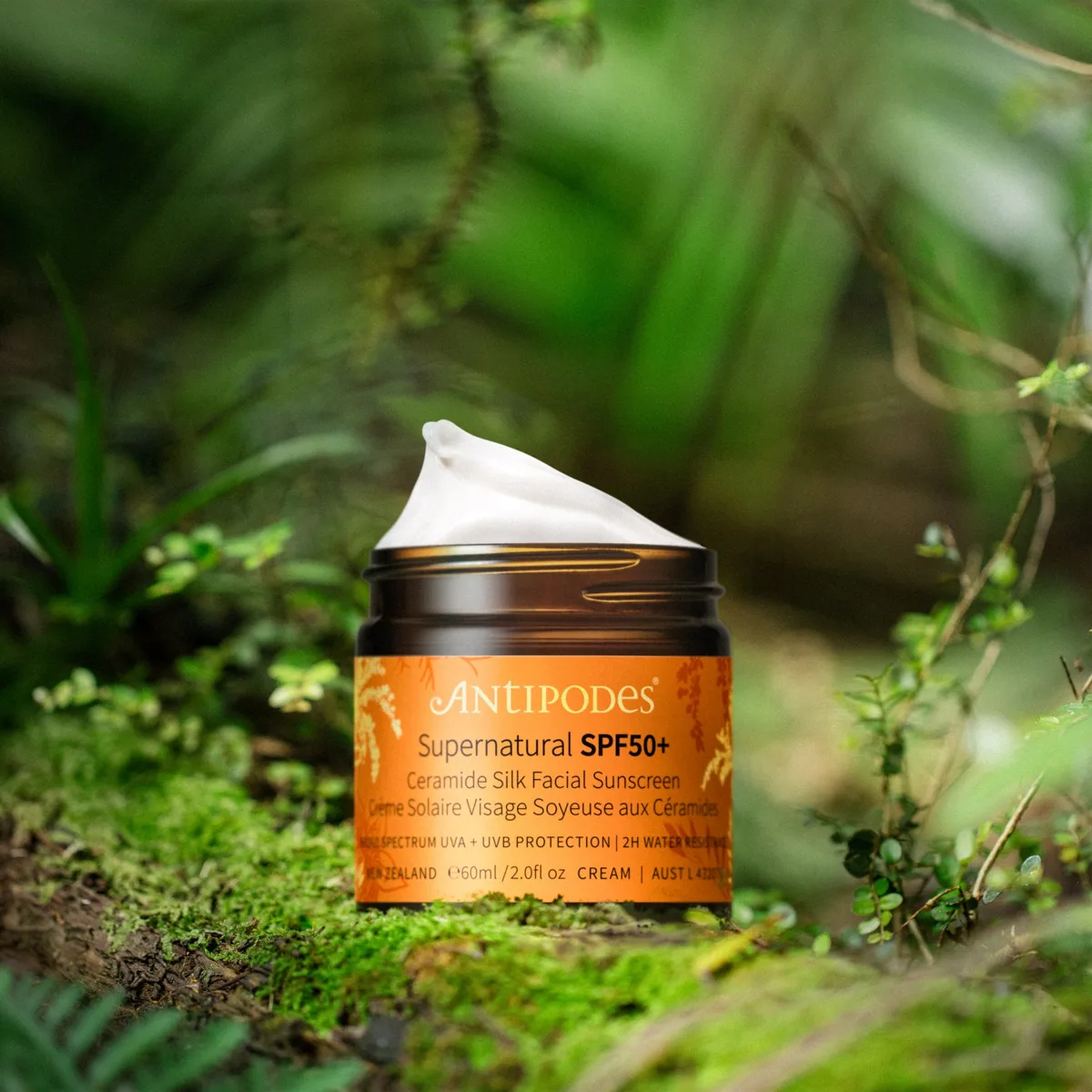
Most clean-beauty mineral sunscreens either compromise on the SPF rating to stay light-textured, or deliver real SPF50 with a thick zinc-paste feel that nobody actually wants to wear daily. This one runs the harder formulation play — TGA-certified SPF50+ at 22.75% zinc oxide in a 100% natural-origin oil base that genuinely disappears on dry skin, with ceramide NP added for barrier support. It's the rare clean SPF that performs to clinical-tier standards.
Antipodes' first sunscreen is also one of the best clean-formulated mineral SPF50+ products on the market — TGA-certified, 22.75% zinc oxide, fragrance-free, with ceramide and antioxidant support. The oil-rich base is the trade-off that lets it disappear without white cast on dry-to-normal skin, but it reads heavy on oily complexions. For the right skin type, this is a genuinely impressive debut.
Roughly a year of real-world data on this specific formulation as of this review — the SPF50+ rating is independently TGA-tested in vivo and well-supported by the 22.75% zinc oxide active, so the protection claim is on solid ground. What's still maturing is the body of independent dermatology review and long-term user reports on texture and comedogenic outcomes; the assessment here weights the formulation chemistry, regulatory paperwork, and roughly 420 verified reviews from launch markets.
The case for it
Same rule for everyone. “Full protection” is the verdict on 2,288 of 45,024 concern verdicts across the catalog; rule P1 decided 2,232 of them. Unchanged since September 5, 2026, engine 5.1.1.
Brand or formulator? Disclose a concentration or correct a fact →
The studies behind the evidence row
The case for it
What would change this: A declared concentration would move this to a firmer reading of the dose.
Same rule for everyone. “Full protection” is the verdict on 2,288 of 45,024 concern verdicts across the catalog; rule P1 decided 2,232 of them. Unchanged since September 5, 2026, engine 5.1.1.
Brand or formulator? Disclose a concentration or correct a fact →
The studies behind the evidence row
The case for it
What would change this: A researched evidence row for the lead active would replace this with a verdict.
Same rule for everyone. “Basic protection” is the verdict on 175 of 45,024 concern verdicts across the catalog; rule P3 decided 68 of them. Unchanged since September 5, 2026, engine 5.1.1.
Brand or formulator? Disclose a concentration or correct a fact →
The case for it
What would change this: A researched evidence row for the lead active would replace this with a verdict.
Same rule for everyone. “Full protection” is the verdict on 2,288 of 45,024 concern verdicts across the catalog; rule P1 decided 2,232 of them. Unchanged since September 5, 2026, engine 5.1.1.
Brand or formulator? Disclose a concentration or correct a fact →
The case for it
What would change this: A researched evidence row for the lead active would replace this with a verdict.
Same rule for everyone. “Good choice” is the verdict on 1,938 of 45,024 concern verdicts across the catalog; rule F2 decided 1,938 of them. Unchanged since September 5, 2026, engine 5.1.1.
Brand or formulator? Disclose a concentration or correct a fact →
The case for it
What would change this: A researched evidence row for the lead active would replace this with a verdict.
Same rule for everyone. “Supporting role” is the verdict on 8,197 of 45,024 concern verdicts across the catalog; rule R8 decided 4,250 of them. Unchanged since September 5, 2026, engine 5.1.1.
Brand or formulator? Disclose a concentration or correct a fact →
Does the jobDoes what a sunscreen is for: UVA coverage, kind to the skin wearing it. Not measured from the label: pleasant enough to actually use.
A verdict is DermApproved’s assessment of how well a product’s ingredients fit a concern — never a claim about what the product treats. Evidence dots and collected reviews sit beside it and are never blended in. Rules 0.5.1 · evidence table ev-2026.09-r228 · how we decide
There is a quiet credibility problem at the heart of clean-beauty sunscreens that the category mostly avoids talking about: most of them are not independently SPF-tested to the standards their labels claim. US sunscreens regulated under the FDA's OTC monograph are tested, but the FDA hasn't approved a new UV filter since 1999, which is why American sunscreens have been stuck in roughly the same chemistry for a quarter of a century while European and Australian sunscreens have moved forward. The clean-beauty SPF market has filled that gap with a lot of marketing language about 'natural protection' and 'mineral barriers' without the regulatory paperwork to back the SPF numbers. So when Antipodes launched its first sunscreen in May 2024, the choice they made about which regulatory framework to register it under was actually the most interesting thing about the product.
They chose the Australian TGA — the Therapeutic Goods Administration — which is one of the more rigorous global sunscreen regulators. The TGA framework allows higher zinc oxide concentrations than the US system, uses more contemporary testing standards (including the broadest spectrum UVA tests), and requires independent in-vivo SPF certification before a product can carry an SPF50+ rating. The 50+ designation itself only exists in Australia and New Zealand — you cannot legally call a sunscreen SPF50+ in the US, regardless of its actual performance. This sunscreen passed those tests and earned the certification. That is more meaningful credentialing than 95% of clean-beauty SPFs carry, and it's worth dwelling on before getting to the formula.
The formula itself is also impressive on its own terms. The active ingredient is zinc oxide at 22.75% w/w — one of the highest concentrations available in a daily facial sunscreen, and high enough that the SPF50+ rating is supported by the underlying chemistry rather than the testing protocol generosity. Zinc oxide is the broadest single-ingredient UV filter on earth: one molecule covers UVB, UVA-II, and most of UVA-I, which matters because UVA-I is the longest UV wavelength and the one most associated with photoaging, melasma, and the deeper dermal damage that builds up over decades. Most chemical sunscreens require a stack of two or three filters to achieve the same wavelength coverage, and even then often leave gaps in the UVA-I range. A 22.75% zinc oxide sunscreen, properly applied, is genuinely the best UV protection available outside a sunblock paste.
The formulation chemistry around the zinc is what makes this product wearable. The dispersing oil phase — medium chain triglycerides, castor oil, coco-octanoate, coconut oil — suspends the zinc particles in a way that prevents the chalky white cast that plagues traditional mineral sunscreens. Polyglyceryl-3 polyricinoleate, a castor-derived natural emulsifier, holds the whole system together. Candelilla wax provides the structure that lets it pump out of a tube as a thick lotion rather than separating into oil and powder phases. Ceramide NP (Ceramide 3) appears at the end of the INCI as a treatment accent — too low on the list to be a barrier-rebuilding workhorse, but enough to support the lipid layer underneath daily zinc oxide use, which can otherwise dry the skin over weeks. Tocopheryl acetate provides antioxidant stability for the oil base and a small bonus of photo-oxidative protection on the skin. This is genuinely sophisticated formulation work.
The texture is the trade-off the formulation makes. The oil base feels like a heavy moisturizer rather than a sunscreen — pleasant on dry and normal skin, where it reads as a luminous, almost glowy finish, and noticeably heavy on combination or oily skin, where it can sit on top of the surface and contribute to a slick feel by midday. There is no version of a 22.75% zinc oxide sunscreen that feels like a water-gel chemical SPF; the physics doesn't allow it. The brand has made the right choice for the dry-skin user this product is aimed at and made the trade-off clearly enough that oily-skin buyers can self-select out. Where the texture really shines is for people with rosacea, sensitivity, or barrier compromise, who need a high-performance SPF that doesn't sting and provides actual barrier support rather than further drying.
There are a few honest limitations worth naming. The coconut oil in the excipient list will concern very acne-prone users — coconut oil scores high on comedogenicity testing, though the concentration here is modest and the silk-finish format reduces the practical clogging risk. The aluminum tube, while protective for the formula, is harder to recycle than the glass jars Antipodes uses elsewhere in the range. The price runs roughly $45 USD for 60ml, which is more expensive than drugstore mineral SPFs and comparable to clinical-tier brands like EltaMD or Avène Mineral Fluid — fair for the formulation work but not a bargain. And the 60ml tube only lasts four to six weeks if you're applying the proper two-finger-length quantity each morning, which most people don't.
A word on application standards: the labeled SPF on any sunscreen assumes 2mg/cm² applied to the skin, which works out to roughly two finger-lengths of product for the face and neck. Most consumers apply about half that, which means most people are getting roughly half the labeled SPF in real-world use. With this sunscreen specifically, the oil-rich texture can make people instinctively apply less to avoid the heavy feel — which then defeats the high-zinc protection that justified the purchase. Apply the proper amount, warm it between your fingertips, and press it into the skin rather than rubbing.
Who this is genuinely for: people with dry-to-normal or sensitive skin who want a clean-formulated high-SPF mineral sunscreen with real regulatory backing, who tolerate (or actively want) a rich, glowy finish, and who are willing to pay the clean-beauty premium for the formulation work and the TGA certification. Particularly excellent for rosacea, melasma, post-procedure skin, and anyone whose previous sunscreens have stung or irritated. People with very oily, breakout-prone, or coconut-oil-reactive skin should look at a fluid mineral SPF instead — Avène Mineral Fluid SPF 50+ or EltaMD UV Clear are better engineered for that profile. Within its intended use case, this is one of the most credible clean-beauty sunscreens currently available and a genuinely strong debut in a category where most clean-brand entries are marketing-led.
The hero actives that drive this product's performance.
| Ingredient | Function | Evidence |
|---|---|---|
| Zinc Oxide (22.75%) (22.75%) | The sole UV filter and the reason this sunscreen earns its SPF50+ rating under Australian TGA testing — at 22.75% zinc oxide, this is one of the highest mineral concentrations available in a daily facial sunscreen. Zinc oxide is the broadest single-ingredient UV filter approved globally, covering UVB, UVA-II, and most of UVA-I with the same molecule, which matters because UVA-I is the longest wavelength and the most associated with photoaging and melasma. | Regulator-approved for Sun Damage · limited certainty |
| Ceramide 3 (Ceramide NP) | Sits at the end of the INCI as a treatment accent rather than a barrier-rebuilding workhorse — but its presence in a mineral sunscreen formula is the differentiator the brand is selling. Ceramide NP slots into the gaps between corneocytes to support the lipid barrier underneath the UV filter, which is genuinely useful for people whose skin gets dry and flaky from daily zinc oxide use. | Not yet assessed |
| Medium Chain Triglycerides + Castor Oil | The dispersing oil phase that suspends the zinc oxide particles and prevents the chalky white cast that plagues traditional mineral sunscreens. This is the formulation chemistry that lets a 22.75% zinc product feel like a silk serum rather than a thick zinc paste — the trade-off being that the resulting texture is oilier than a water-gel chemical sunscreen. | Not yet assessed |
| Polyglyceryl-3 Polyricinoleate | A natural-origin emulsifier derived from castor oil that holds the waterless oil-and-zinc system together as a stable lotion. Its inclusion is part of why this sunscreen can claim 100% natural-origin ingredient sourcing while still functioning as a high-performance cosmetic formula — a balance that's surprisingly hard to achieve in mineral SPF. | Not yet assessed |
| Tocopheryl Acetate (Vitamin E) | An antioxidant and lipid stabilizer that protects the unsaturated oils in the formula from oxidation over the product's shelf life. In a sunscreen context it also provides a small additional layer of photo-oxidative protection on the skin, working alongside the zinc oxide rather than as a UV filter itself. | Limited for Sun Damage |
Ingredient standings describe the active at treatment-level doses and vehicles; this product's own condition grades weigh its actual formula.
Active: Zinc Oxide 22.75% w/w. Excipients: Caprylic/Capric Triglyceride (Medium Chain Triglycerides), Ricinus Communis (Castor) Seed Oil, Coco-Caprylate/Caprate, Cocos Nucifera (Coconut) Oil, Candelilla Cera (Candelilla Wax), Hydrogenated Castor Oil, Polyglyceryl-3 Polyricinoleate, Tocopheryl Acetate, Isostearic Acid, Cetostearyl Alcohol, Ceramide 3 (Ceramide NP)
sunscreen
AM
Use as the final step of the morning routine after moisturizer. Warm the product between your fingertips for ten seconds before pressing onto the skin — the body heat helps the oil base spread and disperses the zinc more evenly. Apply two finger-lengths for the face and neck; anything less will not deliver the labeled SPF. Reapply every two hours of direct sun exposure, after swimming, or after heavy sweating.
Immediate UV protection from first application. Visible texture and tone improvements from consistent daily use take 8–12 weeks to surface — slower than active treatments like retinoids, but UV protection is the most evidence-backed anti-aging intervention available and the long-term cumulative payoff is significant.
The evidence base for this product is unusually strong for a clean-beauty SPF. Zinc oxide as a UV filter has decades of dermatological literature behind it — a 2020 review in the Journal of the American Academy of Dermatology (Hexsel et al., 'Sunscreens: a Review of Their History, Use, and Future Trends') confirmed zinc oxide's broad-spectrum mechanism covering UVB, UVA-II, and the longer UVA-I wavelengths that most chemical filters partially miss. At 22.75% w/w, this product sits near the upper end of practical zinc oxide concentrations for daily wear and well above the threshold for SPF50+ certification under TGA in-vivo testing. The ceramide NP inclusion draws on a deep barrier-repair literature: a 2018 article in the International Journal of Molecular Sciences (Coderch et al., 'Ceramides and Skin Function') summarized the role of stratum corneum ceramides in barrier integrity and transepidermal water loss prevention — the inclusion of ceramide NP at low concentration here is unlikely to dramatically rebuild a compromised barrier on its own, but it offsets the mild drying that high-zinc sunscreens can cause with daily use. The medium chain triglyceride and castor oil dispersion system reflects modern mineral SPF formulation practice and is the reason the product avoids visible white cast. Australian TGA certification of SPF50+ requires in-vivo testing on a minimum panel of human subjects under prescribed UV doses — meaningfully more rigorous than the FDA's monograph protocol, which dates from 1978 and has not been updated for current UV filter chemistry. The combination of regulatory backing, modern formulation chemistry, and well-supported active ingredients is what makes this one of the few clean-beauty SPFs that earns a 'clinical-tier' descriptor honestly.
Dermatologists generally consider high-concentration zinc oxide sunscreens the gold standard for daily facial UV protection, particularly for patients with rosacea, melasma, post-procedure skin, or sensitivity to chemical UV filters. The 22.75% zinc oxide concentration in this product is at the upper end of what clinical practice recommends, and the broad-spectrum coverage from a single mineral active is exactly what most dermatologists prescribe for melasma maintenance and photoaging prevention. The ceramide inclusion is viewed as a useful but modest enhancement — clinical-strength ceramide repair typically requires dedicated barrier products at higher concentrations. The most commonly raised clinical concern is the coconut oil fraction for acne-prone patients, where mineral fluid formats from EltaMD or La Roche-Posay Anthelios are more often recommended. Australian TGA certification is generally regarded as meaningful regulatory backing in clinical contexts, and the SPF50+ designation provides confidence in real-world protection that many clean-beauty SPF claims lack.
Apply as the final step of the morning routine after moisturizer. Warm two finger-lengths of product between your fingertips for ten seconds — this loosens the oil base and disperses the zinc more evenly — then press onto the face and neck rather than rubbing. Wait three to five minutes before applying makeup. Reapply every two hours of direct sun exposure, after swimming, after heavy sweating, or after towel drying. For indoor days with intermittent window or incidental sun, a single morning application usually holds. Store the tube at room temperature and out of direct sunlight to protect the zinc dispersion stability.
At roughly $45 USD for 60ml, this works out to about $0.75 per ml — meaningfully more expensive than drugstore mineral SPFs like Trader Joe's or CeraVe Hydrating Mineral, comparable to EltaMD UV Clear and Avène Mineral Fluid, and cheaper than clinical-tier mineral SPFs from iS Clinical or SkinCeuticals. The 15ml mini at around $15 USD is more useful for travel than for value optimization — the per-ml price is the same. The cost reflects the TGA certification, the high zinc oxide concentration, the modern dispersion chemistry, and the New Zealand manufacturing, and is fair for what you're getting. The honest comparison is not against drugstore SPFs but against other clinical-tier mineral SPFs at the same regulatory standard, and within that comparison the value lands well. For a price-sensitive buyer who's fine with a chemical SPF, this is not the rational choice; for a clean-beauty buyer who wants real SPF50+ performance, it is.
Someone with dry-to-normal or sensitive skin who wants a high-performance clean mineral sunscreen with genuine regulatory backing and is willing to pay for it. Particularly excellent for people with rosacea, melasma, post-procedure skin, or a history of irritation from chemical UV filters. Also a strong choice for makeup wearers who want a luminous, glowy primer-finish under foundation.
Skip this if your skin is very oily or breakout-prone — the oil-rich base will read heavy and the coconut oil fraction is a comedogenic concern. Skip it if you prefer a matte or invisible-finish sunscreen, since this leaves a noticeable glow. And skip it if cost-per-application matters — drugstore mineral SPFs deliver competent UV protection at a fraction of the per-ml price.
Ready to try Antipodes Supernatural SPF50+ Ceramide Silk Facial Sunscreen?
Buy at Amazon ♥A pale ivory cream with a noticeably oil-rich base — pumps out of the tube as a thick lotion that warms to a silky, slightly tacky film on the skin. Sets to a low-sheen finish that reads as 'glowy' rather than greasy on dry skin and as 'oily' on combination or oily skin.
No added fragrance; what you smell is the faint, slightly sweet undertone of the coconut oil and castor oil base, which fades within a few minutes of application.
An aluminum squeeze tube with a screw-on cap, packaged in FSC-certified card. Aluminum tube is a smart format choice for a mineral sunscreen because it protects the formula from light and oxidation better than plastic, though it's harder to recycle in most municipal streams than the brand's glass jars.
First application leaves a noticeable cast for about 60 seconds as the oil base distributes — gentle pressing and warming with the fingertips makes it disappear faster than rubbing. No stinging or tingling. The sensation on the skin is closer to a heavy moisturizer than a sunscreen, which is a feature rather than a bug for the dry-skin user it's designed for.
Approximately 4–6 weeks at the proper two-finger-length application across face and neck each morning. The 15ml mini lasts about 10 days at the same application standard and is useful for travel or trial.
All Year
Antipodes launched its first sunscreen in May 2024 after roughly five years of formulation development — unusually slow for a SKU launch, but consistent with the brand's history of commissioning third-party testing before going to market. The product chose Australian TGA registration over US FDA listing because the TGA framework allows higher-zinc formulations and uses more current testing standards than the FDA's 1999-era monograph. The European launch sold out in 12 days, and the formula has since rolled into UK, US, and ANZ markets.
Antipodes is a New Zealand brand founded in 2004 by Elizabeth Barbalich; this sunscreen is the brand's first SPF and is registered under Australia's TGA (Therapeutic Goods Administration), which is one of the more rigorous global regulatory bodies for sunscreen — a more meaningful credential than US FDA OTC monograph status, which has not approved new UV filters since 1999. The TGA registration gives this product clinical-tier testing the rest of the Antipodes range doesn't carry.
Mineral sunscreens always leave a white cast.
Modern micronized zinc oxide formulations dispersed in oil bases can avoid visible cast on most skin tones, including deeper tones, when properly emulsified. This sunscreen demonstrates that — though the trade-off is the oilier texture that's the price of suspending zinc without nano-particle micronization or silicone systems.
Higher SPF means proportionally more protection.
SPF50 blocks roughly 98% of UVB; SPF30 blocks roughly 97%. The difference is small in best-case lab conditions but matters in real-world use because most people underapply by half — at which point SPF50 protection drops to roughly the SPF15-25 range, while SPF30 underapplied falls below the FDA's minimum effective threshold.
The oil-dispersed zinc formula minimizes white cast meaningfully better than traditional mineral sunscreens, but some sheen can be visible on deeper skin tones if not fully blended. Warm the product between fingertips before applying and press into the skin rather than rubbing — this disperses the zinc more evenly and reduces visible cast significantly.
This formula uses only zinc oxide as the UV filter — a mineral that reflects and absorbs UV at the skin surface — rather than the chemical filters like avobenzone or oxybenzone used in most US drugstore sunscreens. Mineral SPF is generally better tolerated by sensitive and rosacea-prone skin, doesn't degrade in heat, and is the format dermatologists most often recommend for daily facial use.
Yes — the oil base sets to a low-sheen satin finish that works well as a primer for liquid or cream foundations. Powder products may pick up the residual moisture and can look patchy if applied immediately; wait three to five minutes after sunscreen before applying powder.
Yes — zinc oxide is the most pregnancy-recommended UV filter, since it functions as a topical mineral barrier with negligible systemic absorption. The formula contains no retinoids, salicylic acid, or hormonally-active ingredients, and the natural-origin excipients are pregnancy-compatible.
The oil base is what suspends the high concentration of zinc oxide and prevents white cast. A water-based mineral sunscreen at this zinc level would either feel chalky and pasty or require silicone systems the brand has excluded by design. The trade-off is a richer feel that works beautifully on dry skin but can read heavy on oily complexions.
Reapply every two hours of direct sun exposure, immediately after swimming or heavy sweating, and after towel drying. For typical daily use indoors with intermittent sun, a single morning application usually holds for the working day; reapply before any extended outdoor activity.
Recurring themes our editors read across retailer reviews of this product — summaries in our words, not quotations, and not a substitute for your own patch test.
No white cast despite high zinc concentration
Genuinely fragrance-free and reactive-skin-friendly
Doubles as a moisturizer thanks to the ceramide and oil base
TGA-certified for SPF50+ feels more credible than most clean-beauty SPF claims
Oil base can feel heavy on combination or oily skin
Coconut oil may concern very acne-prone users despite the silk finish claim
Tube is small for a daily-use sunscreen at this price point
Limited US distribution at the time of writing
Verified answers from our questions library — the nuance a product page cannot carry.