



Octocrylene and Homosalate: The Filters America Is Stuck With
The critics are right about the data gap, and they are right that it took two decades to move. What follows from that is not the conclusion most people draw.

The marketing sells the pink 'tone-up' veil, but the real story is the filter system underneath. This sunscreen contains Uvinul A Plus and Tinosorb S — advanced, photostable UVA filters that are not even approved for use in US sunscreens — paired with titanium dioxide and UVB filters. It is a tinted, redness-softening sunscreen built on genuinely world-class UV protection.
A genuinely strong tinted sunscreen whose marketing undersells it. The pink 'tone-up' veil gets the attention, but the real story is a quietly excellent multi-filter system — including advanced UVA filters not even available in US sunscreens — plus barrier and soothing ingredients. The tint limits its universality, but the protection is first-rate.
Note: This sunscreen has a solid body of reviews since its 2023 release, and our assessment blends ingredient and filter analysis with that real-world feedback. The brand does not publish independent UVA-protection testing. As more real-world feedback arrives, this rating could move either way.
The case for it
What would change this: A declared concentration would move this to a firmer reading of the dose.
Same rule for everyone. “Full protection” is the verdict on 2,288 of 45,024 concern verdicts across the catalog; rule P1 decided 2,232 of them. Unchanged since September 5, 2026, engine 5.1.1.
Brand or formulator? Disclose a concentration or correct a fact →
The studies behind the evidence row
The case for it
What would change this: A declared concentration would move this to a firmer reading of the dose.
Same rule for everyone. “Supporting role” is the verdict on 8,197 of 45,024 concern verdicts across the catalog; rule R8 decided 4,250 of them. Unchanged since September 5, 2026, engine 5.1.1.
Brand or formulator? Disclose a concentration or correct a fact →
The studies behind the evidence row
The case for it
What would change this: A researched evidence row for the lead active would replace this with a verdict.
Same rule for everyone. “Good choice” is the verdict on 1,938 of 45,024 concern verdicts across the catalog; rule F2 decided 1,938 of them. Unchanged since September 5, 2026, engine 5.1.1.
Brand or formulator? Disclose a concentration or correct a fact →
The case for it
What would change this: A declared concentration would move this to a firmer reading of the dose.
Same rule for everyone. “Promising” is the verdict on 7,858 of 45,024 concern verdicts across the catalog; rule R9p decided 7,858 of them. Unchanged since September 5, 2026, engine 5.1.1.
Brand or formulator? Disclose a concentration or correct a fact →
The studies behind the evidence row
Does the jobDoes what a sunscreen is for: UVA coverage, kind to the skin wearing it. Not measured from the label: pleasant enough to actually use.
A verdict is DermApproved’s assessment of how well a product’s ingredients fit a concern — never a claim about what the product treats. Evidence dots and collected reviews sit beside it and are never blended in. Rules 0.5.1 · evidence table ev-2026.09-r228 · how we decide
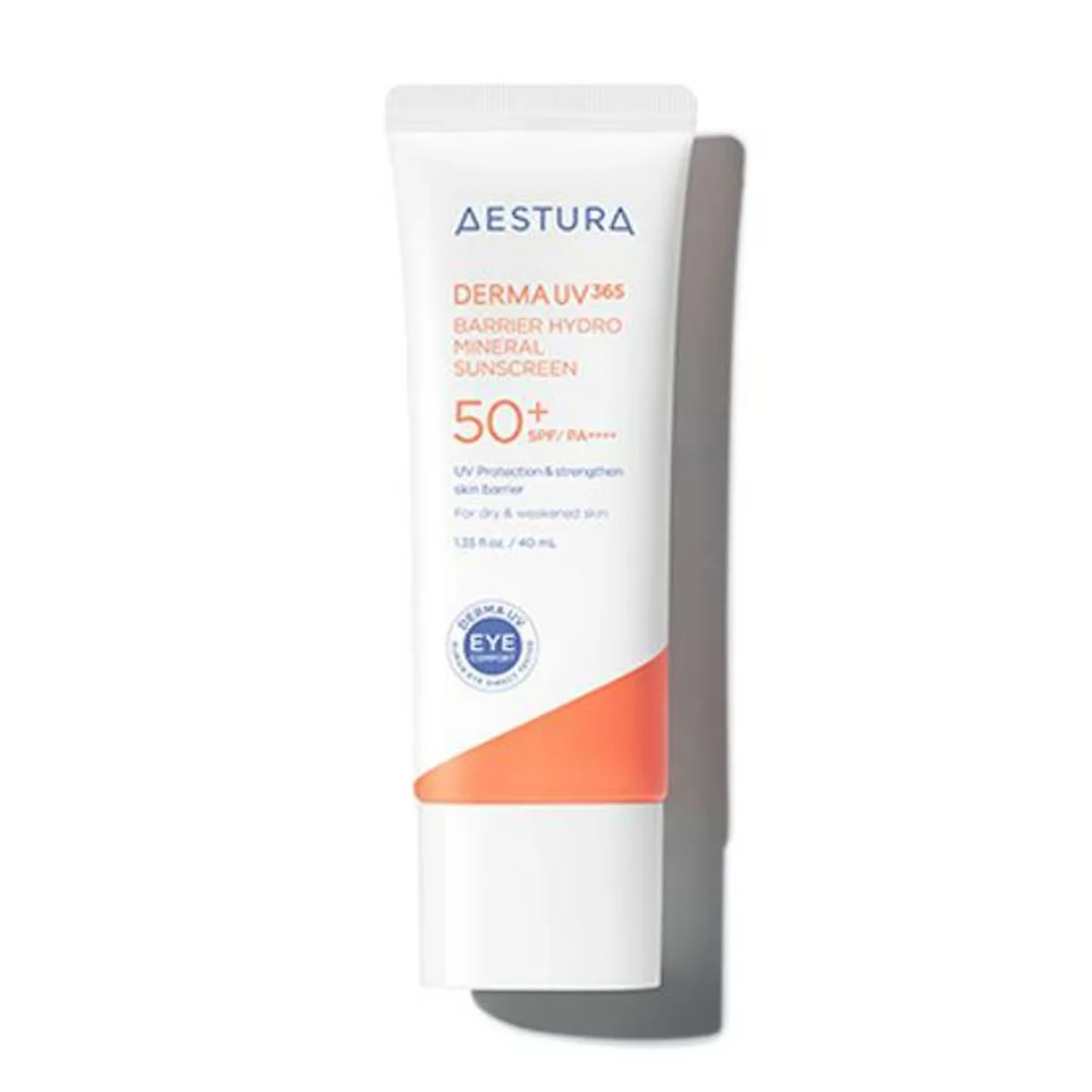
The pink tone-up glow is the sales pitch — but the most impressive thing about this sunscreen is a filter list most US shoppers have never been allowed to buy. Aestura's Derma UV365 Red Calming Tone-up Sunscreen is marketed, front and center, on a cosmetic promise: a pretty pink formula that evens out skin tone and softens the look of redness. That is the part most reviews will linger on, and it is a genuine, pleasant effect that deserves its share of attention. But turn the tube over, read the ingredient list properly, and the real story turns out to be quieter and more technical — a modern multi-filter UV system that quietly outclasses what is available on American shelves, and that almost nobody in the US has had the chance to use.
The filter system is a hybrid, pairing several organic filters with titanium dioxide. Two of those organic filters deserve a specific callout. Diethylamino hydroxybenzoyl hexyl benzoate, known in the trade as Uvinul A Plus, and bisethylhexyloxyphenol methoxyphenyl triazine, known as Tinosorb S, are both highly photostable filters with strong UVA absorption — and neither is approved for use in US sunscreens, whose filter list has not been meaningfully updated in decades. Combined with UVB filters and titanium dioxide, they produce a well-rounded broad-spectrum profile that earns the top PA++++ UVA rating. Underneath the protection sit Aestura's signature skincare touches: ceramide NP to support the barrier as the product wears, allantoin to back the 'calming' half of the name with an actual soothing action, and hydrolyzed hyaluronic acid for hydration. The tone-up effect itself comes from red and yellow iron oxides — inert mineral pigments — working alongside the titanium dioxide to produce a pink-toned veil that color-corrects the appearance of redness.
Worn on the face, it is a faintly pink cream, substantial enough to feel like a light base without being heavy or greasy, that blends out to a soft, tone-evening satin-glow finish. Skin looks immediately more even, with the look of redness softened, and it works well either as a makeup base or worn alone on a no-makeup day. There is no perfume in it and no sting on application. Reviewers consistently praise how the tint evens out the complexion and how comfortable and lightweight it feels for a tinted sunscreen — a category that often errs heavy and mask-like.
It is worth pausing on why that filter gap exists at all, because it changes how you should read this product. In the United States, sunscreen filters are regulated as over-the-counter drugs, and the approval process has effectively stalled for decades, leaving American shoppers with an old, limited list of filters. Korea and Europe regulate sunscreens differently and have access to a newer generation of highly photostable UVA filters. Uvinul A Plus and Tinosorb S are not obscure or experimental ingredients — they are widely used, well-studied workhorses everywhere except the US market. So when this sunscreen feels more elegant and protective than a comparable American one, that is not marketing; it is a real regulatory difference doing real work. The pink tint is the part that sells the tube, but the filter system is the part that makes it genuinely worth importing.
Where the product asks for compromise, it is mostly a matter of the tint. A single pink tone-up shade simply cannot suit every skin tone — it blends most naturally on light to medium skin, and deeper tones may notice a slight light cast, so thorough blending is essential rather than optional. A 40ml tube does not stretch far once you apply the full protective amount. And at thirty-two dollars it runs pricier than many daily sunscreens. It is also worth being clear that the tone-up effect is purely cosmetic — a removable optical veil, not a treatment for redness — even though the allantoin and barrier ingredients do contribute a small, genuine skincare benefit alongside it. None of this detracts from the protection; it just frames what the product is and is not.
On value, the price asks a little patience. Thirty-two dollars for 40ml is not cheap, and larger sizes are available that improve the per-millilitre cost for daily users. What justifies the premium is the filter system itself: you are paying for genuinely world-class, photostable UVA protection from Amorepacific's dermocosmetic brand, formulated in Korea where the best modern filters are permitted and routine. As with the rest of the Derma UV365 line, Aestura does not publish independent UVA testing, so the PA++++ claim relies on the brand's own data rather than a third party's. For redness-prone, rosacea-prone, sensitive or reactive skin on light-to-medium tones, this is a strong, modern sunscreen that happens to also even out the complexion as it protects — and it is, quietly, a better product than its tone-up marketing ever quite admits.
The hero actives that drive this product's performance.
| Ingredient | Function | Evidence |
|---|---|---|
| Broad-Spectrum Filter System (Diethylamino Hydroxybenzoyl Hexyl Benzoate, Bisethylhexyloxyphenol Methoxyphenyl Triazine, Homosalate, Ethylhexyl Salicylate, Polysilicone-15) | A genuinely modern, multi-filter UV system. It includes Uvinul A Plus and Tinosorb S — two of the most effective, photostable UVA filters available, and ones not even approved for use in US sunscreens. Combined with UVB filters, this gives the formula strong, well-rounded UVA and UVB coverage rather than relying on a single filter. | Regulator-approved for Sun Damage · limited certainty |
| Titanium Dioxide | A mineral UV filter that makes this a hybrid sunscreen, scattering and absorbing UV alongside the organic filters. It also contributes to the formula's soft-focus, tone-evening finish, complementing the cosmetic side of the 'tone-up' effect. | Regulator-approved for Sun Damage · limited certainty |
| Iron Oxides (Red & Yellow) | Cosmetic pigments that give the sunscreen its pink-toned tint. They produce the 'tone-up' effect — a subtle brightening, color-correcting veil that visually evens skin tone and softens the look of redness, separate from any soothing skincare action. | Not yet assessed |
| Ceramide 3 (Ceramide NP) | A skin-identical barrier lipid, the signature ingredient of Aestura's barrier-focused range. In a sunscreen for redness-prone skin, it supports the barrier as the product wears, since a stronger barrier is itself part of managing reactivity. | Not yet assessed |
| Allantoin | A gentle, well-tolerated soothing agent. It backs the 'calming' half of the product's name with an actual skincare action, helping settle the skin beneath the redness-correcting tint. | No qualifying study for Rosacea |
| Hydrolyzed Hyaluronic Acid | A humectant that adds a layer of hydration, keeping the sunscreen comfortable through the day and preventing the dry, tight finish that would make a tinted sunscreen cling to dry patches. | Plausible mechanism for Dullness |
Ingredient standings describe the active at treatment-level doses and vehicles; this product's own condition grades weigh its actual formula.
Aqua, Butylene Glycol, Glycerin, Diethylamino Hydroxybenzoyl Hexyl Benzoate, Homosalate, Ethylhexyl Salicylate, Methyl Trimethicone, Butyloctyl Salicylate, Titanium Dioxide, Alkyl (C12-C15) Benzoate, Bisethylhexyloxyphenol Methoxyphenyl Triazine, Polysilicone-15, 1,2-Hexanediol, Cetearyl Alcohol, Silica, Poly C10-30 Alkyl Acrylate, Hydroxyethyl Acrylate/Sodium Acryloyldimethyl Taurate Copolymer, Aluminum Stearate, Alumina, Stearic Acid, Polyhydroxystearic Acid, Acrylates/C10-30 Alkyl Acrylate Crosspolymer, Allantoin, Glyceryl Stearate, Hydrogenated Lecithin, Caprylyl Glycol, Ethylhexylglycerin, Tromethamine, Aluminum Hydroxide, Polyglyceryl-3 Methylglucose Distearate, Palmitic Acid, Disodium EDTA, Triethoxycaprylylsilane, Sorbitan Isostearate, Iron Oxide Red, Hydrolyzed Hyaluronic Acid, Ceramide 3, Iron Oxide Yellow, Myristic Acid, Lauric Acid, Tocopherol
sunscreen
AM
Save this for the last step of your morning skincare routine, after moisturizer, and before makeup if you wear it. Use a generous, even amount — about a quarter teaspoon for the face — to reach the labeled SPF; blend well to distribute the pink tint evenly and avoid patchiness. It can be worn alone as a light tinted base. Reapply every two hours of sun exposure.
Sun protection and the tone-evening, redness-softening tint are immediate on application. The cosmetic tone-up effect lasts through the day per the brand's 8-hour durability testing. The long-term benefit of preventing sun damage depends on daily, consistent, generous use.
The standout of this formula is its UV filter system, and the science there is genuinely strong. The sunscreen combines multiple organic filters with titanium dioxide in a hybrid system. Two of the organic filters deserve specific note: diethylamino hydroxybenzoyl hexyl benzoate (Uvinul A Plus) and bisethylhexyloxyphenol methoxyphenyl triazine (Tinosorb S) are modern, highly photostable filters with strong UVA absorption. Neither is approved by the US FDA, whose sunscreen filter list has not been meaningfully updated in decades; both are widely used in Korea and Europe. Their inclusion, alongside UVB filters and titanium dioxide, produces a well-rounded broad-spectrum profile, and the PA++++ rating reflects strong long-wave UVA protection. Robust, photostable UVA coverage matters because UVA drives photoaging and can aggravate facial redness.
The tone-up effect is a matter of cosmetic optics rather than skin biology. Iron oxides are inert mineral pigments long used in color cosmetics; in a pink-toned formulation they provide color correction — softening the visible appearance of redness on the principle that complementary tones neutralize one another — along with a brightening veil. This effect is real but entirely topical and removable, comparable to a tinted moisturizer.
The skincare actives carry modest, well-grounded evidence. Ceramide NP is a skin-identical barrier lipid with strong support for reducing transepidermal water loss; allantoin has documented soothing and skin-conditioning activity; hydrolyzed hyaluronic acid is an established humectant; and tocopherol is a studied antioxidant that helps counter UV-generated free radicals. As with all sunscreens, the science emphasizes that adequate application — about 2 mg/cm2, a quarter teaspoon for the face — is required to reach the labeled protection. The protective claims are very well supported, while the tone-evening claim is a legitimate cosmetic effect rather than a therapeutic one.
Dermatologists generally regard broad-spectrum, photostable sun protection as the cornerstone of managing redness-prone and rosacea-prone skin, since UV exposure is a recognized trigger for facial redness — so a sunscreen with a strong, modern multi-filter system aligns well with clinical priorities. The advanced UVA filters used here are the kind dermatologists often note as advantages of Korean and European sunscreens over the more limited US filter list. Tinted sunscreens are also frequently recommended for redness-prone skin, both for the iron oxides' visible color correction and because iron oxides additionally help shield against visible light. Clinical guidance is careful to frame the 'tone-up' effect as cosmetic rather than therapeutic. The fragrance-free formula suits sensitive skin, while the presence of homosalate is the reason caution in pregnancy is reasonable, since mineral sunscreens are commonly preferred during that period. As always, adequate application and reapplication are emphasized.
Finish your morning routine with it, applied after moisturizer. Use a generous, even amount — about a quarter teaspoon for the face — to reach the labeled SPF 50+, and blend thoroughly so the pink tint distributes evenly rather than settling into patches. It can be worn alone as a light tinted base or under makeup; give it a minute to set before applying foundation. Reapply every two hours of sun exposure, and again after sweating or swimming. On deeper skin tones, extra blending helps the tint disappear into the complexion.
At around $32 for 40ml, this sunscreen sits at the higher end for a daily facial SPF, and because sunscreen must be applied generously, a 40ml tube lasts only four to six weeks of honest use — so the running cost is real. A 25ml size is also available. The value case rests on what you are actually getting: a genuinely advanced, modern multi-filter UV system with photostable UVA filters not available in US sunscreens, plus a functional cosmetic tone-up tint and barrier-supporting skincare ingredients. For redness-prone skin that benefits from both strong protection and visible redness correction, that combination justifies the price. Shoppers who only want basic untinted protection can find better value elsewhere, including in Aestura's own untinted mineral sunscreen.
Redness-prone, rosacea-prone, sensitive or reactive skin on light to medium tones gets the most from this — a sunscreen that protects strongly while visually softening the look of redness. It also suits anyone who likes a light tinted base they can wear alone, and anyone who values a genuinely advanced, modern UV filter system in a daily sunscreen.
Those with deeper skin tones may find the pink tone-up tint leaves a light or ashy cast and would be better served by an untinted sunscreen. Anyone who wants no tint at all should choose a clear formula. Pregnant users should consult a doctor, given the homosalate content, and fungal-acne-prone users should patch test.
Ready to try Aestura Derma UV365 Red Calming Tone-up Sunscreen?
Buy at Amazon ♥A lightweight, faintly pink cream that spreads smoothly and blends to a soft, tone-evening, satin finish — substantial enough to feel like a light base, not heavy or greasy
Effectively scentless — labeled fragrance and essential-oil free
A 40ml tube in Aestura's clean, clinical styling, with a 25ml size also available. The tube is hygienic and practical; the 40ml is the better everyday value.
Expect a faintly pink cream that blends out to a soft, tone-evening veil — skin looks immediately more even, with the look of redness softened. There is no scent and no sting. The tint blends best on light to medium skin tones; deeper tones may notice a slight light cast, so blending well is key.
About 4-6 weeks with daily facial use at the recommended amount
All Year
Aestura built its reputation on barrier-care skincare for sensitive skin, and the Derma UV365 line extends that to sun protection. The Red Calming Tone-up Sunscreen targets redness-prone skin specifically — pairing a pink color-correcting tint with soothing actives and a 'temperature relief' cooling claim. It also benefits from being formulated in Korea, where the most effective modern UV filters are available, unlike the more limited filter list permitted in the United States.
Aestura is the dermocosmetic brand of Korean beauty conglomerate Amorepacific, developed for sensitive and barrier-compromised skin. Its Derma UV365 line applies the brand's barrier-care expertise to sun protection, with access to the advanced UV filters available in Korea, though the brand does not publish independent UVA-protection testing data.
A 'tone-up' sunscreen treats redness or improves skin tone over time.
The tone-up effect is cosmetic. Iron oxide pigments give an immediate color-correcting, brightening veil that softens the look of redness while worn — it washes off with the product. Allantoin and ceramide do offer mild soothing and barrier support, but the visible tone-evening is makeup-like, not a treatment.
Korean sunscreens and US sunscreens offer the same protection.
They often do not. Korea permits advanced UV filters like Tinosorb S and Uvinul A Plus, used in this sunscreen, which are not approved in the US. These newer filters offer strong, photostable UVA protection, which is part of why many Korean sunscreens have well-rounded filter systems.
The tone-up effect is a cosmetic one. Iron oxide pigments give the sunscreen a pink tint that, once blended, acts as a subtle color-correcting, brightening veil — visually evening skin tone and softening the look of redness. It is a makeup-like effect that lasts while the product is worn, not a long-term treatment.
It is designed with that skin in mind. The pink tint visually counteracts redness, and the formula is fragrance-free with soothing allantoin and barrier-supporting ceramide. Combined with broad-spectrum protection — important since UV can aggravate redness — it is a reasonable choice for redness-prone and rosacea-prone skin, though patch testing is always wise.
Genuinely strong. It rates SPF 50+ PA++++, and its filter system includes Uvinul A Plus and Tinosorb S — advanced, photostable UVA filters not even approved in US sunscreens — alongside titanium dioxide and UVB filters. This multi-filter approach gives well-rounded UVA and UVB coverage.
The pink tone-up tint blends best on light to medium skin tones. On deeper skin tones it can leave a slight light or ashy cast, as tone-up sunscreens generally do. Blending the product thoroughly helps; if a visible cast is a concern, an untinted sunscreen is a safer choice.
We list its pregnancy status as uncertain. It contains no oxybenzone, but it does include homosalate, an organic filter some guidance suggests approaching cautiously during pregnancy. Many dermatologists recommend mineral sunscreens during pregnancy as a precaution, so anyone pregnant should confirm with their doctor.
Yes. It works well as a light tinted base — many people wear it alone for a natural, evened-out look, or apply a light foundation or concealer over it where needed. Let it set for a minute after application before layering makeup.
Recurring themes our editors read across retailer reviews of this product — summaries in our words, not quotations, and not a substitute for your own patch test.
Pink tint visibly evens skin tone and softens redness
Comfortable, lightweight feel for a tinted sunscreen
Fragrance-free and gentle on sensitive, reactive skin
Works well as a light makeup base
Barrier and soothing ingredients add a skincare benefit
Pink tone-up tint does not suit every skin tone
Can leave a slight light cast on deeper skin tones
Pricier than many daily sunscreens
40ml depletes quickly with adequate daily application
Verified answers from our questions library — the nuance a product page cannot carry.