The Dermatology Pantry: Six Cheap Things With Better Evidence Than Most of What's Marketed to You
Every post that dismantles a home remedy owes the reader a replacement. The honest replacement list is embarrassingly cheap, and one item on it is cheaper still — it is a bath.
Read the preview
From the DermApproved blog, in DIY and At-Home: in a trial of over nine hundred surgical patients, plain petroleum jelly matched an antibiotic ointment for infection — and caused no allergic reactions, where the antibiotic did. It is the cheapest thing in the aisle. Five more pantry staples grade like that, one for a surprising reason. For the full breakdown, visit dermapproved.com/blog.
Debunking without a replacement is just scolding
The DIY skincare conversation has a structural problem. The debunking is usually correct and almost always incomplete, because it treats the motive as ignorance when the motive is frequently money.
Someone mashing avocado onto their face has generally not been convinced that avocado is pharmacologically active. They have looked at a shelf, found nothing under a price they can justify, and improvised. Telling them the improvisation does not work, without naming what does at a comparable price, moves nobody.
So here is the constructive version. Six things, all cheap, all with clinical evidence behind them, several of them sold in the aisle nobody browses. The list is short because it is honest — these do a small number of jobs extremely well and nothing else at all, and the final section is about that limit.
Petrolatum, and the trial it won by not causing a rash
Start with the one people underrate most, and with a finding that overturns the standard explanation for why it works.
The assumption was always that petroleum jelly is occlusive in the crude sense — a film sitting on the surface trapping water underneath, which ought to delay the skin's own barrier repair the way plastic wrap does. Researchers tested it directly in human volunteers, disrupting the barrier with acetone and then tracking recovery. Petroleum jelly accelerated barrier recovery rather than impeding it. Tracer studies showed it present within the interstices at every level of the stratum corneum, where it substituted for the intercellular lipid bilayers. Their conclusion was explicit: it neither forms nor acts like an impermeable membrane on the surface — it permeates the tissue and allows normal recovery. It is not clingfilm. It is a stand-in for the mortar between your skin cells while your skin rebuilds its own.
Then there is the wound trial, which is one of the quietly great pieces of pragmatic dermatology. A randomised, double-blind study at Walter Reed enrolled 922 patients with 1,249 wounds after dermatologic surgery, comparing white petrolatum against bacitracin ointment. Post-procedure infection occurred in 2.0% of the petrolatum group and 0.9% of the bacitracin group, a difference that did not reach significance. Healing showed no clinically significant difference at any timepoint. And four patients on bacitracin developed allergic contact dermatitis against none on petrolatum. The published conclusion was that white petrolatum is a safe, effective wound care ointment with an equally low infection rate and minimal risk of inducing allergy — which is why the antibiotic ointment reflex after a minor procedure has been steadily retired.
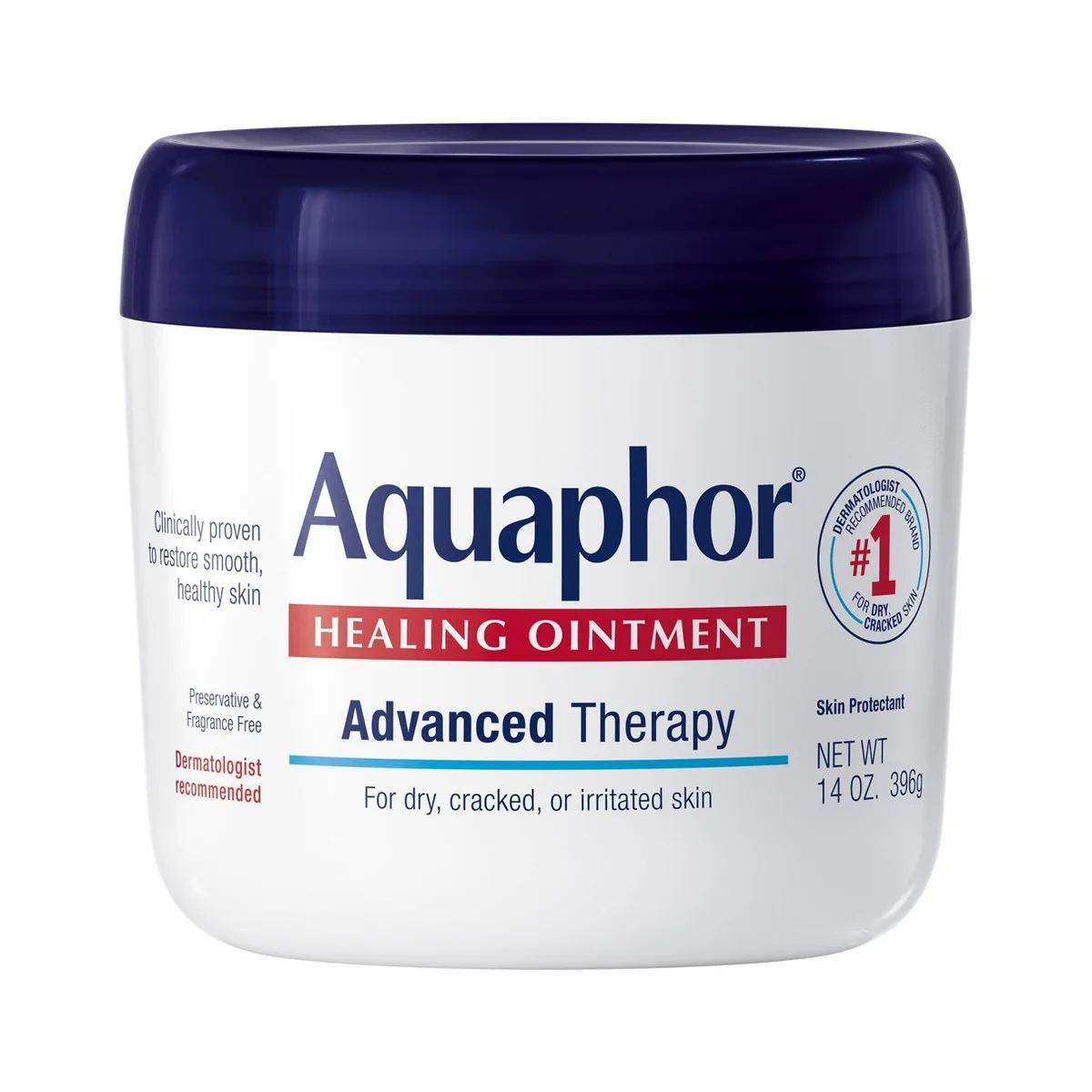
Petrolatum therefore does two jobs at a price nothing else competes with: barrier substitution and aftercare occlusion. Vaseline Original Healing Jelly is the plain version. Aquaphor Healing Ointment adds panthenol and glycerin in a slightly less greasy base, and CeraVe Healing Ointment folds in ceramides. For hands that split every winter, whether petrolatum is genuinely the best option for cracked hands has a more specific answer than "put cream on".
The two cheap actives: oat and urea
Neither of these is an active in the marketing sense. Both are actives in the regulatory or pharmacological sense, which is a higher bar.
Colloidal oatmeal is a recognised over-the-counter skin protectant active in the United States, with monograph labelling covering temporary protection and relief of minor skin irritation and itching from rashes, eczema and insect bites. The anti-inflammatory work has been traced to avenanthramides, phenolic compounds that suppress NF-κB signalling in keratinocytes at strikingly low concentrations and reduce scratching in animal itch models. The only thing to get right is buying the specification rather than approximating it, because "colloidal" describes a particle size and dispersion behaviour that a blender does not produce.
Urea is the more interesting of the two because it is two different ingredients depending on the number on the tube. At low concentrations it behaves as a humectant, increasing the water-binding capacity of the stratum corneum and improving corneocyte flexibility — this is the version in an everyday body lotion. Above that it becomes progressively keratolytic, disrupting hydrogen bonding within keratin filaments and loosening compacted corneocytes, which is what makes the medium band useful for genuinely hyperkeratotic skin: thickened heels, ichthyosis, keratosis pilaris, the sandpaper texture that no amount of ordinary moisturiser fixes. Irritation potential rises with concentration in step, and the evidence base — as reviewers have noted — leans on small trials with heterogeneous outcome measures. So it is well-founded rather than definitively settled.
The practical rule is to match the number to the problem: humectant strength for daily dryness, medium strength for thickened skin, and nothing high-strength on facial skin without a reason. The colloidal oatmeal entry and the urea entry both set out where the evidence sits. Aveeno Eczema Therapy Moisturizing Cream carries oatmeal as a declared drug active; CeraVe Intensive Moisturizing Cream is a straightforward urea-plus-ceramide route for rough, dry body skin.
Bleach baths, and the version of the story that is actually true
This is the one where the honest answer is more useful than the confident one, and where the evidence has moved.
Dilute sodium hypochlorite baths have been recommended for moderate-to-severe eczema for years on the theory that reducing staphylococcal colonisation reduces flares. The best current synthesis is a meta-analysis of 10 randomised trials with 307 participants, using harmonised individual patient data, Bayesian analysis and GRADE. It found that bleach baths probably improve clinician-reported severity — a relative improvement of about 22%, moderate certainty — with roughly one in ten patients achieving a halving of their severity score. Reduction in skin Staphylococcus aureus was low certainty. Itch, patient-reported severity, sleep, quality of life and flare risk showed no clear difference, at low to very low certainty.
And here is the part that rarely makes it into the recommendation. An earlier systematic review compared bleach baths specifically against plain water baths. Of the four studies making that comparison, two favoured bleach, one favoured water, and one found no significant difference. Which raises the genuinely useful possibility that a substantial part of the benefit is the bathing — regular immersion, followed by prompt emollient — rather than the hypochlorite.
That possibility does not make bleach baths worthless. It is a reason to be precise: the intervention has moderate-certainty benefit on clinician-rated severity, uncertain benefit on how the patient actually feels, and an active comparator that costs nothing at all. If your eczema is mild, the bath is likely doing most of the work. If it is moderate to severe, it is a reasonable adjunct with a real but modest effect size.
Two safety points that are not negotiable. Concentration must come from your clinician rather than from a blog, because the correct dilution depends on the bleach product's own strength and getting it wrong produces a chemical irritant exposure across your entire body surface. And never combine bleach with any other cleaning product — the chemistry there is genuinely dangerous. Whether bleach baths work covers the protocol properly, and the eczema pathway places it against the treatments carrying larger effects.
Zinc oxide, filed under the wrong aisle
Most people meet zinc oxide as a sunscreen filter and never encounter its other job, which is arguably the more useful one.
As a thick paste it is a physical barrier with mild astringent and soothing properties, designed to sit on skin that is wet, macerated or under constant frictional or chemical insult. That is the entire logic of nappy rash cream, and the situations it addresses do not stop at infancy: irritant dermatitis around the mouth from lip-licking, chafing along a waistband or between thighs, the skin around a wound edge, hands that are washed twenty times a shift, and any weeping area where an ointment simply slides off. A paste stays put where an ointment does not, which is the whole point of the format.
It is also, unusually for anything in dermatology, essentially free of downside. Zinc oxide has a very low sensitisation profile, no absorption concern in this use, and no meaningful interaction with anything else you might apply nearby. The cosmetic objection is that it is opaque and visible, which is a fair complaint and irrelevant for the situations above.
The zinc oxide entry covers both of its roles. Vanicream Diaper Rash Cream is the fragrance-free version of the paste, and Avène Cicalfate+ Restorative Protective Cream is the same idea reformulated for a face and priced accordingly, which is worth knowing before you assume the expensive one is doing something structurally different.
The sixth item, and the honest limits
The sixth thing on the list is a plain ceramide-containing emollient, and it is here rather than higher up because it is the least surprising entry — but leaving it out would be dishonest, since a barrier lipid blend is the daily workhorse that the other five support. Ceramides with cholesterol and fatty acids are what the stratum corneum's mortar is actually made of, and CeraVe Moisturizing Cream remains the reference-cheap version of that idea.
Which brings us to the real cost lever, and it is not price per tube. It is how much you apply. Almost everyone under-doses topicals badly, and an emollient applied in a token smear is an emollient that does nothing regardless of what is in it. The Fingertip Unit Calculator converts a body area into an actual quantity, and running it once is genuinely startling for most people — the correct amount for a pair of legs is far more than instinct suggests. If you have discovered that the expensive thing on your shelf shares its working ingredients with something a fraction of the price, Dupe Finder is built to make that swap explicit rather than a guess.
Now the limits, because a list like this gets over-extended within about a week of being published.
None of these treats inflammation. Eczema that is red, itching and spreading needs an anti-inflammatory — a topical corticosteroid or a calcineurin inhibitor — and emollients support that treatment rather than replacing it. Reaching for petrolatum instead of the steroid is how a fortnight's flare becomes a season's.
None of these treats acne, and several will make it worse on the face. None addresses pigment. None is anti-ageing in any meaningful sense — there is no retinoid, no vitamin C, no peptide on this list, and those categories have real evidence that these items do not substitute for. And apart from zinc oxide in an actual sunscreen formulation, none of this protects you from ultraviolet.
The correct way to hold the list is as a floor, not a ceiling. Knowing that the cheap versions of barrier repair, occlusion, itch relief and keratolysis are genuinely excellent is what frees you to spend money on the categories where price actually buys something. Our affordable moisturiser ranking and the wider budget list cover that middle ground, and the general principle holds: the expensive thing has to justify itself against the pantry, not the other way round.
Products mentioned
Independently reviewed and scored — the real products behind this piece.



- Therapy guide Eczema Where these staples sit against treatments with larger effects.
- Ranked list Best Affordable Moisturizers The middle ground above the pantry.
- Ranked list Best Moisturizers Under $25 The wider budget list.
- Ingredient Petrolatum (Petroleum Jelly) Barrier substitution, not surface film.
- Ingredient Colloidal Oatmeal A monographed skin protectant active.
- Ingredient Urea (Carbamide) Humectant low, keratolytic high — the number is the decision.
- Ingredient Zinc Oxide The barrier-paste role most people never meet.
- Ingredient Ceramides What the stratum corneum's mortar is actually made of.
- Question Do bleach baths actually help eczema? The protocol, and the water-bath comparison.
- Question Is plain petrolatum really the best thing for cracked hands? A more specific answer than 'moisturise'.
References
- Effects of petrolatum on stratum corneum structure and function — Journal of the American Academy of Dermatology, 1992
- Infection and allergy incidence in ambulatory surgery patients using white petrolatum vs bacitracin ointment. A randomized controlled trial — JAMA, 1996
- Avenanthramides, polyphenols from oats, exhibit anti-inflammatory and anti-itch activity — Archives of Dermatological Research, 2008
- Clinical evidences of urea at medium concentration — International Journal of Clinical Practice, 2020
- Bleach baths for atopic dermatitis: A systematic review and meta-analysis including unpublished data, Bayesian interpretation, and GRADE — Annals of Allergy, Asthma & Immunology, 2022
- Efficacy of bleach baths in reducing severity of atopic dermatitis: A systematic review and meta-analysis — Annals of Allergy, Asthma & Immunology, 2017
- 21 CFR Part 347 — Skin Protectant Drug Products for Over-the-Counter Human Use — US Code of Federal Regulations, 2003
Every cited link is verified to resolve to the paper named. Where a source could not be independently confirmed, it is listed without a link rather than pointing you somewhere wrong.
Frequently asked
Does petroleum jelly suffocate skin or stop it healing?
The opposite, in the study that tested it directly. Barrier recovery after acetone disruption was faster on petroleum-jelly-treated skin than on untreated skin, and tracer work found the petrolatum distributed through the intercellular spaces at every level of the stratum corneum rather than sitting on top as a film. It behaves as a temporary substitute for the skin's own intercellular lipids while they are rebuilt.
Should I use antibiotic ointment on a minor wound?
For a clean minor wound, usually not. In a randomised trial of over nine hundred surgical patients, white petrolatum matched bacitracin on infection rate and healing, and the bacitracin arm produced cases of allergic contact dermatitis while the petrolatum arm produced none. Topical antibiotic ointments are common sensitisers and unnecessary in most routine aftercare. Signs of actual infection are a reason to see someone, not to escalate ointments.
What urea concentration should I buy?
Match it to the problem. Lower concentrations behave as a humectant and suit everyday dryness. The medium range becomes keratolytic and is where thickened, scaly or hyperkeratotic skin responds — heels, keratosis pilaris, ichthyotic skin. Irritation potential climbs with concentration, so higher strengths belong on tough body skin rather than the face, and broken or inflamed skin is not the place to start.
Are bleach baths actually worth doing?
For moderate-to-severe eczema they have moderate-certainty evidence of improving clinician-rated severity by around a fifth, with roughly one in ten patients halving their score. Effects on itch, sleep and quality of life are uncertain, and an earlier review found no clear advantage over plain water baths, which suggests the bathing itself matters. Get the dilution from your clinician, never mix bleach with other products, and treat it as an adjunct.
If cheap products work this well, is expensive skincare pointless?
No — the list is deliberately narrow. These items do barrier repair, occlusion, itch relief and keratolysis extremely well and nothing else. They do not treat inflammation, acne or pigment, none of them is a retinoid or an antioxidant, and only zinc oxide in an actual sunscreen protects from ultraviolet. The point of knowing the cheap floor is so that money goes to the categories where it genuinely buys a different result.