K-Beauty Is Sold on Hydration. Its Best Work Is Arguably on Oily Skin.
The dewy-layering marketing reads as a warning if you are congested — and it is hiding the strongest mass-market lineup anywhere for exactly that skin.
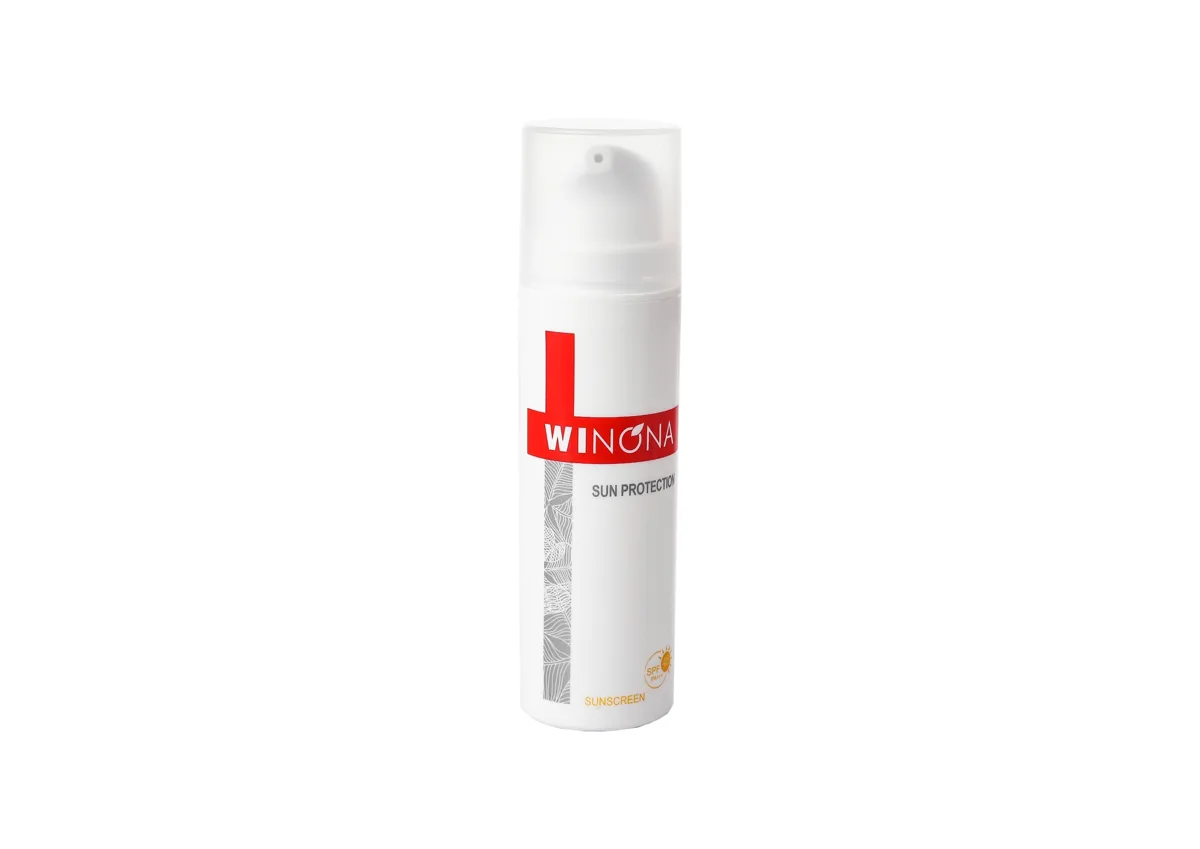
An all-organic, four-filter European-style set including both Tinosorbs and ethylhexyl triazone, delivered in a water-based, fragrance-free, alcohol-free lotion that dries to a starch-matte finish and rinses off with ordinary cleanser. That pairing of a serious filter roster with an everyday, non-waterproof texture is what makes it a daily office sunscreen rather than a beach one, and the 5 g and 15 g tubes mean you can trial it for pocket money.
Winona's everyday sunscreen is quietly one of the better-specified all-organic formulas you can buy for under thirty dollars: four modern filters including both Tinosorbs, no fragrance, no alcohol, and a starch-matte finish that behaves under makeup. It isn't water-resistant and its SPF is the brand's own number, but as a daily office sunscreen for combination and sensitive skin it makes a strong case.
Because no reviews exist on Winona's overseas store and its Amazon pages could not be read, no Western user base informs this assessment; it rests instead on the declared four-filter formula, a combination that is thoroughly characterised in the sunscreen literature, and on the brand's long domestic use. The SPF 48 PA+++ figure is a manufacturer measurement under Chinese testing rules and has not been independently verified.
The case for it
What would change this: A declared concentration would move this to a firmer reading of the dose.
Same rule for everyone. “Full protection” is the verdict on 2,288 of 45,024 concern verdicts across the catalog; rule P1 decided 2,232 of them. As of September 25, 2026, engine 5.1.1.
Brand or formulator? Disclose a concentration or correct a fact →
The studies behind the evidence row
The case for it
What would change this: A researched evidence row for the lead active would replace this with a verdict.
Same rule for everyone. “Good choice” is the verdict on 1,938 of 45,024 concern verdicts across the catalog; rule F2 decided 1,938 of them. As of September 25, 2026, engine 5.1.1.
Brand or formulator? Disclose a concentration or correct a fact →
Also listed for Excess Oiliness — the actives here (Ethylhexyl Triazone, Octinoxate, Starches & Absorbent Powders, Tinosorb) are in our research queue for that concern; there is no verdict until their evidence rows are written. That is a gap in our table, not a mark against the product.
Does the jobDoes what a sunscreen is for: UVA coverage, kind to the skin wearing it. Not measured from the label: pleasant enough to actually use.
A verdict is DermApproved’s assessment of how well a product’s ingredients fit a concern — never a claim about what the product treats. Evidence dots and collected reviews sit beside it and are never blended in. Rules 0.5.1 · evidence table ev-2026.09-r228 · how we decide
Forty-eight is not a number sunscreens usually wear. Brands round up: 48 becomes 50, 50 becomes 50+, and the label ends up saying the same thing as every other label on the shelf. Chinese regulation does not allow that. A sunscreen registered there prints the SPF it measured, so a lotion that tested at 48 says 48, and Winona's everyday sunscreen arrives in overseas shopping carts wearing a figure that looks like a typo. It isn't. It is a small window into a different regulatory culture, one that treats the number as a measurement rather than a marketing tier, and it happens to sit on a formula that deserves more attention than its awkward label will get it.
The filter roster is the reason. Octinoxate leads, as it does in a great many sunscreens, but what follows is the European playbook: ethylhexyl triazone, the most efficient UVB absorber available by weight, and then both Tinosorbs, bemotrizinol dissolved in the oil phase and bisoctrizole as a particulate, photostable and broad-spectrum and the reason the PA+++ on the label is credible. That is four filters, no minerals, and no avobenzone or octocrylene, the two organic filters most often behind stinging. This is the combination a formulator reaches for when the brief is high protection in a light texture that will not upset reactive skin, and it is one that has only recently become fully available on US shelves with the addition of bemotrizinol to the American monograph.
The texture is the second surprise. This is a water-based lotion, not a silicone milk, and the third ingredient is aluminium starch octenylsuccinate, an oil-absorbing starch that most sunscreens use in trace amounts if at all. Here it is placed high enough to define the finish, which is soft, powdery and matte within a minute of application. There is no white cast, because there are no minerals to cast one, and no dewy film, because the starch has drunk it. Foundation and powder go on over it without pilling, which makes it a primer as much as a sunscreen for combination and oily skin. Dry skin will read the matte as a slight tightness and should moisturize underneath, but it is not a drying formula, just a dry-feeling one.
Then the Winona bench, familiar from its clinic-channel repair creams: purslane extract, bisabolol, ginger root, tocopheryl acetate and allantoin. In an all-organic sunscreen there is no mineral cooling to fall back on, so these carry the soothing brief alone, and they carry it adequately. Purslane has small clinical studies, several from Chinese dermatology groups close to the brand, on reducing redness in sensitive skin; bisabolol and allantoin have decades of use behind them. The absence list matters as much: no fragrance, no alcohol, no colourants. Reactive skin that flinches at most chemical sunscreens tends to be fine with this one, which is what Winona built its reputation on.
The limits are practical rather than chemical. First, it is not water-resistant. Winona sells it as the everyday sunscreen and the Aqua-shield milk as the outdoor one, and the division is honest: this lotion is made to be removed with an ordinary cleanser, which is a pleasure on a workday and a liability on a beach. Sweat through it and it needs reapplying. Second, the SPF is the manufacturer's measurement under Chinese testing rules, with no independent laboratory result published, and imported sunscreens have a documented history of testing below their labels when checked abroad. The filter set is easily capable of the number; hold it as a claim all the same. Third, the overseas record is thin. The brand's US store shows no reviews yet and its Amazon listings could not be read, so there is no Western crowd verdict to lean on, only the brand's very large domestic base.
Smaller notes: polysorbate 20 and the ester emollients make it a poor fit for fungal-acne-prone skin, and octinoxate keeps it off the reef-safe list. The preservative system is light, relying on pentylene glycol and sorbitan caprylate rather than conventional preservatives, which the airless pump is there to protect; keep the tube capped and finish it within the year.
On price, the 50 g pump at around twenty-nine dollars is reasonable for this filter set, and the 5 g and 15 g tubes are the rare chance to trial a sunscreen for pocket money before committing. At a full daily dose the large tube lasts six to seven weeks, in line with any face sunscreen.
What this comes to is an everyday sunscreen that is better than it looks and better than its number suggests. For combination, oily and sensitive skin that wants a matte, fragrance-free daily SPF with a modern filter roster and a finish that makes makeup easier, it is a genuinely good choice and a cheap one to try. For beach days, pool days and sweaty commutes it is the wrong Winona, and for anyone who needs an independently verified SPF it is, like most imports, a matter of trusting the label. The strange 48 on the front is the most honest thing about it.
The hero actives that drive this product's performance.
| Ingredient | Function | Evidence |
|---|---|---|
| Octinoxate (Ethylhexyl Methoxycinnamate) | Second on the list and the main UVB engine of an all-organic filter set, here formulated in a water-based lotion rather than a silicone one; its photo-instability is covered by the two Tinosorb filters lower down, which is the arrangement that lets a cinnamate-led sunscreen hold its number through a day. | Regulator-approved for Sun Damage · emerging certainty |
| Ethylhexyl Triazone | The most efficient UVB absorber available per gram, which is how this lotion reaches SPF 48 without a heavy octinoxate load or any mineral powder; it's the filter that makes the texture this light. | Regulator-approved for Sun Damage · limited certainty |
| Bemotrizinol + Bisoctrizole (Tinosorb S + Tinosorb M) | The photostable pair that supplies the UVA behind the PA+++: bemotrizinol dissolved in the oil phase and bisoctrizole as a particulate that both absorbs and scatters, together stabilising the octinoxate and covering the long-UVA range that a cinnamate-and-triazone combination would otherwise leave thin. | Regulator-approved for Sun Damage · limited certainty |
| Portulaca Oleracea (Purslane) Extract + Bisabolol | Winona's house anti-redness pair, present in the same slot as in its repair creams, to soften the heat-flush that a day in sun provokes on reactive skin; in an all-organic sunscreen that has no mineral cooling effect, they carry the 'soothing' half of the label on their own. | Not yet assessed |
| Aluminum Starch Octenylsuccinate | Third on the list, an unusual placement for an oil-absorbing starch, and the reason the lotion dries to a matte, powdery, makeup-friendly finish instead of the dewy film most organic sunscreens leave. | Not yet assessed |
Ingredient standings describe the active at treatment-level doses and vehicles; this product's own condition grades weigh its actual formula.
Aqua, Ethylhexyl Methoxycinnamate, Aluminum Starch Octenylsuccinate, Styrene/Acrylates Copolymer, Glycereth-26, C12-15 Alkyl Benzoate, Caprylyl Methicone, Pentylene Glycol, Butylene Glycol, Ethylhexyl Triazone, Bis-Ethylhexyloxyphenol Methoxyphenyl Triazine, Methylene Bis-Benzotriazolyl Tetramethylbutylphenol, Glycerin, C14-22 Alcohols, Triacontanyl PVP, Steareth-21, Dimethicone, Sorbitan Caprylate, Portulaca Oleracea Extract, Bisabolol, Zingiber Officinale (Ginger) Root Extract, Tocopheryl Acetate, Allantoin, Xanthan Gum, Decyl Glucoside, Acrylamide/Ammonium Acrylate Copolymer, PEG-8 Laurate, C12-20 Alkyl Glucoside, Acrylates/C10-30 Alkyl Acrylate Crosspolymer, Disodium EDTA, Polyisobutene, Polysorbate 20, Propylene Glycol
sunscreen
AM
Apply as the final morning step over an absorbed moisturizer; the starch-matte finish takes powder and foundation well, so no primer is needed. Reapply every two hours outdoors. It removes with an ordinary cleanser, one of the few conveniences of a water-based, non-waterproof formula.
Protection is immediate and the matte finish sets within a minute. Purslane and bisabolol reduce the evening flush after sun exposure from the first wear; no cumulative effect beyond the long-term reward of consistent daily protection should be expected.
The filter combination here is well documented in the European sunscreen literature. Ethylhexyl triazone is the most effective UVB absorber available on a per-gram basis, with high photostability, which allows a high SPF at a low total filter load and explains the light texture. Octinoxate (ethylhexyl methoxycinnamate) supplements the UVB absorbance but photodegrades in sunlight; bemotrizinol (bis-ethylhexyloxyphenol methoxyphenyl triazine) is a broad-spectrum, highly photostable triazine that both covers UVA and has been shown to stabilise less stable partners in the same formulation. Bisoctrizole (methylene bis-benzotriazolyl tetramethylbutylphenol) is a micronised particulate filter that absorbs across UVB and UVA and also scatters light, adding a mineral-like component without a mineral's whitening. Together the four cover the full UVB and UVA range that a PA+++ grade implies, and their photostability profile supports protection holding through a day, though the specific SPF and PA values are the brand's own measurements under Chinese test protocol with no independent published result.
Tolerability follows from the omissions. Avobenzone and octocrylene are the organic filters most associated with stinging and contact reactions, and neither appears; fragrance, the leading cosmetic allergen class, and alcohol, a common irritant on barrier-compromised skin, are also absent. Aluminium starch octenylsuccinate is a modified starch used for oil absorption and a matte feel, with a long safety record. Portulaca oleracea extract has anti-inflammatory and antioxidant activity in laboratory work and in small clinical studies of sensitive-skin subjects, many from Chinese dermatology groups associated with the brand, so the evidence is real but not independent. Bisabolol and allantoin have established soothing data.
The preservative system is unconventional, relying on pentylene glycol and sorbitan caprylate, both multifunctional antimicrobials, in an airless pump rather than a conventional preservative, which is a legitimate approach so long as the packaging integrity holds. Polysorbate 20 and the ester emollients are the components relevant to Malassezia-prone skin.
Daily sunscreen for patients with sensitive or rosacea-prone skin is a standard recommendation, and the practical clinical problem is finding one they will tolerate and actually use. An all-organic formula built on the newer triazine and benzotriazole filters, without avobenzone, octocrylene, fragrance or alcohol, is generally regarded as a well-tolerated design, and its matte, makeup-friendly finish addresses the adherence problem directly for patients who won't wear a greasy film. Clinicians would note the trade-off: a non-water-resistant lotion is appropriate for office and commuting days but should be swapped for a water-resistant product for outdoor exposure, and reapplication every two hours applies regardless. The Chinese labelling convention of printing the measured SPF is worth explaining to patients puzzled by the number 48, and the usual caveat about imported sunscreens applies, namely that the figure is a manufacturer measurement not verified under the US protocol. Patients with fungal acne would be advised the emulsifier profile is unsuitable.
Pump a quarter teaspoon into the palm for the face and neck and spread it in thin, even passes as the final step of the morning routine, over a moisturizer that has fully absorbed; dry skin should not skip that layer, since the matte finish reads tight on its own. Let it set for a minute before makeup, which goes on directly with no primer. Reapply every two hours in direct sun and immediately after sweating, because the formula is not water-resistant. In the evening it removes with a regular cleanser and needs no oil step. Keep the tube capped between uses to protect the light preservative system, and finish it within a year of opening.
Twenty-nine dollars for the 50 g pump is fair for a four-filter set of this quality, and the 15 g tube at around ten dollars and the 5 g at three are unusually cheap ways to trial a sunscreen before committing, which is worth something for anyone with reactive skin who has thrown out half-used tubes before. The 50 g is the best value per gram for daily use. What the money buys is a modern, well-tolerated filter roster and a finish that replaces a primer; what it does not buy is water resistance, an independently verified SPF or an overseas track record, since the brand's clinical pedigree is domestic. For a daily office sunscreen the price is justified; for a beach product it isn't the right purchase at any price.
Combination, oily and sensitive skin that wants a fragrance-free daily sunscreen with a modern all-organic filter set and a matte finish that sits well under makeup. It suits office days and commutes, and anyone who wants to trial a sunscreen cheaply with the travel sizes.
Anyone needing water resistance for swimming, sport or sweaty days, since this rinses off with plain cleanser. Fungal-acne-prone skin, because of the polysorbate and esters. Reef-conscious buyers avoiding octinoxate, and very dry skin that dislikes a matte, powdery finish.
A light, white, water-based lotion with a faint starchy slip that spreads thin and dries in under a minute to a soft, powdery matte finish with no residue.
Nothing added; a faint, clean, slightly starchy note on application that vanishes as it dries.
A tall, narrow white airless pump tube with red Winona branding and a clear cap, 50 g, with 15 g and 5 g travel tubes also sold. The pump meters cleanly and keeps the preservative-light formula sealed from air.
There is no white cast, no tint and no stinging; the only adjustment is to the matte, faintly powdery feel, which dry skin may read as slightly tight until a moisturizer goes underneath. Nothing purges and there's no adjustment period.
Six to seven weeks of daily face use at a full dose from the 50 g tube; the 15 g size lasts about two weeks and is the sensible trial.
All Year
Winona's SPF 48 lotion is the brand's long-running everyday sunscreen at home, sold through pharmacies and dermatology channels as the daily-wear partner to its sensitive-skin creams, and it predates the water-resistant Aqua-shield milk that joined the range later for outdoor use. It reached the brand's overseas store in 2025 alongside the rest of the core line, still wearing its unusual SPF 48 figure.
Winona, created by Botanee in 2008 with dermatologist input, is the dominant sensitive-skin brand in Chinese hospital dermatology channels and publishes clinical work mostly in Chinese-language journals. Outside China its history is short, its overseas store is new, and its SPF figures are the manufacturer's own measurements.
SPF 48 is a strange number, so it must be a lower-quality sunscreen than an SPF 50.
Chinese labelling rules require the measured value to be printed rather than rounded up to 50 or 50+, so SPF 48 simply reports the test result. In protection terms the difference between 48 and 50 is negligible; both block roughly 98 percent of UVB at a full dose.
A sunscreen without a mineral filter can't be gentle enough for sensitive skin.
Tolerability depends on which organic filters and what else is in the base. This one uses the newer triazine and benzotriazole filters, skips avobenzone and octocrylene, and carries no fragrance or alcohol, which is why it suits reactive skin despite being all-organic.
Chinese cosmetics regulations require sunscreens to print the measured SPF rather than round it, so the label reports the test result. Protection at 48 and 50 is practically identical; both filter around 98 percent of UVB when applied at the full dose.
No. It is a water-based everyday lotion designed to be removed with a normal cleanser, which is convenient for office days but means it should be reapplied after sweating and isn't the right choice for swimming or sport. Winona's Aqua-shield milk is the brand's water-resistant option.
Four organic filters: ethylhexyl methoxycinnamate (octinoxate), ethylhexyl triazone, bis-ethylhexyloxyphenol methoxyphenyl triazine (bemotrizinol) and methylene bis-benzotriazolyl tetramethylbutylphenol (bisoctrizole). There are no mineral filters, which is why it leaves no white cast.
Well. The aluminium starch octenylsuccinate high on the list dries it to a powdery matte finish that grips foundation and powder without pilling, so it doubles as a primer for combination and oily skin. Dry skin should moisturize first, as the finish can feel slightly tight on its own.
Yes on both counts. There's no fragrance, no alcohol and no avobenzone or octocrylene, and the base carries purslane, bisabolol and allantoin from Winona's sensitive-skin creams. Reactive skin that stings with typical chemical sunscreens generally tolerates this filter combination well.
The 15 g tube. It costs around ten dollars, lasts roughly two weeks of daily face use, and is enough to judge finish and tolerance before committing to the 50 g pump, which is the better value per gram.
Recurring themes our editors read across retailer reviews of this product — summaries in our words, not quotations, and not a substitute for your own patch test.
Light, matte, makeup-friendly finish
No stinging on reactive skin
Removes with a regular cleanser
Travel sizes make it easy to trial
SPF 48 label is unusual and unverified outside China
Not water-resistant for beach or sport days
No US review base yet