One Cream, Growing List: How Topical JAK Inhibitors Keep Collecting Indications
Two are now approved, the indications keep expanding, and both carry a boxed warning inherited from a pill that behaves nothing like a cream.
Read the preview
From the DermApproved blog, in Prescription Skincare: topical JAK inhibitors. There are two on the market now, and the list of diseases they're approved for keeps growing. They also carry a boxed warning borrowed from a pill — and the absorption data says roughly six percent versus eighty. Which doesn't mean the warning is meaningless. For the full breakdown, visit dermapproved.com/blog.
Two on the market, and a list that keeps growing
Topical ruxolitinib arrived in 2021 for atopic dermatitis and has been accumulating ground since. Its current label covers short-term and non-continuous chronic treatment of mild-to-moderate atopic dermatitis in non-immunocompromised patients aged 2 and over whose disease is not controlled by other topical prescription therapies, plus nonsegmental vitiligo in patients aged 12 and over. The paediatric expansion down to age 2 came later than the original approval, which is the ordinary sequence for a new molecule.
In July 2025 it stopped being alone. Delgocitinib cream was approved for moderate-to-severe chronic hand eczema in adults for whom topical corticosteroids are inadvisable or have failed — the first and only approved treatment for that indication, which had spent decades being managed with steroids, gloves and resignation. It inhibits JAK1, JAK2, JAK3 and TYK2, a broader profile than ruxolitinib's JAK1/JAK2 selectivity, and its phase 3 programme reported treatment success rates up to 37.7% with twice-daily application over 16 weeks.
Beyond the approved list sits an active investigational pipeline: hidradenitis suppurativa, lichen sclerosus and prurigo nodularis among them.
That pattern — one mechanism collecting indications across diseases that look nothing alike — is the actual news. It marks a shift away from the steroid-for-everything model that has governed topical dermatology for seventy years, toward drugs aimed at a specific signalling pathway that several diseases happen to share.
What JAK inhibition is, in one paragraph
Cytokines — the signalling proteins that drive inflammation — bind receptors on the cell surface. Many of those receptors have no enzymatic activity of their own, so they depend on associated enzymes called Janus kinases, of which there are four: JAK1, JAK2, JAK3 and TYK2. When a cytokine docks, the JAKs phosphorylate transcription factors called STATs, which travel to the nucleus and switch on inflammatory gene programmes.
Blocking a JAK interrupts that relay for every cytokine that routes through it. That is why a single molecule can touch atopic dermatitis, vitiligo, hand eczema and alopecia areata: those diseases have different triggers and converge on shared signalling.
It is also, precisely, why the safety question exists. The same relay does useful things — antiviral defence, blood cell production, immune surveillance. A drug that quiets the pathway systemically quiets those too. Whether it does so at a given dose is an entirely separate question from whether it can, and that distinction is the whole story of the next section.
The boxed warning paradox
Both topical JAK inhibitors carry a boxed warning covering serious infections, mortality, malignancy, major adverse cardiovascular events and thrombosis. It is inherited from the oral JAK class, and it reads alarming enough that patients routinely decline the prescription in the room.
The pharmacokinetics complicate it considerably. Across three double-blind trials involving 1,248 patients, mean bioavailability of topical ruxolitinib was 5.68% — against roughly 80% for oral JAK1/2 inhibitors across the 5 to 200 mg dose range. A 2025 paper in the Journal of Drugs in Dermatology named this directly, reappraising the cream's safety through the lens of its pharmacokinetics and calling the situation a boxed warning paradox.
The outcome data has been consistent with that reading. A real-world safety analysis at one year post-approval found the serious adverse events described in the class warning were not reported with ruxolitinib cream. A retrospective cohort study drawing on the TriNetX network compared systemic risk profiles of topical ruxolitinib against oral JAK inhibitors in atopic dermatitis patients and found the topical users had significantly lower incidences of arterial thrombosis and tuberculosis. A comparative safety review covering both topical agents against systemic JAKs reached broadly the same conclusion.
Now the part that a purely reassuring account would skip, and shouldn't. Pharmacokinetic work also indicates that plasma concentrations from topical application — particularly when applied to more than 20% of body surface area — can fall within the range reached with oral ruxolitinib. The label's usage restrictions exist for that reason. 'Short-term and non-continuous', a maximum weekly tube allowance, and a body surface area ceiling are not bureaucratic hedging; they are the mechanism that keeps systemic exposure low.
So the honest framing is neither 'the warning is meaningless' nor 'this is an oral JAK on your skin'. It is that the warning describes what happens at systemic exposure, the cream produces very little of it when used as labelled, and the labelled limits are the thing doing the work. Someone applying it liberally over most of their body has moved outside the conditions the safety data describes. Our answer on JAK inhibitor safety goes through this in more detail.
Where it actually sits in the ladder
New does not mean first. The realistic sequence, which the label itself encodes, runs like this.
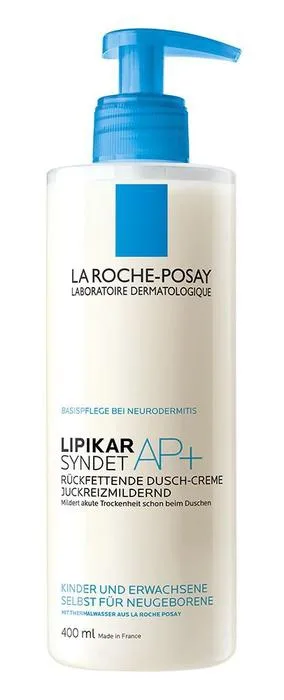
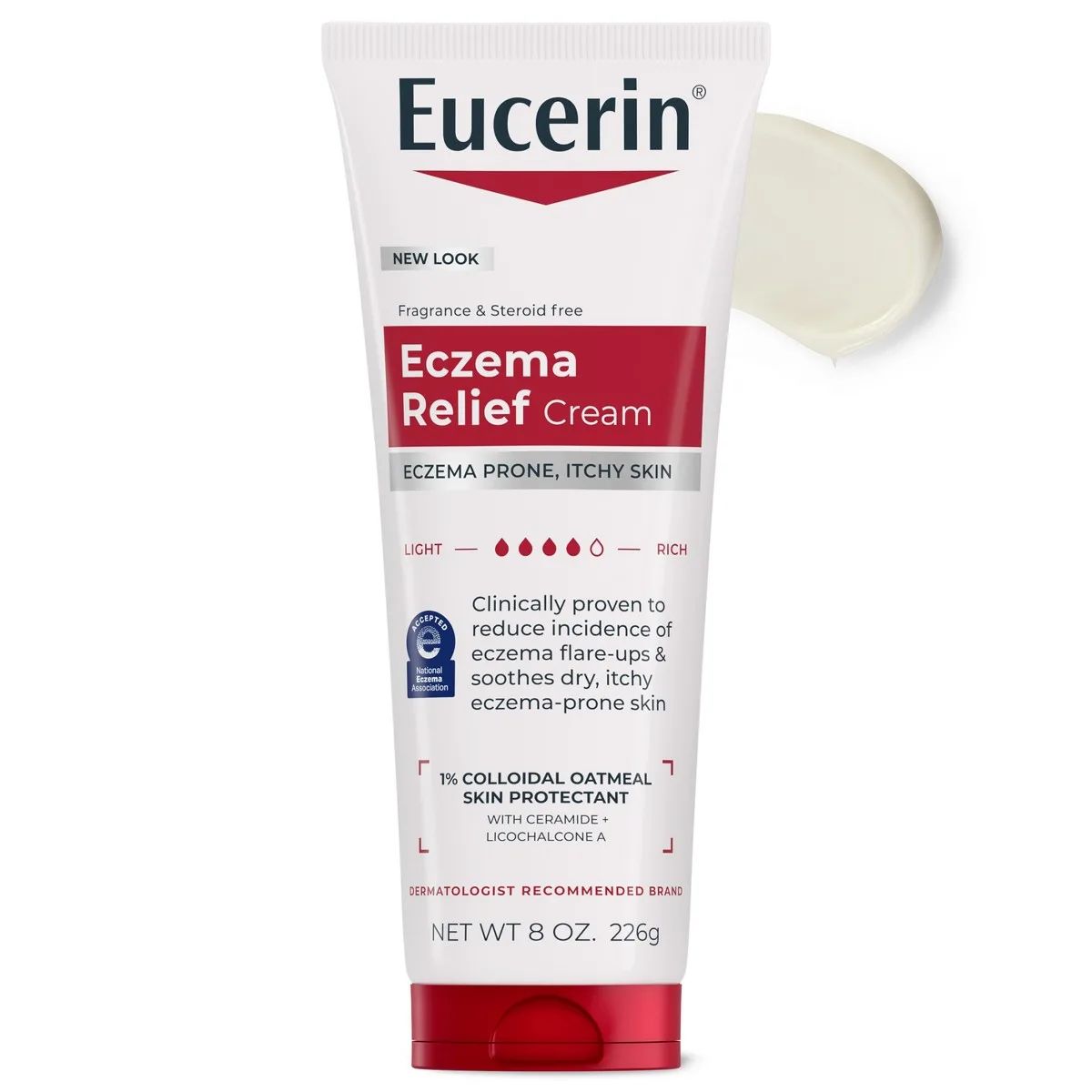
Emollients and trigger control at the base — unglamorous, evidence-backed, and the layer everything else sits on. A ceramide-forward cream such as La Roche-Posay Lipikar Eczema Cream, CeraVe Moisturizing Cream or Vanicream Moisturizing Skin Cream, plus a lipid-replenishing wash like La Roche-Posay Lipikar Syndet AP+ rather than a foaming cleanser. For hands specifically — the delgocitinib indication — SkinFix Eczema+ Hand Repair Cream and Eucerin Eczema Relief Cream cover the same base. Ceramides and colloidal oatmeal are the ingredient families with the most support here.
Topical corticosteroids remain first-line for flares. They are effective, inexpensive, extensively characterised, and the risks of appropriate short courses are more widely feared than the evidence justifies — a mismatch we cover in what topical steroids actually risk and whether topical steroid withdrawal is real.
Calcineurin inhibitors — tacrolimus and pimecrolimus — as steroid-sparing options for the face, eyelids and skin folds, with their own well-known burning-on-application problem. What calcineurin inhibitors are and when they're used covers where they fit.
Topical JAK inhibitors above those: for patients whose disease is not controlled by topical prescription therapy, or for whom it is inadvisable.
With one exception worth stating plainly. In nonsegmental vitiligo, this class did not do something better — it did something that essentially did not exist. Repigmentation from a topical, in a condition where the previous options were phototherapy, off-label steroids and camouflage, is a genuinely new capability rather than an incremental one. The eczema pathway sets out the full escalation for the dermatitis indications.
Cost, prior authorisation, and what to bring
The practical barrier is not clinical. It is the prior authorisation.
Both drugs are premium branded topicals with no generic equivalent, and approval almost always requires documented failure of specified prior therapies — typically topical corticosteroids of stated potency, often calcineurin inhibitors as well, for stated durations. That documentation is the actual gating factor, and it is the part patients arrive without.
So the appointment strategy is administrative rather than medical. Bring a written list of every topical you have used, at what strength, for how long, and what happened — no response, partial response, intolerance, or a specific adverse effect. 'Steroids didn't really work' is not a prior authorisation. 'Triamcinolone 0.1% twice daily for four weeks, cleared then relapsed within ten days, twice' is. Our derm visit prep tool assembles that record, and the eczema control tool tracks flares over time in a form that supports exactly this kind of claim.
Two further practicalities. Manufacturer copay assistance exists for commercially insured patients and is typically unavailable to anyone on government insurance, which inverts the usual affordability assumption. And appeals succeed more often than people expect when the clinician submits specific prior-therapy documentation rather than a general statement of medical necessity — so a denial is a step in the process rather than the end of it.
None of which changes the base layer. A prescription that costs a great deal and works well still sits on top of daily emollient use, and skipping that step is the most common way an expensive topical underperforms.
Products mentioned
Independently reviewed and scored — the real products behind this piece.



- Therapy guide Eczema The full escalation ladder these drugs sit near the top of
- Routine Skincare Routine for Eczema-Prone Skin The daily build that any prescription treatment layers onto
- Ingredient Ceramides The base-layer ingredient family with the most support in barrier disease
- Ingredient Colloidal Oatmeal The other well-supported emollient active in eczema
- Question Are JAK inhibitors safe to take for eczema? The boxed warning question handled at length
- Question What are the actual risks of topical steroids? Why the rung below this one is more feared than the evidence justifies
- Question Is topical steroid withdrawal a real thing? The specific fear that drives patients toward newer topicals
- Question What are calcineurin inhibitors and when are they used? The steroid-sparing rung immediately below
References
- INDIVIDUAL ARTICLE: Ruxolitinib 1.5% Cream and the "Boxed Warning Paradox": Reappraisal of Safety Through the Lens of Pharmacokinetics — Journal of Drugs in Dermatology, 2025
- Real-World Use of Ruxolitinib Cream: Safety Analysis at 1 Year — American Journal of Clinical Dermatology, 2024
- Systemic risk profiles of topical ruxolitinib and oral Janus kinase inhibitors in patients with atopic dermatitis: A retrospective cohort study from the TriNetX network — Journal of the American Academy of Dermatology, 2025
- Topical Ruxolitinib and Delgocitinib Versus Systemic JAK Inhibitors: A Comparative Safety Review — International Journal of Molecular Sciences, 2025
Every cited link is verified to resolve to the paper named. Where a source could not be independently confirmed, it is listed without a link rather than pointing you somewhere wrong.
Frequently asked
Should the boxed warning stop me using a topical JAK inhibitor?
Not on its own. Mean bioavailability of topical ruxolitinib across three double-blind trials was 5.68% against roughly 80% for oral JAK1/2 inhibitors, real-world analysis at one year did not report the class-warning serious adverse events, and cohort data found lower arterial thrombosis and tuberculosis than with oral JAKs. It is a warning about systemic exposure, which the cream produces very little of when used as labelled.
Why does the label limit how much I can apply?
Because the limits are what keep systemic exposure low. Pharmacokinetic work indicates plasma concentrations from topical application over more than 20% of body surface area can reach the range seen with oral dosing. 'Short-term and non-continuous', the weekly tube allowance and the body surface area ceiling are the mechanism behind the safety data, not paperwork.
What is actually approved versus still in trials?
Approved: ruxolitinib cream for mild-to-moderate atopic dermatitis from age 2 and nonsegmental vitiligo from age 12; delgocitinib cream for moderate-to-severe chronic hand eczema in adults, approved July 2025. Investigational: hidradenitis suppurativa, lichen sclerosus and prurigo nodularis among others. Patients routinely lose track of this distinction and ask for an indication that does not yet exist.
Should this replace my topical steroid?
Usually not as a first move. Corticosteroids remain first-line for flares — effective, inexpensive and extensively characterised — and topical JAKs are labelled for patients whose disease is not controlled by topical prescription therapy or for whom it is inadvisable. The exception is nonsegmental vitiligo, where this class provided a capability that essentially did not previously exist.
How do I get it covered by insurance?
By documenting prior therapy failure specifically. Approval typically requires named prior treatments at stated potencies for stated durations, and vague accounts fail. Bring what you used, at what strength, for how long, and exactly what happened. Manufacturer copay assistance exists for commercially insured patients and is generally unavailable on government insurance — and a first denial is a normal step rather than the end.