


One Cream, Growing List: How Topical JAK Inhibitors Keep Collecting Indications
Two are now approved, the indications keep expanding, and both carry a boxed warning inherited from a pill that behaves nothing like a cream.
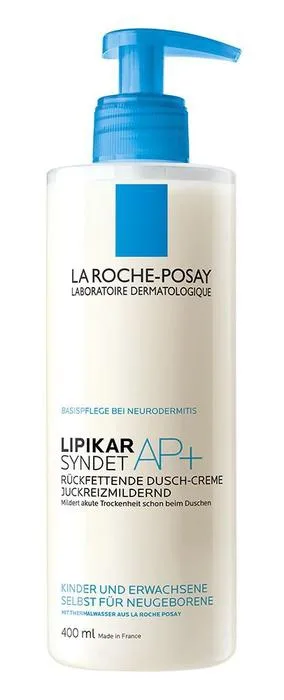
Most body washes use sulfate-heavy detergent systems. LRP Lipikar Syndet AP+ balances cleansing with lipid replenishment (shea butter, niacinamide) and adds Aqua Posae Filiformis for atopic-specific support.
A cream-format body wash built so atopic-prone and dry skin can shower daily without paying for it in tightness and itch. It pairs shea butter and niacinamide with the brand's Aqua Posae Filiformis postbiotic, leaving skin clean but soft rather than stripped. NEA-accepted and well priced for a generous 400 ml. The honest catch: it still contains sodium laureth sulfate, so it is not strictly sulfate-free.
The case for it
Cautions: a stronger surfactant system.
What would change this: The same active in a leave-on form would be judged on its evidence rather than its contact time.
Same rule for everyone. “Supporting role” is the verdict on 8,197 of 45,024 concern verdicts across the catalog; rule R6 decided 2,017 of them. Unchanged since September 5, 2026, engine 5.1.1.
Brand or formulator? Disclose a concentration or correct a fact →
The studies behind the evidence row
The case for it
Cautions: a stronger surfactant system.
What would change this: The same active in a leave-on form would be judged on its evidence rather than its contact time.
Same rule for everyone. “Supporting role” is the verdict on 8,197 of 45,024 concern verdicts across the catalog; rule R6 decided 2,017 of them. Unchanged since September 5, 2026, engine 5.1.1.
Brand or formulator? Disclose a concentration or correct a fact →
The studies behind the evidence row
The case for it
What would change this: A researched evidence row for the lead active would replace this with a verdict.
Same rule for everyone. “Good choice” is the verdict on 1,938 of 45,024 concern verdicts across the catalog; rule F2 decided 1,938 of them. Unchanged since September 5, 2026, engine 5.1.1.
Brand or formulator? Disclose a concentration or correct a fact →
Also listed for Compromised Skin Barrier — the actives here (Probiotics & Prebiotics, Cocamidopropyl Betaine, Shea Butter) are in our research queue for that concern; there is no verdict until their evidence rows are written. That is a gap in our table, not a mark against the product.
Does the jobDoes what a cleanser is for: puts something back, surfactant mildness. Not measured from the label: pH match to skin.
A verdict is DermApproved’s assessment of how well a product’s ingredients fit a concern — never a claim about what the product treats. Evidence dots and collected reviews sit beside it and are never blended in. Rules 0.5.1 · evidence table ev-2026.09-r228 · how we decide
For anyone with eczema-prone skin, the shower is a quiet adversary. You moisturize diligently, you protect the barrier, and then a standard foaming body wash strips away the lipids you have been working to maintain, leaving skin tight, itchy, and primed for the next flare. It is a frustrating loop, and it is the reason dermatologists spend so much time talking about cleansers, not just moisturizers, with atopic patients. Lipikar Syndet AP+ Lipid-Replenishing Cream Wash is La Roche-Posay's answer to that loop: a body and face wash designed so the act of cleaning does not sabotage the barrier work, built specifically for the eczema-prone family member who still has to shower every day.
The name does most of the explaining. Syndet is short for synthetic detergent, indicating a cleansing system built around milder surfactants rather than traditional soap, and lipid-replenishing signals the formula's central idea: put back into the skin what cleansing tends to take out. The surfactant system leads with cocamidopropyl betaine, an amphoteric detergent that is gentler than harsh anionic cleansers, combined with sodium laureth sulfate kept toward a minimum effective concentration. Around that, the formula folds in the barrier-supporting cast. Shea butter delivers emollient lipids that counteract the lipid loss inherent to washing, which is the literal mechanism behind the lipid-replenishing claim. Niacinamide contributes barrier support through ceramide synthesis along with anti-inflammatory activity. Glycerin adds humectant draw. And the formula carries the Lipikar AP+ line's signature active, Aqua Posae Filiformis ferment extract, a postbiotic positioned for anti-itch and microbiome-balancing support in atopic-prone skin, here delivered in a cleanser context. It is NEA-accepted, fragrance-free, and pregnancy-safe.
In use, this is a creamy white gel that produces a mild, medium lather, rinses cleanly, and, most importantly, leaves skin feeling clean without that tight, squeaky, stripped sensation. It is essentially scentless. The immediate payoff is comfortable post-rinse skin; over one to two weeks of consistent use, atopic-prone skin tends to feel more stable and less reactive. It is labeled for both body and face, works AM and PM, and many sensitive-skinned users find it gentler than typical facial cleansers. It is best used as part of a routine, paired with a Lipikar moisturizer after showering, to complete the cleanse-then-replenish cycle the line is designed around.
The limitations are worth stating plainly. Despite the gentle positioning, the formula does contain sodium laureth sulfate, so it is not strictly sulfate-free, and clean-beauty-oriented shoppers who screen out SLS will see it on the INCI list; in practice it is used at a moderate level alongside the milder amphoteric surfactant, but the label is what it is. The shea butter content means the wash is not fungal-acne safe, a consideration mainly for facial use in Malassezia-prone individuals. And because it is a genuinely mild cream wash, the lather is modest, so anyone who equates clean with a thick, foamy, bubbly experience may find it underwhelming; that is a texture preference, and the brand makes a foaming variant for exactly those users. None of this undermines the core function, but it does shape who will be happiest with it.
Value is strong. At around 19 dollars for a generous 400 ml, with larger sizes available, this is well priced for an NEA-accepted, lipid-replenishing cream wash, and the large format plus the option to size up makes the per-ml cost genuinely economical for daily whole-body use. A bottle lasts roughly two to three months at daily use. La Roche-Posay, founded in 1975, is a legacy pharmacy brand with deep clinical credibility and a long dermatology track record, so the price reflects formulation substance and the accreditation process, not a name premium. With a 4.6 average across thousands of reviews, the feedback is consistent.
It is worth underlining why cleanser choice deserves this much attention in the first place, because it is easy to treat a body wash as an afterthought. For atopic-prone skin, the cleanser is not a neutral step; it is one of the most frequent things that either supports or undermines the barrier, day after day. A harsh wash quietly works against every moisturizer you apply, while a gentle, lipid-replenishing one works with them. Over weeks and months, that difference compounds. Choosing a cleanser like this is less about any single shower and more about removing a persistent, low-grade source of irritation from a routine, which is exactly the kind of unglamorous change that keeps eczema-prone skin calmer over the long run.
The recommendation: for dry, sensitive, and atopic-prone skin, and for families managing eczema, this is a dependable, fairly priced daily cleanser that genuinely does not strip. Pair it with a barrier moisturizer afterward and it closes the cleanse-and-replenish loop that keeps atopic skin stable. Just go in knowing it contains a sulfate and lathers gently, and if a foamy shower experience matters to you, the foaming version is the better fit.
The hero actives that drive this product's performance.
| Ingredient | Function | Evidence |
|---|---|---|
| Aqua Posae Filiformis Ferment Extract | LRP's proprietary postbiotic providing anti-itch and microbiome-balancing effects for atopic-prone skin in a cleanser context. | Not yet assessed |
| Shea Butter + Niacinamide | Lipid-replenishing emollient (shea butter) and barrier-supportive niacinamide compensate for the surfactant cleansing, leaving the formula's signature 'lipid-replenishing' positioning rather than the stripped feel of typical body washes. | Established mechanism for Dryness · established mechanism |
| Mild Amphoteric Surfactant System (Cocamidopropyl Betaine) | Gentler than pure sulfate detergent systems. Combined with sulfate at minimum effective concentration to balance cleansing with barrier preservation appropriate for atopic-prone skin. | Not yet assessed |
Ingredient standings describe the active at treatment-level doses and vehicles; this product's own condition grades weigh its actual formula.
Aqua, Cocamidopropyl Betaine, Sodium Laureth Sulfate, Glycerin, Sodium Chloride, Polyquaternium-7, Cocamide MIPA, Niacinamide, PEG-200 Hydrogenated Glyceryl Palmate, Butyrospermum Parkii (Shea) Butter, Aqua Posae Filiformis Ferment Extract, PEG-7 Glyceryl Cocoate, Cocoyl Sarcosine, Sodium Hydroxide, Salicylic Acid, Tetrasodium EDTA, Phenoxyethanol
cleanser
AM & PM
Daily body and face wash. Apply to wet skin, lather gently, rinse with lukewarm water. Pair with Lipikar moisturizer post-shower for full barrier support routine.
Immediate: clean, non-tight skin feel. 1-2 weeks: stable atopic-prone skin comfort.
The formula's design centers on surfactant chemistry and lipid replenishment rather than a single hero active. Conventional body washes can disrupt the skin barrier because harsh anionic surfactants strip stratum corneum lipids and can elevate skin pH, both of which worsen atopic, eczema-prone skin. A syndet, or synthetic detergent, system addresses this by leading with milder surfactants: cocamidopropyl betaine is an amphoteric detergent that is gentler and less stripping than strong anionic cleansers, and combining it with sodium laureth sulfate at a controlled concentration balances effective cleansing against barrier preservation. The lipid-replenishing element is the formula's distinguishing feature: shea butter contributes emollient triglycerides that help offset the lipid depletion inherent to washing, so skin is left softer post-rinse rather than tight. Niacinamide adds a well-supported mechanism here, it upregulates ceramide and stratum corneum lipid synthesis, directly supporting barrier function, and contributes anti-inflammatory activity, both relevant in atopic skin where barrier dysfunction is central. Glycerin provides validated humectant support. The Aqua Posae Filiformis postbiotic targets the cutaneous microbiome, an approach grounded in the established observation that atopic skin shows altered microbial balance, though independent validation of this specific ferment sits at a promising rather than fully-established evidence tier. The combined logic is a cleanser engineered to clean while minimizing barrier disruption and actively returning lipids, addressing the cleanse-then-strip problem at its source.
Dermatologists place real emphasis on cleanser choice for atopic, eczema-prone skin, frequently advising patients to replace harsh foaming body washes with gentle, syndet-based or cream cleansers, since aggressive surfactants can strip barrier lipids and aggravate the condition. Dermatology practitioners generally recommend short, lukewarm showers with a mild cleanser followed promptly by a barrier moisturizer, the cleanse-then-replenish approach this product is built around. Many dermatologists also specifically look for National Eczema Association accreditation when recommending products for atopic skin. Niacinamide is recognized by dermatologists as a barrier-supportive, anti-inflammatory ingredient suitable for eczema-prone skin. For active flares, dermatologists advise that a gentle cleanser and emollient routine supports skin but does not replace prescription anti-inflammatory therapy where it is indicated.
Use daily as a body and face wash. Apply to wet skin in the shower or bath, work up the mild lather gently with hands or a soft cloth, and rinse thoroughly with lukewarm rather than hot water, since hot water aggravates dry and atopic skin. Keep showers reasonably short. Most importantly, follow promptly with a barrier moisturizer, ideally within a few minutes of towel-drying while skin is still slightly damp, to lock in hydration and complete the cleanse-then-replenish routine. It can be used AM and PM and is gentle enough for daily use across the whole family, including sensitive facial skin.
At roughly 19 dollars for a generous 400 ml, with larger sizes available, this is strong value for an NEA-accepted, lipid-replenishing cream wash. The large standard size and the option to size up make the per-milliliter cost economical for daily whole-body cleansing, and a bottle typically lasts two to three months. Coming from a legacy pharmacy brand with decades of clinical research and genuine dermatology credibility, the price reflects formulation quality and the accreditation process rather than a brand premium. For atopic-prone households cleansing multiple people daily, it is a sensible, cost-effective staple.
This is a dependable daily cleanser for dry, sensitive, and atopic or eczema-prone skin that needs to wash without stripping the barrier. It suits whole households managing eczema, works for both body and face, and is a good fit for anyone who finds standard body washes leave their skin tight and itchy.
Anyone strictly avoiding fungal acne should be cautious with facial use because of the shea butter content. Shoppers who screen out sulfates entirely will see SLS on the label, and those who strongly prefer a rich, foamy lather may find the mild cream texture underwhelming and should choose the foaming variant instead.
Ready to try La Roche-Posay Lipikar Syndet AP+ Lipid-Replenishing Cream Wash?
Buy at Amazon ♥Creamy white gel that produces medium lather
Essentially scentless
Plastic pump bottle
Mild creamy lather, rinses cleanly without stripping.
2-3 months at daily body use
All Year
Part of LRP's Lipikar atopic skin franchise, designed for daily cleansing of eczema-prone family members.
La Roche-Posay was founded in 1975 in the French town of La Roche-Posay, known for its thermal spring water. The brand is part of L'Oreal's Active Cosmetics Division and is one of the most extensively studied and dermatologist-recommended pharmacy brands in the world. Distributed through US drugstores, Sephora, Ulta, and dermatology offices with strong clinical research backing.
All body washes strip the skin.
Surfactant chemistry matters. Lipid-replenishing cream washes like this LRP combine cleansing with emollient and barrier-supportive ingredients that leave skin softer post-rinse than typical sulfate body washes.
Syndet is the cream-format wash with stronger lipid-replenishing positioning; Wash AP+ is the foaming variant. Both share most ingredients and the Aqua Posae Filiformis postbiotic. Cream format is gentler for dry skin; foaming format provides traditional shower experience.
Yes — fragrance-free formulation appropriate for body and face. Some users find it gentler than typical facial cleansers for sensitive skin.
Recurring themes our editors read across retailer reviews of this product — summaries in our words, not quotations, and not a substitute for your own patch test.
Doesn't strip skin like typical body washes
Strong value for the 400ml size
Fragrance-free formulation
Lipid-replenishing positioning is genuine
SLS at top INCI position (not strictly sulfate-free)
Shea butter limits strict fungal-acne avoidance
Mild lather may disappoint users wanting foamy cleansing
Verified answers from our questions library — the nuance a product page cannot carry.