Shea Butter Is Doing a Different Job Than You Think
It is sold as deeply nourishing. What it measurably does is seal — and the difference decides whether you should apply it to damp skin or not at all.
Read the preview
From the DermApproved blog, in Hydration & Barrier: shea butter. Every jar says deeply hydrating, and it doesn't hydrate anything — it's an emollient and a sealant, which are different jobs entirely. That correction isn't pedantry. It changes exactly when you should put it on, and most people are doing it at the wrong moment. For the full breakdown, visit dermapproved.com/blog.
One word covering three different mechanisms
'Moisturiser' is not a mechanism. It is a shopping category that contains three quite different things, and almost every confusion about dry skin comes from not separating them.
Humectants attract and hold water. Glycerin, hyaluronic acid, urea, panthenol, propanediol — these bind water molecules, drawing them from the environment when it is humid and from deeper in the skin when it is not. They add water to the equation.
Emollients fill the spaces between the flattened dead cells at the skin surface. Skin that feels rough is skin whose corneocyte edges are lifting; an emollient slots into those gaps, which is why the effect is immediate and tactile. They do not add water. They change texture.
Occlusives form a film that slows the rate at which water leaves. Petrolatum is the reference case, reducing transepidermal water loss more effectively than anything else in common use. They do not add water either. They stop the water already present from going anywhere.
Shea butter is an emollient and a mild-to-moderate occlusive. It is not a humectant. Which means every package describing it as intensely hydrating is using a word that does not apply to what it does — and this is not pedantry, because the correction changes how you should use it.
The practical consequence: damp skin, or nothing
If a material's job is to slow water leaving, then everything depends on how much water is there when you apply it.
Apply shea butter to skin that is still damp — within a minute or two of washing, patted rather than rubbed dry — and it traps water that is already in the stratum corneum. The skin holds that water instead of losing it to the air, and the result is genuine, measurable improvement in hydration.
Apply the same butter to skin that has been dry for hours and you have sealed dry skin under a lipid film. It will feel better, because emollience is real and instantaneous. It will not be more hydrated, because there was nothing to seal in.
That single rule accounts for most of the gap between people who find shea butter transformative and people who find it greasy and useless. The greasy-and-useless group are usually applying it correctly by every instruction on the jar and at the wrong moment.
The better version of the routine, if your skin is genuinely dry, is a humectant layer first — glycerin or hyaluronic acid on damp skin — then the occlusive over it. Now there is water to hold and something holding it. A formula like Avène Tolerance Hydra-10 Hydrating Cream does both jobs in one step, which is what most well-built moisturisers actually are: a humectant and an occlusive in the same jar, sold under a word that describes neither.
What is actually in it, and why source matters
Shea butter is the fat pressed from the kernel of the Vitellaria paradoxa tree, across a belt of sub-Saharan Africa. Chemically it is dominated by two fatty acids: oleic acid and stearic acid, in roughly comparable proportions, with smaller amounts of palmitic and linoleic. That balance is why it is solid at room temperature and melts on contact with skin.
The proportions vary meaningfully by origin. West African and East African populations of the tree differ in their oleic-to-stearic ratio, which changes the hardness and melting behaviour of the butter — the same INCI name covering materials with noticeably different textures. This is the same principle that makes any biological ingredient name a description of a source rather than a specification.
The more interesting fraction is the part that is not fatty acid at all. Most plant fats have an unsaponifiable content of well under one percent — the bits that will not turn into soap. Shea's is unusually large, and it contains triterpene alcohols and, distinctively, their cinnamate esters. That fraction is where essentially every claim beyond emollience comes from: the anti-inflammatory reputation, the wound-comfort claims, and the mild UV absorbance sometimes attributed to the cinnamates.
It is worth being clear about that last one, because it circulates as advice. Some of shea's constituents absorb ultraviolet light to a small degree. That does not make shea butter a sunscreen, for the same reason a plant oil is not one — a measurable absorbance in a laboratory is not a tested, uniform, film-forming photoprotective product. Our shea butter page grades what the fraction supports and what it does not.
Refined and unrefined are different materials
Here is a distinction the label almost never makes and the marketing frequently exploits in both directions.
Unrefined shea butter — filtered mechanically, not chemically processed — retains its ivory-to-yellow colour, its distinctive nutty smell, more of the unsaponifiable fraction, and more residual plant material including proteins. Refined shea is deodorised and decolourised, arriving white and odourless, more stable, easier to formulate into an elegant product, and stripped of a portion of the very fraction that the claims rest on.
So which is better depends entirely on what you want from it. If you are using shea as an occlusive and an emollient — which is what it is demonstrably good at — refined is arguably preferable: the fatty acids are intact, it will not go rancid as fast, and it will not smell. If you are buying it for the triterpene story, unrefined retains more of it, at the cost of stability, aesthetics, and a slightly higher chance of reacting to residual protein.
The honest position is that this is a real trade-off with no universal answer, and the confident claims in either direction — 'raw is always better', 'refined is purer' — are marketing rather than chemistry. Since the panel rarely tells you which you have, the practical signals are colour and smell: white and odourless means refined.
A formulated product sidesteps most of this. When shea appears in something like CeraVe Intensive Moisturizing Cream or La Roche-Posay Lipikar AP+M Triple Repair, it is one component of a system that also carries humectants, other lipids and a preservative — which is a different and generally better proposition than a tub of the raw fat, whatever the purity framing suggests.
The evidence, which is thinner than the ubiquity
Given how many products contain it, the clinical literature on shea butter specifically is surprisingly slight.
The most instructive study is a paediatric one. Researchers in Hong Kong recruited children with atopic dermatitis and assessed a cream and cleanser containing a lipid complex with shea butter extract over four weeks, measuring disease severity, skin hydration and transepidermal water loss alongside patient acceptability. Around three quarters of patients rated the cream good or very good, and in that accepting group both itch scores and quality-of-life scores improved.
The finding that matters most, though, is the comparison. When set against data from a ceramide-precursor moisturiser studied previously, there was no statistical difference in efficacy or acceptability between the two products. The authors also made a point worth repeating: there is a general lack of published clinical trials documenting the efficacy and skin biophysiological effects of many proprietary moisturisers.
Read that correctly and it is neither a takedown nor an endorsement. Shea butter performs about as well as a well-regarded ceramide product in the population where moisturisers matter most. That is a genuinely respectable result. It is also a ceiling: it is not better, and the mechanism by which it helps is the unglamorous one this article started with.
Separate work has looked at shea as a skin, scalp and hair moisturiser in a Nigerian population, where it is a traditional staple rather than an imported concept — a useful reminder that the ingredient long predates its arrival in Western skincare marketing.
If you are choosing a moisturiser for eczema-prone skin specifically, our answer on which moisturiser to buy takes the decision apart on the variables that actually predict outcomes, and acceptability — whether you will genuinely use the thing daily — turns out to be one of them.
Comedogenicity, and when a lighter material does the job better
Shea butter carries a comedogenicity rating in the charts that circulate online, and those charts descend from an animal assay whose correlation with human experience was formally challenged decades ago — and from ingredient-level testing that later human work showed does not predict how a finished product behaves. A number from that lineage is not evidence about your face.
The reasonable concern is mechanical rather than numerical. Shea is heavy and occlusive. On facial skin that is already oily or acne-prone, a substantial occlusive layer is a plausible problem for the same reason any heavy film is: it changes the follicular environment. That is a hypothesis about your skin, testable in four to six weeks on one side of your face, not a property you can read off a table. And for anyone whose bumps are the uniform, itchy, Malassezia-driven kind rather than ordinary comedones, the calculation is different again — our answer on fungal-acne-safe moisturisers covers which lipids matter there.
When shea is the wrong tool, the alternatives divide by which of its two jobs you actually wanted.
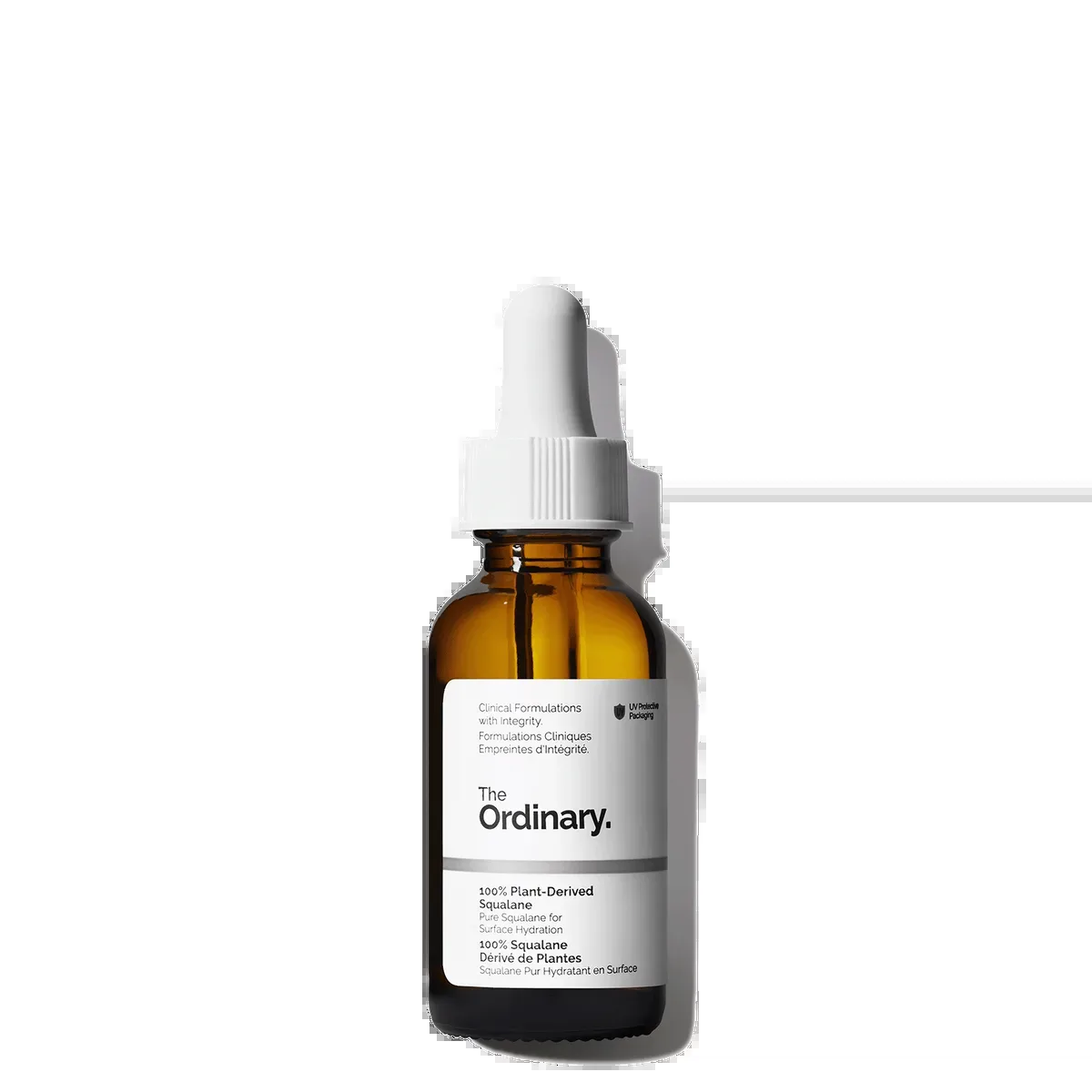
For pure occlusion with the least possible fuss, petrolatum outperforms it and is more inert; CeraVe Healing Ointment is the straightforward version, and on cracked hands, heels or lips it is the better answer most of the time. For emollience without weight, squalane is the obvious substitute — The Ordinary 100% Plant-Derived Squalane delivers slip and smoothing at a fraction of the heaviness, which is why it suits facial skin that shea overwhelms. And cocoa butter sits in the same family with a harder, waxier feel, useful when you want a film that stays put.
The rule that generalises: match the material to the mechanism you need. Rough and tight, but not losing water quickly? You want an emollient. Losing water fast — a barrier that is genuinely compromised, winter air, post-procedure skin? You want an occlusive, applied over damp skin, ideally over a humectant. Reaching for shea because a package said nourishing is choosing by adjective, and adjectives are the one thing in skincare that nobody has to substantiate. Run the panel through our ingredient decoder if you want to see which of the three jobs each of your products is actually doing.
Products mentioned
Independently reviewed and scored — the real products behind this piece.


- Ingredient Shea Butter What the unsaponifiable fraction supports and what it does not.
- Ingredient Petrolatum (Petroleum Jelly) The occlusive benchmark shea is usually being compared against without anyone saying so.
- Ingredient Squalane Emollience without the weight, when shea is too heavy for facial skin.
- Ingredient Cocoa Butter The same family with a harder, waxier film that stays put.
- Question Which moisturiser should I actually buy? The decision taken apart on the variables that predict outcomes, including acceptability.
- Question Do I need a special moisturiser during treatment? Where the lipid calculation changes entirely for Malassezia-driven bumps.
References
- Patient acceptability, efficacy, and skin biophysiology of a cream and cleanser containing lipid complex with shea butter extract versus a ceramide product for eczema — Hong Kong Medical Journal, 2015
- Shea butter as skin, scalp, and hair moisturizer in Nigerians — Dermatologic Therapy, 2021
- Evidence-based treatment of atopic dermatitis with topical moisturizers — Giornale Italiano di Dermatologia e Venereologia, 2018
- A re-evaluation of the comedogenicity concept — Journal of the American Academy of Dermatology, 2006
Every cited link is verified to resolve to the paper named. Where a source could not be independently confirmed, it is listed without a link rather than pointing you somewhere wrong.
Frequently asked
Does shea butter hydrate skin?
Not directly. Hydration means adding water, which is what humectants like glycerin and hyaluronic acid do. Shea is an emollient and an occlusive: it smooths the skin surface by filling gaps between dead cells, and it slows the rate at which water already present escapes. Both are useful. Neither is hydration.
When should I apply it?
To damp skin, within a minute or two of washing. Because its job is to slow water leaving, it works best when there is water to hold — applying it to skin that has been dry for hours seals in nothing. Better still, put a humectant layer on damp skin first and the shea over it.
Is unrefined shea butter better?
It depends what you want. Unrefined retains more of the unsaponifiable fraction the anti-inflammatory claims rest on, plus colour, smell and residual plant protein. Refined is more stable, easier to formulate and less likely to provoke a reaction, at the cost of some of that fraction. Neither is universally better, and the label rarely says which you have — white and odourless means refined.
Will shea butter break me out?
The comedogenicity ratings circulating online descend from an animal assay whose correlation with human experience was formally challenged decades ago, and human work has since shown that finished products containing comedogenic ingredients are not necessarily comedogenic. The reasonable concern is mechanical — it is heavy and occlusive — which makes it a hypothesis to test on your own skin over four to six weeks.
What should I use instead if shea is too heavy?
Split the question by which job you needed. For pure occlusion, petrolatum outperforms it and is more inert. For smoothing without weight, squalane gives slip at a fraction of the heaviness and suits facial skin better. Cocoa butter sits in the same family with a harder, waxier film if you want something that stays put.