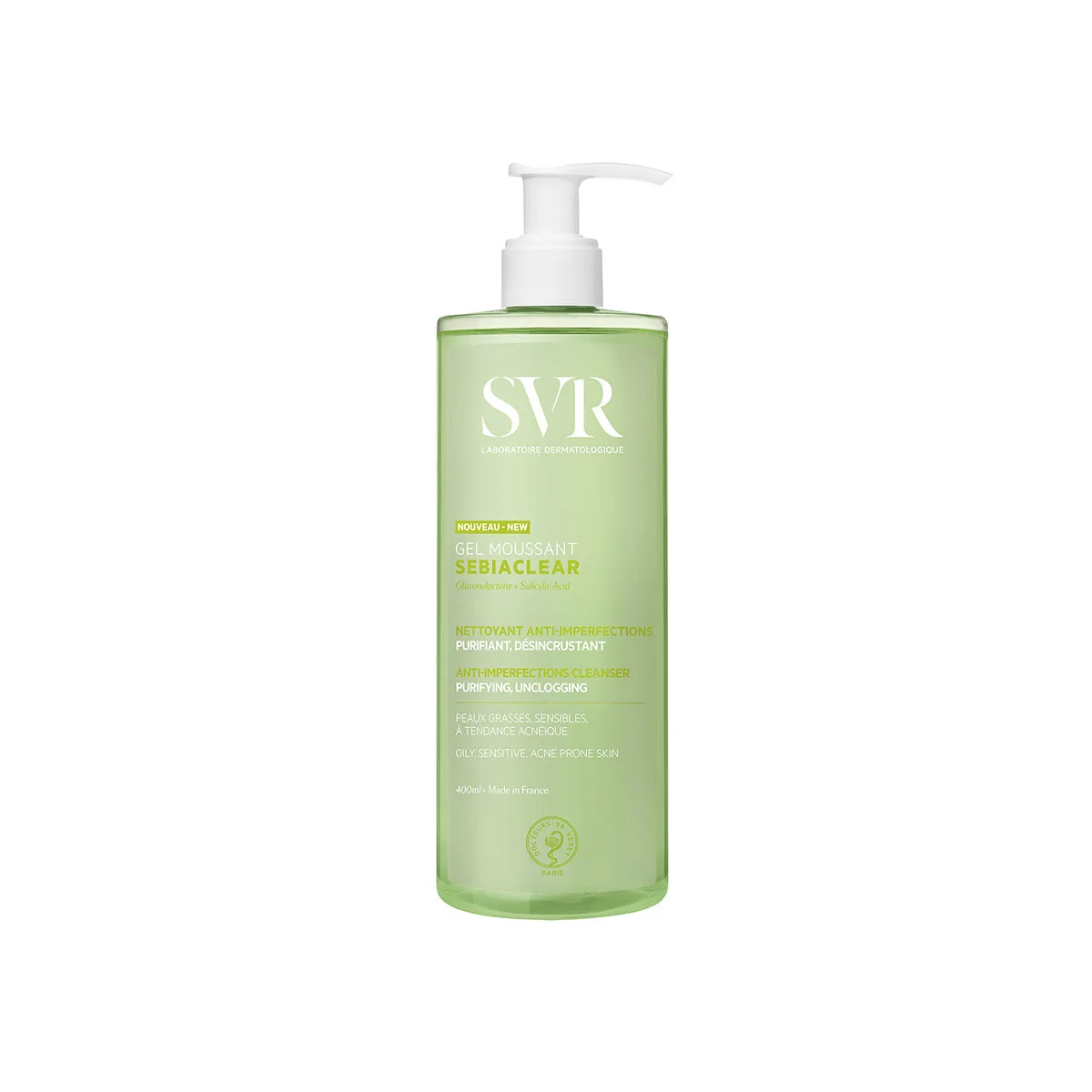
Most affordable acne cleansers reach for high-concentration salicylic acid alone or pair it with sulfate surfactants that strip the barrier — solving congestion by causing dehydration. This formula instead combines 4% gluconolactone (the gentler PHA) with salicylic acid in a glucoside-surfactant base, with glycerin sitting unusually high in the second INCI slot. The result is a wash that clears pores without provoking the rebound oiliness or barrier compromise that drugstore acne cleansers routinely cause.
An honest French pharmacy acne wash that pairs 4% gluconolactone with salicylic acid in a glucoside-surfactant base, with glycerin riding high in the formula to prevent the stripping that drugstore foaming cleansers routinely cause. The 400ml size at $25 is the standout — months of supply, suitable for face and body, gentle enough for twice-daily use.
Good choicefor AcneIn your profileYou chose · Salicylic Acid is an approved or monograph active for acne; this rinse-off gel carries it — short contact still counts for this active, but a leave-on does more.Moderate evidenceStandard tolerabilityNo reviews collected yet
The case for it
Salicylic Acid is a first-line active — approved, monograph-listed or named in current guidelines — for this concern.
It is plausibly present at a working level, though the concentration is not declared.
The formula carries no trigger this concern is sensitive to, with the cautions noted.
Cautions: fragrance.
What would change this: A declared concentration would move this to a firmer reading of the dose.
Same rule for everyone. “Good choice” is the verdict on 9,564 of 45,024 concern verdicts across the catalog; rule R2r decided 408 of them.
Unchanged since September 5, 2026, engine 5.1.1.
R2r — Rinse-off exceptions (BPO wash, salicylic acid cleanser) deliver a real but smaller effect than the leave-on form; they cap at 'good choice'. Medicated shampoos for scalp concerns are exempt — the shampoo is the treatment form. Editorial decision 2 Sep 2026, pending advisory review. · the full register
Carrying active
Salicylic Acid
Standing
first line — a regulator recognises it for this use; trials support it · per § 333.310 Acne active ingredients. (U.S. Food and Drug Administration — 21 CFR Part 333 Subpart D (Topical Acne Drug Products), Code of Federal Regulations via GovInfo), opened July 27, 2026
Form
plausible — studied range 0.5–2%, from the OTC monograph or label; judge it after ~6 weeks
Tolerability
standard — fragrance load
Row checked
against its sources on July 27, 2026 (evidence table ev-2026.09-r228)
Supporting rolefor Excess OilinessIn your profileYou chose · Rinse-off gel: Salicylic Acid gets seconds of contact, so this supports a routine for excess oiliness rather than treating it.Moderate evidenceStandard tolerabilityNo reviews collected yet
The case for it
Salicylic Acid has early or mechanistic evidence for this concern, not trial-backed standing.
It is in a rinse-off product, so it gets seconds of contact rather than the leave-on exposure the evidence assumes.
The formula carries no trigger this concern is sensitive to, with the cautions noted.
What would change this: The same active in a leave-on form would be judged on its evidence rather than its contact time.
Same rule for everyone. “Supporting role” is the verdict on 8,197 of 45,024 concern verdicts across the catalog; rule R6 decided 2,017 of them.
Unchanged since September 5, 2026, engine 5.1.1.
R6 — Contact time cannot deliver a leave-on claim; the product is judged on its job (cleansing without aggravating). Explicit exceptions (BPO wash, SA cleanser, medicated shampoos) never reach this rule because their rows set rinse_off_ok. · the full register
Carrying active
Salicylic Acid
Standing
plausible — trials support it
Form
contact limited — studied range 30%, from the trials on the row; needs leave-on contact; judge it after ~6 weeks
Tolerability
standard
Row checked
against its sources on July 17, 2026 (evidence table ev-2026.09-r228)
Good choicefor BlackheadsIn your profileYou chose · Salicylic Acid is an approved or monograph active for blackheads; this rinse-off gel carries it — short contact still counts for this active, but a leave-on does more.Moderate evidenceStandard tolerabilityNo reviews collected yet
The case for it
Salicylic Acid is a first-line active — approved, monograph-listed or named in current guidelines — for this concern.
It is plausibly present at a working level, though the concentration is not declared.
The formula carries no trigger this concern is sensitive to, with the cautions noted.
What would change this: A declared concentration would move this to a firmer reading of the dose.
Same rule for everyone. “Good choice” is the verdict on 9,564 of 45,024 concern verdicts across the catalog; rule R2r decided 408 of them.
Unchanged since September 5, 2026, engine 5.1.1.
R2r — Rinse-off exceptions (BPO wash, salicylic acid cleanser) deliver a real but smaller effect than the leave-on form; they cap at 'good choice'. Medicated shampoos for scalp concerns are exempt — the shampoo is the treatment form. Editorial decision 2 Sep 2026, pending advisory review. · the full register
Carrying active
Salicylic Acid
Standing
first line — a regulator recognises it for this use; trials support it · per 21 CFR § 333.350 - Labeling of acne drug products. (US Code of Federal Regulations (Legal Information Institute, Cornell Law School)), opened July 27, 2026
Form
plausible — studied range 0.5–2%, from the OTC monograph or label; judge it after ~6 weeks
Tolerability
standard
Row checked
against its sources on July 27, 2026 (evidence table ev-2026.09-r228)
The studies behind the evidence row
OTC monograph, Topical Acne Drug Products — salicylic acid 0.5–2% recognized as an acne treatment active — US Food and Drug Administration
Supporting rolefor Large PoresIn your profileYou chose · Rinse-off gel: Salicylic Acid gets seconds of contact, so this supports a routine for large pores rather than treating it.Not yet assessedStandard tolerabilityNo reviews collected yet
The case for it
Salicylic Acid has been researched for this concern and the evidence does not support it.
It is in a rinse-off product, so it gets seconds of contact rather than the leave-on exposure the evidence assumes.
The formula carries no trigger this concern is sensitive to, with the cautions noted.
What would change this: The same active in a leave-on form would be judged on its evidence rather than its contact time.
Same rule for everyone. “Supporting role” is the verdict on 8,197 of 45,024 concern verdicts across the catalog; rule R6 decided 2,017 of them.
Unchanged since September 5, 2026, engine 5.1.1.
R6 — Contact time cannot deliver a leave-on claim; the product is judged on its job (cleansing without aggravating). Explicit exceptions (BPO wash, SA cleanser, medicated shampoos) never reach this rule because their rows set rinse_off_ok. · the full register
Carrying active
Salicylic Acid
Standing
none
Form
contact limited — studied range 0.5–2%, from the OTC monograph or label; needs leave-on contact; judge it after ~6 weeks
Supporting rolefor Rough TextureIn your profileYou chose · Rinse-off gel: Salicylic Acid gets seconds of contact, so this supports a routine for rough texture rather than treating it.Moderate evidenceStandard tolerabilityNo reviews collected yet
The case for it
Salicylic Acid has trial-supported standing for this concern.
It is in a rinse-off product, so it gets seconds of contact rather than the leave-on exposure the evidence assumes.
The formula carries no trigger this concern is sensitive to, with the cautions noted.
What would change this: The same active in a leave-on form would be judged on its evidence rather than its contact time.
Same rule for everyone. “Supporting role” is the verdict on 8,197 of 45,024 concern verdicts across the catalog; rule R6 decided 2,017 of them.
Unchanged since September 5, 2026, engine 5.1.1.
R6 — Contact time cannot deliver a leave-on claim; the product is judged on its job (cleansing without aggravating). Explicit exceptions (BPO wash, SA cleanser, medicated shampoos) never reach this rule because their rows set rinse_off_ok. · the full register
Carrying active
Salicylic Acid
Standing
supported — its mechanism is established
Form
contact limited — studied range 0.5–2%, from the trials on the row; needs leave-on contact; judge it after ~6 weeks
Tolerability
standard
Row checked
against its sources on July 17, 2026 (evidence table ev-2026.09-r228)
The studies behind the evidence row
International Cosmetic Ingredient Dictionary and Handbook — declared function — Personal Care Products Council
United States Pharmacopeia / National Formulary — excipient monograph — USP-NF
Excellent at the jobDoes what a cleanser is for, on every measure we can take from the label: pH match to skin, surfactant mildness.
A verdict is DermApproved’s assessment of how well a product’s ingredients fit a concern — never a claim about what the product treats. Evidence dots and collected reviews sit beside it and are never blended in.
Rules 0.5.1 · evidence table ev-2026.09-r228 · how we decide
Assessment
Pros & Cons
Pros
✓ 4% gluconolactone plus salicylic acid delivers genuine pore-clearing in a rinse-off format
✓ Gentle glucoside and amino-acid surfactant base lathers without stripping
✓ Glycerin in the second INCI slot prevents the dehydration drugstore foams cause
✓ 400ml size at $25 lasts 4-6 months — excellent per-use value
✓ Suitable for both face and body, useful for chest and back acne
✓ Pharmacist-formulated by a 60-year French dermo-cosmetic laboratory
✓ Readily biodegradable formula and 96% natural-origin ingredients
✓ Compatible with sensitive acne-prone skin that can't tolerate harsher cleansers
Cons
✗ Added fragrance disqualifies the most fragrance-sensitive users
✗ Salicylic acid rules it out during pregnancy and breastfeeding
✗ Pump cap can stick during the first week of use
✗ Cannot replace leave-on active treatments for meaningful acne management
✗ Too active for dry, sensitive, or eczema-prone skin
Review
Full Review
There's a persistent assumption in skincare advice that foaming cleansers are always bad for sensitive or acne-prone skin. That assumption confuses the chemistry — the problem with most foaming acne washes is the sodium lauryl sulfate and sodium laureth sulfate that produce the lather, not the lather itself. SVR's Sebiaclear Foaming Gel demonstrates the alternative path. It produces a soft creamy foam from decyl glucoside, disodium cocoyl glutamate, and coco-betaine — three plant-derived and amino-acid-derived surfactants that lather without the barrier-stripping action of sulfates. The result is a cleanser that delivers the satisfying clean-feeling most users want from a foam, without the rebound oiliness and barrier compromise the SLS-based products cause. Foam does not equal damage; the surfactant's identity does.
The active strategy is straightforward and well-chosen for the format. Gluconolactone sits in the third INCI slot at a brand-stated 4% — a PHA that loosens dead-cell and sebum buildup during the brief thirty-to-sixty-second cleanser contact, with a larger molecular size that limits penetration depth and keeps the action surface-level, which is precisely where you want it in a wash. Salicylic acid follows lower in the formula as the lipid-soluble counterpart, penetrating briefly into the pore lining to dissolve fresh sebum plugs before they have a chance to harden into blackheads. Combining a water-loving acid working at the surface with an oil-loving one working inside the pore addresses both interfaces of congestion in a single step, and in a rinse-off format the short contact time keeps the salicylic acid useful without the irritation a leave-on BHA can bring.
Glycerin in the second INCI slot is the kind of detail that signals pharmacist formulation rather than mass-market cost-cutting. Foaming cleansers typically relegate glycerin to trace amounts, treating it as a box to tick; loading it this high is what lets the wash deliver the gluconolactone and salicylic acid without leaving the skin barrier dehydrated. The whole ingredient list runs to ten items. There is nothing in it that isn't working.
Texture is a clear gel that builds into a dense creamy foam with water — closer to a French pharmacy cream cleanser experience than to the airy fluff of a sulfate-heavy drugstore foam. Skin feels clean rather than squeaky-tight after rinse, and the absence of that squeaky-tight sensation is the practical proof that the barrier didn't get stripped. Squeakiness has never been a sign of cleanliness; it is the sound of a barrier that has just lost its lipids. The fragrance is restrained — the soft fresh-clean note typical of European pharmacy skincare — and rinses away completely with the foam. The pH sits at 5.5.
On the mechanics: wet the skin, work one or two pumps into a lather between your hands, and massage for thirty to sixty seconds, concentrating on the T-zone or on the chest and back if that's where your congestion lives. Rinse with lukewarm water. Twice daily on the face, once in the shower for the body. At night it works as the second step after an oil cleanser has taken off your sunscreen. Always follow with moisturizer.
Honest limitations: it's a cleanser, not a treatment. The brief contact time means that even with PHA and BHA in the formula, this will not replace your leave-on active routine. Used alone, expect modest improvements in surface oiliness and texture over two or three weeks, with blackhead density shifting nearer the six-to-eight-week mark. Paired with a leave-on serum, it serves as the supportive cleanse step that doesn't undo the work of your other products — and that is the real argument for choosing it, since a stripping cleanser actively sabotages everything that follows it.
The salicylic acid disqualifies it during pregnancy and breastfeeding under most obstetric guidance — even rinse-off SA usually triggers the precaution. The fragrance, while restrained, rules it out for the most fragrance-sensitive users. And for skin that runs dry or has active eczema in areas you'd be cleansing, this is simply too active a wash; the same brand's gentler cleansing line is the better fit. The pump cap has a reputation for sticking during its first week.
Value-wise, $25 for 400ml is excellent. That bottle lasts four to six months at twice-daily face use, longer if you're not also using it on body congestion — four to six dollars a month, comparable to drugstore acne cleansers at a meaningfully more thoughtful formulation level. The generous size is what makes the face-and-body use case work; dedicated body acne washes are sparse and expensive, and this one bottle covers both. A 200ml format exists for travel. SVR has been in French pharmacies since 1962, and the brand's positioning keeps the price honest — you're paying for formulation and volume rather than for marketing or department-store margin.
If you have oily-combination or normal skin with mild-to-moderate acne, blackheads, or congestion, this is a solid daily cleanser foundation that won't sabotage the rest of your routine. If you have dry, sensitive, or barrier-compromised skin, look to a gentler pharmacy wash instead. If your acne is severe or cystic, this is a supporting product, not the intervention — pair it with appropriate medical-strength treatment and let the cleanser do the modest, unglamorous job it was designed for.
Formula
Key Ingredients
The hero actives that drive this product's performance.
Sits in the third INCI slot at a working 4% concentration, where it loosens dead-cell and sebum buildup during the brief cleanser contact time. Gluconolactone in a wash format does most of its work in the surface layer rather than building up over time, which is exactly why this PHA is the right choice — it doesn't outstay its welcome the way salicylic acid in a leave-on product can.
Slotted in below the gentle surfactant trio, the BHA penetrates briefly into the pore lining during the cleansing minute to dissolve fresh sebum plugs before they harden into blackheads. In a rinse-off format the contact time is short, which keeps salicylic acid contributing to pore-clearing without the leave-on irritation potential that BHA serums carry.
Established mechanismfor Rough Texture · established mechanism
A trio of mild glucoside and amino-acid-derived surfactants that lather without the barrier-stripping action of sulfates. This blend is the reason the wash leaves skin feeling clean rather than tight — even acne-prone skin tolerates twice-daily use without the rebound oiliness that SLS cleansers trigger. The choice signals pharmacist formulation rather than mass-market cost-cutting.
Sits in the second INCI slot — a notably high placement for a foaming cleanser, where glycerin typically gets relegated to trace amounts. The high loading is what lets the formula deliver the gluconolactone and salicylic acid without leaving the skin barrier dehydrated. Critical for sensitive acne-prone skin that loses moisture through compromised barrier.
Not yet assessed
Ingredient standings describe the active at treatment-level doses and
vehicles; this product's own condition grades weigh its actual formula.
Use as the second cleanser at night following an oil cleanser, or as a single morning cleanse. Massage onto damp skin for 30 to 60 seconds — long enough for the actives to make contact but not so long it strips the barrier. Rinse thoroughly. Follow with toner and your usual routine. The formula is gentle enough for both face and body use on blemish-prone backs and chest.
Results Timeline
Immediate clean-and-fresh feeling without barrier tightness from first use; visibly reduced congestion at 2 to 3 weeks of twice-daily use; meaningful change in blackhead density and pore clarity at 6 to 8 weeks. A cleanser cannot do what a leave-on treatment does, so pair this with a Sebiaclear serum or other active treatment for faster results.
The case for a PHA-plus-BHA wash rests on the dual-mechanism keratolytic logic well-documented in cosmetic dermatology. Gluconolactone exfoliates through the same hydroxy-acid chemistry as glycolic and lactic acid, but its larger molecular structure limits skin penetration — which is actually the desired behavior in a brief-contact wash, where you want the action to stay at the surface dead-cell layer rather than penetrate into living epidermis. Salicylic acid is the most-studied keratolytic in cosmetic acne care; its oil-solubility lets it dissolve briefly into sebum plugs at the pore opening during the wash phase. Combining a hydrophilic PHA at the skin surface with a lipophilic BHA at the pore tackles the two interfaces of congestion in a single product, which is why this combination has become standard in modern blemish-focused cleanser formulation. The surfactant selection is the second technical layer. Decyl glucoside is a non-ionic surfactant derived from coconut and corn starch with a long record of low irritation in patch testing. Disodium cocoyl glutamate is an amino-acid-derived anionic surfactant from coconut and glutamic acid, considered among the mildest cleansing actives in cosmetic chemistry. Coco-betaine is an amphoteric surfactant that buffers the cleansing action of the other two. Together they produce dense foam at near-neutral pH without the barrier disruption documented for sulfate-based surfactants in repeated-use trials. The glycerin loading at the second INCI slot — well above the trace amounts typical of foaming cleansers — addresses the post-cleanse hydration drop that contributes to reactive oiliness in acne-prone skin. None of these mechanisms is novel; the formulation discipline is in choosing all of them together for a daily-tolerable acne-cleansing wash.
Dermatologist Perspective
Cleanser selection is one of the more under-appreciated elements of acne management in dermatologic practice. Aggressive sulfate-based foaming cleansers contribute to barrier compromise that reactively increases sebum production — patients commonly find that switching from a high-SLS drugstore acne cleanser to a gentler surfactant-base formulation reduces overall oiliness within 2 to 3 weeks, even with no other routine changes. The PHA-plus-BHA active strategy used here is consistent with current best-practice recommendations for adult acne-prone skin; the brief contact time in a wash mitigates the irritation risk that those same actives carry in leave-on products. Dermatologists treating acne with body involvement frequently recommend dual-purpose face-and-body cleansers like this one for chest and back acne, where dedicated body acne products are sparse and the alternative is using either a face cleanser wastefully or a body wash that lacks acne-specific actives. The salicylic acid content disqualifies the product for pregnant patients regardless of the rinse-off format; appropriate substitutions include fragrance-free gentle cleansers in the CeraVe, Vanicream, or Avène ranges.
Guidance
Usage & Recommendations
How to Use
Wet your face or body with lukewarm water. Pump one to two doses into your palm, work into a lather between your hands, and apply to skin. Massage for 30 to 60 seconds — focusing on congested zones like the t-zone for face use, or chest and back for body use. Rinse thoroughly with lukewarm water and pat dry. Use morning and evening on the face; once daily in the shower for body use. As a second cleanser in a double cleanse routine, follow an oil cleanser that removed your sunscreen and makeup. Always follow with toner, treatment, and moisturizer to support the barrier the cleanser briefly opened up for the actives.
Value Assessment
At $25 for 400ml, this lands as one of the better-value French pharmacy acne cleansers on the market. The bottle lasts 4 to 6 months at twice-daily face use, putting monthly cost at $4 to $6 — comparable to drugstore options at a meaningfully gentler and more thoughtful formulation level. If you use it on body congestion as well, the value calculus changes — the 400ml is generous enough to handle face and chest or back without requiring a separate body acne wash, which would otherwise add $15 to $25 to your monthly routine. The 200ml format is available for travel or trial; both sizes are commonly stocked at French pharmacies and increasingly at US specialty pharmacy importers. The brand's pharmacy positioning keeps the price honest — you're paying for the formulation and the volume rather than for marketing or department-store margin.
Who Should Buy
Anyone with oily-combination skin managing mild-to-moderate acne, blackheads, or congestion who wants a daily cleanser that contributes to the active routine without sabotaging it. The 400ml size makes this particularly appealing for users who want one product for both face and body congestion.
Who Should Skip
Skip if your skin is dry, sensitive, eczema-prone, or your barrier is currently compromised — the PHA-and-BHA combination is too active for that profile, and SVR's Topialyse cleansing line from the same brand is the better fit. Pregnant or breastfeeding users should choose a salicylic-acid-free alternative. Anyone needing makeup removal as the primary cleansing job should pair this with a separate oil cleanser or micellar water rather than relying on it alone.
Clear gel that lathers into a creamy soft foam with water. The lather is dense rather than airy — closer to a French pharmacy cream cleanser than to a sulfate-heavy drugstore foam.
Scent
Soft fresh-clean fragrance characteristic of European pharmacy cleansers; rinses away completely with the lather.
Packaging
400ml pump bottle in white with the signature SVR red branding. The pump format makes it practical for shower use and family bathrooms; 200ml flip-top version available for travel.
Finish
non-greasymatte
What to Expect on First Use
First use feels notably different from sulfate-based cleansers — the lather builds slowly, the skin feel afterward is clean without the squeaky-tight sensation that signals barrier disruption. Mild tingle is possible if applied to sensitized skin; this passes once tolerance builds. Visible reduction in surface oiliness within the first week.
How Long It Lasts
4 to 6 months for the 400ml applied morning and night face use; longer if used face-only rather than face-and-body.
The Sebiaclear range is SVR's longstanding blemish-prone-skin line, and the Foaming Gel has been the cleanser anchor since roughly 2015. The brand's pharmacist founders built it specifically for the French-pharmacy reality of dispensing acne care to adult women whose skin couldn't tolerate the harsh formulations marketed to teenagers — that constraint shaped the gentle-surfactant-plus-PHA approach this cleanser still uses.
About SVR Legacy Brand (20+ years)
Laboratoire SVR was founded in 1962 in Ault, France by pharmacist couple Simone and Robert Véret, distributing through European pharmacies for six decades. The brand's clinical credibility rests on long pharmacy-channel reformulation history and dermo-cosmetic positioning, with brand-funded clinical claims more common than independent peer-reviewed trials.
Brand founded: 1962 · Product launched: 2015
Myth vs. Reality
Common Myths
Myth
A cleanser cannot meaningfully treat acne — it's just washed away.
Reality
Cleansers contribute mechanically by removing surface sebum, makeup, and pollutants that contribute to congestion, and the brief contact with PHA and BHA does loosen dead-cell-and-sebum buildup that would otherwise harden into blackheads. They're a supporting cast, not the star — but a sulfate-heavy stripping cleanser actively undoes the work of your leave-on actives, so the cleanser choice matters.
Myth
Foaming cleansers are always too harsh for sensitive acne-prone skin.
Reality
Cheap sulfate-heavy foaming cleansers are the problem — not foaming chemistry itself. The decyl glucoside, disodium cocoyl glutamate, and coco-betaine in this formula are gentle glucoside and amino-acid-derived surfactants that lather without stripping. Foam doesn't equal damage; the surfactant identity does.
FAQ
Frequently Asked Questions
Can SVR Sebiaclear Foaming Gel be used on the body, including back acne?
Yes — it's formulated for both face and body, which makes it useful for chest and back acne where standard face cleansers would be wasteful at the surface area. Apply in the shower, work into a lather, leave on the affected zone for 30 to 60 seconds before rinsing, and follow with a lightweight body lotion. The 400ml size is well-matched to body use.
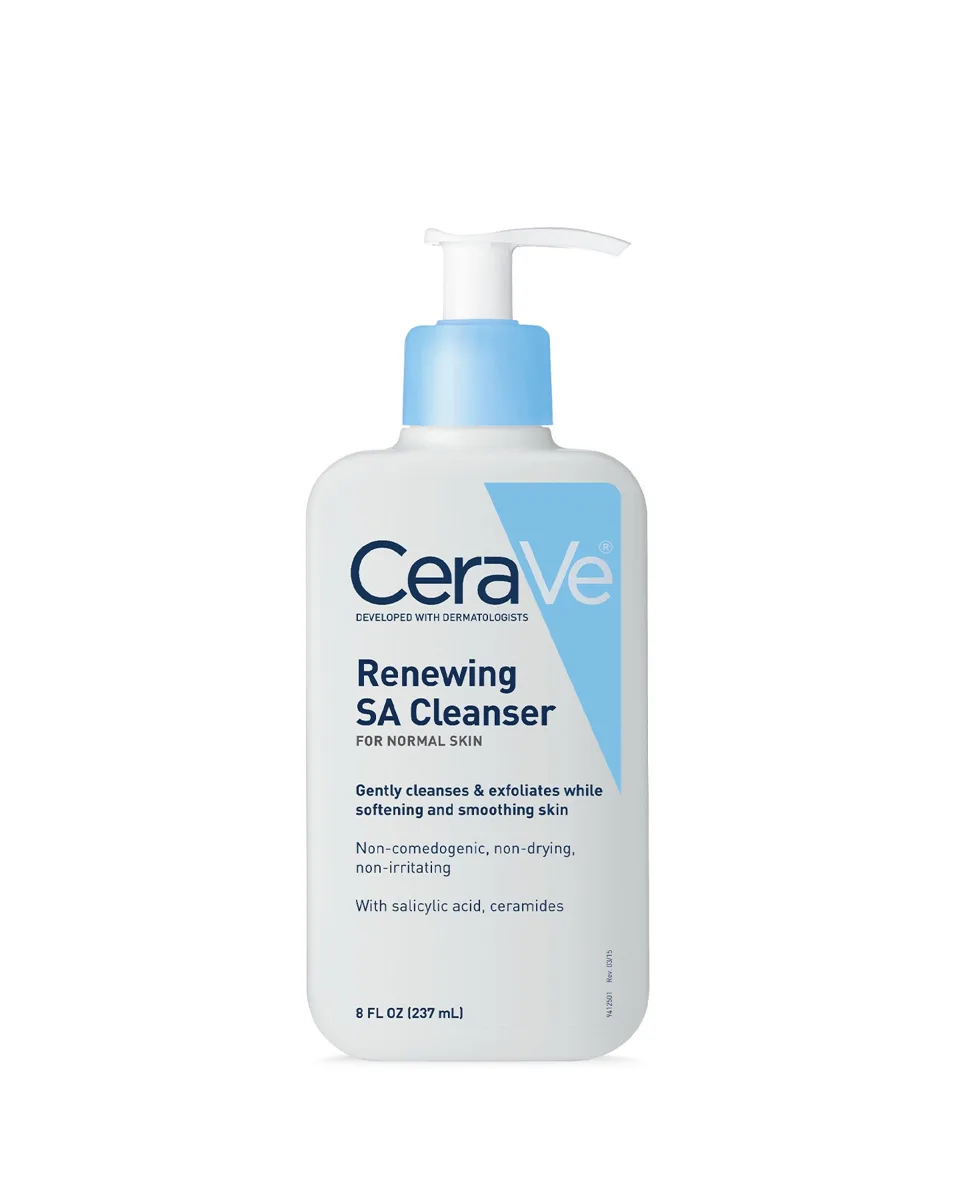
How does SVR Sebiaclear Foaming Gel compare to CeraVe SA Cleanser?
Both contain salicylic acid in a gentle surfactant base, but SVR adds 4% gluconolactone (a PHA) for a second exfoliation mechanism, and CeraVe adds ceramides and niacinamide for barrier support. SVR is more actively exfoliating; CeraVe is more barrier-focused. For oily-combination skin with congestion, SVR delivers stronger pore-clearing action; for sensitive or barrier-compromised acne-prone skin, CeraVe is the gentler pick.
Is SVR Sebiaclear Foaming Gel pregnancy-safe?
No — the salicylic acid content makes it inadvisable during pregnancy and breastfeeding under most obstetric guidance. Even in a rinse-off format, the precaution is typically maintained as a buffer. Switch to a fragrance-free, salicylic-acid-free gentle cleanser for the duration; SVR's Topialyse Cleansing Gel from the same brand is one option.
Will SVR Sebiaclear Foaming Gel dry out my skin?
It shouldn't, if you're not over-cleansing. The gentle glucoside surfactant base and the high glycerin content (second INCI slot) work to prevent the barrier-stripping that aggressive acne cleansers cause. Twice-daily use is fine for most users; once-daily evening use is gentler if your skin runs dry-combination. If you experience tightness or flaking, reduce to evening-only use.
Can I use SVR Sebiaclear Foaming Gel as part of a double cleanse routine?
Yes — use it as the second cleanser at night, following an oil cleanser or micellar water that lifted off your sunscreen and makeup. The PHA and BHA contact during the foam-on phase is what does the targeted acne work; the oil cleanser handles the makeup-removal job that this wash can't do efficiently on its own.
How long should I leave SVR Sebiaclear Foaming Gel on my skin before rinsing?
30 to 60 seconds is the sweet spot — long enough for the gluconolactone and salicylic acid to make brief contact with congestion, but short enough that the actives don't sit so long they irritate. Massaging for longer than 90 seconds doesn't add benefit and risks pulling at the skin; if you want stronger exfoliation, that belongs in a leave-on treatment, not the cleanse step.
Does SVR Sebiaclear Foaming Gel contain fragrance?
Yes — 'Parfum' appears at the end of the INCI list, indicating a low concentration. The scent is the restrained fresh-clean note typical of French pharmacy cleansers and rinses off completely with the lather. If you have known fragrance sensitivity that extends to brief-contact rinse-off products, look for a fragrance-free alternative; for most users the brief exposure is well-tolerated.
Reviews
What Reviewers Tend to Say
Recurring themes our editors read across retailer reviews of this product — summaries in our words, not quotations, and not a substitute for your own patch test.
Common Praise
Genuinely cleans without stripping or tightness
Effective on both face and body congestion
Generous 400ml size lasts months
Lather feels gentle even on sensitive skin
Common Complaints
Mild fragrance is detectable
Not pregnancy-safe due to salicylic acid
Pump cap can stick in the first week
Not strong enough as a standalone acne treatment
Notable Endorsements
Stocked in French pharmaciesFrequently recommended in European dermatology consults for adult acne and back acne
The whole case for salicylic acid rests on one unglamorous fact of chemistry: it dissolves in oil. Understand that, and you know exactly when it beats a glycolic acid — and when it's overkill.
Polyhydroxy acids get filed under 'beginner exfoliant,' as if gentle meant weak. The truth is stranger: their bulk is exactly why they work for the skin everything else sets on fire.
Those tiny dots on your nose are almost certainly not blackheads — they're normal, functional plumbing you will never 'clear,' and the extraction obsession is quietly wrecking the skin around them.
Jun 6, 2026· 6 min
Questions people ask about Acne
Verified answers from our questions library — the nuance a product page cannot carry.
Products, answers, therapy guides, tools and articles in one search. Brand names,
slang and abbreviations all work — accutane finds isotretinoin, bacne finds truncal acne.