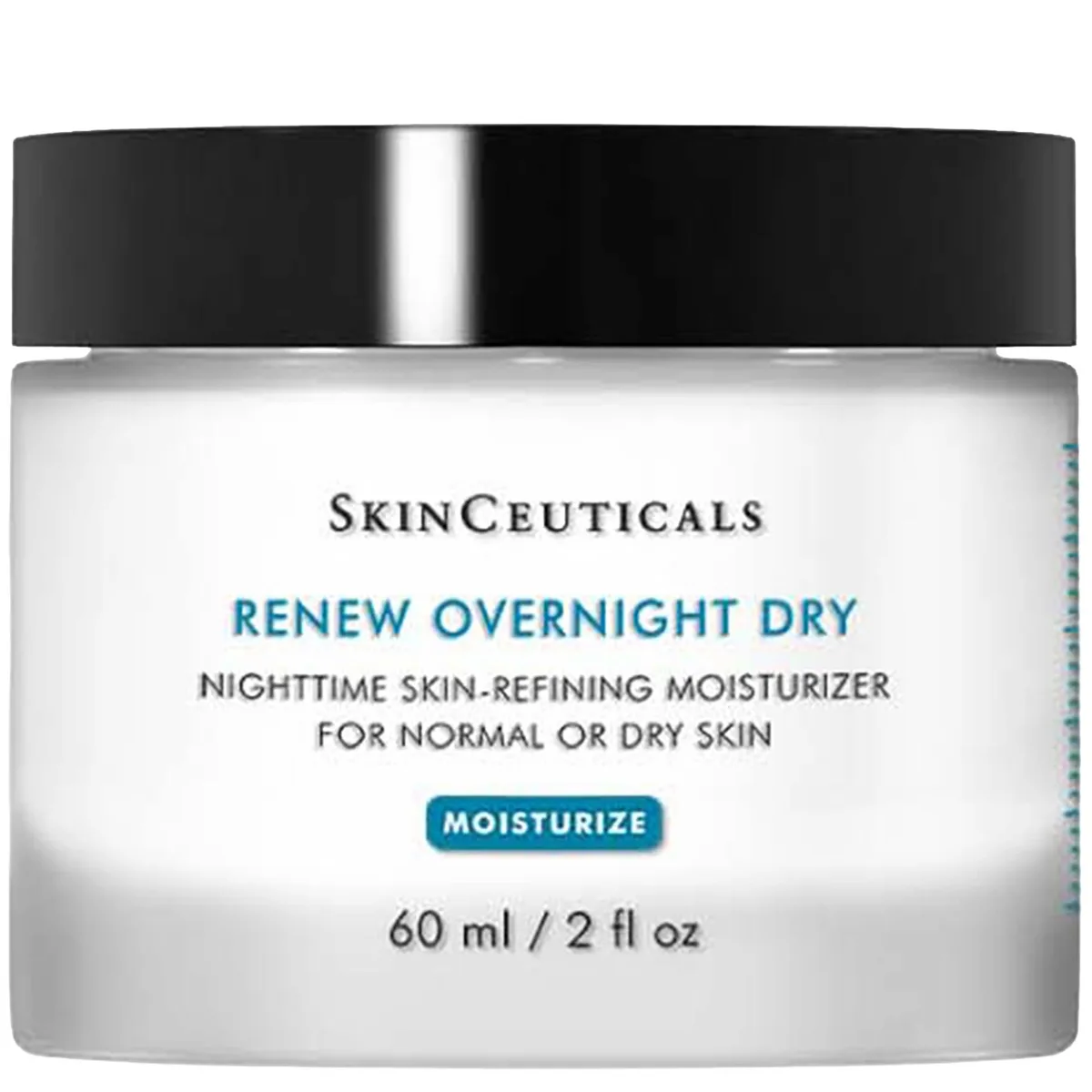
Most 10% glycolic products come in the form of a lightweight serum or toner, which is efficient for oily skin but brutal on dry or mature complexions. This formula delivers the same exfoliating workload embedded in a rich cream base with glycerin, panthenol, and dimethicone — a combination that allows dry-skin users to get meaningful 10% glycolic benefits without the stripped, dehydrated feeling that sends most of them back to milder alternatives.
A well-formulated 10% glycolic cream that delivers the exfoliating benefits of a clinical AHA in a format dry skin can actually use nightly. It's not cheap, and it's not for sensitive skin, but it earns its reputation as one of the more thoughtfully balanced high-strength glycolic products in the dermatology-office category.
Good choicefor DrynessIn your profileYou chose · Glycerin is a reference standard by mechanism for dryness; this cream carries it high in the ingredient list.Moderate evidenceStandard tolerabilityNo reviews collected yet
The case for it
Glycerin has trial-supported standing for this concern.
It is present at an effective concentration, declared or high in the ingredient list.
The formula carries no trigger this concern is sensitive to, with the cautions noted.
Same rule for everyone. “Good choice” is the verdict on 9,564 of 45,024 concern verdicts across the catalog; rule R5 decided 9,072 of them.
Unchanged since September 5, 2026, engine 5.1.1.
Good choicefor Rough TextureIn your profileYou chose · Glycolic Acid is a reference standard by mechanism for rough texture; this cream carries it at 10%.Moderate evidenceStandard tolerabilityNo reviews collected yet
The case for it
Glycolic Acid has trial-supported standing for this concern.
It is present at an effective concentration, declared or high in the ingredient list.
The formula carries no trigger this concern is sensitive to, with the cautions noted.
Same rule for everyone. “Good choice” is the verdict on 9,564 of 45,024 concern verdicts across the catalog; rule R5 decided 9,072 of them.
Unchanged since September 5, 2026, engine 5.1.1.
Good choicefor DullnessIn your profileYou chose · Glycolic Acid is a reference standard by mechanism for dullness; this cream carries it at 10%.Moderate evidenceStandard tolerabilityNo reviews collected yet
The case for it
Glycolic Acid has trial-supported standing for this concern.
It is present at an effective concentration, declared or high in the ingredient list.
The formula carries no trigger this concern is sensitive to, with the cautions noted.
Same rule for everyone. “Good choice” is the verdict on 9,564 of 45,024 concern verdicts across the catalog; rule R5 decided 9,072 of them.
Unchanged since September 5, 2026, engine 5.1.1.
Supporting rolefor AgingIn your profileYou chose · Glycolic Acid has early evidence for aging, and hydration and barrier support is the recognised companion to treating it — a reasonable supporting choice, short of a recommendation.Moderate evidenceStandard tolerabilityNo reviews collected yet
The case for it
Glycolic Acid has early or mechanistic evidence for this concern, not trial-backed standing.
It is present at an effective concentration, declared or high in the ingredient list.
The formula carries no trigger this concern is sensitive to, with the cautions noted.
Cautions: a photosensitising active — use sun protection.
What would change this: Trial evidence for the active on this concern would move this from a bet to a recommendation.
Same rule for everyone. “Supporting role” is the verdict on 8,197 of 45,024 concern verdicts across the catalog; rule R8a decided 1,489 of them.
Unchanged since September 5, 2026, engine 5.1.1.
R8a — A plausible-tier active in a category with a supportive job: the sentence names the active instead of saying nothing targets the concern (the AmLactin / CeraVe SA case for keratosis pilaris, where no guideline and single trials leave the keratolytics at early evidence). · the full register
Carrying active
Glycolic Acid
Standing
plausible — trials support it
Form
adequate (declared 10%) — studied range 5–10%, from the OTC monograph or label; needs leave-on contact; judge it after ~8 weeks
Tolerability
standard — photosensitization
Row checked
against its sources on July 17, 2026 (evidence table ev-2026.09-r228)
Promisingfor HyperpigmentationIn your profileYou chose · Glycolic Acid has trial-level evidence for hyperpigmentation but no guideline or regulatory standing yet — promising, short of a recommendation; the other actives here are not yet assessed for it.Moderate evidenceStandard tolerabilityNo reviews collected yet
The case for it
Glycolic Acid has trial-level evidence for this concern but no guideline or regulatory standing yet.
It is present at an effective concentration, declared or high in the ingredient list.
The formula carries no trigger this concern is sensitive to, with the cautions noted.
Cautions: a photosensitising active — use sun protection.
What would change this: Guideline or regulatory standing for the active on this concern would move this from a promising bet to a recommendation.
Same rule for everyone. “Promising” is the verdict on 7,858 of 45,024 concern verdicts across the catalog; rule R9p decided 7,858 of them.
Unchanged since September 5, 2026, engine 5.1.1.
R9p — 0.5.0: 'Unproven' beside three filled dots read as one question answered twice with opposite words (7,018 rows). The chip measures standing, the dots measure trial volume; where the row carries at least one RCT or a tier-2 source (moderate dots) and the active is present at a working level, the honest word is Promising. Unproven is reserved for plausible-standing rows with limited or weak evidence, or an under-dosed form. Same rank as Unproven — a bet either way; the dots order them. · the full register
Carrying active
Glycolic Acid
Standing
plausible — trials support it
Form
adequate (declared 10%) — studied range 5–10%, from the OTC monograph or label; needs leave-on contact; judge it after ~8 weeks
Tolerability
standard — photosensitization
Row checked
against its sources on July 17, 2026 (evidence table ev-2026.09-r228)
Promisingfor Sun DamageIn your profileYou chose · Glycolic Acid has trial-level evidence for sun damage but no guideline or regulatory standing yet — promising, short of a recommendation; the other actives here are not yet assessed for it.Moderate evidenceStandard tolerabilityNo reviews collected yet
The case for it
Glycolic Acid has trial-level evidence for this concern but no guideline or regulatory standing yet.
It is present at an effective concentration, declared or high in the ingredient list.
The formula carries no trigger this concern is sensitive to, with the cautions noted.
Cautions: a photosensitising active — use sun protection.
What would change this: Guideline or regulatory standing for the active on this concern would move this from a promising bet to a recommendation.
Same rule for everyone. “Promising” is the verdict on 7,858 of 45,024 concern verdicts across the catalog; rule R9p decided 7,858 of them.
Unchanged since September 5, 2026, engine 5.1.1.
R9p — 0.5.0: 'Unproven' beside three filled dots read as one question answered twice with opposite words (7,018 rows). The chip measures standing, the dots measure trial volume; where the row carries at least one RCT or a tier-2 source (moderate dots) and the active is present at a working level, the honest word is Promising. Unproven is reserved for plausible-standing rows with limited or weak evidence, or an under-dosed form. Same rank as Unproven — a bet either way; the dots order them. · the full register
Carrying active
Glycolic Acid
Standing
plausible — trials support it
Form
adequate (declared 10%) — studied range 5–25%, from the OTC monograph or label; needs leave-on contact; judge it after ~8 weeks
Tolerability
standard — photosensitization
Row checked
against its sources on July 17, 2026 (evidence table ev-2026.09-r228)
Supporting rolefor Winter SkinIn your profileYou chose · Nothing here targets winter skin directly; occlusive hydration is the recognised companion to treating it, and this cream does that without known triggers.Not yet assessedStandard tolerabilityNo reviews collected yet
The case for it
Glycolic Acid has no evidence row yet for this concern — it is in the research queue.
The formula carries no trigger this concern is sensitive to, with the cautions noted.
What would change this: A researched evidence row for the lead active would replace this with a verdict.
Same rule for everyone. “Supporting role” is the verdict on 8,197 of 45,024 concern verdicts across the catalog; rule R8 decided 4,250 of them.
Unchanged since September 5, 2026, engine 5.1.1.
R8 — The category's job (barrier care, humectant hydration, gentle cleansing, photoprotection) is the documented supportive role for this concern. This is the honest verdict for a moisturizer on an acne page. · the full register
Supporting rolefor Keratosis PilarisIn your profileYou chose · Glycolic Acid has early evidence for keratosis pilaris, and emollient hydration is the recognised companion to treating it — a reasonable supporting choice, short of a recommendation.Limited evidenceStandard tolerabilityNo reviews collected yet
The case for it
Glycolic Acid has early or mechanistic evidence for this concern, not trial-backed standing.
It is present at an effective concentration, declared or high in the ingredient list.
The formula carries no trigger this concern is sensitive to, with the cautions noted.
What would change this: Trial evidence for the active on this concern would move this from a bet to a recommendation.
Same rule for everyone. “Supporting role” is the verdict on 8,197 of 45,024 concern verdicts across the catalog; rule R8a decided 1,489 of them.
Unchanged since September 5, 2026, engine 5.1.1.
R8a — A plausible-tier active in a category with a supportive job: the sentence names the active instead of saying nothing targets the concern (the AmLactin / CeraVe SA case for keratosis pilaris, where no guideline and single trials leave the keratolytics at early evidence). · the full register
Carrying active
Glycolic Acid
Standing
plausible — trials support it
Form
adequate (declared 10%)
Tolerability
standard
Row checked
against its sources on July 17, 2026 (evidence table ev-2026.09-r228)
Does the jobDoes what a moisturizer is for: draws in water, softens and smooths.
Where our review and the verdict differ. The review below was written on the formulation and the published trials; the verdicts above apply the stricter standing test in our methodology — an active earns a recommendation only with guideline or regulatory standing for the concern. Where the two disagree, the verdict is DermApproved’s position.
A verdict is DermApproved’s assessment of how well a product’s ingredients fit a concern — never a claim about what the product treats. Evidence dots and collected reviews sit beside it and are never blended in.
Rules 0.5.1 · evidence table ev-2026.09-r228 · how we decide
Assessment
Pros & Cons
Pros
✓ 10% glycolic acid at pH 3.8 in a dry-skin-friendly cream base
✓ Delivers meaningful exfoliation without the stripped feeling of serum-form acids
✓ Works as a retinoid alternative for patients who can't tolerate tretinoin
✓ Pregnancy-safe when patients need to pause retinoids
✓ Includes supporting lactic acid, panthenol, and glycerin for barrier support
✓ Visible smoothing and brightening within 2-4 weeks of consistent use
Cons
✗ $78 for 2.4 oz is premium pricing vs comparable AHA creams
✗ Not appropriate for sensitive, rosacea-prone, or reactive skin
✗ Can sting on first use during the adjustment period
✗ Contains BHT and silicones some users prefer to avoid
✗ Not strong enough to double as treatment for oily acne-prone skin
Review
Full Review
Anyone who's tried a 10% glycolic acid serum on dry skin in January knows what the first week looks like. The skin tightens. The cheeks flake. The nose turns red. By night three, you're staring at a bottle that cost sixty dollars and wondering whether the frizz of winter-stripped skin is actually an improvement over the dullness you started with. Most high-strength glycolic formulas are built for the oily-skin user who can tolerate a naked acid serum and benefit from the matte finish. Dry skin has, historically, been told to either lower its standards or use a weaker product.
SkinCeuticals built Renew Overnight Dry specifically to solve this problem. The exfoliating active load is unambiguously clinical — 10% glycolic acid at pH 3.8, the same strength and pH as the brand's dermatology-office peel products, backed by a second hit of ammonium lactate for a gentler keratolytic assist. What makes it different from a serum-form acid is the carrier. Instead of a thin water-and-glycol vehicle, the acids are embedded in an emulsion built around glycerin, dimethicone, panthenol, and a cream base rich enough to replace a dedicated moisturizer on most nights.
The net effect is that dry skin gets the full benefits of a 10% glycolic — smoother texture, brighter tone, accelerated turnover, fewer fine lines — without the barrier damage that usually comes along for the ride. It's worth stating outright that a cream base does not dilute an acid's efficacy. What determines how hard a glycolic works is its concentration and its pH, both of which are printed on this box and both of which match what a serum would deliver. What the cream changes is the collateral damage, not the effect.
The ammonium lactate deserves a word too, because it is a genuinely clever inclusion rather than a second acid for the label. Lactic acid is both a keratolytic and a humectant — it exfoliates while binding water — which is precisely the dual property a dry face wants from anything asking to remove some of its surface.
Application is straightforward. Clean the face, pat dry, apply a medium-thick layer as the final PM step. First-time users often feel a brief tingling sensation that most skin recognizes as an acid at work; this is normal and typically subsides within a few minutes. In the first week there's often a slight surface dryness or minor flaking as the cell turnover rate ramps up. By week two the skin usually adjusts, and by week four the payoff starts being visible: smoother texture, more even tone, better makeup application, and the general 'your skin looks good' feedback that makes acid products worth the effort. Start at two or three nights a week and build.
Where this cream shines is in a few specific scenarios that dermatologists see regularly. It's a legitimate option for patients who can't tolerate retinoids but still want meaningful anti-aging and texture benefits. It's a go-to for pregnant and nursing patients who've had to pause their retinoid routine. It's a staple for winter-dry patients in cold climates where their usual glycolic serum becomes unwearable from October to March. And it pairs well with the alternating-night routine many patients settle into: glycolic one night, tretinoin the next, with this cream serving as the glycolic half of that rotation.
One clarification on that rotation, since the substitution is often overstated. Glycolic acid and retinoids are not doing the same job by different means. Glycolic works at the surface, loosening the bonds between dead cells and accelerating their departure, with a secondary effect on dermal glycosaminoglycans over months. Retinoids reach further down and remodel collagen through nuclear receptors. They complement each other beautifully. One does not replace the other, and a patient told that an AHA is 'basically a retinol' has been sold a simplification.
The limitations are real and worth being honest about. Sensitive and rosacea-prone skin should almost certainly avoid this — 10% glycolic at pH 3.8 is a meaningful strength and reactive skin will not have a good time. The price, at seventy-eight dollars for two-point-four ounces, is firmly in the premium tier; meaningful alternatives exist from budget and value brands at a fraction of the cost, though without the dry-skin-optimized emulsion base. A tube covers three or four months at three to five nights weekly, which softens the arithmetic. It's also worth noting that this isn't a replacement for a proper moisturizer on very dry or compromised skin, which often needs an occlusive or ceramide layer over the top. And the acid raises photosensitivity, so morning sunscreen is not optional.
Clinicians tend to recommend this specifically for patients who want glycolic benefits in a dry-skin-friendly format, for retinoid-intolerant users looking for a surface-texture alternative, and for pregnant patients needing a temporary stand-in for their tretinoin. If you fit one of those profiles, this is one of the better options in the category and worth the price for the specific user. If you have sensitive skin, a tight budget, or a resilient oily complexion, the answer is different — and that's a positioning question, not a flaw in the formula.
Formula
Key Ingredients
The hero actives that drive this product's performance.
Delivers the exfoliating workload of this cream — at 10% with a low pH of 3.8, it promotes cell turnover and smooths rough dry-skin texture overnight while the surrounding cream base buffers the potential irritation that pure glycolic serums can cause.
Established mechanismfor Rough Texture · established mechanism
Adds a second layer of gentle humectant-and-keratolytic activity alongside the glycolic acid — particularly valuable in this formula because dry skin benefits from lactic acid's ability to bind water at the same time it's exfoliating.
Established mechanismfor Rough Texture · established mechanism
Provides the humectant hydration that counterbalances the dehydrating potential of 10% glycolic acid — the specific reason this formulation works for dry skin where a straight acid serum would leave the barrier feeling stripped.
Established mechanismfor Dryness · established mechanism
Contributes barrier-soothing support to help the skin tolerate nightly glycolic exposure, reducing the redness and tightness that can accompany the early adjustment phase of acid use.
Present as a supporting antioxidant rather than a headline active — provides a modest brightening synergy with the glycolic acid to help address sun damage and dullness alongside the exfoliation.
Limitedfor Aging
Ingredient standings describe the active at treatment-level doses and
vehicles; this product's own condition grades weigh its actual formula.
Use as the final PM step on dry, cleansed skin. Do not combine with retinoids, salicylic acid, or other exfoliants on the same night — alternate nights instead. Always pair with daily sunscreen.
Results Timeline
Short-term (1-2 weeks): smoother texture and less flaking. Full benefits (4-8 weeks of 3-5 nights weekly use): visibly brighter tone, reduced fine lines, more refined pore appearance, and noticeably improved response to subsequent skincare products.
Glycolic acid is the best-studied of the alpha hydroxy acids, with a large body of peer-reviewed clinical literature supporting its efficacy for photoaging, hyperpigmentation, surface texture, and overall skin renewal at concentrations of 5% and above. The active mechanism is keratolytic — glycolic acid disrupts the ionic bonds between corneocytes in the stratum corneum, accelerating desquamation and encouraging turnover of the deeper epidermal layers. Studies have also documented effects on dermal glycosaminoglycan production, which contributes to the fine-line improvement users typically report after 8-12 weeks of use. The 10% concentration used here is at the effective end of over-the-counter cosmetic formulations, and the pH of 3.8 is optimized to deliver the acid in its protonated, active form while remaining tolerable for daily use on non-sensitive skin. The inclusion of ammonium lactate — the ammonium salt of lactic acid — provides a secondary AHA with a slightly different size and penetration profile, and is well-documented for its dual humectant and keratolytic effect, particularly on dry and keratinized skin. Panthenol and glycerin reinforce the barrier and water-binding capacity of the stratum corneum, reducing the typical downsides of acid use. The formulation strategy here — combining a clinical-strength acid with a moisturizing emulsion base — reflects the current dermatology consensus that barrier support and exfoliation should be delivered together rather than sequentially.
Dermatologist Perspective
Dermatologists commonly recommend this cream for patients with dry, photoaged, or texturally rough skin who want a high-strength glycolic product they can actually tolerate nightly. It is frequently suggested as an alternative for patients who cannot use retinoids — either because of intolerance, pregnancy, or personal preference — and who still want meaningful results for fine lines, dullness, and uneven tone. Many dermatologists also use it in rotation routines, where the glycolic cream and a retinoid alternate nights to give both actives room to work without stacking irritation. Dermatologists tend to steer patients elsewhere when the skin is sensitive, rosacea-prone, or reactive, when the patient is in the immediate post-procedure window, or when a gentler 5-8% glycolic option would be more appropriate for the starting tolerance level.
Guidance
Usage & Recommendations
How to Use
Apply to clean, dry skin as the final PM step, 2-3 nights weekly to start and building up to 3-5 nights weekly as tolerance develops. A medium pea-sized amount is sufficient for face and neck. Avoid the immediate eye area. Do not combine with retinoids, salicylic acid, or other exfoliants on the same night — alternate instead. Always follow with daily broad-spectrum SPF 30 or higher in the morning, without exception. If you experience significant burning, persistent redness, or barrier breakdown, reduce frequency and add a ceramide-heavy moisturizer on alternate nights.
Value Assessment
Seventy-eight dollars for 2.4 fluid ounces puts this squarely at the premium end of the AHA moisturizer category. Used 3-5 nights per week, a single tube lasts roughly three to four months, which keeps the per-use cost defensible for the audience who benefits most. Lower-priced alternatives exist — The Ordinary's glycolic toner, Paula's Choice 10% AHA formulations, various drugstore creams — and these deliver overlapping exfoliating benefits at a fraction of the price, though without the dry-skin-optimized emulsion base that makes this formula particularly tolerable for its target user. For dry, retinoid-intolerant, or pregnancy-pause patients who specifically need a dry-skin-friendly 10% glycolic, the price is reasonable for the result. For oily skin that can tolerate a serum-form acid, the value math is harder to justify.
Who Should Buy
Dry, photoaged, or texturally rough skin looking for a well-tolerated high-strength glycolic cream for nightly or near-nightly use. Particularly suited to patients who can't use retinoids, pregnancy-pause users, and winter-climate users whose usual glycolic products become unwearable in cold weather.
Who Should Skip
Sensitive, rosacea-prone, or reactive skin will not tolerate 10% glycolic at pH 3.8 and should look to gentler 5-8% formulas or lactic-acid-only options. Oily, resilient skin can usually benefit from the lighter Oily variant or a direct acid serum at lower cost. Anyone on a strict budget should explore lower-priced AHA alternatives before committing to this tier.
Dispenses as a substantial cream that spreads easily on damp or dry skin. First-time users often feel a brief tingling sensation from the 10% glycolic acid — this is normal and typically subsides within a few minutes. In the first week, expect slight skin-surface redness and some mild flaking as cell turnover accelerates. The skin adjusts quickly.
SkinCeuticals developed Renew Overnight as a response to dermatologists asking for a well-tolerated high-strength glycolic option patients could use nightly. The 'Dry' version was specifically engineered with a richer emulsion base for patients whose skin wouldn't handle a serum-form acid — particularly older patients, winter-climate users, and those with naturally dry skin who still wanted meaningful exfoliating results.
About SkinCeuticals Legacy Brand (20+ years)
SkinCeuticals was founded in 1997 on the antioxidant research of Dr. Sheldon Pinnell at Duke University. The brand's exfoliating moisturizers have been staples in dermatology and med-spa practice for nearly two decades.
Brand founded: 1997 · Product launched: 2005
Myth vs. Reality
Common Myths
Myth
AHAs can replace retinoids entirely.
Reality
Glycolic acid and retinoids work on different cellular pathways — glycolic primarily affects surface turnover and barrier hydration, while retinoids remodel dermal collagen over time. They can be complementary, but glycolic is not a full substitute for prescription retinoid benefits.
Myth
A cream-based acid is less effective than a serum.
Reality
Efficacy depends on concentration and pH, not format. This cream is formulated at 10% glycolic with pH 3.8, which is comparable to many serum-form glycolic products — the cream base adds barrier support without reducing the acid activity.
FAQ
Frequently Asked Questions
How often should I use this cream?
Start with 2-3 nights a week and build up to nightly use if your skin tolerates it. Most users settle at 3-5 nights per week, alternating with more barrier-supportive nights or retinoid use on opposite evenings.
Can Renew Overnight Dry be used alongside retinol?
Not in the same routine — combining 10% glycolic acid with a retinoid significantly increases irritation risk. Most dermatologists recommend alternating: glycolic on one night, retinoid on another. This approach gives you the benefits of both without stacking the irritation.
Is Renew Overnight Dry safe to use during pregnancy?
Glycolic acid and lactic acid are generally considered pregnancy-safe in topical cosmetic concentrations, and this product is frequently recommended to pregnant patients who can no longer use retinoids. Confirm with your OB if you have concerns.
How is this different from Renew Overnight Oily?
The Dry version uses a richer cream base with additional glycerin and occlusive components for users with dry skin or winter skin. The Oily version has a lighter emulsion more suited to combination and oily skin. Both deliver 10% glycolic acid at pH 3.8 — the only meaningful difference is the carrier base.
Will it cause purging?
A mild adjustment period with slight flaking and temporary increased sensitivity is normal in the first 1-2 weeks. This isn't purging in the classic sense — it's the skin accelerating its turnover cycle. If you experience significant burning, persistent redness, or breakouts beyond week 2, reduce frequency or discontinue.
Do I still need sunscreen?
Absolutely yes. AHAs increase sun sensitivity, and daily broad-spectrum SPF 30+ is non-negotiable while using any glycolic product. Without it, you'll undo the benefits and potentially worsen sun damage.
Can sensitive skin use this?
Generally no — 10% glycolic at pH 3.8 is a meaningful strength and sensitive skin often can't tolerate it. Dermatologists typically recommend gentler 5-8% formulations or lactic-acid-only alternatives for sensitive patients.
Reviews
What Reviewers Tend to Say
Recurring themes our editors read across retailer reviews of this product — summaries in our words, not quotations, and not a substitute for your own patch test.
Common Praise
Visible smoothing and brightening within a few weeks
Dry-skin-friendly compared to acid serums
Good alternative to retinol for sensitive or pregnant users
Improves makeup application
Common Complaints
Expensive for a nightly-use product
Can sting on first use
Not strong enough for resilient oily skin
Not for sensitive or rosacea-prone skin
Notable Endorsements
Frequently recommended by dermatologists as an alternative to retinoids for patients who can't tolerate them
Price and formulation quality do correlate — right up until they stop, and the point where the curve goes flat is different for every category. Knowing where each one flattens outlasts any individual dupe recommendation.
Glycolic gets the hype and the higher numbers. But lactic acid does something glycolic can't — and for a lot of skin, that changes the whole calculation.
The smallest AHA gets deepest and shows results soonest — which is precisely why routines built around it overshoot, and why the people who do best with it use it least.
The one home formulation with a genuinely coherent case, taken apart on its own terms: the pH window, the oxidation clock, and what a browning serum has actually become.
Aug 28, 2026· 9 min
Questions people ask about Hyperpigmentation
Verified answers from our questions library — the nuance a product page cannot carry.
Products, answers, therapy guides, tools and articles in one search. Brand names,
slang and abbreviations all work — accutane finds isotretinoin, bacne finds truncal acne.