Drugstore, Mid-Range, Prestige, Luxury: What Actually Changes Between Price Tiers
Price and formulation quality do correlate — right up until they stop, and the point where the curve goes flat is different for every category. Knowing where each one flattens outlasts any individual dupe recommendation.
Read the preview
From the DermApproved blog, in Dupes and Budget Buys: paying more buys something real — until it suddenly stops, and the stopping point moves by category. For one active it runs backwards — the cheapest shelf holds the strongest evidence, and what the expensive versions sell you isn't strength. Knowing where each curve flattens outlasts any dupe list. For the full breakdown, visit dermapproved.com/blog.
There is a curve, and it is real
The two positions people usually take on skincare pricing are both wrong. One says expensive products are a scam and everything is the same underneath. The other says you get what you pay for. Neither survives contact with a formulation cost sheet.
Some things genuinely cost money to make. Licensed UV filters carry patent and safety-dossier costs. An active at a meaningful concentration costs more than the same active at a pixie-dusted trace. Stability testing is expensive and slow. Encapsulation systems are expensive to develop and expensive to manufacture. Packaging that keeps oxygen and light away from a fragile molecule costs several times what a clear jar costs. Clinical substantiation costs a great deal and most brands do not do it.
And some things cost money that has nothing to do with the formula. Retail margin in this industry is structurally large — the standard trade heuristic prices a product at several multiples of its total factory cost, and the marketing spend that gap funds is the actual product for a lot of brands. That is not fraud. It is the business model, and it is why two tubes with near-identical ingredient lists can sit three tiers apart.
So the useful question is never 'is expensive better'. It is: for this specific category, at what price does the curve go flat? Below that point you are buying capability. Above it you are buying experience, story, and margin. The answer differs enormously by category, and unlike any specific product recommendation, it does not go out of date.
Cleansers: flat almost immediately
This is the shortest curve in skincare, and the reason is physical rather than commercial.
A cleanser is on the face for under a minute and then removed. Whatever else is in it has almost no opportunity to act. That leaves two variables that matter: how efficiently it removes what needs removing, and how much damage the surfactant system does to the barrier on the way out. Both were solved decades ago by surfactant chemists, and the solutions are cheap.
The evidence base reflects that. A drugstore staple like Cetaphil Gentle Skin Cleanser has actually been studied for its effect on the skin barrier in rosacea patients — the kind of clinical work that premium positioning usually implies and rarely delivers. Meanwhile a luxury-tier cleanser such as La Mer The Cleansing Foam is a competent product with a beautiful sensory profile whose headline ingredient will be rinsed down the drain in forty seconds. That is not a criticism of the formula; it is a statement about contact time, which applies to every cleanser ever made.
Where a little extra spending does buy something in this category is texture and format — a balm that removes sunscreen properly, a non-foaming cream cleanser for skin that reacts to sulfates. Those are worth paying for. They are also available well below the prestige tier. Our assessment of cleansers for sensitive skin is sorted on surfactant mildness rather than price, and the ordering is instructive.
Practical translation: cleansers are the single safest category to buy at the bottom of the market, and the money saved there funds everything below.
Moisturisers: flat by mid-range
Moisturisers run a slightly longer curve, and it is worth being precise about what the extra spending buys before it flattens.
The base chemistry — humectants, emollients, occlusives — is old, characterised and cheap. Below a certain price you can still buy a genuinely poor moisturiser: one that is mostly water and thickener, or one that relies on a fragrance-heavy base. Above that floor, the incremental things money buys are a more sophisticated lipid profile (ceramides in physiological ratios rather than a token inclusion), better emulsion stability, and texture engineering.
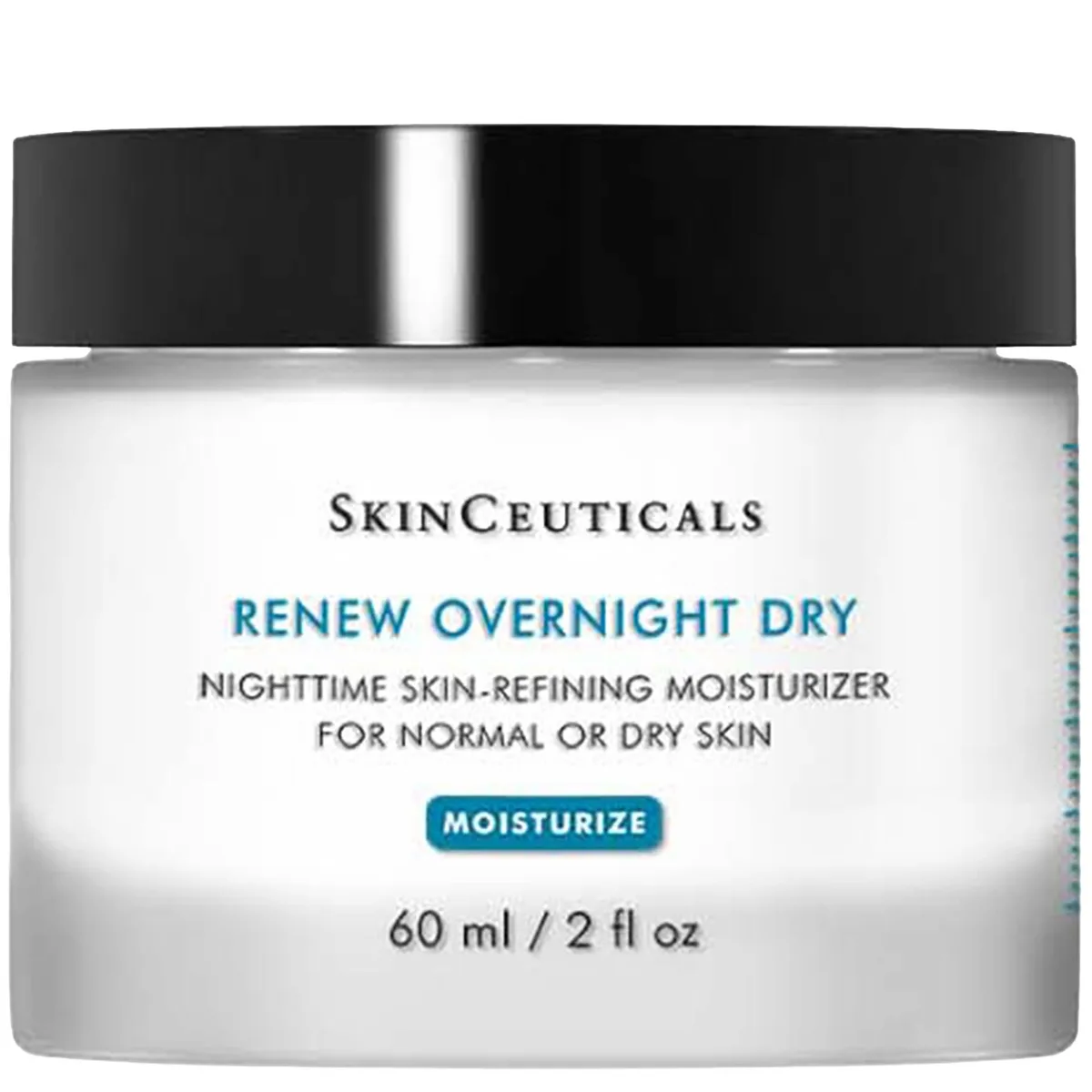
Of those, only the first has a clear mechanism attached to outcomes, and it is available at the drugstore. CeraVe Moisturizing Cream and La Roche-Posay Toleriane Double Repair Face Moisturizer both put ceramides in at concentrations that mean something, and neither sits anywhere near the top of the market. A mid-range clinical option like SkinCeuticals Renew Overnight Dry adds hydroxy acids to the same job. By the time you reach a luxury cream such as La Prairie Skin Caviar Luxe Cream, the incremental spend is going almost entirely to sensory experience, packaging and brand — all of which are real things people legitimately enjoy, and none of which changes barrier function.
The honest caveat is that texture is not nothing. Vehicle characteristics — how fast it absorbs, whether it feels greasy, whether it is sticky — are documented determinants of whether people keep using a topical at all. A cream you enjoy applying gets applied. That is a genuine benefit of paying more, and it should be described as what it is rather than dressed up as superior chemistry.
Sunscreen: the longest curve, and mostly not in the US
Sunscreen is the category where paying more can genuinely buy protection — and the reason it often doesn't in the United States is regulatory rather than commercial.
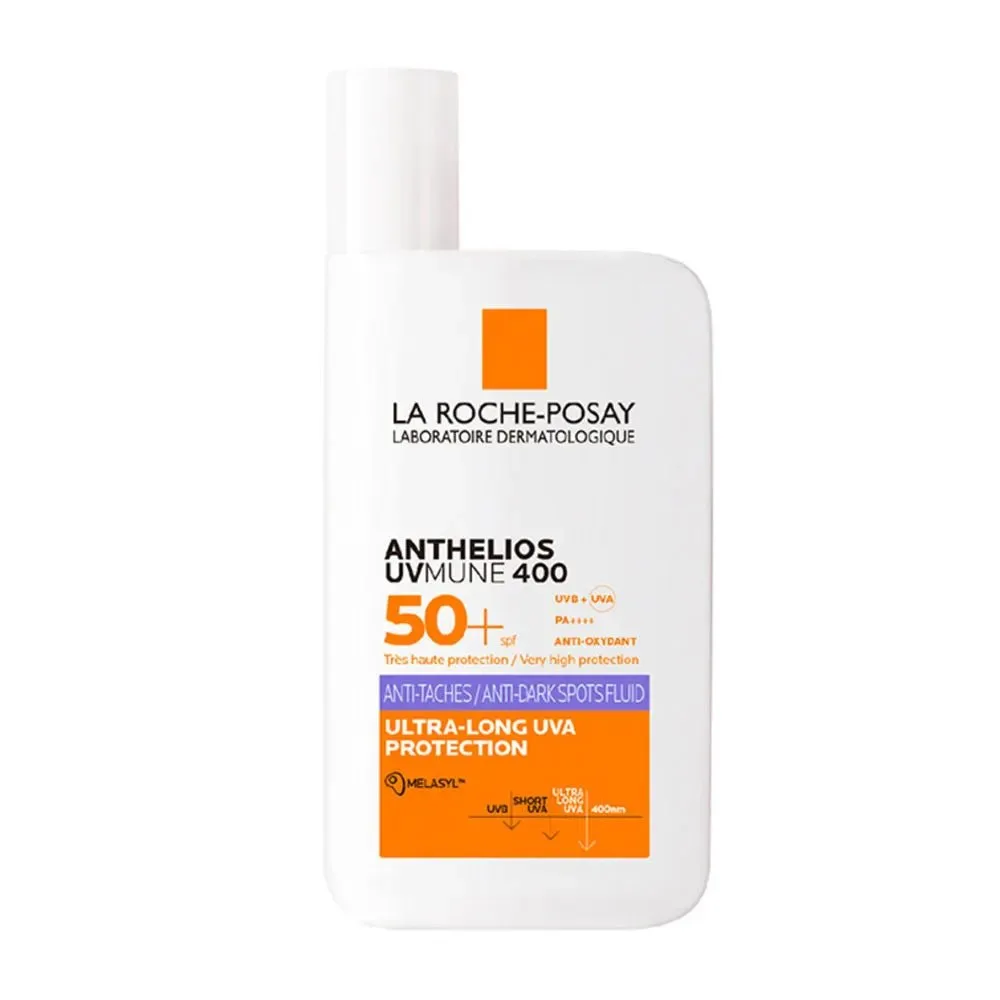
The US operates a short, dated list of permitted UV filters. Elsewhere, formulators can use modern broad-spectrum filters with better photostability and better long-UVA coverage. La Roche-Posay Anthelios UVMune 400 Anti-Dark Spots Fluid SPF 50+ is built around Mexoryl 400 and Tinosorb S — filters designed to close the ultra-long UVA gap that older systems leave open. Nothing in the American aisle can replicate that filter set, at any price. A domestic option like Neutrogena Invisible Daily Defense Sunscreen SPF 60+ draws from the same permitted list as sunscreens priced several times higher, which is why the curve inside the US flattens so early.
This is genuinely in motion. Bemotrizinol — a filter used internationally for over two decades — has been the focus of recent work on modernising US sunscreen regulation, and reviews of filter developments make clear that the American gap is a function of an approval pathway rather than of chemistry. If that pathway opens, the US price-quality curve for sunscreen will get materially longer.
Until then, the practical reading is unusual for this article: inside the US, spend little on sunscreen chemistry and choose entirely on texture, because texture determines how much you apply and applied dose determines protection. If you have access to a market with a broader filter list, that is one of the few places where the extra spend buys a measurable capability rather than a nicer experience. The Compare tool will show you the filter lists side by side, which is the only comparison that matters here.
Vitamin C and retinoids: one steep curve, one inverted
These two actives behave in opposite ways, and confusing them is the most expensive mistake in the category.
Vitamin C has a genuinely steep curve at the low end. L-ascorbic acid needs a pH below 3.5 to cross the stratum corneum in useful quantity, works in a window of roughly 8% to 20% with no benefit above that, and is hydrophilic and unstable enough that formulation and packaging are most of the product. Cheap vitamin C often fails on one of those three axes — wrong form, wrong pH, wrong container. A well-built formulation like SkinCeuticals Phloretin CF is expensive partly because getting an unstable molecule to survive in an aqueous system at the right pH is real work. But the curve flattens at mid-range, not luxury: derivative-based serums such as The INKEY List 15% Vitamin C + EGF Serum are legitimate, and the derivative literature is candid that different forms behave differently rather than worse. What you are buying is stability and delivery, and past a certain point nobody sells more of either. Which form is in the bottle tells you more than the price tag does.
Retinoids invert the whole framework. The best-evidenced retinoid available without a prescription is adapalene, a third-generation molecule with acne trial data behind it, and it sits at the very bottom of the price range — Differin Adapalene Gel 0.1% outperforms the great majority of premium retinol serums on evidence, not despite its price but irrespective of it. What money buys in this category is tolerability rather than potency: encapsulation and nano-lipid carrier systems are an active research area precisely because retinoids are chemically unstable and irritating, and those systems are genuinely expensive to develop. CeraVe Resurfacing Retinol Serum uses encapsulated retinol at a mid-tier price and is a fair illustration of what that engineering is worth. Above that, the spending buys packaging and marketing.
So: for vitamin C, spend up to the middle and read the form. For retinoids, the cheapest shelf holds the strongest evidence, and everything above it is buying comfort.
The category where the curve never rose
One group of products deserves separating out, because the framework above does not apply to it at all.
When a product's central claim is a proprietary complex — a trademarked broth, a growth-factor blend, a fermented ferment, an exosome preparation with no published characterisation — there is no curve, because there is no dose-response relationship to be on. You cannot buy more of an effect that has not been demonstrated, and price is not a proxy for anything measurable. What price is doing in that category is signalling: it establishes the product as prestige, and prestige is the experience being sold.
That is a legitimate thing to buy if you know that is what you are buying. Skincare is not purely instrumental; a beautiful object used in a daily ritual has value that a spreadsheet will not capture. The failure mode is buying it under the impression that it is doing what a retinoid does.
The tell is usually in the claim structure. A product that names its active and its concentration is inviting a comparison it expects to survive. A product that names a complex and describes an outcome is opting out of comparison. Neither is deceptive on its face — but only one of them can be evaluated. Running the ingredient list through the Dupe Finder tool is a quick way to find out whether the thing you are paying a premium for is present in a cheaper product under its ordinary INCI name, which is a surprisingly common outcome.
Where every curve flattens, in one list
Pulled together, the map looks like this. Cleansers flatten at the drugstore tier, because contact time caps what any formula can achieve. Moisturisers flatten at mid-range, once ceramides are present in physiological ratios; past that, you are buying texture, which is worth something but should be priced as what it is. Sunscreen flattens early inside the US because filter access is regulated rather than purchased, and runs longer in markets with modern filters. Vitamin C flattens at mid-range, once pH, form and packaging are handled properly. Retinoids are inverted — the strongest evidence sits at the cheapest tier and money buys tolerability. And proprietary-complex products have no curve to be on.
What makes this framing durable is that it survives everything that normally invalidates buying advice. Products get reformulated, prices move, brands launch and die, and a specific dupe recommendation is out of date within a year or two. The reason a cleanser cannot justify a luxury price does not change, because it is a fact about contact time. The reason US sunscreen differentiates on texture rather than chemistry will change only when regulation does — and the fact that regulation is what would have to change is itself the useful thing to know.
The practical version is short. Work out which end of each category's curve you are shopping on, buy at the flattening point, and treat everything above it as a purchase of experience rather than of capability. Then be honest with yourself about which one you actually wanted, because sometimes the answer is genuinely the experience — and that is a perfectly good reason to buy something, as long as it is not confused with a mechanism. The My Skin tool is a useful place to record what you are actually using and why, which makes that self-audit considerably easier the next time you restock.
Products mentioned
Independently reviewed and scored — the real products behind this piece.





- Ranked list Best Cleansers for Sensitive Skin Sorted on surfactant mildness rather than price, which makes the flat curve visible.
- Ingredient Ceramides The one moisturiser component with a clear mechanism, and it is available cheaply.
- Ingredient Vitamin C (L-Ascorbic Acid) Form, pH and packaging decide the outcome — and the curve flattens at mid-range.
- Ingredient Retinol Where encapsulation and stability work, rather than potency, is what higher prices buy.
References
- The effect of Cetaphil Gentle Skin Cleanser on the skin barrier of patients with rosacea — Cutis, 2006
- Bemotrizinol and the modernization of US sunscreen regulation — JAAD International, 2026
- Sunscreens: Updates on Sunscreen Filters and Formulations — Photodermatology, Photoimmunology & Photomedicine, 2025
- Topical Vitamin C and the Skin: Mechanisms of Action and Clinical Applications — The Journal of Clinical and Aesthetic Dermatology, 2017
- A review of topical vitamin C derivatives and their efficacy — Journal of Cosmetic Dermatology, 2022
- Topical retinoids: Novel derivatives, nano lipid-based carriers, and combinations to improve chemical instability and skin irritation — Journal of Cosmetic Dermatology, 2024
- Topical tretinoin or adapalene in acne vulgaris: an overview — Journal of Dermatological Treatment, 2004
- Assessing attributes of topical vehicles for the treatment of acne, atopic dermatitis, and plaque psoriasis — Cutis, 2014
Every cited link is verified to resolve to the paper named. Where a source could not be independently confirmed, it is listed without a link rather than pointing you somewhere wrong.
Frequently asked
Is there any category where a luxury product is genuinely better?
In markets with a modern UV filter list, yes — sunscreen is the clearest case, because filter access changes actual protection. Elsewhere the honest answer is that higher tiers reliably buy texture, sensory experience and packaging, all of which are real but none of which is the same as a different mechanism.
Why does a cheap cleanser perform as well as an expensive one?
Contact time. A cleanser is on the face for under a minute, so ingredients beyond the surfactant system have almost no opportunity to act. Surfactant mildness was solved decades ago and is inexpensive to execute, which is why the price-quality curve in this category flattens almost immediately.
What genuinely costs money to formulate?
Licensed UV filters, actives at real rather than token concentrations, stability testing, encapsulation and delivery systems, packaging that excludes air and light, and clinical substantiation. Those are legitimate cost drivers. The jar, the box and the campaign are also cost drivers, but they are not formulation.
Are expensive retinol serums better than cheap adapalene?
Not on evidence. Adapalene is a third-generation retinoid with acne trial data comparing it against tretinoin, and it is available over the counter at the cheapest tier. What higher retinoid prices buy is tolerability — encapsulation and lipid-carrier systems that reduce irritation — rather than a stronger effect.
How can I tell if a premium product is worth it before buying?
Look at whether the claim can be evaluated. A product that names its active and concentration is inviting comparison. A product built on a trademarked complex with no published characterisation is opting out of it. Running the ingredient list against cheaper products often reveals the same molecule under its ordinary INCI name.
Is it wrong to buy luxury skincare knowing this?
No — as long as you know what you are buying. A product you enjoy using gets used, and vehicle characteristics are a documented determinant of whether people stick with a topical. The mistake is not buying the experience; it is buying the experience while believing it is the mechanism.