


The Truth About Pore Strips, Pore Vacuums, and 'Shrinking' Your Pores
You cannot shrink a pore. But you can change how visible it is — and almost everything sold to 'minimize' pores is pulling the wrong lever.
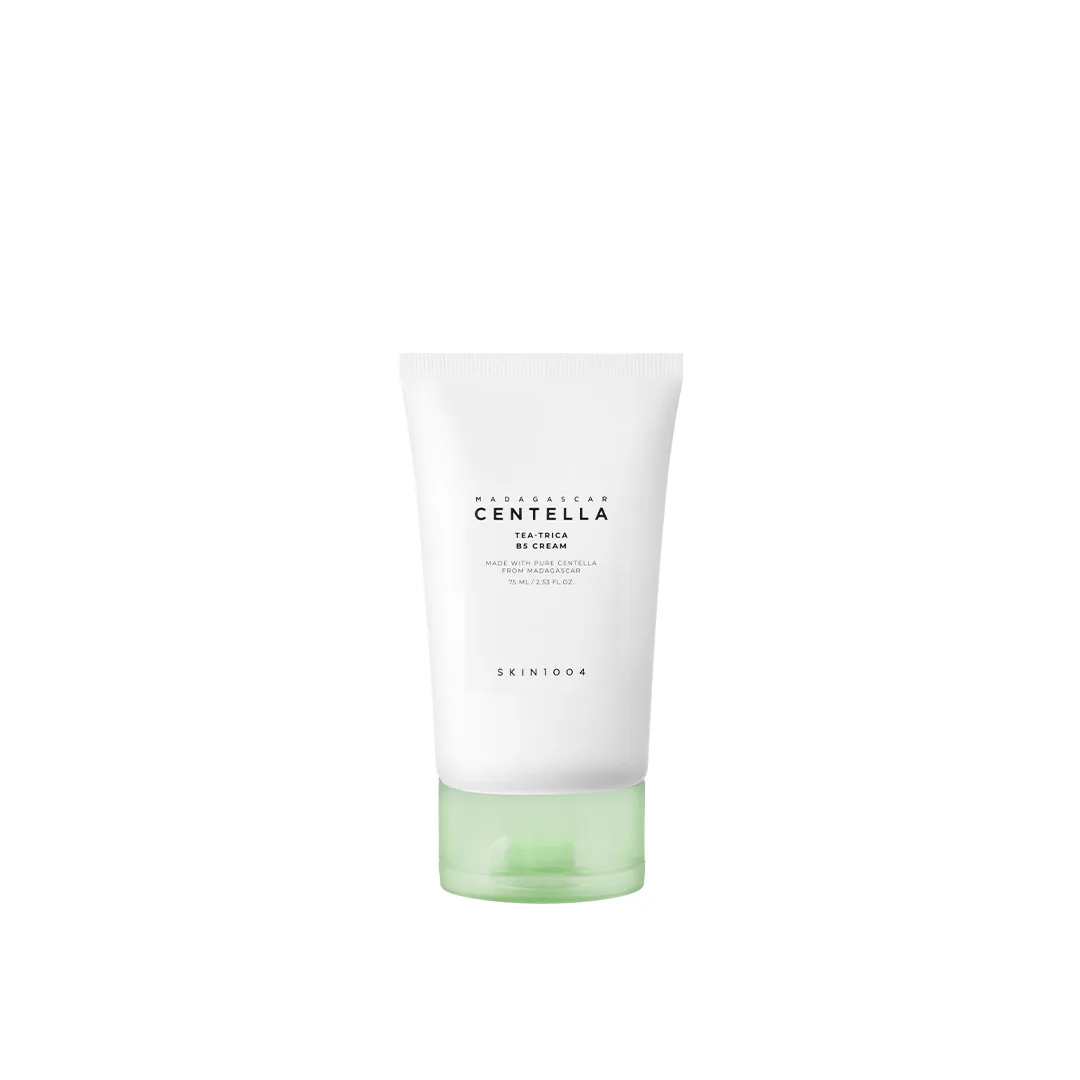
Most K-beauty acne creams either lean too hard on tea tree oil (irritating) or stop at low-dose niacinamide (underpowered). This cream stacks tea tree water, extract, and a small amount of essential oil with salicylic acid, zinc PCA, and niacinamide — and then uses the full centella triterpene panel as the calming counterweight so the actives don't wreck the skin they're treating.
SKIN1004's acne-prone answer to its own centella lineage — a gel-cream that stacks tea tree, salicylic acid, niacinamide, and zinc PCA on a base of full-panel centella. Built for oily and breakout-prone skin that wants more bite than the brand's gentler barrier creams.
Note: This gel-cream launched in 2024 and scoring relies on ingredient analysis plus SKIN1004's centella formulation track record applied to the newer Tea-Trica line. We'll revisit as more real-world data accumulates.
The case for it
Cautions: fragrance; fungal-acne triggers.
Same rule for everyone. “Strong choice” is the verdict on 1,459 of 45,024 concern verdicts across the catalog; rule R2 decided 892 of them. Unchanged since September 5, 2026, engine 5.1.1.
Brand or formulator? Disclose a concentration or correct a fact →
The studies behind the evidence row
The case for it
Cautions: fungal-acne triggers.
What would change this: Guideline or regulatory standing for the active on this concern would move this from a promising bet to a recommendation.
Same rule for everyone. “Promising” is the verdict on 7,858 of 45,024 concern verdicts across the catalog; rule R9p decided 7,858 of them. Unchanged since September 5, 2026, engine 5.1.1.
Brand or formulator? Disclose a concentration or correct a fact →
The studies behind the evidence row
The case for it
Cautions: fungal-acne triggers.
Same rule for everyone. “Strong choice” is the verdict on 1,459 of 45,024 concern verdicts across the catalog; rule R2 decided 892 of them. Unchanged since September 5, 2026, engine 5.1.1.
Brand or formulator? Disclose a concentration or correct a fact →
The studies behind the evidence row
The case for it
What would change this: A concentration inside the studied range would raise this a step.
Same rule for everyone. “Unproven” is the verdict on 1,111 of 45,024 concern verdicts across the catalog; rule R9 decided 1,111 of them. Unchanged since September 5, 2026, engine 5.1.1.
Brand or formulator? Disclose a concentration or correct a fact →
The studies behind the evidence row
The case for it
Same rule for everyone. “Good choice” is the verdict on 9,564 of 45,024 concern verdicts across the catalog; rule R5 decided 9,072 of them. Unchanged since September 5, 2026, engine 5.1.1.
Brand or formulator? Disclose a concentration or correct a fact →
The studies behind the evidence row
Falls shortJudged as a moisturizer, it comes up short on: seals moisture in, supplies barrier lipids.
A verdict is DermApproved’s assessment of how well a product’s ingredients fit a concern — never a claim about what the product treats. Evidence dots and collected reviews sit beside it and are never blended in. Rules 0.5.1 · evidence table ev-2026.09-r228 · how we decide
SKIN1004 has built its entire identity around being gentle. The brand's bestsellers are centella formulas that calm, soothe, and repair — the skincare equivalent of a weighted blanket. That's a great place to be if your skin is reactive, dry, or recovering from a dermatological procedure. It's a less helpful place to be if you're twenty-two, have genuinely oily skin, and are actively dealing with four new pimples a week. For a long time, SKIN1004 fans in that category had to improvise — pair the brand's centella cream with a BHA from somewhere else, hope it didn't conflict, wait. The Tea-Trica B5 Cream is the brand finally saying: we heard you, and here's a cream that's still us, but with teeth.
The bones of the formula are still centella. Centella asiatica leaf water sits in the base alongside tea tree leaf water, and all four centella triterpenes — madecassoside, asiaticoside, asiatic acid, and madecassic acid — show up in the INCI. That's important, because the aggressive actives in this cream would quickly irritate the acne-prone skin they're supposed to be treating without a calming counterweight. Using the full centella panel as the anti-irritation layer is exactly what you want in a cream like this, and it's the main reason the formula can get away with the stronger actives it carries. Houttuynia cordata and purslane extract sit a little further down doing quiet reinforcement work, and allantoin adds another layer of surface softening.
The tea tree approach is worth calling out, because it's smarter than the typical dump-tea-tree-oil-into-a-cream shortcut. There are three forms of tea tree in this product: leaf water near the top of the INCI, leaf extract a little lower down, and a small percentage of leaf oil. That distribution spreads the antimicrobial activity across a much gentler range of concentrations than pure tea tree oil, which can be genuinely irritating at the levels some acne brands favor. And that spread is the real answer to the belief that tea tree oil alone is all acne-prone skin needs — undiluted, it frequently does more damage than the breakouts it was meant to treat, which is why the anti-acne work here is split across four mechanisms instead of loaded onto one.
Salicylic acid is the other key active, and it's almost certainly in the sub-0.5% range that's typical for leave-on moisturizers. That's not a treatment dose — you won't replace a dedicated BHA with this — but it's enough to keep pores turning over alongside the tea tree and niacinamide. Speaking of niacinamide: it's listed high on the INCI, probably in the 2-4% range, and it's doing multiple jobs at once — sebum regulation, post-inflammatory mark support, barrier support. Zinc PCA rounds out the oil-control side, a common K-beauty addition that Western acne brands often overlook. Panthenol and sodium hyaluronate keep the hydration floor from dropping out beneath all of it, which is the difference between a cream that controls oil and one that simply strips it.
The pH sits around 5.0 — high enough to be comfortable, low enough that the salicylic acid isn't entirely neutralized into decoration. The emulsion itself is built on cetearyl alcohol, glyceryl stearate, and a polyglyceryl distearate, thickened with xanthan gum and carbomer and pH-buffered with arginine and tromethamine. Disodium EDTA chelates trace metals so the actives don't degrade in the jar. None of that is glamorous, but it's the scaffolding that keeps a cream this active stable for its twelve-month open-jar life.
Texture-wise, this is a gel-cream, and a lightweight one. It's cool on application, absorbs in under a minute, and leaves a matte finish that doesn't turn chalky. For oily and combination skin, it's exactly the kind of weight that gets ignored by the skin and goes about its work. The scent is mildly herbal from the tea tree oil — noticeable on first application but fading quickly — and not the cloying medicinal smell some acne products carry. A faint tingle during the first several uses is normal and usually settles within a week; if it's still there after that, the formula is telling you something.
The packaging is an opaque screw-top jar, which protects the actives from light but does mean fingers go in and out of the product. Clean hands or a small spatula are the answer, and the point is not academic in a cream aimed at acne-prone skin. Fifty milliliters, used morning and evening, lasts roughly two to three months.
There is a real list of people this cream is wrong for, and it's not a short one. Sensitive skin or rosacea-prone types should skip it entirely — the tea tree oil and salicylic acid combination is too much for reactive skin. It's not pregnancy-safe due to the leave-on salicylic acid. It's not officially fungal acne safe, because of the cetearyl alcohol and triglycerides in the base. For severe acne, it's a support player, not a headliner — you'll still need a dedicated BHA or a prescription retinoid to drive the actual treatment. And the tea tree scent, mild as it is, is a departure from the fragrance-free character of the brand's other lines.
Where it fits in a routine is straightforward: it's the moisturizer step, morning and night, on oily or breakout-prone skin. It sits comfortably over azelaic acid, benzoyl peroxide, or adapalene, and it's a sensible buffer under them if your skin needs one. Layering it on top of a separate BHA toner is where people get into trouble — the combined acid load is what drives the occasional complaint about dryness. If you're bringing retinol into the same routine, stagger the introduction rather than starting both in the same week. Expect a mattifying effect immediately, fewer active breakouts by week two or three, and whatever tone and texture change is coming by week six to eight.
The review pool is a few hundred deep rather than a few thousand, so read the sentiment as directional rather than settled: several reviewers describe it as light enough to disappear on oily skin without feeling drying, and the recurring criticisms are exactly the ones the formula predicts — the scent, the dryness when stacked with other acids, and its limits against severe acne. Around $26 for 50ml, the value is fair for the active density on offer, and it's the summer-weight option in a lineup that otherwise leans richer. For acne-prone skin that wants SKIN1004's formulation philosophy in a version that actually works on breakouts, this is the right choice. For everyone else in the brand's lineup, the gentler centella creams remain the better fit.
The hero actives that drive this product's performance.
| Ingredient | Function | Evidence |
|---|---|---|
| Centella Asiatica (Full Triterpene Panel) | The calming counterweight to the tea tree and salicylic acid in this formula — without it, the acne-targeting actives would risk irritating the exact acne-prone skin the cream is built for. | Not yet assessed |
| Tea Tree Leaf Water, Extract & Oil | A three-form tea tree complex — water, extract, and a small percentage of essential oil — for antimicrobial activity against acne-causing bacteria, delivered at concentrations low enough to avoid the irritation pure tea tree oil causes. | Not yet assessed |
| Niacinamide (likely 2-4%) | Sits high on the INCI as a supporting active — works on sebum regulation, post-inflammatory marks, and barrier support, all of which matter for the acne-prone skin this cream targets. | Limited for Acne |
| Salicylic Acid (likely under 0.5%) | A small leave-on dose for pore decongestion — not enough to replace a dedicated BHA treatment, but enough to keep pores turning over in tandem with the tea tree and niacinamide. | Established mechanism for Rough Texture · established mechanism |
| Zinc PCA | Helps regulate sebum production and supports the cream's light, non-greasy finish — a common addition in K-beauty oily-skin creams but not as widely used in Western equivalents. | Limited for Acne |
Ingredient standings describe the active at treatment-level doses and vehicles; this product's own condition grades weigh its actual formula.
Centella Asiatica Leaf Water, Melaleuca Alternifolia (Tea Tree) Leaf Water, Propanediol, Glycerin, Niacinamide, Pentylene Glycol, 1,2-Hexanediol, Caprylic/Capric Triglyceride, Panthenol, Centella Asiatica Extract, Madecassoside, Asiaticoside, Asiatic Acid, Madecassic Acid, Melaleuca Alternifolia (Tea Tree) Leaf Oil, Salicylic Acid, Zinc PCA, Sodium Hyaluronate, Allantoin, Houttuynia Cordata Extract, Portulaca Oleracea Extract, Cetearyl Alcohol, Glyceryl Stearate, Polyglyceryl-3 Methylglucose Distearate, Xanthan Gum, Arginine, Carbomer, Tromethamine, Ethylhexylglycerin, Disodium EDTA
moisturizer
AM & PM
Use as your primary moisturizer on oily or acne-prone skin. Can be spot-applied over active breakouts or used all-over 1-2x daily.
Immediate mattifying effect. Reduction in active breakouts within 2-3 weeks. Full benefits on tone and texture by 6-8 weeks of consistent use.
The active backbone of this cream rests on three well-studied categories. Tea tree oil (Melaleuca alternifolia) has a substantial published evidence base for antimicrobial activity against Cutibacterium acnes, with clinical trials showing efficacy comparable to low-dose benzoyl peroxide for mild-to-moderate inflammatory acne, though tea tree worked more slowly. The leaf water and extract forms used alongside the essential oil spread the antimicrobial activity across lower concentration ranges, reducing the irritation risk that pure-oil formulations carry. Salicylic acid is the most extensively studied leave-on BHA, with decades of research supporting its comedolytic activity and its ability to penetrate sebum-filled pores. At the sub-0.5% leave-on concentration typical of moisturizers, it provides maintenance-level pore turnover rather than treatment strength. Niacinamide has well-documented effects on sebum regulation, post-inflammatory pigmentation, and barrier function across multiple published studies at 2-5% concentrations. The centella triterpene panel provides the anti-inflammatory counterweight, with published research showing madecassoside and asiaticoside reducing pro-inflammatory cytokines and supporting barrier repair in compromised skin. Zinc PCA has promising but less extensive published evidence as a sebum regulator. The combination of antimicrobial, keratolytic, sebum-regulating, and anti-inflammatory mechanisms in a single leave-on cream is a coherent approach to managing mild-to-moderate breakouts without the irritation of higher-concentration actives.
Dermatologists commonly recommend moisturizers that combine low-dose salicylic acid with niacinamide for patients with mild-to-moderate inflammatory acne who also need hydration. Clinicians find that tea tree oil can be an effective antimicrobial adjunct at lower concentrations, particularly for patients who prefer plant-based actives. This type of cream is frequently suggested as a supportive moisturizer layered alongside prescription treatments like topical retinoids or benzoyl peroxide, rather than a primary acne treatment. Patients with sensitive skin, rosacea, or eczema are typically advised to avoid leave-on tea tree formulations.
Apply as your standard moisturizer step after toner and serums. Use twice daily on oily or acne-prone skin. In the morning, always follow with a broad-spectrum sunscreen — salicylic acid can mildly increase sun sensitivity. At night, it layers well under or alongside prescription retinoids or BHA treatments used a few nights a week. If you're introducing it into a routine with other actives, start once daily and build up to avoid compounding dryness.
At roughly $26 for 50ml, this cream is fairly priced within the K-beauty acne category. Comparable tea tree and BHA moisturizers from Western brands often run $30-45 for similar sizes with less complete ingredient lists. For oily or combination skin dealing with mild-to-moderate breakouts, the cost-per-benefit is reasonable — the cream functions as a moisturizer plus a light treatment step. For severe acne or anyone needing a true BHA treatment dose, it's an add-on rather than a replacement.
Oily or combination skin dealing with mild-to-moderate breakouts, blackheads, or large pores. It's also a good fit for anyone who already likes SKIN1004's centella philosophy and wants an acne-targeted variant that stays on-brand.
Sensitive skin, rosacea, or eczema types — the tea tree oil and salicylic acid combination is too much. Also skip during pregnancy, and skip if you're looking for a replacement for a dedicated BHA treatment — this is a supportive moisturizer, not a primary acne product.
Lightweight gel-cream with a cool, quick-absorbing finish
Subtle tea tree herbal note from the essential oil
Opaque screw-top jar
Immediately cooling and mattifying. Some users notice a very faint tingle from the salicylic acid and tea tree oil during the first few uses; this usually fades within a week. Breakout reduction typically starts in week 2.
Around 2-3 months when applied morning and evening to the face
spring summer
The Tea-Trica line was SKIN1004's answer to the demand for an acne-targeted version of their centella formulation philosophy. The brand's older lines lean gentle and barrier-focused, but oily and acne-prone customers wanted something more assertive while still keeping the cica DNA.
SKIN1004 launched in 2016 and built its reputation on single-origin Madagascar centella. The Tea-Trica line, added in 2024, applies the brand's cica-centered approach to acne-prone and oily skin with a tea tree complex.
Tea tree oil is the only ingredient you need for acne
Pure tea tree oil at high concentrations can irritate skin worse than the acne it's treating. This cream uses a three-form tea tree approach — water, extract, and a small amount of essential oil — combined with salicylic acid, niacinamide, and centella to spread the anti-acne work across multiple gentler mechanisms.
The Tea-Trica B5 Cream is built for oily and acne-prone skin: tea tree, salicylic acid, and zinc PCA dominate the actives. The Probio-Cica Enrich Cream is richer and focused on barrier repair for dry or compromised skin. They're essentially opposite ends of SKIN1004's cica line.
No — it contains salicylic acid as a leave-on active. Most dermatologists recommend avoiding leave-on BHAs during pregnancy. Use the Probio-Cica Enrich Cream or Madagascar Centella Cream instead.
Yes, but introduce it slowly. Both retinol and tea tree/salicylic acid can be drying. Start by using them on alternate nights and buffer with a gentler moisturizer on retinol nights.
Not strictly. It contains cetearyl alcohol and caprylic/capric triglyceride, which some strict fungal acne routines exclude. Tea tree oil itself is often considered helpful for fungal acne, but the overall formula isn't on the standard 'safe' lists.
No — the salicylic acid concentration is low (likely under 0.5%) because it's in a leave-on moisturizer. For moderate-to-severe acne, pair this cream with a dedicated BHA treatment used 2-3 nights per week.
Recurring themes our editors read across retailer reviews of this product — summaries in our words, not quotations, and not a substitute for your own patch test.
Lightweight on oily skin
Reduces breakouts
Doesn't feel drying
Pairs well with other acne actives
Tea tree scent noticeable
Can be drying if layered with other BHAs
Not enough for severe acne
Verified answers from our questions library — the nuance a product page cannot carry.