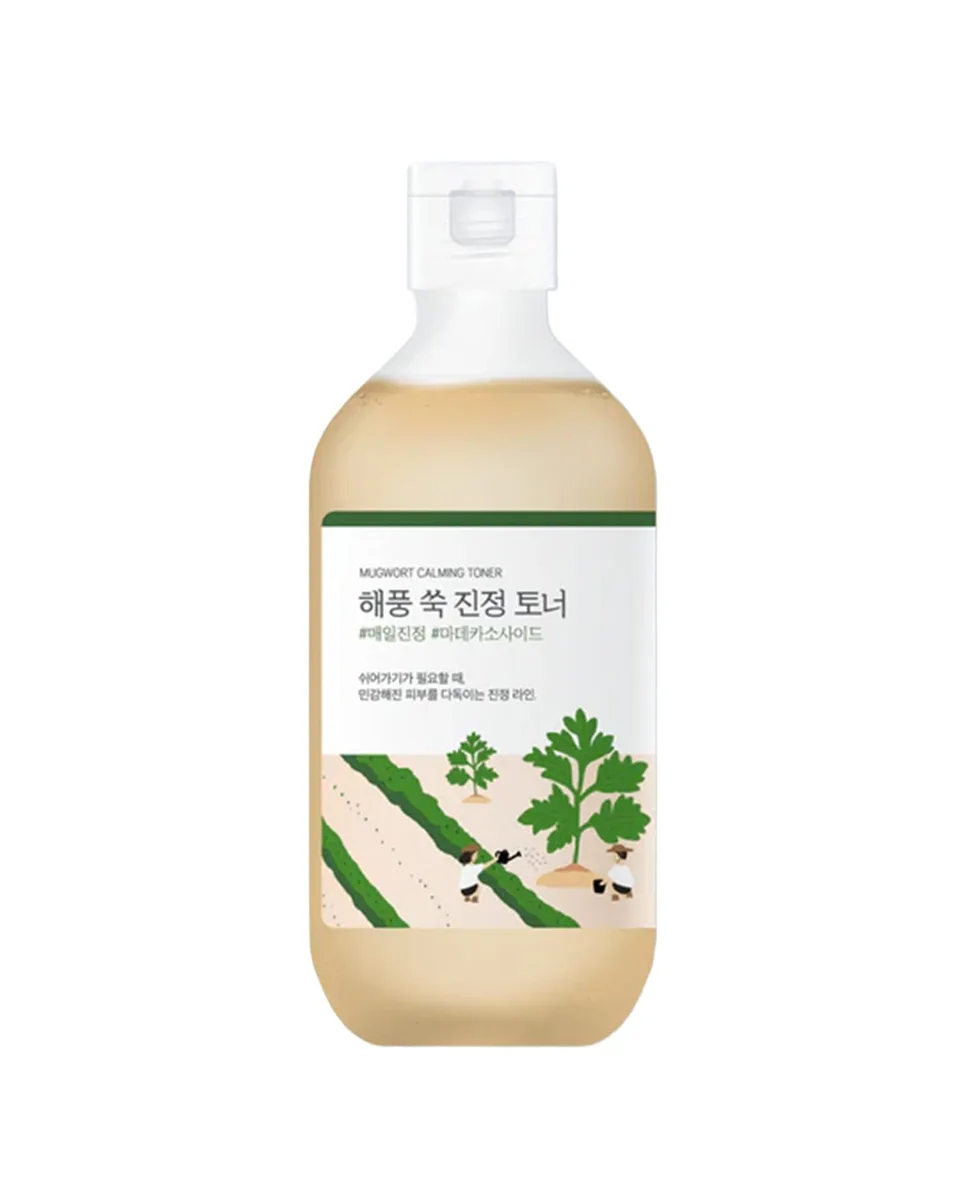
This is the leave-on heart of the Mugwort line — where the cleanser's soothing actives rinse away, this toner keeps around 1% mugwort and madecassoside on the skin to actually work on redness and reactivity over time. It is fully fragrance- and essential-oil-free, more rigorously so than the line's cleanser, and pairs calming with light hydration in a large, affordable bottle.
The leave-on workhorse of Round Lab's Mugwort line, and the one where the soothing actives actually get to do their job: around 1% mugwort paired with madecassoside, panthenol, and licorice settles redness and reactivity while a light humectant blend adds moisture. It is fully fragrance- and essential-oil-free — more rigorously so than the line's cleanser — in a generous, well-priced bottle. A calming-and-hydrating step, not a treatment, but a genuinely good one.
Good choicefor SensitivityIn your profileYou chose · No fragrance, drying alcohol, declarable allergens or sensitising preservatives in this liquid — the profile sensitive skin looks for.Not yet assessedGentleNo reviews collected yet
The case for it
Madecassoside has been researched for this concern and the evidence does not support it.
It is plausibly present at a working level, though the concentration is not declared.
The formula carries none of the triggers this concern is sensitive to.
What would change this: A declared concentration would move this to a firmer reading of the dose.
Same rule for everyone. “Good choice” is the verdict on 1,938 of 45,024 concern verdicts across the catalog; rule F2 decided 1,938 of them.
Unchanged since September 5, 2026, engine 5.1.1.
Promisingfor RosaceaIn your profileYou chose · Centella Asiatica has trial-level evidence for rosacea but no guideline or regulatory standing yet — promising, short of a recommendation; the other actives here are not yet assessed for it.Moderate evidenceGentleNo reviews collected yet
The case for it
Madecassoside has trial-level evidence for this concern but no guideline or regulatory standing yet.
It is plausibly present at a working level, though the concentration is not declared.
The formula carries none of the triggers this concern is sensitive to.
What would change this: A declared concentration would move this to a firmer reading of the dose.
Same rule for everyone. “Promising” is the verdict on 7,858 of 45,024 concern verdicts across the catalog; rule R9p decided 7,858 of them.
Unchanged since September 5, 2026, engine 5.1.1.
R9p — 0.5.0: 'Unproven' beside three filled dots read as one question answered twice with opposite words (7,018 rows). The chip measures standing, the dots measure trial volume; where the row carries at least one RCT or a tier-2 source (moderate dots) and the active is present at a working level, the honest word is Promising. Unproven is reserved for plausible-standing rows with limited or weak evidence, or an under-dosed form. Same rank as Unproven — a bet either way; the dots order them. · the full register
Carrying active
Madecassoside
Standing
plausible — trials support it
Form
plausible
Tolerability
gentle
Row checked
against its sources on July 17, 2026 (evidence table ev-2026.09-r228)
Promisingfor DullnessIn your profileYou chose · Glycerin has trial-level evidence for dullness but no guideline or regulatory standing yet — promising, short of a recommendation; the other actives here are not yet assessed for it.Moderate evidenceGentleNo reviews collected yet
The case for it
Glycerin + Betaine + Biosaccharide Gum-1 has trial-level evidence for this concern but no guideline or regulatory standing yet.
It is present at an effective concentration, declared or high in the ingredient list.
The formula carries none of the triggers this concern is sensitive to.
What would change this: Guideline or regulatory standing for the active on this concern would move this from a promising bet to a recommendation.
Same rule for everyone. “Promising” is the verdict on 7,858 of 45,024 concern verdicts across the catalog; rule R9p decided 7,858 of them.
Unchanged since September 5, 2026, engine 5.1.1.
R9p — 0.5.0: 'Unproven' beside three filled dots read as one question answered twice with opposite words (7,018 rows). The chip measures standing, the dots measure trial volume; where the row carries at least one RCT or a tier-2 source (moderate dots) and the active is present at a working level, the honest word is Promising. Unproven is reserved for plausible-standing rows with limited or weak evidence, or an under-dosed form. Same rank as Unproven — a bet either way; the dots order them. · the full register
Carrying active
Glycerin + Betaine + Biosaccharide Gum-1
Standing
plausible — trials support it
Form
adequate — studied range 2–20%, from the trials on the row; needs leave-on contact; judge it after ~1 weeks
Tolerability
gentle
Row checked
against its sources on July 17, 2026 (evidence table ev-2026.09-r228)
The studies behind the evidence row
Harry's Cosmeticology / Baran & Maibach Textbook of Cosmetic Dermatology — humectant, emollient and occlusive classification — standard reference text
Also listed for Acne, Compromised Skin Barrier and Excess Oiliness — the actives here (Glycerin, Panthenol (Vitamin B5) are in our research queue for those concerns; there is no verdict until their evidence rows are written. That is a gap in our table, not a mark against the product.
Does the jobDoes what a toner is for: not alcohol-driven, adds something real. Not measured from the label: restores skin pH, plays well with what follows.
A verdict is DermApproved’s assessment of how well a product’s ingredients fit a concern — never a claim about what the product treats. Evidence dots and collected reviews sit beside it and are never blended in.
Rules 0.5.1 · evidence table ev-2026.09-r228 · how we decide
Assessment
Pros & Cons
Pros
✓ Leave-on format lets mugwort and centella actually work
✓ Around 1% mugwort plus well-studied madecassoside
✓ Fully fragrance-free, alcohol-free, and essential-oil-free
✓ Light humectant blend calms and hydrates in one step
✓ Generous 300ml bottle at a fair price
✓ Cleaner, more reactive-skin-appropriate than the line's cleanser
Cons
✗ A calming and hydrating step, not a treatment
✗ Soothing effect is subtle and builds gradually
✗ Lighter hydration than the Birch toner
✗ No herbal scent for those expecting one
✗ Will not replace medical care for rosacea or acne
Review
Full Review
There is a quiet logic problem with putting soothing ingredients in a face wash: you rinse them off after thirty seconds. The Mugwort Calming Cleanser does it well enough, but a cleanser's soothing actives are always fighting against the drain. The Mugwort Calming Toner has no such handicap, and that is precisely why it is the more important product in the line. This is a leave-on step — you apply it and walk away — which means the mugwort and centella inside it actually stay on your skin and get hours, not seconds, to work on the redness and reactivity they target. If you are going to buy one piece of the Mugwort routine for calming, this is the one that earns its name most directly.
The active story is focused and sensible. Mugwort leads at around 1%, the same meaningful level as in the cleanser, bringing the antioxidant and anti-inflammatory compounds that anchor the whole line. Alongside it sits madecassoside — not a vague 'centella extract' but the single most-studied calming fraction of centella asiatica, the one with the best evidence for soothing and barrier support. Panthenol and licorice-derived dipotassium glycyrrhizate round out the anti-inflammatory side, two of the most reliable soothers in skincare. It is a tight, purpose-built calming stack, and because it stays on the skin, it has a genuine chance to reduce the low-grade inflammation that drives redness and a reactive, easily-provoked complexion.
What keeps it from being a one-note soothing tonic is a light layer of hydration. Glycerin sits high, joined by betaine and biosaccharide gum-1, a humectant blend that gives the toner a watery, non-sticky feel and leaves a soft, soothing film behind. Red algae and sugarcane extracts add to the conditioning. The result is a toner that calms and lightly quenches in the same step, which suits the reactive skin it targets — often dehydrated as well as irritated. It is not a heavy hydrator like the Birch toner, but it is not trying to be; the balance here tilts toward calm, with moisture as a welcome bonus. That dual character also makes it an unusually flexible step: oily, acne-prone skin can use it as a light, soothing layer that does not add grease, while drier reactive skin can pat on a couple of passes for extra comfort, so a single bottle works across the range of complexions the line is meant to serve.
The detail that most distinguishes this from its own cleanser sibling is what is not in it. Where the Mugwort cleanser slips in a trace of sage oil, the toner is rigorously fragrance-free, alcohol-free, and essential-oil-free — no scent, no herbal mugwort smell, nothing volatile to provoke a reaction. For a leave-on product aimed at the most reactive skin, that purity is exactly right, and it is the more thoughtful formulation of the two. There is a small irony that the product staying on your skin longest is the cleaner one, but it is the irony you want; the leave-on step is where fragrance would do the most harm, and Round Lab left it out.
In use, the toner is about as low-drama as it sounds. It is a lightweight, watery liquid that absorbs in seconds, leaving skin feeling cooled, settled, and lightly hydrated with no tackiness and no scent. You can pat it on by hand as a calming first layer, or saturate a cotton pad and press it over a red patch for a quick localized soothe. There is no tingle and no sensory drama, which is the point — calming ingredients work by quieting inflammation, not by making your face buzz, and anyone expecting a herbal hit or a cooling sting has misunderstood what a good calming toner is supposed to feel like.
The limitations are the honest ones for the category. This is a soothing-and-hydrating step, not a treatment: it will help a reactive complexion feel and look calmer over time, but it will not clear acne, fade marks, or replace medical care for rosacea — it complements those rather than substituting for them. And like any calming product, its effect is cumulative and subtle; you notice it most in the gradual sense that your skin is less prone to flaring, not in a dramatic overnight change. Set the expectation correctly and it delivers; expect a miracle and it will seem to do little.
Value, as ever with Round Lab, is a strong point. Twenty-seven dollars buys a full 300 milliliters, enough for three to four months of twice-daily use, which is generous pricing for a calming toner with real mugwort and madecassoside content. You are paying for substance and volume rather than a small bottle of marketing, and the fully fragrance-free formula is exactly what reactive skin should be reaching for. As the leave-on core of a soothing routine — and as a gentle, well-priced calming step for anyone whose skin runs red and reactive — the Mugwort Calming Toner is an easy and genuinely useful recommendation.
Formula
Key Ingredients
The hero actives that drive this product's performance.
Mugwort leads the actives at around 1% and, crucially, this is a leave-on product, so the herb's antioxidant and anti-inflammatory compounds stay on the skin to work rather than rinsing away — the reason this toner can genuinely target redness and reactivity over time.
The most studied calming fraction of centella, madecassoside, partners with the mugwort to soothe and support the skin barrier, a pairing chosen specifically to settle the inflammation behind redness, sensitivity, and breakout-prone skin.
Provitamin B5 and licorice-derived glycyrrhizate deepen the anti-inflammatory action and condition the barrier, reinforcing the toner's calming purpose so it leaves stressed skin noticeably more comfortable.
A light humectant blend keeps the toner hydrating as well as calming, giving it a watery, non-sticky feel that adds a layer of moisture and a soothing film without weighing the skin down — calming and quenching in one gentle step.
Plausible mechanismfor Dullness
Ingredient standings describe the active at treatment-level doses and
vehicles; this product's own condition grades weigh its actual formula.
Right after cleansing, apply it as a calming first layer; pat in by hand, or saturate a cotton pad and press over red areas. Follow with a soothing serum and moisturizer while skin is still damp.
Results Timeline
Skin feels soothed and lightly hydrated immediately; with daily use over two to four weeks, reactive or redness-prone skin tends to look calmer and more even.
As a leave-on product, this toner gives its soothing actives the residence time a cleanser cannot, which is the most important structural point in its favor. The calming core pairs mugwort (Artemisia vulgaris) at roughly 1%, a source of antioxidant and anti-inflammatory constituents, with madecassoside, the centella fraction that carries the strongest evidence among the cica actives for reducing inflammation and supporting barrier repair. Panthenol contributes documented anti-inflammatory and barrier-support effects, and dipotassium glycyrrhizate from licorice adds recognized soothing activity, giving the formula several mechanistically aligned calming agents. The hydration side is handled by glycerin, betaine, and biosaccharide gum-1, well-supported humectants that also confer a soothing, film-forming quality. Red algae (Chondrus crispus), sugarcane, and cacao seed extracts add minor antioxidant and conditioning support. The formulation's most defensible scientific strength is its restraint: fully fragrance-, alcohol-, and essential-oil-free, it aligns closely with evidence-based recommendations for sensitive, reactive, and barrier-compromised skin, and avoids the trace essential oil present in the line's cleanser. Its benefits are soothing and supportive rather than treatment-level.
Dermatologist Perspective
Leave-on calming toners that are fully fragrance- and alcohol-free are a sensible choice in clinical thinking for reactive, redness-prone, and rosacea-affected skin, and keeping soothing actives on the skin rather than rinsing them away gives them a better chance to act. Madecassoside in particular has a reasonable evidence base for soothing and supporting barrier recovery, and pairing it with mugwort and panthenol is a coherent anti-inflammatory approach. Dermatology resources would frame this as a supportive, barrier-friendly step rather than a treatment, noting that it complements but does not replace prescribed therapy for conditions like rosacea or active acne. The absence of fragrance and essential oils is well aligned with standard recommendations for sensitive skin, making this a low-risk addition to a calming routine for most reactive complexions.
Guidance
Usage & Recommendations
How to Use
Right after cleansing, use it as your calming first layer. Pour a small amount into your palms and press it gently into the skin, or saturate a cotton pad and sweep or press it over red, reactive areas. For extra soothing on irritated patches, lay a saturated pad flat for a minute or two. While skin is still damp, follow with a soothing serum and moisturizer to seal in the calm and the light hydration. Use it morning and night, and reach for it any time your skin feels stressed or flushed.
Value Assessment
At twenty-seven dollars for a full 300 milliliters, the Mugwort Calming Toner is strong value for a leave-on calming toner with genuine mugwort and madecassoside content. Many soothing toners ship in 150- or 200-milliliter bottles for similar money, so the volume alone makes this competitive, and a bottle lasts three to four months of twice-daily use. The price reflects formula substance and the brand's value positioning rather than marketing, and the fully fragrance-free construction is exactly what reactive skin should prioritize. There is no larger size, but at 300 milliliters there is little need for one. Against premium calming toners that charge a multiple of this for smaller bottles with comparable cica content, it represents clear value, especially for sensitive, redness-prone skin.
Who Should Buy
This is an excellent everyday calming step for sensitive, reactive, redness-prone, or acne-prone skin that wants a fully fragrance-free, leave-on soothing toner. It suits anyone drawn to mugwort and centella for irritation, and those who want light hydration alongside the calm in a large, well-priced bottle.
Who Should Skip
Those seeking a treatment toner — with exfoliating acids or targeted brightening and anti-aging actives — should look elsewhere, since this soothes and lightly hydrates rather than treats. Skin whose main concern is deep dryness may prefer the more hydration-focused Birch toner, and anyone expecting a dramatic, immediate change should temper that expectation.
A lightweight, watery toner with a faint slip that absorbs quickly and leaves a soft, soothed, non-tacky finish.
Scent
Completely unscented, with no fragrance or essential oils — notably, no herbal mugwort smell.
Packaging
A large 300ml bottle with a flip cap, easy to dispense into the hands or onto a cotton pad.
Finish
lightweightfast-absorbingnatural
What to Expect on First Use
From the first use it feels cooling and calming, sinking in fast with no scent or sting, immediately leaving reactive skin more settled and lightly hydrated.
How Long It Lasts
Around 3-4 months with twice-a-day use, thanks to the generous 300ml size.
Round Lab built the Mugwort Calming line for reactive, redness-prone skin, and the toner is its workhorse leave-on step, sourcing mugwort the brand ties to Korea's Geomundo Island and pairing it with centella to settle inflammation between cleansing and moisturizing.
About ROUND LAB Established Brand (5–20 years)
Round Lab, the South Korean brand founded in 2014, anchors its Mugwort Calming line on mugwort and centella for reactive skin. Unlike the line's cleanser, this leave-on toner is fully fragrance- and essential-oil-free, in keeping with the brand's gentle reputation and large, well-established review base.
Brand founded: 2017
Myth vs. Reality
Common Myths
Myth
A calming toner should smell herbal and tingle to prove it is working.
Reality
This toner is deliberately scentless and non-tingling. Calming ingredients like mugwort and madecassoside work by reducing inflammation, not by producing sensation, and a fragrance or tingle would risk irritating the very reactive skin the toner is meant to soothe.
FAQ
Frequently Asked Questions
What does the Round Lab Mugwort Calming Toner do?
It is a leave-on calming toner that soothes redness and reactivity while lightly hydrating. Around 1% mugwort plus madecassoside, panthenol, and licorice-derived glycyrrhizate stay on the skin to reduce inflammation, with a humectant blend adding gentle moisture.
Is the Mugwort Calming Toner good for redness and rosacea?
It is well suited to redness-prone and reactive skin. It is fully fragrance-free, alcohol-free, and essential-oil-free, with mugwort and centella to calm inflammation, making it a gentle daily option, though it complements rather than replaces medical rosacea treatment.
How is this different from the Round Lab Birch Toner?
The Birch toner is hydration-first, built on birch sap and hyaluronic acid, while the Mugwort toner is calming-first, leading with mugwort and madecassoside to soothe redness. Choose Mugwort for reactivity and irritation, Birch for dryness and dehydration.
Does the Mugwort Calming Toner smell like mugwort?
No. Despite the herb, it is completely fragrance-free and essential-oil-free, with no herbal scent. That is intentional, since added fragrance could irritate the reactive skin the toner is designed to calm.
How should I use the Mugwort Calming Toner?
Apply it right after cleansing as a calming first layer, patting it in by hand or pressing a saturated cotton pad over red areas. Follow with a soothing serum and moisturizer while skin is still damp. It can be used morning and night.
Reviews
What Reviewers Tend to Say
Recurring themes our editors read across retailer reviews of this product — summaries in our words, not quotations, and not a substitute for your own patch test.
Every cica, calming, and barrier product leans on the same three ingredients, and the real mechanisms are far more specific — and more limited — than 'soothing' lets on.
The K-beauty buzzword slaps a green leaf on half the shelf — but centella is one of the rare botanicals with genuine wound-healing data. The trick is knowing which molecule is doing the job.
It's in half your products and headlines none of them. Provitamin B5 has the kind of boring, decades-deep barrier and wound-healing evidence that flashier actives can only envy.
Cutting a beard hair takes about a twentieth of a newton. You press with two and stretch your skin by a fifth — which is why almost every shaving problem is a technique problem wearing a hardware costume.
Aug 28, 2026· 10 min
Questions people ask about sensitive skin
Verified answers from our questions library — the nuance a product page cannot carry.
Products, answers, therapy guides, tools and articles in one search. Brand names,
slang and abbreviations all work — accutane finds isotretinoin, bacne finds truncal acne.