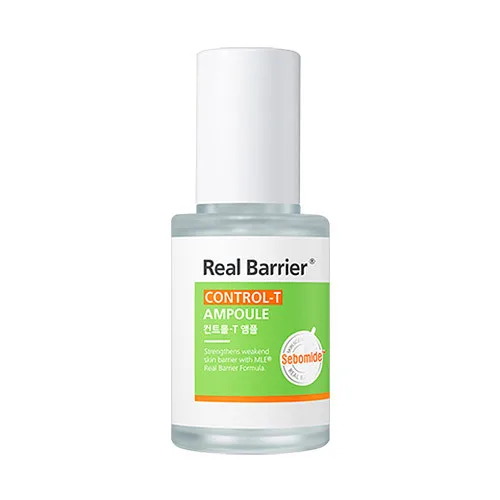
It is a barrier-conscious take on an oil-control serum, pairing tea tree and houttuynia with a gentle lactobionic PHA and soothing licorice and witch hazel rather than harsh actives, so it manages oil and texture without aggressive stripping. The trade-off is a botanical essential-oil blend and the lack of a heavyweight active like niacinamide.
A lightweight, barrier-conscious oil-control ampoule that leans on tea tree, houttuynia, a gentle lactobionic PHA, and soothing licorice to manage shine and congestion without harsh stripping. It is pleasant and reasonably priced for oily and combination skin. But the absence of a heavyweight proven active like niacinamide, plus a mugwort-sandalwood-patchouli oil blend, keeps it a supportive step rather than a standout treatment.
Listed for Excess Oiliness, Large Pores, Blackheads and Acne — the actives here (Houttuynia Cordata (Heartleaf) are in our research queue for those concerns; there is no verdict until their evidence rows are written. That is a gap in our table, not a mark against the product.
A verdict is DermApproved’s assessment of how well a product’s ingredients fit a concern — never a claim about what the product treats. Evidence dots and collected reviews sit beside it and are never blended in.
Rules 0.5.1 · evidence table ev-2026.09-r228 · how we decide
✓ Tea tree and houttuynia for gentle sebum calming
✓ Lactobionic PHA refines texture without harshness
✓ Licorice and witch hazel soothe blemish-prone skin
✓ Barrier-conscious, non-stripping approach to oil control
✓ Reasonably priced for the format
Cons
✗ No niacinamide, BHA, or other strong proven active
✗ Mugwort, sandalwood, and patchouli oils add allergens
✗ Results are gentle and supportive, not dramatic
✗ Poor fit for dry or sensitive skin
✗ Small 30ml bottle with no larger size
Review
Full Review
There are two schools of thought on treating oily skin. One reaches for the heavy artillery, salicylic acid, niacinamide, retinoids, the actives with the deepest evidence behind them. The other takes a gentler, botanical route, calming the skin and nudging sebum down with plant extracts rather than hammering it. This ampoule is firmly in the second camp, and your reaction to it will depend largely on which school you belong to. It is a thoughtful, mild, barrier-conscious take on oil control, and also, by design, a fairly modest one.
The formula is built around two Korean problem-skin favorites. Tea tree leaf extract sits second on the ingredient list, an unusually high placement, and houttuynia cordata follows close behind, both botanicals with a long track record in oily and blemish-prone skincare for their soothing and clarifying reputations. Around them, Real Barrier added a gentle lactobionic acid, a large-molecule PHA that lightly refines texture while doubling as a humectant, plus witch hazel water for mild astringency and dipotassium glycyrrhizate, a licorice derivative, to calm the redness that often rides along with breakouts. It is a coherent, sensibly assembled cast for managing oil and congestion gently, and it reflects the brand's barrier-first instincts even in a product for oily skin.
In use, it is genuinely pleasant. The texture is light and watery, absorbing quickly to a fresh, slightly matte finish with no greasy film, which is exactly what oily skin wants from a serum step. Layered under a gel moisturizer, it sits comfortably and helps skin look a touch less shiny through the day. Over about four weeks of consistent use, oily and combination skin may notice a more refined, less congested surface. None of this is dramatic, but it is real, and for skin that reacts badly to stronger actives, a gentle option that still does something has clear value.
The limitation is what is missing. There is no niacinamide here, the single most useful and best-evidenced active for oily skin, no salicylic acid or other BHA, and no retinoid. The ampoule leans entirely on botanicals and a mild PHA, which means its sebum-control and pore-refining effects are inherently gentler and slower than what a niacinamide or BHA serum would deliver at a similar price. Tea tree and houttuynia are promising but not powerful at leave-on cosmetic levels, so if you have meaningful oiliness, persistent congestion, or active acne, this ampoule alone will likely underwhelm, and you would do better with, or alongside, a product carrying a stronger proven active. It is a supportive player, not a lead.
The other recurring issue is the one that follows nearly every Real Barrier product reviewed here: essential oils. This ampoule contains mugwort, sandalwood, and patchouli oils, which give it a distinct herbal-woody scent and carry fragrance allergens. Because it is a leave-on, the exposure is real, and the irony is familiar, a product aimed partly at calming blemish-prone, sometimes-reactive skin that nonetheless includes a botanical-oil blend capable of irritating it. Oily skin without fragrance sensitivity will usually be fine, but dry, sensitive, or rosacea-prone skin should steer clear, which further narrows the audience.
Value is fair. At around twenty dollars for 30 milliliters, it is reasonably priced for a lightweight botanical ampoule, and a little goes a long way, but you are paying for a gentle, supportive formula rather than a heavy-hitting treatment. Plenty of niacinamide serums at the same or lower price will do more measurable work on oily skin, so the value here rests on whether you specifically want the gentle, botanical, barrier-conscious approach rather than maximum efficacy. There is no larger size to improve the math.
Where it lands is clear. For oily and combination skin that prefers a mild, plant-led approach to managing shine and congestion, tolerates a herbal-woody scent, and is realistic about gentle results, this is a likeable, fairly priced ampoule that will not strip or aggravate the skin. For anyone with significant oiliness or acne who wants real results, or with dry or sensitive skin that the essential oils would bother, it is the wrong tool, and a niacinamide or BHA serum, or the brand's gentler Aqua line, will serve better. Buy it for what it is, a gentle sebum-soothing step, and it does that job without drama. It is also worth setting realistic expectations around the whole gentle-botanical approach. Ingredients like tea tree and houttuynia have a long cultural history in Korean problem-skin care, and there is genuine comfort in a product that calms rather than attacks oily, breakout-prone skin. But comfort is not the same as clearance, and anyone expecting this ampoule to meaningfully reduce active acne is likely to be let down by what botanicals at leave-on levels can actually do. Used as a soothing, oil-balancing companion to proven actives, rather than as a stand-in for them, it makes far more sense, and your expectations will line up with what it genuinely delivers.
Formula
Key Ingredients
The hero actives that drive this product's performance.
Sitting second on the list at an unusually high level, tea tree leaf extract is the ampoule's headline active, included for its clarifying, antibacterial reputation on oily and blemish-prone skin and its role in the formula's sebum-calming intent.
A Korean staple for problem skin placed high in the formula, it works alongside the tea tree to soothe and help control sebum, reinforcing the ampoule's focus on oil and congestion.
A large-molecule polyhydroxy acid that gently refines texture and supports a clearer-looking surface while also acting as a humectant, a milder way to address congestion than the stronger acids usually paired with oily skin.
A mildly astringent botanical water that supports the pore-refining, mattifying goal of the ampoule, complementing the tea tree and houttuynia for oily skin.
A soothing, anti-inflammatory licorice derivative that calms the redness often accompanying breakouts, keeping the ampoule gentle while it works on oil and texture.
Not yet assessed
Ingredient standings describe the active at treatment-level doses and
vehicles; this product's own condition grades weigh its actual formula.
Press a few drops on after toner and before moisturizer, morning and night, focusing on oilier areas like the T-zone. It is lightweight enough to layer under a gel moisturizer; because of the essential oils, avoid pairing it in the same routine with other strongly fragranced or heavily exfoliating products.
Results Timeline
Immediate: a light, fresh, slightly mattifying feel. Over about four weeks, oily and combination skin may look less shiny and more refined as the sebum-calming botanicals and gentle PHA work, though results are supportive rather than dramatic.
The ampoule's actives are reasonable but modest in evidence at leave-on cosmetic levels. Tea tree (Melaleuca alternifolia) has the most support of the botanicals, with studies showing antibacterial activity against acne-associated bacteria and some efficacy for mild acne, though most positive data come from higher-concentration gels rather than a botanical extract in a serum. Houttuynia cordata has promising anti-inflammatory and antimicrobial data relevant to oily, blemish-prone skin, but robust clinical evidence is limited. Lactobionic acid is a polyhydroxy acid whose large molecule produces gentle surface exfoliation and meaningful humectant activity, a milder route to texture refinement than AHAs or BHA. Dipotassium glycyrrhizate (a licorice derivative) and calendula are evidence-backed soothers, and witch hazel offers mild, lightly-supported astringency. Notably absent are the actives with the strongest evidence for oily and acne-prone skin, niacinamide for sebum regulation and tone, and salicylic acid (BHA) for unclogging pores, so the formula's oil-control and pore effects are inherently gentler and less proven than a serum built around those. Working against the soothing intent are the essential oils, mugwort (artemisia), sandalwood, and patchouli, which contribute recognized fragrance allergens in a leave-on format. The honest read is a sensibly assembled, gentle botanical oil-control ampoule whose ingredients are appropriate but mild, lacking a heavyweight proven active and carrying a fragrance load that limits its suitability for sensitive skin.
Dermatologist Perspective
For oily and blemish-prone skin, the most evidence-backed topical options are typically niacinamide, salicylic acid, and retinoids, none of which appear in this ampoule; it instead relies on botanicals like tea tree and houttuynia, which have supportive but more limited evidence at leave-on levels. Clinically, such a product would be framed as a gentle adjunct rather than a primary treatment, useful for someone who wants mild sebum-calming without strong actives, and the lactobionic acid offers gentle, well-tolerated exfoliation. The reservation a dermatologist would raise is the essential-oil content, mugwort, sandalwood, and patchouli oils are recognized sensitizers, making the ampoule a poor choice for sensitive, rosacea-prone, or dry skin despite its blemish-calming positioning. For oily skin without fragrance sensitivity, it is a reasonable lightweight step, best paired with a proven active and daily sunscreen if meaningful oil or acne control is the goal.
Guidance
Usage & Recommendations
How to Use
Smooth a few drops over the skin after your toner and before moisturizer, morning and night, focusing with extra attention to oilier areas like the T-zone. Let it absorb, then follow with a lightweight gel moisturizer and, in the morning, sunscreen. Because it leans on gentle botanicals rather than strong actives, give it about four weeks to judge the effect on shine and texture, and consider pairing it with a niacinamide or BHA product if you want stronger oil or acne control. If your skin is fragrance-reactive, patch test first because of the essential oils.
Value Assessment
At around twenty dollars for 30 milliliters, this is fairly priced for a lightweight botanical ampoule, and a little goes a long way, but the value is qualified by what the formula lacks. Because it omits niacinamide and BHA, many similarly priced or cheaper serums will do more measurable work on oily and acne-prone skin, so you are essentially paying for the gentle, plant-led, barrier-conscious approach rather than maximum efficacy. There is no larger size to lower the per-use cost. As an established brand from Neopharm rather than a hype label, Real Barrier prices it sensibly, but the value case really only holds if you specifically want a mild botanical ampoule and are not chasing the stronger results a proven active would provide.
Who Should Buy
This suits oily and combination skin that prefers a gentle, botanical, barrier-conscious approach to managing shine and congestion, tolerates a herbal-woody scent, and is realistic about mild, supportive results. It is a good pick for people who react badly to strong actives but still want a lightweight sebum-calming step.
Who Should Skip
Pass on it if your skin is dry, sensitive, or rosacea-prone, since the oil-control focus and the mugwort, sandalwood, and patchouli oils are likely to be drying or irritating. It is also the wrong choice if you have significant oiliness or active acne and want measurable results, where a niacinamide or BHA serum would do far more.
A light, watery ampoule that absorbs quickly to a fresh, slightly matte, non-greasy finish
Scent
A herbal-woody aroma from the mugwort, sandalwood, and patchouli oils, distinct but not heavy
Packaging
A 30ml dropper bottle dispensing the light, watery ampoule
Finish
lightweightfast-absorbingnon-greasynatural
What to Expect on First Use
It drops on light and watery, sinking in fast to leave skin feeling fresh and slightly more matte without any greasy film. The herbal-woody scent is immediately noticeable; oily skin tends to find it comfortable, while drier or reactive skin may register the essential oils.
How Long It Lasts
Around 1.5-2.5 months with twice-a-day use from the 30ml bottle
Part of Real Barrier's Control-T range for oily skin, this ampoule leans on Korean problem-skin botanicals, tea tree and houttuynia foremost, to regulate shine while keeping the formula relatively mild. It targets people who want sebum control without the irritation of strong acids or high-percentage actives.
About Real Barrier Established Brand (5–20 years)
Real Barrier, the barrier-repair line from Neopharm (maker of ATOPALM), runs its Control-T range for oily and blemish-prone skin. This sebum-regulating ampoule leans on tea tree and houttuynia rather than ceramides, and is sold on Amazon and at K-beauty retailers as a lightweight treatment for shine and congestion.
Brand founded: 2015 · Product launched: 2018
Myth vs. Reality
Common Myths
Myth
Tea tree ampoules work like benzoyl peroxide for acne.
Reality
Tea tree has some antibacterial evidence, but at the levels in a leave-on ampoule it is a supportive, soothing ingredient rather than a clinical acne treatment. This ampoule helps manage oil and calm blemish-prone skin; it is not a replacement for proven acne actives like benzoyl peroxide or a BHA.
FAQ
Frequently Asked Questions
What does the Real Barrier Control-T Ampoule do?
It is a lightweight ampoule for oily and blemish-prone skin that uses tea tree, houttuynia, witch hazel, and a gentle lactobionic PHA to help manage sebum, refine the look of pores, and calm congestion, all in a relatively mild, barrier-conscious formula rather than a harsh oil-control treatment.
Does the Control-T Ampoule contain niacinamide or salicylic acid?
No. It relies on botanical sebum-calmers like tea tree and houttuynia plus a gentle lactobionic acid (a PHA), but it does not contain niacinamide or salicylic acid. If you want those stronger, better-studied oil and acne actives, you would need to add a separate product.
Is the Control-T Ampoule fragrance-free?
No. It contains mugwort, sandalwood, and patchouli essential oils, which give it a herbal-woody scent and carry fragrance allergens. Oily skin often tolerates it, but dry, sensitive, or reactive skin should patch test or choose a fragrance-free oil-control product.
Is this ampoule strong enough to treat acne?
It is a supportive product rather than an acne treatment. The tea tree and houttuynia can help calm and manage oily, congestion-prone skin, but for active acne you will get better results pairing it with, or replacing it with, a proven active like a BHA, niacinamide, or benzoyl peroxide.
Can dry or sensitive skin use the Control-T Ampoule?
It is not ideal for them. The formula is oriented toward oil control and contains stimulating essential oils, so dry skin may find it insufficiently hydrating and sensitive skin may find it irritating. The brand's Aqua Soothing range is a gentler option for those skin types.
Reviews
What Reviewers Tend to Say
Recurring themes our editors read across retailer reviews of this product — summaries in our words, not quotations, and not a substitute for your own patch test.
Common Praise
Lightweight and fast-absorbing
Skin looks less shiny and more refined
Soothing on blemish-prone skin
Pleasant fresh, herbal feel
Good for oily and combination types
Common Complaints
Herbal-woody essential-oil scent
Mugwort, sandalwood, and patchouli oils irritate some
No niacinamide or BHA for stronger results
Too stimulating for dry or sensitive skin
Notable Endorsements
Popular sebum-control ampoule for oily skinStocked on Amazon and major K-beauty retailers
The supplier specification for standard witch hazel water caps the tannin content — the fraction all the research is about — at a level indistinguishable from none. The tightness you feel is the solvent.
The strongest counterexample to blanket botanical scepticism is also one of the more common contact allergens — and holding both facts at once is the only honest way to read it.
Essential oils are declared by botanical name rather than as fragrance, which is why the most heavily perfumed products in the natural aisle can carry the reassuring word — and why the bottle gets more sensitising the longer you own it.
Polyhydroxy acids get filed under 'beginner exfoliant,' as if gentle meant weak. The truth is stranger: their bulk is exactly why they work for the skin everything else sets on fire.
Jan 10, 2026· 5 min
Questions people ask about Acne
Verified answers from our questions library — the nuance a product page cannot carry.
Products, answers, therapy guides, tools and articles in one search. Brand names,
slang and abbreviations all work — accutane finds isotretinoin, bacne finds truncal acne.