


The Truth About Pore Strips, Pore Vacuums, and 'Shrinking' Your Pores
You cannot shrink a pore. But you can change how visible it is — and almost everything sold to 'minimize' pores is pulling the wrong lever.
Most acne serums attack — stripping oil, drying out blemishes, often leaving skin raw. This one takes the opposite route: it treats acne largely by calming the inflammation that drives it. Niacinamide, guaiazulene, centella, houttuynia and a long soothing roster settle redness, while gentle LHA and PHA handle congestion without harshness.
An acne serum that works by calming rather than stripping — niacinamide, guaiazulene, centella and a deep soothing roster settle the inflammation behind breakouts, while gentle LHA and PHA handle congestion. Genuinely well-suited to reactive, blemish-prone skin and excellent value; the tea tree oil is the one note that pulls against its gentle promise.
A year or two on shelves gives this serum a moderate feedback base. Consider the grade reasonably grounded, though not yet settled by long-term data.
The case for it
Cautions: fragrance.
What would change this: A declared concentration would move this to a firmer reading of the dose.
Same rule for everyone. “Strong choice” is the verdict on 1,459 of 45,024 concern verdicts across the catalog; rule R3 decided 567 of them. Unchanged since September 5, 2026, engine 5.1.1.
Brand or formulator? Disclose a concentration or correct a fact →
The studies behind the evidence row
The case for it
What would change this: A declared concentration would move this to a firmer reading of the dose.
Same rule for everyone. “Promising” is the verdict on 7,858 of 45,024 concern verdicts across the catalog; rule R9p decided 7,858 of them. Unchanged since September 5, 2026, engine 5.1.1.
Brand or formulator? Disclose a concentration or correct a fact →
The studies behind the evidence row
The case for it
What would change this: Removing the trigger named above would let the actives be judged on their own.
Same rule for everyone. “Avoid” is the verdict on 1,909 of 45,024 concern verdicts across the catalog; rule F1 decided 605 of them. Unchanged since September 5, 2026, engine 5.1.1.
Brand or formulator? Disclose a concentration or correct a fact →
The studies behind the evidence row
The case for it
What would change this: A declared concentration would move this to a firmer reading of the dose.
Same rule for everyone. “Strong choice” is the verdict on 1,459 of 45,024 concern verdicts across the catalog; rule R3 decided 567 of them. Unchanged since September 5, 2026, engine 5.1.1.
Brand or formulator? Disclose a concentration or correct a fact →
The studies behind the evidence row
The case for it
What would change this: A declared concentration would move this to a firmer reading of the dose.
Same rule for everyone. “Promising” is the verdict on 7,858 of 45,024 concern verdicts across the catalog; rule R9p decided 7,858 of them. Unchanged since September 5, 2026, engine 5.1.1.
Brand or formulator? Disclose a concentration or correct a fact →
The studies behind the evidence row
A verdict is DermApproved’s assessment of how well a product’s ingredients fit a concern — never a claim about what the product treats. Evidence dots and collected reviews sit beside it and are never blended in. Rules 0.5.1 · evidence table ev-2026.09-r228 · how we decide
The default logic of acne skincare is aggression. Strip the oil, dry out the blemish, scrub the pores, attack. A generation of acne products were built on the premise that breakout-prone skin is an enemy to be subdued, and the experience of using them — the tightness, the flaking, the raw stinging — was treated as proof they were working. The Klairs Blue AC Calming Serum is interesting because it is built on a quiet rejection of that whole premise. It treats acne, but it treats it by calming the skin down rather than beating it up.
That approach is not soft-headed; it is grounded in how acne actually works. A breakout is not just clogged oil — it is an inflammatory process. The redness, the swelling, the soreness, the angry look of an active blemish are all inflammation, and inflammation is part of what perpetuates the cycle. Aggressively drying skin out, meanwhile, tends to backfire: it damages the barrier, can prod the skin into producing even more oil, and leaves you irritated. So calming the inflammation is not a consolation prize — it is a legitimate, and for many people better-tolerated, route to clearer skin. This serum is designed around that idea.
The soothing roster is genuinely deep. Niacinamide sits high on the ingredient list, and it is the linchpin: well-evidenced for regulating oil and refining the look of pores, and crucially possessed of real anti-inflammatory activity, so it serves the 'AC' and the 'Calming' halves of the name at once. Around it is one of the more comprehensive calming line-ups you will find in an acne serum — centella asiatica, houttuynia cordata, aloe, turmeric, holy basil, rutin, panthenol, allantoin, even broccoli and cabbage extracts. And there is guaiazulene, which is what gives the serum its striking blue color. Guaiazulene is an azulene-derived anti-inflammatory, naturally deep blue, so the color is not a dye — it is the soothing active announcing itself. The serum also folds in sh-Oligopeptide-1, a cell-communicating peptide marketed as EGF, with a full amino acid complex, aimed at helping blemish-stressed skin recover. Read further down the list and the supporting choices keep the theme: neem leaf and flower extracts add another traditional anti-blemish botanical, malachite extract brings a mineral antioxidant angle, and a hydration trio of sodium hyaluronate, sodium PCA, and sea water keeps the water content up so the pore-clearing acids never leave skin parched.
The acne side is not neglected — it is just handled gently. Capryloyl salicylic acid, an LHA, is a lipophilic, slow-release cousin of classic salicylic acid that penetrates oily pores to clear the plugs behind blemishes, and it is paired with gluconolactone, a mild PHA, for low-irritation exfoliation. This is pore care without the harshness of a strong acid.
And then there is the tea tree oil, which deserves an honest paragraph. Tea tree leaf oil is a traditional anti-blemish ingredient with real antibacterial and anti-inflammatory research behind it, so its inclusion makes sense. But it is also the one ingredient in this otherwise gentle formula that cuts against the calming positioning — tea tree oil is a known potential irritant and contact allergen for some people, and it gives the serum a faint herbal scent. Klairs has clearly buffered it with the deep soothing roster, and most people will be fine. But it means the serum is not the no-questions-asked choice for the most reactive skin that the rest of the formula would suggest. If your skin is genuinely sensitive, patch test before committing. On the routine side, the built-in LHA and PHA mean a little sequencing sense goes a long way: slot it in after toner and before moisturizer, morning and night, but introduce it gradually if a retinoid or strong exfoliating acid is already in rotation — stacking every active at once is exactly the aggression this formula exists to avoid. It is, helpfully, a pregnancy-compatible option in a category where many of the heavier hitters are not.
In use, the serum is light, faintly gel-like, blue-tinted, and absorbs quickly to a non-greasy finish. The calming effect on the redness around blemishes is the fastest, most noticeable benefit — skin looks settled within a week or two. The reduction in breakout frequency is the slower, cumulative payoff over four to eight weeks. It is worth being clear about scope: this is a serum for mild blemishes, congestion and redness-prone skin. Moderate-to-severe or cystic acne needs stronger treatment, and this serum's role there is supportive and soothing, not curative. It is also, despite its acne focus, not fungal-acne safe. Dry skin types are the other mismatch — the oil-free, fast-absorbing texture assumes there's sebum to spare, and drier faces will want a richer cream layered over it. The dropper bottle makes dosing easy and hygienic, and at twice-daily use the 50 grams runs roughly ten to twelve weeks, which conveniently spans the full results window.
At nineteen dollars for 50 grams, the value is excellent — a long, thoughtfully built formula at a price well below what its ingredient list would suggest, from a brand that has specialized in gentle, sensitive-skin care since 2010. If your skin breaks out and reacts in equal measure, and you are tired of acne products that leave you raw, this calm-it-down approach is a smart, affordable thing to try. The eleven hundred or so reviews behind its 4.3-star average largely agree on why: the fast settling of redness and the unusual gentleness draw the praise, while the recurring reservations — the tea tree note, the gradual pace on breakout frequency, the fungal-acne exclusion — are the same fine print laid out here.
The hero actives that drive this product's performance.
| Ingredient | Function | Evidence |
|---|---|---|
| Niacinamide | Sits high on the list as the formula's most evidence-backed active — it regulates oil, refines the look of pores and, importantly for an acne serum, has genuine anti-inflammatory activity. It is the bridge between the 'AC' and 'Calming' halves of the name. | Limited for Acne |
| Tea Tree Leaf Oil | The serum's traditional anti-blemish active — tea tree oil has antibacterial and anti-inflammatory properties studied for mild acne. It is the one ingredient that cuts slightly against the gentle positioning, since tea tree oil can also irritate, so it is balanced here by a deep roster of soothing botanicals. | Not yet assessed |
| Guaiazulene | The source of the serum's blue color — an azulene-derived anti-inflammatory that calms the redness and irritation surrounding active blemishes. Its deep blue hue is the active itself, not a dye, so the color signals the soothing function. | Not yet assessed |
| Capryloyl Salicylic Acid (LHA) | A lipophilic salicylic acid derivative that penetrates oily pores to gently clear the keratin and sebum plugs behind blemishes — a milder, slow-release cousin of classic BHA, paired here with the gentle PHA gluconolactone for low-irritation pore care. | Regulator-approved for Acne · emerging certainty |
| Centella Asiatica Extract | A core soothing botanical, here joined by houttuynia, aloe, turmeric and others — together they form the deep calming roster that defines this serum, settling the inflammation that is itself a major component of acne. | Not applicable for Sensitivity |
| EGF (sh-Oligopeptide-1) | A cell-communicating peptide, sh-Oligopeptide-1, included alongside a full amino acid complex to support skin renewal and recovery — aimed at helping blemish-stressed skin repair and at the marks blemishes leave behind. | Not yet assessed |
Ingredient standings describe the active at treatment-level doses and vehicles; this product's own condition grades weigh its actual formula.
Water (Aqua), Glycerin, 1,2-Hexanediol, Butylene Glycol, Niacinamide, Propanediol, Acrylates/C10-30 Alkyl Acrylate Crosspolymer, C12-14 Pareth-12, Tromethamine, Ammonium Acryloyldimethyltaurate/VP Copolymer, Allantoin, Ethylhexylglycerin, Adenosine, Xanthan Gum, Sodium Phytate, Melaleuca Alternifolia (Tea Tree) Leaf Oil, Melia Azadirachta Leaf Extract, Melia Azadirachta Flower Extract, Malachite Extract, Coccinia Indica Fruit Extract, Solanum Melongena (Eggplant) Fruit Extract, Aloe Barbadensis Flower Extract, Sodium Hyaluronate, Ocimum Sanctum Leaf Extract, Hydroxycinnamic Acid, Curcuma Longa (Turmeric) Root Extract, Corallina Officinalis Extract, Rutin, Capryloyl Salicylic Acid, Guaiazulene, Gluconolactone, Sea Water, Sodium PCA, Dipropylene Glycol, Panthenol, Brassica Oleracea Capitata (Cabbage) Leaf Extract, Camellia Sinensis Leaf Extract, Centella Asiatica Extract, Hydrogenated Lecithin, Sorbitan Olivate, Cetearyl Olivate, Houttuynia Cordata Extract, Brassica Oleracea Italica (Broccoli) Extract, Glycine, Serine, Glutamic Acid, SH-Oligopeptide-1, Aspartic Acid, Leucine, Alanine, Lysine, Arginine, Tyrosine, Phenylalanine, Valine, Threonine, Proline, Isoleucine, Histidine, Methionine, Cysteine
serum
AM & PM
Apply after toner and before moisturizer, morning and evening, over the whole face or focused on blemish-prone areas. It contains gentle LHA and PHA, so if you also use a strong exfoliating acid or retinoid, introduce it gradually and avoid stacking too many actives at once.
Redness and irritation around blemishes calm within the first 1-2 weeks. Improvement in breakout frequency and congestion typically builds over 4-8 weeks of consistent twice-daily use.
This serum's strategy aligns with the modern understanding of acne as an inflammatory condition, not merely a matter of clogged pores. The strongest evidence belongs to niacinamide, which has controlled-trial support for sebum regulation, improving the appearance of pores, and notably anti-inflammatory activity relevant to inflammatory acne lesions. Capryloyl salicylic acid (LHA) is a lipophilic salicylic acid derivative with a keratolytic, comedolytic mechanism comparable to salicylic acid, releasing more gradually for better tolerability; gluconolactone (PHA) adds gentle surface exfoliation without photosensitization.
Tea tree (Melaleuca alternifolia) oil has a reasonable evidence base for mild acne — studies have compared topical tea tree oil to benzoyl peroxide, finding it slower but better tolerated, with antibacterial and anti-inflammatory activity. It is, however, also a recognized potential contact sensitizer, which is the trade-off in its inclusion.
The soothing botanicals — centella asiatica, houttuynia cordata, aloe and others — have promising evidence for anti-inflammatory and skin-calming effects, and guaiazulene is a recognized anti-inflammatory azulene compound. SH-Oligopeptide-1 (marketed as EGF) is a cell-communicating peptide; its topical evidence is emerging rather than established, as penetration of growth-factor-type molecules from a leave-on product is not well demonstrated.
The key limitation is scope and dosing. The actives are gentle and present at cosmetic, not treatment, strength, so the realistic, evidence-aligned outcome is reduced inflammation and gradual improvement in mild blemishes and congestion — not the results of prescription acne therapy for moderate or severe disease.
Dermatology increasingly frames acne as an inflammatory condition, so a serum that addresses breakouts partly by calming inflammation is consistent with current clinical thinking. Niacinamide is well regarded for acne-prone skin, valued for sebum regulation and anti-inflammatory effects, and gentle exfoliants like LHA and PHA are seen as reasonable, well-tolerated options for congestion. Clinicians often caution against the over-stripping, over-drying approach to acne, noting that barrier damage can worsen breakouts. On tea tree oil, dermatology guidance is measured: it has genuine evidence for mild acne but is also a recognized cause of contact allergy, so patch testing is commonly advised, particularly for sensitive skin. The consistent clinical message is one of scope: a calming cosmetic serum can support mild, inflammatory, redness-prone breakouts, but moderate-to-severe or cystic acne warrants evaluation and prescription treatment. Daily sunscreen is also emphasized, as several acne actives and post-blemish marks are affected by UV exposure.
Apply after cleansing and toner, morning and evening. Dispense a few drops and press evenly over the face, or focus on blemish-prone and reactive areas. Follow with a lightweight moisturizer, and sunscreen in the morning. The serum contains mild LHA and PHA exfoliants, so if you already use a strong acid or a retinoid, introduce it gradually — a few times a week at first — and avoid stacking many actives at once. Patch test before regular use if your skin is sensitive, as tea tree oil can occasionally irritate.
At $19 for 50 g, this serum is one of the better values in its category. The ingredient list is long and genuinely considered — niacinamide, LHA, PHA, guaiazulene, a deep soothing roster and an amino acid complex — for a price well below most acne serums of comparable formulation, which frequently run $25 to $50. With twice-daily use the bottle lasts roughly two to three months, keeping the running cost low. There is no alternative size. Klairs's long, well-reviewed track record in gentle, sensitive-skin formulation supports confidence in the spend. The value verdict is strong, with the one caveat being fit: it is excellent value for mild, inflammatory, redness-prone breakouts, but it is not a substitute for stronger treatment if your acne is moderate or severe, so it should be bought for the right job.
Anyone with oily or combination, blemish-prone skin who also struggles with redness, irritation and reactivity, and who wants an acne serum that calms rather than strips. It suits those frustrated by harsh, drying acne products, and is excellent value for mild breakouts and congestion.
The most reactive, tea-tree-intolerant skin should patch test carefully or skip it. Anyone with moderate-to-severe or cystic acne needs stronger treatment and dermatologist care, for which this serum is supportive at best. Those who need a fungal-acne-safe routine should also look elsewhere.
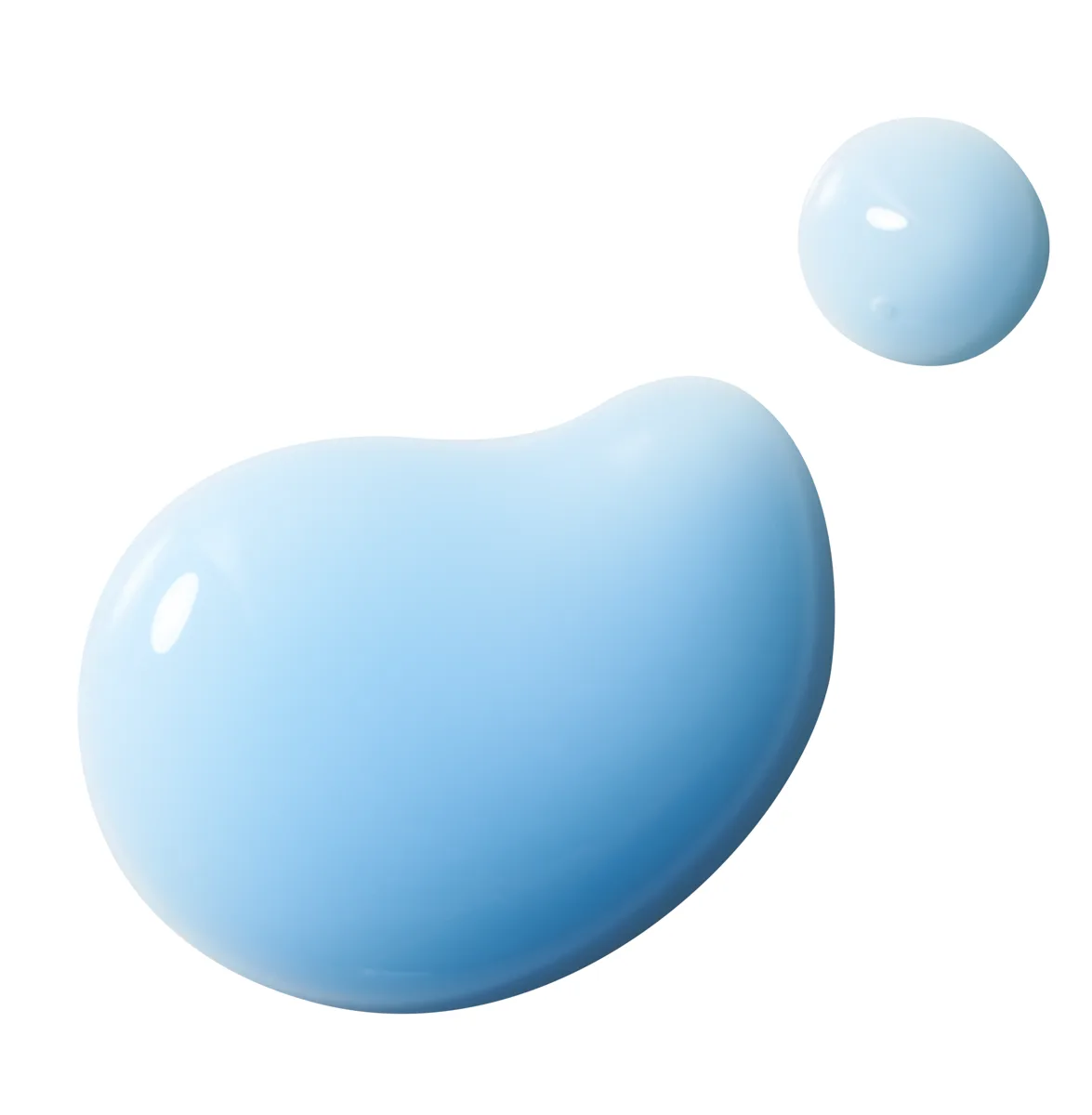
A lightweight, faintly gel-like serum with a soft blue tint. It spreads easily, absorbs quickly to a smooth, non-greasy finish, and leaves no tacky residue.
Largely fragrance-free, with a faint natural scent from the tea tree oil and botanical extracts.
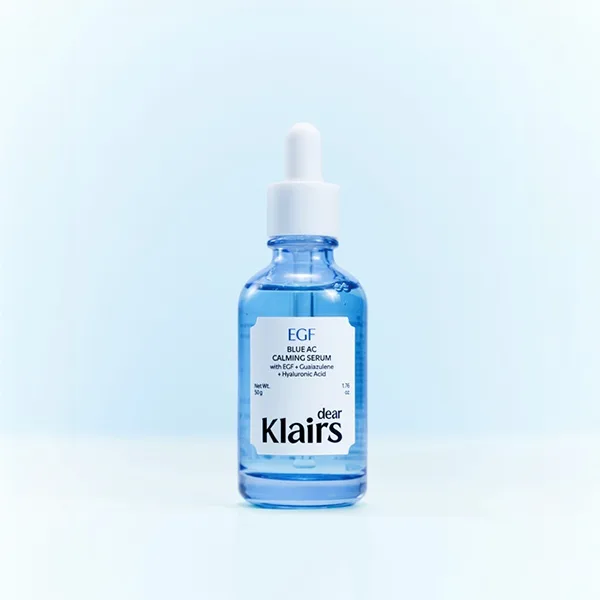
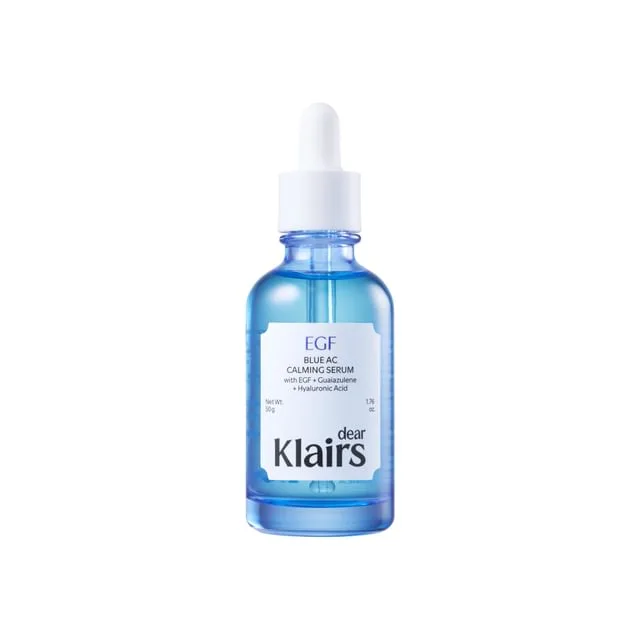
50 g bottle with a dropper, in Klairs's clean design with a blue accent. The dropper allows controlled, hygienic dosing onto the skin.
First use feels light and cooling — the blue-tinted serum absorbs quickly and the skin around blemishes looks calmer and less red within days. There is a faint tea tree scent. Most skin feels soothed rather than stung, though very reactive skin should patch test, as tea tree oil can occasionally irritate.
Roughly 10-12 weeks at morning-and-night use
All Year
Klairs built its reputation on gentle care for sensitive skin, so its Blue AC line approaches blemishes through that lens. Rather than a stripping spot treatment, the Blue AC Calming Serum is designed for people whose skin is both breakout-prone and reactive — treating acne as an inflammatory condition to be soothed, not just an oil problem to be scrubbed away.
Dear, Klairs was founded in 2010 in Seoul under Wishcompany, with a philosophy of simple, gentle skincare for sensitive skin. Its Midnight Blue and Blue AC lines apply that gentle approach to blemish-prone and reactive skin.
Acne products need to dry out and strip the skin to work.
Aggressive drying often backfires — it damages the barrier, can trigger more oil production and leaves skin irritated. Acne is substantially an inflammatory condition, so calming inflammation, as this serum does with niacinamide and soothing botanicals, is a legitimate and often better-tolerated route to clearer skin.
The blue color of this serum is a cosmetic dye.
The blue comes from guaiazulene, an azulene-derived anti-inflammatory ingredient that is naturally deep blue. The color is the active itself, signaling the serum's soothing function — not a dye added for visual appeal.
It treats breakouts largely by reducing inflammation, since acne is substantially an inflammatory condition. Niacinamide, guaiazulene, centella and a deep soothing roster calm redness and irritation, while gentle LHA and PHA clear pore congestion and tea tree oil adds mild antibacterial action — a calm-the-skin rather than strip-the-skin approach.
It is built around soothing ingredients and is fragrance-free, which suits reactive skin well. However, it does contain tea tree leaf oil, which can irritate the most sensitive skin. Very reactive skin should patch test first, but for many people with sensitive, blemish-prone skin it is gentler than typical acne serums.
The blue color comes from guaiazulene, an azulene-derived anti-inflammatory ingredient that is naturally deep blue. It is not a cosmetic dye — the color is the soothing active itself, and it absorbs invisibly into the skin on application.
It is best suited to mild blemishes, congestion and redness-prone skin. Its actives are gentle and calming rather than treatment-strength. Moderate-to-severe or cystic acne usually needs stronger treatments or dermatologist care — this serum can play a supportive, soothing role alongside that.
Yes, generally — but introduce it gradually. The serum contains mild LHA and PHA exfoliants, so if you already use a strong acid or a retinoid, avoid stacking too many actives at once to prevent irritation. Start a few times a week alongside existing treatments and build up as tolerated.
Recurring themes our editors read across retailer reviews of this product — summaries in our words, not quotations, and not a substitute for your own patch test.
Calms redness and irritation around active blemishes quickly
Lightweight texture that absorbs fast and layers well
Genuinely soothing rather than drying, unusual for an acne serum
Excellent value at a low price for a loaded formula
Tea tree oil scent and ingredient may not suit very sensitive skin
Calming rather than a strong acne treatment for moderate-to-severe cases
Not fungal-acne safe despite its acne focus
Results on breakout frequency are gradual
Verified answers from our questions library — the nuance a product page cannot carry.