The Truth About Pore Strips, Pore Vacuums, and 'Shrinking' Your Pores
You cannot shrink a pore. But you can change how visible it is — and almost everything sold to 'minimize' pores is pulling the wrong lever.
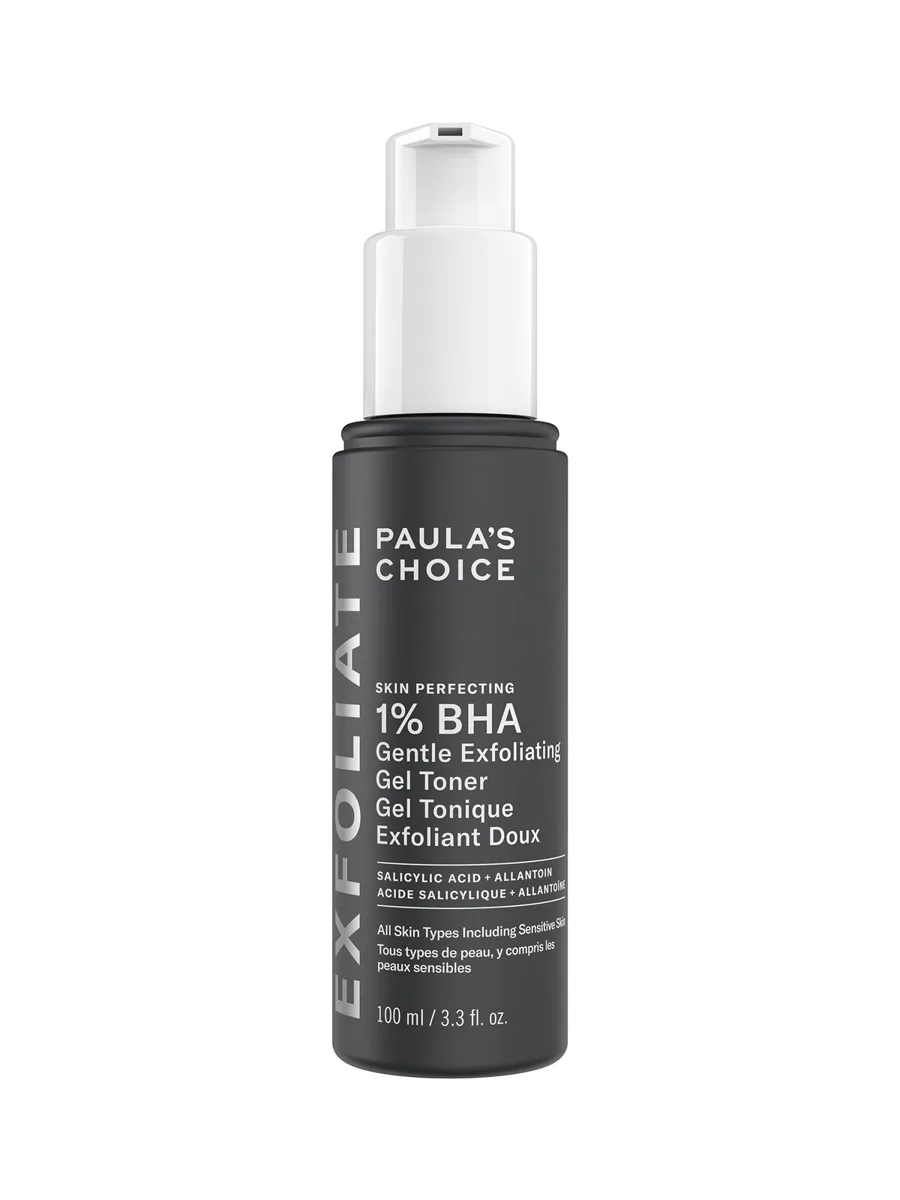
A 1 percent leave-on salicylic acid in a cushioned gel-cream base — emollient alkanes, prebiotic sugars, allantoin and redness-targeting botanicals — from the brand whose 2 percent liquid defined the category, built explicitly for the sensitive and rosacea-prone skin that the flagship excludes. Most low-strength BHAs are watery toners for teenagers; this one is a barrier-minded exfoliant for adults whose faces flush.
The brand that made 2 percent salicylic acid famous has finally made the version for the faces that could not use it: a 1 percent leave-on BHA cushioned in emollient alkanes, prebiotic sugars and allantoin, fragrance-free and built for skin that flushes. It works more slowly than the flagship and costs the same, and the redness botanicals are ahead of their evidence, but as a daily exfoliant for sensitive and rosacea-prone skin it is a thoughtful, overdue product.
This gel toner launched in mid-2026 and had thirteen brand-site reviews and no retailer pool at the time of writing, so nothing here rests on accumulated user experience. The assessment draws on the extensive evidence for low-dose leave-on salicylic acid, the fully published formula and Paula's Choice's long record with fragrance-free BHA products; the redness-calming and microbiome claims specific to this formula are the brand's own and remain to be borne out.
The case for it
Same rule for everyone. “Not for this” is the verdict on 488 of 45,024 concern verdicts across the catalog; rule R10 decided 488 of them. As of September 25, 2026, engine 5.1.1.
Brand or formulator? Disclose a concentration or correct a fact →
The studies behind the evidence row
The case for it
Same rule for everyone. “Good choice” is the verdict on 9,564 of 45,024 concern verdicts across the catalog; rule R5 decided 9,072 of them. As of September 25, 2026, engine 5.1.1.
Brand or formulator? Disclose a concentration or correct a fact →
The studies behind the evidence row
The case for it
Same rule for everyone. “Strong choice” is the verdict on 1,459 of 45,024 concern verdicts across the catalog; rule R2 decided 892 of them. As of September 25, 2026, engine 5.1.1.
Brand or formulator? Disclose a concentration or correct a fact →
The studies behind the evidence row
The case for it
What would change this: A researched evidence row for the lead active would replace this with a verdict.
Same rule for everyone. “Good choice” is the verdict on 1,938 of 45,024 concern verdicts across the catalog; rule F2 decided 1,938 of them. As of September 25, 2026, engine 5.1.1.
Brand or formulator? Disclose a concentration or correct a fact →
The case for it
What would change this: A declared concentration would move this to a firmer reading of the dose.
Same rule for everyone. “Not for this” is the verdict on 488 of 45,024 concern verdicts across the catalog; rule R10 decided 488 of them. As of September 25, 2026, engine 5.1.1.
Brand or formulator? Disclose a concentration or correct a fact →
The studies behind the evidence row
A verdict is DermApproved’s assessment of how well a product’s ingredients fit a concern — never a claim about what the product treats. Evidence dots and collected reviews sit beside it and are never blended in. Rules 0.5.1 · evidence table ev-2026.09-r228 · how we decide
For twenty years Paula's Choice's advice pages have carried a quiet caveat under its most famous product: the 2% BHA Liquid Exfoliant, the leave-on salicylic acid that made the category, is not the right choice for skin that flushes, stings and reacts. The brand said so itself, repeatedly, and pointed those readers toward its calmer ranges instead. The Skin Perfecting 1% BHA Gentle Exfoliating Gel Toner, launched in mid-2026, is the product that caveat had been asking for — half the acid, a cushioned gel-cream base, and a formula that reads as though someone sat down with the list of reasons sensitive skin gave up on the flagship and addressed them one by one.
The acid comes first, because it is the point. Salicylic acid is sixth in the list at a declared 1 percent, and its mechanism does not change with dose: it is oil-soluble, so it dissolves into the lipid-rich lining of the pore rather than sitting on the surface, and over hours it loosens the bonds holding dead cells to one another and to the pore wall, which is why leave-on BHA clears congestion that scrubs and AHAs cannot reach. At 1 percent it does this more slowly than at 2. That is the whole trade, and for skin that cannot tolerate 2 percent it is a good one, because an exfoliant that can be used every day at a lower dose outperforms one that gets used twice and abandoned. Salicylic acid is also a salicylate, with mild anti-inflammatory activity of its own — the reason low-dose BHA has a place in managing the papules and congestion that accompany some rosacea, and the reason it, rather than an AHA, is the right acid for a product aimed at redness.
The base is where the thinking shows. Instead of the flagship's thin water-and-glycol liquid, the acid here is carried in methylpropanediol with two light, dry emollients — dicaprylyl carbonate and a C15-19 alkane — high in the list, which turns a toner into a soft gel-cream that cushions the acid against the skin and can stand in for a hydrating layer rather than sit on top of one. That texture is why users with reactive skin describe the first application as a non-event, and it is the single most important difference from the 2 percent liquid. Inulin and alpha-glucan oligosaccharide are the prebiotic pair, plant sugars with supplier data on feeding the skin's resident bacteria over the opportunists after a disruption; on a product whose active can shift the surface pH, they are coherent rather than trendy, though the evidence is early. Allantoin sits tenth, the classic anti-irritant placed where it can blunt the tightness a BHA causes in the first weeks. Glycerin, a larch polysaccharide called galactoarabinan that is reported to even out an exfoliant's spread while slowing water loss, and schizophyllan, a mushroom beta-glucan with soothing film-forming properties, round out the support.
Then the redness botanicals, which are the part of the formula that has run ahead of its proof. Albatrellus confluens mushroom extract contains grifolin, which its supplier links to damping the nerve signalling behind stinging and flushing; prickly pear stem extract is a hydrating, anti-inflammatory succulent; laminaria kelp extract adds minerals and a humectant film. Each has laboratory or small-panel support, none has a trial in this gel, and the honest reading of the 'calms visible redness' claim is that a BHA which does not provoke redness will, over weeks, leave skin looking less red than a BHA which does. That is a real benefit; it is a benefit of restraint rather than of an active. Tocopherol and a trace of soybean oil — the only potential allergen on a very clean list — finish the formula, and it is fragrance-free, essential-oil-free and free of denatured alcohol throughout.
In use the pattern is consistent across the few dozen early accounts: no sting, a brief coolness and a faint tack that settles in a minute, smoother texture inside a week or two, and blackheads that shift over four to six weeks rather than two. A minority notice mild tightness in the first week, which a barrier moisturiser over the top resolves. The brand's directions — start every other night, move to daily, sunscreen every morning — are the right ones for any leave-on acid, and the gel's dual role as exfoliant and light hydrator makes the routine shorter, not longer. It pairs sensibly with azelaic acid for redness-prone skin and with a retinoid on alternate nights once tolerated.
The value case is the product's soft spot, and the brand's own line-up makes it visible. Thirty-seven dollars for 100 mL is exactly what the 2 percent liquid costs for 118 mL, which means the half-strength version carries a full-strength price. Some of that is the more expensive base — emollients, prebiotics and botanicals cost more than water and glycol — and some of it is the brand's confidence that the sensitive-skin customer has nowhere else to go for a leave-on BHA this carefully built. That confidence is largely justified; comparable low-dose BHAs from other brands tend to be watery toners aimed at teenage acne rather than barrier-minded gels for adults who flush. But a shopper with resilient skin who simply prefers a gentler pace is paying a premium for slowness, and should know it. A tube lasts about three months at once-daily use.
What cannot be said yet is how it wears over a year on rosacea-prone faces, because the product has only been on sale for a few months and has thirteen brand-site reviews and no retailer pool at the time of writing. The mechanism is among the best-studied in skincare and the formula is fully published, so the low confidence here is about the specific gel, not about salicylic acid. Paula's Choice's track record with fragrance-free, leave-on actives is long enough that the bet is a reasonable one.
The verdict, then, is warm and provisional. This is the BHA for the people the brand spent two decades telling to look elsewhere, built with evident care and priced as though that care were a premium — which, for those people, it is. Anyone whose face tolerates the 2 percent liquid should keep using it. Anyone whose face does not has, at last, a version worth trying.
The hero actives that drive this product's performance.
| Ingredient | Function | Evidence |
|---|---|---|
| Salicylic Acid 1% (1%) | Half the dose of the brand's flagship liquid, sixth in the list, and the entire reason the product exists: a leave-on BHA at a strength that still dissolves into pore lining and loosens the dead-cell plugs behind congestion, but at a rate that sensitive and redness-prone skin can tolerate daily. Salicylic acid is also mildly anti-inflammatory in its own right, which is the quiet logic of putting it, rather than an AHA, in a product for reactive skin. | Established mechanism for Rough Texture · established mechanism |
| Dicaprylyl Carbonate and C15-19 Alkane | Third and fourth — two light, dry-feeling emollients that make this a gel-cream rather than a watery toner. They cushion the acid on the skin and are why the brand can describe a barrier-supporting exfoliant; salicylic acid in a bare water-glycol base would sting a reactive face where this does not. | Not yet assessed |
| Inulin and Alpha-Glucan Oligosaccharide | The prebiotic pair, eighth and sixteenth — plant sugars that selectively feed the skin's resident bacteria over the opportunists, with supplier data on rebalancing the microbiome after disruption. On a product whose active can shift the surface pH, that is a coherent inclusion rather than a buzzword, though the evidence is early. | Not yet assessed |
| Allantoin | Tenth, placed just below the preservative-humectants, a classic anti-irritant with a long record in products for chapped and reactive skin. It is the formula's first line of defence against the tightness a BHA can cause, ahead of the botanical soothers that follow. | No qualifying study for Rosacea |
| Albatrellus Confluens Mushroom and Prickly Pear Stem Extracts | The redness-calming botanicals, late in the list. Albatrellus confluens contains grifolin, a compound the supplier links to reducing the neural signalling behind stinging and flushing; prickly pear stem extract is a hydrating, anti-inflammatory succulent. Both have laboratory and small-panel support and no trial in this formula; they are why the product is aimed at redness rather than just sensitivity. | Not yet assessed |
| Galactoarabinan and Schizophyllan | Two plant polysaccharides near the end — galactoarabinan from larch is reported to enhance the penetration and evenness of exfoliants while reducing water loss, and schizophyllan is a mushroom beta-glucan with soothing, film-forming properties. They are formulation refinements rather than actives, and they read as the brand thinking about how a 1 percent acid can be made to work harder without irritating. | Not yet assessed |
Ingredient standings describe the active at treatment-level doses and vehicles; this product's own condition grades weigh its actual formula.
Water, Methylpropanediol, Dicaprylyl Carbonate, C15-19 Alkane, Hydroxyethyl Acrylate/Sodium Acryloyldimethyl Taurate Copolymer, Salicylic Acid, Propanediol, Inulin, Caprylyl Glycol, Allantoin, Tocopherol, Sodium Hydroxide, Ethylhexylglycerin, Hexylene Glycol, Sorbitan Isostearate, Alpha-Glucan Oligosaccharide, Glycerin, Laminaria Digitata Extract, Albatrellus Confluens (Mushroom) Extract, Glycine Soja Oil, Opuntia Ficus-Indica Stem Extract, Galactoarabinan, Citric Acid, Schizophyllan, Maltodextrin, Phenoxyethanol
treatment
AM & PM
It goes on after cleansing and before serums, and the gel-cream texture means it can stand in for a hydrating toner rather than sit on top of one. Start every other night, then daily; a retinoid can share the routine on alternate nights, and a barrier moisturiser over the top is sensible for the first few weeks. Sunscreen every morning is non-negotiable with any leave-on BHA.
Skin feels smoother within the first week and the surface looks less bumpy by two, which is the acid loosening the dead-cell layer. Pore congestion and blackheads take four to six weeks of daily use to visibly shift at 1 percent — slower than the 2 percent liquid — and the redness-calming claim is a matter of skin simply being less provoked over time rather than an active effect to watch for.
Salicylic acid is the best-evidenced leave-on exfoliant in dermatology, and its behaviour at low concentration is well characterised. Unlike alpha hydroxy acids it is lipophilic, which allows it to partition into the sebum-filled follicular canal and act on the corneocyte adhesion within the pore as well as on the surface; controlled studies of 0.5 to 2 percent leave-on salicylic acid have shown reductions in comedones and improvement in skin texture, with the lower end of that range used in products for sensitive skin and in the FDA's over-the-counter acne monograph, which recognises 0.5 to 2 percent salicylic acid as an active. Its anti-inflammatory activity — it is chemically a salicylate — is modest but real, and is the basis for its use in some rosacea and seborrhoeic presentations where AHAs are avoided.
The formulation choices around the acid have their own support. Salicylic acid's irritation potential in leave-ons is strongly influenced by vehicle; emollient and cushioned bases reduce stinging and transepidermal water loss relative to hydro-alcoholic or thin aqueous vehicles, which is the rationale for carrying the acid here in a gel-cream with dicaprylyl carbonate and a C15-19 alkane. Allantoin has a long regulatory record as a skin protectant and anti-irritant. Galactoarabinan, a larch arabinogalactan, has been reported in supplier studies to increase the uniformity of exfoliation and reduce water loss when combined with hydroxy acids.
The prebiotic pair — inulin and alpha-glucan oligosaccharide — rests on in-vitro and small in-vivo work showing selective support for commensal bacteria over Staphylococcus aureus and other opportunists; the clinical relevance of prebiotic cosmetic ingredients is plausible and still being established. Albatrellus confluens extract has supplier data on reducing TRPV1-mediated neurosensory irritation, and Opuntia ficus-indica stem extract has in-vitro anti-inflammatory and humectant properties; neither has independent clinical evidence in a leave-on exfoliant. The absence of fragrance, essential oils and denatured alcohol removes the most common irritants for the sensitive skin the product targets. No published trial of this specific formula exists.
Low-strength leave-on salicylic acid is a standard recommendation in dermatology for comedonal congestion in patients who cannot tolerate stronger exfoliants, and clinicians are generally comfortable with 0.5 to 1 percent BHA on sensitive and even rosacea-prone skin provided the vehicle is bland and use is built up gradually — the approach this product takes. The cushioned, fragrance-free base and the inclusion of allantoin would be viewed as sensible, and the prebiotic and botanical additions as harmless and unproven. Dermatologists would set expectations accordingly: slower clearing of blackheads than a 2 percent product, no substitute for azelaic acid or prescription therapy in inflammatory rosacea, and a patch test on the jaw before committing the cheeks. Daily sunscreen would be emphasised, as with any leave-on exfoliant. For the adult with reactive, congested skin who has failed the brand's flagship, it is exactly the kind of product a clinic would be glad to suggest.
After cleansing, squeeze a small amount — about a pea and a half for the face and neck — from the tube onto fingertips and smooth it over the skin in a thin, even layer, avoiding the eye area. Do not rinse; let it set for a minute, then follow with serums or a moisturiser. Begin with every other night for the first two weeks, then move to nightly or twice daily as tolerated; sensitive skin often settles at once a day. A barrier moisturiser over it is sensible in the early weeks if tightness appears. Wear a broad-spectrum sunscreen every morning while using it, and patch-test on the jawline for three nights if skin is rosacea-prone. A retinoid can be used on alternate nights once tolerance is established.
Thirty-seven dollars for 100 mL puts this at the same price as the brand's own 2% BHA Liquid — a half-strength product at a full-strength price, and above most low-dose BHA toners from other brands. The premium buys a more expensive base than the flagship's, a fragrance-free formula built specifically for reactive skin, and the brand's three decades of leave-on acid expertise, and for the sensitive-skin customer who has no other comparable option that is defensible. There is only one size, and a tube lasts about three months at once-daily use. Paula's Choice is an established, well-regarded brand rather than a clinically validated one, and the product itself is too new to have a track record; anyone with resilient skin is better served, and better priced, by the 2 percent liquid.
People with sensitive, redness-prone or rosacea-prone skin who want the pore-clearing and texture benefits of a leave-on BHA and have found 2 percent products too much, and adults with congested but reactive skin who need an exfoliant they can use daily. It also suits anyone who wants a BHA that doubles as a light hydrating layer.
Anyone with resilient skin and stubborn blackheads, who will get faster results at the same price from the 2 percent liquid; people with an active eczema flare or a compromised barrier, who should wait before adding any acid; and those who want strong evidence for the redness claims specifically, which does not yet exist. Pregnant users should check with their clinician about leave-on salicylic acid.
Ready to try Paula's Choice Skin Perfecting 1% BHA Gentle Exfoliating Gel Toner?
Buy at Amazon ♥A soft, translucent gel-cream with a faint emollient slip that spreads thinly, feels cool for a moment and sets to a soft, barely-there finish
None — fragrance-free and essential-oil-free, with the neutral, faintly waxy note of the alkane base
A 100 mL tube in the Skin Perfecting line's white-and-teal livery with a narrow nozzle for controlled dosing; opaque, hygienic and travel-friendly
For most sensitive-skin users the first application is a non-event in the best sense — no sting, no flush, a brief coolness and a faint tack that settles within a minute. A few people notice mild tightness in week one, which a moisturiser over the top resolves. Texture improvements start to show around day seven; blackheads take longer, and anyone who has used the 2 percent liquid will notice the slower pace.
About three months at once-daily use over the face and neck; closer to four at the every-other-night cadence sensitive skin often settles on
All Year
Paula's Choice's 2% BHA Liquid Exfoliant has been the category's reference product for two decades and also its most common casualty on reactive skin, and the brand's advice pages have long steered redness-prone readers away from it. The 1% gel toner, launched in mid-2026 alongside a 4 percent serum toner, fills that gap at the gentle end of a tiered BHA range and borrows its microbiome and redness ingredients from the brand's CALM line.
Paula's Choice has sold leave-on salicylic acid since the 1990s and its 2% BHA Liquid is the reference product of the category, so a lower-strength BHA from this brand arrives with unusual credibility on the mechanism. Founded in 1995 and Unilever-owned since 2021, the brand publishes full ingredient lists and fragrance-free formulas; this gel toner is a mid-2026 launch with a review record still in its first months.
One percent salicylic acid is too weak to do anything.
Leave-on BHA works by dissolving into the lipid-rich pore lining and loosening the bonds between dead cells over hours, not by strength on contact. One percent does this more slowly than two, and for skin that flares at two percent, slowly is the version that actually gets used every day — which is what produces results.
Exfoliating acids always make rosacea and redness worse.
AHAs and high-strength acids often do, but salicylic acid is a salicylate with mild anti-inflammatory activity, and low-dose leave-on BHA is used in dermatology for the papules and congestion that accompany some rosacea. Tolerance is individual, which is why this product is cushioned and dosed the way it is — and why a patch test still makes sense.
Half the salicylic acid, in a gel-cream base with emollient alkanes, prebiotic sugars, allantoin and redness-calming botanicals instead of the liquid's thin water-glycol formula. It works the same way, more slowly, and is designed for the sensitive and redness-prone skin the brand's own advice steers away from the 2 percent.
That is the intent — daily use once skin has adjusted, and the brand suggests starting at every other night. Because it doubles as a light hydrating layer, most people use it in place of a toner rather than on top of one.
It is built with rosacea-prone skin in mind — low-dose salicylic acid has mild anti-inflammatory activity and the base is cushioned with allantoin and calming extracts — but rosacea tolerance is individual. Patch-test on the jaw for three nights before using it on the cheeks.
Yes, but more slowly than a 2 percent product. Expect smoother texture within a week or two and visible improvement in congestion over four to six weeks of daily use; anyone with resilient skin and stubborn blackheads will get faster results from the brand's stronger BHAs.
Neither. It is fragrance-free, essential-oil-free and free of denatured alcohol, preserved with phenoxyethanol and glycols. The only potential allergen in the list is a small amount of soybean oil.
Yes, daily. Any leave-on exfoliating acid increases sun sensitivity by thinning the dead-cell layer, and the brand's directions call for a broad-spectrum sunscreen every morning while using it.
Recurring themes our editors read across retailer reviews of this product — summaries in our words, not quotations, and not a substitute for your own patch test.
A BHA that finally does not sting on reactive skin
Gel-cream texture feels like a moisturiser, not an acid
Smoother texture within the first week or two
Fragrance-free and pairs with azelaic acid without trouble
Slower on blackheads than the 2% liquid
Priced the same as the full-strength product
Too few reviews to judge long-term redness claims
Slight tackiness before it sets