You Can Mix L-Ascorbic Acid at Home. Keeping It Alive Is the Hard Part.
The one home formulation with a genuinely coherent case, taken apart on its own terms: the pH window, the oxidation clock, and what a browning serum has actually become.
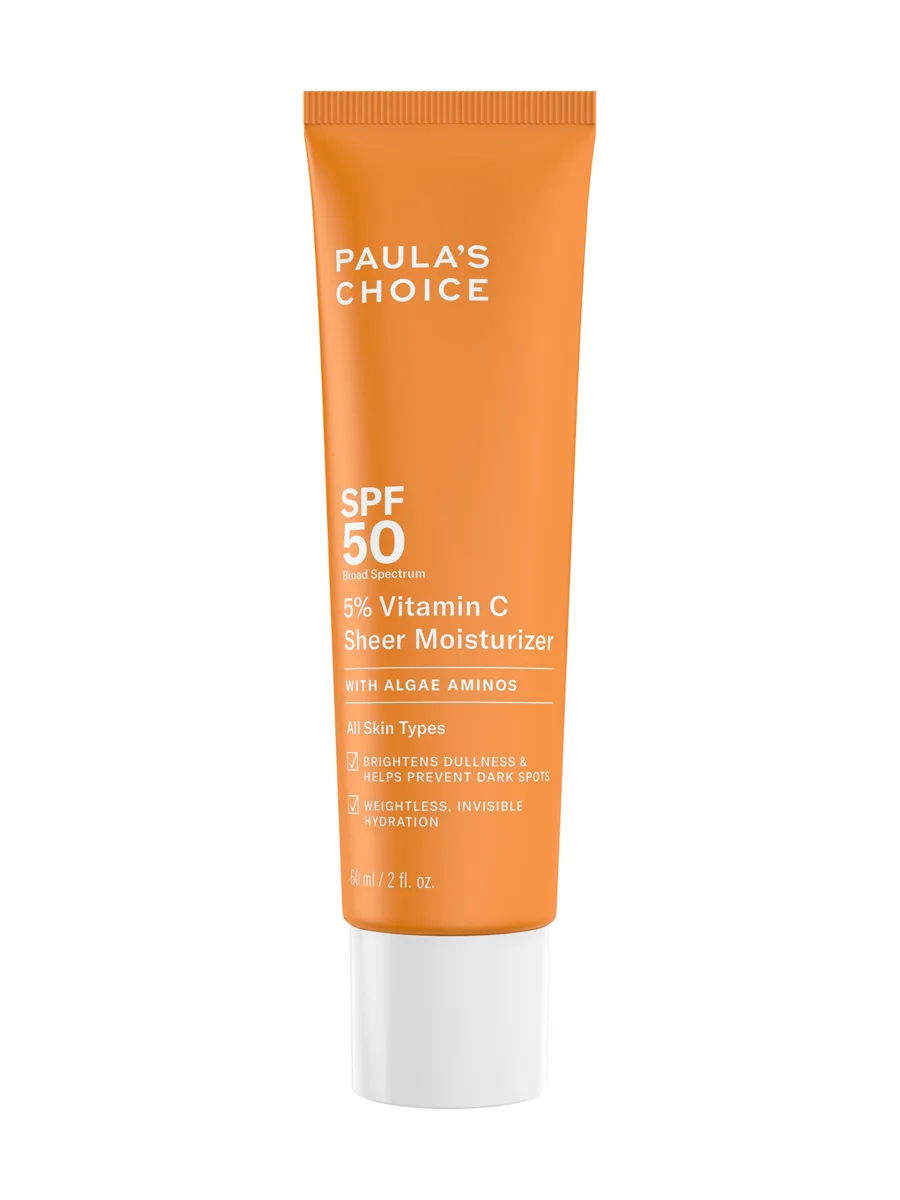
Most sunscreens that advertise vitamin C carry a whisper of one derivative; this one declares 5 percent across three — two water-soluble, one oil-soluble — and stabilises them with acetyl zingerone while a dedicated photostabiliser holds the avobenzone. The result is a genuinely sheer, cast-free SPF 50 that also functions as a daily antioxidant and brightening step, from a brand that publishes exactly what is in it and registers it on DailyMed.
A sheer, cast-free chemical SPF 50 that doubles as a daily vitamin C step — a declared 5 percent across three derivatives, stabilised with acetyl zingerone, with a photostabiliser guarding the avobenzone — in a fragrance-free fluid light enough to replace a morning moisturiser for most skin. It is a well-built daily-wear sunscreen; it is not water-resistant, it uses four chemical filters including octocrylene, and forty-five dollars for two ounces is a premium.
This sunscreen launched in 2024, so its real-world record is still short — around 630 reviews on the brand's site and 200 on Amazon — and the assessment leans on its FDA-listed filter system, the published literature on the three vitamin C derivatives and acetyl zingerone, and Paula's Choice's long sunscreen history rather than on years of user data. The product itself has not been independently tested, and how the sheer texture affects real-world application density has not been measured.
The case for it
Same rule for everyone. “Full protection” is the verdict on 2,288 of 45,024 concern verdicts across the catalog; rule P1 decided 2,232 of them. As of September 25, 2026, engine 5.1.1.
Brand or formulator? Disclose a concentration or correct a fact →
The studies behind the evidence row
The case for it
What would change this: Trial evidence for the active on this concern would move this from a bet to a recommendation.
Same rule for everyone. “Full protection” is the verdict on 2,288 of 45,024 concern verdicts across the catalog; rule P1 decided 2,232 of them. As of September 25, 2026, engine 5.1.1.
Brand or formulator? Disclose a concentration or correct a fact →
The studies behind the evidence row
The case for it
What would change this: Trial evidence for the active on this concern would move this from a bet to a recommendation.
Same rule for everyone. “Full protection” is the verdict on 2,288 of 45,024 concern verdicts across the catalog; rule P1 decided 2,232 of them. As of September 25, 2026, engine 5.1.1.
Brand or formulator? Disclose a concentration or correct a fact →
The studies behind the evidence row
The case for it
What would change this: Trial evidence for the active on this concern would move this from a bet to a recommendation.
Same rule for everyone. “Full protection” is the verdict on 2,288 of 45,024 concern verdicts across the catalog; rule P1 decided 2,232 of them. As of September 25, 2026, engine 5.1.1.
Brand or formulator? Disclose a concentration or correct a fact →
The studies behind the evidence row
Also listed for Dullness and Dehydration — the actives here (Avobenzone, Vitamin C, Acetyl Zingerone, Algae Extract) are in our research queue for those concerns; there is no verdict until their evidence rows are written. That is a gap in our table, not a mark against the product.
Does the jobDoes what a SPF moisturizer is for: UVA coverage, actually moisturizes. Not measured from the label: wearable all day.
A verdict is DermApproved’s assessment of how well a product’s ingredients fit a concern — never a claim about what the product treats. Evidence dots and collected reviews sit beside it and are never blended in. Rules 0.5.1 · evidence table ev-2026.09-r228 · how we decide
For most of its thirty years Paula's Choice has been making one argument about sunscreen louder than anyone else: that the SPF number is only half the job, and that a daytime product should also carry antioxidants to deal with the UV that no filter stops. The brand's older sunscreens made the case with a handful of plant antioxidants and a trace of vitamin C. This one, launched in 2024 as the sunscreen of its C+ collection, makes it with a declared 5 percent vitamin C — 3-O-ethyl ascorbic acid and ascorbyl glucoside placed right after the glycerin, and the oil-soluble tetrahexyldecyl ascorbate a little further down — stabilised by acetyl zingerone, the ginger-derived antioxidant the brand has adopted across its vitamin C range. It is the first time the argument has been made at a dose you would expect from a dedicated vitamin C product rather than a sunscreen's garnish, and it is worth taking seriously on those terms.
The sunscreen half of the formula is conventional and competent. Avobenzone at 2 percent handles UVA, octinoxate at 7.5 percent and octisalate at 5 percent handle UVB, and octocrylene at 2 percent helps stabilise the avobenzone, with diethylhexyl syringylidenemalonate — a dedicated photostabiliser — doing the same job more elegantly. That system earns the broad-spectrum SPF 50 that the DailyMed listing records. Silica and two silicone crosspolymers give the fluid its dry, sheer feel; glycerin and a little castor oil provide the moisture; a red algae extract contributes the 'algae-derived amino acids' of the label at a trace dose; and a whisper of iron oxides and titanium dioxide warms the lotion enough to avoid any pallor without counting as coverage. No fragrance, no alcohol, no essential oils.
In use it is the sunscreen for people who hate sunscreen. It is thin — runny enough to spill if you tip the tube carelessly — and it spreads in two or three strokes to a sheer, softly dewy finish that reads as bare skin on every tone reviewers have reported, with no cast, no shine and no scent. It sets in about a minute, sits under makeup without pilling, and on normal, combination and oily skin it is enough hydration for the day on its own; dry skin will want a moisturiser beneath it, especially in winter. Sensitive eyes are the one caution, as with any avobenzone-and-octocrylene sunscreen: keep it below the brow bone. The texture's real risk is under-application — a lotion this light makes a quarter-teaspoon feel like too much, and it is not.
The filters deserve the same scrutiny the brand applies to everyone else's. Octinoxate is restricted in Hawaii and some other jurisdictions over reef concerns, and octocrylene has been shown to degrade slowly into benzophenone in stored sunscreen, which is a documented reason some people avoid it — Paula's Choice keeps octocrylene to 2 percent and adds a separate photostabiliser, which limits how much is needed, but it is there. The FDA has also asked for more safety data on chemical filters generally, a request the brand acknowledges in its own writing. None of this makes the product unsafe by any current standard, and the trade-off — chemical filters for a truly sheer SPF 50 — is a legitimate one that mineral sunscreens cannot yet match. But a buyer who wants mineral-only protection should know this is not that, and the brand sells the alternative.
The vitamin C is the reason to pay the premium, and the honest reading is that it does two things. The first, and the one the science supports best, is invisible: topical vitamin C in a daytime product reduces the oxidative damage that gets past a filter, which is a real addition to photoprotection that the SPF number does not measure. The second, brightening, is slow — eight to twelve weeks of daily wear before tone looks more even and new dark spots stop forming as readily — and gentler than a dedicated serum, because these are derivatives rather than L-ascorbic acid. Anyone who already uses a strong vitamin C serum in the morning does not need this one on top; anyone who does not, and wants the benefit without another step, is the target.
The product is only two years old, and the evidence base reflects that: around 630 reviews on the brand's site at a 4.5 average, a couple of hundred on Amazon, and a formula whose components — the filters, the derivatives, acetyl zingerone — each have literature behind them but which has not itself been trialled. The 2024 launch also means no water-resistance claim was pursued; this is a commute-and-office sunscreen, not a beach one.
Forty-five dollars for 60ml is the honest sticking point. At the correct quarter-teaspoon dose a tube lasts about six weeks, and most people stretch it to two or three months by under-applying, which is a bad way to save money on a sunscreen. Amazon pricing tends to track the brand's, and there is no travel size. What the money buys is a genuinely sheer SPF 50 that most people will actually wear every day, a real vitamin C dose stabilised properly, and a brand that registers its sunscreens on DailyMed and publishes every ingredient. That is worth a premium over a drugstore chemical SPF; whether it is worth forty-five dollars depends on how much the vitamin C step would otherwise cost you.
For normal, combination and oily skin that wants a cast-free daily SPF 50 with a built-in antioxidant and brightening step, and for anyone who has abandoned mineral sunscreens over texture, this is a strong, well-reasoned choice and an easy recommendation. For mineral-only buyers, for very sensitive or eczema-prone skin, for beach and sport days, and for anyone who already wears a vitamin C serum in the morning, the brand and the market have better-matched options.
The hero actives that drive this product's performance.
| Ingredient | Function | Evidence |
|---|---|---|
| Avobenzone 2% + Octinoxate 7.5% + Octisalate 5% + Octocrylene 2% (16.5% total) | A four-filter chemical system that delivers the SPF 50 broad-spectrum rating — avobenzone for UVA, octinoxate and octisalate for UVB, and octocrylene at a modest 2 percent to help hold the avobenzone together. It is the reason the lotion is sheer and cast-free where a mineral SPF 50 would not be, and the reason it feels like a moisturiser rather than a sunscreen; it is also why the brand's mineral fans went elsewhere. | Regulator-approved for Sun Damage · emerging certainty |
| 3-O-Ethyl Ascorbic Acid + Ascorbyl Glucoside + Tetrahexyldecyl Ascorbate (5% total) (5%) | Three vitamin C derivatives — two water-soluble, placed right after the glycerin, and one oil-soluble — totalling a declared 5 percent, chosen so the vitamin C is delivered to both the water and oil phases of the lotion and stays stable beside the filters. In a sunscreen its job is to neutralise the free radicals UV generates past the filter, and secondarily to brighten with daily use. | Limited for Sun Damage |
| Acetyl Zingerone + Diethylhexyl Syringylidenemalonate | The stabilisers: acetyl zingerone protects the vitamin C derivatives from oxidising and adds its own photoprotective activity, and diethylhexyl syringylidenemalonate is a photostabiliser for the avobenzone, quenching the excited state that would otherwise degrade it. Between them they are why a chemical SPF with vitamin C can sit in a tube for a year without losing either. | Not yet assessed |
| Porphyra Umbilicalis (Red Algae) Extract + Entada Seed Extract | The 'algae-derived amino acids' of the label — a red algae extract rich in mycosporine-like amino acids, the compounds marine organisms use as natural UV absorbers, plus an entada seed extract for soothing. They are trace supporting ingredients that add a small antioxidant and skin-conditioning layer rather than contributing to the SPF rating. | Not yet assessed |
| Iron Oxides (sheer tint, with trace Titanium Dioxide) | A light universal tint at the end of the list — enough to warm the lotion and cancel any pallor from the silica and filters, not enough to count as coverage or to add meaningful visible-light protection. Reviewers describe it as 'tinted but not colour-correcting', which is exactly what a trace iron oxide dose does. | Not yet assessed |
Ingredient standings describe the active at treatment-level doses and vehicles; this product's own condition grades weigh its actual formula.
Active Ingredients: Avobenzone 2%, Octinoxate 7.5%, Octisalate 5%, Octocrylene 2%. Inactive Ingredients: Water, Glycerin, Silica, 3-O-Ethyl Ascorbic Acid, Ascorbyl Glucoside, Dimethicone, Propanediol, Tetrahexyldecyl Ascorbate, Acetyl Zingerone, Acrylates/C10-30 Alkyl Acrylate Crosspolymer, Diethylhexyl Syringylidenemalonate, Dimethicone/Vinyl Dimethicone Crosspolymer, Entada Phaseoloides Bark/Seed Extract, Porphyra Umbilicalis Extract, Hydrogenated Lecithin, Ricinus Communis (Castor) Seed Oil, Sodium Hydroxide, Tocopherol, Xanthan Gum, Ethylhexylglycerin, Laureth-4, Phenoxyethanol, Potassium Sorbate, Sodium Benzoate, Titanium Dioxide, Iron Oxides (CI 77492), Iron Oxides (CI 77491), Iron Oxides (CI 77499)
sunscreen
AM
Use it as the last step in the morning, on its own over serums for normal-to-oily skin or over a moisturiser for dry skin — it is light enough that most faces will not need anything else. Apply a full quarter-teaspoon, let it set a minute before makeup, and reapply every two hours in direct sun. It is not water-resistant, so it is a daily-wear SPF rather than a beach one.
Full sun protection is immediate once the correct dose is applied, and the sheer, hydrated finish is instant. Brightening from the 5 percent vitamin C derivatives and prevention of new dark spots take eight to twelve weeks of daily wear to show; the antioxidant margin over plain sunscreen is invisible by design.
Two bodies of evidence apply here: one for the filters and one for the antioxidants layered on top. The 2025 review of sunscreen mechanisms and efficacy in the Journal of the American Academy of Dermatology summarises the current understanding of organic filters — avobenzone as the workhorse UVA absorber, its known photo-instability, and the role of stabilisers such as octocrylene and dedicated photostabilisers like diethylhexyl syringylidenemalonate in keeping it effective — as well as the central importance of application density, since most users apply a quarter to a half of the two milligrams per square centimetre at which SPF is measured. This product's four-filter system is a standard broad-spectrum design, and its inclusion of a separate photostabiliser is a mark of a careful formulation. The same literature notes the FDA's ongoing request for additional safety data on chemical filters, which is a reason for informed choice rather than alarm.
Octocrylene deserves a specific mention because the brand's own readers will ask. A 2021 study in Chemical Research in Toxicology found that benzophenone — a compound of regulatory concern — accumulates over time in commercial sunscreens containing octocrylene as the octocrylene degrades, with levels rising through a product's shelf life. The finding is real and has been contested only in degree; the practical implications are to keep octocrylene doses low, use products within their period after opening, and avoid old stock. This formula's 2 percent octocrylene is at the low end, and the separate photostabiliser reduces reliance on it.
The vitamin C rests on derivative literature. A 2022 review in the Journal of Cosmetic Dermatology surveyed topical vitamin C derivatives and found that ethyl ascorbic acid, ascorbyl glucoside and tetrahexyldecyl ascorbate each show meaningful skin penetration and antioxidant or brightening activity, with better stability than L-ascorbic acid — which is what makes a 5 percent split across all three viable in a water-based sunscreen. The principle that antioxidants under or in a sunscreen reduce UV-induced oxidative damage that filters miss is well established for vitamin C and E combinations; the specific contribution of this product's derivative set, and of acetyl zingerone's stabilising role, is inferred from that literature rather than shown in a trial of the sunscreen itself.
The clinical priority with any sunscreen is that the patient will wear enough of it every day, and a sheer, cast-free, fragrance-free chemical SPF 50 like this one is frequently the answer for patients — especially those with deeper skin tones or oily skin — who abandon mineral sunscreens over texture and cast. Its broad-spectrum four-filter system with a photostabiliser is standard and effective when applied at the correct dose, and the addition of vitamin C derivatives is consistent with the evidence that daytime antioxidants supplement photoprotection; for patients with melasma or post-inflammatory hyperpigmentation it is a reasonable daily vehicle alongside their pigment treatment, though a higher iron-oxide load would offer more visible-light protection than this sheer tint provides. The counselling points are those for chemical sunscreens generally: apply a full quarter-teaspoon to the face, reapply every two hours outdoors, note that it is not water-resistant, and keep it away from the eyes in patients prone to stinging. Patients with contact allergy to avobenzone or octocrylene, those with active eczema or rosacea flares, and patients who prefer to avoid absorbed organic filters in pregnancy would be directed to a zinc oxide alternative, which the same brand offers. The octocrylene content is low and within current regulatory limits; using the product within its stated shelf life is sensible advice.
Make it the final step of every morning routine. After cleansing, toner and any serum or booster — and after moisturiser if your skin is dry — squeeze a quarter-teaspoon into your palm; the lotion is thin and runs easily, so tip the tube gently. Dot it over the face and neck and spread in a few strokes until the sheer tint disappears, avoiding the immediate eye area if your eyes are sensitive. Apply fifteen minutes before going outside and let it set for a minute before makeup. Reapply every two hours in direct sun and after sweating; it carries no water-resistance claim, so use a water-resistant sunscreen for swimming or sport. Normal-to-oily skin can skip a separate moisturiser under it. Remove it at night with a cleansing balm or oil followed by a gentle cleanser. Keep the tube capped and out of heat, and replace it a year after opening or by the printed expiry.
Forty-five dollars for 60ml on the brand's site is a premium for a chemical sunscreen, and Amazon pricing tends to match it; there is no travel size. Used correctly — a quarter-teaspoon for the face each morning — a tube lasts about six weeks, which works out to around thirty dollars a month, and the temptation to stretch it by under-applying is the wrong economy with any SPF. The premium buys three things a drugstore chemical SPF 50 does not: a declared 5 percent vitamin C from three stabilised derivatives, a dedicated avobenzone photostabiliser, and a fragrance-free formula from a brand with thirty years of ingredient transparency and a DailyMed listing. For anyone who would otherwise buy a separate morning vitamin C product, the combination can be reasonable value; for anyone who only needs a sheer SPF 50, the vitamin C is a cost they did not ask for. The product is young — around 630 brand-site reviews and 200 on Amazon — so the long-term satisfaction record is still forming.
Normal, combination and oily skin that wants a cast-free daily SPF 50 with a built-in vitamin C antioxidant and brightening step, and anyone — particularly with a deeper skin tone — who has given up on mineral sunscreens over texture and cast. It suits people who want to fold their morning vitamin C into their sunscreen, and those managing dullness or mild discolouration who need a sheer daily SPF they will actually wear.
Anyone who wants mineral-only protection, or who is allergic to avobenzone or octocrylene, and very sensitive, eczema-prone or rosacea-flaring skin. It is not for beach, sport or swimming days, since it is not water-resistant, and anyone already wearing a vitamin C serum in the morning is paying for a step they have covered.
Ready to try Paula's Choice 5% Vitamin C Sheer Moisturizer SPF 50?
Buy at Amazon ♥A thin, faintly tinted, runny lotion — almost a fluid — that spreads in a couple of strokes with a light silicone slip and sets within a minute to a sheer, softly dewy, cast-free finish that reads as bare skin.
Fragrance-free; a faint chemical-sunscreen note from the filters at the tube that disappears once it has set.
A 60ml orange squeeze tube that stands on its wide white cap; the thin lotion pours out readily, so squeeze gently. No travel size is listed.
Most people are surprised by how thin it is — it runs if you tip the tube — and then by how completely it disappears on the skin, with no cast, no shine and no scent. Very sensitive eyes may notice a mild sting near the lash line from the chemical filters; otherwise there is no adjustment, and the brightening is a slow two-to-three-month story.
Around six weeks at the full quarter-teaspoon daily dose for the face; two to three months if, like most people, you under-apply.
All Year
Paula's Choice launched the 5% Vitamin C Sheer Moisturizer SPF 50 in 2024 as the sunscreen of its C+ vitamin C collection, alongside the reformulated C5 Super Boost Moisturizer and eye cream. The brief was a chemical SPF 50 light enough to replace a morning moisturiser for oily and combination skin, with the same acetyl-zingerone-stabilised vitamin C system as the rest of the line, filling a gap between the brand's mineral matte SPF 30 and its heavier hydrating SPF 50 fluids.
Paula's Choice, founded in 1995 by consumer advocate Paula Begoun, publishes ingredient rationales for every fragrance-free formula and has sold vitamin C and sunscreen products for decades. This 2024 launch is an FDA-listed OTC sunscreen (DailyMed) with four chemical filters and a declared 5 percent vitamin C from three derivatives; the antioxidant claims rest on ingredient-level trials, not a study of the product.
Vitamin C in a sunscreen raises the SPF.
It does not change the SPF rating, which is set by the four chemical filters. What topical vitamin C does is neutralise some of the free radicals generated by the UV that gets past any sunscreen, which adds a measure of protection against photoaging that the SPF number does not capture — a margin, not a multiplier.
A sheer, runny texture means the sunscreen is watered down.
The thinness comes from a silica-and-silicone-crosspolymer base and from having no mineral filters to suspend; the 16.5 percent total chemical filter load is a full SPF 50 system, FDA-listed on DailyMed. The real risk of a thin texture is under-application — a quarter-teaspoon for the face is still required to reach the label.
Chemical. Its actives are avobenzone 2 percent, octinoxate 7.5 percent, octisalate 5 percent and octocrylene 2 percent; the trace titanium dioxide at the end of the list is a tint, not a filter. That is why it is sheer and cast-free — and why people who want mineral-only protection should look at the brand's zinc oxide SPFs instead.
No, the label does not carry a water-resistance claim. It is designed as a daily-wear sunscreen for the commute, office and errands; for swimming, sweating or long outdoor days, use a water-resistant product and reapply every two hours.
Normal, combination and oily skin usually can — the glycerin and light silicone base give enough hydration for a day, and the brand positions it as a moisturiser. Dry skin will want a proper moisturiser underneath, especially in winter.
Both carry a declared 5 percent vitamin C stabilised with acetyl zingerone, but the SPF 50 is a chemical sunscreen for morning use only, while the C5 Super Boost is a gel-cream moisturiser without SPF for morning or night. Many people use the C5 at night and this in the morning.
Most reviewers say no, but chemical filters — avobenzone and octocrylene in particular — can sting sensitive eyes, and the thin texture makes it easy for the lotion to migrate. Keep it below the brow bone and use a mineral stick around the eyes if you are prone to stinging.
Chemical UV filters including avobenzone, octinoxate and octocrylene are absorbed into the bloodstream to a small degree, and some obstetric guidance prefers mineral sunscreens in pregnancy as a precaution, though no harm has been established. If you are pregnant and cautious, the brand's zinc oxide sunscreens are the conservative choice; ask your clinician if unsure.
Recurring themes our editors read across retailer reviews of this product — summaries in our words, not quotations, and not a substitute for your own patch test.
Truly sheer with no white cast on any skin tone
Light enough to replace a morning moisturiser
Sits well under makeup without pilling
Does not sting the eyes for most users
Thin, slightly runny texture takes a moment to spread evenly
Chemical filters — not for those who want mineral only
Forty-five dollars for two ounces
Faint tint shows on very fair skin